


 Скачать презентацию Water Conflict and Cooperation State of the Worldwatch
fc373fa274c400496ed800cdda1cf94f.ppt
- Количество слайдов: 26
 Water Conflict and Cooperation State of the Worldwatch
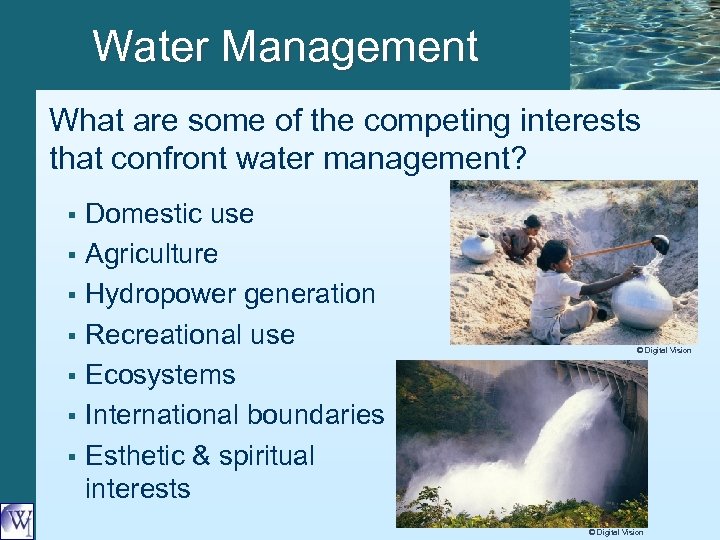 Water Management What are some of the competing interests that confront water management? Domestic use § Agriculture § Hydropower generation § Recreational use § Ecosystems § International boundaries § Esthetic & spiritual interests § © Digital Vision
 Water and Disputes Water is never the single--and hardly ever the major--cause of conflict. § But it can exacerbate existing political, ethnic or religious tensions § It can also provide a basis for opening dialogue and negotiations § Between 1945 and 1999 cooperative events between nations outnumbered conflicts by more than two to one © Edwin Huffman/World Bank
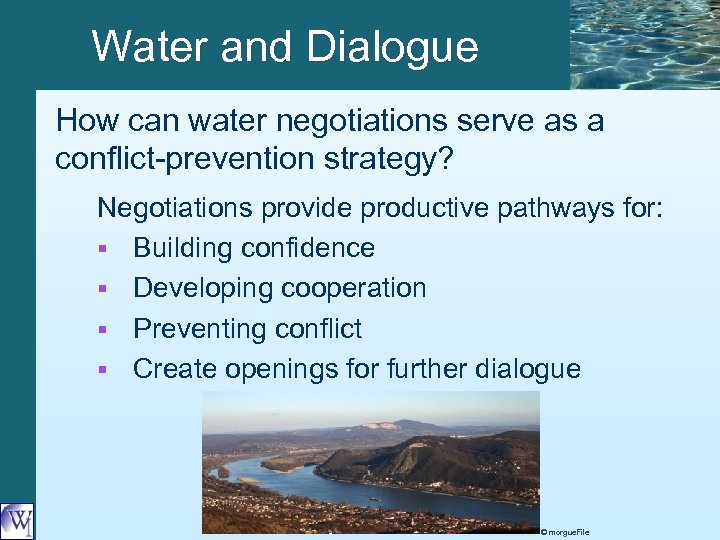 Water and Dialogue How can water negotiations serve as a conflict-prevention strategy? Negotiations provide productive pathways for: § Building confidence § Developing cooperation § Preventing conflict § Create openings for further dialogue © morgue. File
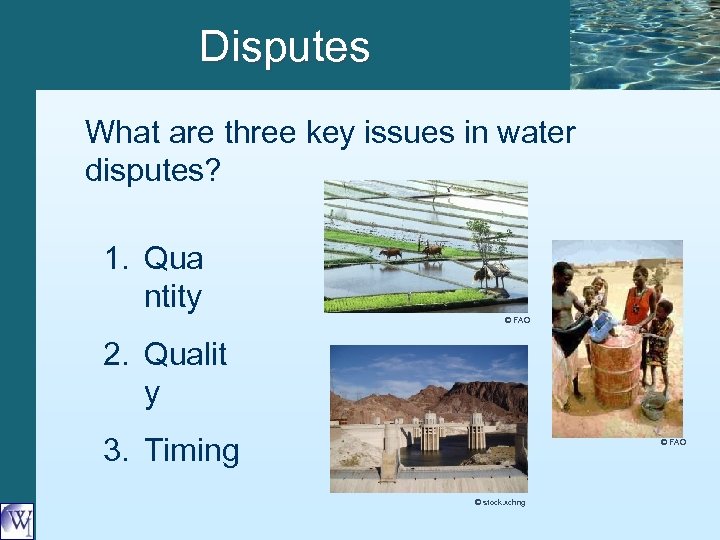 Disputes What are three key issues in water disputes? 1. Qua ntity © FAO 2. Qualit y 3. Timing © FAO © stock. xchng
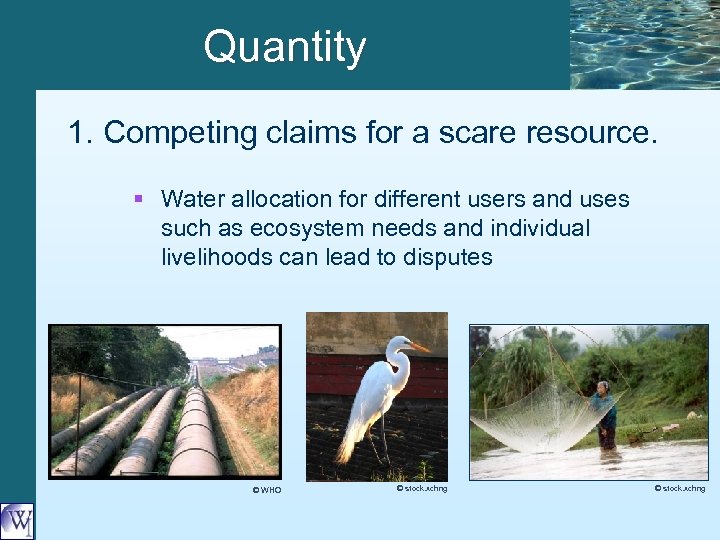 Quantity 1. Competing claims for a scare resource. § Water allocation for different users and uses such as ecosystem needs and individual livelihoods can lead to disputes © WHO © stock. xchng
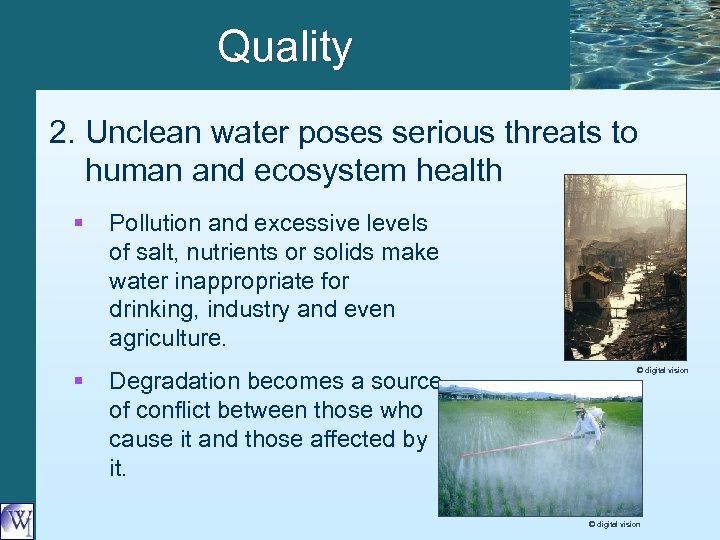 Quality 2. Unclean water poses serious threats to human and ecosystem health § § Pollution and excessive levels of salt, nutrients or solids make water inappropriate for drinking, industry and even agriculture. Degradation becomes a source of conflict between those who cause it and those affected by it. © digital vision
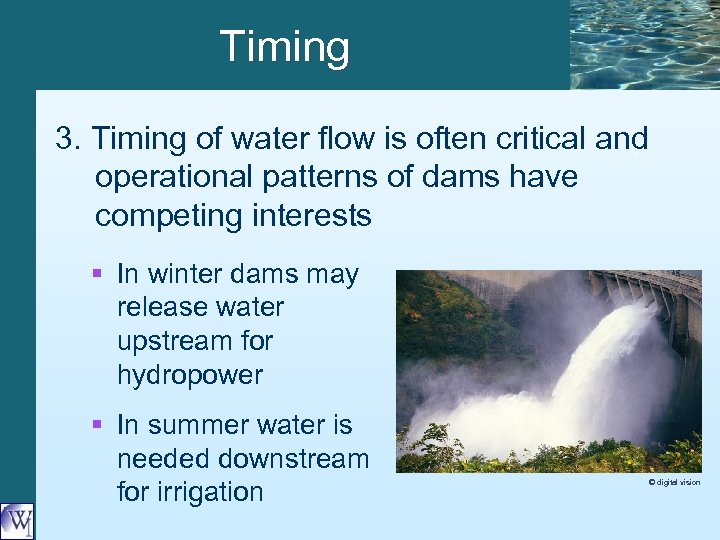 Timing 3. Timing of water flow is often critical and operational patterns of dams have competing interests § In winter dams may release water upstream for hydropower § In summer water is needed downstream for irrigation © digital vision
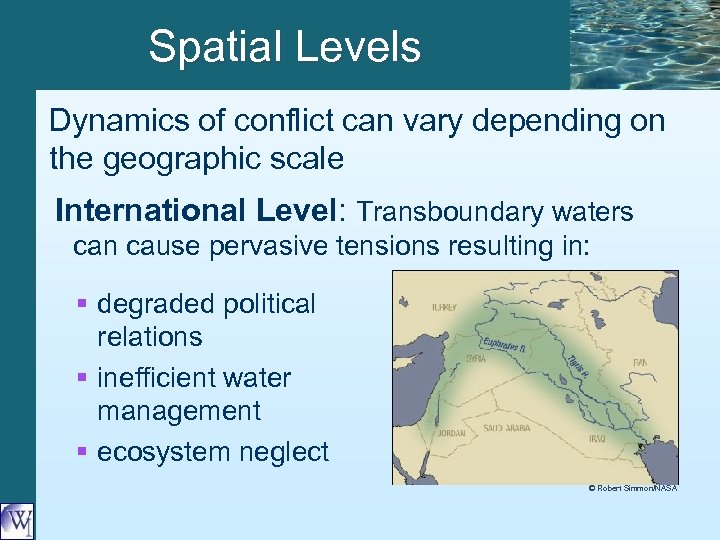 Spatial Levels Dynamics of conflict can vary depending on the geographic scale International Level: Transboundary waters can cause pervasive tensions resulting in: § degraded political relations § inefficient water management § ecosystem neglect © Robert Simmon/NASA
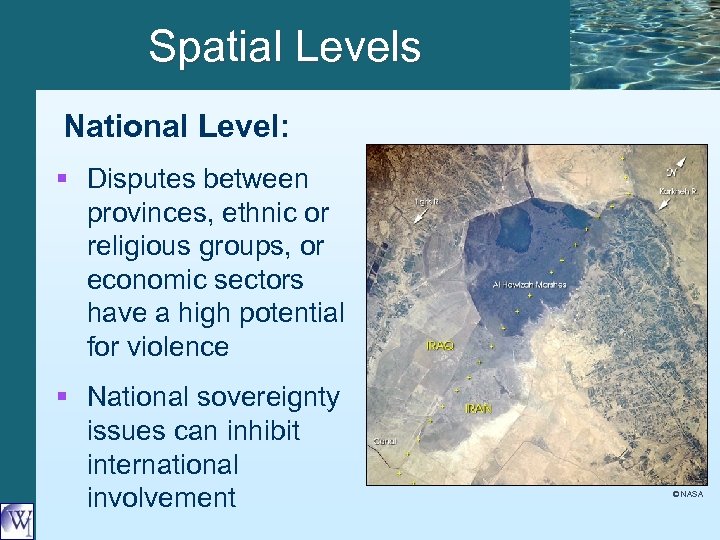 Spatial Levels National Level: § Disputes between provinces, ethnic or religious groups, or economic sectors have a high potential for violence § National sovereignty issues can inhibit international involvement © NASA
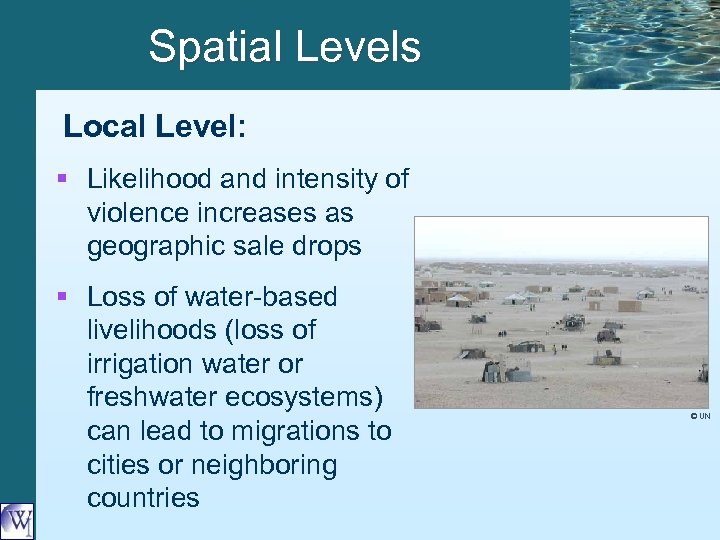 Spatial Levels Local Level: § Likelihood and intensity of violence increases as geographic sale drops § Loss of water-based livelihoods (loss of irrigation water or freshwater ecosystems) can lead to migrations to cities or neighboring countries © UN
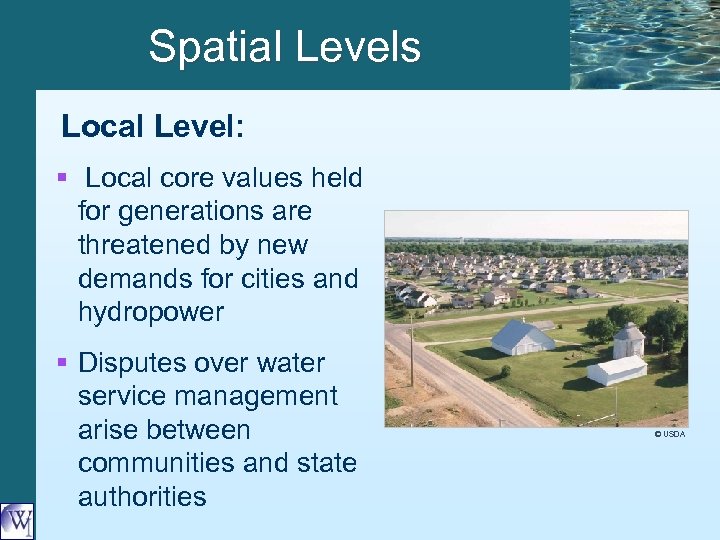 Spatial Levels Local Level: § Local core values held for generations are threatened by new demands for cities and hydropower § Disputes over water service management arise between communities and state authorities © USDA
 Interdependence Why are international basins so critical to global security? § Basins bounded by 2 or more countries cover 45. 3% of earth § Host about 40% of the world’s population § Account for 60% of global river flow © Stock. xchng
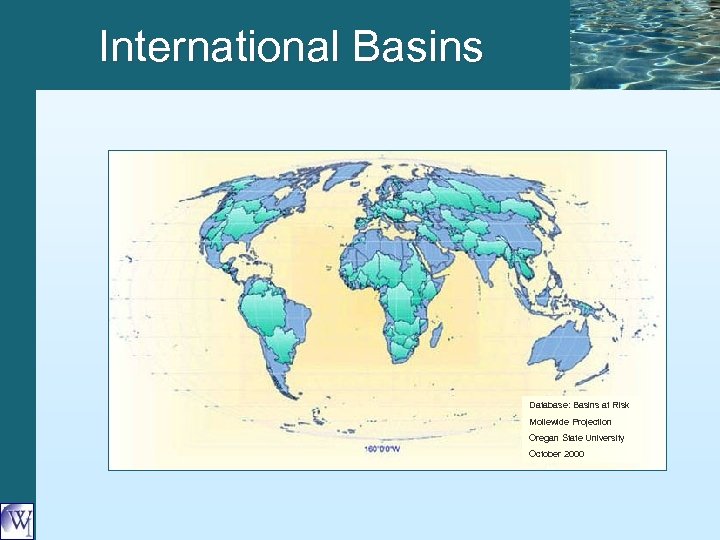 International Basins Database: Basins at Risk Mollewide Projection Oregan State University October 2000
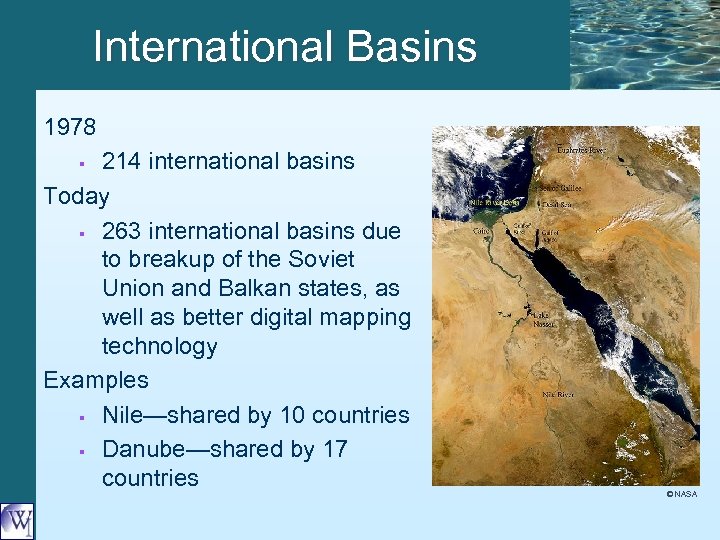 International Basins 1978 214 international basins Today § 263 international basins due to breakup of the Soviet Union and Balkan states, as well as better digital mapping technology Examples § Nile—shared by 10 countries § Danube—shared by 17 countries § © NASA
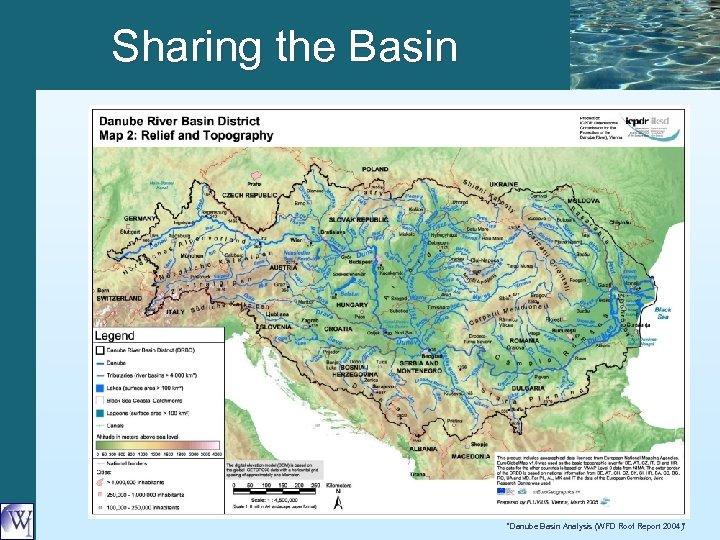 Sharing the Basin “Danube Basin Analysis (WFD Roof Report 2004)”
 Cooperation Does the rate of cooperation over international resources outweigh the incidence of acute conflicts? § Acute Conflict: 42 acute disputes in last 50 years (30 involved Israel, violence which ended in 1970) § Treaties: 400 treaties negotiated and signed § Conflict events: 507 conflict related events § Cooperation: 1, 228 cooperative agreements
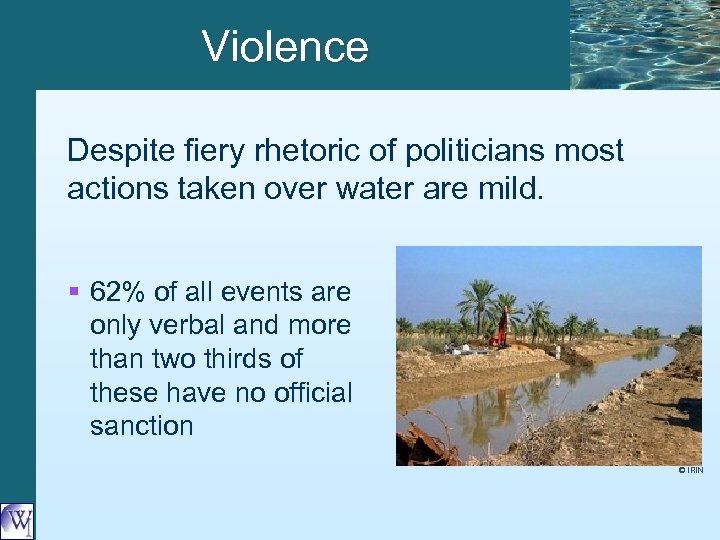 Violence Despite fiery rhetoric of politicians most actions taken over water are mild. § 62% of all events are only verbal and more than two thirds of these have no official sanction © IRIN
 Good and Bad Despite lack of violence, water acts as both an irritant and a unifier. § water can make good relations bad and bad relations worse § international waters can unify basins with relatively strong institutions
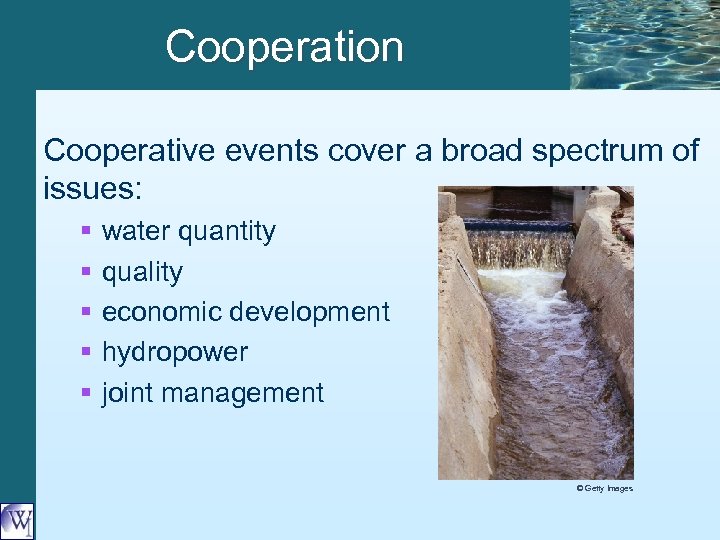 Cooperation Cooperative events cover a broad spectrum of issues: § § § water quantity quality economic development hydropower joint management © Getty Images
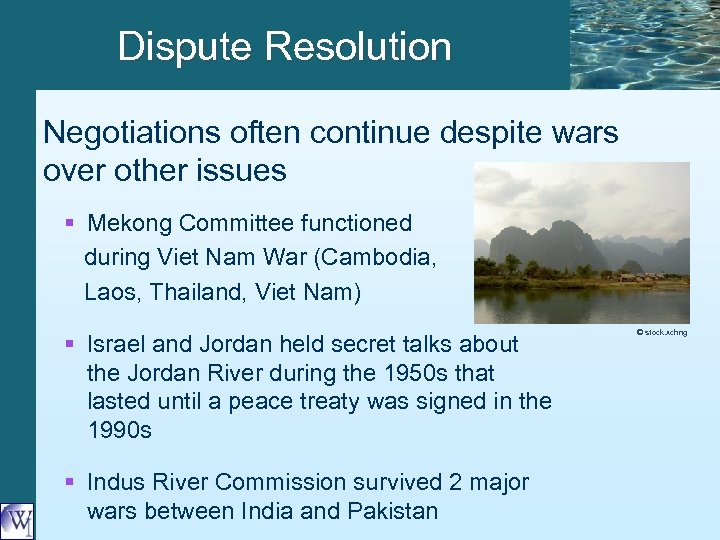 Dispute Resolution Negotiations often continue despite wars over other issues § Mekong Committee functioned during Viet Nam War (Cambodia, Laos, Thailand, Viet Nam) § Israel and Jordan held secret talks about the Jordan River during the 1950 s that lasted until a peace treaty was signed in the 1990 s § Indus River Commission survived 2 major wars between India and Pakistan © stock. xchng
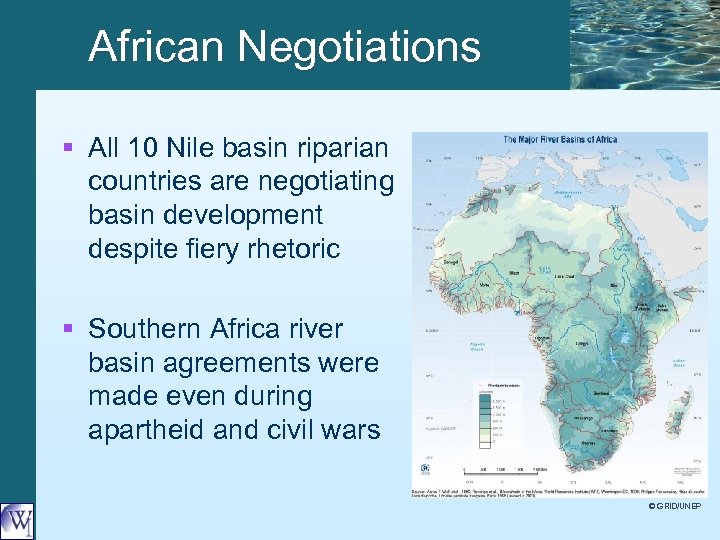 African Negotiations § All 10 Nile basin riparian countries are negotiating basin development despite fiery rhetoric § Southern Africa river basin agreements were made even during apartheid and civil wars © GRID/UNEP
 Conflict Resolution Without institutions to resolve conflict, unilateral action can heighten tensions and regional instability, requiring decades to resolve. § Indus treaty took 10 years of negotiations § the Ganges 30 years § the Jordan 40 years
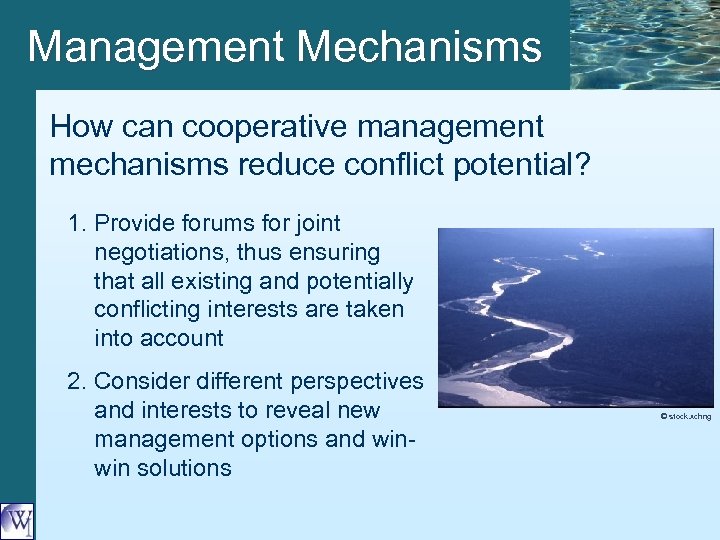 Management Mechanisms How can cooperative management mechanisms reduce conflict potential? 1. Provide forums for joint negotiations, thus ensuring that all existing and potentially conflicting interests are taken into account 2. Consider different perspectives and interests to reveal new management options and winwin solutions © stock. xchng
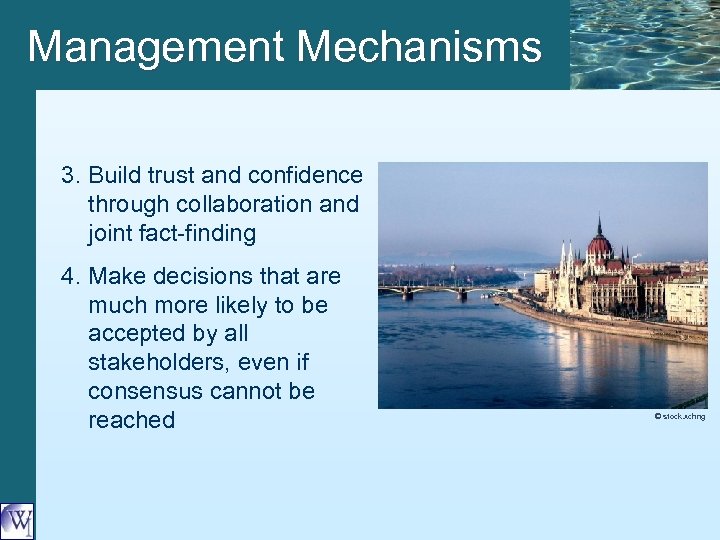 Management Mechanisms 3. Build trust and confidence through collaboration and joint fact-finding 4. Make decisions that are much more likely to be accepted by all stakeholders, even if consensus cannot be reached © stock. xchng
 Worldwatch Institute Further information and references for the material in this presentation are available in the Worldwatch Institute’s publication “State of the World 2005” This presentation is based on Chapter 5 “Managing Water Conflict and Cooperation” authored by: Aaron T. Wolf, Annika Kramer, Alexander Carius, and Geoffrey D. Dabelko www. worldwatch. org