

Washington Irving: Passport to American Romanticism Cathelene Morris



 Скачать презентацию Washington Irving: Passport to American Romanticism Cathelene Morris
26632-irving.ppt
- Количество слайдов: 31
Washington Irving: Passport to American Romanticism Cathelene Morris Oconee Christian Academy December 6, 2002
The Beginning of American Romanticism “In the four corners of the globe, who reads an American book?” Sydney Smith Edinburgh Review 1820
Just a few months before Smith’s question, an American writer named Washington Irving began publishing a series of essays and tales called The Sketch Book.
First True “American” Writer The Sketch Book made Washington Irving the first American writer to achieve international fame
Sought to Entertain Washington Irving was the first American writer who sought to entertain his readers
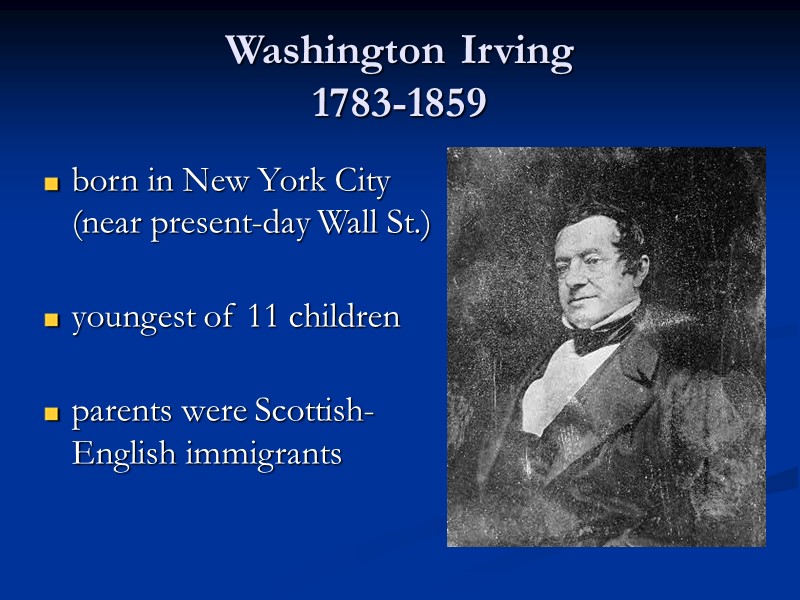
Washington Irving 1783-1859 born in New York City (near present-day Wall St.) youngest of 11 children parents were Scottish-English immigrants
Biographical Information his parents greatly admired General George Washington (hence his name) his father became a wealthy merchant he trained as a lawyer but practiced only briefly showed literary promise early in his life
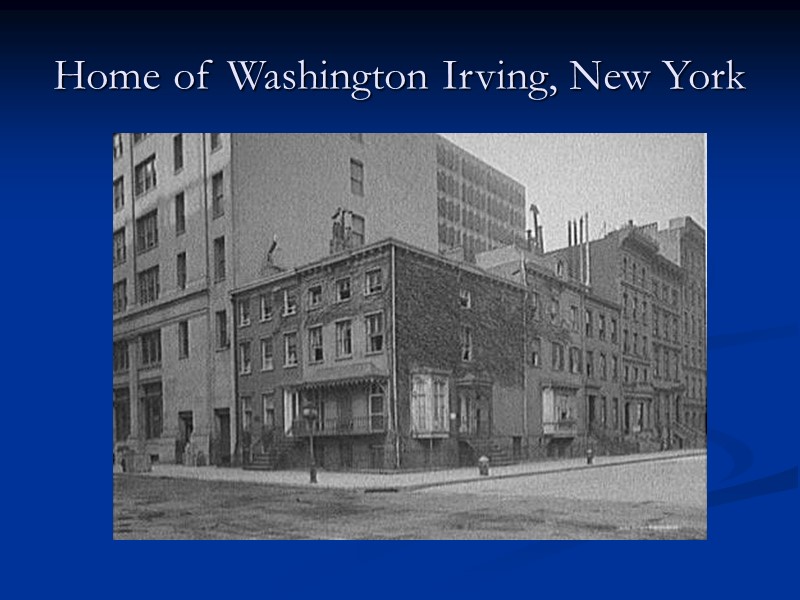
Home of Washington Irving, New York
Writing Career Begins 1802-3 published a series of newspaper articles 1807-8 published the Salmagundi papers 1809 published 1st major work – A History of New York it was supposedly written by Deidrich Knickerbocker, an old, eccentric historian
this work marked Irving’s future course it was designed solely for entertainment it taught no serious moral lessons his fiancée died in 1809 accounts for melancholic cast over rest of his life and work
Career Shifts to Europe in 1815 sailed for England to take charge of family business in Liverpool when it bankrupted, he concentrated on literary career traveled throughout England, France, Spain, Germany, and Switzerland wrote history of Christopher Columbus
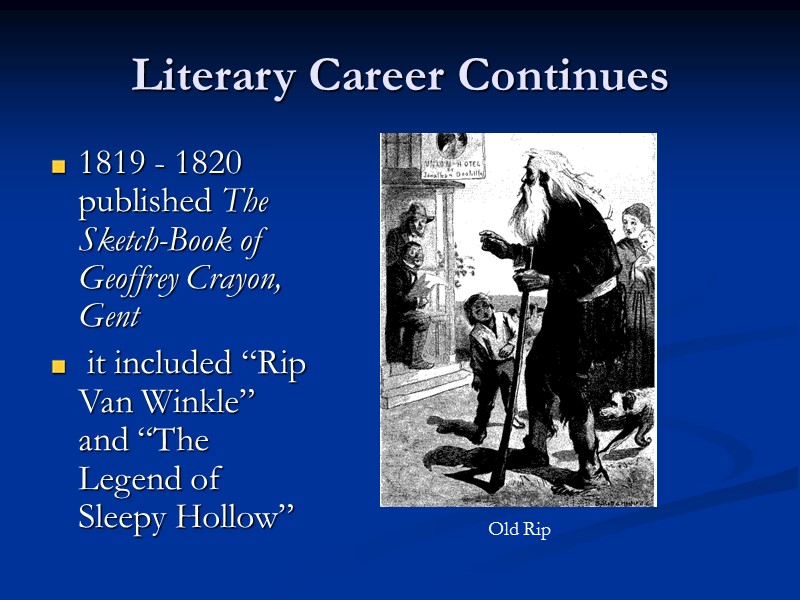
Literary Career Continues 1819 - 1820 published The Sketch-Book of Geoffrey Crayon, Gent it included “Rip Van Winkle” and “The Legend of Sleepy Hollow” Old Rip
Irving’s Literary Pseudonyms Dietrich Knickerbocker Jonathan Oldstyle Geoffrey Crayon
Irving Widely Recognized By the late 1820s, Irving had gained a reputation throughout Europe and America as a great writer and thinker
Returns to America in 1832 returned from Europe to New York established his home Sunnyside in Tarrytown never married or had children for next 25 years he shared Sunnyside with his brother Ebenezer and Ebenezer's 5 daughters
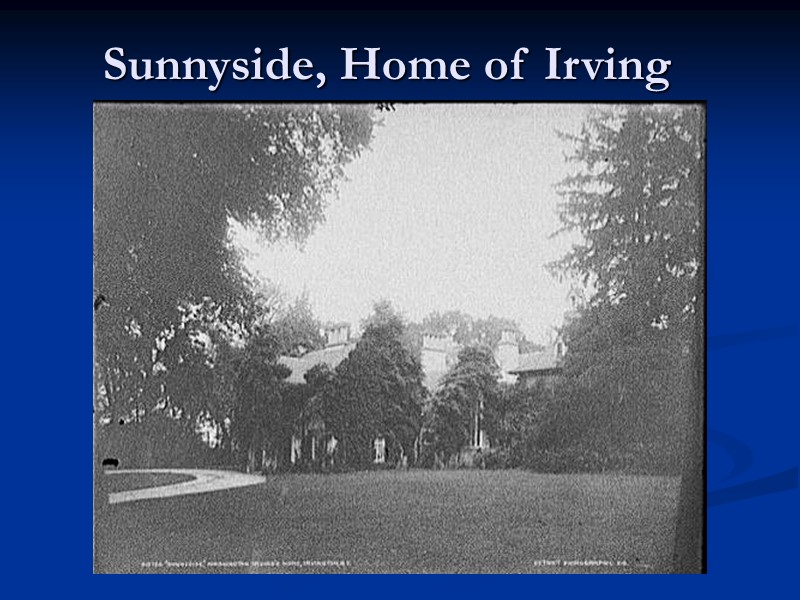
Sunnyside, Home of Irving
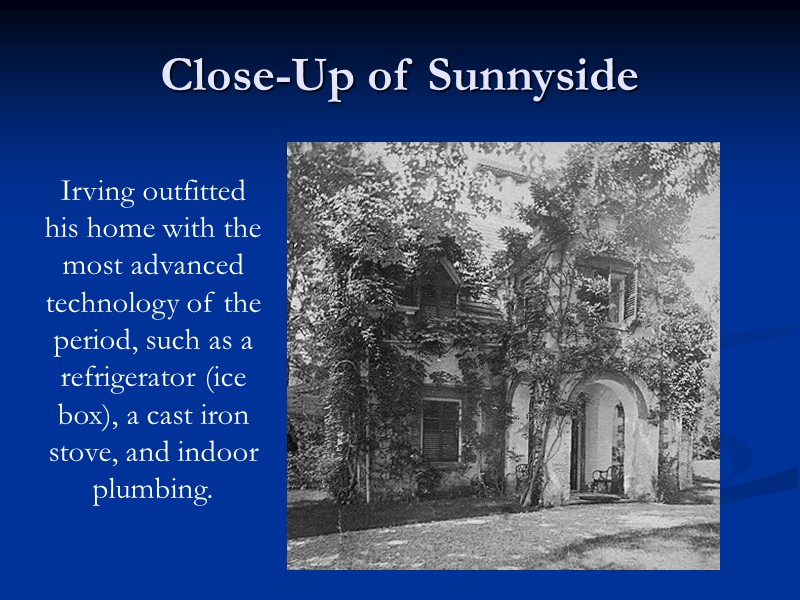
Facts About Sunnyside located on Hudson River in Tarrytown, N.Y. purchased by Irving in 1835 for $1,800 originally a two-room Dutch farm house over 15 years, artist friend George Harvey helped Irving redesign & add to the original house
Close-Up of Sunnyside Irving outfitted his home with the most advanced technology of the period, such as a refrigerator (ice box), a cast iron stove, and indoor plumbing.
More Facts About Sunnyside Sunnyside was visited by many artists, politicians, writers, and other influential people Irving's home was publicized throughout the world in lithographs, magazines, and tourists maps images of Sunnyside could even be found on cigar boxes, sheet music, and ceramic pitchers.
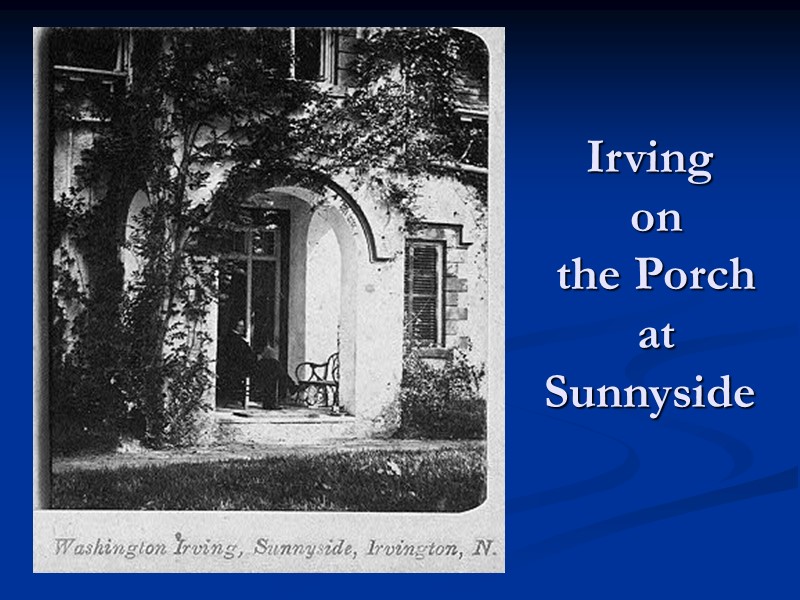
Irving on the Porch at Sunnyside
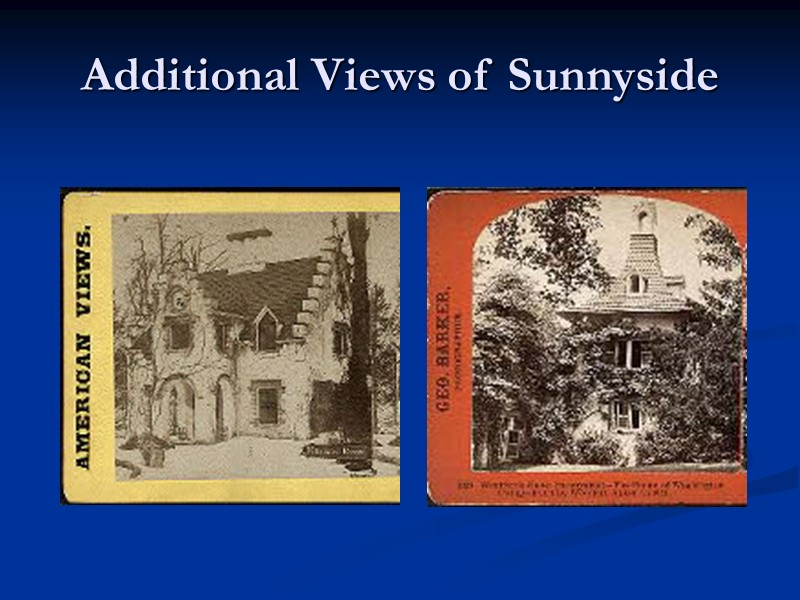
Additional Views of Sunnyside
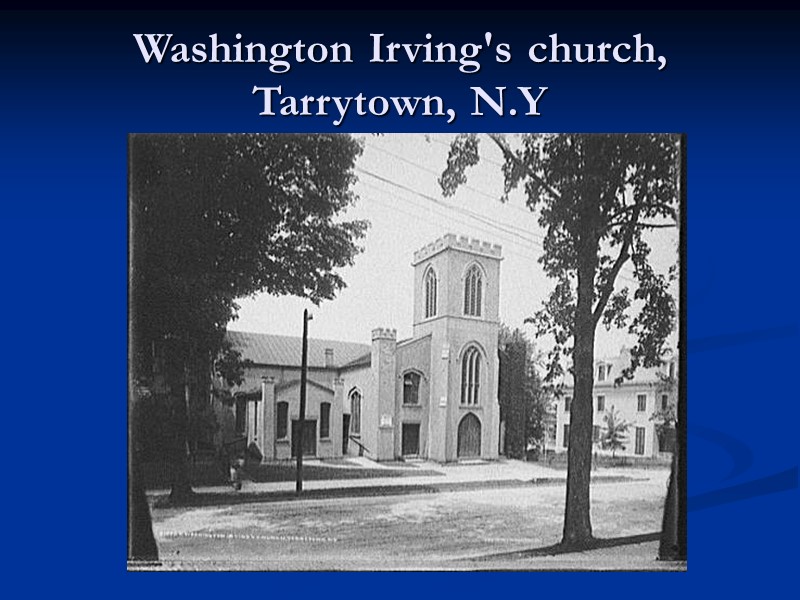
Washington Irving's church, Tarrytown, N.Y
First Genuine American Stories “Rip Van Winkle” “The Legend of Sleepy Hollow” contained distinctive American settings and characters incorporated German folktales and legends
“Rip Van Winkle” Irving's best-known story based on a German folktale set in the Dutch culture of Pre-Revolutionary War in New York State
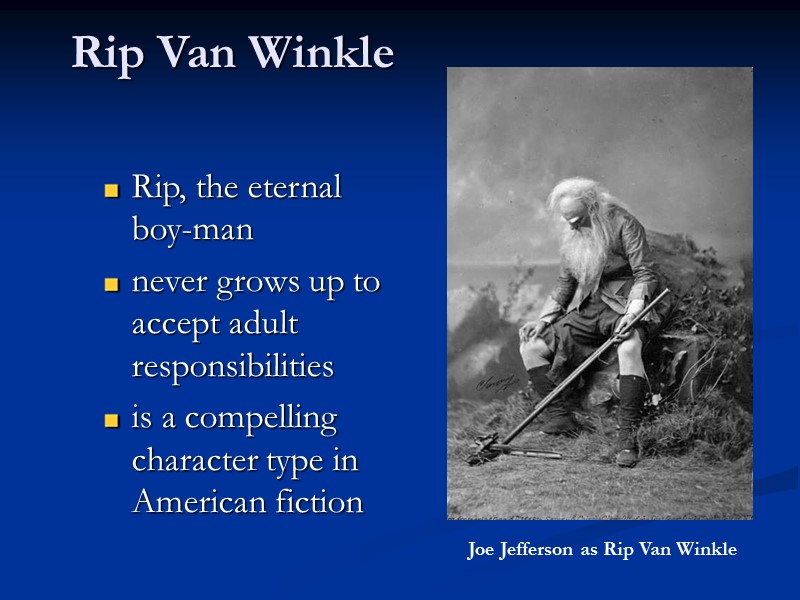
Rip Van Winkle Rip, the eternal boy-man never grows up to accept adult responsibilities is a compelling character type in American fiction Joe Jefferson as Rip Van Winkle
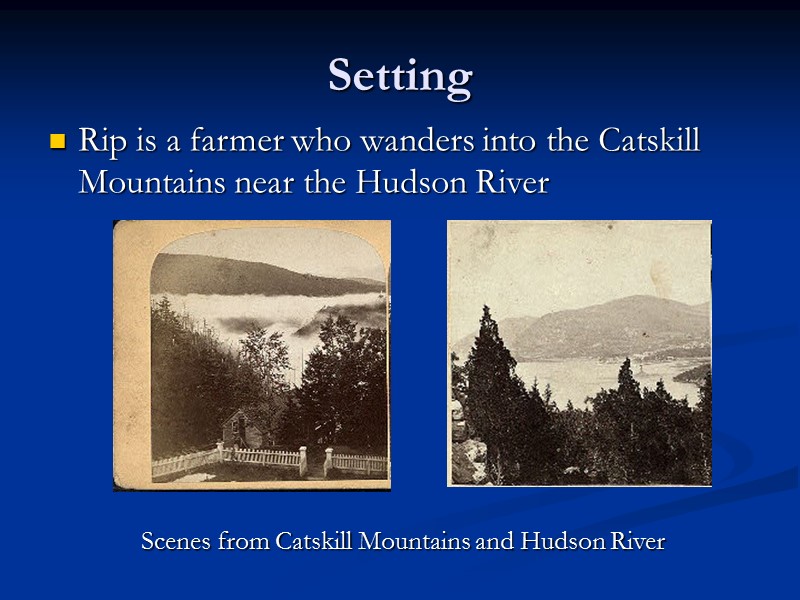
Setting Rip is a farmer who wanders into the Catskill Mountains near the Hudson River Scenes from Catskill Mountains and Hudson River
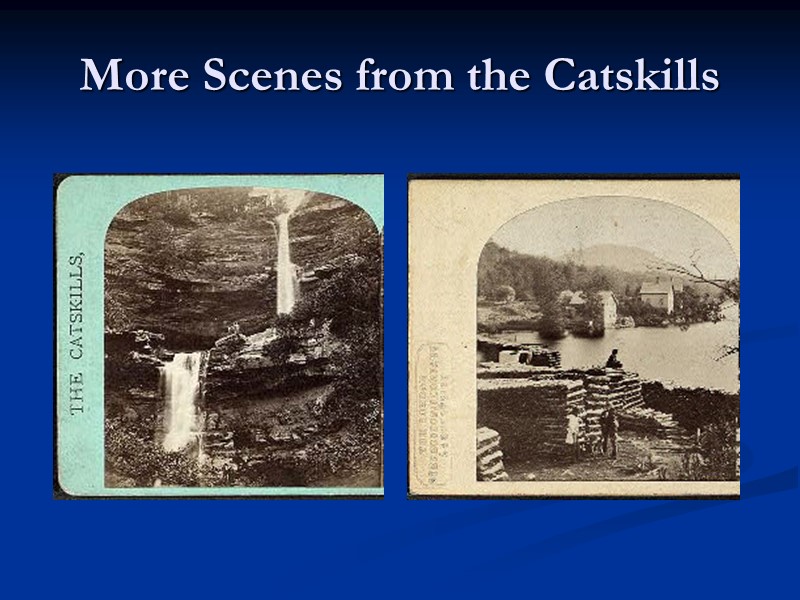
More Scenes from the Catskills
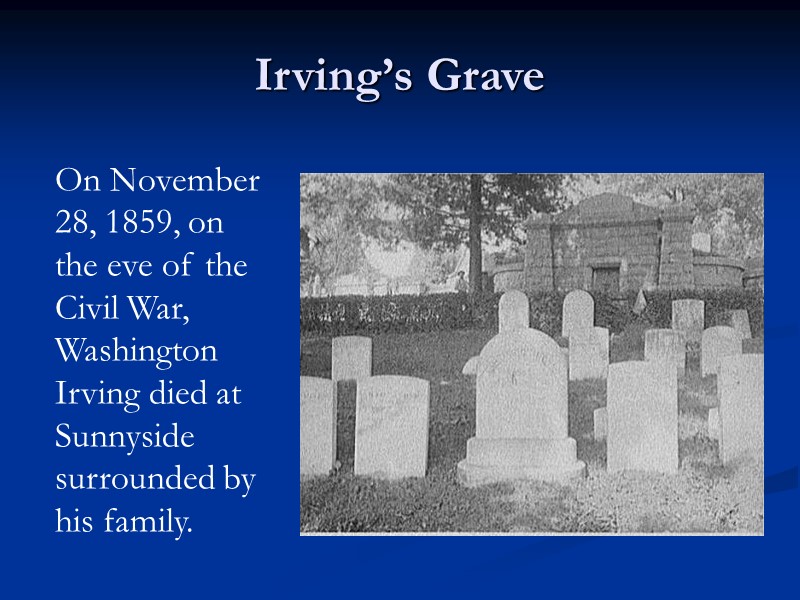
Irving’s Grave On November 28, 1859, on the eve of the Civil War, Washington Irving died at Sunnyside surrounded by his family.
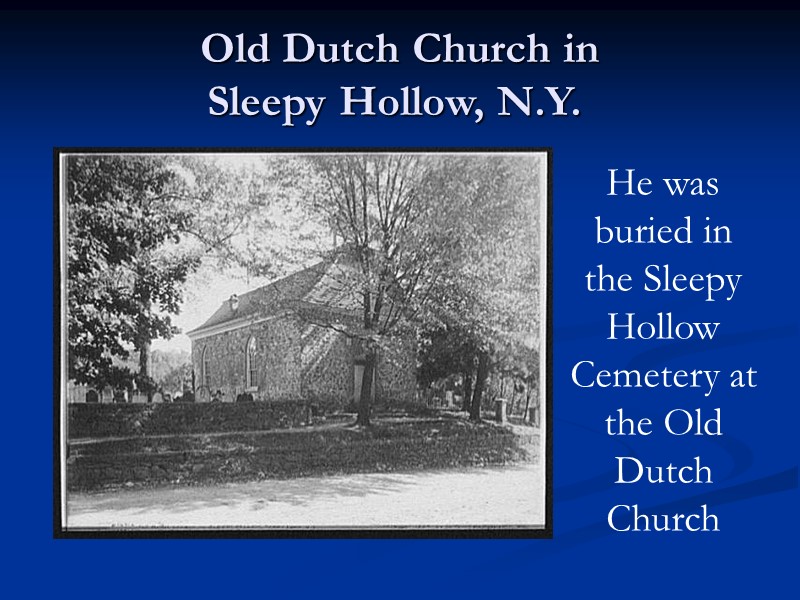
Old Dutch Church in Sleepy Hollow, N.Y. He was buried in the Sleepy Hollow Cemetery at the Old Dutch Church
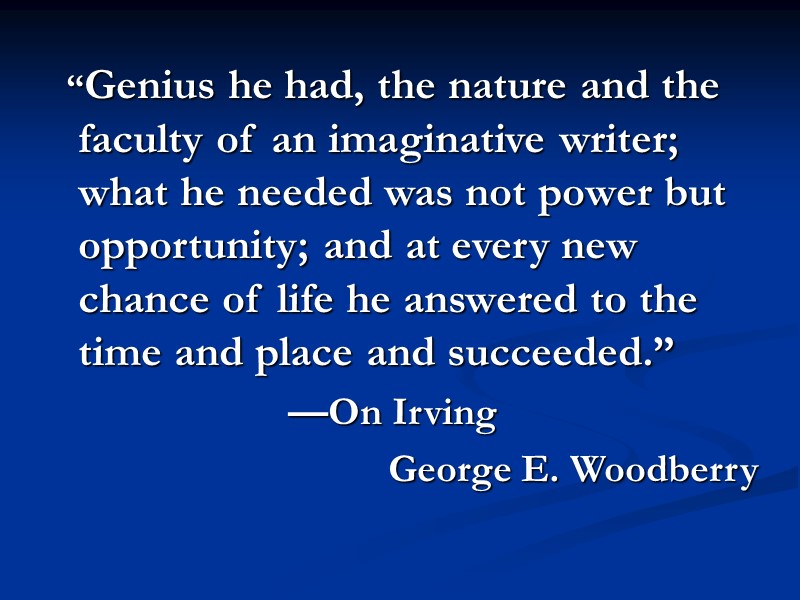
“Genius he had, the nature and the faculty of an imaginative writer; what he needed was not power but opportunity; and at every new chance of life he answered to the time and place and succeeded.” —On Irving George E. Woodberry
Works Cited All photos in this PowerPoint presentation came from the American Memory Collection of the Library of Congress Back to Beginning Home