


 Скачать презентацию Warwick Effect Polymers Ltd Innovation in Polymers Elementis
830c6519fce5db8efeeeeb712c78036f.ppt
- Количество слайдов: 48
 Warwick Effect Polymers Ltd Innovation in Polymers Elementis Nov. 18 th, 2004
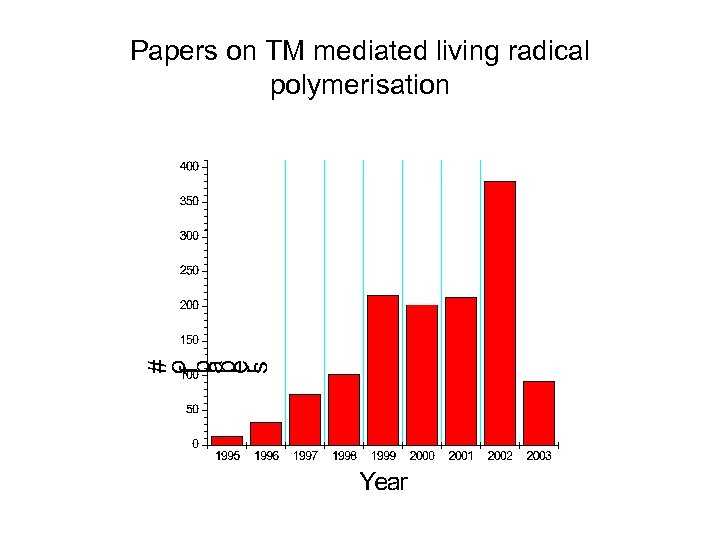 Papers on TM mediated living radical polymerisation
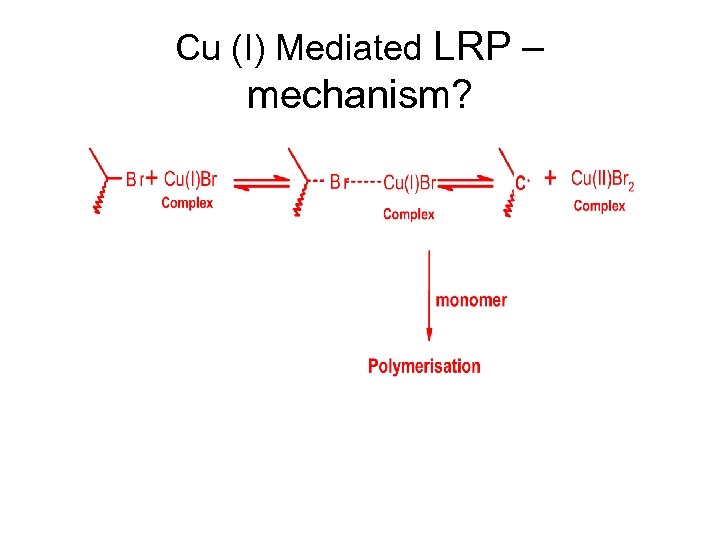 Cu (I) Mediated LRP – mechanism?
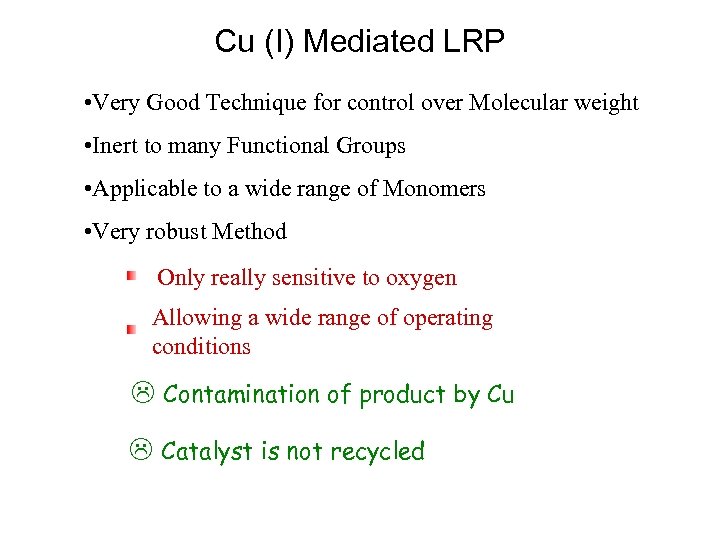 Cu (I) Mediated LRP • Very Good Technique for control over Molecular weight • Inert to many Functional Groups • Applicable to a wide range of Monomers • Very robust Method Only really sensitive to oxygen Allowing a wide range of operating conditions L Contamination of product by Cu L Catalyst is not recycled
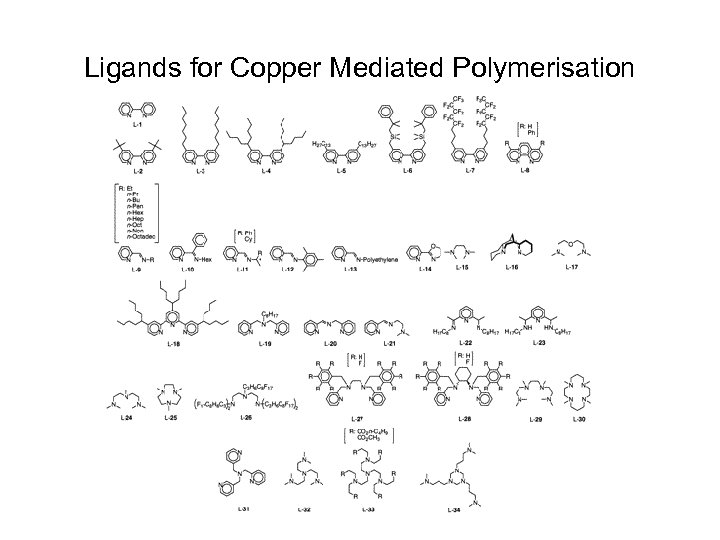 Ligands for Copper Mediated Polymerisation
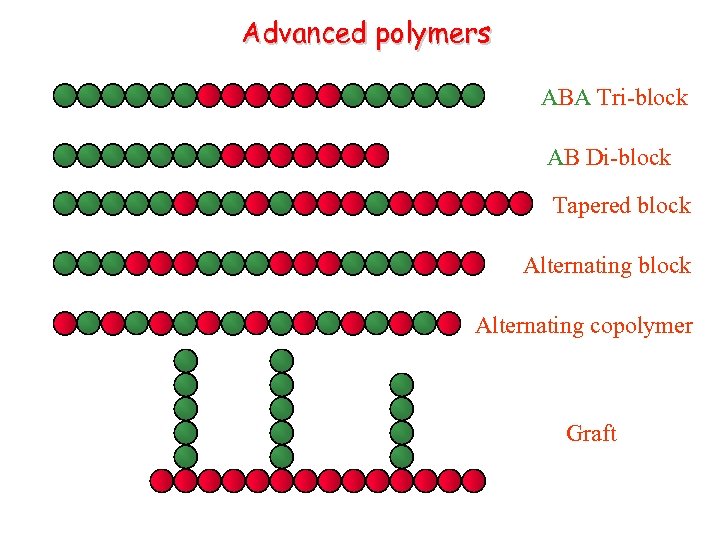 Advanced polymers ABA Tri-block AB Di-block Tapered block Alternating copolymer Graft
 Controlled Free Radical Polymerization and Warwick Effect Polymers • Fast-growing area of new technology • WEP has worldwide patents protecting platform/generic technology (US and Europe) • Several blue-chip customers • Significant expansion opportunities • Diverse market potential
 Management • Chairman Michael Penington • CEO Fergal O’Brien (May 2004) • CTO David Haddleton • B Dev (US) Thomas Neenan • Director Phil Stern
 Science Advisory Board • Craig Hawker, IBM, Almaden, (UCSB) • Mitsuo Sawamoto, Kyoto University • Tom Davis, University of New South Wales
 Strategy • Exploit existing IP for the development and supply of new polymers to meet specific customer needs. • Provide polymer expertise via short term contracts to develop customer base and provide revenue. • Develop new IP in polymers for healthcare.
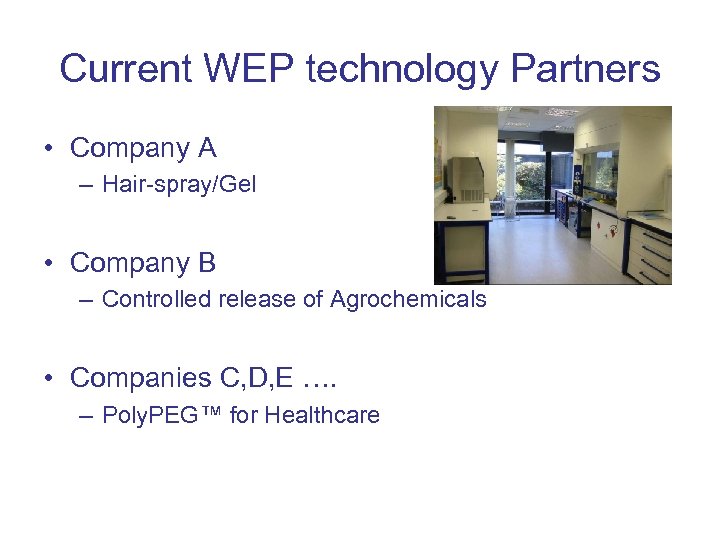 Current WEP technology Partners • Company A – Hair-spray/Gel • Company B – Controlled release of Agrochemicals • Companies C, D, E …. – Poly. PEG™ for Healthcare
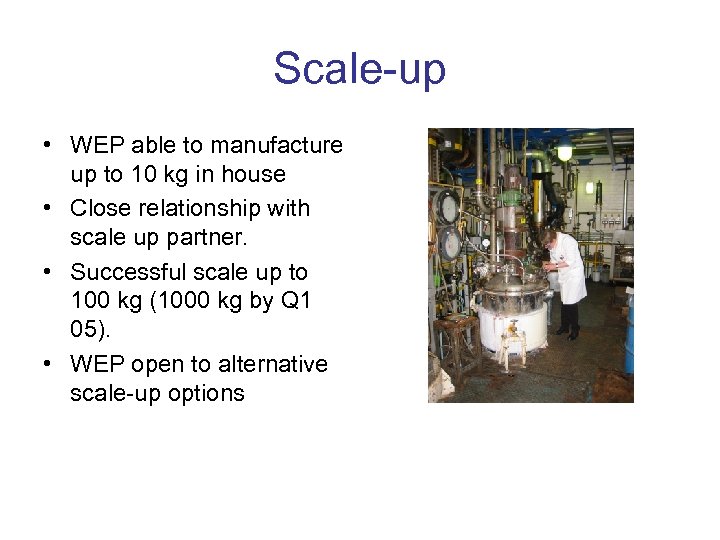 Scale-up • WEP able to manufacture up to 10 kg in house • Close relationship with scale up partner. • Successful scale up to 100 kg (1000 kg by Q 1 05). • WEP open to alternative scale-up options
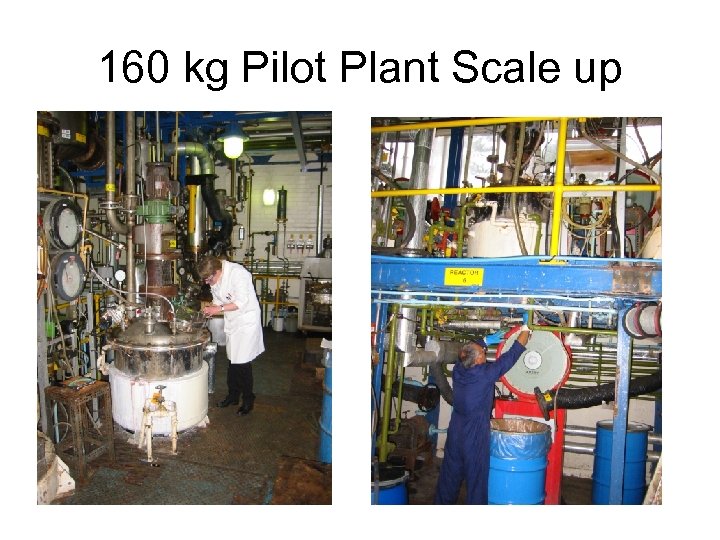 160 kg Pilot Plant Scale up
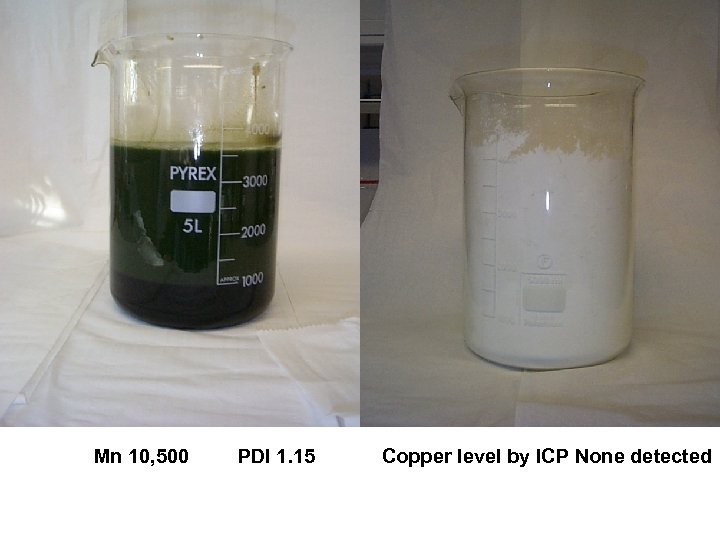 Mn 10, 500 PDI 1. 15 Copper level by ICP None detected
 Survey of Applications • • Solution Modifiers Surface and Fabric Modifiers Pigment and Dye Modifiers Biological – New PEG technology – Mucoadhesives – Polymers for diagnostics
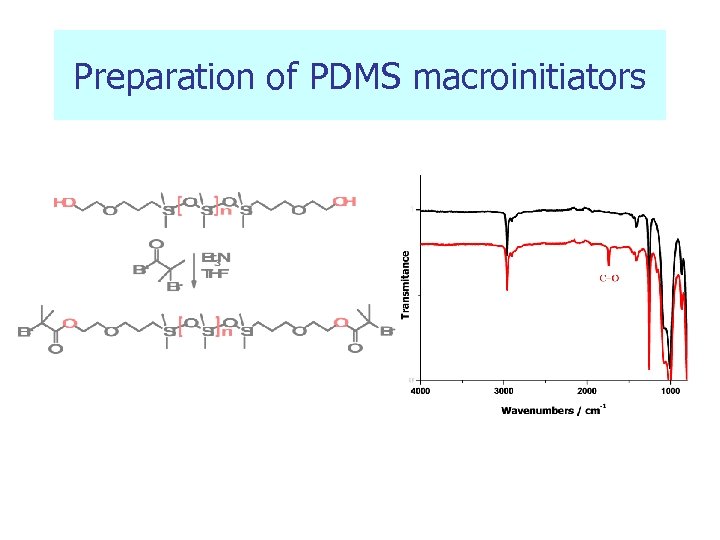 Preparation of PDMS macroinitiators
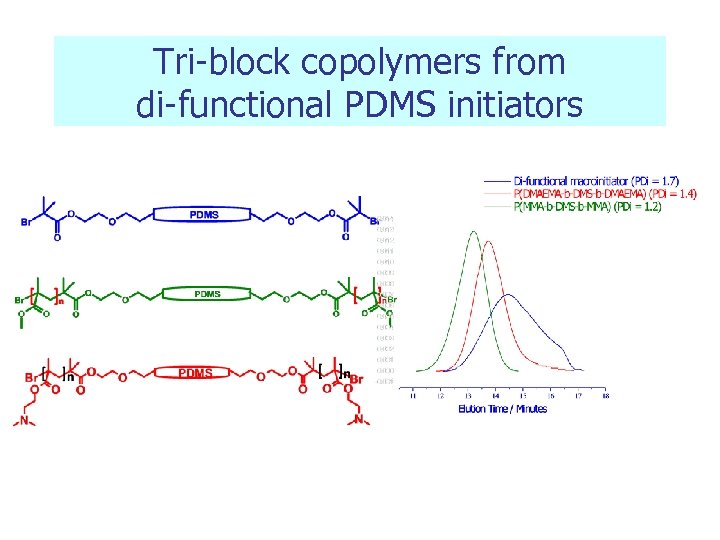 Tri-block copolymers from di-functional PDMS initiators
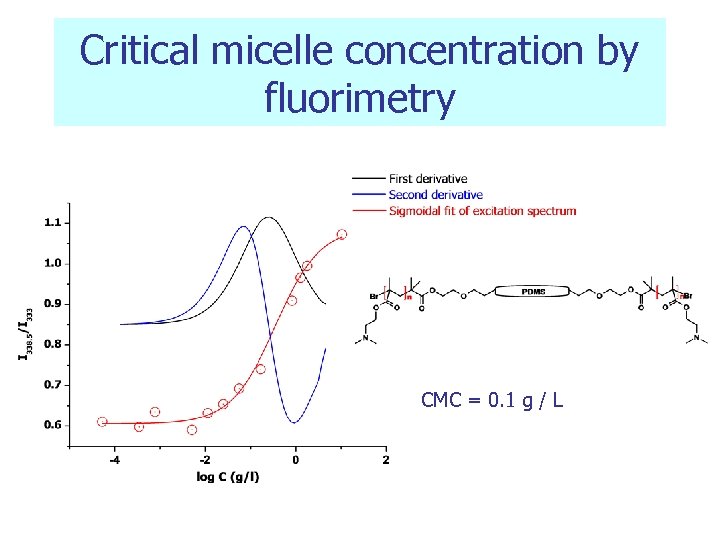 Critical micelle concentration by fluorimetry CMC = 0. 1 g / L
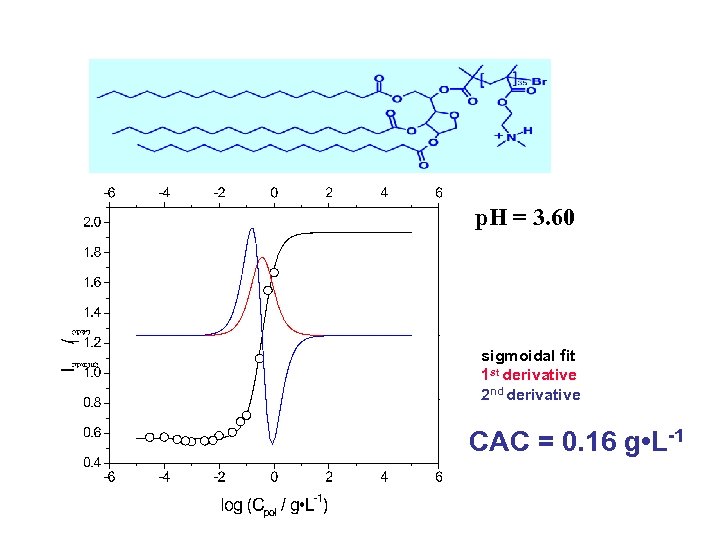 p. H = 3. 60 sigmoidal fit 1 st derivative 2 nd derivative CAC = 0. 16 g • L-1
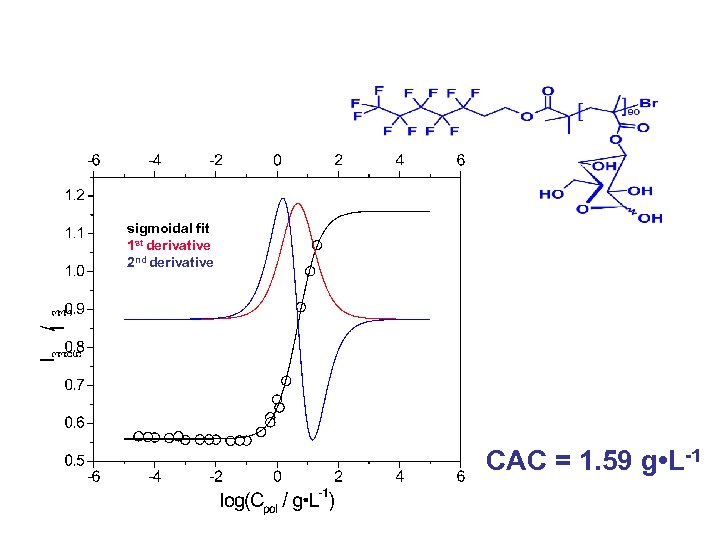 sigmoidal fit 1 st derivative 2 nd derivative CAC = 1. 59 g • L-1
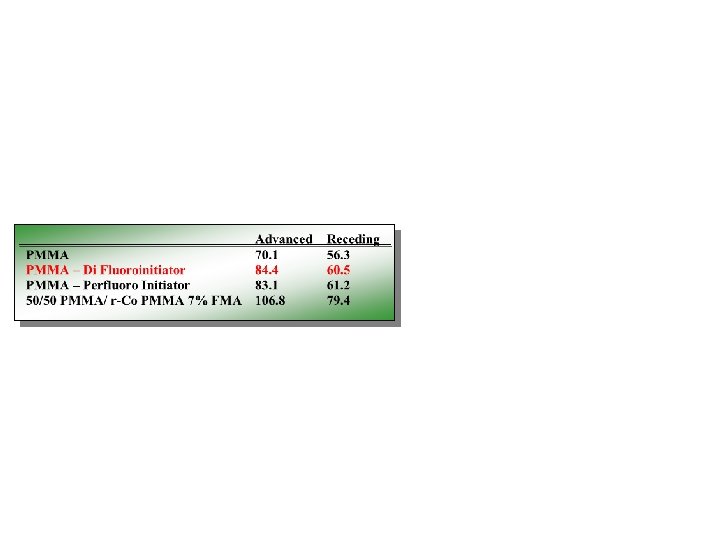
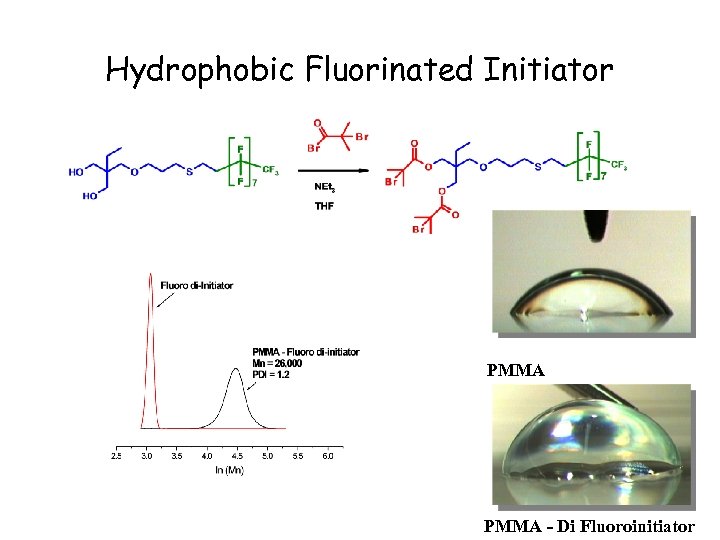 Hydrophobic Fluorinated Initiator PMMA - Di Fluoroinitiator
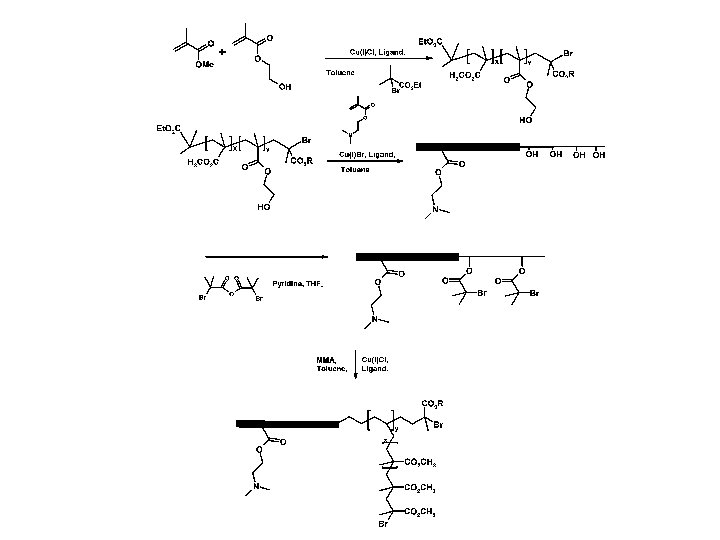
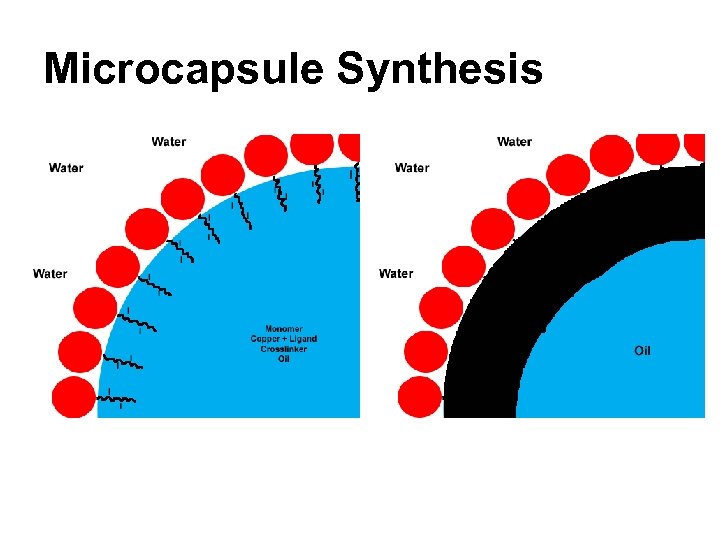 Microcapsule Synthesis
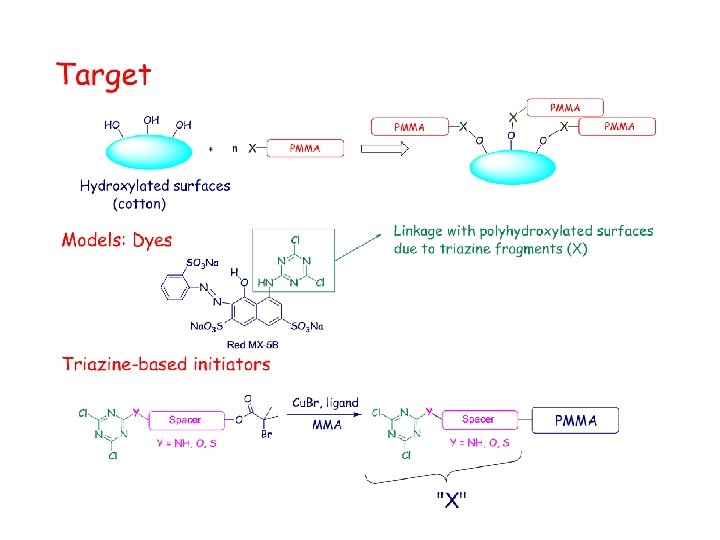
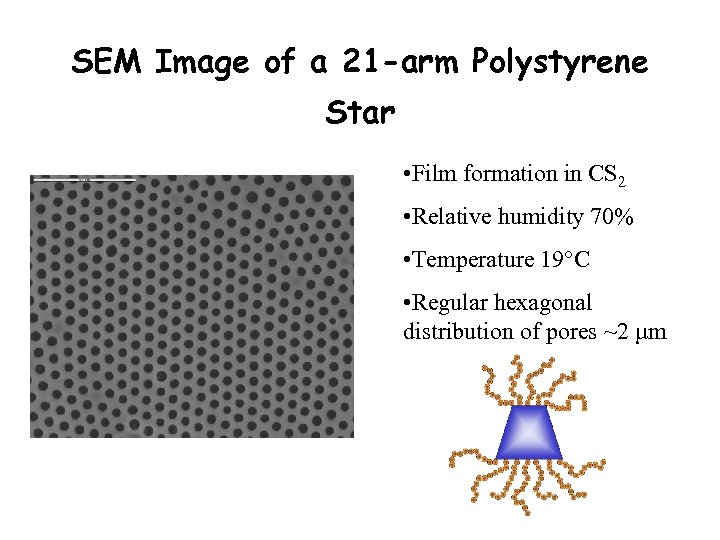 SEM Image of a 21 -arm Polystyrene Star • Film formation in CS 2 • Relative humidity 70% • Temperature 19°C • Regular hexagonal distribution of pores ~2 µm
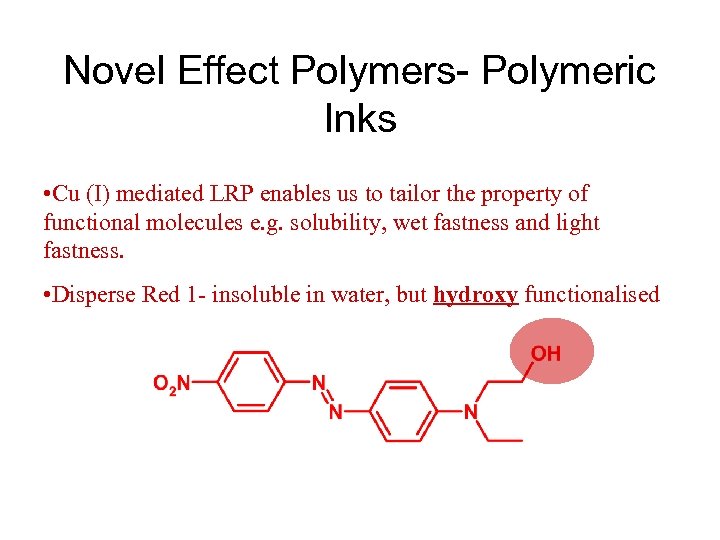 Novel Effect Polymers- Polymeric Inks • Cu (I) mediated LRP enables us to tailor the property of functional molecules e. g. solubility, wet fastness and light fastness. • Disperse Red 1 - insoluble in water, but hydroxy functionalised
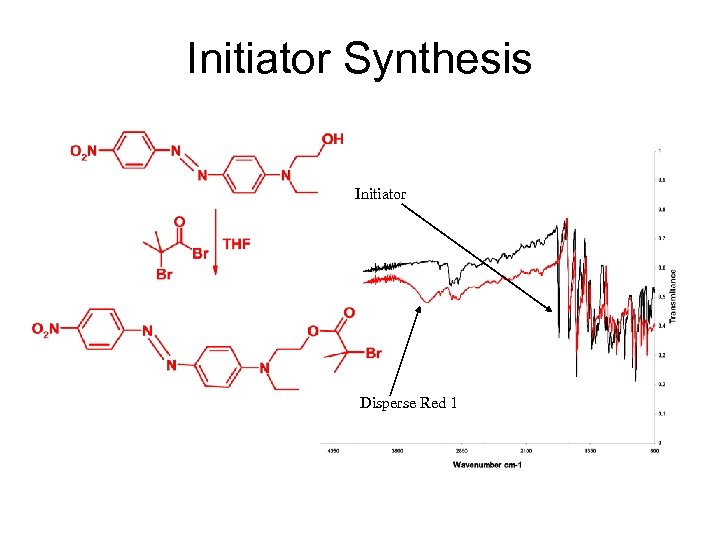 Initiator Synthesis Initiator Disperse Red 1
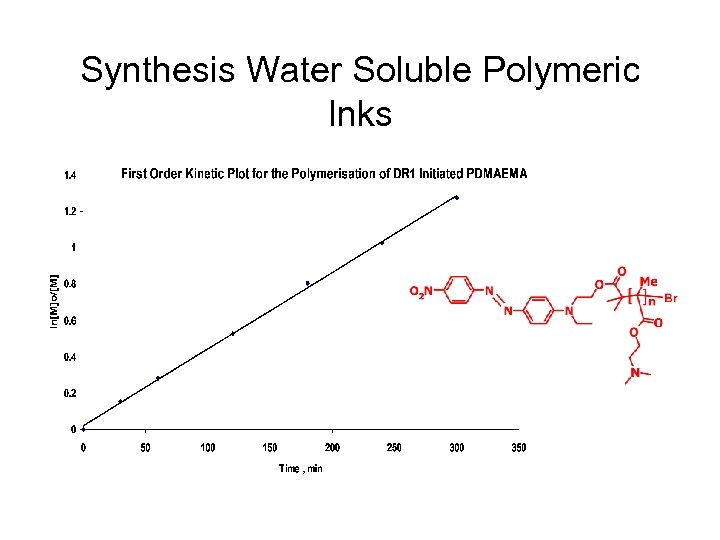 Synthesis Water Soluble Polymeric Inks
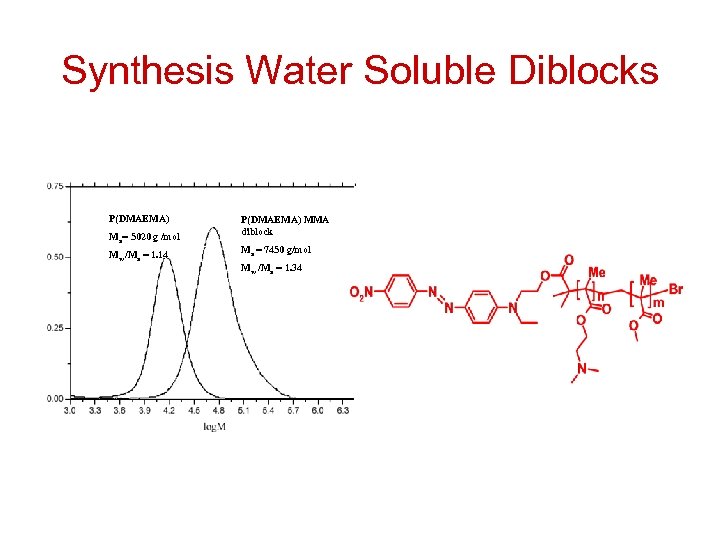 Synthesis Water Soluble Diblocks P(DMAEMA) Mn= 5020 g /mol Mw /Mn = 1. 14 P(DMAEMA) MMA diblock Mn = 7450 g/mol Mw /Mn = 1. 34
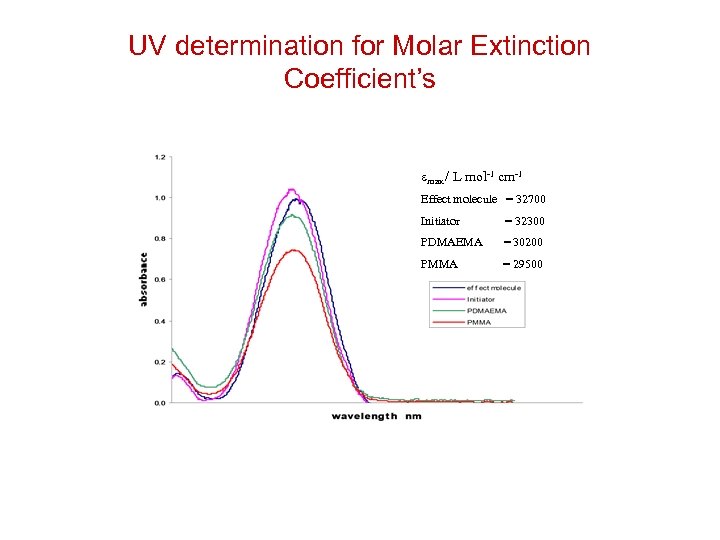 UV determination for Molar Extinction Coefficient’s emax / L mol-1 cm-1 Effect molecule = 32700 Initiator = 32300 PDMAEMA = 30200 PMMA = 29500
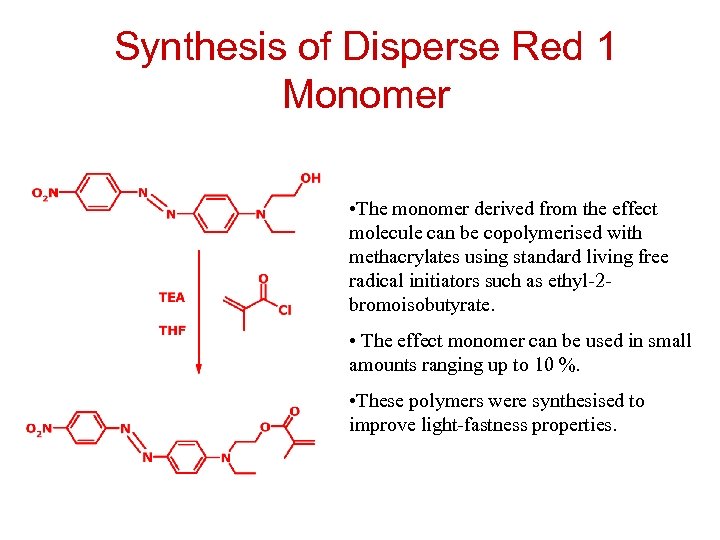 Synthesis of Disperse Red 1 Monomer • The monomer derived from the effect molecule can be copolymerised with methacrylates using standard living free radical initiators such as ethyl-2 bromoisobutyrate. • The effect monomer can be used in small amounts ranging up to 10 %. • These polymers were synthesised to improve light-fastness properties.
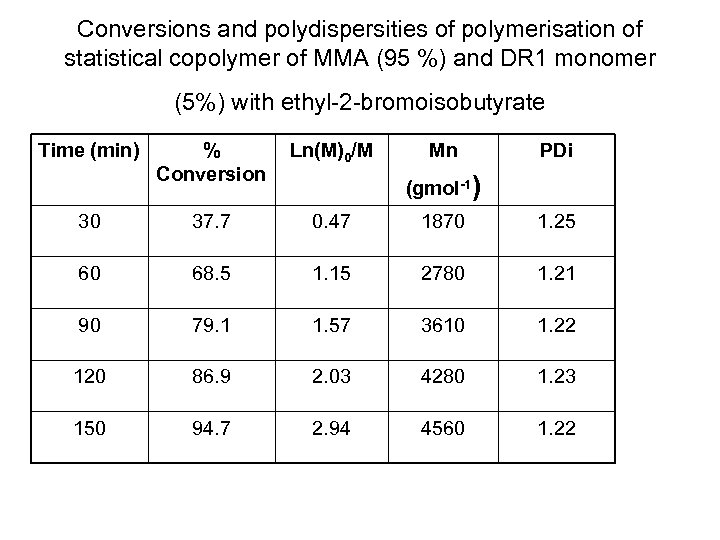 Conversions and polydispersities of polymerisation of statistical copolymer of MMA (95 %) and DR 1 monomer (5%) with ethyl-2 -bromoisobutyrate Time (min) % Conversion Ln(M)0/M Mn PDi 30 37. 7 0. 47 1870 1. 25 60 68. 5 1. 15 2780 1. 21 90 79. 1 1. 57 3610 1. 22 120 86. 9 2. 03 4280 1. 23 150 94. 7 2. 94 4560 1. 22 (gmol-1)
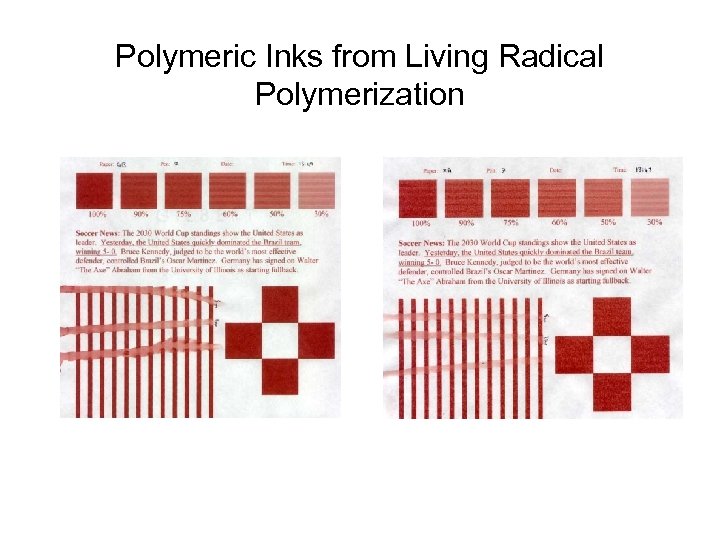 Polymeric Inks from Living Radical Polymerization Gibbet Bond Paper Xerox Acid Paper
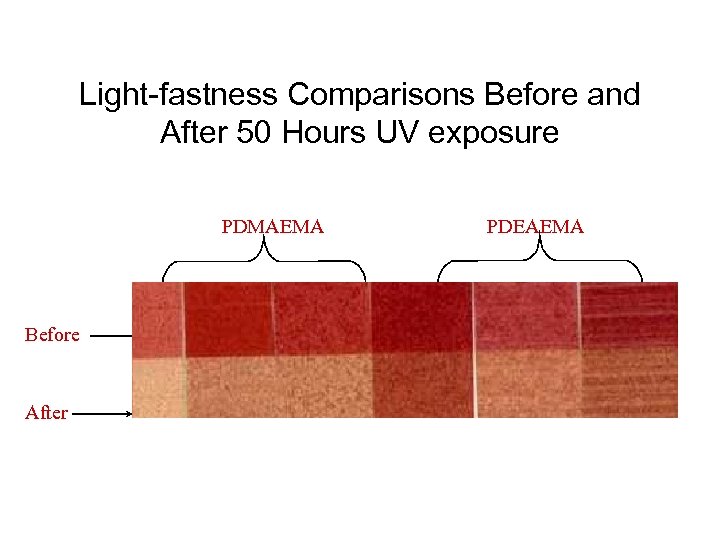 Light-fastness Comparisons Before and After 50 Hours UV exposure PDMAEMA Before After PDEAEMA
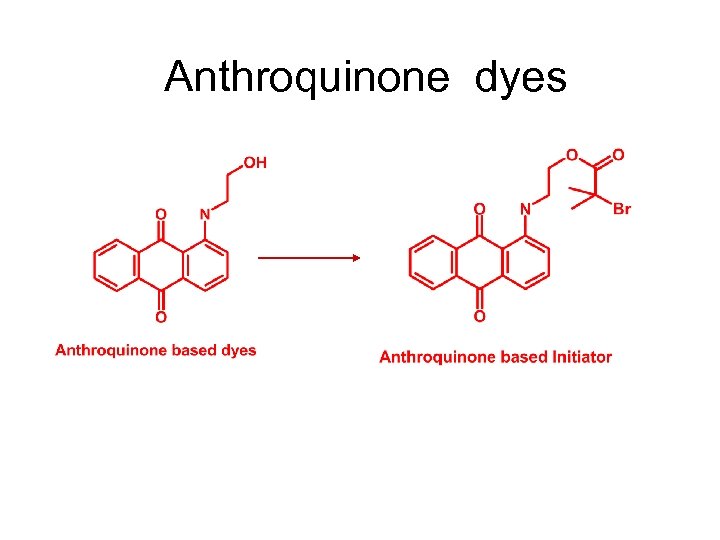 Anthroquinone dyes
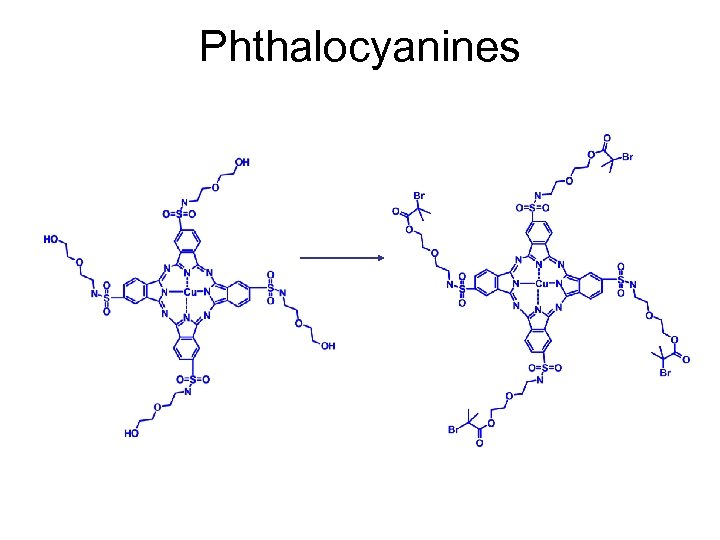 Phthalocyanines
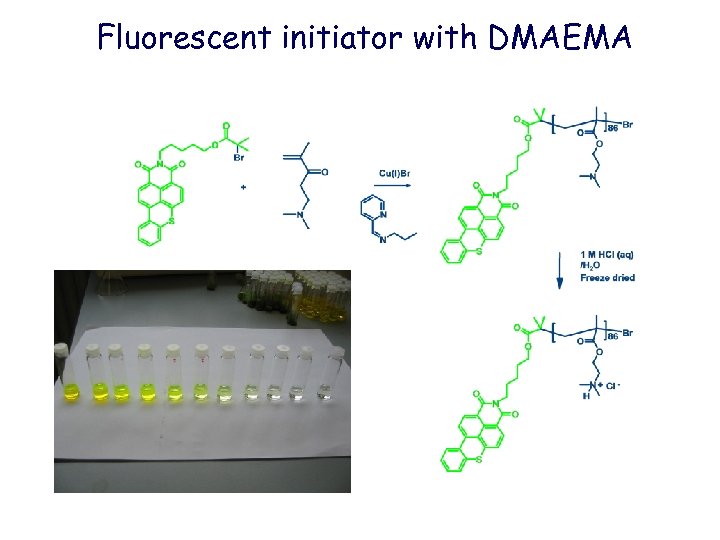 Fluorescent initiator with DMAEMA
 Protein Based Drugs • Insulin, Interferon – Diabetes, Osteoporosis, Inflam. Bowel disease • A need for Oral delivery – Longer stability to enzyme degradation – Enhanced absorption across the GI tract – Optimised hydrophilic/hydrophobic balance
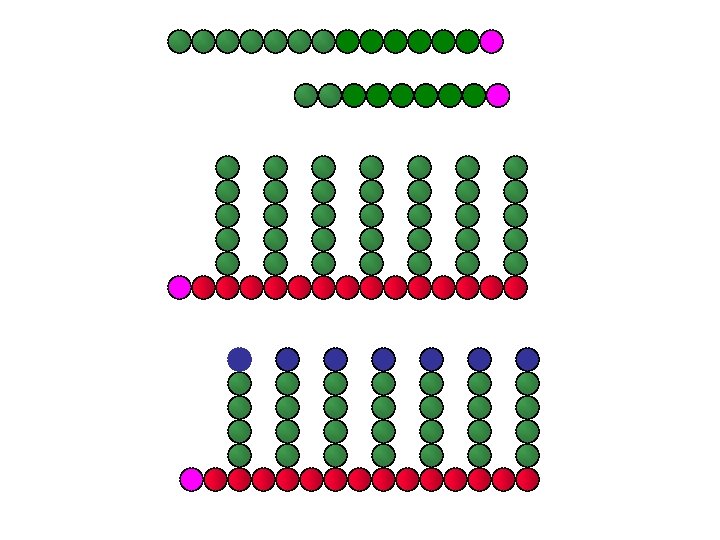
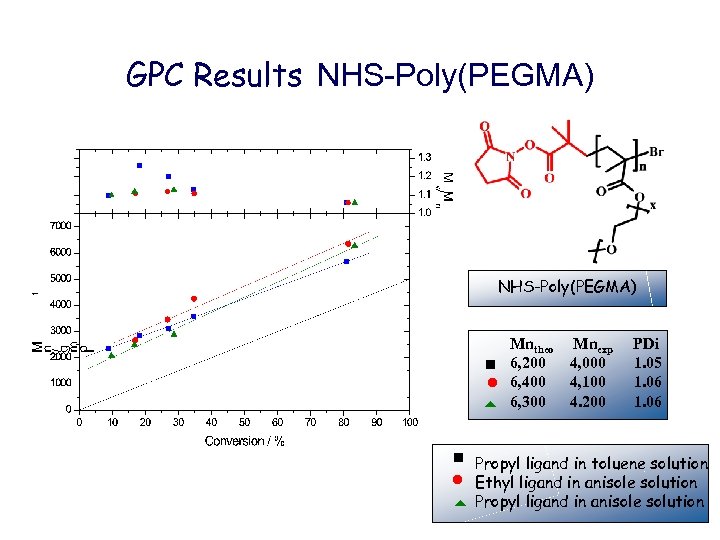 GPC Results NHS-Poly(PEGMA) Mntheo 6, 200 ● 6, 400 6, 300 t Mnexp 4, 000 4, 100 4. 200 PDi 1. 05 1. 06 Propyl ligand in toluene solution ● Ethyl ligand in anisole solution t Propyl ligand in anisole solution
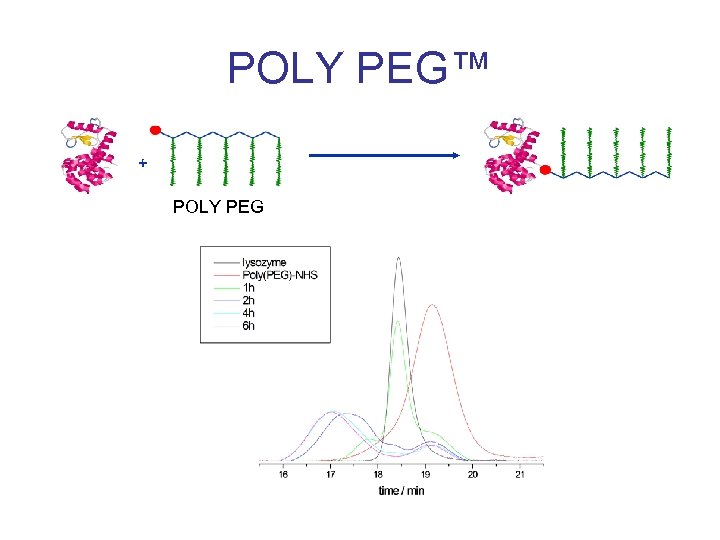 POLY PEG™ + POLY PEG
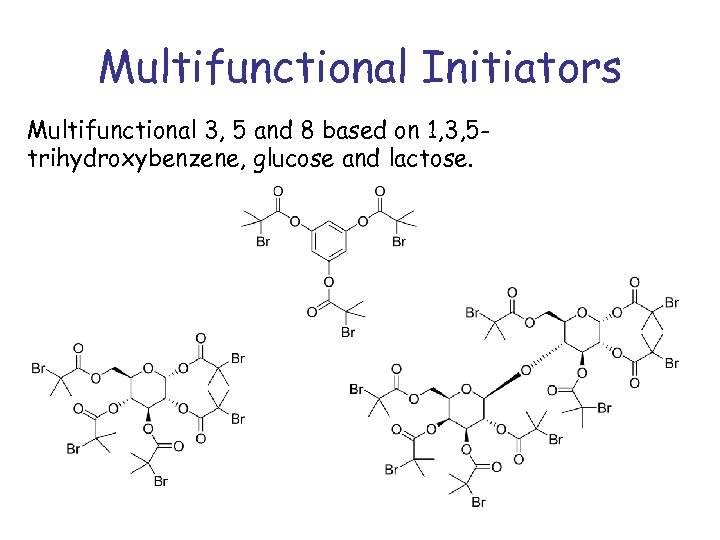 Multifunctional Initiators Multifunctional 3, 5 and 8 based on 1, 3, 5 trihydroxybenzene, glucose and lactose.
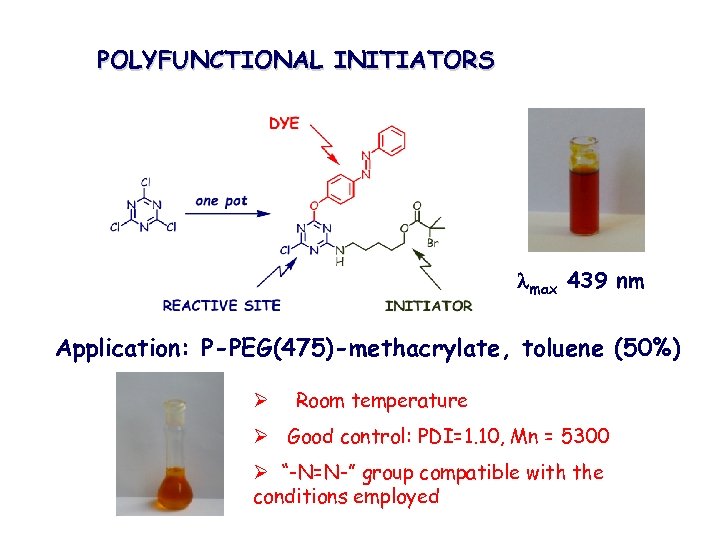 POLYFUNCTIONAL INITIATORS lmax 439 nm Application: P-PEG(475)-methacrylate, toluene (50%) Ø Room temperature Ø Good control: PDI=1. 10, Mn = 5300 Ø “-N=N-” group compatible with the conditions employed
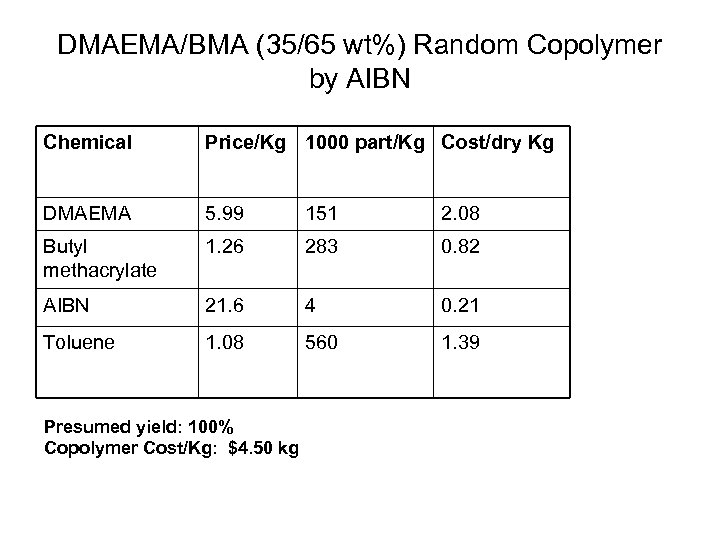 DMAEMA/BMA (35/65 wt%) Random Copolymer by AIBN Chemical Price/Kg 1000 part/Kg Cost/dry Kg DMAEMA 5. 99 151 2. 08 Butyl methacrylate 1. 26 283 0. 82 AIBN 21. 6 4 0. 21 Toluene 1. 08 560 1. 39 Presumed yield: 100% Copolymer Cost/Kg: $4. 50 kg
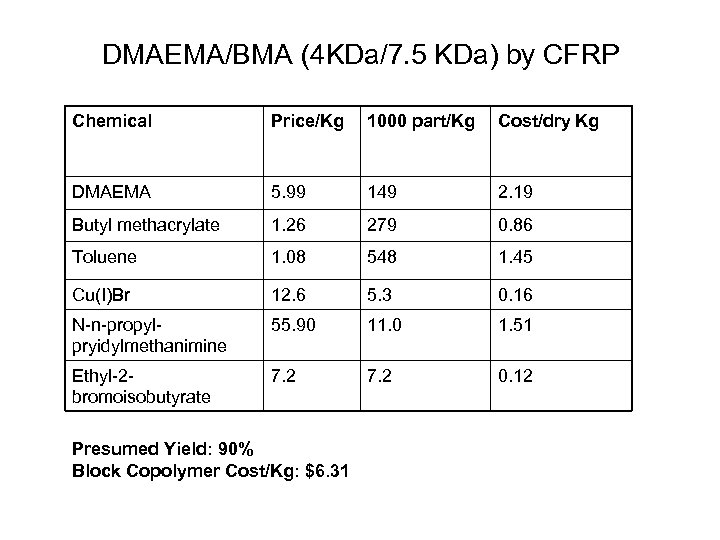 DMAEMA/BMA (4 KDa/7. 5 KDa) by CFRP Chemical Price/Kg 1000 part/Kg Cost/dry Kg DMAEMA 5. 99 149 2. 19 Butyl methacrylate 1. 26 279 0. 86 Toluene 1. 08 548 1. 45 Cu(I)Br 12. 6 5. 3 0. 16 N-n-propylpryidylmethanimine 55. 90 11. 0 1. 51 Ethyl-2 bromoisobutyrate 7. 2 0. 12 Presumed Yield: 90% Block Copolymer Cost/Kg: $6. 31
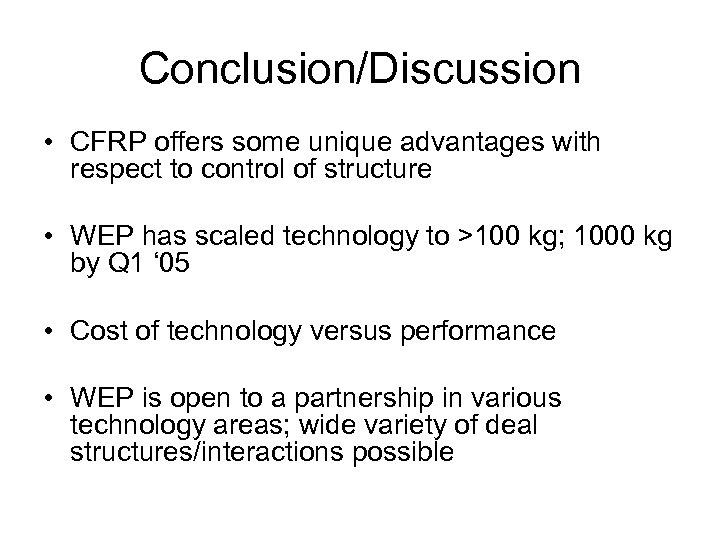 Conclusion/Discussion • CFRP offers some unique advantages with respect to control of structure • WEP has scaled technology to >100 kg; 1000 kg by Q 1 ‘ 05 • Cost of technology versus performance • WEP is open to a partnership in various technology areas; wide variety of deal structures/interactions possible