


 Скачать презентацию Warm Up 2 1 Using the text
3e67f1bb3a5f8628d67a17fc9f4ca9a6.ppt
- Количество слайдов: 39
 Warm. Up #2 ► 1. Using the text on pgs. 49, answer the 2 respective questions, concerning “Hammurabi’s Code of Laws”.
 The Ancient Middle East
 ► Mesopotamia means “the land between the rivers” in Greek § valley between the Tigris & Euphrates Rivers ► The Cradle of Civilization Fertile Crescent: fertile land between Mediterranean Sea & the Persian Gulf silt: deposited by two rivers each year when the rivers flooded; helped farming ► farmers learned to control the flooding & civilization started to flourish in Mesopotamia ►
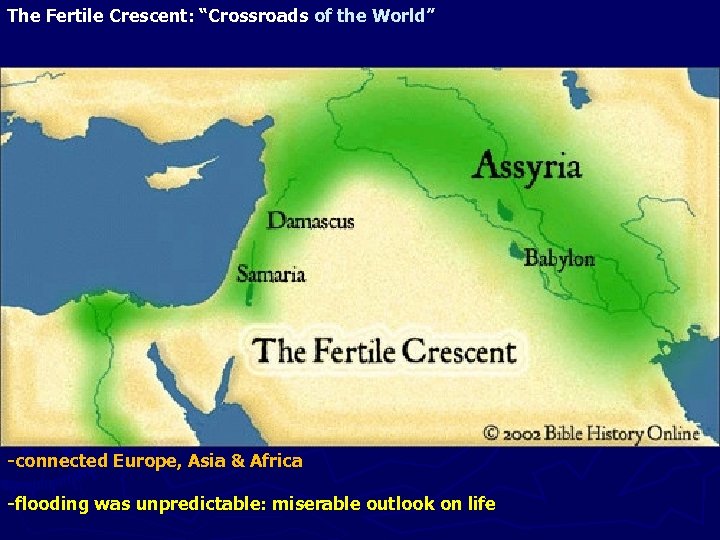 The Fertile Crescent: “Crossroads of the World” -connected Europe, Asia & Africa -flooding was unpredictable: miserable outlook on life
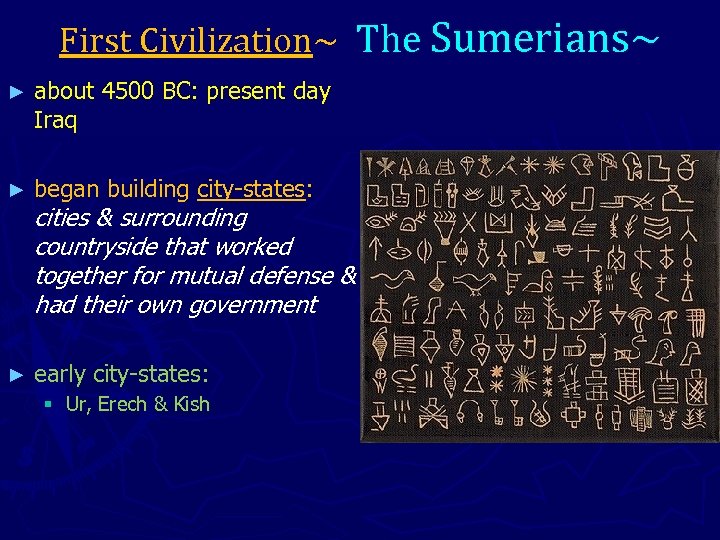 First Civilization~ The Sumerians~ ► about 4500 BC: present day Iraq ► began building city-states: ► early city-states: cities & surrounding countryside that worked together for mutual defense & had their own government § Ur, Erech & Kish
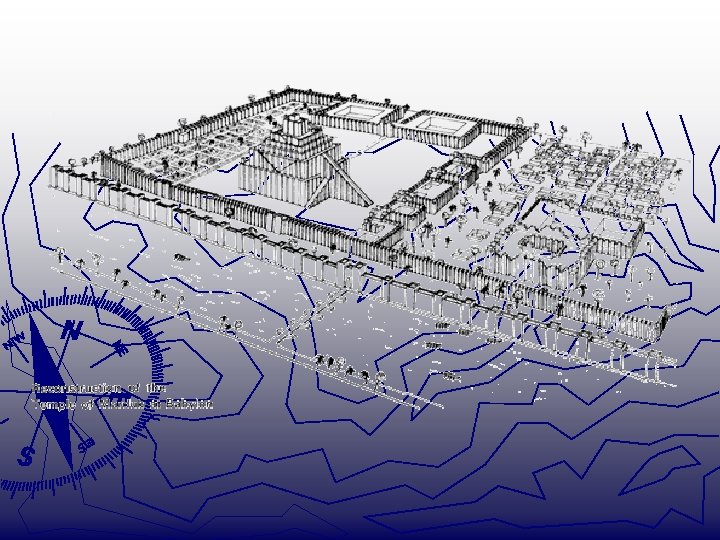
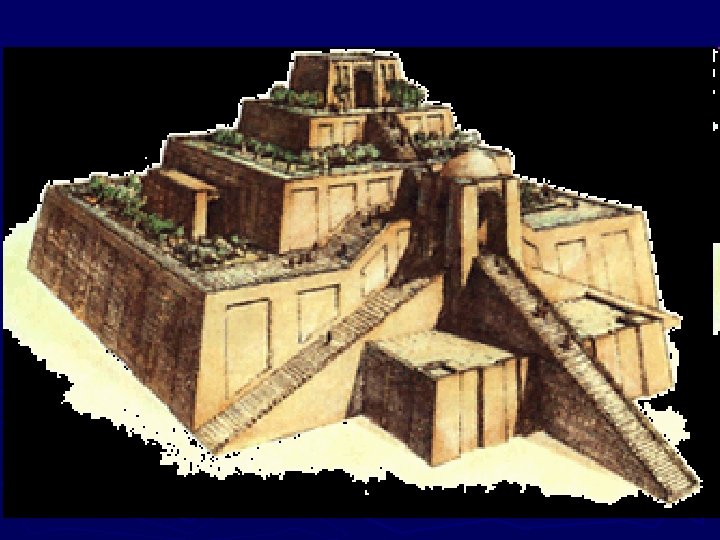
 Religion in Sumerian city-states ► polytheism: belief in many gods § nature was controlled by gods (floods, harvests etc) § prevailing thought that gods were like people: ►ate, drank, fell in love, married, fought, etc. § made offerings to them through priests/priestesses ► each city-state worshipped their own gods ► ziggurat: pyramid on top of temple
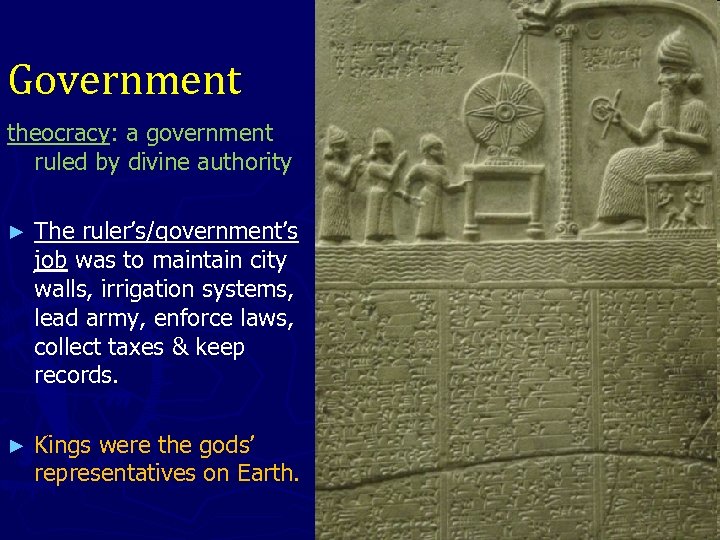 Government theocracy: a government ruled by divine authority ► The ruler’s/government’s job was to maintain city walls, irrigation systems, lead army, enforce laws, collect taxes & keep records. ► Kings were the gods’ representatives on Earth.
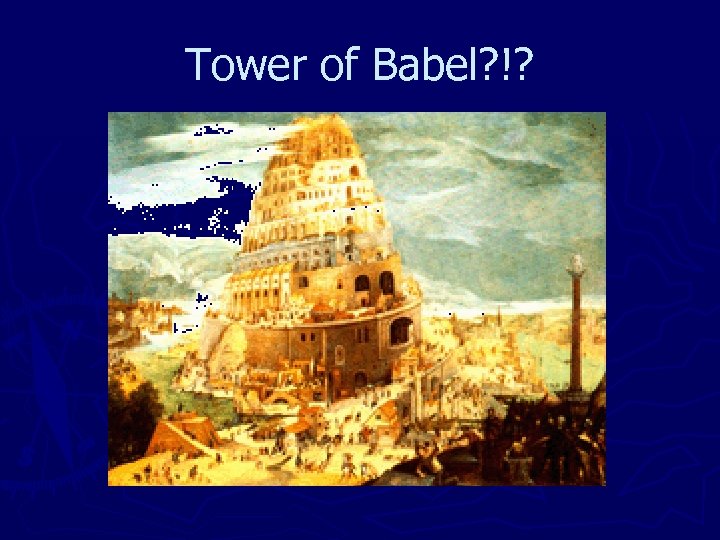 Tower of Babel? !?
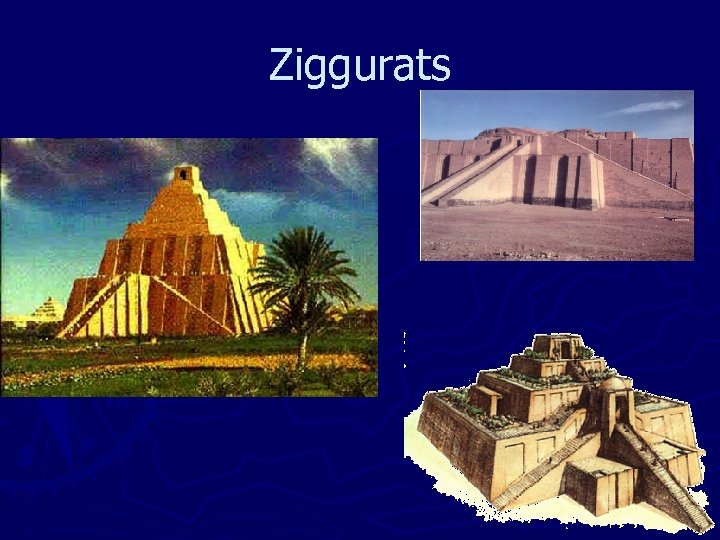 Ziggurats
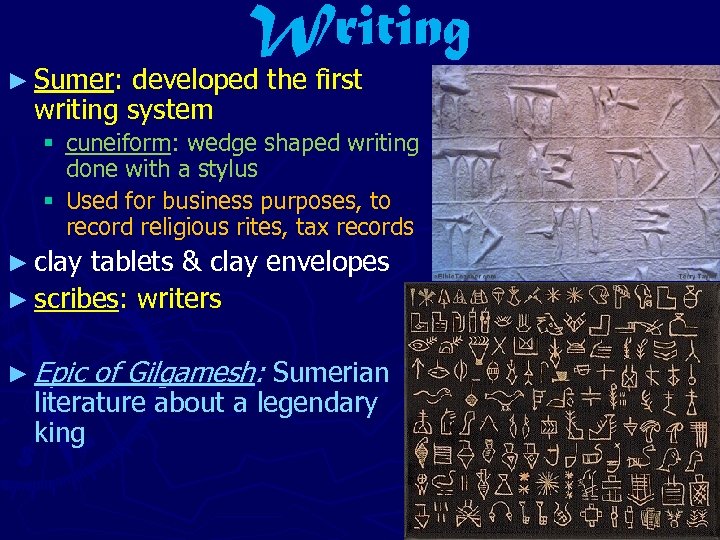 ► Sumer: Writing developed the first writing system § cuneiform: wedge shaped writing done with a stylus § Used for business purposes, to record religious rites, tax records ► clay tablets & clay envelopes ► scribes: writers ► Epic of Gilgamesh: Sumerian literature about a legendary king
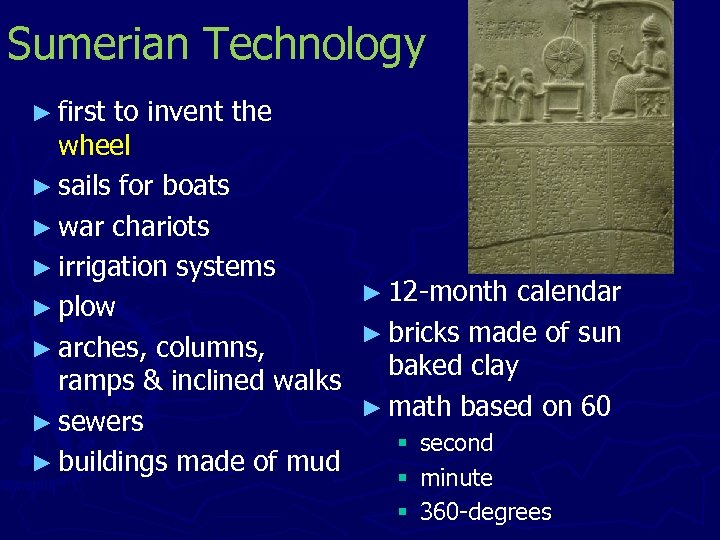 Sumerian Technology ► first to invent the wheel ► sails for boats ► war chariots ► irrigation systems ► plow ► arches, columns, ramps & inclined walks ► sewers ► buildings made of mud ► 12 -month calendar ► bricks made of sun baked clay ► math based on 60 § § § second minute 360 -degrees
 Fertile Crescent: Map Analysis ► Analyze the maps on “The Fertile Crescent, 2500 BC” on pg. 45 & answer the 2 questions.
 Invaders ► Sumerian city-states were on flat plains, easily invaded by warrior societies § ceased to exist about 1750 BC -constant warfare -invaded & taken over ► Sargon: leader of the Akkadians from the North, invades & sets up the world’s first empire
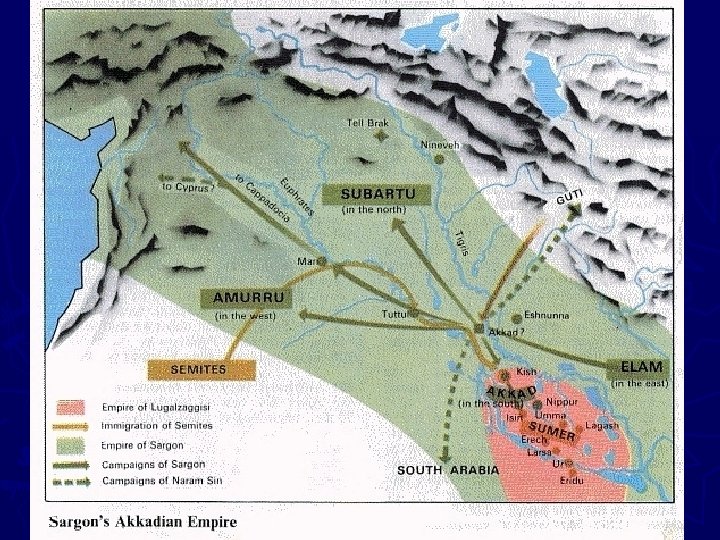
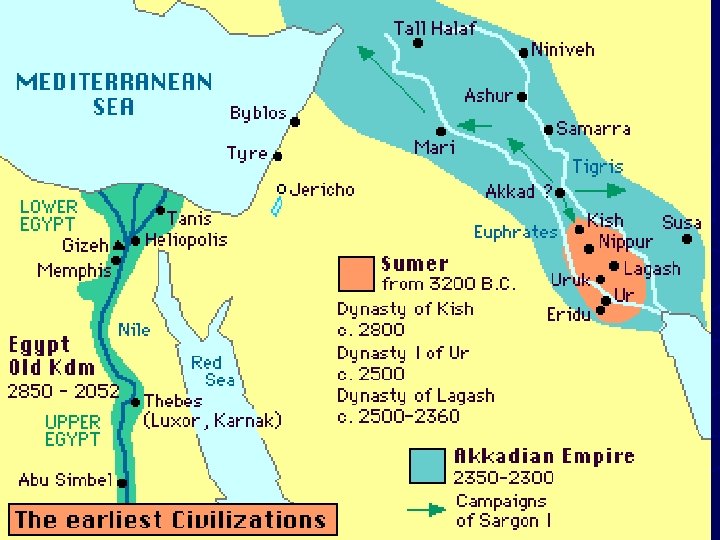
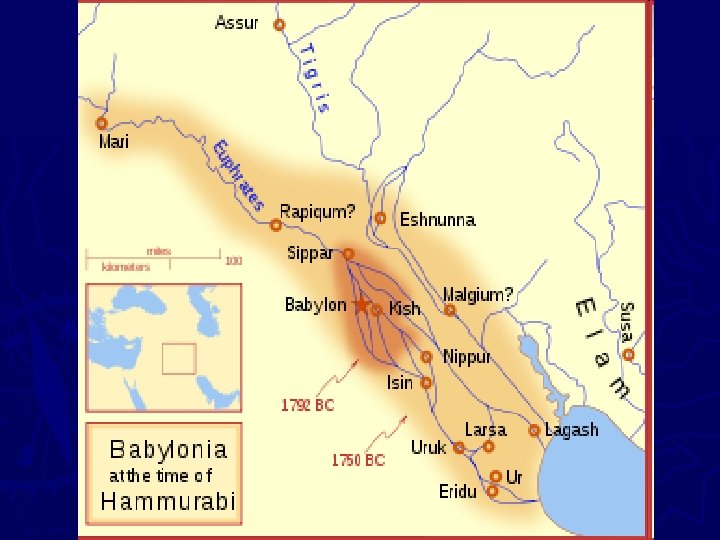
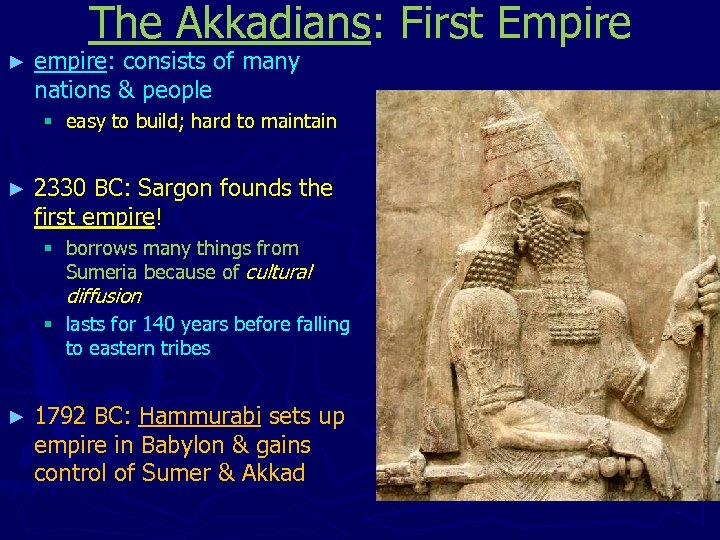 The Akkadians: First Empire ► empire: consists of many nations & people § easy to build; hard to maintain ► 2330 BC: Sargon founds the first empire! § borrows many things from Sumeria because of cultural diffusion § lasts for 140 years before falling to eastern tribes ► 1792 BC: Hammurabi sets up empire in Babylon & gains control of Sumer & Akkad
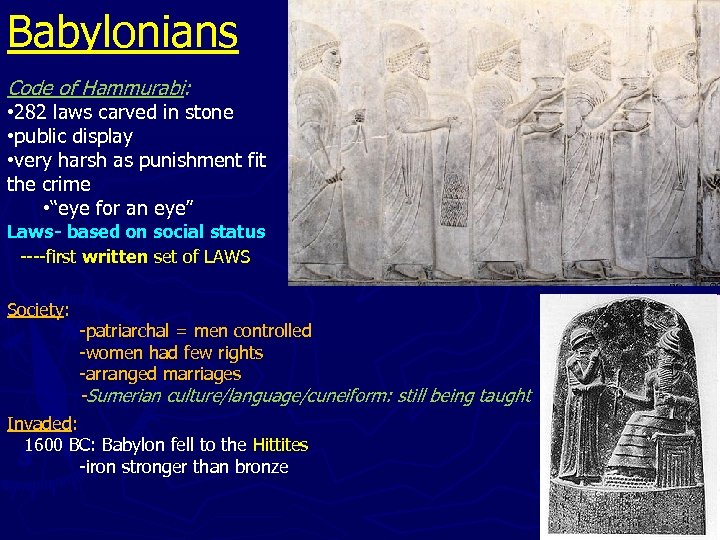 Babylonians Code of Hammurabi: • 282 laws carved in stone • public display • very harsh as punishment fit the crime • “eye for an eye” Laws- based on social status ----first written set of LAWS ---Society: -patriarchal = men controlled -women had few rights -arranged marriages -Sumerian culture/language/cuneiform: still being taught Invaded: 1600 BC: Babylon fell to the Hittites -iron stronger than bronze
 Indo-Europeans ► group of people who speak a language from one mother tongue § Latin, Greek, Sanskrit, Persian, Germanic languages ► Hittites: group of Indo-Europeans § used iron weapons § brought them to Mesopotamia § destroyed ~1200 BC by sea peoples
 Assyrians militaristic: tortured, beheaded (skinned? ) prisoners ► deported troublesome people to outer edges of region ► built capital at Nineveh: 1 st library ► King Assurbanipal builds the world’s first library with 22, 000 clay tablets ► used iron weapons: empire by 700 BC ► very efficient communications ► very ruthless people: no mercy on captured peoples ► practiced forced assimilation: forcing people to give up their identity and become like the conquerors ► finally overthrown by Medes (Iran) & Chaldeans ►
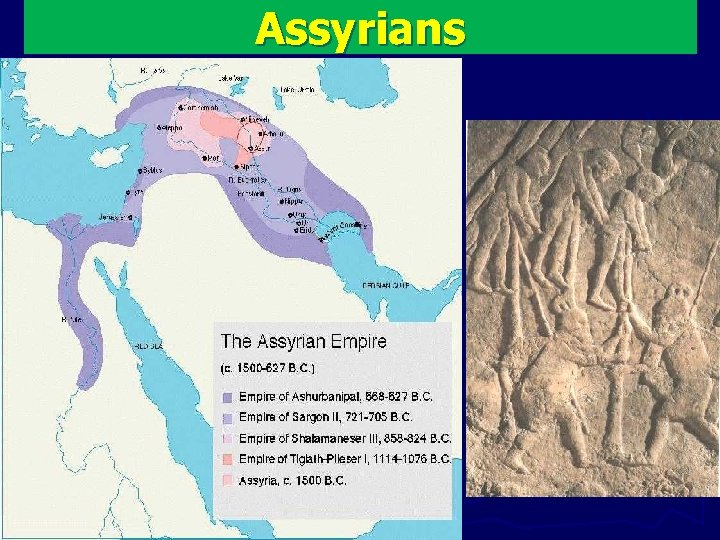 Assyrians
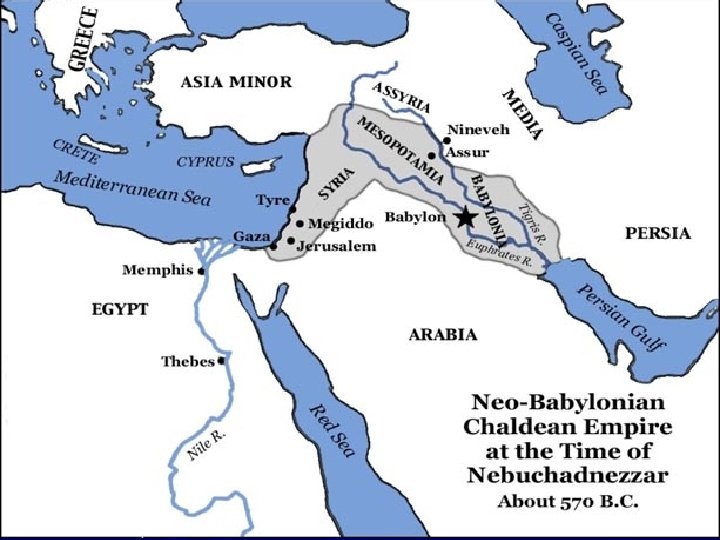
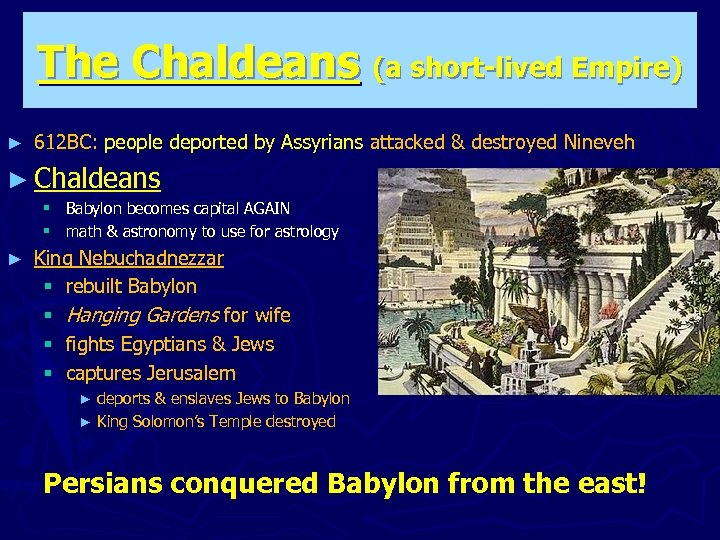 The Chaldeans (a short-lived Empire) ► 612 BC: people deported by Assyrians attacked & destroyed Nineveh ► Chaldeans § Babylon becomes capital AGAIN § math & astronomy to use for astrology ► King Nebuchadnezzar § rebuilt Babylon § Hanging Gardens for wife § fights Egyptians & Jews § captures Jerusalem deports & enslaves Jews to Babylon ► King Solomon’s Temple destroyed ► Persians conquered Babylon from the east!
 Phoenicians
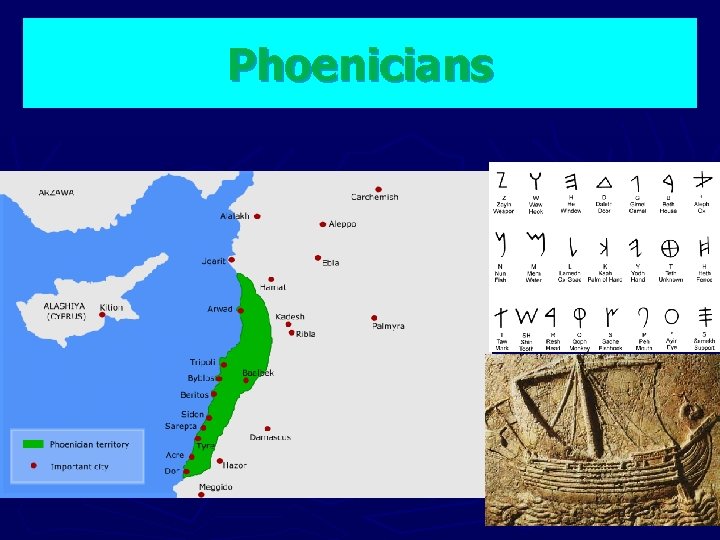
 Phoenicia ► Phoenicia § present-day Lebanon ► traders not fighters § major ports § controlled by several empires ► carriers of civilization § alphabet: 22 letters LYDIA ► first to use coined $$$ ► barter system scraped § both had to have something the other wanted § coins could be stored & saved: livestock & food could not
 In-Class Assessment Answer the following ? s in complete sentences. ► 1. Who created the first empire? § Name the empire. ► 2. Who created the first set of laws? § Give the name of the laws. 3. What do we call a society ruled & dominated by men? ► 4. Explain assimilation. ►
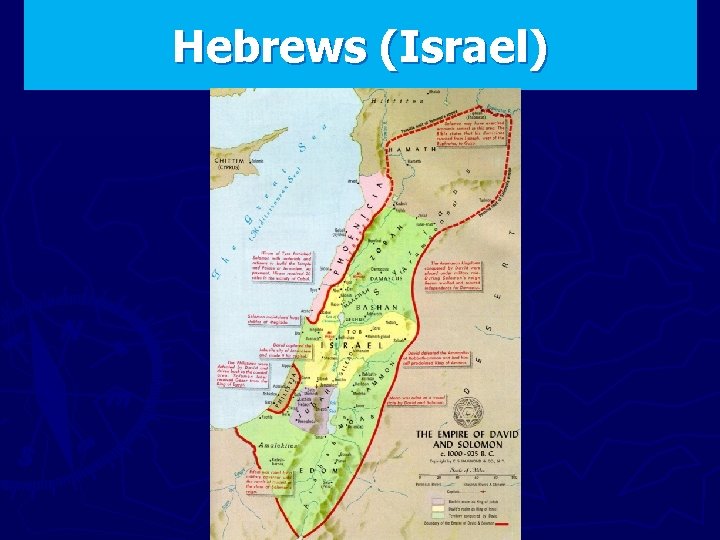 Hebrews (Israel)
 Israel ► Abraham § migrated from Mesopotamia (Ur) to Jordan River Valley of Palestine § founder of the Jews/Hebrews/Israelites (2000 BC) ► 2 nd, but favored son Isaac & grandson Jacob (Israel): patriarchs § Jacob had 12 sons: each established a tribe ► “ 12 Tribes of Israel” About 400 years later, the Israelites left Palestine for Egypt because of a drought/famine. Egyptians enslaved the Jews -after a few hundred years, the Jews gained their freedom & left under Moses (the Exodus)
 Kings of Israel ► 1. Saul § first to unite tribes ► 2. David § defeated the Philistines § formed a dynasty ► 3. Solomon § made Jerusalem a great capital through building the temple ► height of power § lots of building = lots of taxes § one of his 700+ wives was the daughter of Pharaoh (Egypt)
 Israel (ctnd) ► Kingdom divided in half: § Israel: north § Judah: south by 722 BC: Israel conquered by the Assyrians & the people were forcibly assimilated ► by 586 BC: Judah conquered by Babylonians/Chaldeans & sent into exile ► § King Solomon’s Temple destroyed § Jewish Diaspora: scattering of Jews outside Judah ► Eventually some Jews in exile returned to Palestine when Cyrus & Persians overthrew the Babylonians § rebuilt temple: the “second temple”
 Jewish Beliefs ► only 1 God, called YHWY (monotheism) ► YHWY is good & just § expects His people to be the same ► YHWY made a covenant (contract) with Abraham § God would give the people a promised land (Israel/Palestine) if they followed His commands ► When Jews left Egypt, God gave the Law to Moses including The 10 Commandments
 Jewish Beliefs (ctnd) Jews set apart from other peoples because of their Mosaic laws (i. e. keeping “kosher”) ► prophets warned Israel when they werent following God or taking care of justice ► § also showed them the future ► the Abrahamic covenant + the Mosaic Law + the prophets = the 3 parts of the religion: JUDAISM § Judeo-Christian beliefs & traditions ► ► Christianity builds onto Judaism the first 5 books of the Jewish holy book were written by Moses: the Torah (the Hebrew Bible) § Talmud: finished AD 500 by Jewish scholars ► explains & interprets behaviors, other writings & how to live daily life
 Judaism ► Fiddler On The Roof § famous musical about a Jewish family living in Russia in the late 1800’s http: //www. youtube. com/watch? v=g. Rdf. X 7 ut 8 gw
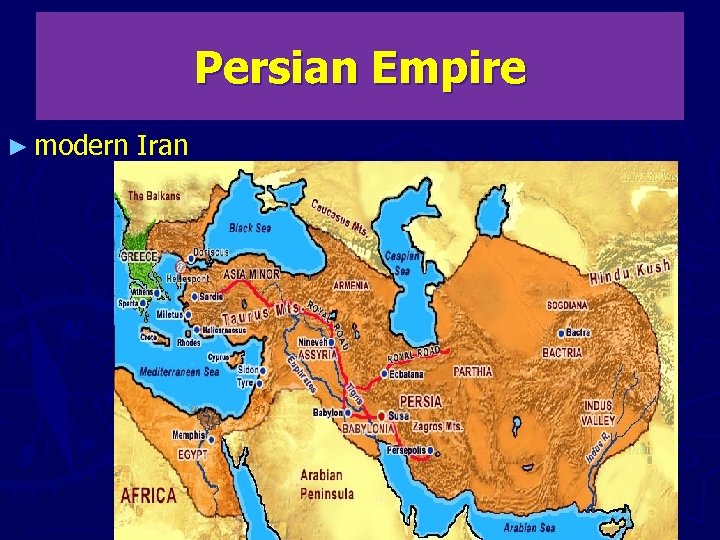 Persian Empire ► modern Iran
 Persians ► Cyrus § treats conquered people with respect § lets them continue to self govern & keep their religions § mercy & multiculturalism § allowed exiled peoples to return home, including Jews ► RELIGION: Zoroastrianism 600 BC § Zoroaster/Zarathustra: founder § Avesta: sacred text § monotheistic § Ahura Mazda: creator god § Ahriman: evil spirit § good & evil forces (dualism) § Day of Judgment: rewarded or punished
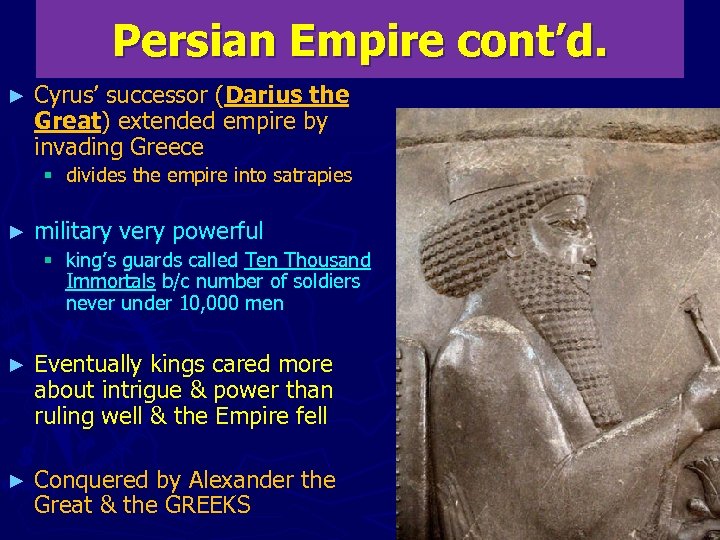 Persian Empire cont’d. ► Cyrus’ successor (Darius the Great) extended empire by invading Greece § divides the empire into satrapies ► military very powerful § king’s guards called Ten Thousand Immortals b/c number of soldiers never under 10, 000 men ► Eventually kings cared more about intrigue & power than ruling well & the Empire fell ► Conquered by Alexander the Great & the GREEKS
 Compare Judaism & Zoroastrianism ► Create a Venn Diagram (Double Bubble Map) on the religions of the Persians and the Israelites. Zoroastrianism Judaism In common