


 Скачать презентацию War with Japan Events n n n
a5a720d93ffc9a46d73a59bb0406a456.ppt
- Количество слайдов: 35
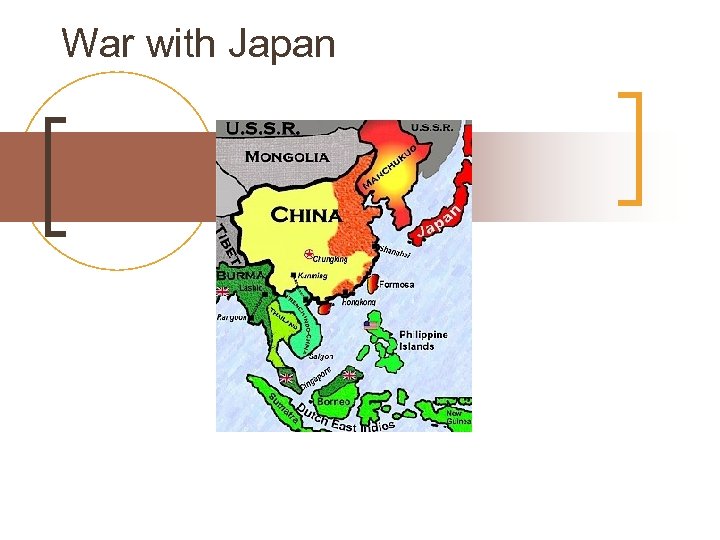 War with Japan
 Events n n n n n 1931 attack in Manchuria 1932 attack in Shanghai and brief occupation 1932 Set up Manchukuo with last Emperor Pu yi Negotiations with CKS Communists declare war on Japan 1933 Japan occupies Jehe 1933 Tanggu Truce with China 1935 Japanese take over Hebei 1936 Formation of the Second United Front 1937 Marco Polo Bridge incident
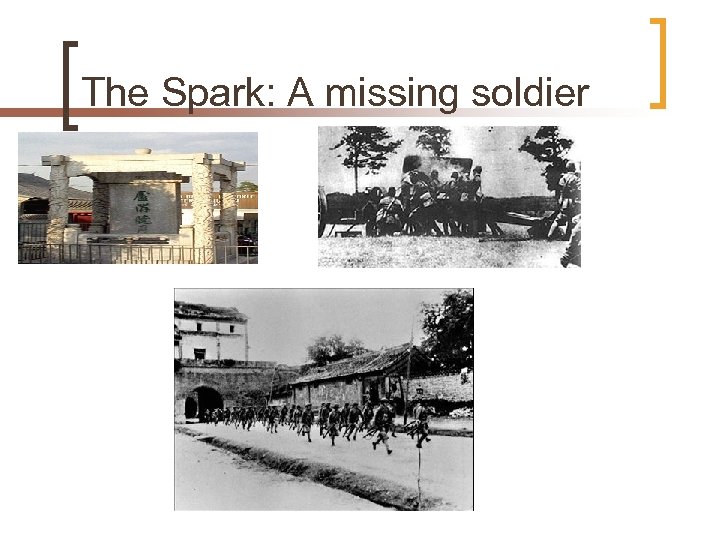 The Spark: A missing soldier
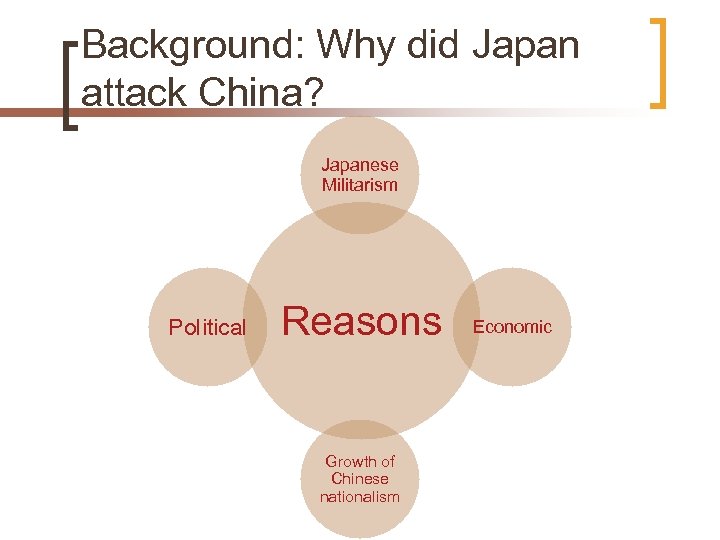 Background: Why did Japan attack China? Japanese Militarism Political Reasons Growth of Chinese nationalism Economic
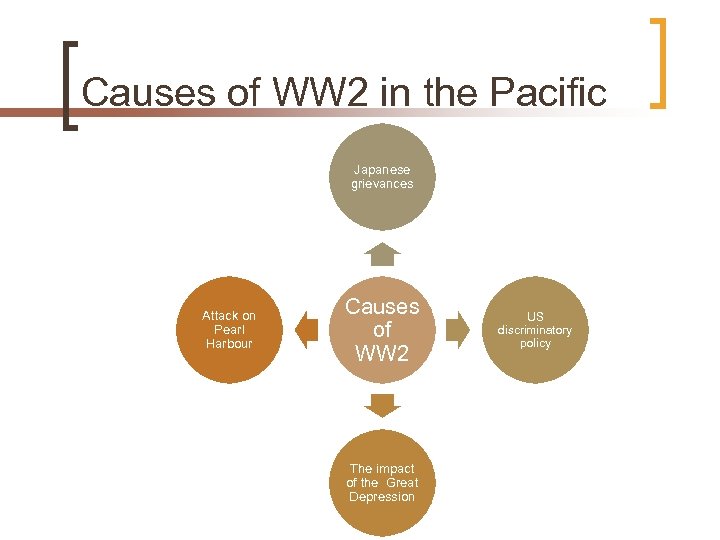 Causes of WW 2 in the Pacific Japanese grievances Attack on Pearl Harbour Causes of WW 2 The impact of the Great Depression US discriminatory policy
 Military: n n n n Japan unable to control military Parliament and Military conflict Assassination of moderate Japanese politicians Depression and its effects In September 1931 the Kwantung army precipitated the crisis Japanese govt. unable to deal with the crisis In 1932, Japan occupied Shanghai briefly Jiang Jieshi ( CKS) response also emboldened the Japanese
 Rise of Chinese nationalism Manchuria and China proper became very important areas for Japanese investment These threatened by periodic riots, boycotts and attacks on Japanese concessions May 1928 attack on Jinan Assassination of warlord Zhang Tso-lin n Son on Zhang Tsolin a committed Nationalist n
 Tanggu Truce 1933 n n What were the implications China withdraws from Manchuria and Hebei province is demilitarized This leaves Beijing and its entry point Tianjin defenceless In 1935 Japan encroaches on Hebei
 Chinese response to Japan n n n Ironically Chiang Kai Shek would refuse to confront them, preferring to negotiate until 1936 Chinese communists protested and the protests led to the punitive action of Japan …. invasion of Jehe Chinese nationalist protests, march to Beijing to protest ineffectiveness of CKS CCP claimed that it did much to incite protests against Japanese Chinese intellectuals formed the Shanghai National Salvation Association to protest Japanese invasions in 1935 This was followed by a National Salvation Association and criticized CKS This group demanded a United Front of all peoples and parties to stop Japanese aggression.
 National Salvation Association n n Demanded new United Front Authorised a series of strikes in Japanese owned textile factories Japan demanded the arrest of the ‘seven gentlemen’ or leaders of the NSA Zhang Zueliang who was sent by CKS to deal with Communists in Shaanxi was now involved in deal.
 Second United Front n n n Kidnapping of CKS in Xian Zhang called for a coalition government and end civil war Called for a National Salvation Conference CKS agreed to Second Front after two weeks CKS released, Zhang court martialled and arrested and under house arrest till 1990
 Why Second United Front? n n n In March 1936 the CCP demanded called for a suspension of the Civil War and formation of a United Front to resist Japan Allegedly NSA’s were communist fronts Zhou En Lai is believed to have had discussions with Zhang Zueliang Zhou not involved in the Xian incident but negotiated CKS’s release Zhou is believd to have indicated to CKS that the CCP accepted CKS as leader providing he committed to resistance to Japan
 Evaluation of Xian Incident n n n n A turning point in Chinese history Nationalist writers say it saved Communists from annihilation For communist it was an opportunity to strike back against the Japanese In a sense CCP agreement at Xian marks the Comintern directive to involve itself with non fascist groups to resist Fascism In 1937 the Second Front was confirmed. Both sides made concessions CCP agreed to drop the name Red army and place its troops under CKS command The Soviet republic of China ( CCP controlled areas) would become a special region, confiscation of land from lanldlords to stop
 GMD concessions to CCP n n In return for agreement to place CCP troops under central command CCP areas were special regions GMD agreed to stop civil war , release political prisoners GMD agreed to hold a joint National Salvation conference with CCP to discuss resistance to Japan
 Marco Polo Bridge: Accident or Attack? n n The missing soldier prompted aggression between Japan and China Japanese demands for GMD forces to withdraw from Beijing were met with resistance. Resultant massacre of several towns around Beijing This time CKS offered no concessions
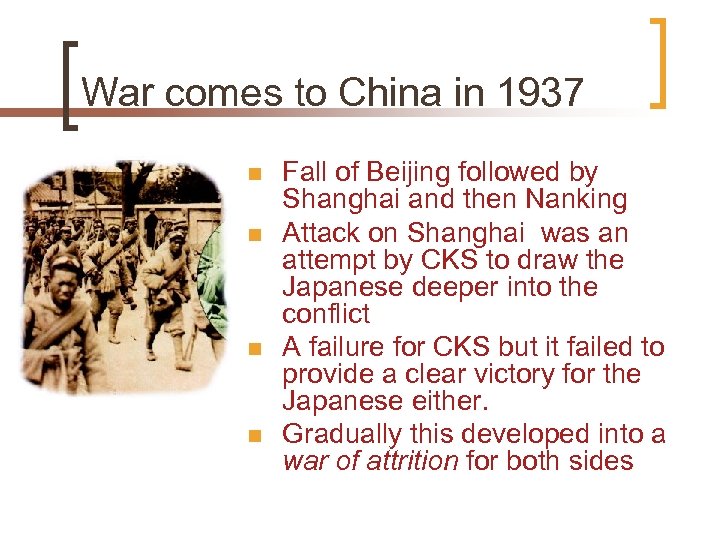 War comes to China in 1937 n n Fall of Beijing followed by Shanghai and then Nanking Attack on Shanghai was an attempt by CKS to draw the Japanese deeper into the conflict A failure for CKS but it failed to provide a clear victory for the Japanese either. Gradually this developed into a war of attrition for both sides
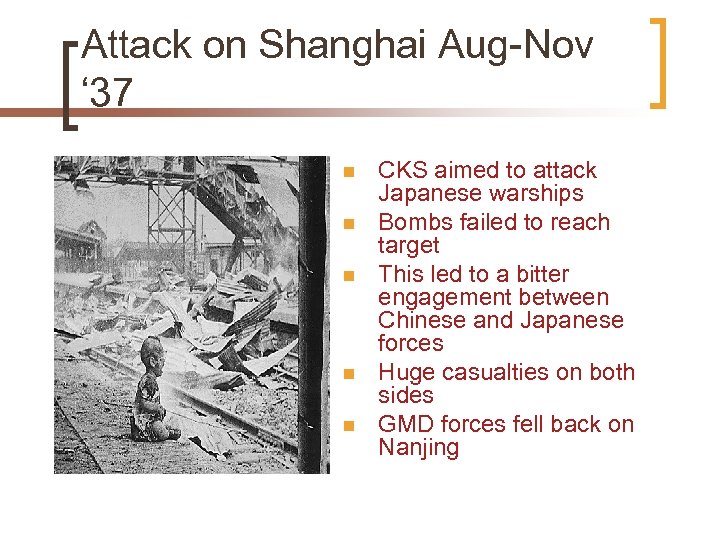 Attack on Shanghai Aug-Nov ‘ 37 n n n CKS aimed to attack Japanese warships Bombs failed to reach target This led to a bitter engagement between Chinese and Japanese forces Huge casualties on both sides GMD forces fell back on Nanjing
 Nanjing December 1937 n n n Next major stand at Nanjing Japanese took control of this city in December 1937 Followed by the ‘Rape of Nanjing’ It is believed that this was retaliation for the attacks on the Japanese consulate in 1926 -27 GMD forces retreat further
 Move towards Chongqing n n n Li Zongren inflicts a defeat on the Japanese but CKS fails to capitalise on it. CKS moves into Wuhan enroute to Chonqing 1500 kms east 1938 CKS ordered dykes to be broken to check Japanese advance towards Chongqing Immense hardship to ordinary Chinese who had no warning This left a legacy of bitterness and reduced support for the GMD
 1937 -1938 n n n CKS aided by CKS Red Army under Marshal Georgy Zhukov stationed in Manchuria Japanese take Wuhan and Canton CKS cut off from access to the sea Japanese forces now seriously stretched from Manchuria to Central China
 Chongqing 1937 -1945 n n n CKS base till the end of the War Factories dismantled and moved up there Teacher, students and intellectuals move there Chonqing government was corrupt inefficient Since CKS lost control of key cities such as Shanghai and. Nanjing The loss of revenue meant CKS needed wealthy landlords for support Also warlords tried to take advantage of the situation Rising inflation since CKS could not find the money he resorted to printing more Extortion from peasants Land taxes reached their highest level and this at a time of widespread famine In 1941 the United Front shows signs of break up CKS waited for intervention of foreign powers
 Role of the Communist Party in the conflict? How did they benefit? n n n The war with Japan led to the rise two power centres CKS based in Chongqing Mao develops an alternate base at Yanan ¡ ¡ ¡ n Eliminates or neutralises rivals such as Zhang Guotao and late Wang Ming Mao paid lip service to aid from Moscow By 1941 Mao was gradually able to establish his domination of the CCP It is during this time that Mao clearly establishes himself as the leader of the Chinese Communist party
 Yanan Decade: A contrast ¡ ¡ ¡ ¡ More organised form of government at Yanan Mao attempts education reforms Specific Marxist elements were played down Landlords no longer the target Confiscation land abandoned in favour of lowering of rents Anti Japanese themes encouraged Use of Guerrilla warfare to defeat Japanese
 Life at Yanan n n Mao’s flexible policy encouraged a steady growth in CCP membership Likewise recruitment for the Red Army as the CCP was encouraging action against the Japanese Now the CCP controls 8 th Route Army under Peng Dehuai and Zhu De New 4 th Army In areas under Japanese control several Communist controlled guerrilla groups sprang up
 Communist successes n n n Unlike the litany of failure of the GMD CCP troops were better organised. Lin Biao won a victory in 1937 Hundred Regiment offensive launched against the Japanese but causalties affected Communists and Japanese response: Three All ¡ Kill All, Burn All, Loot All
 Fighting between CKS and Mao n n By 1941 United Front shows signs of disintegrating The 4 th Army attacked by CKS troops While this offensive led to serious communist casualties it worked for the Communist It worked as a propaganda message : Communists were willing to fight the Japanese while the GMD would fight the Communists
 Foreign aid for CKS n Rising tensions between the US and Japan ¡ ¡ n n n n Embargo on export of scrap metal to Japan Sanctions on Oil 1941 the attack on Pearl harbour leads to US entry into the war CKS was appointed Supreme Commander of the China theatre Aid to CKS over the Himalayas, a dangerous and difficult task General Stilwell sent to help. Stilwell referred to CKS as the ‘Peanut’ Stilwell unimpressed by CKS’s dilatoriness In 1944 Stilwell replaced by Wedermeyer “ Chennault’s Flying Circus”, an attempt to provide airpower to CKS
 ICHIGO Offensive Japan’s last stand? n n Took place in 1944 Exposed the military weakness of the GMD. Emboldened the Communists to start operating in areas held by the GMD Communists introduce mass mobilizations and class struggle activiities which so far had been confined to border areas.
 US Role in China n n So far US had only supported the GMD but clearly there was a better trained force available Also FDR policy had focused in getting the USSR involved in the Pacific War GMD collapse before Operation Ichigo made the US consider the Communists in China as a potential ally against the Japanese. Dixie mission sent to Yan’an in July 1944
 Negotiations begin with GMD n n n USA anxious to get the Communists on board. Mao presents his case as Agrarian reformers to avoid a repeat civil war. Troubles with GMD start even then because CKS will not negotiate with Communists unless they disbanded their army which they refused to do
 Yalta and CHina n n At Yalta, Stalin agreed to support CKS and enter the war against Japan three months after victory in Europe In return Stalin granted concessions in Manchuria ¡ ¡ ¡ n Lease on naval base at Lushun Control Dalian an industrial centre Control of Manchurian railways This increased communist suspicion of the US.
 Post FDR n n Truman support for CKS and condemned the Communists When bomb was dropped Truman no longer needed the support of Stalin However CKS and Stalin negotiate to from a Sino Soviet treaty of friendship In return for Soviet support to the Nationalists, USSR would with draw from the Manchurian region after Japanese surrender
 End of the War n n Bombs on Hiroshima and Nagasaki ended the war one year earlier. Both CCP and GMD wanted to control the territory controlled by the Japanese to surrended to Russians in Manchuria and Chinese in China proper US flew Chinese troops into N. China to accept surrender ( GMD troops were in the south
 Confusion prevails n n Communists try to force surrender to them Nationalists encourage Japanese to fight the Communists USSR occupies Manchuria and proceeds to strip it as reparations In November when USSR had to withdraw the GMD knew that they did not have adequate control and asked USSR to stay on.
 Stage is set for the Civil War to follow….