 Скачать презентацию Vulnerability and Adaptation Assessments Hands-On Training Workshop Impact
6a5873fe0576b946d8fc6edff834c6d0.ppt
- Количество слайдов: 89



Vulnerability and Adaptation Assessments Hands-On Training Workshop Impact, vulnerability and adaptation assessment for coastal zones 1 A. 1
Outline 1. 2. 3. 4. 5. Drivers & impacts on coastal areas Adaptation options V&A tools & data sources Integrating mechanisms Conclusions
Drivers & impacts on coastal areas 1 A. 3
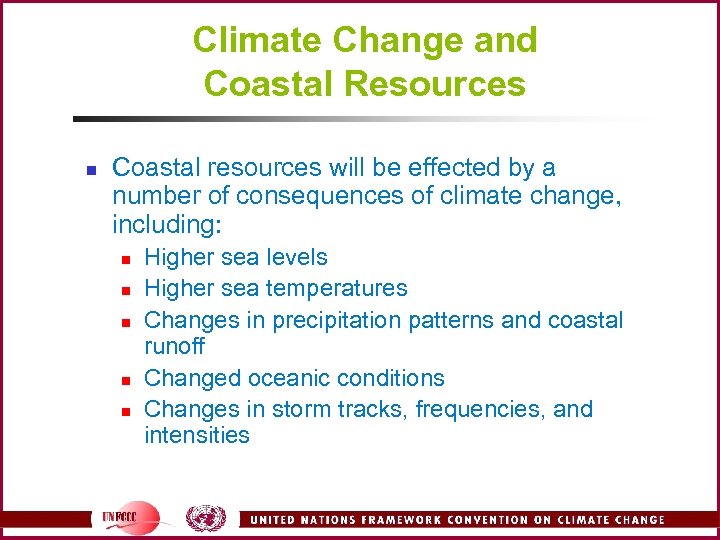
Climate Change and Coastal Resources n Coastal resources will be effected by a number of consequences of climate change, including: n n n Higher sea levels Higher sea temperatures Changes in precipitation patterns and coastal runoff Changed oceanic conditions Changes in storm tracks, frequencies, and intensities
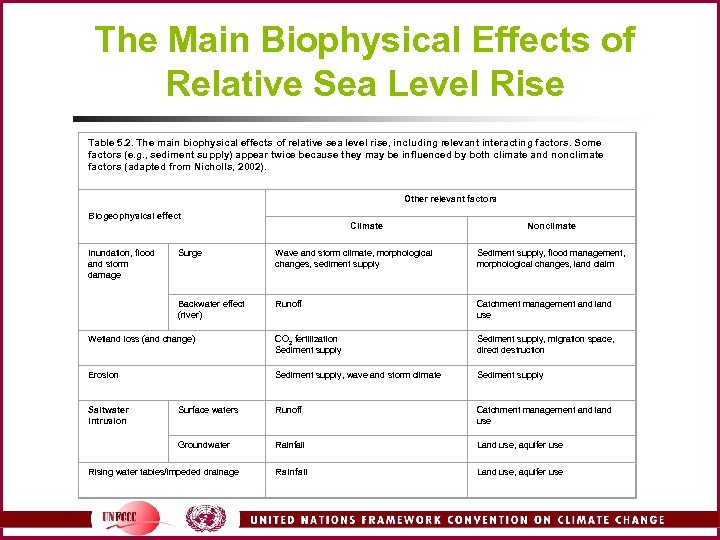
The Main Biophysical Effects of Relative Sea Level Rise Table 5. 2. The main biophysical effects of relative sea level rise, including relevant interacting factors. Some factors (e. g. , sediment supply) appear twice because they may be influenced by both climate and nonclimate factors (adapted from Nicholls, 2002). Other relevant factors Biogeophysical effect Climate Inundation, flood and storm damage Nonclimate Surge Wave and storm climate, morphological changes, sediment supply Sediment supply, flood management, morphological changes, land claim Backwater effect (river) Runoff Catchment management and land use Wetland loss (and change) CO 2 fertilization Sediment supply, migration space, direct destruction Erosion Sediment supply, wave and storm climate Sediment supply Surface waters Runoff Catchment management and land use Groundwater Rainfall Land use, aquifer use Saltwater intrusion Rising water tables/impeded drainage
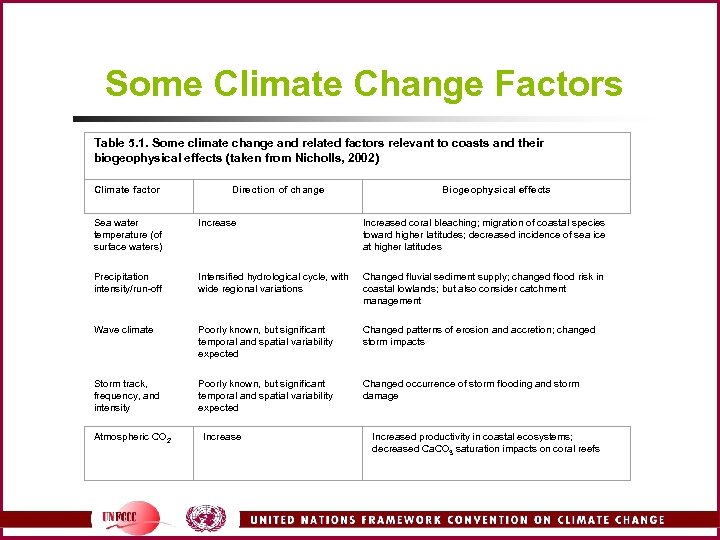
Some Climate Change Factors Table 5. 1. Some climate change and related factors relevant to coasts and their biogeophysical effects (taken from Nicholls, 2002) Climate factor Direction of change Biogeophysical effects Sea water temperature (of surface waters) Increased coral bleaching; migration of coastal species toward higher latitudes; decreased incidence of sea ice at higher latitudes Precipitation intensity/run-off Intensified hydrological cycle, with wide regional variations Changed fluvial sediment supply; changed flood risk in coastal lowlands; but also consider catchment management Wave climate Poorly known, but significant temporal and spatial variability expected Changed patterns of erosion and accretion; changed storm impacts Storm track, frequency, and intensity Poorly known, but significant temporal and spatial variability expected Changed occurrence of storm flooding and storm damage Atmospheric CO 2 Increased productivity in coastal ecosystems; decreased Ca. CO 3 saturation impacts on coral reefs
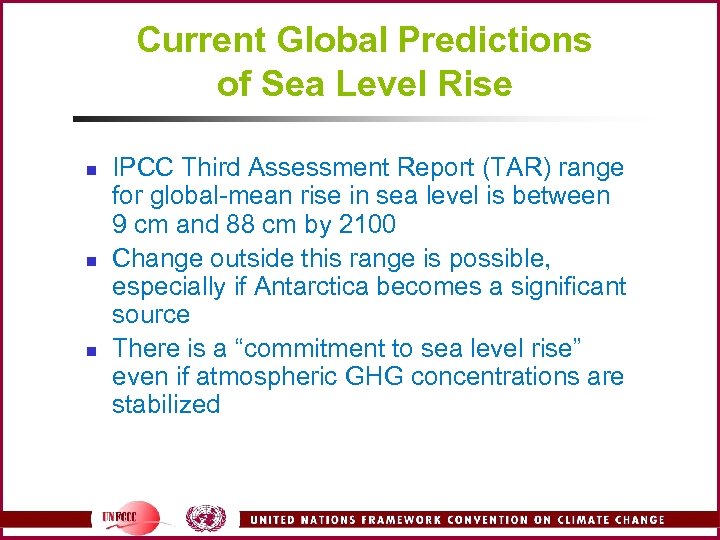
Current Global Predictions of Sea Level Rise n n n IPCC Third Assessment Report (TAR) range for global-mean rise in sea level is between 9 cm and 88 cm by 2100 Change outside this range is possible, especially if Antarctica becomes a significant source There is a “commitment to sea level rise” even if atmospheric GHG concentrations are stabilized
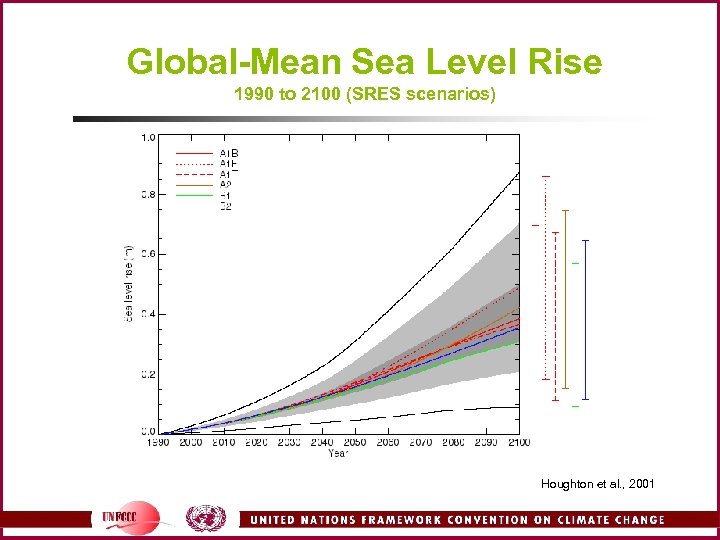
Global-Mean Sea Level Rise 1990 to 2100 (SRES scenarios) Houghton et al. , 2001
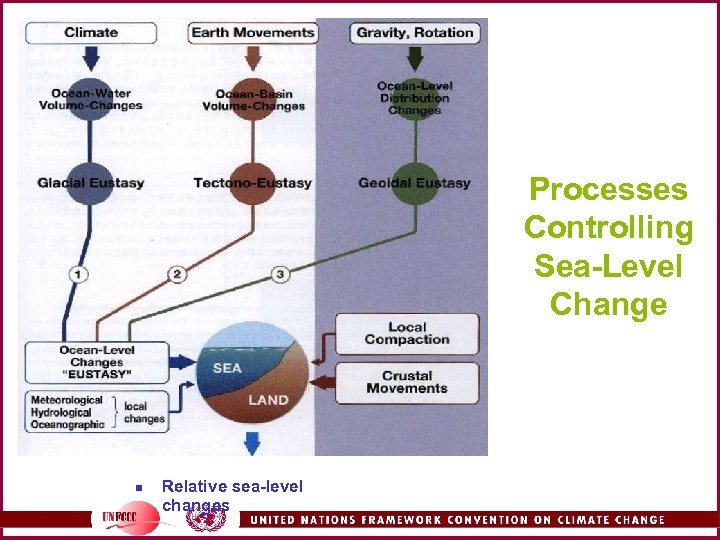
Processes Controlling Sea-Level Change n Relative sea-level changes
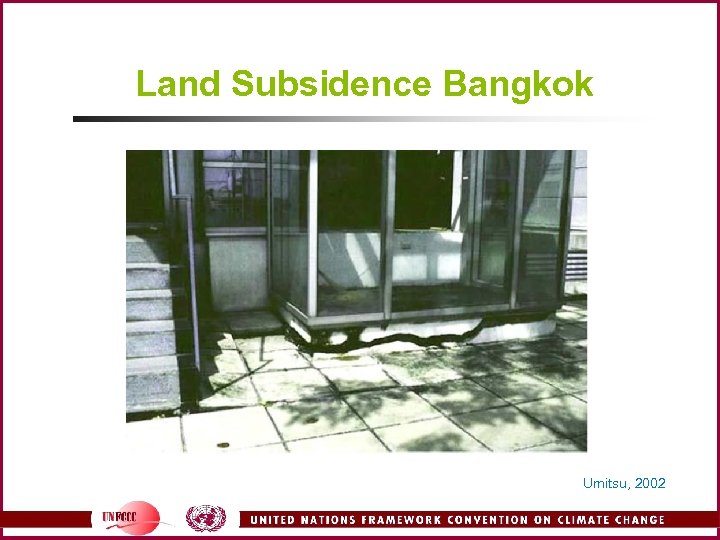
Land Subsidence Bangkok Umitsu, 2002
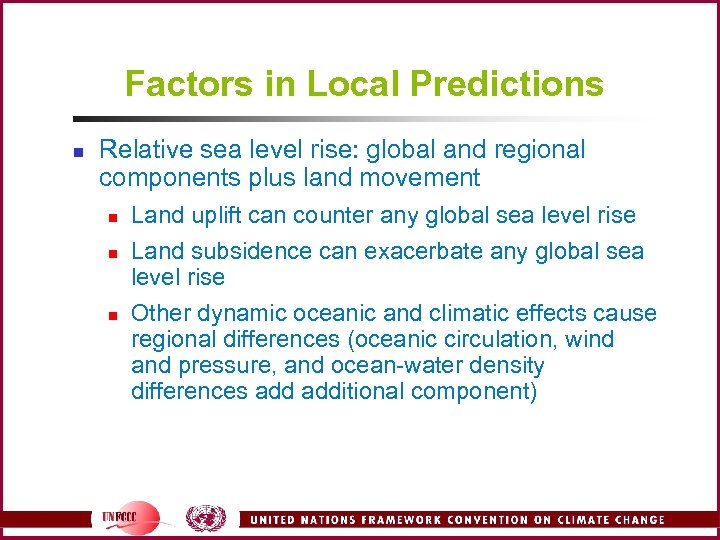
Factors in Local Predictions n Relative sea level rise: global and regional components plus land movement n n n Land uplift can counter any global sea level rise Land subsidence can exacerbate any global sea level rise Other dynamic oceanic and climatic effects cause regional differences (oceanic circulation, wind and pressure, and ocean-water density differences additional component)
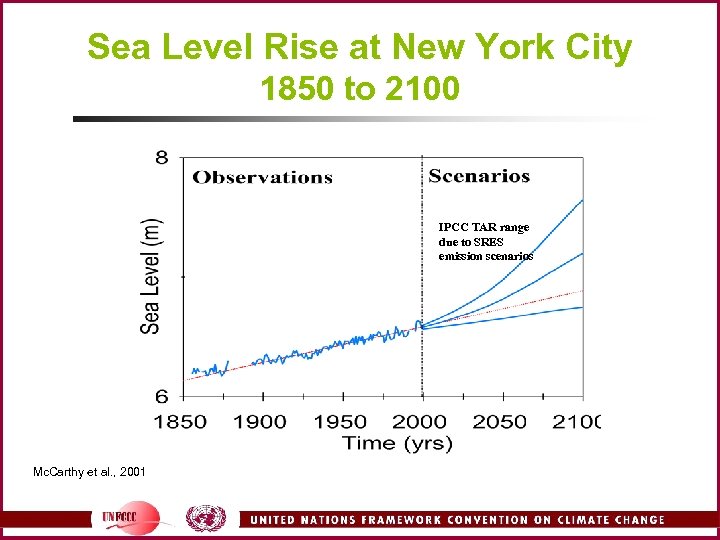
Sea Level Rise at New York City 1850 to 2100 IPCC TAR range due to SRES emission scenarios Mc. Carthy et al. , 2001
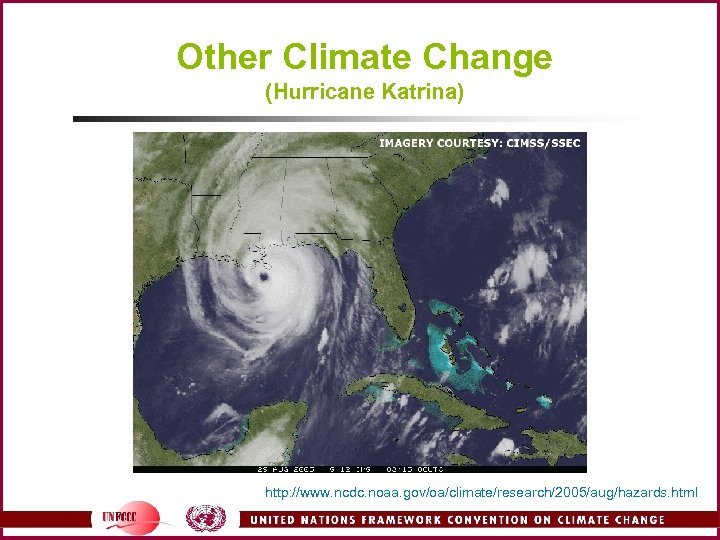
Other Climate Change (Hurricane Katrina) http: //www. ncdc. noaa. gov/oa/climate/research/2005/aug/hazards. html
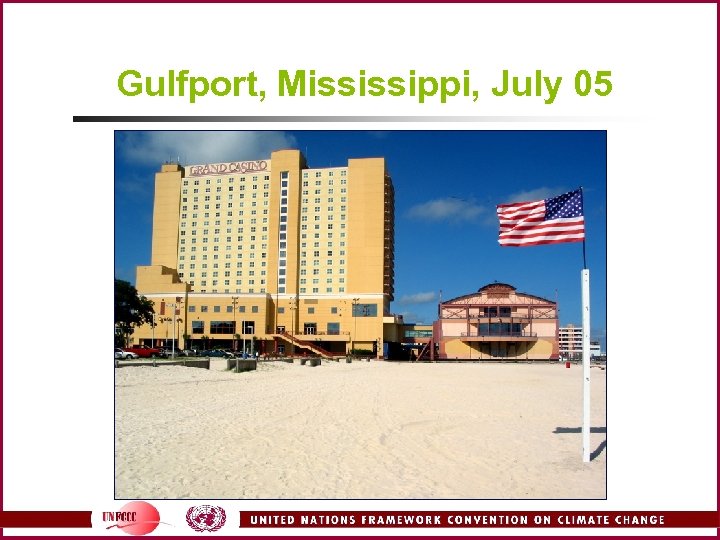
Gulfport, Mississippi, July 05
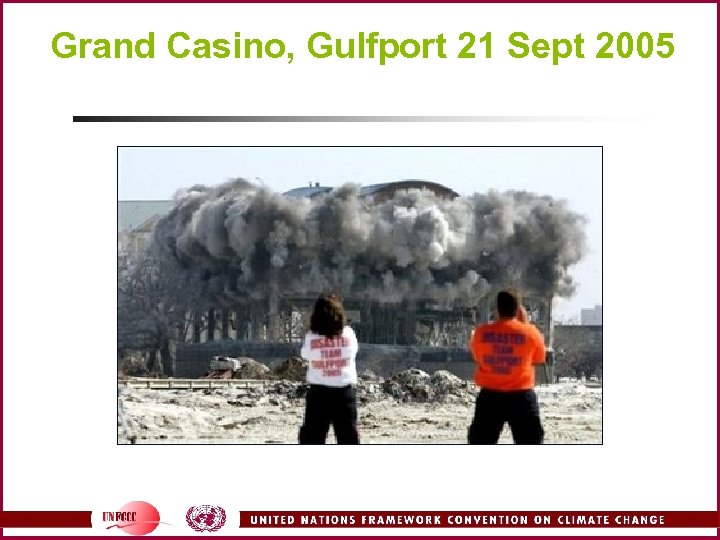
Grand Casino, Gulfport 21 Sept 2005
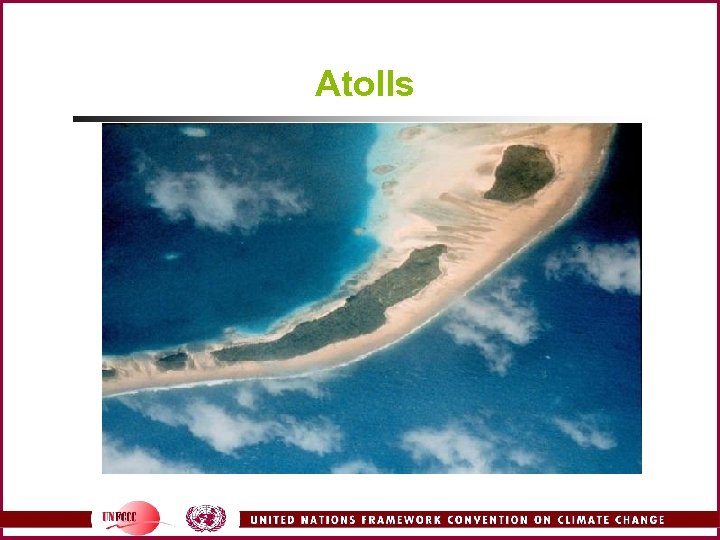
Atolls
Coral Impacts n n n “Recent global increases in reef ecosystem degradation and mortality are exceeding the adaptive capacity of coral reef organisms and communities. The severity of this crisis will only intensify with future changes in the global climate. While the net effects of climate change on coral reefs will be negative, coral reef organisms and communities are not necessarily doomed to total extinction. Multiple environmental management strategies, from local to global, will be necessary to ensure the longterm sustainability of the world’s coral reef ecosystems. ” Buddemeier et al, 2004
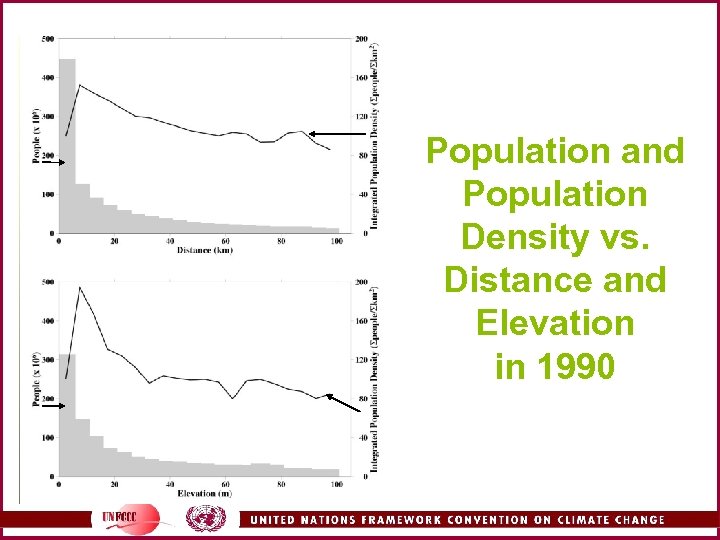
Population and Population Density vs. Distance and Elevation in 1990
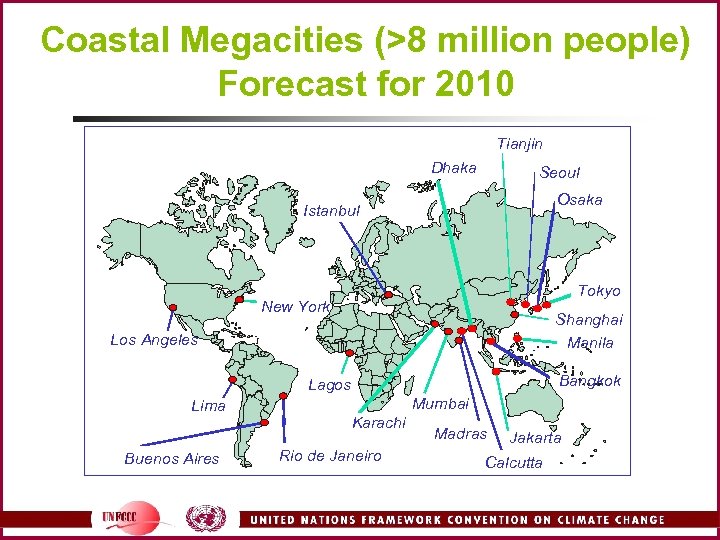
Coastal Megacities (>8 million people) Forecast for 2010 Tianjin Dhaka Seoul Osaka Istanbul Tokyo New York Shanghai Manila Los Angeles Bangkok Lagos Lima Buenos Aires Mumbai Karachi Rio de Janeiro Madras Jakarta Calcutta
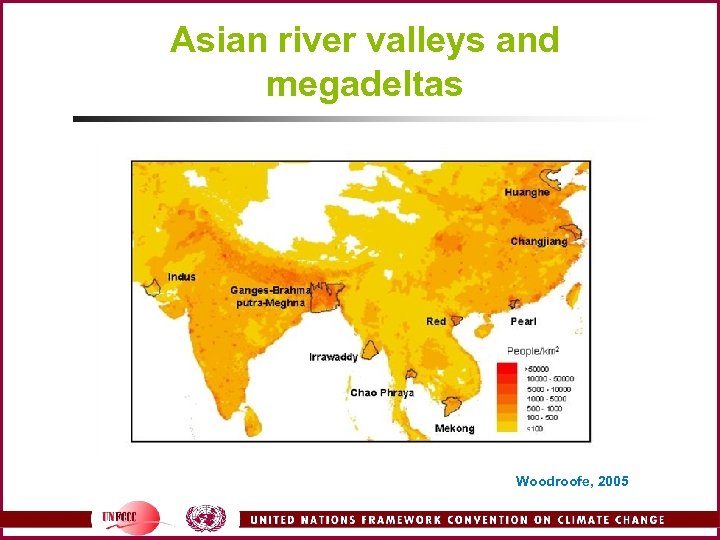
Asian river valleys and megadeltas Woodroofe, 2005
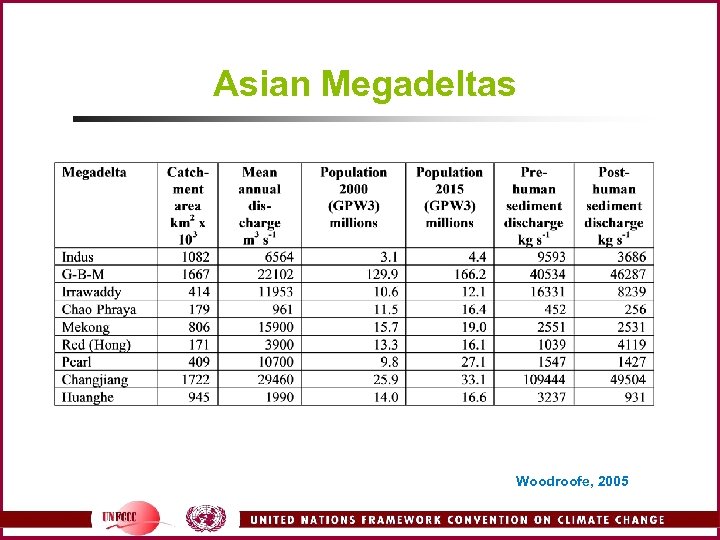
Asian Megadeltas Woodroofe, 2005
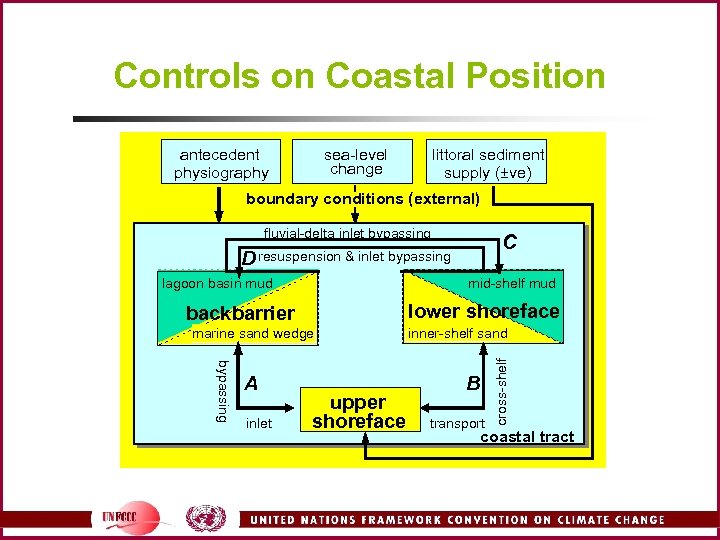
Controls on Coastal Position antecedent physiography sea-level change littoral sediment supply (±ve) boundary conditions (external) fluvial-delta inlet bypassing C D resuspension & inlet bypassing lagoon basin mud mid-shelf mud lower shoreface marine sand wedge bypassing A inlet upper shoreface inner-shelf sand B transport cross-shelf backbarrier coastal tract
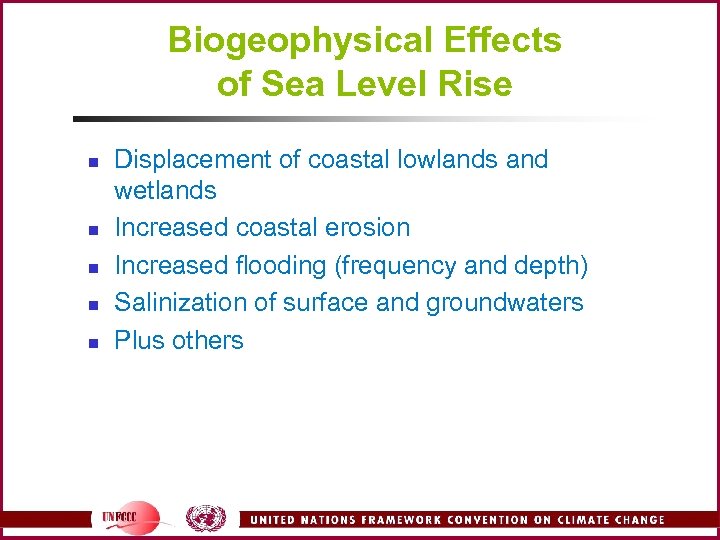
Biogeophysical Effects of Sea Level Rise n n n Displacement of coastal lowlands and wetlands Increased coastal erosion Increased flooding (frequency and depth) Salinization of surface and groundwaters Plus others
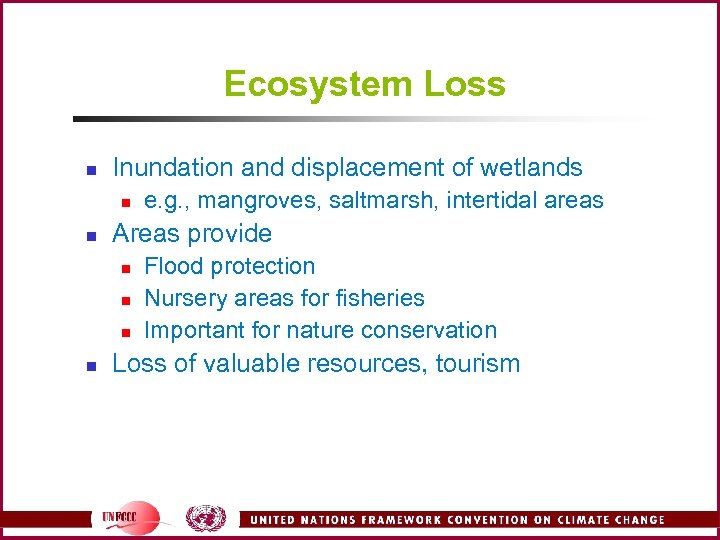
Ecosystem Loss n Inundation and displacement of wetlands n n Areas provide n n e. g. , mangroves, saltmarsh, intertidal areas Flood protection Nursery areas for fisheries Important for nature conservation Loss of valuable resources, tourism
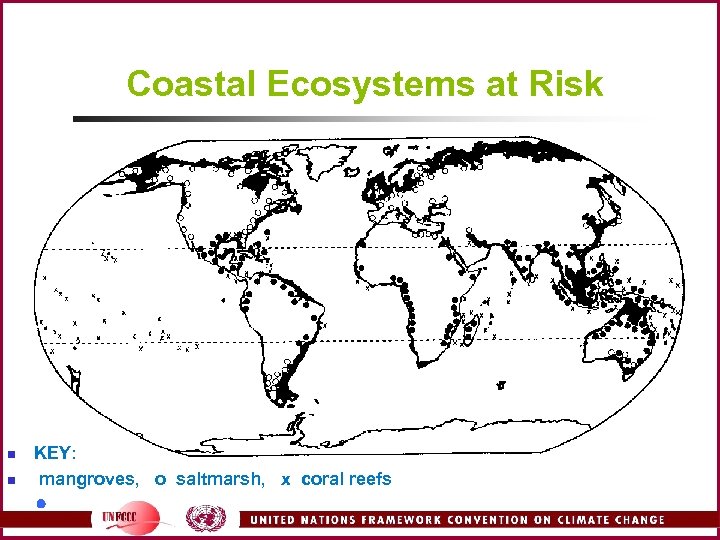
Coastal Ecosystems at Risk n n KEY: mangroves, o saltmarsh, x coral reefs
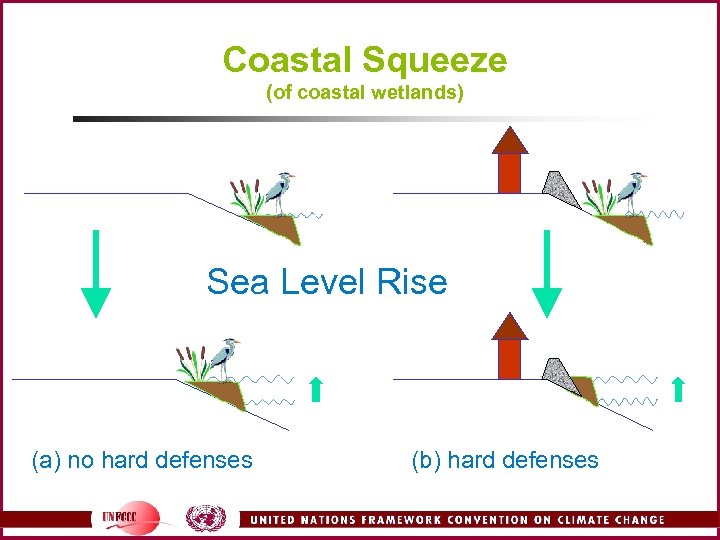
Coastal Squeeze (of coastal wetlands) Sea Level Rise (a) no hard defenses (b) hard defenses
Socioeconomic Impacts n n n Loss of property and land Increased flood risk/loss of life Damage to coastal protection works and other infrastructure Loss of renewable and subsistence resources Loss of tourism, recreation, and coastal habitats Impacts on agriculture and aquaculture through decline in soil and water quality
Adaptation Options 1 A. 28
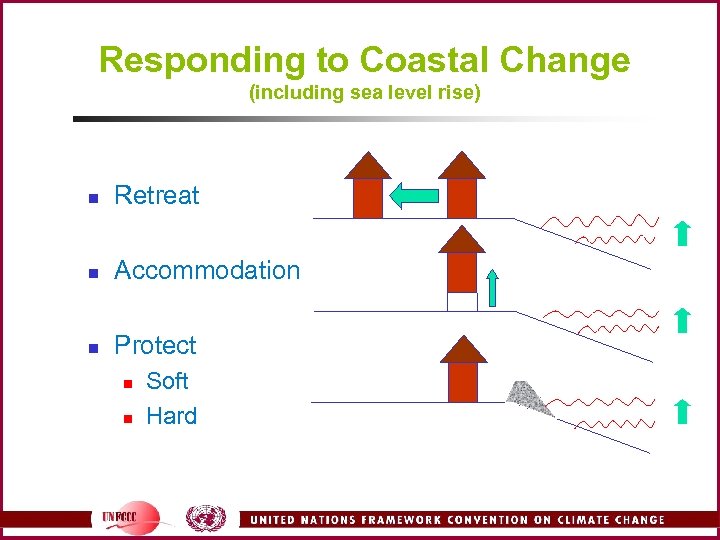
Responding to Coastal Change (including sea level rise) n Retreat n Accommodation n Protect n n Soft Hard
Adaptation Methods n Retreat n n n Managed retreat Relocation from high risk zones Accommodation n n Public awareness Natural disaster management planning
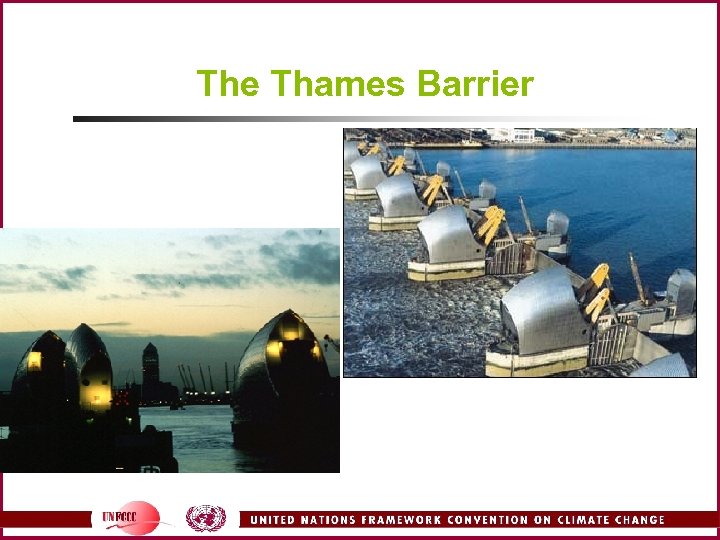
Adaptation Methods n Protect n Hard options n n n Revetments, breakwaters, groins Floodgates, tidal barriers Soft options n n Beach/wetland nourishment Dune restoration (continued)
Example Approach to Adaptation Measures n Climate change predictions n n Rise in sea level Increase in number and intensity of tropical weather systems Increase in severity of storm surges Changes in rainfall
Example Approach to Adaptation Measures (continued) n Coastal impacts n n n n Damage to property/infrastructure Damage/loss of coastal/marine ecosystems Destruction of hotels and tourism facilities Increased risk of disease Damage/loss of fisheries infrastructure General loss of biodiversity Submergence/inundation of coastal areas
Example Approach to Adaptation Measures (continued) n Adaptation (retreat, protect, accommodate) n n n Improved physical planning and development control Strengthening/implementation of EIA regulations Formulation of Coastal Zone Management Plan Monitoring of coastal habitats, including beaches Formulation of national climate change policy Public awareness and education
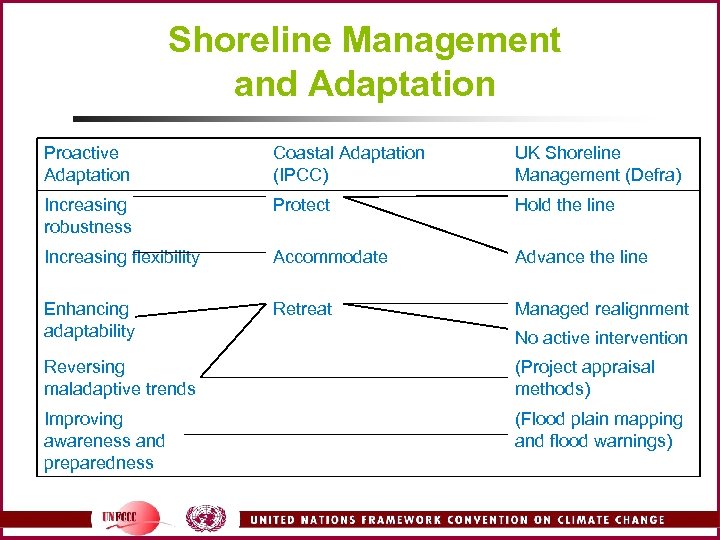
Shoreline Management and Adaptation Proactive Adaptation Coastal Adaptation (IPCC) UK Shoreline Management (Defra) Increasing robustness Protect Hold the line Increasing flexibility Accommodate Advance the line Enhancing adaptability Retreat Managed realignment No active intervention Reversing maladaptive trends (Project appraisal methods) Improving awareness and preparedness (Flood plain mapping and flood warnings)
V&A Tools & Data Sources 1 A. 36
Coastal Vulnerability Assessment n n Principles Older tools Top down Bottom up
Methods to Assess Impacts of Sea Level Rise n n n Sea level rise & climate change scenarios Screening assessment Erosion Flooding Top-down Bottom up
Screening Assessment n Rapid assessment to highlight possible impacts of a sea level rise scenario and identify information/data gaps n Qualitative or semiquantitative n Steps n n Collation of existing coastal data Assessment of the possible impacts of a high sea level rise scenario Implications of future development Possible responses to the problems caused by sea level rise
Step 1: Collation of Existing Data n n n n n Topographic surveys Aerial/remote sensing images – topography/ land cover Coastal geomorphology classification Evidence of subsidence Long-term relative sea level rise Magnitude and damage caused by flooding Coastal erosion Population density Activities located on the coast (cities, ports, resort areas and tourist beaches, industrial and agricultural areas)
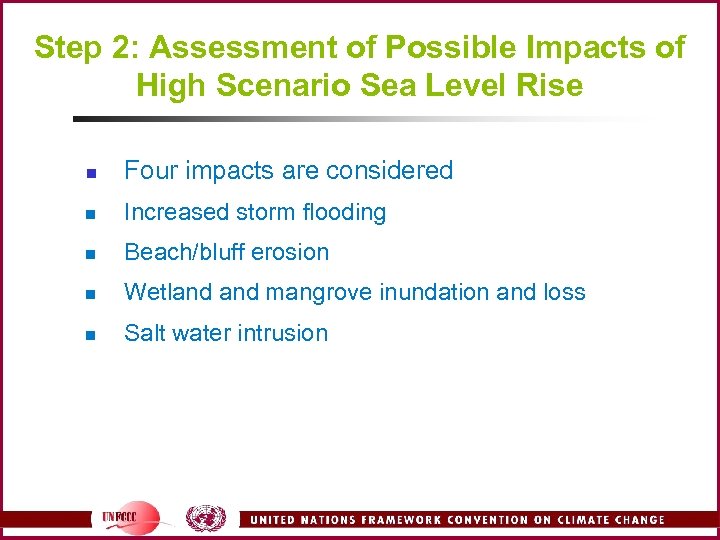
Step 2: Assessment of Possible Impacts of High Scenario Sea Level Rise n Four impacts are considered n Increased storm flooding n Beach/bluff erosion n Wetland mangrove inundation and loss n Salt water intrusion
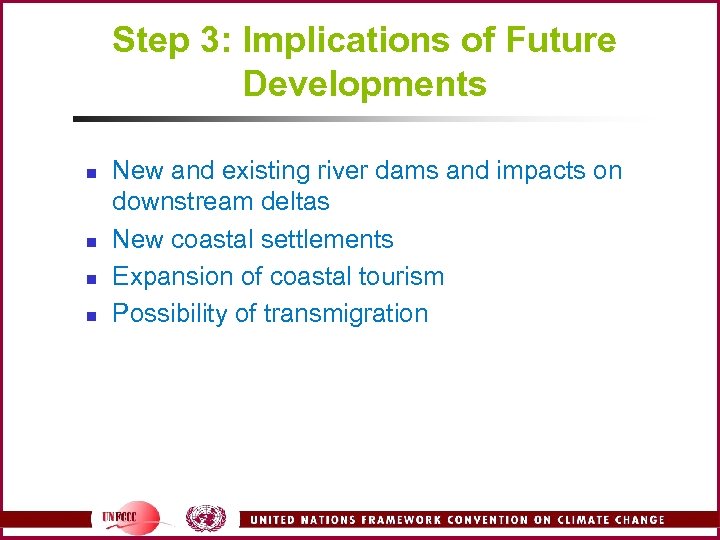
Step 3: Implications of Future Developments n n New and existing river dams and impacts on downstream deltas New coastal settlements Expansion of coastal tourism Possibility of transmigration
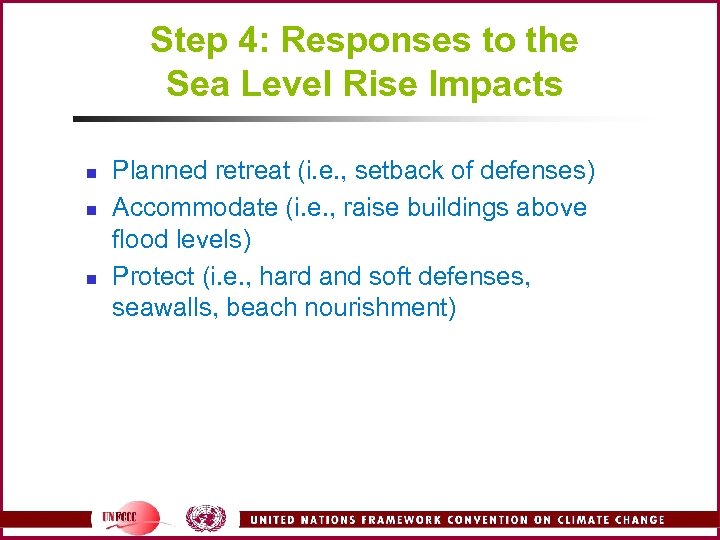
Step 4: Responses to the Sea Level Rise Impacts n n n Planned retreat (i. e. , setback of defenses) Accommodate (i. e. , raise buildings above flood levels) Protect (i. e. , hard and soft defenses, seawalls, beach nourishment)
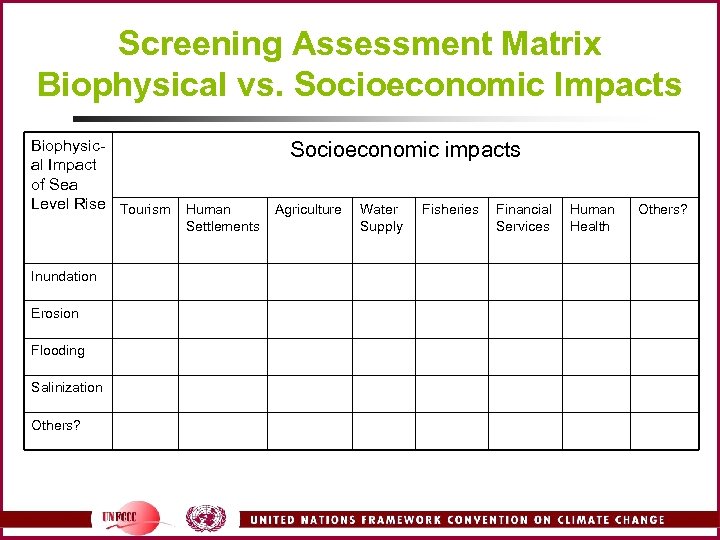
Screening Assessment Matrix Biophysical vs. Socioeconomic Impacts Biophysical Impact of Sea Level Rise Tourism Human Settlements Inundation Erosion Flooding Salinization Others? Socioeconomic impacts Agriculture Water Supply Fisheries Financial Services Human Health Others?
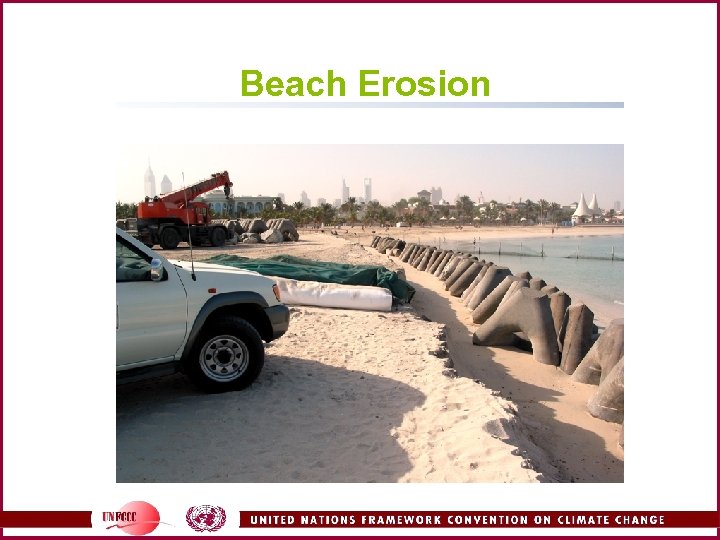
Beach Erosion
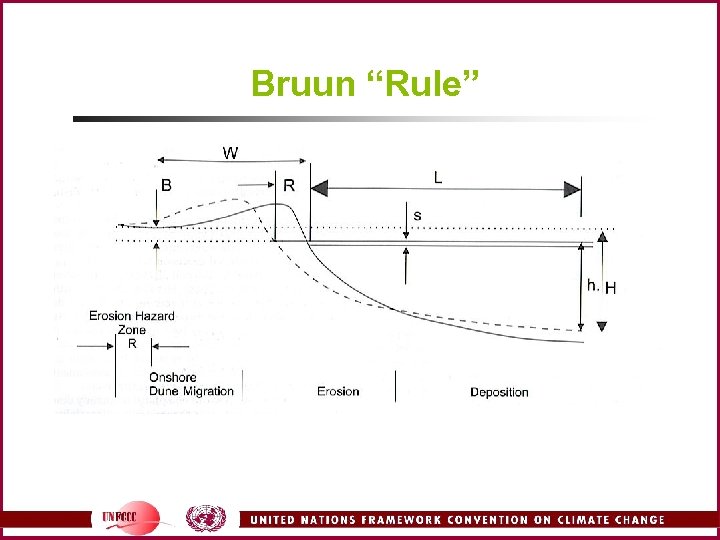
Bruun “Rule”
Limitations of the Bruun “Rule” n n Only describes one of the processes affecting sandy beaches Indirect effect of mean sea level rise n n n Estuaries and inlets maintain equilibrium Act as major sinks Sand eroded from adjacent coast Increased erosion rates Response time – best applied over long timescales
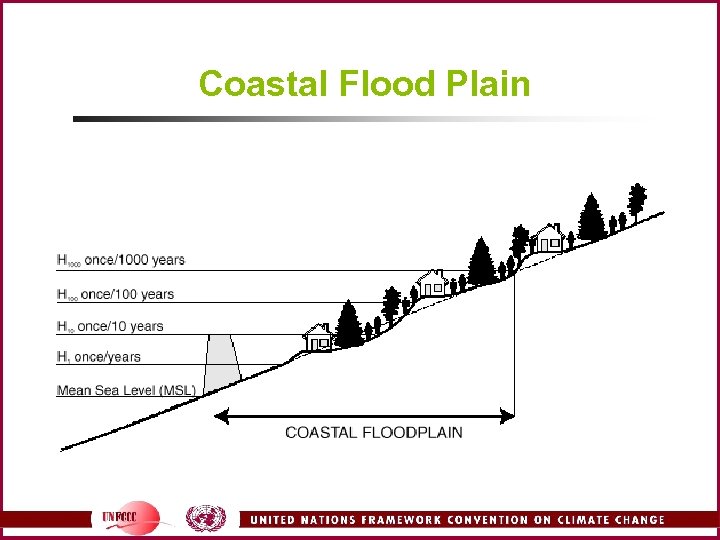
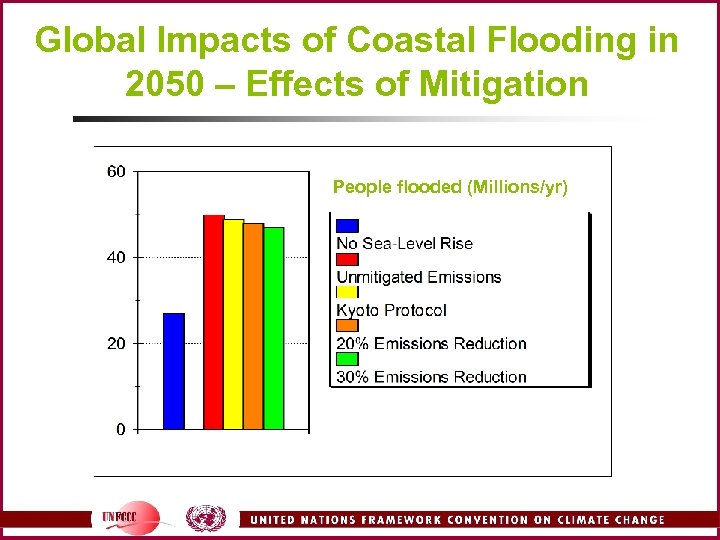
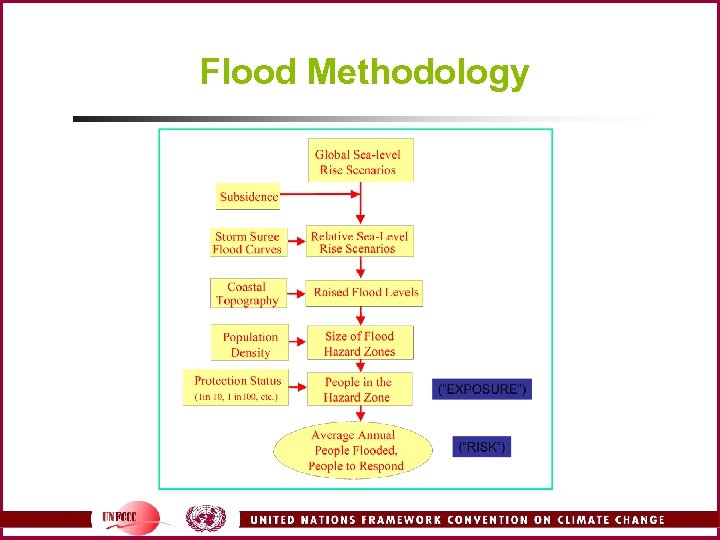
Flooding n n Increase in flood levels due to rise in sea level Increase in flood risk Increase in populations in coastal floodplain Adaptation n n Increase in flood protection Management and planning in floodplain
Coastal Flood Plain
Global Impacts of Coastal Flooding in 2050 – Effects of Mitigation People flooded (Millions/yr)
The Thames Barrier
Flood Methodology
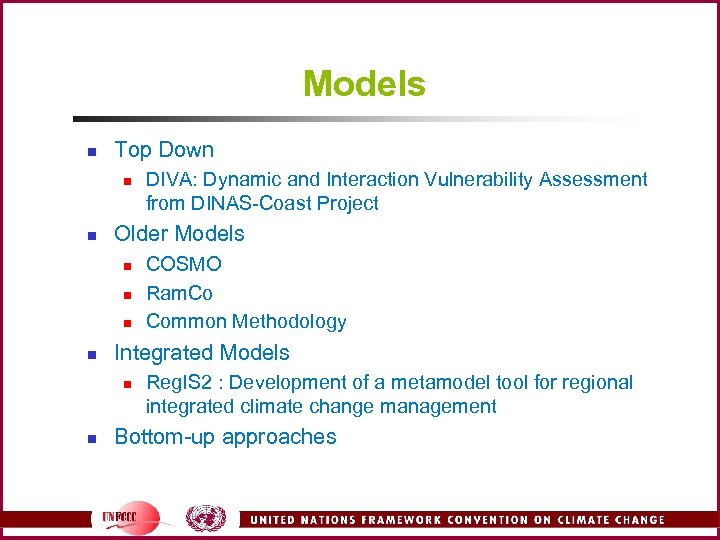
Models n Top Down n n Older Models n n COSMO Ram. Co Common Methodology Integrated Models n n DIVA: Dynamic and Interaction Vulnerability Assessment from DINAS-Coast Project Reg. IS 2 : Development of a metamodel tool for regional integrated climate change management Bottom-up approaches
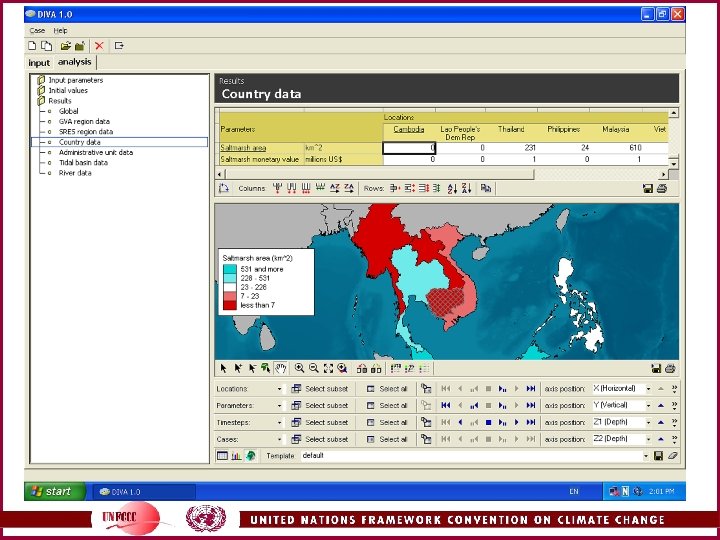
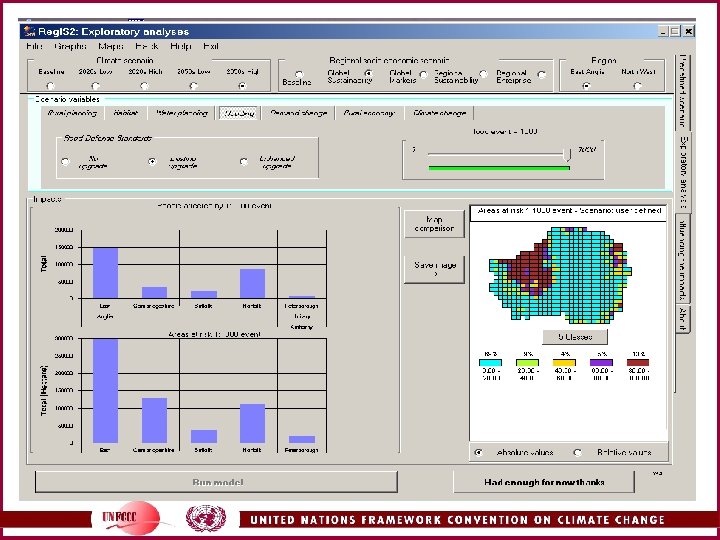
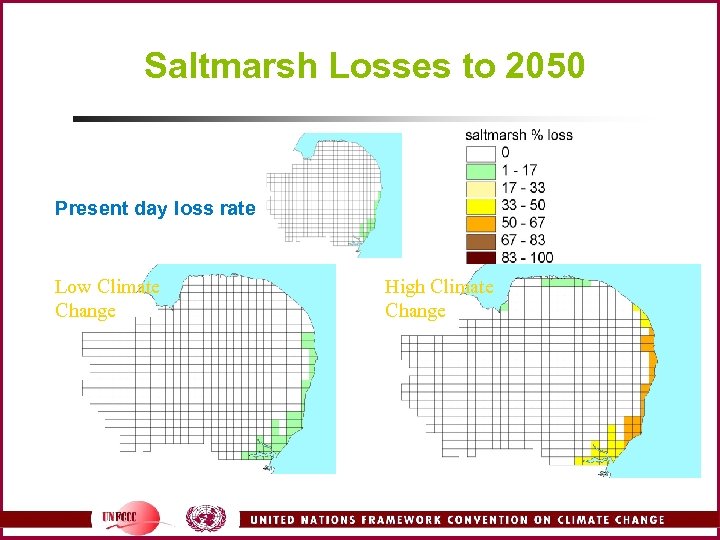
Saltmarsh Losses to 2050 Present day loss rate Low Climate Change High Climate Change
Bottom Up Models n n Detailed local assessments UK erosion assessment Australian approaches Relative assessment approach ‘Pacific Methodology’
Approach Selection n ‘Relative’ vs ‘absolute assessments’ Pragmatic approach and selection Example selection criteria: n n n Type of coast Management issues Time/budget Access to expertise & data Integration into adaptation
UK Planning Assessment n n Ongoing investigation and formulation of policy Requires information on n Role of major processes in sediment budget n Including human influences n Other climate change impacts Example of assessment from the UK Combined flood hazard and erosion assessment
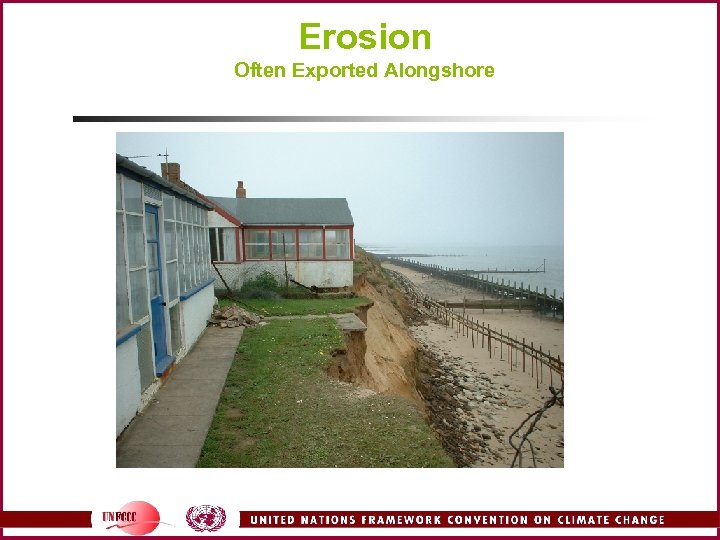
Erosion Often Exported Alongshore
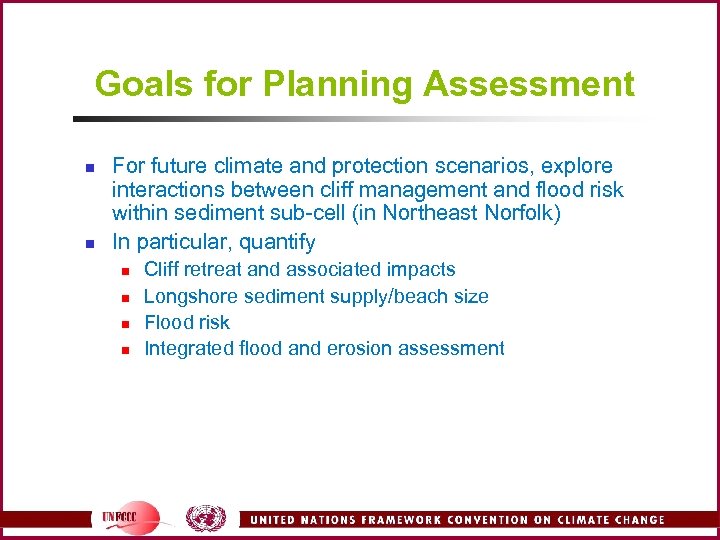
Goals for Planning Assessment n n For future climate and protection scenarios, explore interactions between cliff management and flood risk within sediment sub-cell (in Northeast Norfolk) In particular, quantify n n Cliff retreat and associated impacts Longshore sediment supply/beach size Flood risk Integrated flood and erosion assessment
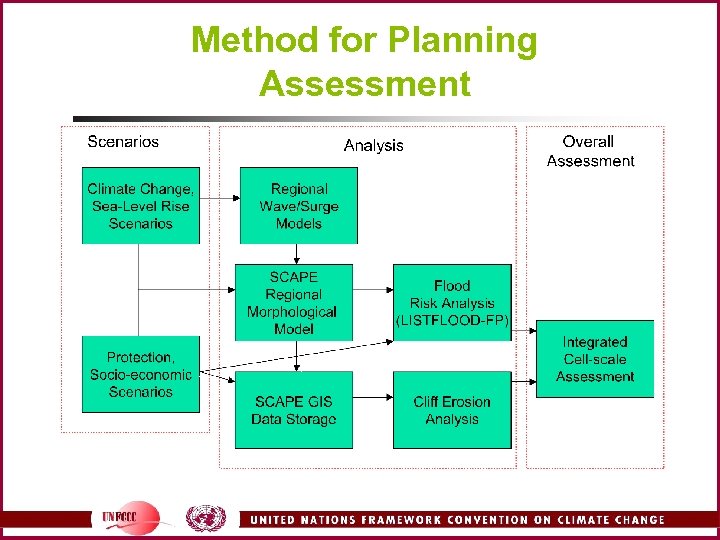
Method for Planning Assessment
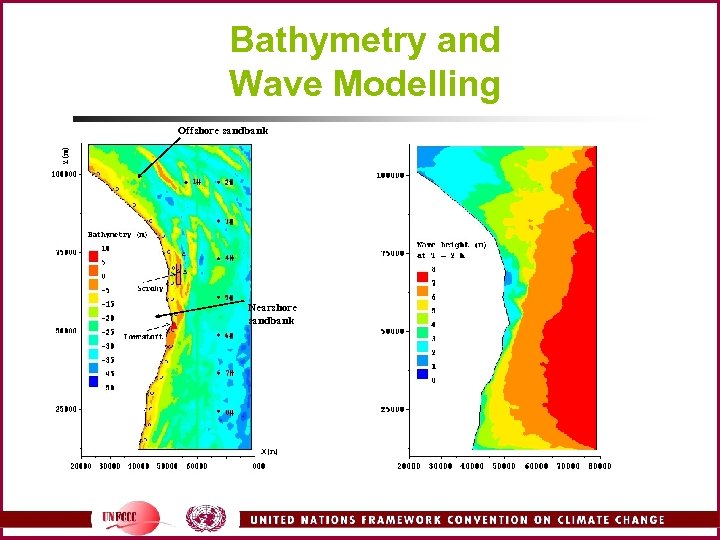
Bathymetry and Wave Modelling Offshore sandbank Nearshore sandbank
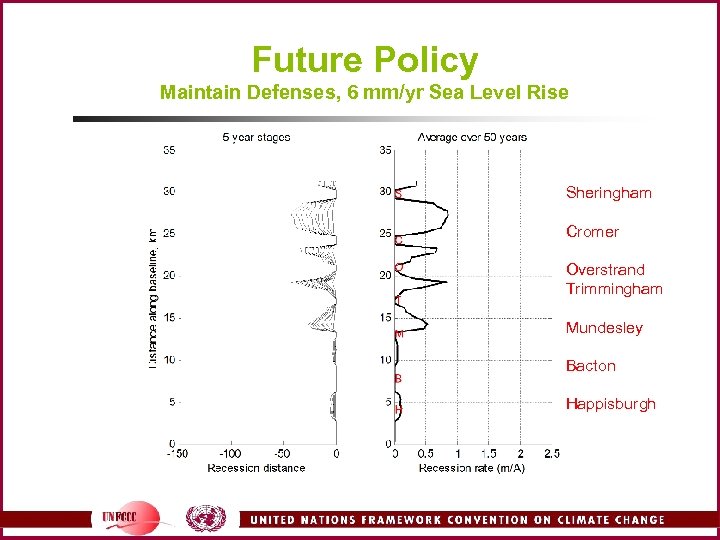
Future Policy Maintain Defenses, 6 mm/yr Sea Level Rise Sheringham Cromer Overstrand Trimmingham Mundesley Bacton Happisburgh
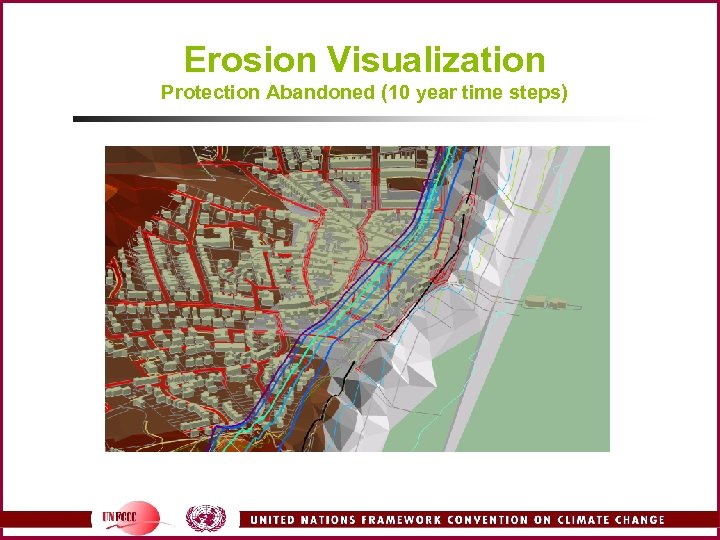
Erosion Visualization Protection Abandoned (10 year time steps)
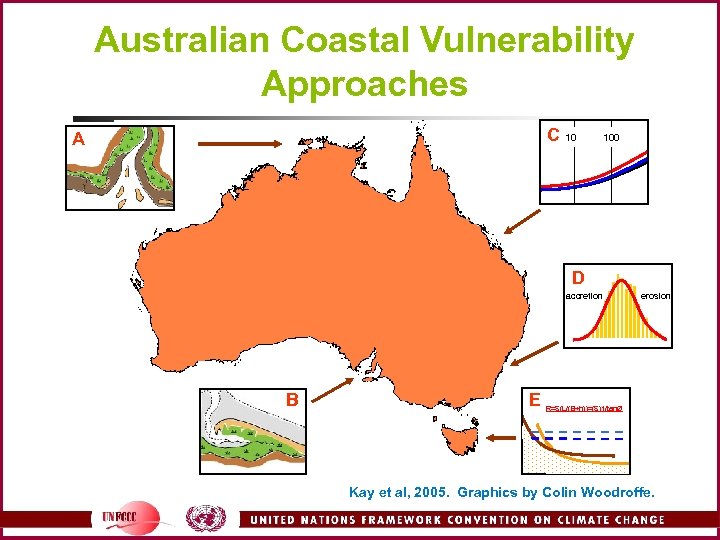
Australian Coastal Vulnerability Approaches C 10 A 100 D accretion B E erosion R=S(L/(B+h))=(S)1/tanØ Kay et al, 2005. Graphics by Colin Woodroffe.
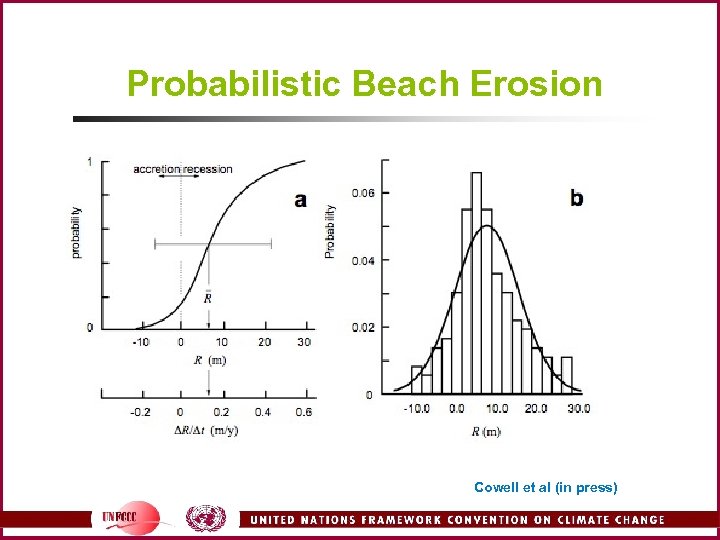
Probabilistic Beach Erosion Cowell et al (in press)
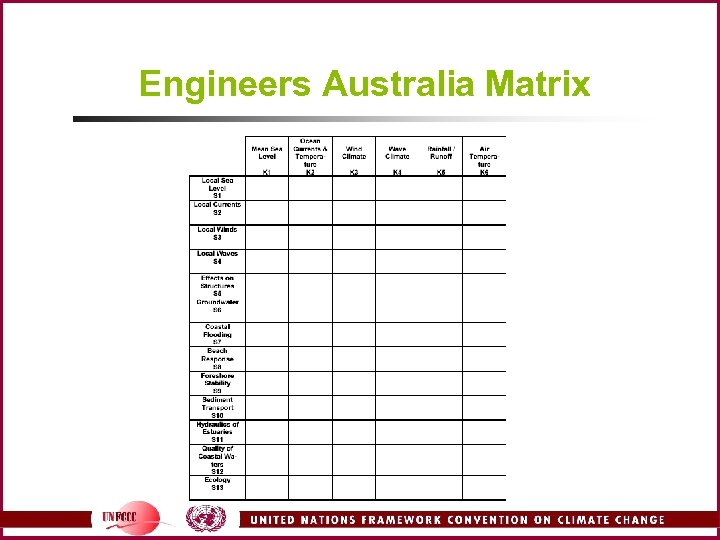
Engineers Australia Matrix
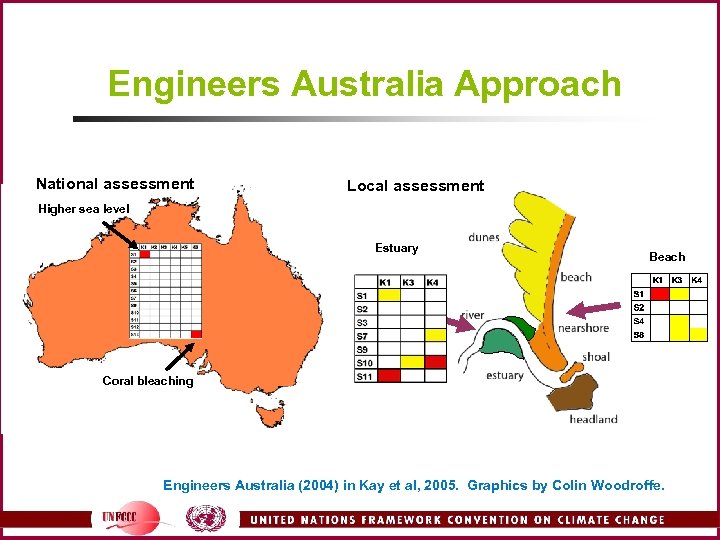
Engineers Australia Approach National assessment Local assessment Higher sea level Estuary Beach Coral bleaching Engineers Australia (2004) in Kay et al, 2005. Graphics by Colin Woodroffe.
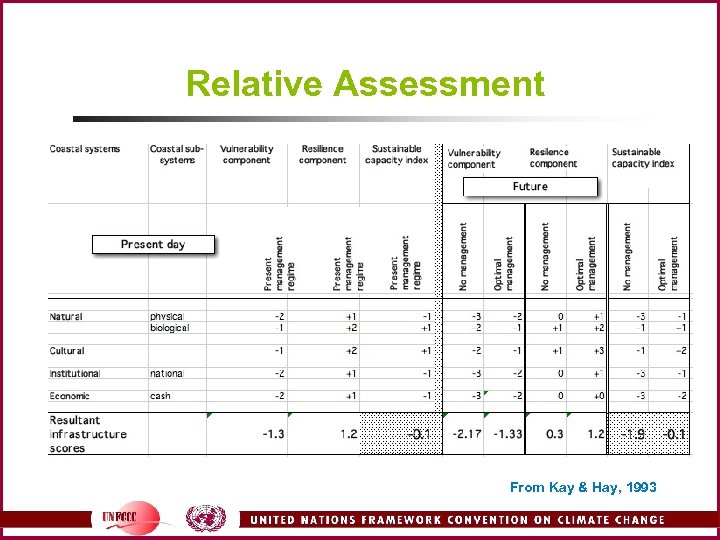
Relative Assessment From Kay & Hay, 1993
Group Consultation Processes n n n Expert consensus building Stakeholder engagement processes Can be as structured or unstructured as required
Barriers to Conducting Vulnerability Assessments n n n Incomplete knowledge of the relevant processes affected by sea level rise and their interactions Insufficient data on existing physical conditions Difficulty in developing the local and regional scenarios of future changes Lack of appropriate analytical methodologies Variety of questions raised by different sociopolitical conditions
Data Sources n n IPCC Data Distribution Centre Sea level data n n n Permanent service for mean sea level GLOSS – Global Sea-Level Observing System Remotely sensed data n n Land Processes Distributed Active Archive Centre (NASA) Shuttle radar topography mission
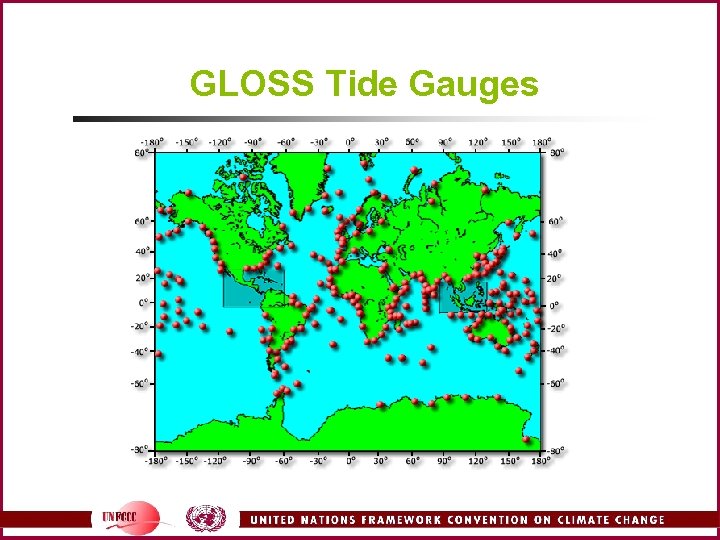
GLOSS Tide Gauges
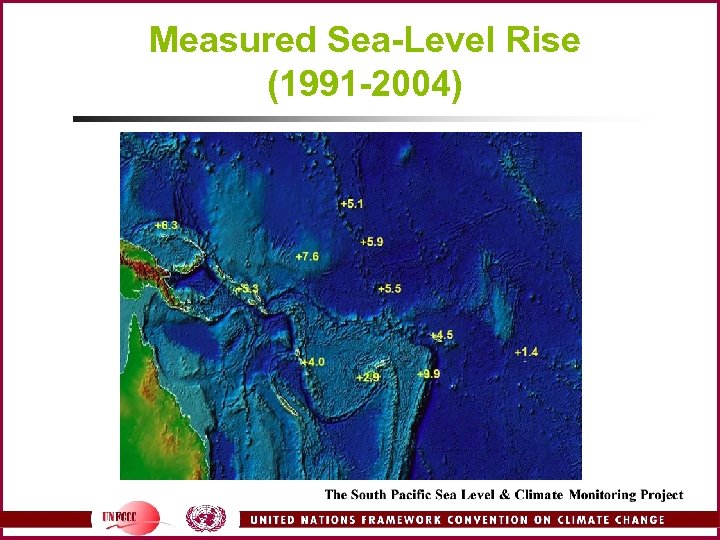
Measured Sea-Level Rise (1991 -2004)
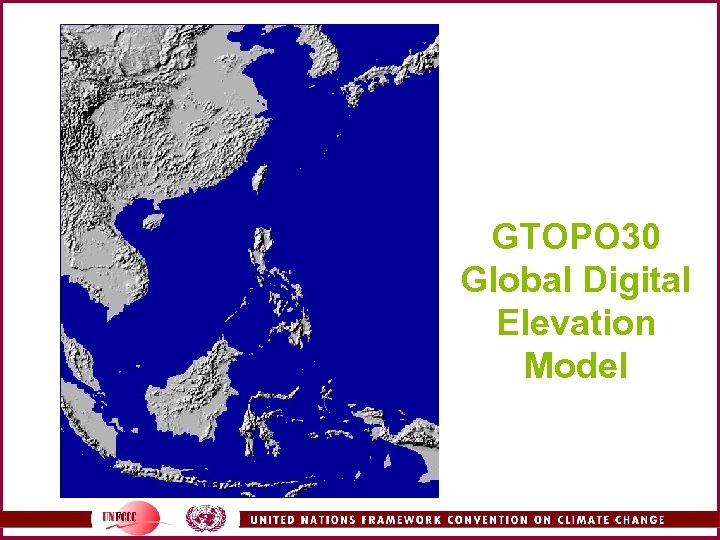
GTOPO 30 Global Digital Elevation Model
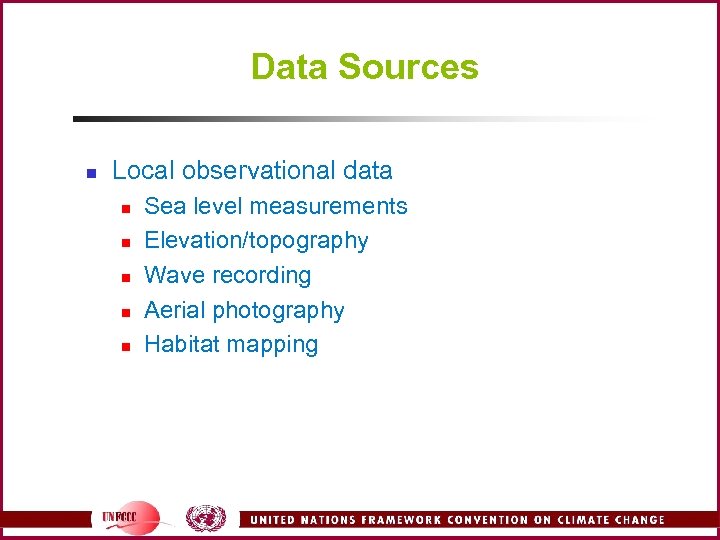
Data Sources n Local observational data n n n Sea level measurements Elevation/topography Wave recording Aerial photography Habitat mapping
Integrating Mechanisms Integrated Coastal Zone Management (ICZM) 1 A. 78
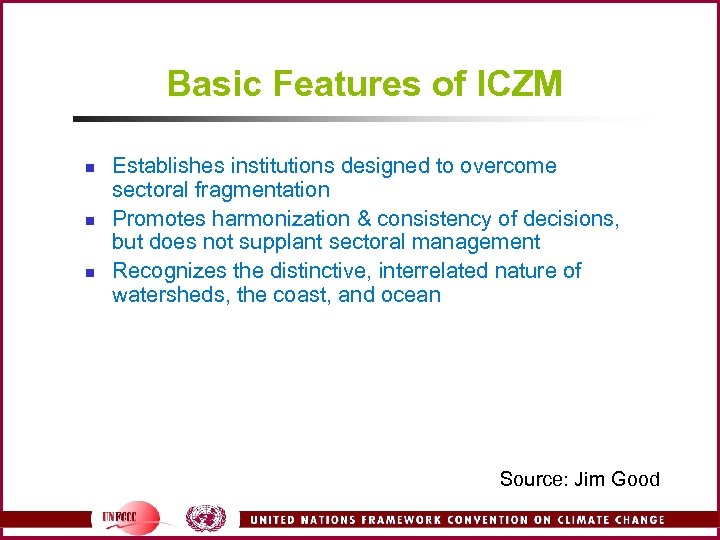
Basic Features of ICZM n n n Establishes institutions designed to overcome sectoral fragmentation Promotes harmonization & consistency of decisions, but does not supplant sectoral management Recognizes the distinctive, interrelated nature of watersheds, the coast, and ocean Source: Jim Good
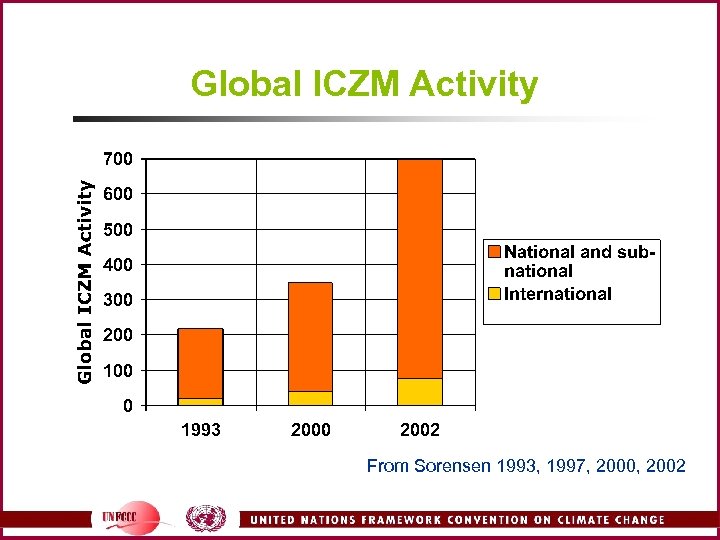
Global ICZM Activity From Sorensen 1993, 1997, 2000, 2002
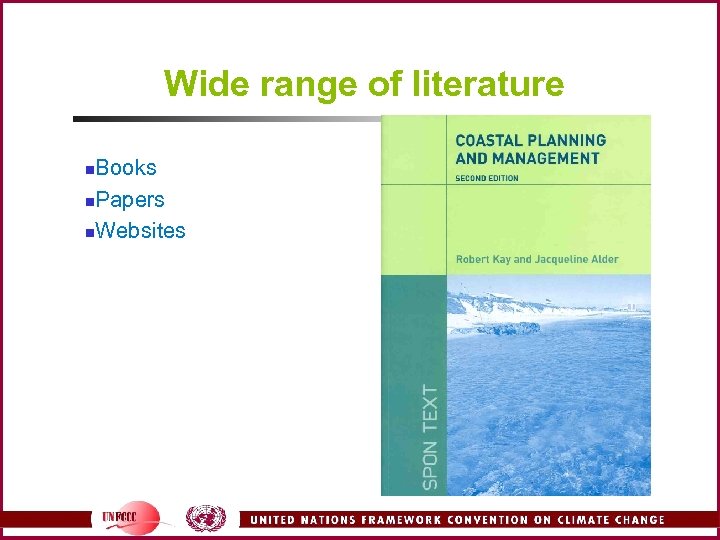
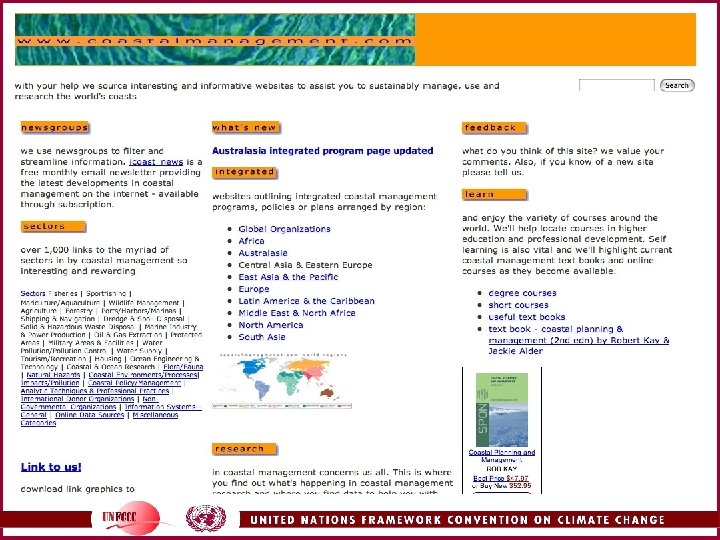
Wide range of literature Books n. Papers n. Websites n
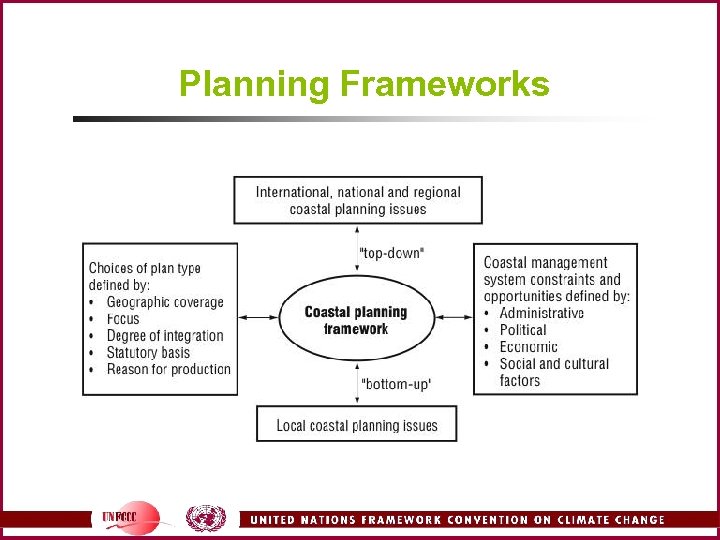
Planning Frameworks
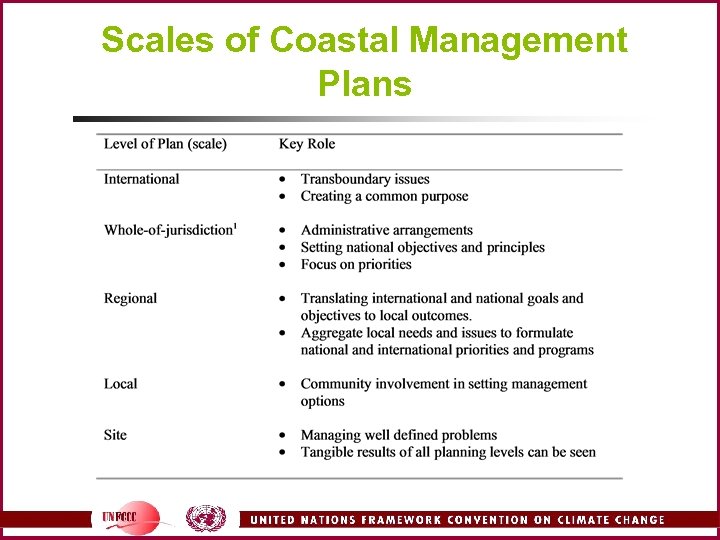
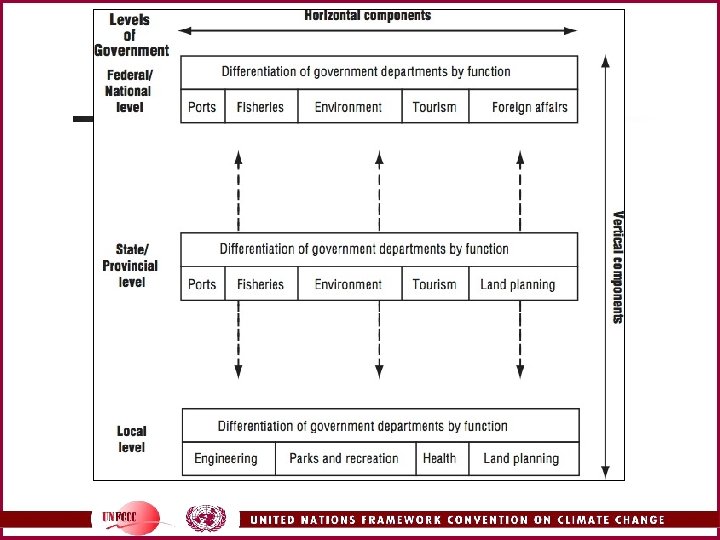
Scales of Coastal Management Plans
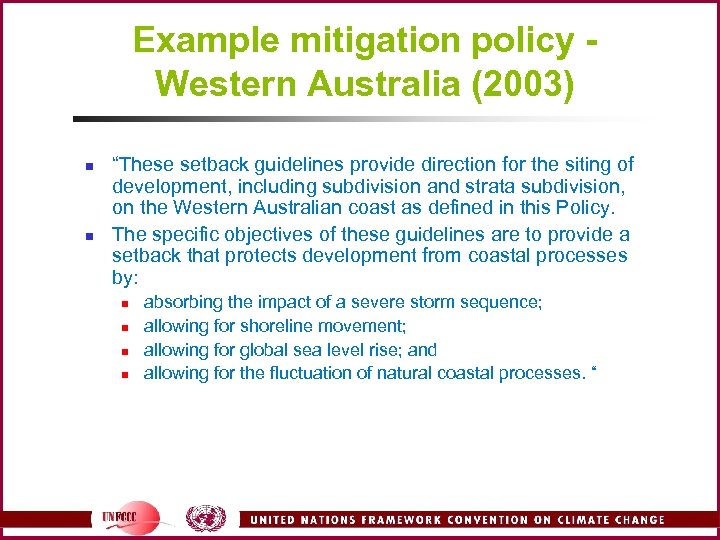
Example mitigation policy Western Australia (2003) n n “These setback guidelines provide direction for the siting of development, including subdivision and strata subdivision, on the Western Australian coast as defined in this Policy. The specific objectives of these guidelines are to provide a setback that protects development from coastal processes by: n n absorbing the impact of a severe storm sequence; allowing for shoreline movement; allowing for global sea level rise; and allowing for the fluctuation of natural coastal processes. “
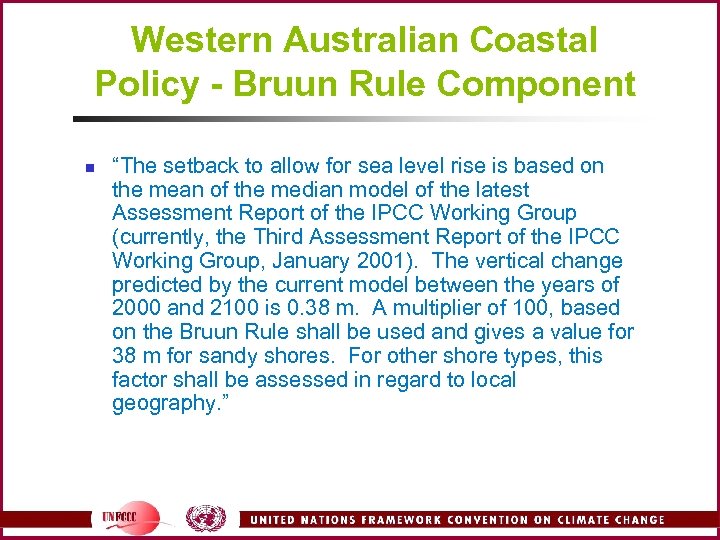
Western Australian Coastal Policy - Bruun Rule Component n “The setback to allow for sea level rise is based on the mean of the median model of the latest Assessment Report of the IPCC Working Group (currently, the Third Assessment Report of the IPCC Working Group, January 2001). The vertical change predicted by the current model between the years of 2000 and 2100 is 0. 38 m. A multiplier of 100, based on the Bruun Rule shall be used and gives a value for 38 m for sandy shores. For other shore types, this factor shall be assessed in regard to local geography. ”
Recap 1. 2. 3. 4. 5. Drivers & impacts on coastal areas Adaptation options V&A tools & data sources Integrating mechanisms Conclusions
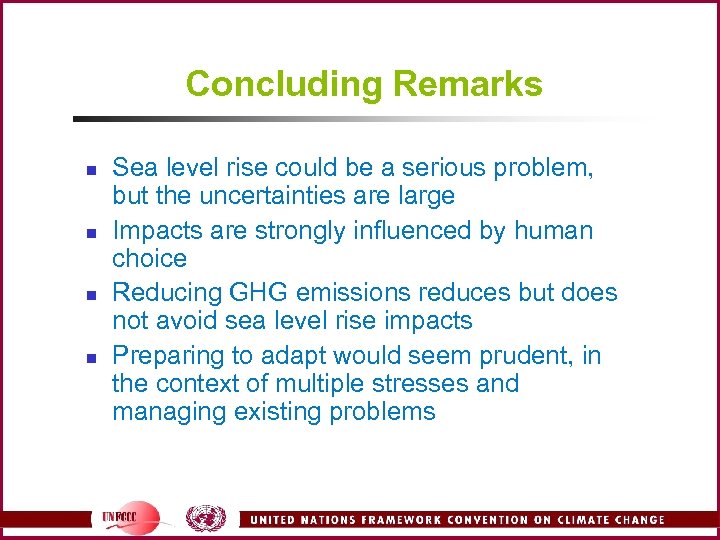
Concluding Remarks n n Sea level rise could be a serious problem, but the uncertainties are large Impacts are strongly influenced by human choice Reducing GHG emissions reduces but does not avoid sea level rise impacts Preparing to adapt would seem prudent, in the context of multiple stresses and managing existing problems
Скачать презентацию Vulnerability and Adaptation Assessments Hands-On Training Workshop Impact
6a5873fe0576b946d8fc6edff834c6d0.ppt