


 Скачать презентацию Voluntary Industry Initiatives in Jamaica EAST Karen Mc
772950be9bdeb2d4ce4daf22dcf65a23.ppt
- Количество слайдов: 14
 Voluntary Industry Initiatives in Jamaica: EAST Karen Mc. Donald-Gayle Project Management Specialist USAID/Jamaica Hugh Cresser Project Coordinator The EAST Project World Tourism Organization – Tourism Policy Forum October 20, 2004 Working Group Sessions Session C: SME Business Development and Competitiveness
 USAID/Jamaica Environment Program: From Ridge to Reef Goal: ♦ To improve natural resource quality in select areas across Jamaica 3 major project activities focused on: ♦ Improving wastewater management ♦ Assisting the government to develop environmental policies ♦ Promoting Environmental Best Practices in: – Coastal Zone Management – Watershed Management – Sustainable Tourism
 The Phases of The EAST Project: Phase 1 ♦ ♦ Demonstration of effectiveness of EMS as savings tool Green Globe Certification Training and testing environmental technologies Identifying the total product Phase 2 ♦ ♦ Demonstration of EMS in tourism facilities and attractions Continued EMS work and certification Working with educational institutions and developing “green” curriculum for Hotel Training Facility EMS work with manufacturing sector Phase 3 ♦ ♦ Promoting an integrated tourism development approach for a single destination (Portland) The Destination Management Program (DMP)
 EAST Background ♦ Began in 1997 as a demonstration of the benefits of improved environmental management in the hotel and manufacturing sectors ♦ Focused on impacts to the bottom line to ensure buy-in: – – – Energy use Water use Wastewater generation Solid waste generation Use of chemicals
 Objectives of EAST Project ♦ Promote sound environmental management in the hotel/tourist industry and manufacturing sector and forge linkages between both industries ♦ Identify environmental champions ♦ Include best environmental management practices in hospitality and tourism curricula ♦ Transfer the lessons learned to the wider Caribbean
 Implementation Strategies ♦ Target four groups for capacity building in relevant government and non -government tourism organizations: 1) 2) 3) 4) Hotels and attractions Tourism and other government agencies Educational institutions Communities ♦ Provide technical and institutional strengthening assistance for long term strategies ♦ Inclusion of lessons learned and best practices initiatives into standard operating requirements for licenses issued by the Tourism Product Development Company (TPDCo)
 Challenges Encountered ♦ Limited management and technical capabilities of small hotels ♦ Identification of leaders and champions within the tourism industry ♦ Changing the mind-set from “standard practices” to “best practices” in business operations ♦ Sourcing capital for environmental retrofitting ♦ Need for increased government support for licensing standards, promotion and marketing, and incentives for “going green”
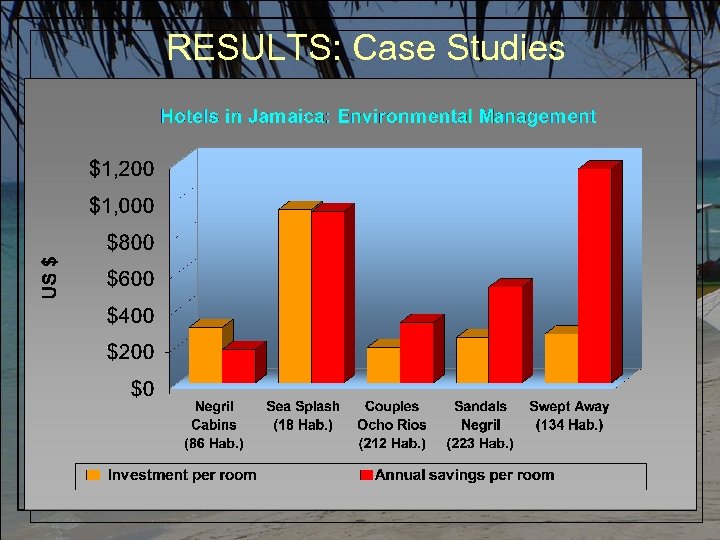 RESULTS: Case Studies
 Major Accomplishments ♦ Introduction of Green Globe 21 Certification ♦ Greening of curricula at the Runaway Bay HEART Hotel and Training Institute ♦ Introduction of Certified Hotel Environmental Manager program ♦ Audit protocol for hotels, attractions and manufacturing enterprises ♦ Development of a Destination Management Program
 Destination Management Promoting Collective Actions ♦ Repositioning Portland as a prime tourism destination ♦ Encouraging sound and coordinated environmental planning by government and private sector ♦ Identifying new and innovative economic development opportunities for local communities ♦ Meeting international sustainable tourism benchmarks ♦ Achieving Green Globe 21 Benchmarking and Certification for Portland
 Indirect Achievements ♦ Improved awareness of environment issues within tourism industry ` ♦ Public/private partnerships in destination management ♦ Industry support to local communities and environmental NGOs ♦ Transfer of experience to Eastern Caribbean ♦ Government of Jamaica has endorsed the GG 21 Certification and encouraging all hotels to become certified ♦ Large hotels and hotel groups have come on board and are getting certified
 Lessons Learned ♦ EMS is an effective management tool, while certification provides necessary incentive ♦ Promotion of achievements results in “follow the leader” ♦ Voluntary approach extends “outside the fence” of hotel properties ♦ Continuous improvement creates incentive for innovation ♦ Environmental issues must be incorporated into mainstream planning and investment decision
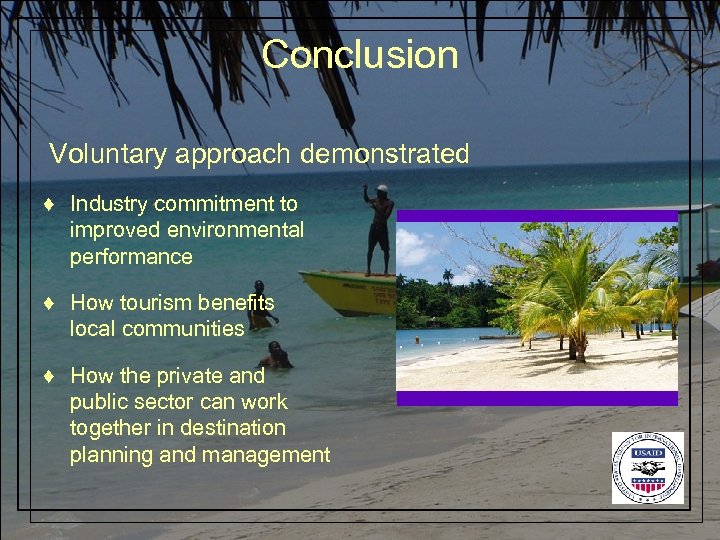 Conclusion Voluntary approach demonstrated ♦ Industry commitment to improved environmental performance ♦ How tourism benefits local communities ♦ How the private and public sector can work together in destination planning and management
 Thank you! This project was implemented by PA Government Services