


 Скачать презентацию Volume D MODERN PERIOD 1910 1945 1
49d747fa80437dcbb789f59133aaf00b.ppt
- Количество слайдов: 7
 Volume D MODERN PERIOD, 1910– 1945 1
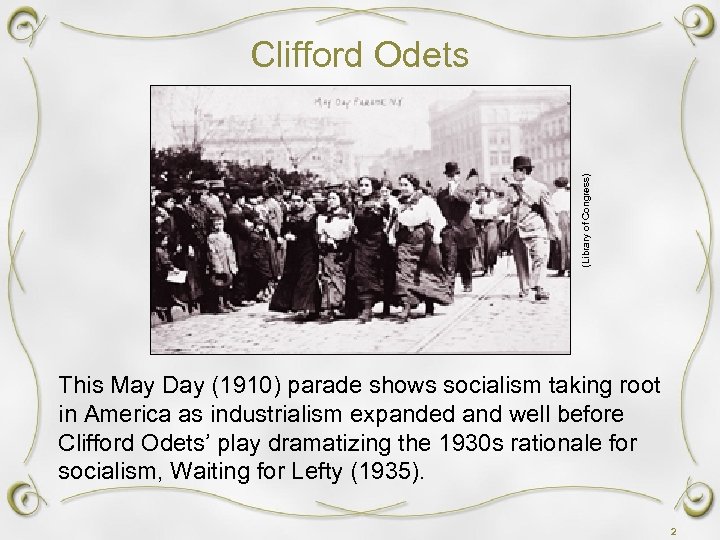 (Library of Congress) Clifford Odets This May Day (1910) parade shows socialism taking root in America as industrialism expanded and well before Clifford Odets’ play dramatizing the 1930 s rationale for socialism, Waiting for Lefty (1935). 2
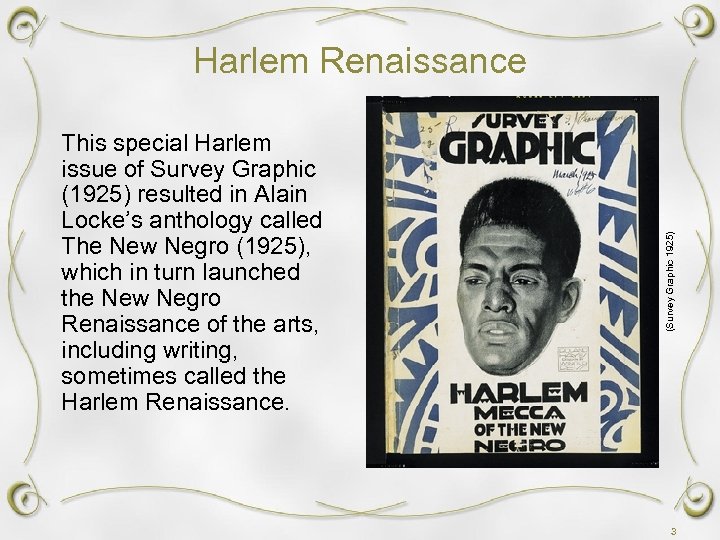 This special Harlem issue of Survey Graphic (1925) resulted in Alain Locke’s anthology called The New Negro (1925), which in turn launched the New Negro Renaissance of the arts, including writing, sometimes called the Harlem Renaissance. (Survey Graphic 1925) Harlem Renaissance 3
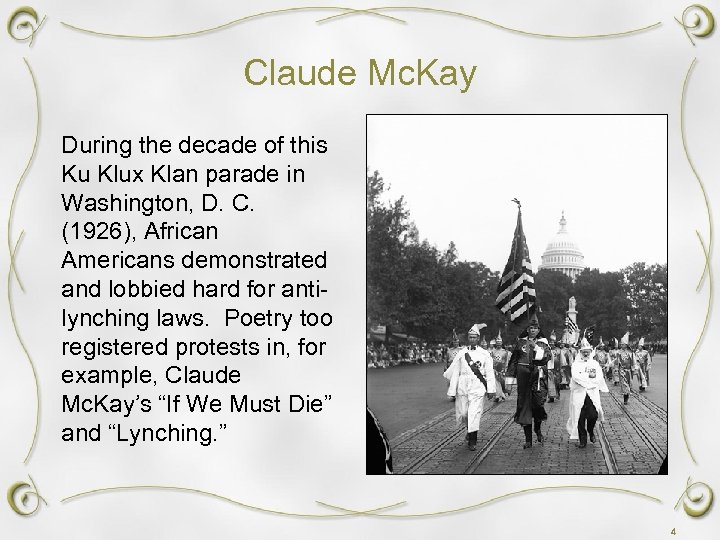 Claude Mc. Kay During the decade of this Ku Klux Klan parade in Washington, D. C. (1926), African Americans demonstrated and lobbied hard for antilynching laws. Poetry too registered protests in, for example, Claude Mc. Kay’s “If We Must Die” and “Lynching. ” 4
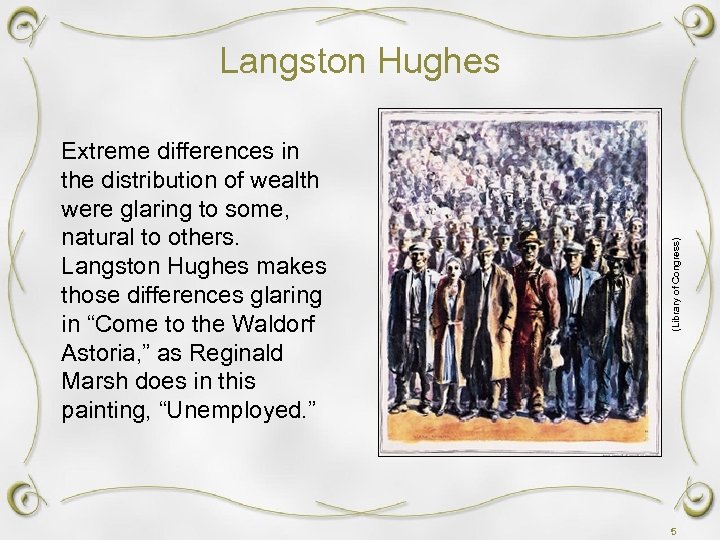 Extreme differences in the distribution of wealth were glaring to some, natural to others. Langston Hughes makes those differences glaring in “Come to the Waldorf Astoria, ” as Reginald Marsh does in this painting, “Unemployed. ” (Library of Congress) Langston Hughes 5
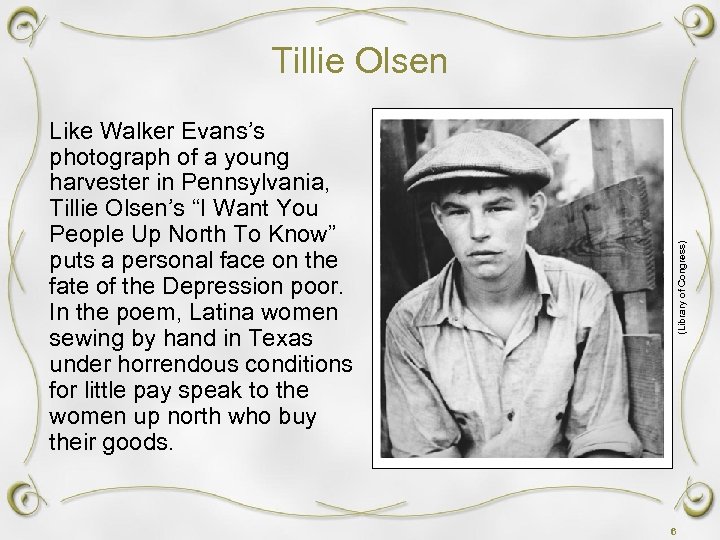 Like Walker Evans’s photograph of a young harvester in Pennsylvania, Tillie Olsen’s “I Want You People Up North To Know” puts a personal face on the fate of the Depression poor. In the poem, Latina women sewing by hand in Texas under horrendous conditions for little pay speak to the women up north who buy their goods. (Library of Congress) Tillie Olsen 6
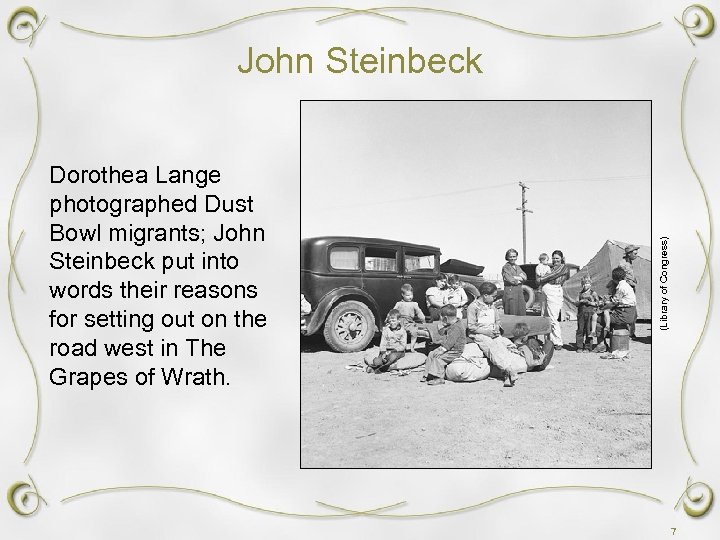 Dorothea Lange photographed Dust Bowl migrants; John Steinbeck put into words their reasons for setting out on the road west in The Grapes of Wrath. (Library of Congress) John Steinbeck 7