


 Скачать презентацию Voice over Internet Protocol Vo IP technology www
0e3e946cbe0194a16ef0e4b01c18ff64.ppt
- Количество слайдов: 66
 Voice over Internet Protocol (Vo. IP) technology www. slt. lk
 Part I - Re-cap of Basics • • • www. slt. lk What is a protocol? Telephony Circuit switching Important technical terms Public switched telephone network (PSTN) Internet Protocol (IP) suite Internet Protocol networks Packet switching What is Vo. IP? What is the need for Vo. IP? Growth opportunity for Vo. IP
 What is a Protocol? • A protocol is a special set of rules that end points in a telecommunication connection use when they communicate www. slt. lk
 Telephony • Telephony is “communicating at a distance” • It is “circuit switched”, i. e. , there is dedicated channel for exchange of voice and signaling throughout the conversation • Reliable delivery • End to end www. slt. lk
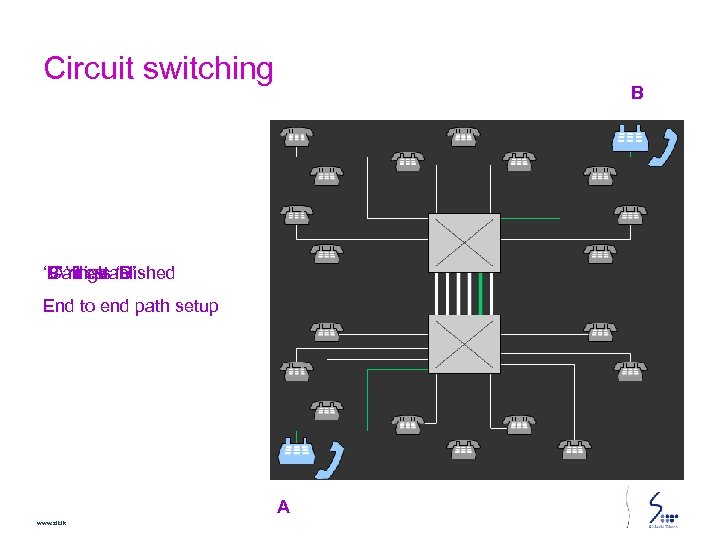 Circuit switching ‘B’ rings Call established ‘A’ dials ‘B’ End to end path setup A www. slt. lk B
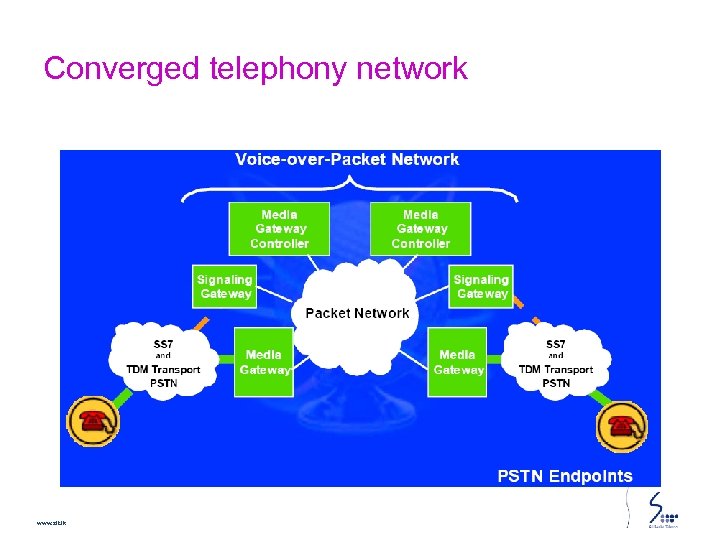
 Important technical terms • Media – refers data / audio / video • Gateway – a network element that interconnect two disparate networks such as PSTN and IP networks • Signaling – controls that govern how a media stream is set up, maintained, and gracefully discontinued • TDM – Time Division Multiplexing (used in telecom networks) www. slt. lk
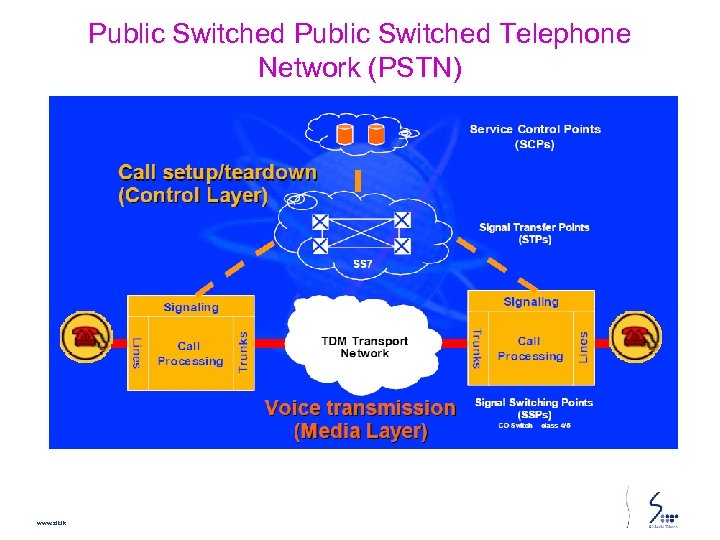 Public Switched Telephone Network (PSTN) www. slt. lk
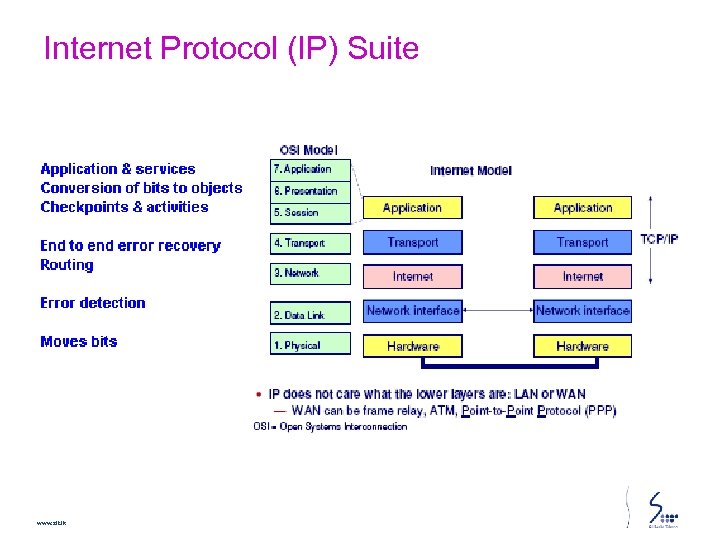 Internet Protocol (IP) Suite www. slt. lk
 Internet Protocol (IP) networks • Use Internet Protocol for communication of data across “packet switched” network • Characteristics of IP are – – www. slt. lk Connectionless Best effort Unreliable Out of order delivery
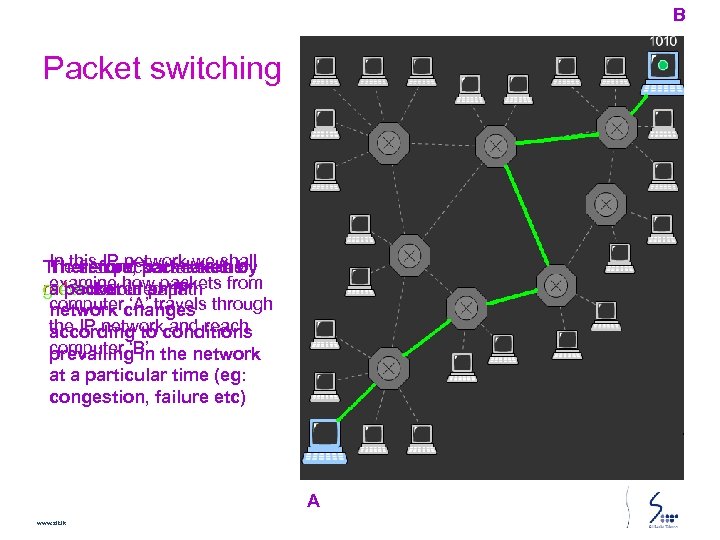 B Packet switching In this IP network we shall The second packet takes The first packet takes the Therefore, path taken by examine how packets from green coloured path red coloured path a packet in an IP computer ‘A’ travels through network changes the IP network and reach according to conditions computer ‘B’ prevailing in the network at a particular time (eg: congestion, failure etc) A www. slt. lk
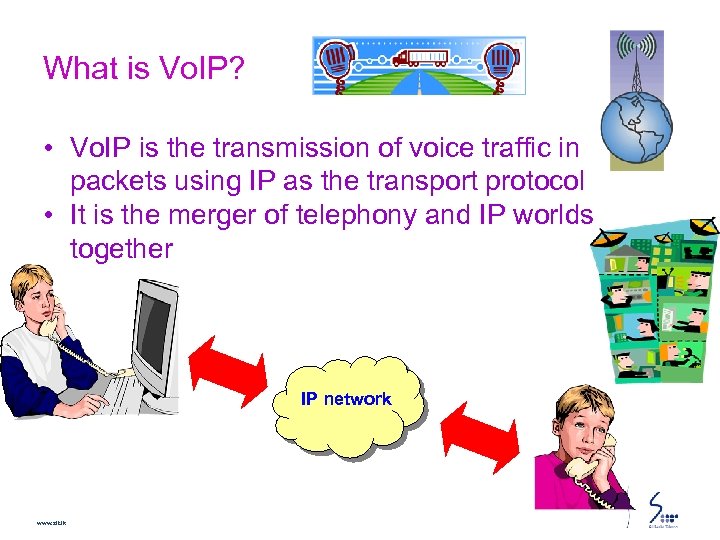 What is Vo. IP? • Vo. IP is the transmission of voice traffic in packets using IP as the transport protocol • It is the merger of telephony and IP worlds together IP network www. slt. lk
 What is the need for Vo. IP? • • • www. slt. lk Integration of voice and data Universal presence of IP Maturation of technologies Bandwidth consolidation The shift to data networks
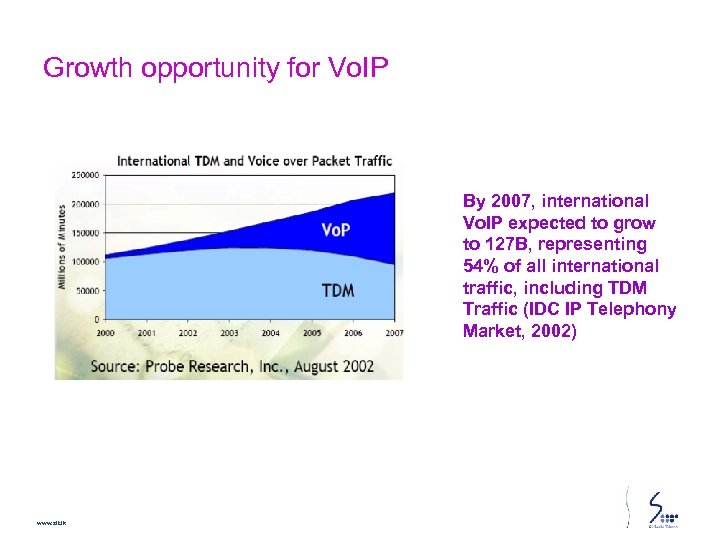 Growth opportunity for Vo. IP By 2007, international Vo. IP expected to grow to 127 B, representing 54% of all international traffic, including TDM Traffic (IDC IP Telephony Market, 2002) www. slt. lk
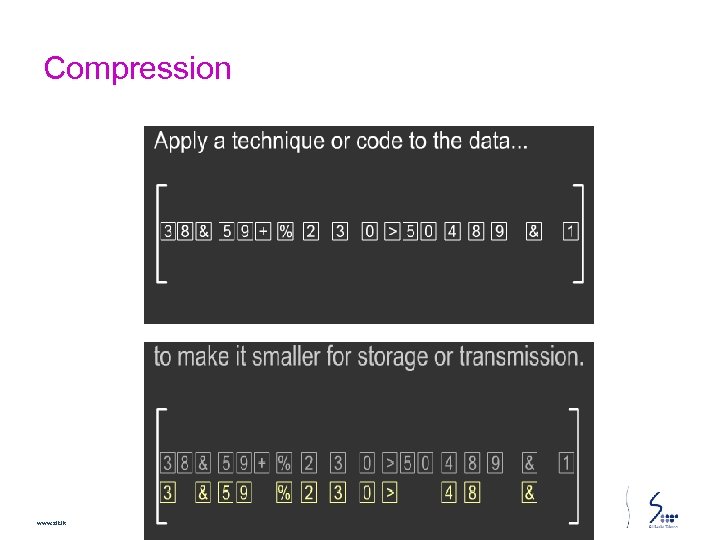
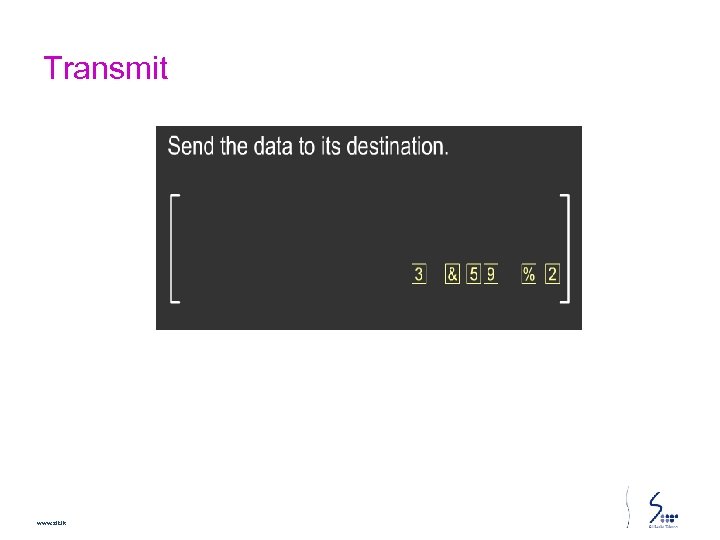
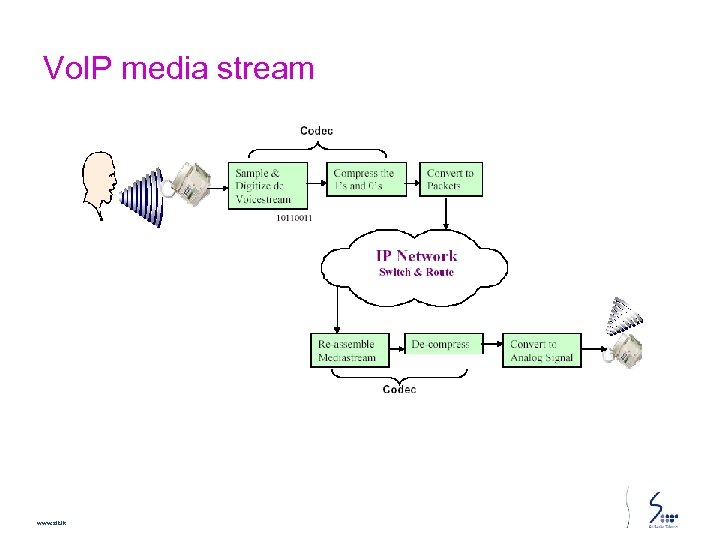
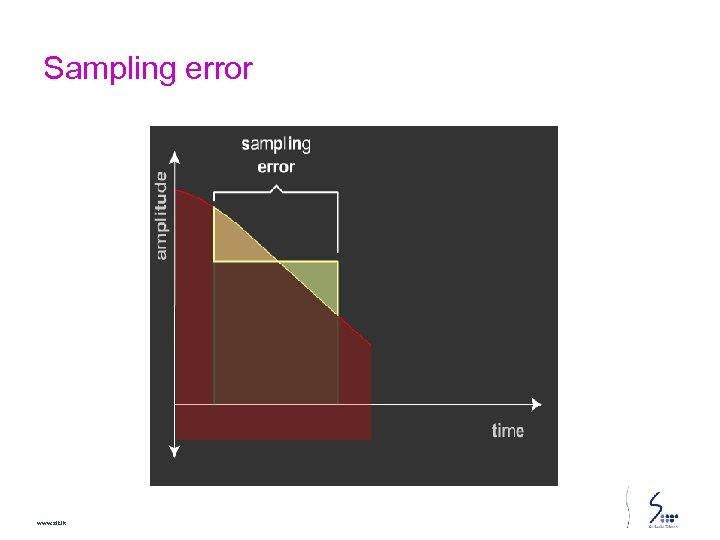
 Part II - Voice processing in Vo. IP • • www. slt. lk Voice signal Digitization Compression Transmission Vo. IP media stream Sampling error Sampling rate Packet delivery in Vo. IP
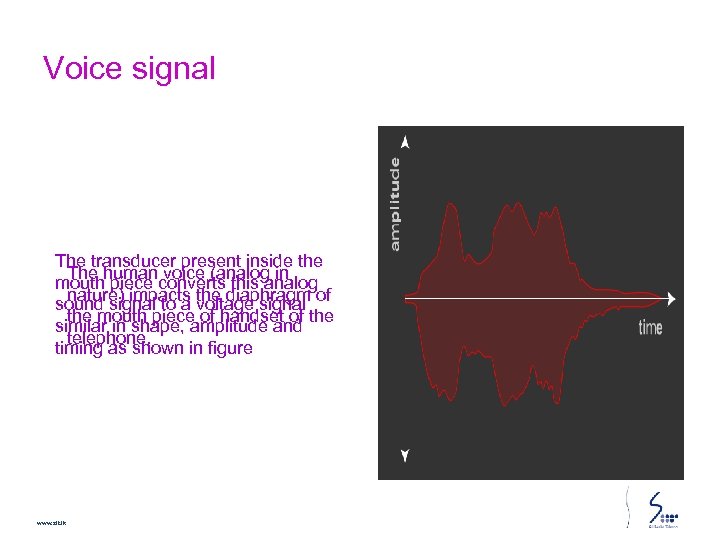 Voice signal The transducer present inside the The human voice (analog in mouth piece converts this analog nature) impacts the diaphragm of sound signal to a voltage signal the mouth piece of handset of the similar in shape, amplitude and telephone. timing as shown in figure www. slt. lk
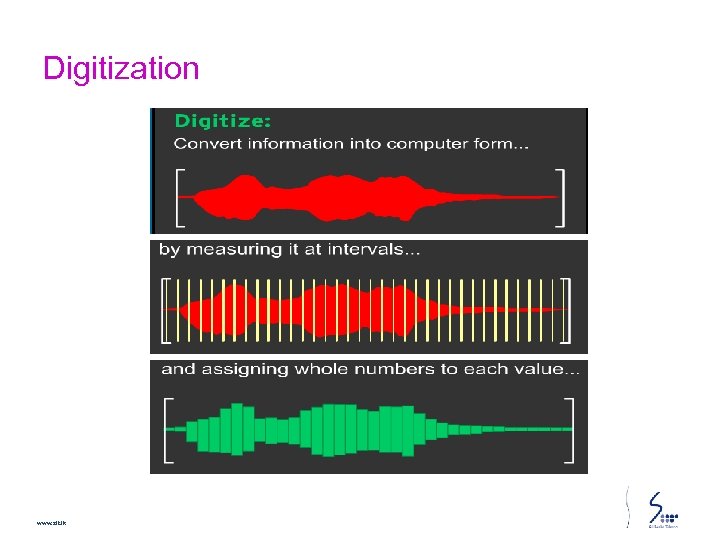 Digitization www. slt. lk
 Compression www. slt. lk
 Transmit www. slt. lk
 Vo. IP media stream www. slt. lk
 Sampling error www. slt. lk
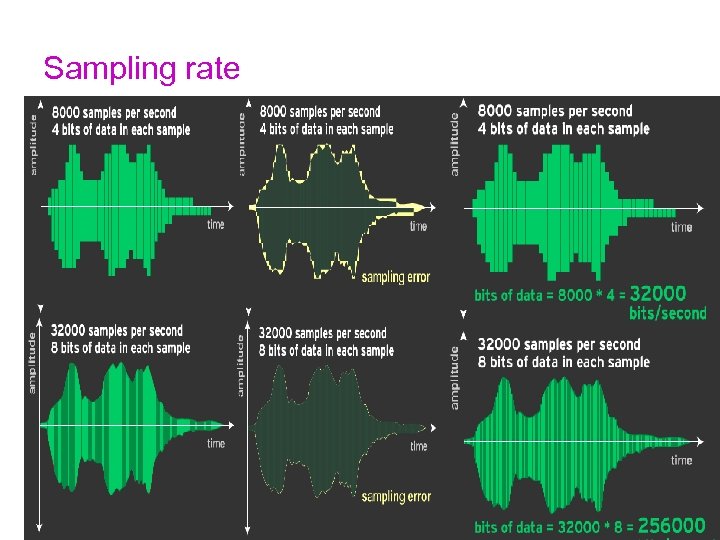 Sampling rate www. slt. lk
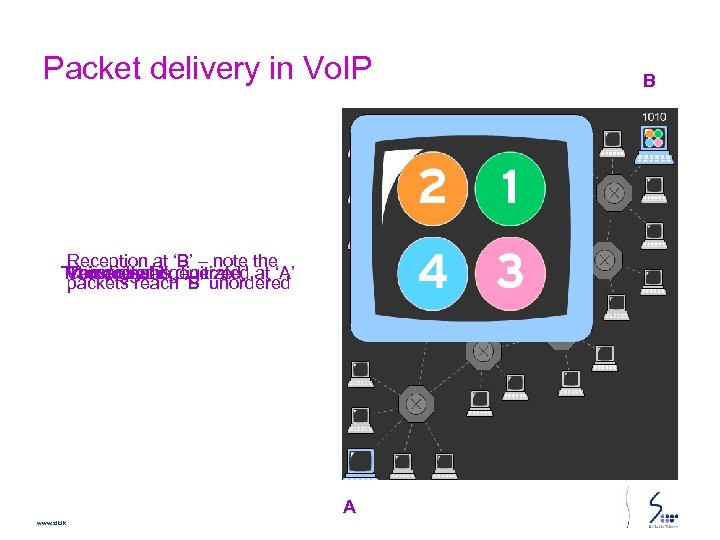 Packet delivery in Vo. IP Reception at ‘B’ – note the Transmitted Compressed This signal is digitized Voice signal generated at ‘A’ packets reach ‘B’ unordered A www. slt. lk B
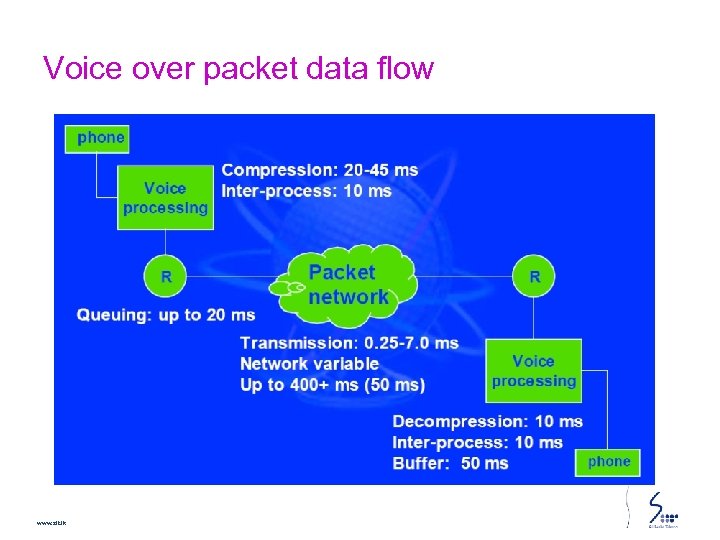 Voice over packet data flow www. slt. lk
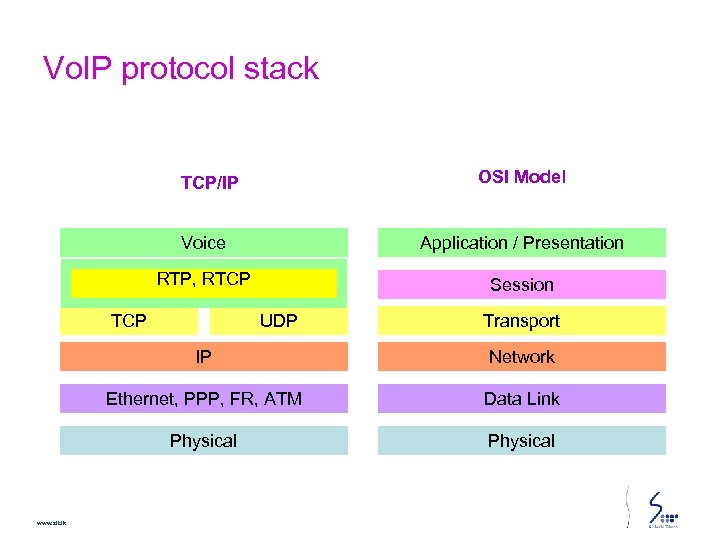
 Part III - Vo. IP protocols • • • www. slt. lk Main types of Vo. IP protocols Diagrammatic representation of Vo. IP protocols H. 323 MGCP / Megaco (H. 248) SIP vs H. 323 Vo. IP signaling protocol standards compared RTP RTCP Converged telephony network Vo. IP protocol stack
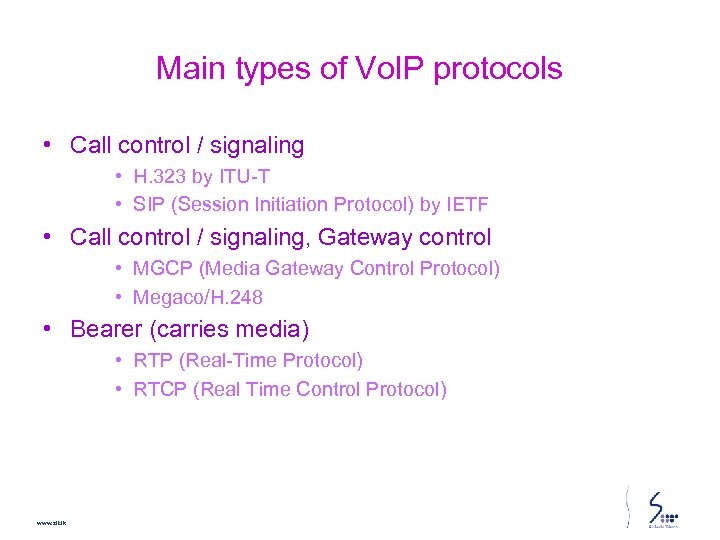 Main types of Vo. IP protocols • Call control / signaling • H. 323 by ITU-T • SIP (Session Initiation Protocol) by IETF • Call control / signaling, Gateway control • MGCP (Media Gateway Control Protocol) • Megaco/H. 248 • Bearer (carries media) • RTP (Real-Time Protocol) • RTCP (Real Time Control Protocol) www. slt. lk
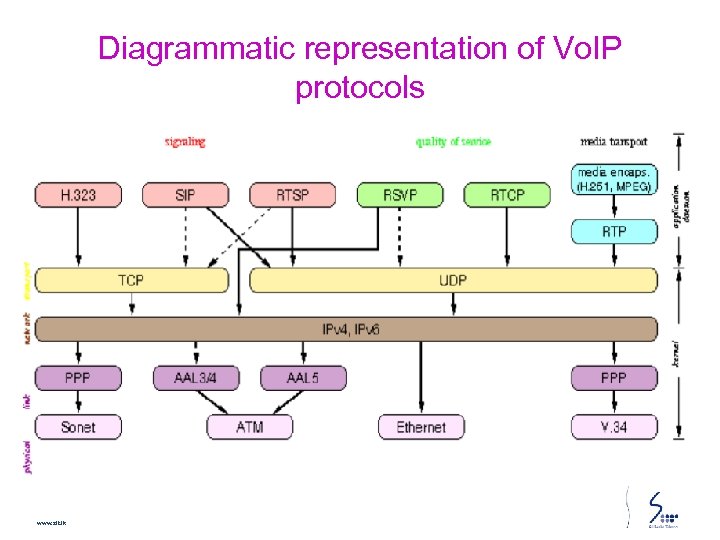 Diagrammatic representation of Vo. IP protocols www. slt. lk
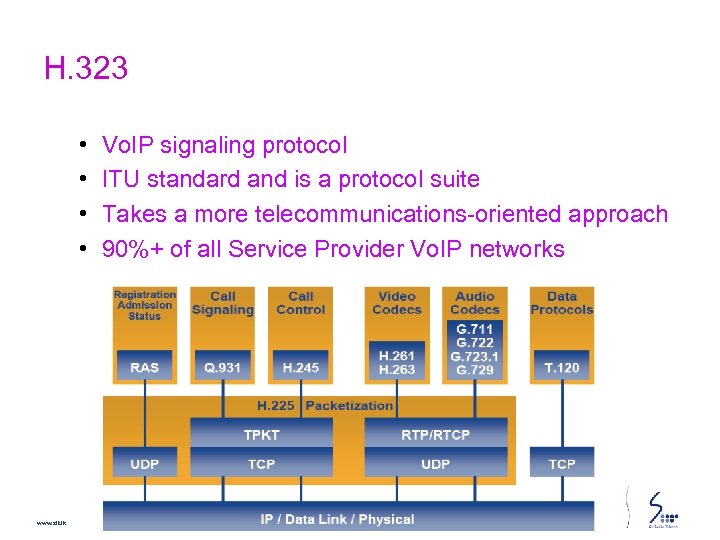 H. 323 • • www. slt. lk Vo. IP signaling protocol ITU standard and is a protocol suite Takes a more telecommunications-oriented approach 90%+ of all Service Provider Vo. IP networks
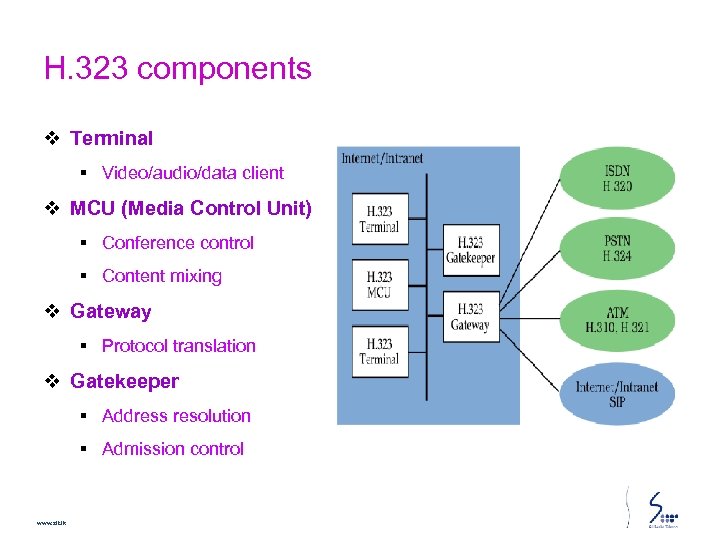 H. 323 components v Terminal § Video/audio/data client v MCU (Media Control Unit) § Conference control § Content mixing v Gateway § Protocol translation v Gatekeeper § Address resolution § Admission control www. slt. lk
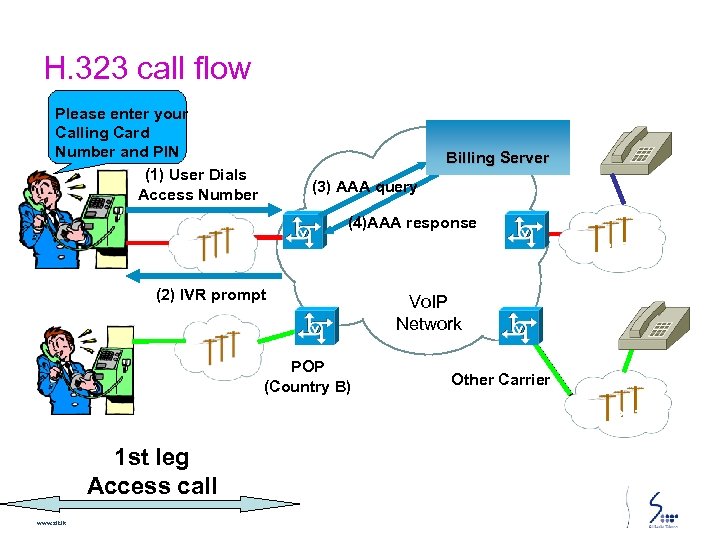 H. 323 call flow Hello Please enter your Calling Card Number and PIN (1) User Dials Access Number Billing Server (3) AAA query (4)AAA response PSTN (2) IVR prompt PSTN POP (Country B) Vo. IP Network Other Carrier PSTN 1 st leg Access call www. slt. lk
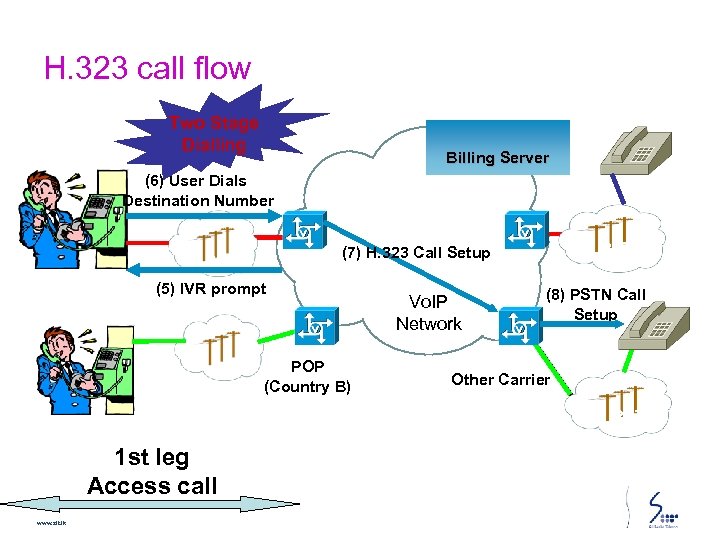 H. 323 call flow Hello Two Stage Dialling Billing Server (6) User Dials Destination Number (5) IVR prompt PSTN (7) H. 323 Call Setup PSTN POP (Country B) Vo. IP Network (8) PSTN Call Setup Other Carrier PSTN 1 st leg Access call www. slt. lk
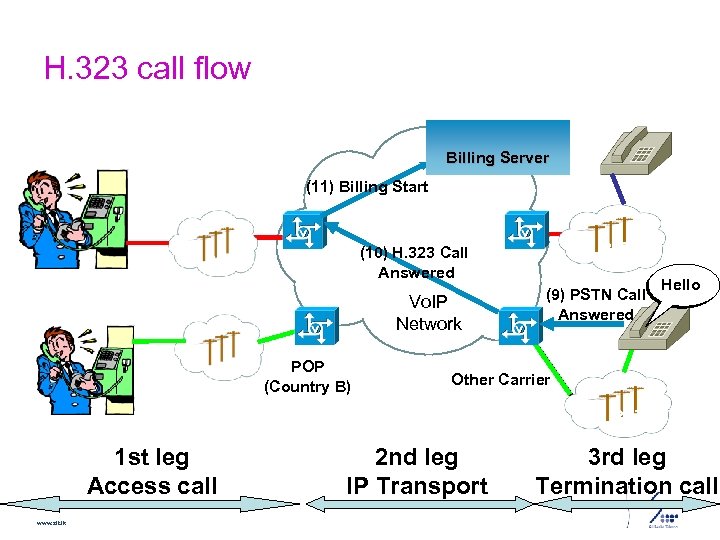 H. 323 call flow Hello Billing Server (11) Billing Start Vo. IP Network PSTN (10) H. 323 Call Answered PSTN POP (Country B) (9) PSTN Call Answered Hello Other Carrier PSTN 1 st leg Access call www. slt. lk 2 nd leg IP Transport 3 rd leg Termination call
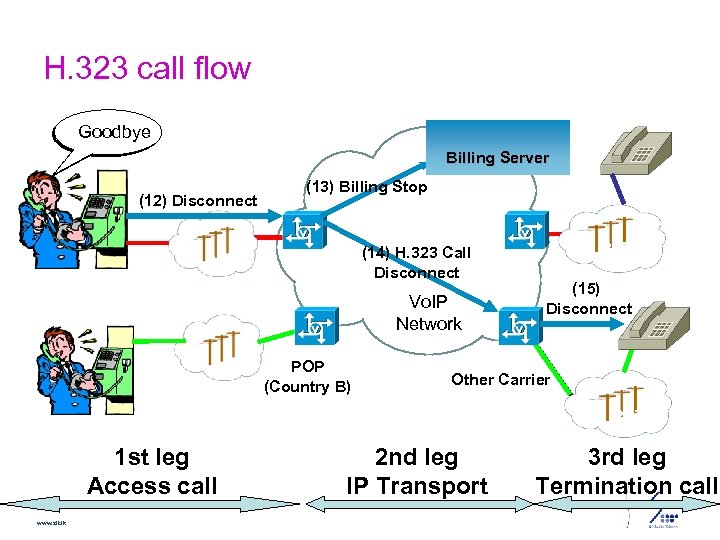 H. 323 call flow Hello Goodbye Billing Server (12) Disconnect (13) Billing Stop (14) H. 323 Call Disconnect PSTN Vo. IP Network PSTN POP (Country B) PSTN (15) Disconnect Other Carrier PSTN 1 st leg Access call www. slt. lk 2 nd leg IP Transport 3 rd leg Termination call
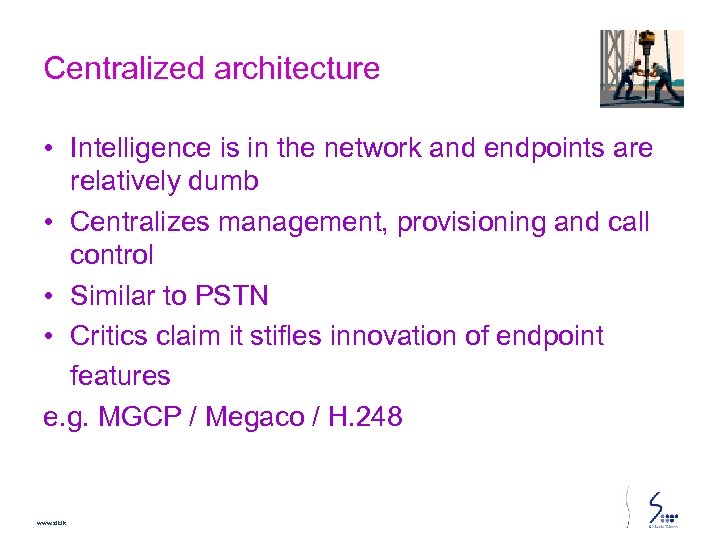
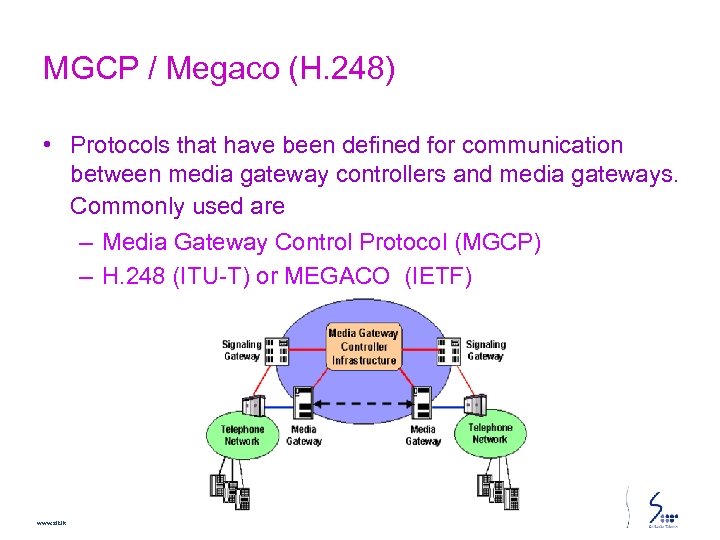 MGCP / Megaco (H. 248) • Protocols that have been defined for communication between media gateway controllers and media gateways. Commonly used are – Media Gateway Control Protocol (MGCP) – H. 248 (ITU-T) or MEGACO (IETF) www. slt. lk
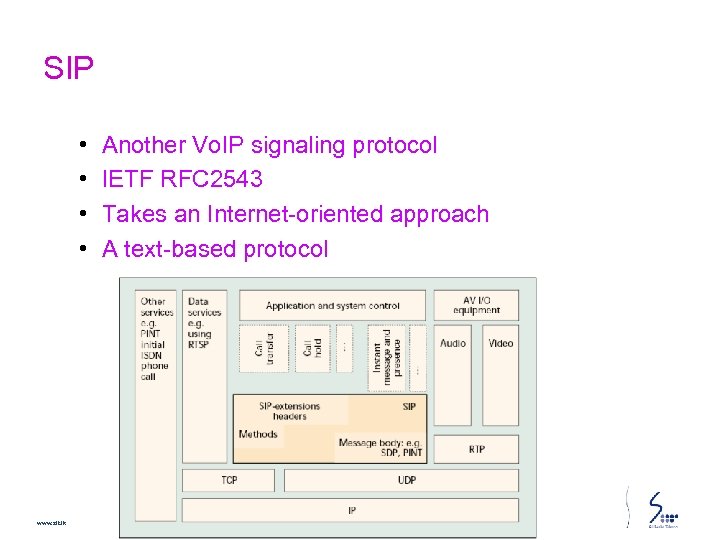 SIP • • www. slt. lk Another Vo. IP signaling protocol IETF RFC 2543 Takes an Internet-oriented approach A text-based protocol
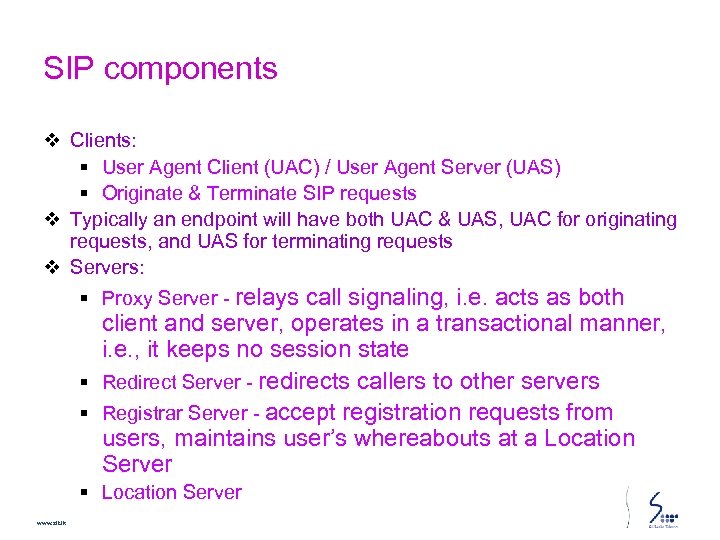 SIP components v Clients: § User Agent Client (UAC) / User Agent Server (UAS) § Originate & Terminate SIP requests v Typically an endpoint will have both UAC & UAS, UAC for originating requests, and UAS for terminating requests v Servers: § Proxy Server - relays call signaling, i. e. acts as both client and server, operates in a transactional manner, i. e. , it keeps no session state § Redirect Server - redirects callers to other servers § Registrar Server - accept registration requests from users, maintains user’s whereabouts at a Location Server § Location Server www. slt. lk
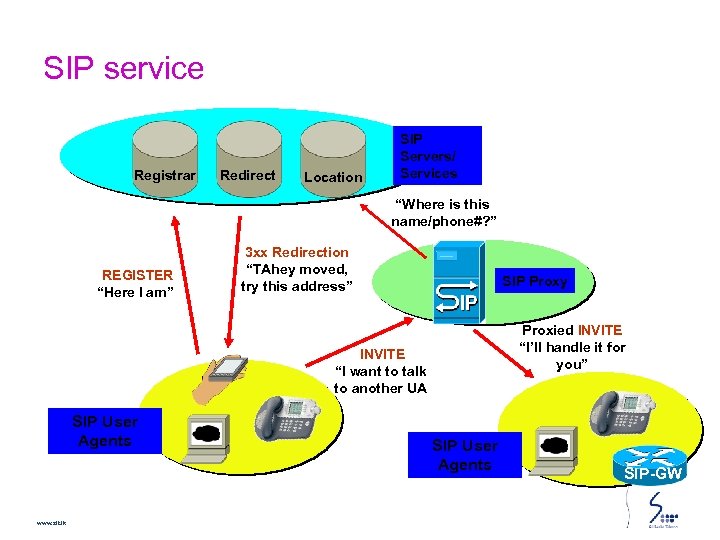 SIP service Registrar Redirect Location SIP Servers/ Services “Where is this name/phone#? ” REGISTER “Here I am” 3 xx Redirection “TAhey moved, try this address” SIP Proxy Proxied INVITE “I’ll handle it for you” INVITE “I want to talk to another UA SIP User Agents www. slt. lk SIP User Agents SIP-GW
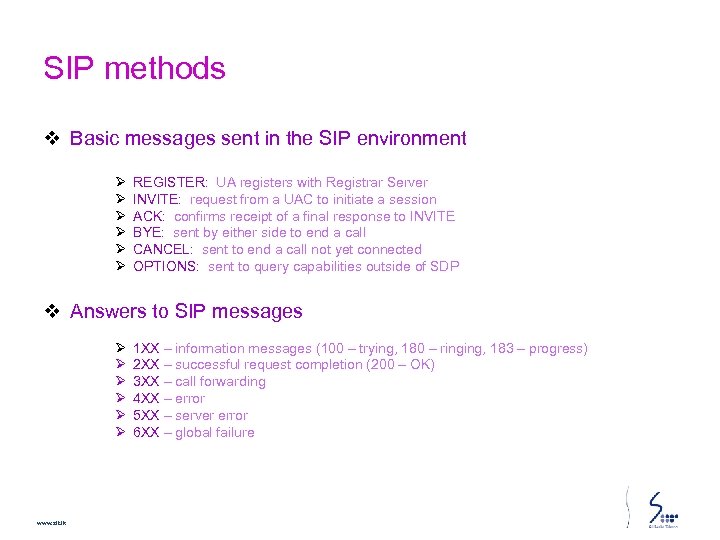 SIP methods v Basic messages sent in the SIP environment Ø Ø Ø REGISTER: UA registers with Registrar Server INVITE: request from a UAC to initiate a session ACK: confirms receipt of a final response to INVITE BYE: sent by either side to end a call CANCEL: sent to end a call not yet connected OPTIONS: sent to query capabilities outside of SDP v Answers to SIP messages Ø Ø Ø www. slt. lk 1 XX – information messages (100 – trying, 180 – ringing, 183 – progress) 2 XX – successful request completion (200 – OK) 3 XX – call forwarding 4 XX – error 5 XX – server error 6 XX – global failure
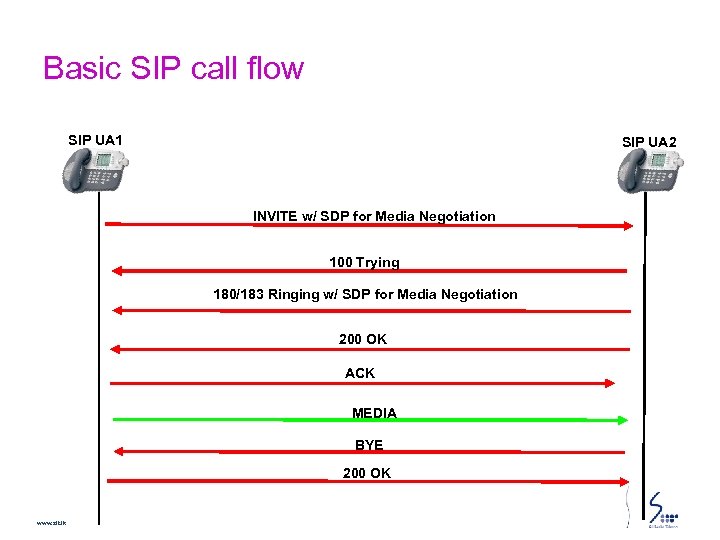 Basic SIP call flow SIP UA 1 SIP UA 2 INVITE w/ SDP for Media Negotiation 100 Trying 180/183 Ringing w/ SDP for Media Negotiation 200 OK ACK MEDIA BYE 200 OK www. slt. lk
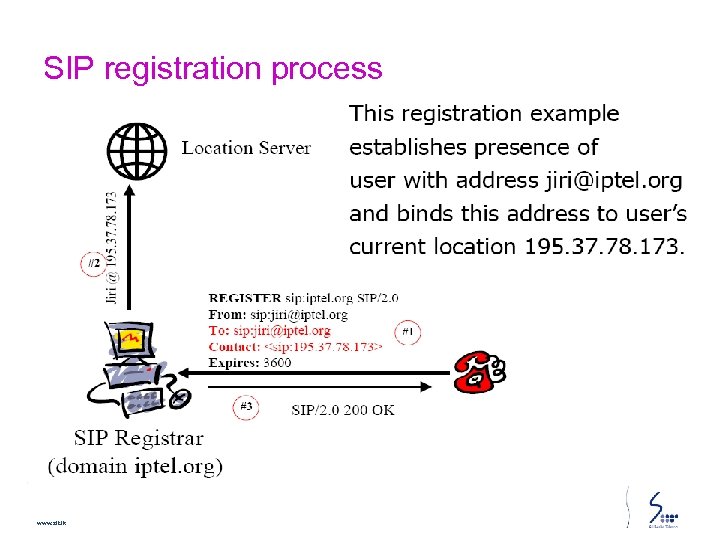 SIP registration process www. slt. lk
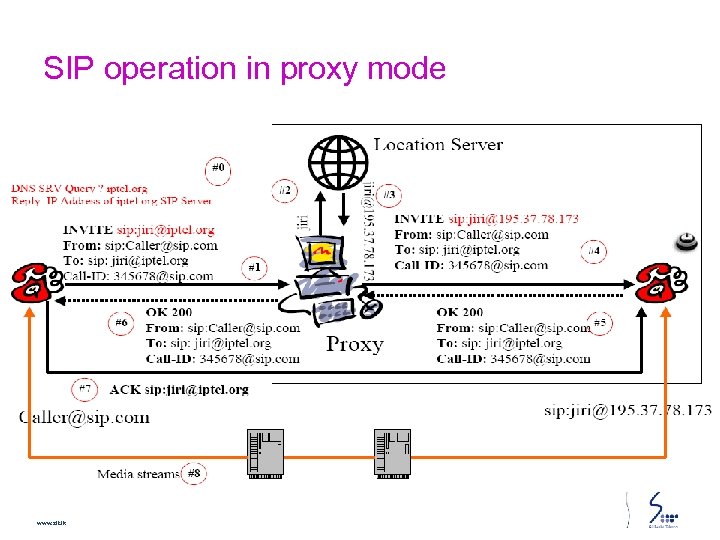 SIP operation in proxy mode www. slt. lk
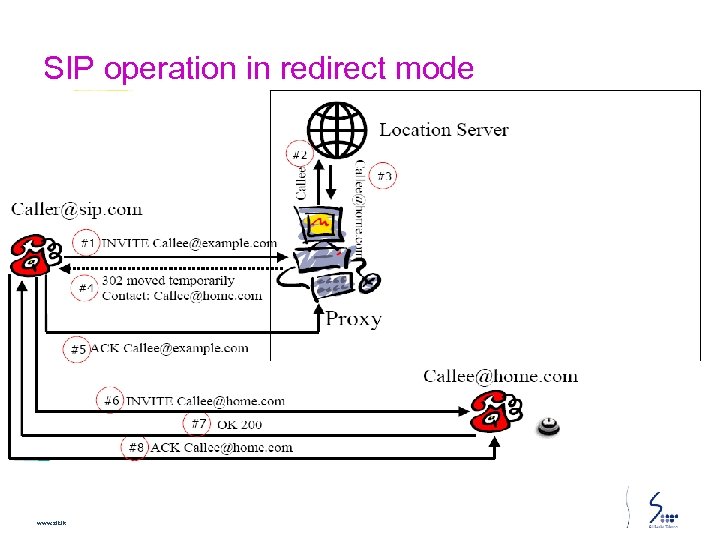 SIP operation in redirect mode www. slt. lk
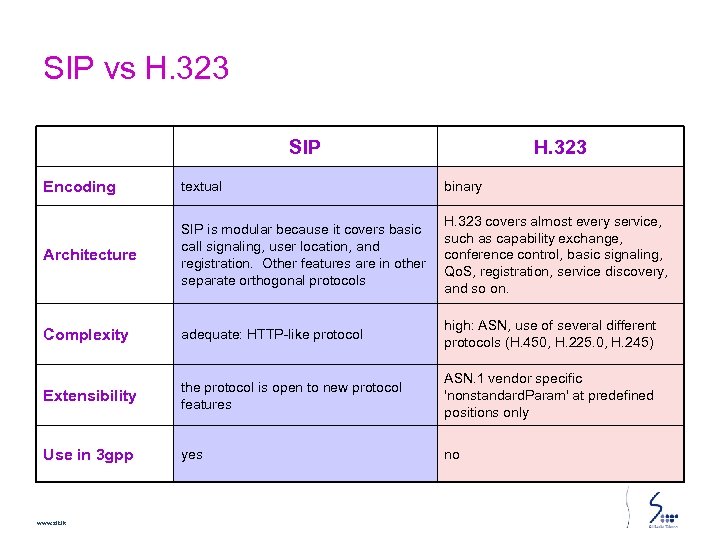 SIP vs H. 323 SIP H. 323 Encoding textual binary Architecture SIP is modular because it covers basic call signaling, user location, and registration. Other features are in other separate orthogonal protocols H. 323 covers almost every service, such as capability exchange, conference control, basic signaling, Qo. S, registration, service discovery, and so on. Complexity adequate: HTTP-like protocol high: ASN, use of several different protocols (H. 450, H. 225. 0, H. 245) Extensibility the protocol is open to new protocol features ASN. 1 vendor specific 'nonstandard. Param' at predefined positions only Use in 3 gpp yes no www. slt. lk
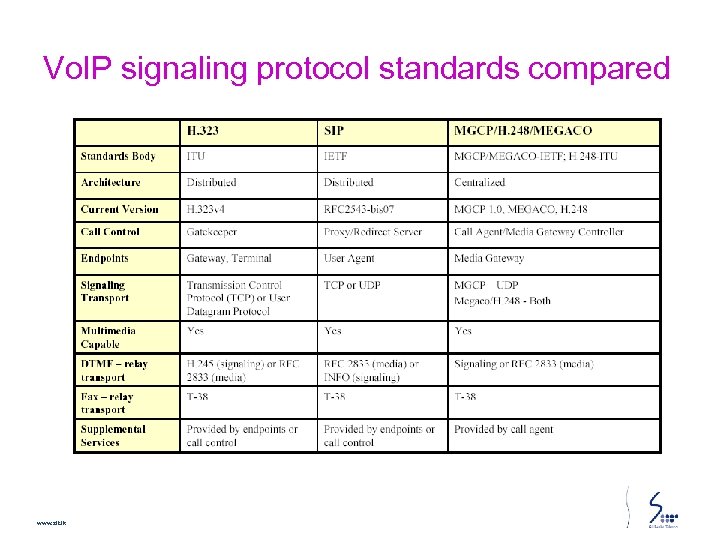 Vo. IP signaling protocol standards compared www. slt. lk
 RTP • The challenge for the designers of RTP, was to build a mechanism for robust, real-time media delivery above an unreliable transport layer (UDP). • RTP was developed by the Audio/Video Transport working group of the Internet Engineering Task Force (IETF). RTP is defined by the IETF proposed standard RFC 1889 published in January 1996. It has been adopted by the International Telecommunication Union (ITU) as part of the H. 323 series recommendations, and by several other standards organizations. • In the TCP/IP model it is hard to say in which layer RTP is in. On the one hand, it looks as an application layer protocol since it runs in user space and is linked to the application program. On the other hand, it is a generic, application independent protocol that just provides transport facilities, so it looks like a transport protocol. The best description would be that RTP is a transport protocol implemented in the application layer. • Designed to carry a wide variety of data (voice, audio, video) www. slt. lk
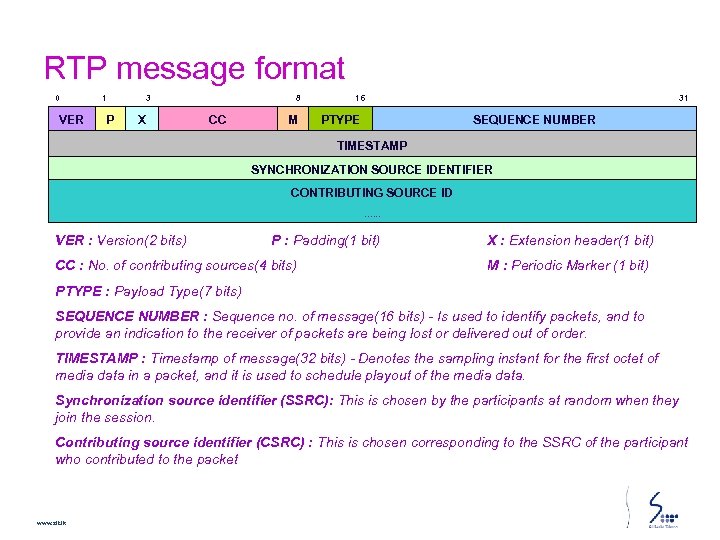 RTP message format 0 VER 1 P 3 X 8 CC M 16 PTYPE 31 SEQUENCE NUMBER TIMESTAMP SYNCHRONIZATION SOURCE IDENTIFIER CONTRIBUTING SOURCE ID …. . . VER : Version(2 bits) P : Padding(1 bit) CC : No. of contributing sources(4 bits) X : Extension header(1 bit) M : Periodic Marker (1 bit) PTYPE : Payload Type(7 bits) SEQUENCE NUMBER : Sequence no. of message(16 bits) - Is used to identify packets, and to provide an indication to the receiver of packets are being lost or delivered out of order. TIMESTAMP : Timestamp of message(32 bits) - Denotes the sampling instant for the first octet of media data in a packet, and it is used to schedule playout of the media data. Synchronization source identifier (SSRC): This is chosen by the participants at random when they join the session. Contributing source identifier (CSRC) : This is chosen corresponding to the SSRC of the participant who contributed to the packet www. slt. lk
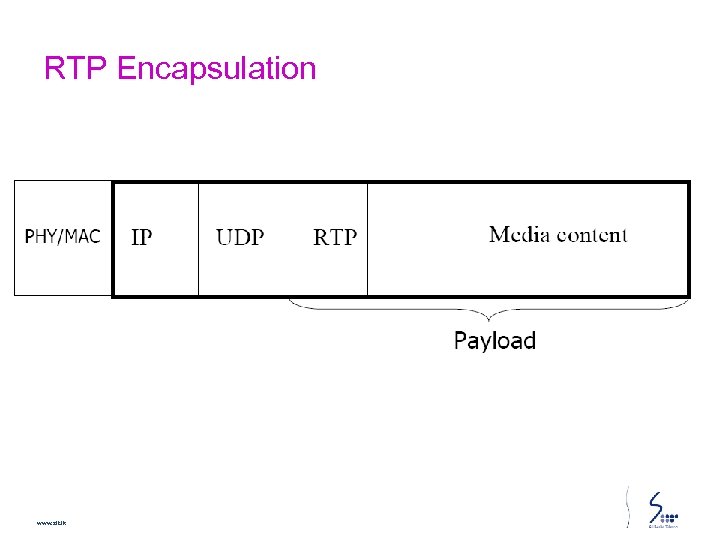 RTP Encapsulation www. slt. lk
 RTCP • RTCP provides out-of-band communication (such as periodic reporting of information such as reception quality feedback, participant identification, and synchronization between media streams) between the endpoints. • RTCP allows senders and receivers to transmit a series of reports to one another. • Although data packets are typically sent every few milliseconds, the control protocol operates on the scale of seconds. • RTCP messages are encapsulated in UDP datagrams. • UDP port number used is one greater than the port number of the associated data stream in RTP. www. slt. lk
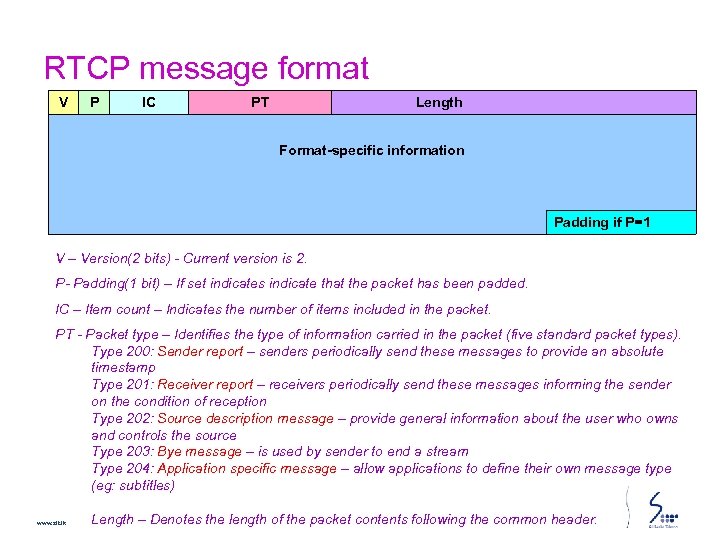 RTCP message format V P IC PT Length Format-specific information Padding if P=1 V – Version(2 bits) - Current version is 2. P- Padding(1 bit) – If set indicates indicate that the packet has been padded. IC – Item count – Indicates the number of items included in the packet. PT - Packet type – Identifies the type of information carried in the packet (five standard packet types). Type 200: Sender report – senders periodically send these messages to provide an absolute timestamp Type 201: Receiver report – receivers periodically send these messages informing the sender on the condition of reception Type 202: Source description message – provide general information about the user who owns and controls the source Type 203: Bye message – is used by sender to end a stream Type 204: Application specific message – allow applications to define their own message type (eg: subtitles) www. slt. lk Length – Denotes the length of the packet contents following the common header.
 Converged telephony network www. slt. lk
 Vo. IP protocol stack OSI Model TCP/IP Voice Application / Presentation RTP, RTCP Session TCP UDP Transport IP Ethernet, PPP, FR, ATM Data Link Physical www. slt. lk Network Physical
 Part IV - Vo. IP architectures • Centralized architecture • Distributed architecture www. slt. lk
 Centralized architecture • Intelligence is in the network and endpoints are relatively dumb • Centralizes management, provisioning and call control • Similar to PSTN • Critics claim it stifles innovation of endpoint features e. g. MGCP / Megaco / H. 248 www. slt. lk
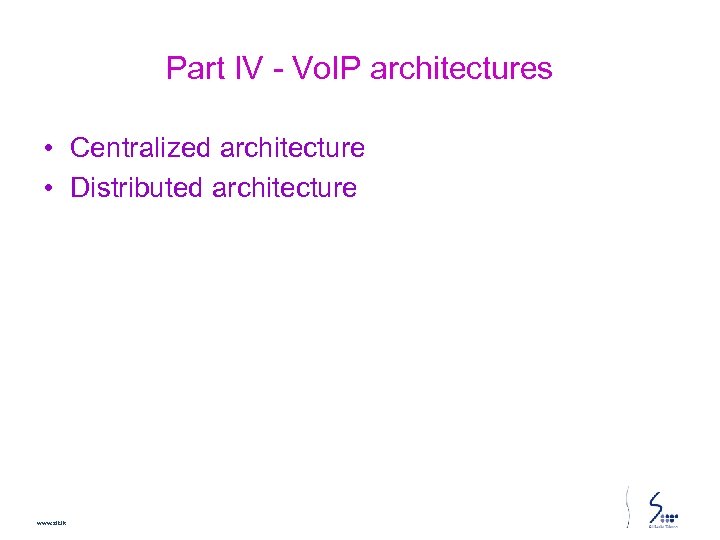
 Distributed architecture • Network intelligence distributed between • Endpoints and call-control devices v Endpoints – IP phones, Vo. IP G/W, PCs v Call control – gatekeepers (H. 323) Proxy or redirect servers (SIP) • Flexible, easy to add new services • More complex e. g. H. 323, SIP www. slt. lk
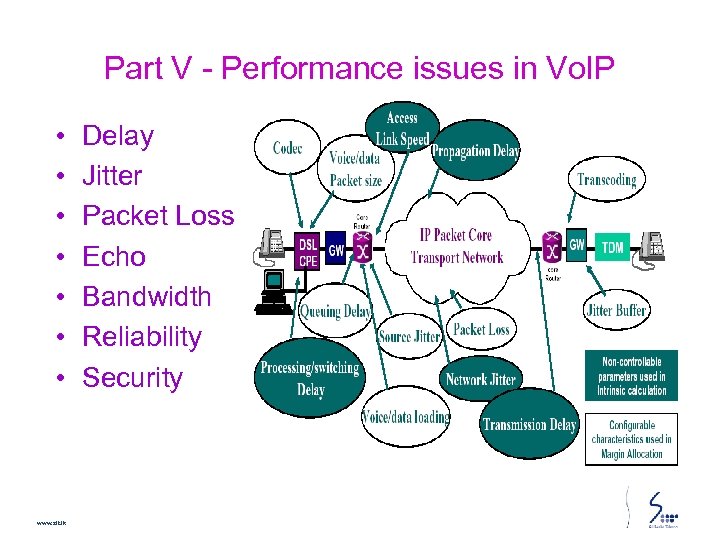 Part V - Performance issues in Vo. IP • • www. slt. lk Delay Jitter Packet Loss Echo Bandwidth Reliability Security
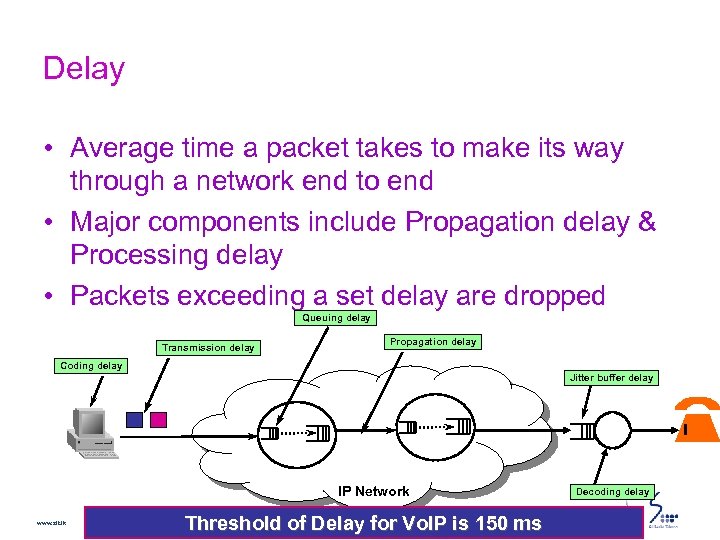 Delay • Average time a packet takes to make its way through a network end to end • Major components include Propagation delay & Processing delay • Packets exceeding a set delay are dropped Queuing delay Transmission delay Propagation delay Coding delay Jitter buffer delay POTS IP Network www. slt. lk Threshold of Delay for Vo. IP is 150 ms Decoding delay
 Jitter • Jitter is variation in packet arrival time • Due to the nature of packet networks, packets can travel from a source to a destination using different paths resulting in different travel delay • Speech samples have to be played back at regular intervals (sampling rate). Otherwise, a severe degradation in the speech quality can take place • A delay jitter buffer is used to reorder the packets and absorb the delay jitter caused by the network. • The larger the buffer the better is the protection from delay jitter. However, this will result in larger delays www. slt. lk
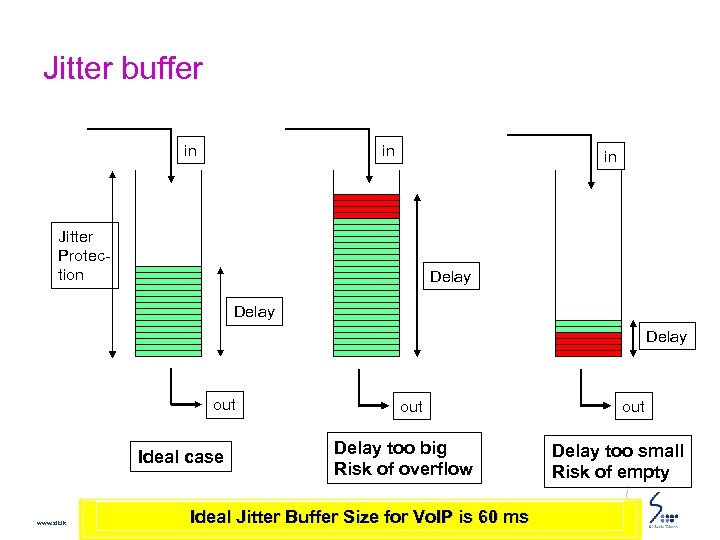 Jitter buffer in in in Jitter Protection Delay out Ideal case www. slt. lk out Delay too big Risk of overflow Ideal Jitter Buffer Size for Vo. IP is 60 ms out Delay too small Risk of empty
 Packet Loss • • Packet loss is caused by buffer/queue overflow within the network or by late packet arrival at the receiver or by network failures For real-time interactive applications like voice, this means the signal must be output without those packets. Packet Loss creates gaps in voice communications, which can result in clicks, muting, or unintelligible speech. What can be done to minimize lost packets? – Qo. S classification to expedite voice packets – Longer jitter buffer (trade off between delay and distortion) – Call admission control to prevent congestion Maximum Tolerable Packet Loss is 3% www. slt. lk
 Packet Loss (contd. ) • We can make voice transmission robust to small amounts of packet loss by using Packet Loss Concealment (PLC) algorithms • These are algorithms that smooth over the gaps in the speech • Some codecs have a built-in PLC feature, while external PLC is added to other codecs • Lost packets are handled by one of the following PLC approaches: – Replacing lost packet by a silence packet (no speech) – Repeating the previous packet – Skipping the lost packet – Inserting a noise packet with the proper energy level & spectrum – Most vocoders have internal packet concealment techniques that optimize the speech quality • PLC can help for short losses, not effective for long bursts (> 3 or so packets - 40 -60 ms of speech ) www. slt. lk
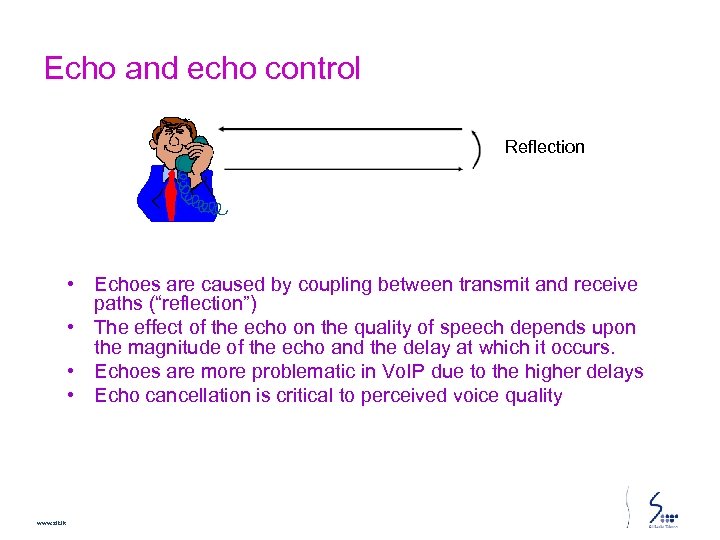 Echo and echo control Reflection • Echoes are caused by coupling between transmit and receive paths (“reflection”) • The effect of the echo on the quality of speech depends upon the magnitude of the echo and the delay at which it occurs. • Echoes are more problematic in Vo. IP due to the higher delays • Echo cancellation is critical to perceived voice quality www. slt. lk
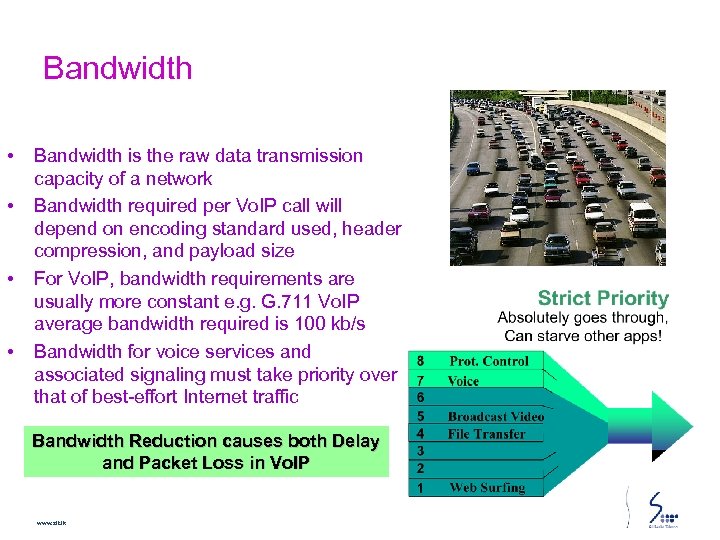 Bandwidth • • Bandwidth is the raw data transmission capacity of a network Bandwidth required per Vo. IP call will depend on encoding standard used, header compression, and payload size For Vo. IP, bandwidth requirements are usually more constant e. g. G. 711 Vo. IP average bandwidth required is 100 kb/s Bandwidth for voice services and associated signaling must take priority over that of best-effort Internet traffic Bandwidth Reduction causes both Delay and Packet Loss in Vo. IP www. slt. lk
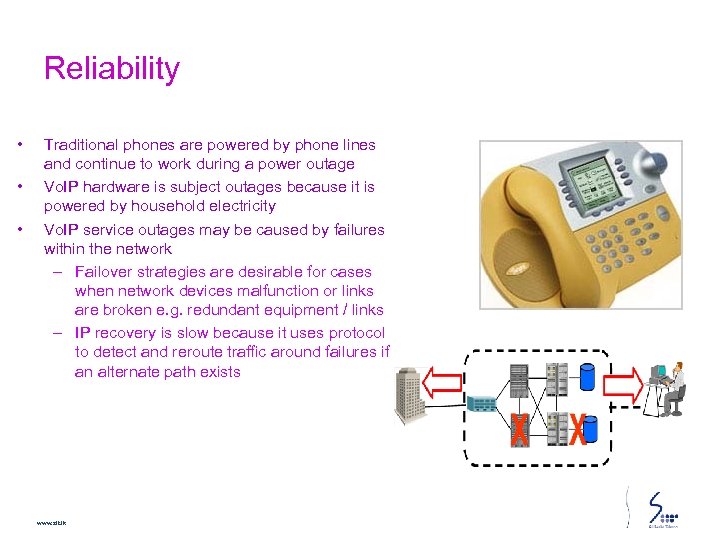 Reliability • • • Traditional phones are powered by phone lines and continue to work during a power outage Vo. IP hardware is subject outages because it is powered by household electricity Vo. IP service outages may be caused by failures within the network – Failover strategies are desirable for cases when network devices malfunction or links are broken e. g. redundant equipment / links – IP recovery is slow because it uses protocol to detect and reroute traffic around failures if an alternate path exists www. slt. lk
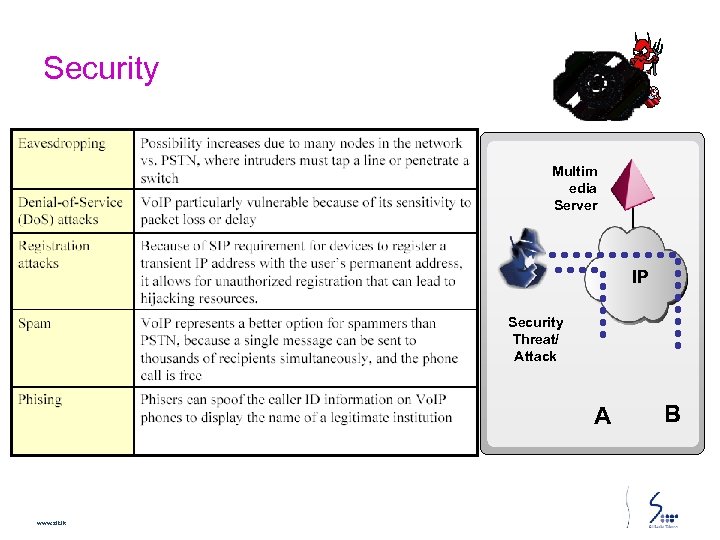 Security Multim edia Server IP Security Threat/ Attack A www. slt. lk B
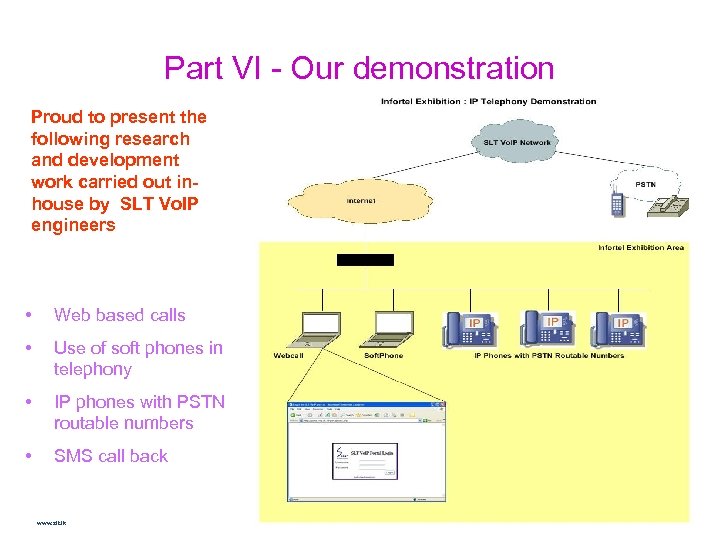 Part VI - Our demonstration Proud to present the following research and development work carried out inhouse by SLT Vo. IP engineers • Web based calls • Use of soft phones in telephony • IP phones with PSTN routable numbers • SMS call back www. slt. lk
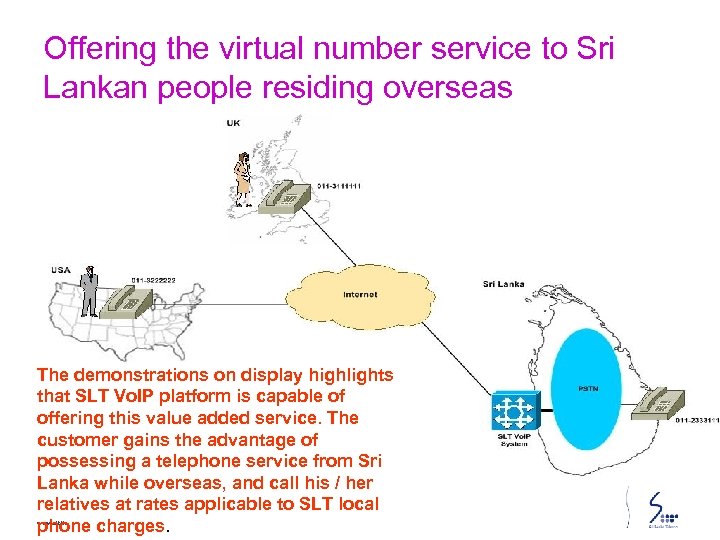 Offering the virtual number service to Sri Lankan people residing overseas The demonstrations on display highlights that SLT Vo. IP platform is capable of offering this value added service. The customer gains the advantage of possessing a telephone service from Sri Lanka while overseas, and call his / her relatives at rates applicable to SLT local phone charges. www. slt. lk
 Part VII – Current Vo. IP services offered • International call originations from Sri Lanka to A -Z countries worldwide through MAXTALK prepaid card – available at teleshops. The face values of such cards are LKR 200/- and LKR 400/-. • International call terminations to Sri Lanka through local Vo. IP wholesale partners. www. slt. lk