 Скачать презентацию Vitamin A Natalia Balan B-23 Vitamin A
Noviy_Prezentatsia_Microsoft_PowerPoint.pptx
- Количество слайдов: 17



Vitamin A Natalia Balan B-23
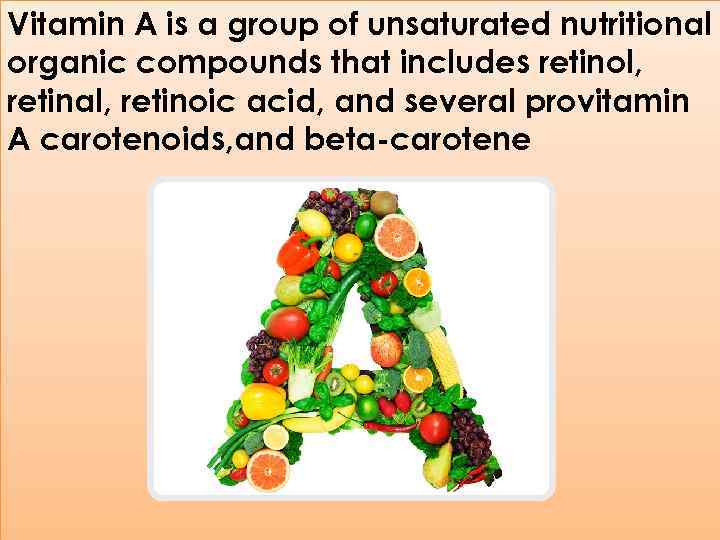
Vitamin A is a group of unsaturated nutritional organic compounds that includes retinol, retinal, retinoic acid, and several provitamin A carotenoids, and beta-carotene
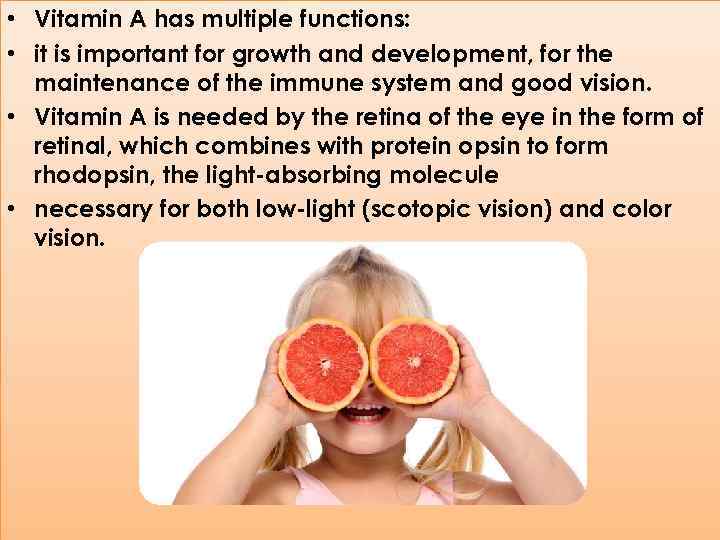
• Vitamin A has multiple functions: • it is important for growth and development, for the maintenance of the immune system and good vision. • Vitamin A is needed by the retina of the eye in the form of retinal, which combines with protein opsin to form rhodopsin, the light-absorbing molecule • necessary for both low-light (scotopic vision) and color vision.
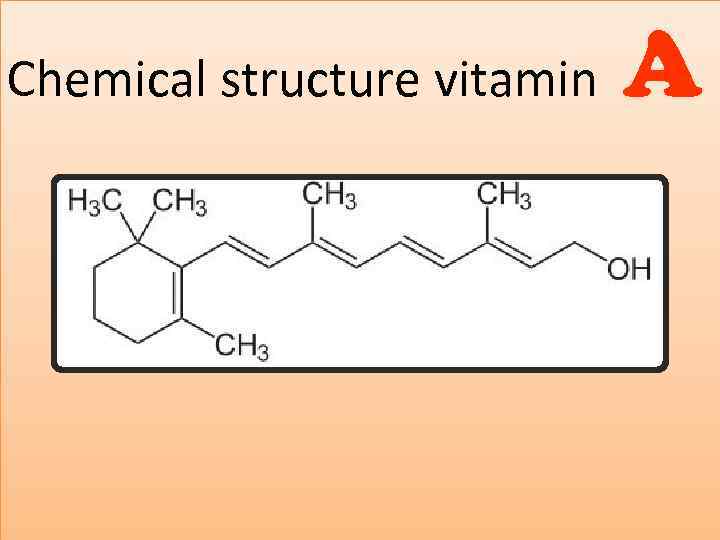
Chemical structure vitamin A
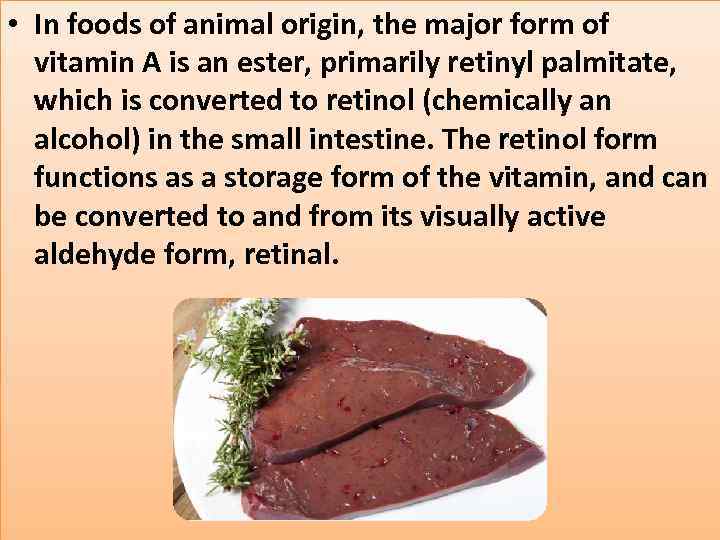
• In foods of animal origin, the major form of vitamin A is an ester, primarily retinyl palmitate, which is converted to retinol (chemically an alcohol) in the small intestine. The retinol form functions as a storage form of the vitamin, and can be converted to and from its visually active aldehyde form, retinal.
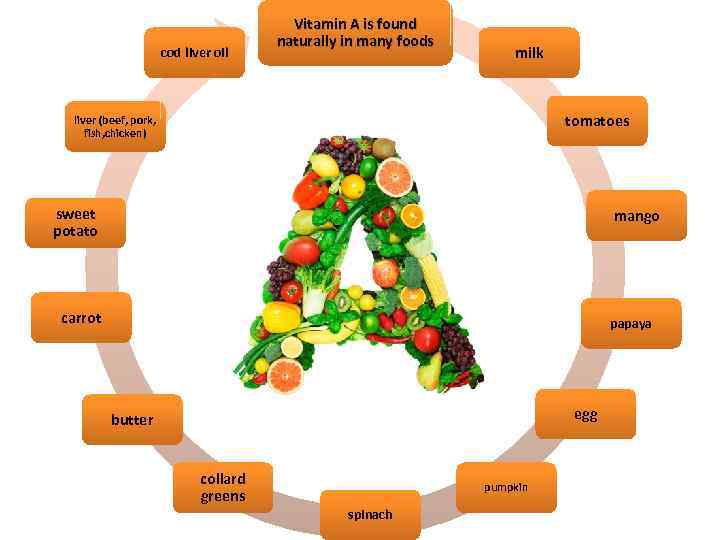
cod liver oil Vitamin A is found naturally in many foods milk tomatoes liver (beef, pork, fish, chicken) sweet potato mango carrot papaya egg butter collard greens pumpkin spinach
• Metabolic function Vitamin A plays a role in a variety of functions throughout the body, such as: Vision Gene transcription Immune function Embryonic development and reproduction Bone metabolism Hematopoiesis Skin and cellular health Antioxidant activity
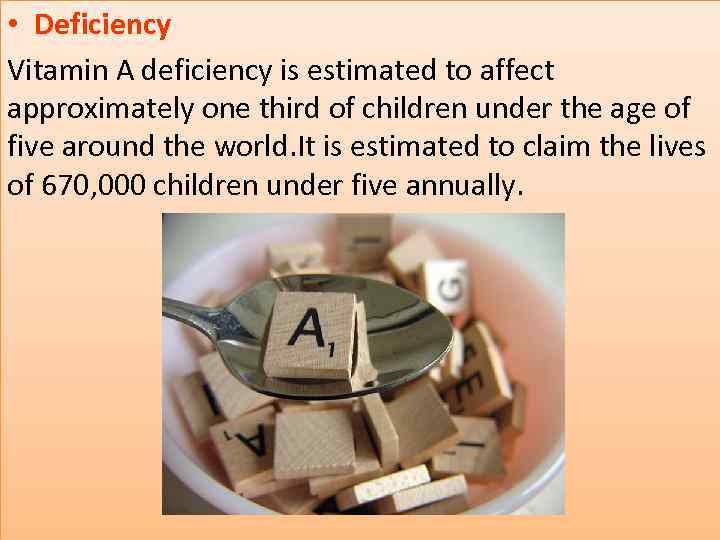
• Deficiency Vitamin A deficiency is estimated to affect approximately one third of children under the age of five around the world. It is estimated to claim the lives of 670, 000 children under five annually.
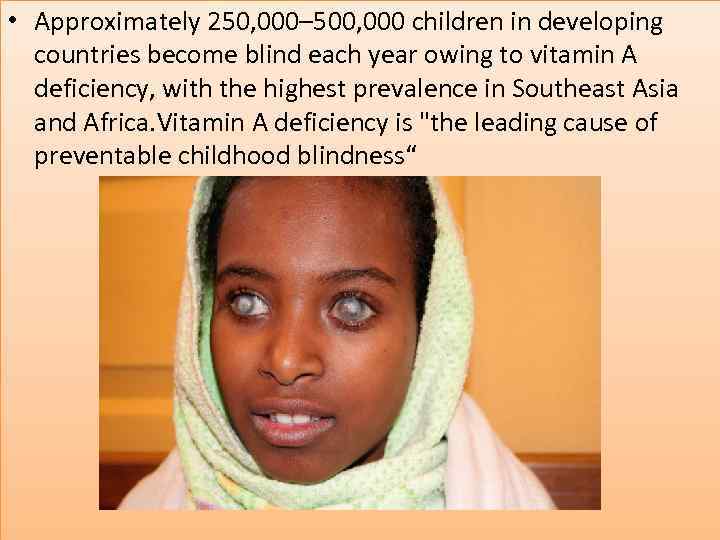
• Approximately 250, 000– 500, 000 children in developing countries become blind each year owing to vitamin A deficiency, with the highest prevalence in Southeast Asia and Africa. Vitamin A deficiency is "the leading cause of preventable childhood blindness“
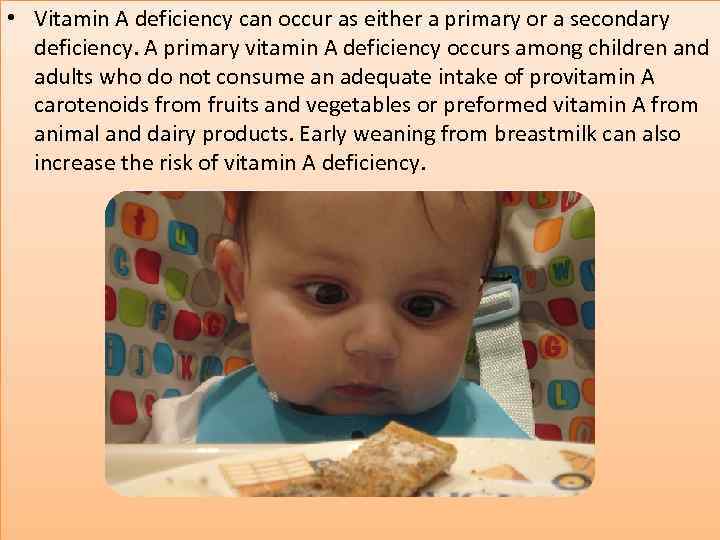
• Vitamin A deficiency can occur as either a primary or a secondary deficiency. A primary vitamin A deficiency occurs among children and adults who do not consume an adequate intake of provitamin A carotenoids from fruits and vegetables or preformed vitamin A from animal and dairy products. Early weaning from breastmilk can also increase the risk of vitamin A deficiency.
• Secondary vitamin A deficiency is associated with chronic malabsorption of lipids, impaired bile production and release, and chronic exposure to oxidants, such as cigarette smoke, and chronic alcoholism. • Vitamin A is a fat-soluble vitamin and depends on micellar solubilization for dispersion into the small intestine, which results in poor use of vitamin A from low-fat diets.
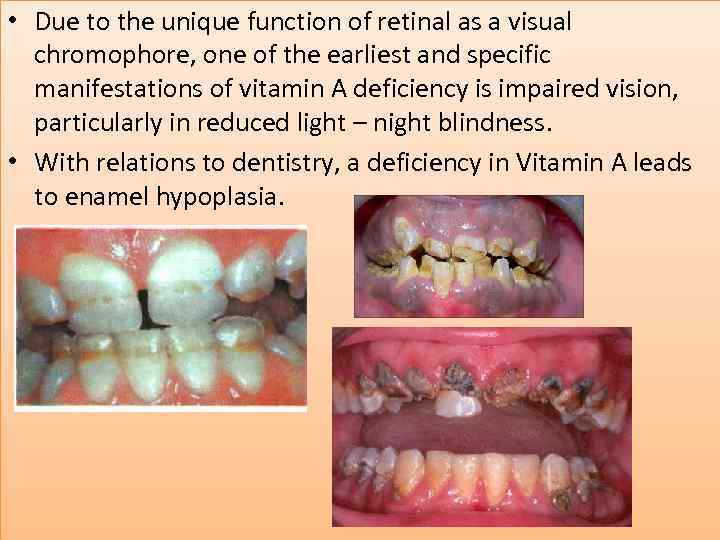
• Due to the unique function of retinal as a visual chromophore, one of the earliest and specific manifestations of vitamin A deficiency is impaired vision, particularly in reduced light – night blindness. • With relations to dentistry, a deficiency in Vitamin A leads to enamel hypoplasia.
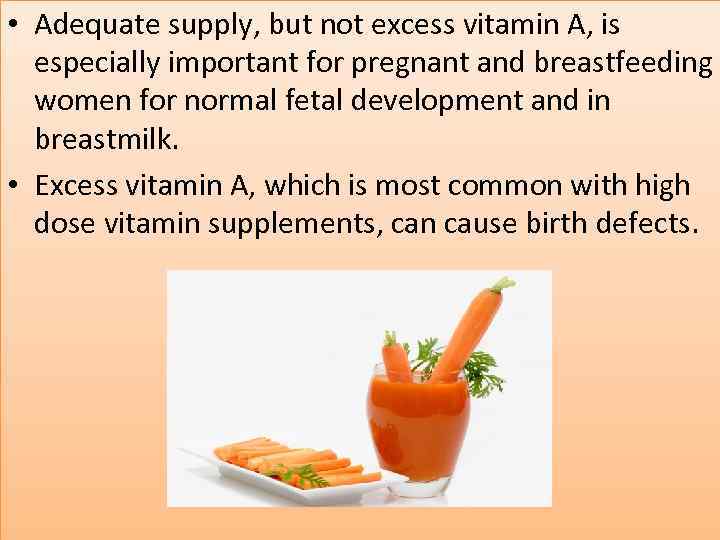
• Adequate supply, but not excess vitamin A, is especially important for pregnant and breastfeeding women for normal fetal development and in breastmilk. • Excess vitamin A, which is most common with high dose vitamin supplements, can cause birth defects.
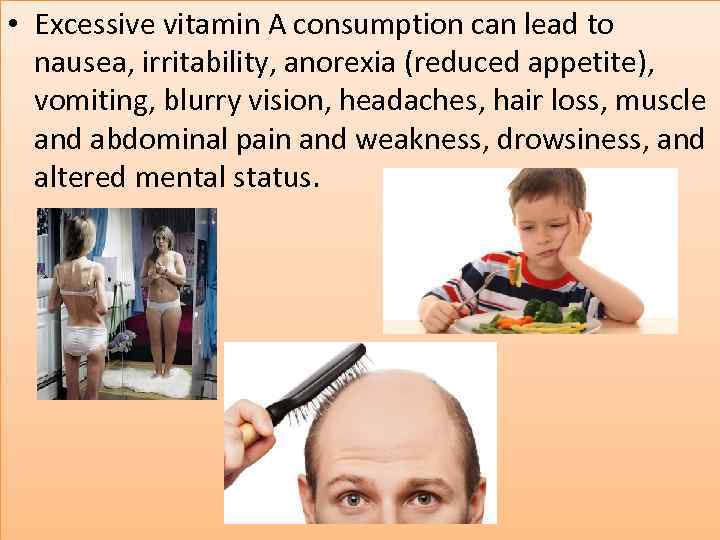
• Excessive vitamin A consumption can lead to nausea, irritability, anorexia (reduced appetite), vomiting, blurry vision, headaches, hair loss, muscle and abdominal pain and weakness, drowsiness, and altered mental status.
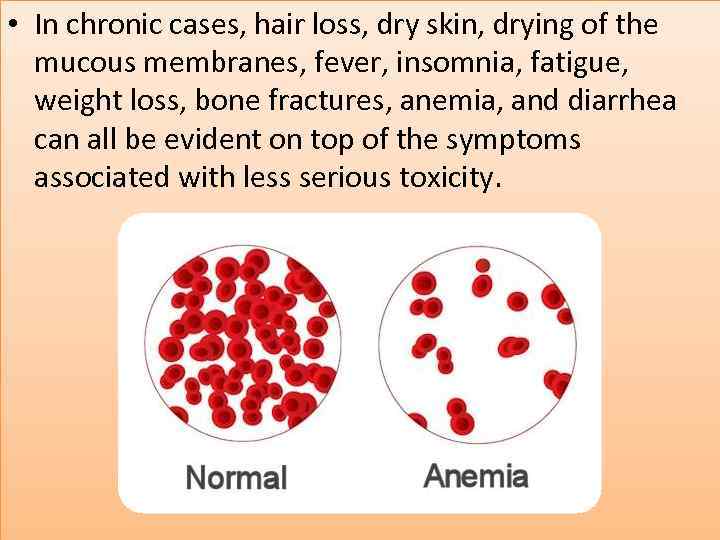
• In chronic cases, hair loss, dry skin, drying of the mucous membranes, fever, insomnia, fatigue, weight loss, bone fractures, anemia, and diarrhea can all be evident on top of the symptoms associated with less serious toxicity.

 Скачать презентацию Vitamin A Natalia Balan B-23 Vitamin A
Noviy_Prezentatsia_Microsoft_PowerPoint.pptx