 Скачать презентацию Vital Signs in the Ambulatory Setting An Evidence-Based
5d8a66d808759c87d1625e6dc525defe.ppt
- Количество слайдов: 37



Vital Signs in the Ambulatory Setting: An Evidence-Based Approach Project Overview Presentation Crawford, RN, MSN Cecelia. HERE SUB TITLE L. title
The Importance of Vital Signs Foundation of clinical assessment Basis for many clinical decisions Accuracy of VS § Influences the patient’s clinical course § Impacts patient outcomes Therefore, VS should be based on evidence, rather than ritual, routine, & tradition!
Frequency of Vital Signs Trends more important than any single measurement Should NOT be used as a method of ensuring Health Care Worker (HCW) visits Standardize methods of
Frequency of Vital Signs VS parameters do NOT guarantee normal physiological status § Have VS become routine & unrelated to patient needs? § Is visual observation more important than routine VS?
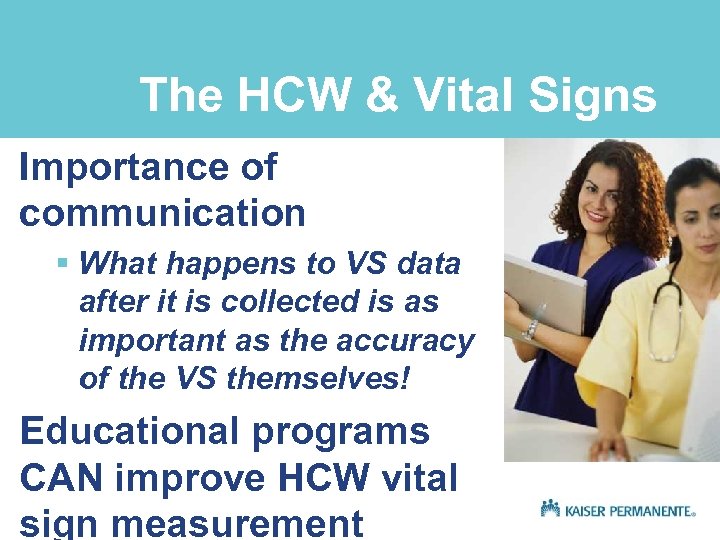
The HCW & Vital Signs Importance of communication § What happens to VS data after it is collected is as important as the accuracy of the VS themselves! Educational programs CAN improve HCW vital sign measurement

The HCW & Vital Signs HCW has a definite influence on VS § Speech § Touch § Physical
The HCW & Vital Signs Most influence seen with auscultated blood pressure White coat HTN may contribute 20% towards misdiagnosis of Stage 1 HTN § Higher BPs in clinic/work settings
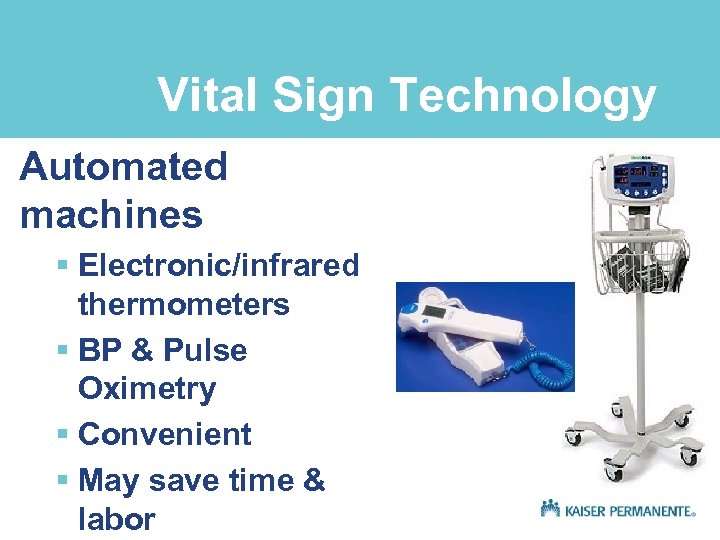
Vital Sign Technology Automated machines § Electronic/infrared thermometers § BP & Pulse Oximetry § Convenient § May save time & labor
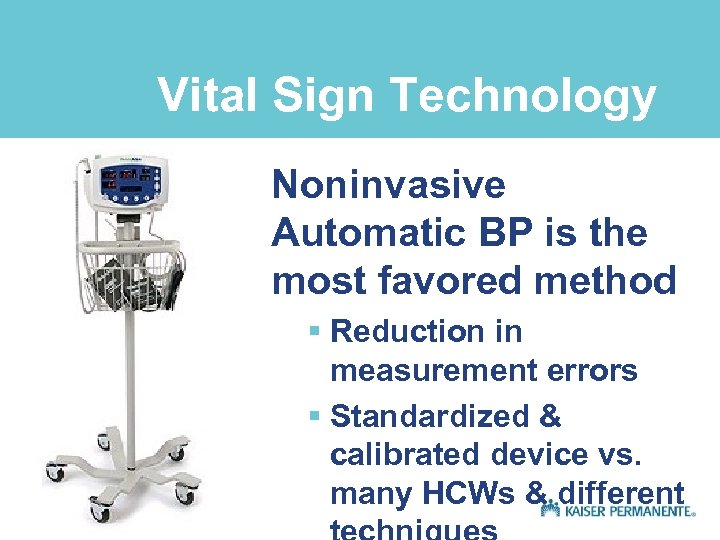
Vital Sign Technology Noninvasive Automatic BP is the most favored method § Reduction in measurement errors § Standardized & calibrated device vs. many HCWs & different
Vital Sign Techniques & Methods: An Overview Temperature Pulse Respiratory Rate Blood Pressure Pulse Oximetry (5 th VS)
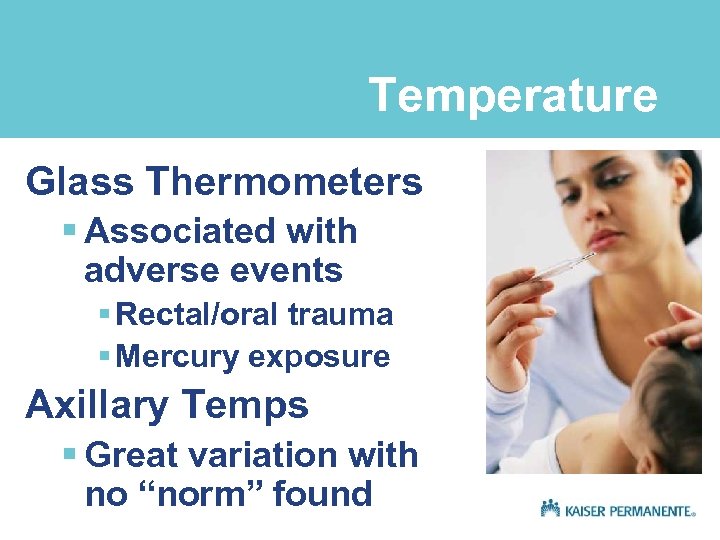
Temperature Glass Thermometers § Associated with adverse events § Rectal/oral trauma § Mercury exposure Axillary Temps § Great variation with no “norm” found
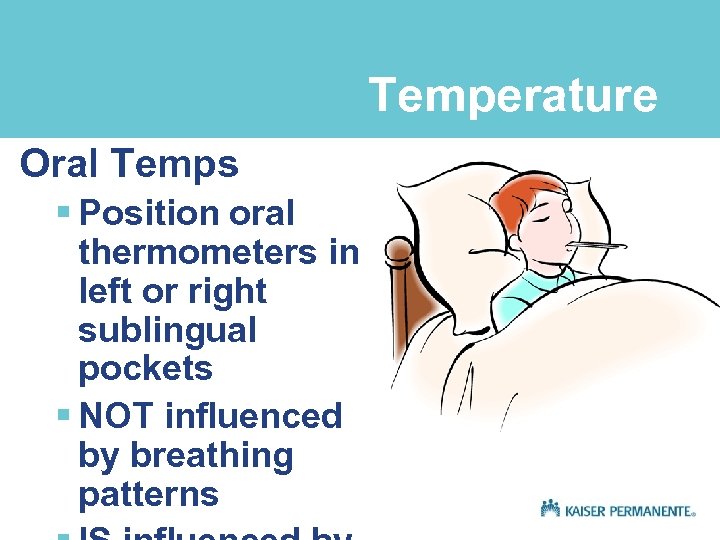
Temperature Oral Temps § Position oral thermometers in left or right sublingual pockets § NOT influenced by breathing patterns
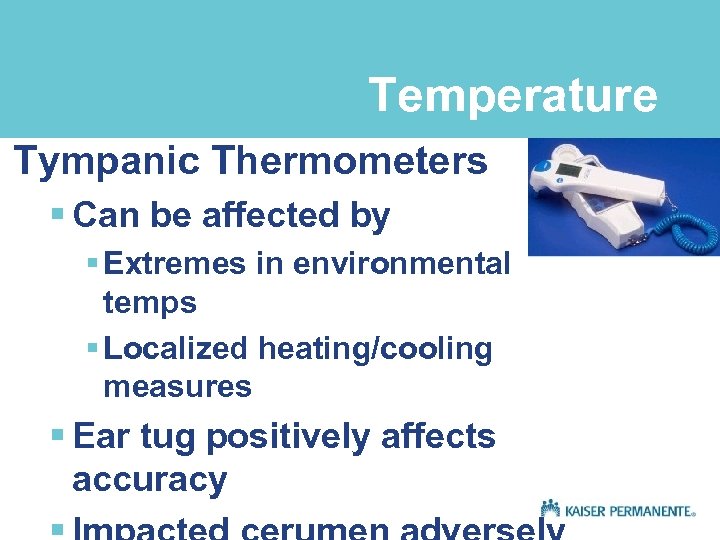
Temperature Tympanic Thermometers § Can be affected by § Extremes in environmental temps § Localized heating/cooling measures § Ear tug positively affects accuracy
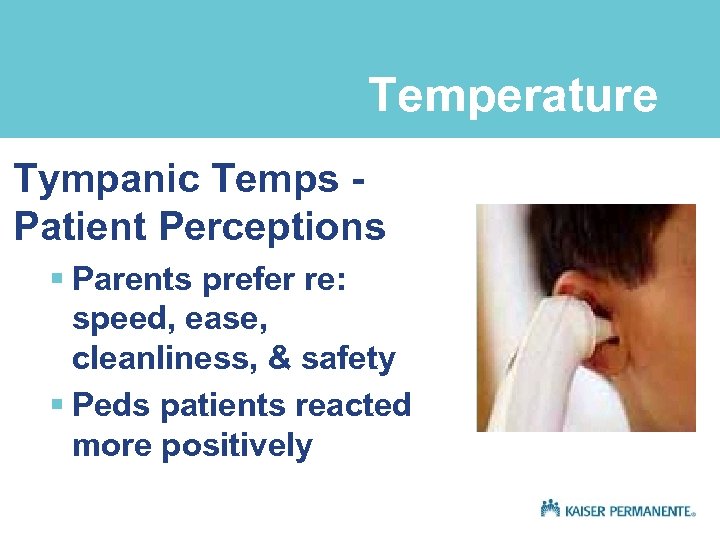
Temperature Tympanic Temps Patient Perceptions § Parents prefer re: speed, ease, cleanliness, & safety § Peds patients reacted more positively
Pulse Count for 60 sec Count for 30 sec and multiply X 2 § Shorter time counts = inaccurate data
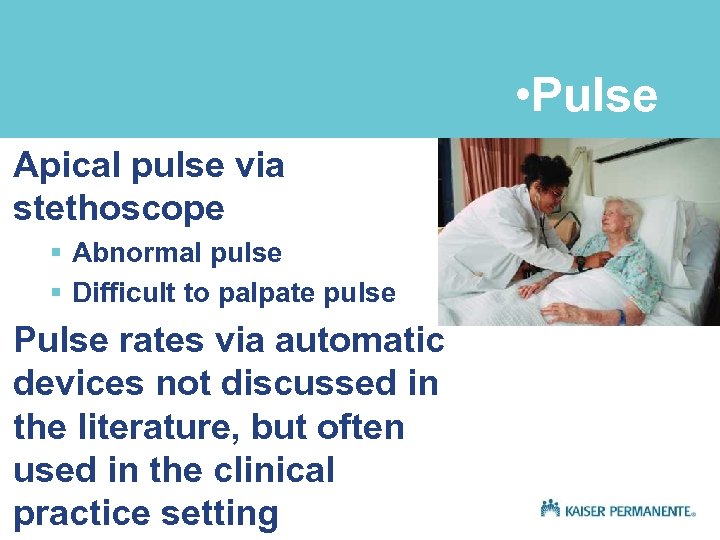
• Pulse Apical pulse via stethoscope § Abnormal pulse § Difficult to palpate pulse Pulse rates via automatic devices not discussed in the literature, but often used in the clinical practice setting
Respiratory Rate Count for 60 sec Count for 30 sec and multiply X 2 § Shorter time counts = inaccurate data
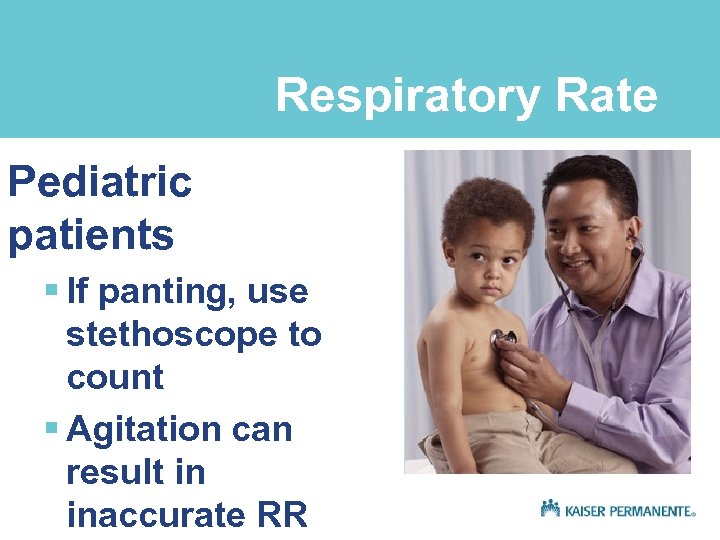
Respiratory Rate Pediatric patients § If panting, use stethoscope to count § Agitation can result in inaccurate RR
Respiratory Rate RR is NOT a reliable screen for oxygen desaturation states! § RN and MD assessment is needed
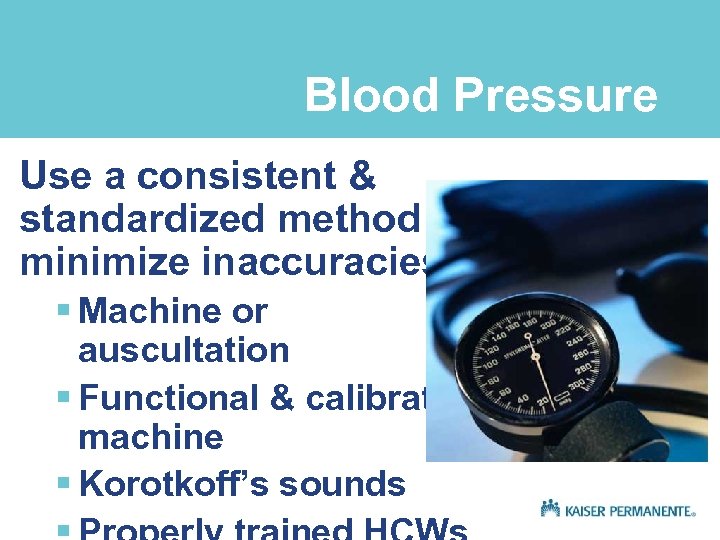
Blood Pressure Use a consistent & standardized method to minimize inaccuracies § Machine or auscultation § Functional & calibrated machine § Korotkoff’s sounds
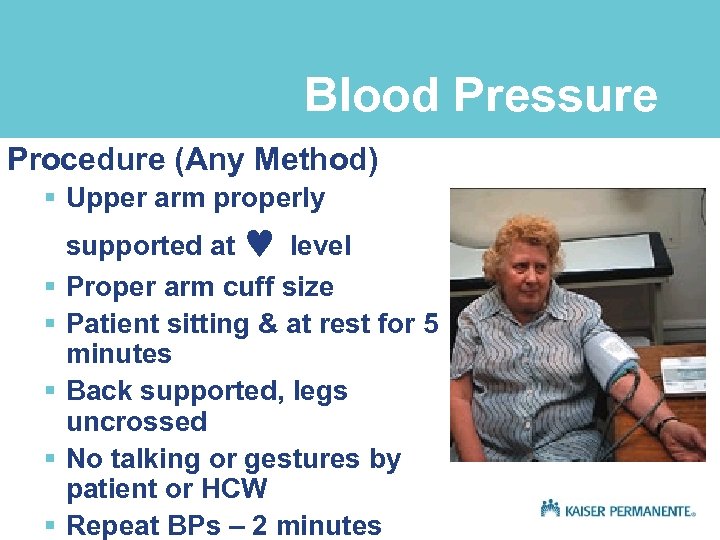
Blood Pressure Procedure (Any Method) § Upper arm properly § § § supported at level Proper arm cuff size Patient sitting & at rest for 5 minutes Back supported, legs uncrossed No talking or gestures by patient or HCW Repeat BPs – 2 minutes
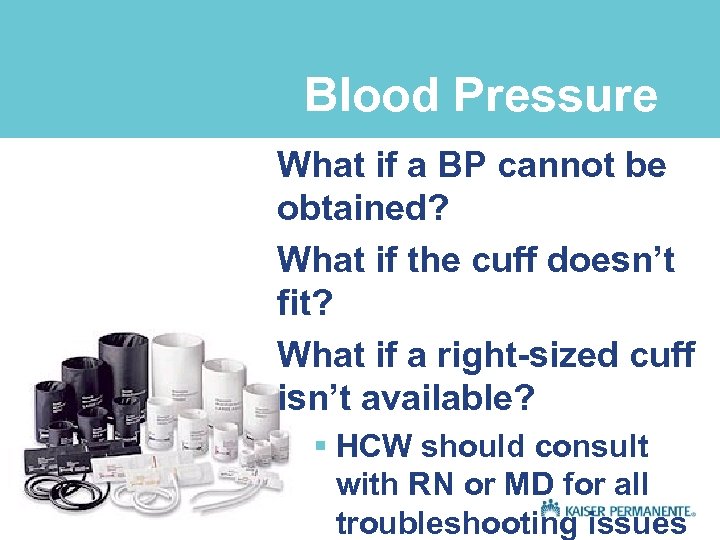
Blood Pressure What if a BP cannot be obtained? What if the cuff doesn’t fit? What if a right-sized cuff isn’t available? § HCW should consult with RN or MD for all troubleshooting issues
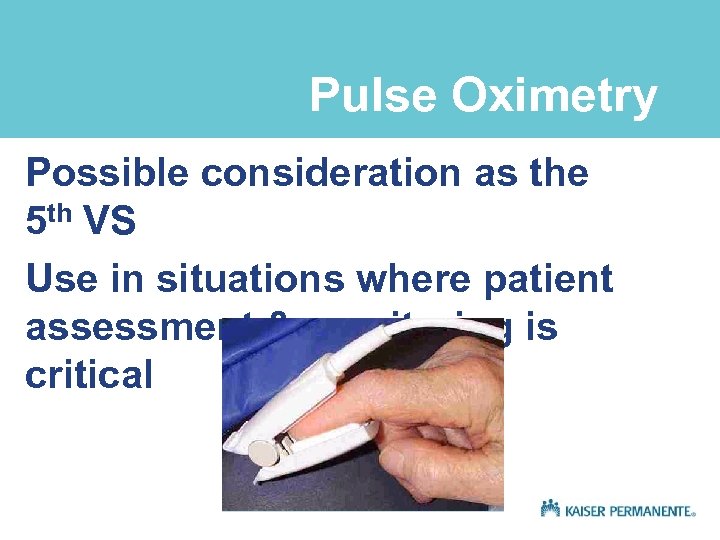
Pulse Oximetry Possible consideration as the 5 th VS Use in situations where patient assessment & monitoring is critical
VS – It’s All About The Numbers! Terminal Digit Preference HCW may show a preference for certain numbers in Pulse, Respirations, & auscultated BP readings* § Zeros, even numbers, odd numbers § Research study on BP revealed 99% of auscultated SBP/DBP readings ended in zero, demonstrating lack of adherence to AHA recommendations* HCW should be aware of this possible tendency (*Roubsanthisuk, W. , Wongsurin, U. , Saravich, S. , & Buranakitjaroen, P. , 2007)
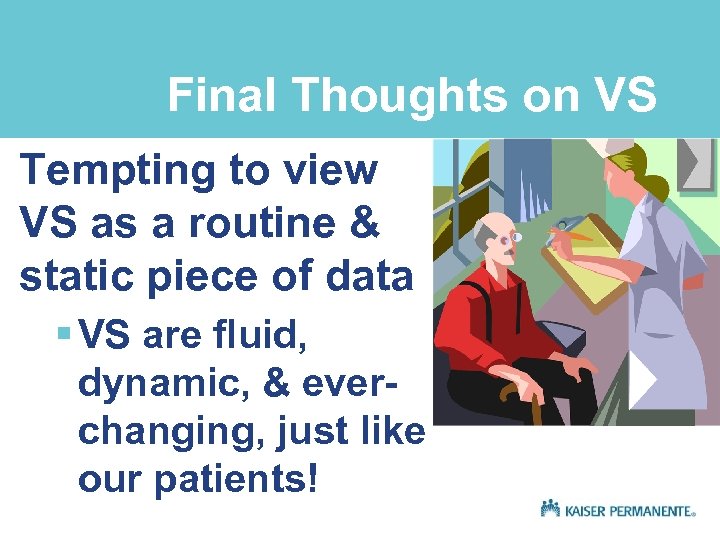
Final Thoughts on VS Tempting to view VS as a routine & static piece of data § VS are fluid, dynamic, & everchanging, just like our patients!
Final Thoughts on VS Crucial Vital Sign Decisions § Base on the Evidence! § Equipment & Technology § Technique & Methods § HCW Education & Training § Frequency Protocols § Influences P&Ps &

Final Thoughts on VS HCW Education & Training § VS Accuracy & Communication of Data § Competencies § Annual Review of Skills
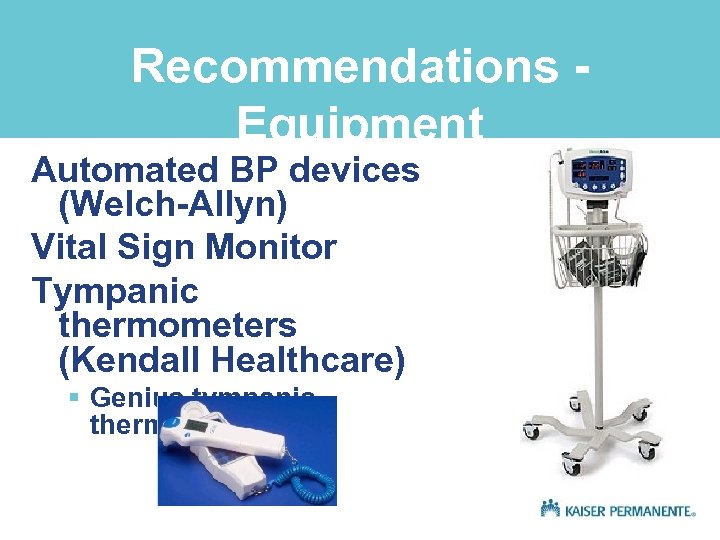
Recommendations Equipment Automated BP devices (Welch-Allyn) Vital Sign Monitor Tympanic thermometers (Kendall Healthcare) § Genius tympanic thermometer
Recommendations – Reference Texts American Academy of Ambulatory Care Nurses (2006): Core Curriculum of Ambulatory Care, 2 nd Ed. , Elsevier Perry & Potter (2006): Clinical Nursing Skills & Techniques, 6 th Ed. , Mosby Perry & Potter (2006): Skills Performance Checklists: Clinical Nursing Skills and Techniques, 6 th Ed. , Mosby
Recommendations Procedure Base Policy & Procedures on AAACN Core Curriculum and Perry & Potter Use AAACN Core Curriculum and Perry & Potter as a daily clinical reference Checklists to instruct and validate clinical competence & skills
Personal Stories Make it Real! Use real life stories to illustrate how the proper use of vital sign equipment can positively impact the care of your patients… Remember these stories as they happen and pass them along!
Vital Signs Conclusions An evidence-based vital sign measurement method provides a foundation for: § § Patient-HCW Relationships Patient Assessment Patient Treatment Quality Patient Outcomes Shift the paradigm from
References American Association of Critical Care Nurses (AACN) (2006). Practice alert: Noninvasive blood pressure monitoring. AACN Newsletter, June 2006, 4 -5. Lockwood, C. , Conroy-Hiller, T. , & Page, T. (2004). Vital signs: Systematic review. Joanna Briggs Institute Reports, 2, 207 -230.
References Pickering, T. G. , Hall, J. E. , Appel, L. J. , Falkner, B. E. , Graves, J. , Hill, M. N. , Jones, D. W. , Kurtz, T. , Sheps, S. G. , & Roccella, E. J. (2005). Recommendations for blood pressure measurement in humans: A statement for professionals from the subcommittee of professional and public education of the American Heart Association council on high blood pressure research. Hypertension, 45, 142 -161.
References Roubsanthisuk, W. , Wongsurin, U. , Saravich, S. , & Buranakitjaroen, P. (2007). Blood Pressure Determination By Traditionally Trained Personnel Is Less Reliable And Tends To Underestimate The Severity Of Moderate To Severe Hypertension. Blood Pressure
References Schell, K. , Bradley, E. , Bucher, L. , Seckler, M. , Lyons, D. , Wakai, S. , Bartell, D. , Carson, E. , Chichester, M. , Foraker, T. , & Simpson, K. (2006). Clinical comparison of automatic, noninvasive measurements of blood pressure in the forearm and upper arm. American Journal of Critical Care, 14(3),

For more information: Cecelia L. Crawford, RN, MSN Project Manager for Evidence. Based Nursing Practice So. Calif. Nursing Research Program 626 -405 -5802 Cecelia. L. Crawford@kp. org
Скачать презентацию Vital Signs in the Ambulatory Setting An Evidence-Based
5d8a66d808759c87d1625e6dc525defe.ppt