


 Скачать презентацию Vista Controls Vsystem at the ISIS pulsed neutron
0679f6490ab27edb696155ae7a94ec47.ppt
- Количество слайдов: 30
 Vista Controls Vsystem* at the ISIS pulsed neutron facility Bob Mannix, Tim Gray ISIS Controls Group STFC, Rutherford Appleton Laboratory UK ICALEPCS 2007, Knoxville TN, October 2007 * – www. vista-control. com
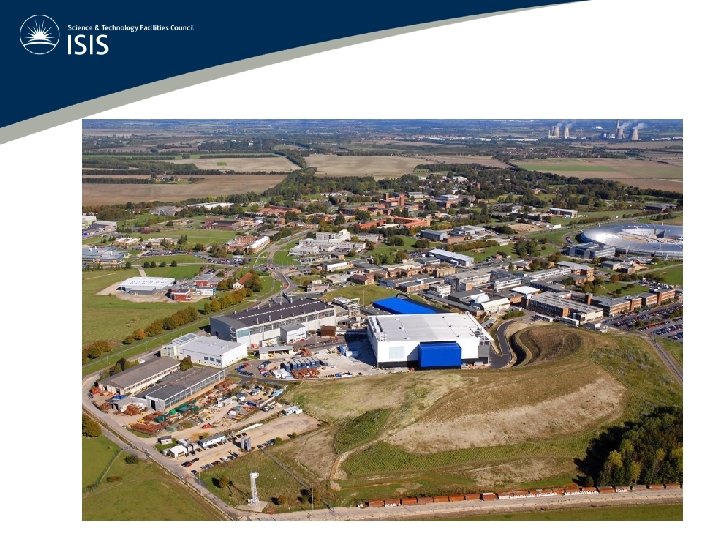
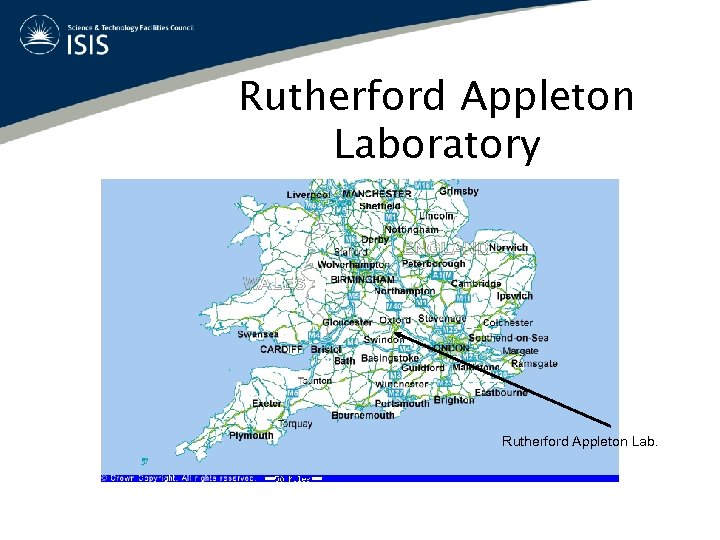 Rutherford Appleton Laboratory Rutherford Appleton Lab.
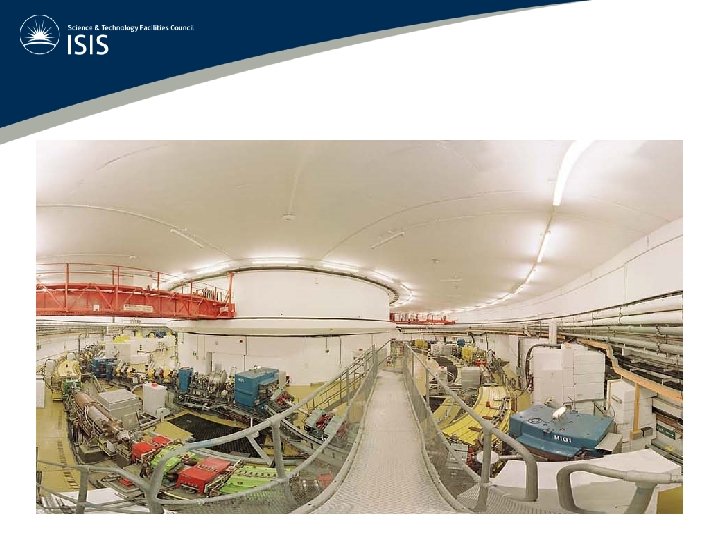
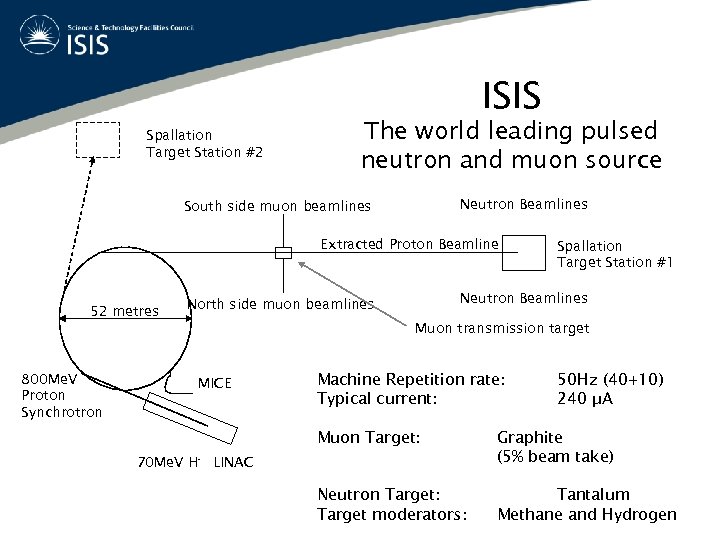 ISIS Spallation Target Station #2 The world leading pulsed neutron and muon source Neutron Beamlines South side muon beamlines Extracted Proton Beamline 52 metres Spallation Target Station #1 Neutron Beamlines North side muon beamlines Muon transmission target 800 Me. V Proton Synchrotron MICE Machine Repetition rate: Typical current: 50 Hz (40+10) 240 µA Muon Target: Graphite (5% beam take) Neutron Target: Target moderators: Tantalum Methane and Hydrogen 70 Me. V H- LINAC
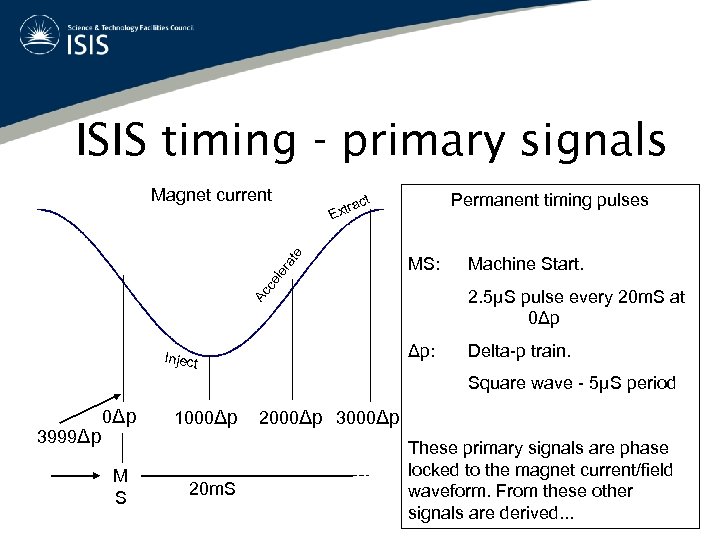 ISIS timing - primary signals Magnet current Permanent timing pulses Ac ce ler at e t trac Ex MS: 2. 5μS pulse every 20 m. S at 0Δp Δp: Inject Machine Start. Delta-p train. Square wave - 5μS period 3999Δp 0Δp M S 1000Δp 20 m. S 2000Δp 3000Δp These primary signals are phase locked to the magnet current/field waveform. From these other signals are derived. . .
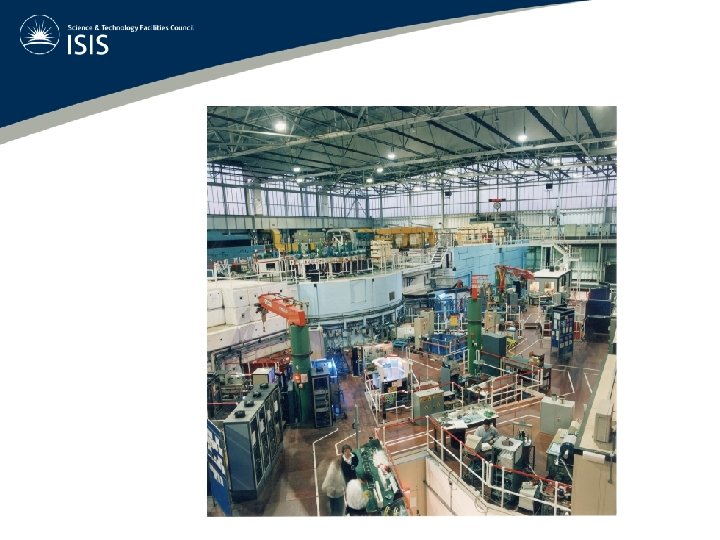
 The ISIS Facility • A staggering variety of ancient (50 years max. ) and modern equipment with various interface requirements: RS 232, RS 485, IEEE 488, Ethernet, DC Analogue, TTL, BCD digital panel meter outputs, Function generators requiring ISIS timing signals, GPIB instruments, PLC systems, other proprietary embedded systems. • Over 10000 identifiable parameters which may require control or monitoring (a smaller subset are generally accessed). • The control system interface electronics consists of about 500 modules in 50 crates of our original multiplex system (GPMPX), 30 installed STEbus embedded systems, 20 or so Lab. View PXI systems, and our replacements for the STEbus
 ISIS Controls - original • Classical late 70’s/80’s approach using minicomputers (GEC 4000 series) with CAMAC, driving our own multiplex system (GPMPX). • Semi-compiled interpretive language (GRACES) • Data modules (equipment routines) based on CERN SPS model • CAMAC based man-machine interface on control desk • LAN between machines but no external access
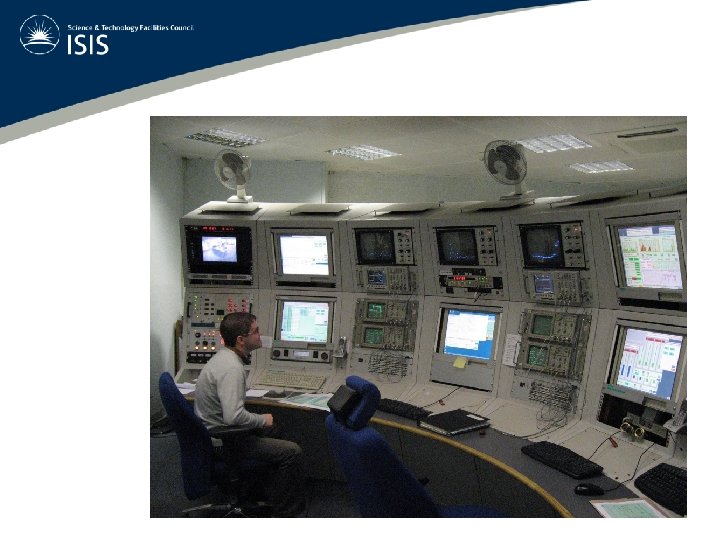
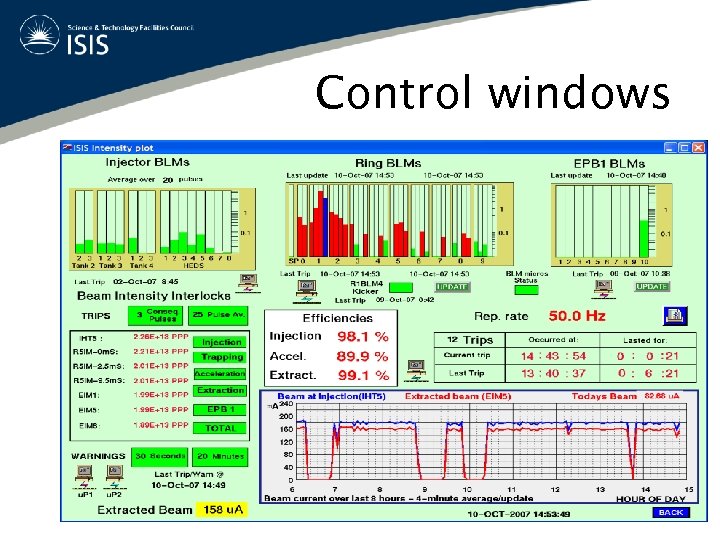
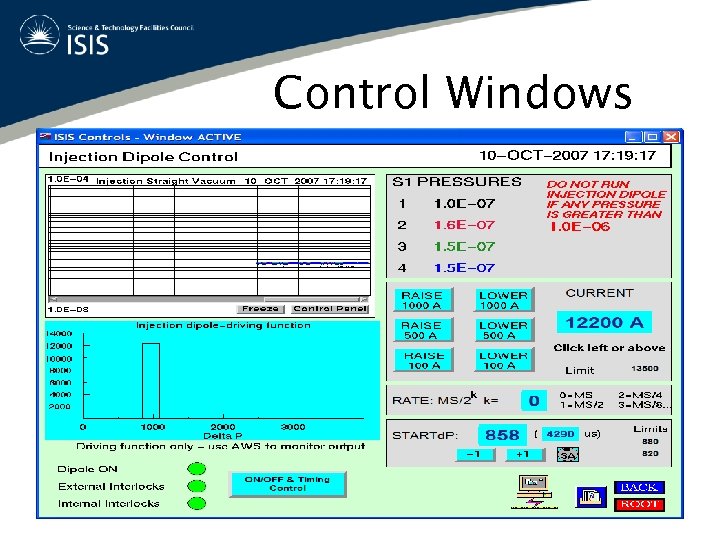
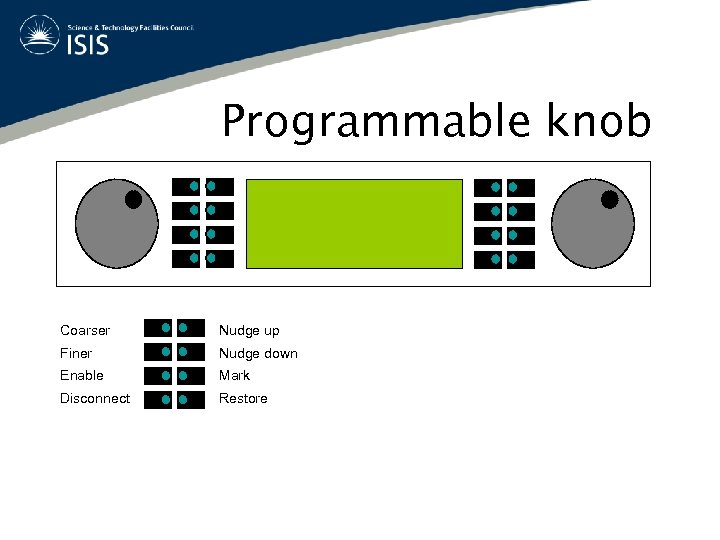
 ISIS Controls - current • Ethernet linking control computers (Open. VMS and XP workstations), terminals, programmable knobs, CAMAC, STEbus and all new proprietary processor systems (PLC, PXI/PCI etc) • Purchased project license for Vista control software with built in graphics package, logging, trending, alarm handling as well as user application programs in C, FORTRAN, BASIC and IDL. • Equipment handlers and readers written in-house • X-windows displays and programmable knob units on desk
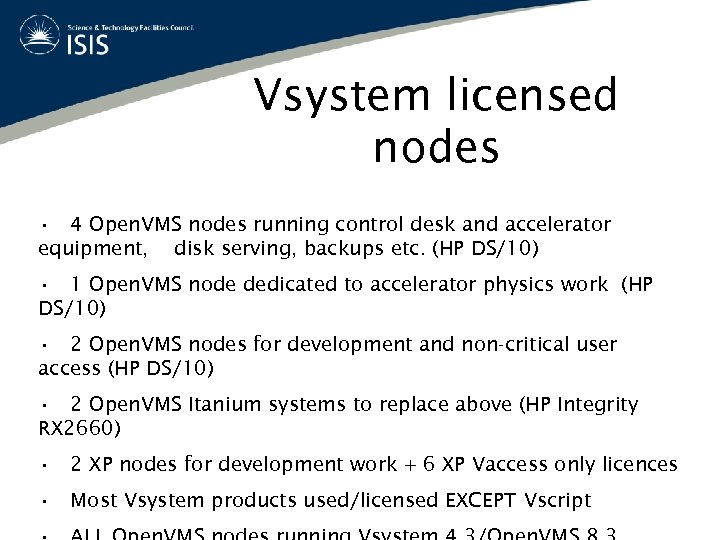 Vsystem licensed nodes • 4 Open. VMS nodes running control desk and accelerator equipment, disk serving, backups etc. (HP DS/10) • 1 Open. VMS node dedicated to accelerator physics work (HP DS/10) • 2 Open. VMS nodes for development and non-critical user access (HP DS/10) • 2 Open. VMS Itanium systems to replace above (HP Integrity RX 2660) • 2 XP nodes for development work + 6 XP Vaccess only licences • Most Vsystem products used/licensed EXCEPT Vscript
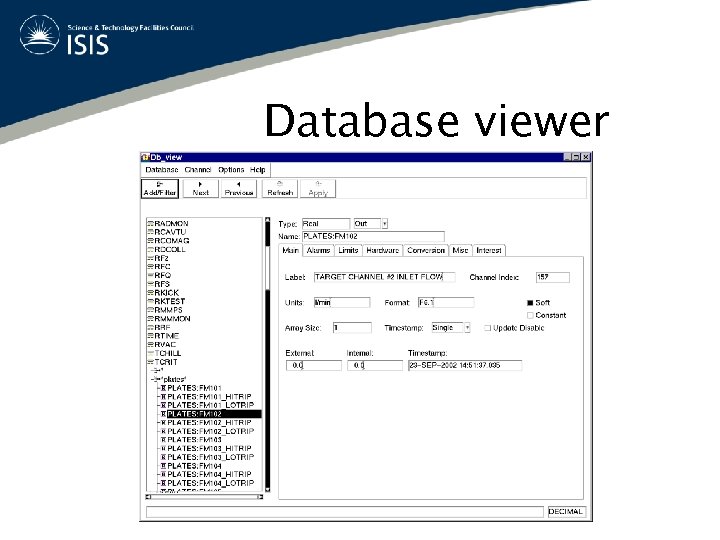
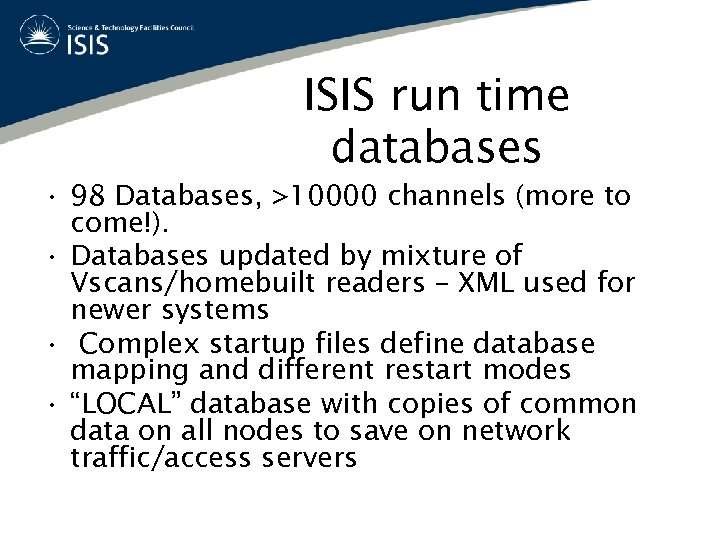 ISIS run time databases • 98 Databases, >10000 channels (more to come!). • Databases updated by mixture of Vscans/homebuilt readers – XML used for newer systems • Complex startup files define database mapping and different restart modes • “LOCAL” database with copies of common data on all nodes to save on network traffic/access servers
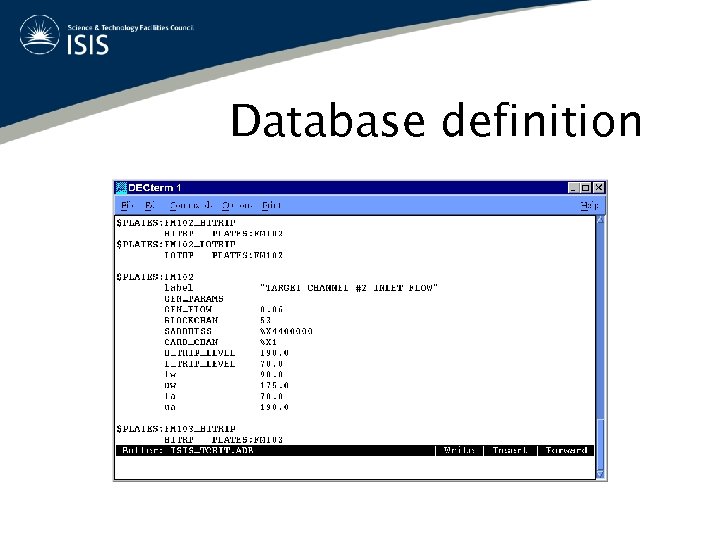 Database definition
 Database viewer
 Simple API %include " on_include: conlib. bas c " rs=read_chan("local: : beam: synchrotron", x) print using "ISIS Beam ###. # µA", x
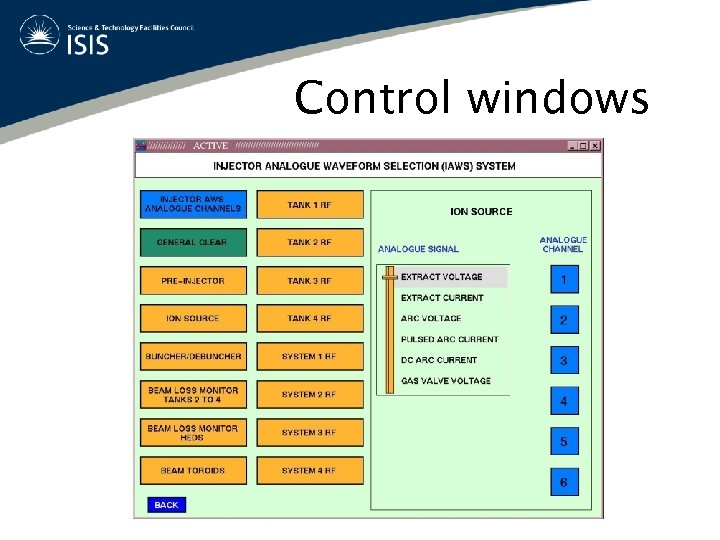
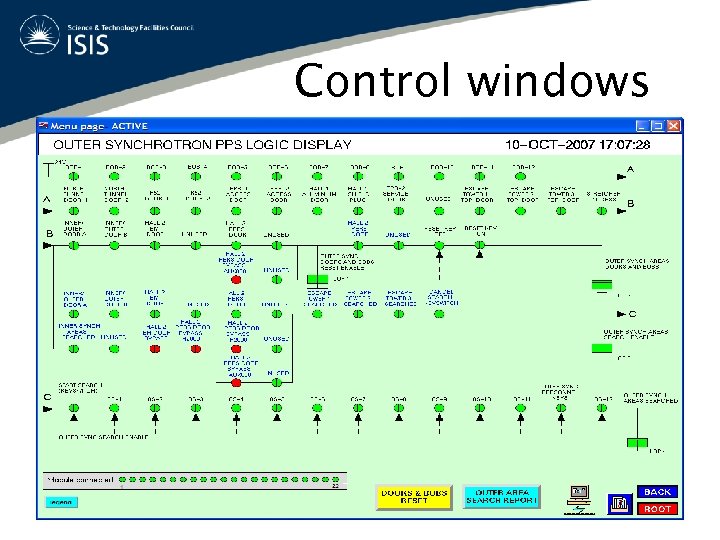
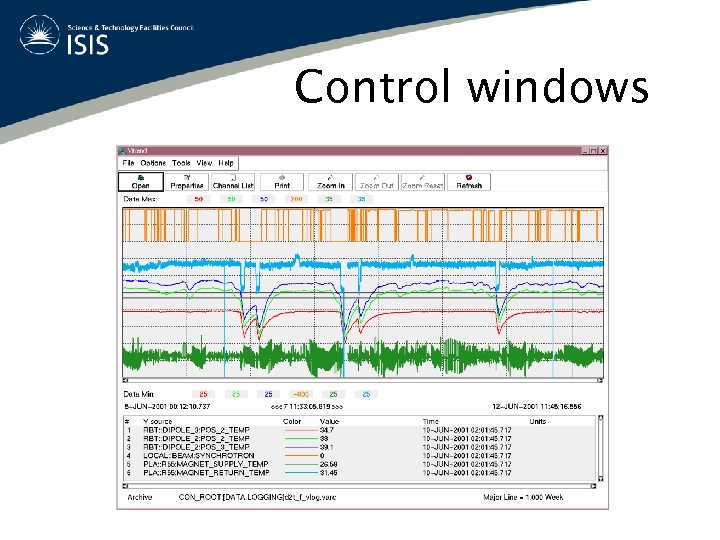
 Control windows
 Control Windows
 Control windows
 Control windows
 Control windows
 Programmable knob Coarser Nudge up Finer Nudge down Enable Mark Disconnect Restore
 Vsystem conclusions • Open. VMS - but we have no evidence that different conclusions would be reached on other operating systems. • Support has always been excellent • Since version 2. 7, downtime caused by software has been 99% in our own software and other third-party software, not in Vsystem • Upgrading early versions (up to 2. 7) could be problematic. Recent upgrades (now stable at 4. 3) have been happy experiences. • Vista have hosted user-group meetings where user requests can be channelled effectively into Vsystem development • Vsystem suits an organization that cannot afford the highest levels of software expertise but which wants to do its own system development.
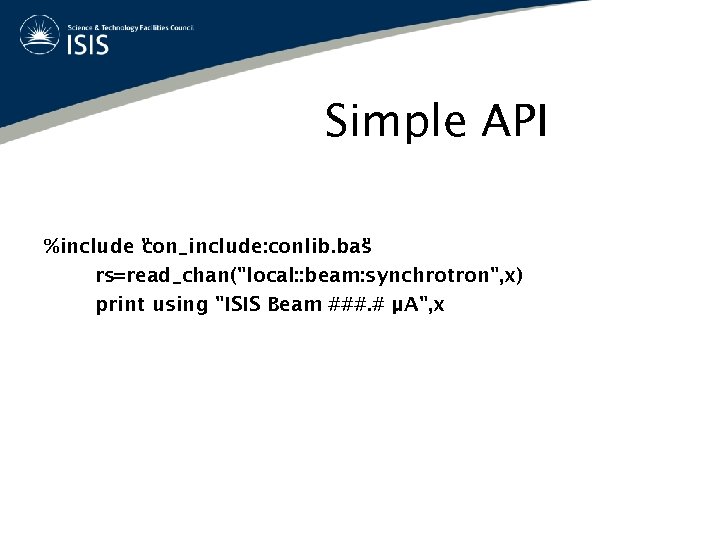
 Vsystem conclusions • We felt it necessary to write our own front-end, user-friendly channel access functions (“read_chan, write_chan”) but this is not hard to do. Using Vscript would remove some of this requirement. • For high-level imaging of data, Vsystem is not suitable but should be used in conjunction with another package (IDL in our case). • Vsystem fell out of favour in the accelerator world, due to EPICS being developed for accelerator physics and control as a collaborative venture between the participating laboratories. • Vsystem is now more successful in the commercial world, where support rather than a chance to participate in software development is more important
![World Vsystem • • Power utilities Alumin[i]um & Steel forge & rolling facilities Cyclotron](https://present5.com/presentation/0679f6490ab27edb696155ae7a94ec47/image-27.jpg "World Vsystem • • Power utilities Alumin[i]um & Steel forge & rolling facilities Cyclotron") World Vsystem • • Power utilities Alumin[i]um & Steel forge & rolling facilities Cyclotron control, Synchrotron control Aviation engine testing (civil and US military) Weapon test telemetry (US military) Industrial motor drives Water management utilities Satellite broadcasting
World Vsystem • • Power utilities Alumin[i]um & Steel forge & rolling facilities Cyclotron control, Synchrotron control Aviation engine testing (civil and US military) Weapon test telemetry (US military) Industrial motor drives Water management utilities Satellite broadcasting
 Vsystem advantages • Controls Group cheaper – Smaller, less (expensive) expertise, no need for “gurus” • Support and development from Vista – Single source with tracking, not collaborative • Cheaper overall • QA accreditation/verification • Source protected in escrow
 Vsystem disadvantages • Not part of accelerator “family” • Equipment doesn’t come with drivers • Less accelerator-specific product • Have to take what you get to a certain extent but always access to code through Vsystem API.
 The Vsystem “experience” • We didn’t really have an experience just a need and a solution • “Experiences” are interesting, challenging, fulfilling and can be…. expensive!