


 Скачать презентацию ВИРУСНЫЕ ГЕПАТИТЫ Этиология патогенез иммунитет профилактика гепатита А
Вирусные гепатиты.ppt
- Количество слайдов: 49
 ВИРУСНЫЕ ГЕПАТИТЫ Этиология, патогенез, иммунитет, профилактика гепатита А. Вирусы гепатитов В, С, Д, Е, G. Систематическое положение. Характеристика вирусов и вызываемых ими заболеваний. Профилактика парентеральных вирусных гепатитов.
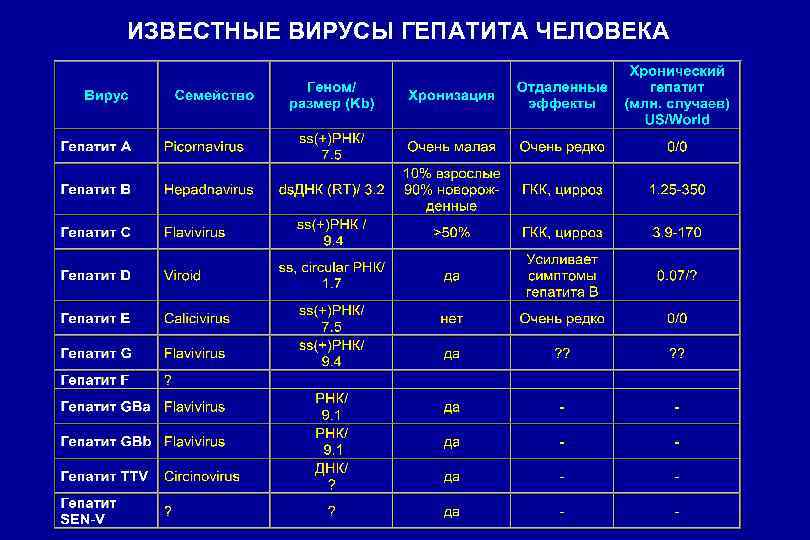 ИЗВЕСТНЫЕ ВИРУСЫ ГЕПАТИТА ЧЕЛОВЕКА
 ГЕНОТИПИРОВАНИЕ НЕКОТОРЫХ ВИРУСОВ Гепатит А 7 генотипов (1, 2, 3 и 7 - инфекционные для человека) Гепатит В 6 -7 генотипов, 4 субтипа и мутантные формы ВГВ (мутации в S-, С-, Х- и Р-генах генома HBV) Гепатит С 1 -11 генотипов, >100 субтипов (наиболее распространенные 1 а, 1 b, 2 a, 2 b и 3 а)
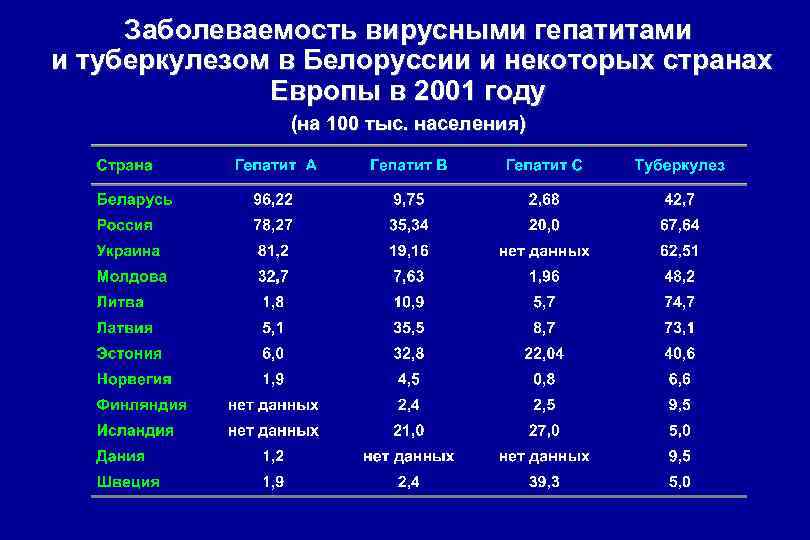 Заболеваемость вирусными гепатитами и туберкулезом в Белоруссии и некоторых странах Европы в 2001 году (на 100 тыс. населения)
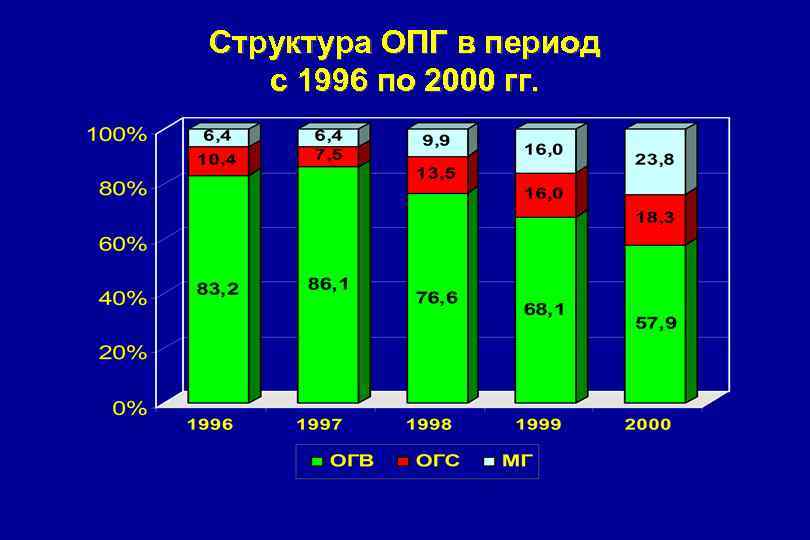 Структура ОПГ в период с 1996 по 2000 гг.
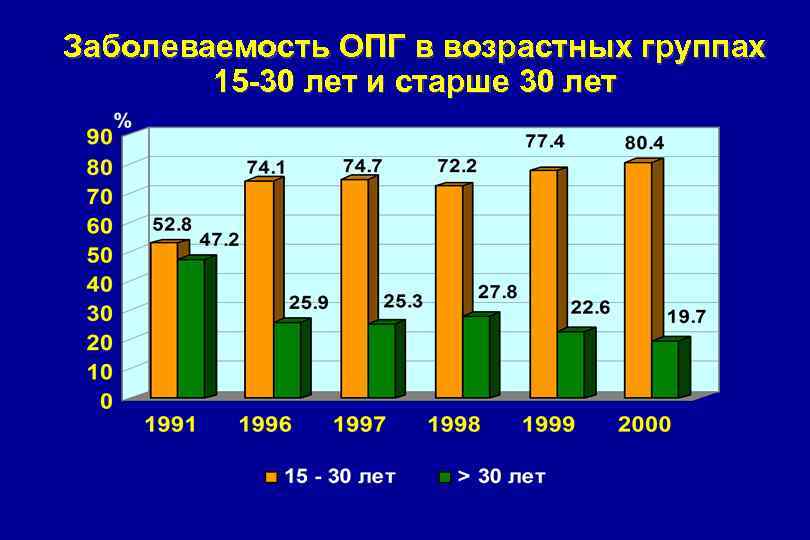 Заболеваемость ОПГ в возрастных группах 15 -30 лет и старше 30 лет
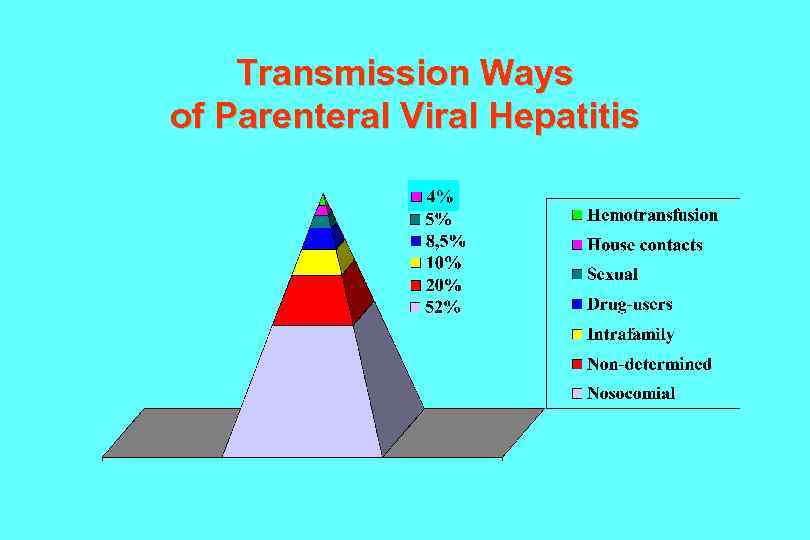 Transmission Ways of Parenteral Viral Hepatitis
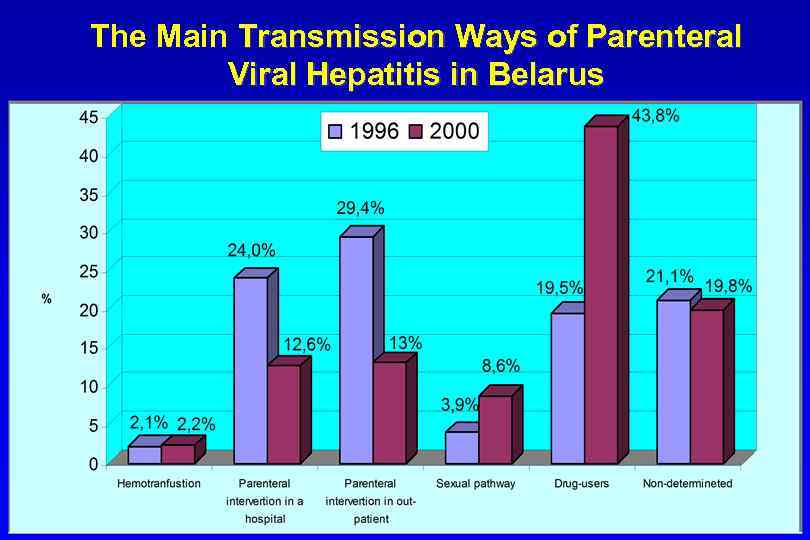 The Main Transmission Ways of Parenteral Viral Hepatitis in Belarus
 ВИРУСНЫЙ ГЕПАТИТ А
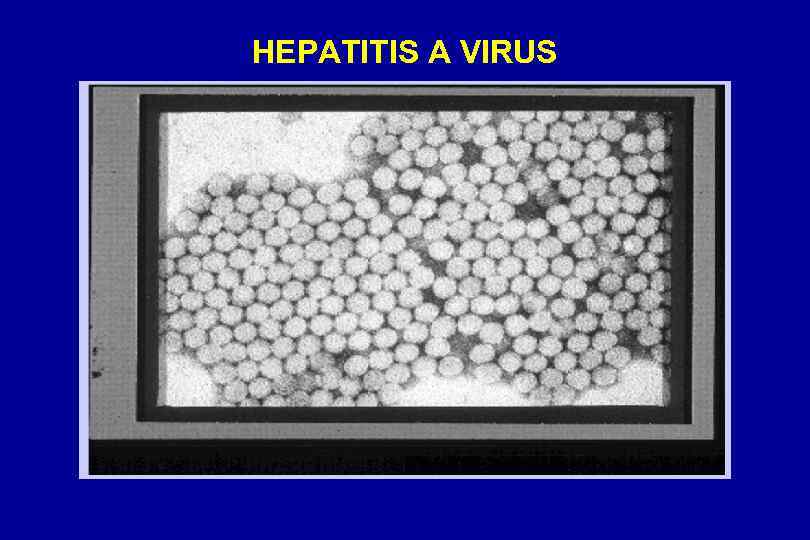 HEPATITIS A VIRUS
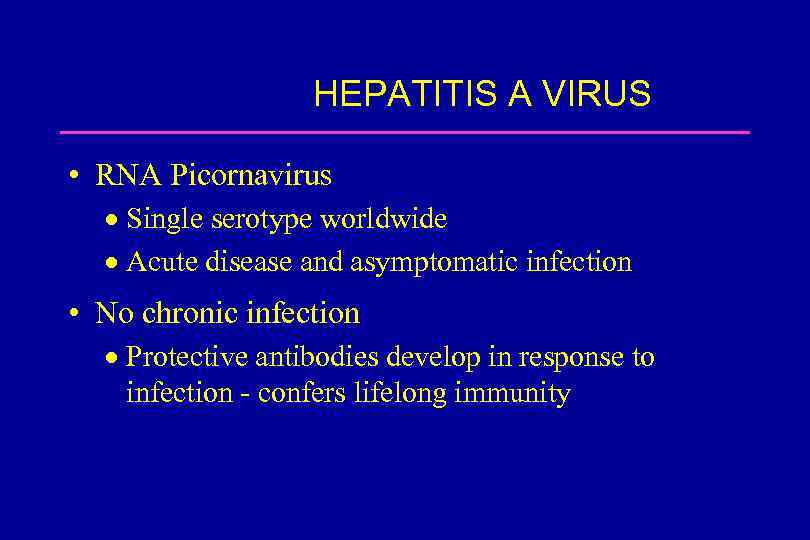 HEPATITIS A VIRUS • RNA Picornavirus · Single serotype worldwide · Acute disease and asymptomatic infection • No chronic infection · Protective antibodies develop in response to infection - confers lifelong immunity
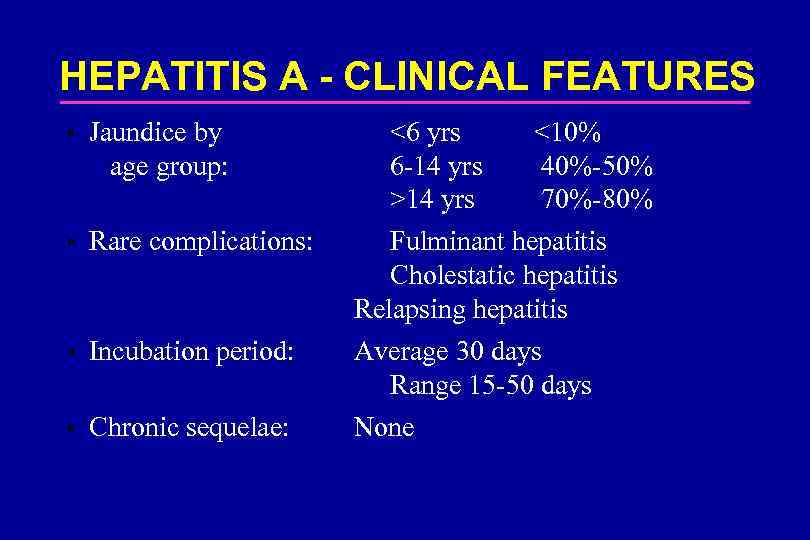 HEPATITIS A - CLINICAL FEATURES • Jaundice by age group: <6 yrs 6 -14 yrs >14 yrs <10% 40%-50% 70%-80% • Rare complications: Fulminant hepatitis Cholestatic hepatitis Relapsing hepatitis • Incubation period: Average 30 days Range 15 -50 days • Chronic sequelae: None
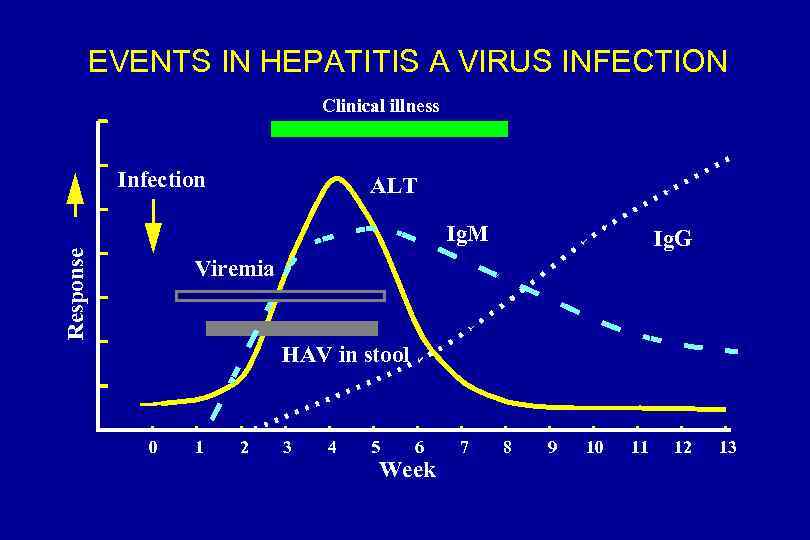 EVENTS IN HEPATITIS A VIRUS INFECTION Clinical illness Infection ALT Response Ig. M Ig. G Viremia HAV in stool 0 1 2 3 4 5 6 Week 7 8 9 10 11 12 13
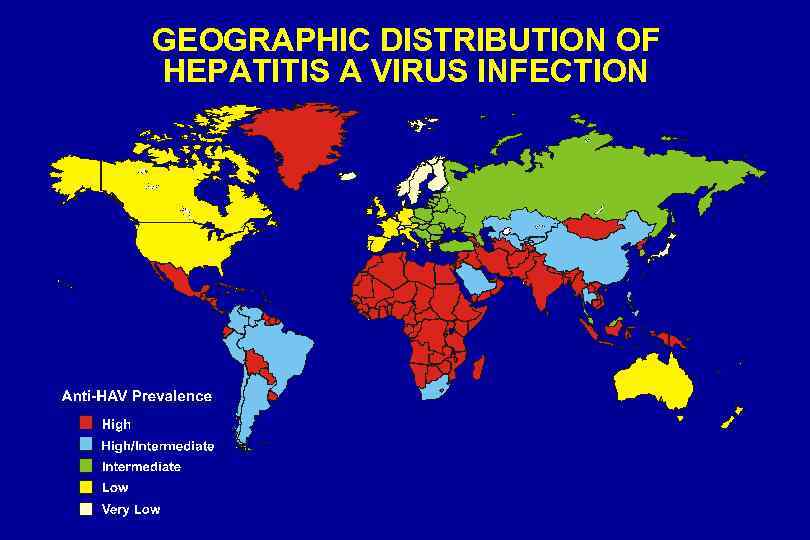 GEOGRAPHIC DISTRIBUTION OF HEPATITIS A VIRUS INFECTION
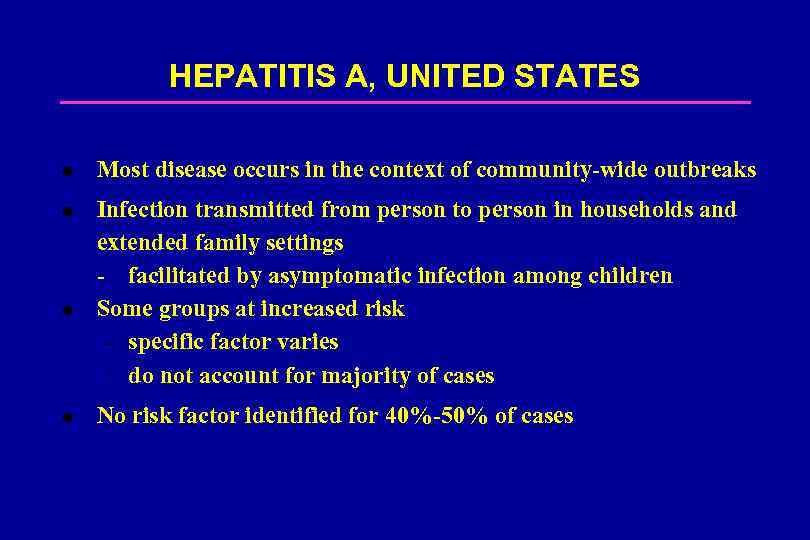 HEPATITIS A, UNITED STATES l Most disease occurs in the context of community-wide outbreaks l Infection transmitted from person to person in households and extended family settings - facilitated by asymptomatic infection among children Some groups at increased risk – specific factor varies – do not account for majority of cases l l No risk factor identified for 40%-50% of cases
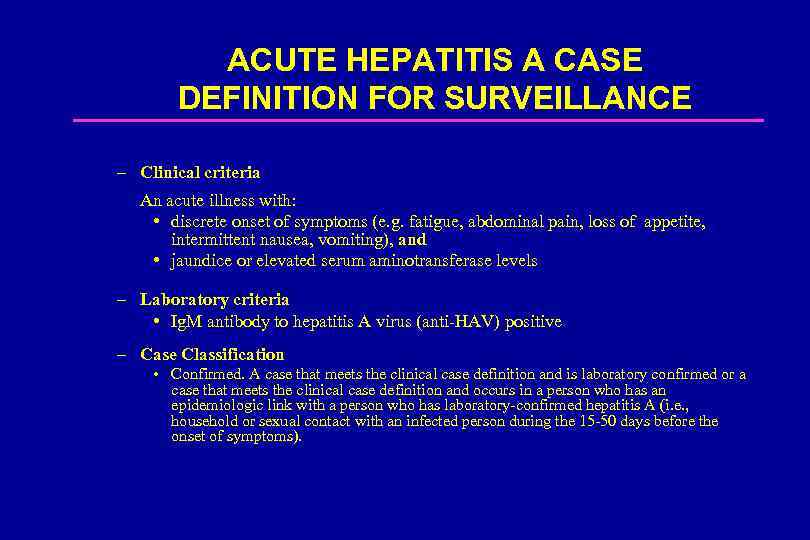 ACUTE HEPATITIS A CASE DEFINITION FOR SURVEILLANCE – Clinical criteria An acute illness with: • discrete onset of symptoms (e. g. fatigue, abdominal pain, loss of appetite, intermittent nausea, vomiting), and • jaundice or elevated serum aminotransferase levels – Laboratory criteria • Ig. M antibody to hepatitis A virus (anti-HAV) positive – Case Classification • Confirmed. A case that meets the clinical case definition and is laboratory confirmed or a case that meets the clinical case definition and occurs in a person who has an epidemiologic link with a person who has laboratory-confirmed hepatitis A (i. e. , household or sexual contact with an infected person during the 15 -50 days before the onset of symptoms).
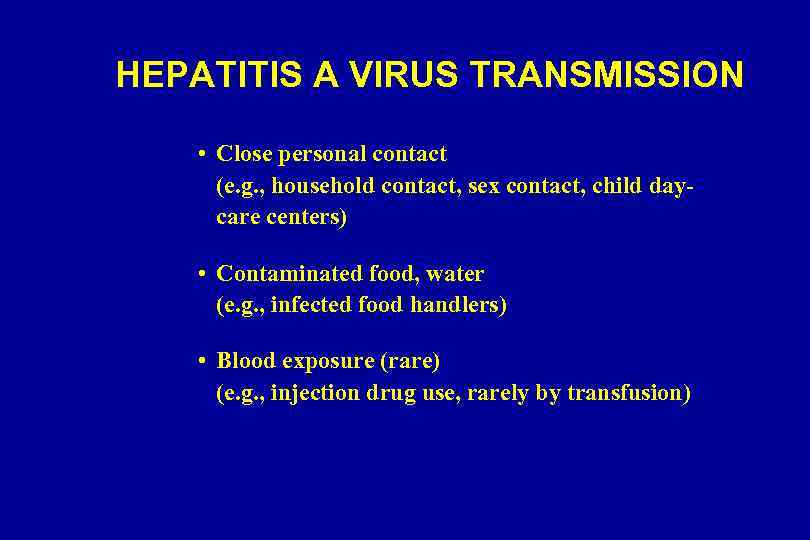 HEPATITIS A VIRUS TRANSMISSION • Close personal contact (e. g. , household contact, sex contact, child daycare centers) • Contaminated food, water (e. g. , infected food handlers) • Blood exposure (rare) (e. g. , injection drug use, rarely by transfusion)
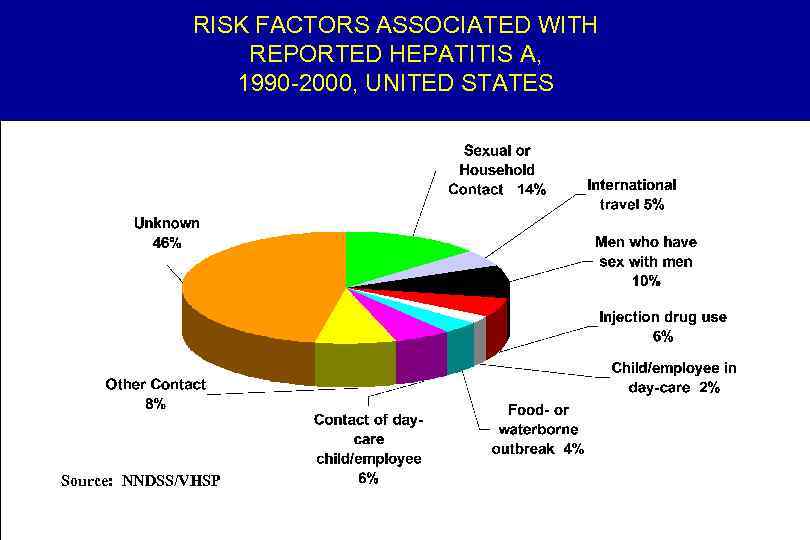 RISK FACTORS ASSOCIATED WITH REPORTED HEPATITIS A, 1990 -2000, UNITED STATES Source: NNDSS/VHSP
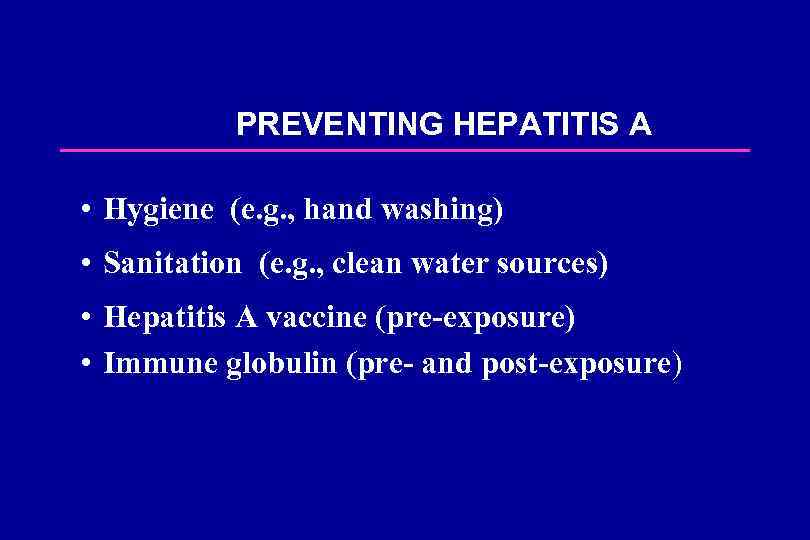 PREVENTING HEPATITIS A • Hygiene (e. g. , hand washing) • Sanitation (e. g. , clean water sources) • Hepatitis A vaccine (pre-exposure) • Immune globulin (pre- and post-exposure)
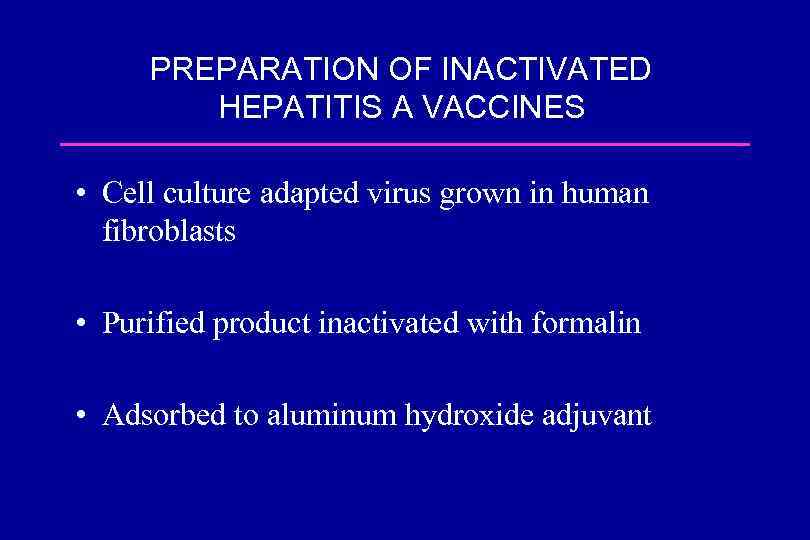 PREPARATION OF INACTIVATED HEPATITIS A VACCINES • Cell culture adapted virus grown in human fibroblasts • Purified product inactivated with formalin • Adsorbed to aluminum hydroxide adjuvant
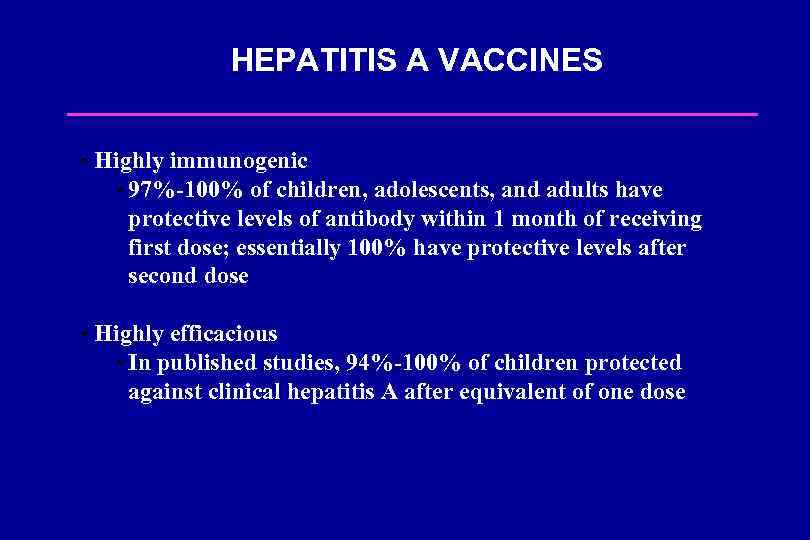 HEPATITIS A VACCINES • Highly immunogenic • 97%-100% of children, adolescents, and adults have protective levels of antibody within 1 month of receiving first dose; essentially 100% have protective levels after second dose • Highly efficacious • In published studies, 94%-100% of children protected against clinical hepatitis A after equivalent of one dose
 ВИРУСНЫЙ ГЕПАТИТ С
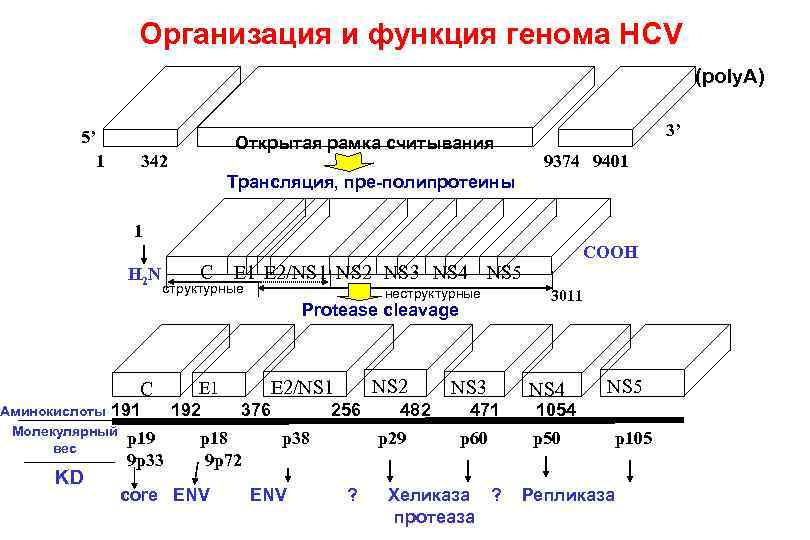 Организация и функция генома HCV (poly. A) 5’ 1 3’ Открытая рамка считывания 342 9374 9401 Трансляция, пре-полипротеины 1 H 2 N C E 1 E 2/NS 1 NS 2 NS 3 NS 4 NS 5 структурные неструктурные Protease cleavage C Аминокислоты 191 Молекулярный p 19 вес KD 9 p 33 E 1 192 NS 2 E 2/NS 1 376 p 18 9 p 72 core ENV COOH 256 p 38 ENV 482 p 29 ? NS 3 471 p 60 Хеликаза ? протеаза 3011 NS 4 NS 5 1054 p 50 p 105 Репликаза
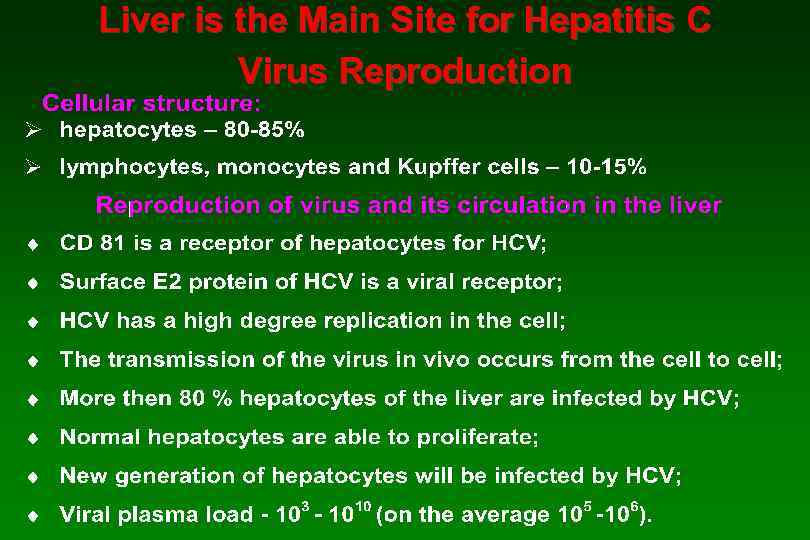 Liver is the Main Site for Hepatitis С Virus Reproduction
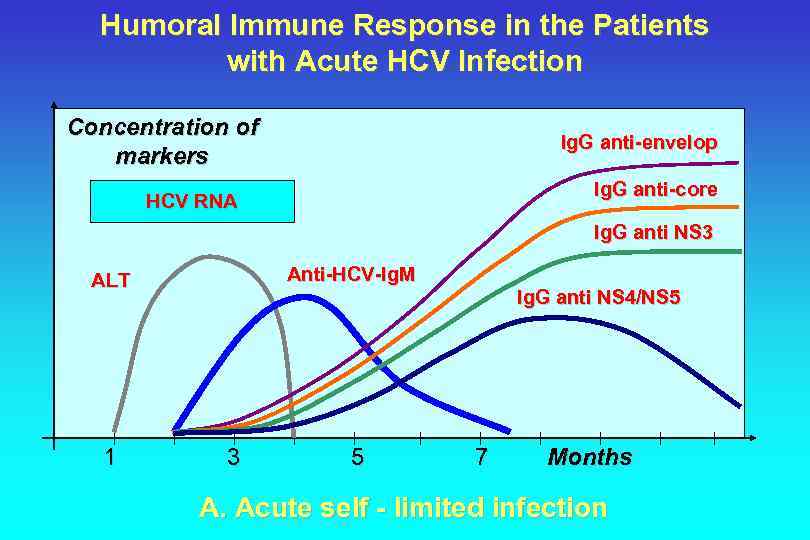 Humoral Immune Response in the Patients with Acute HCV Infection Concentration of markers Ig. G anti-envelop Ig. G anti-core HCV RNA Ig. G anti NS 3 Anti-HCV-Ig. M ALT 1 3 5 Ig. G anti NS 4/NS 5 7 Months A. Acute self - limited infection
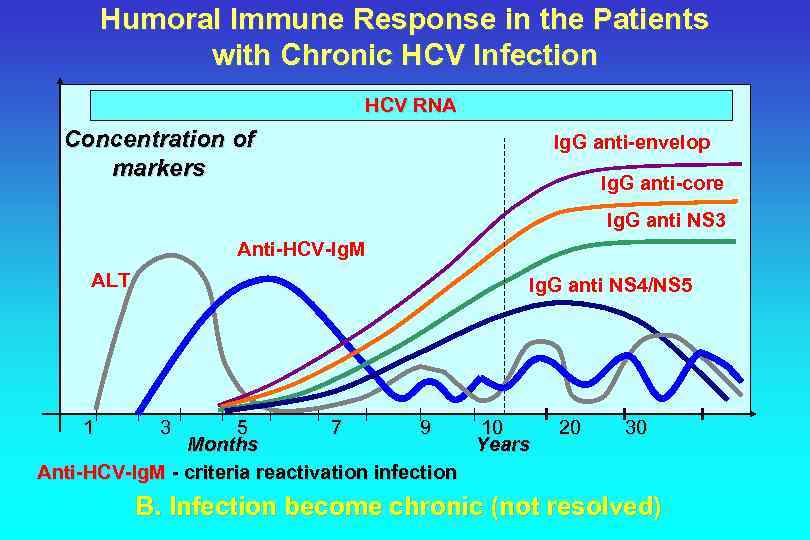 Humoral Immune Response in the Patients with Chronic HCV Infection HCV RNA Concentration of markers Ig. G anti-envelop Ig. G anti-core Ig. G anti NS 3 Anti-HCV-Ig. M ALT 1 Ig. G anti NS 4/NS 5 3 5 7 9 10 Months Years Anti-HCV-Ig. M - criteria reactivation infection 20 30 B. Infection become chronic (not resolved)
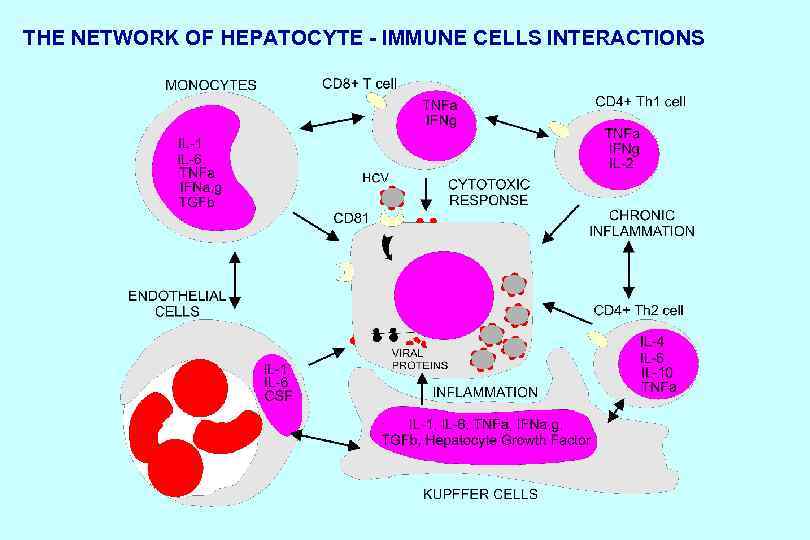 THE NETWORK OF HEPATOCYTE - IMMUNE CELLS INTERACTIONS
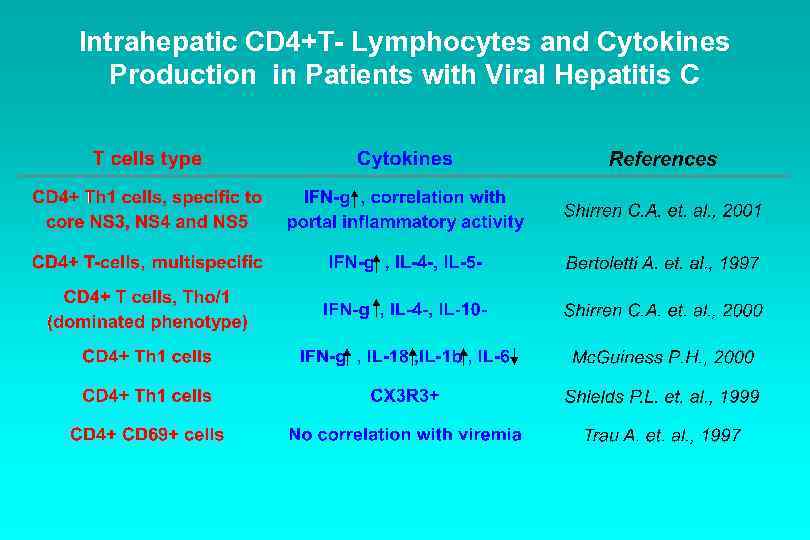 Intrahepatic CD 4+T- Lymphocytes and Cytokines Production in Patients with Viral Hepatitis C
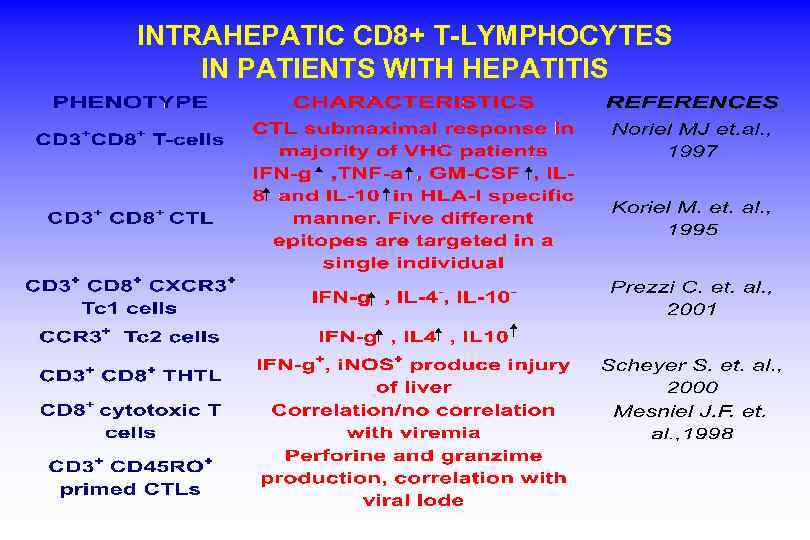 INTRAHEPATIC CD 8+ T-LYMPHOCYTES IN PATIENTS WITH HEPATITIS
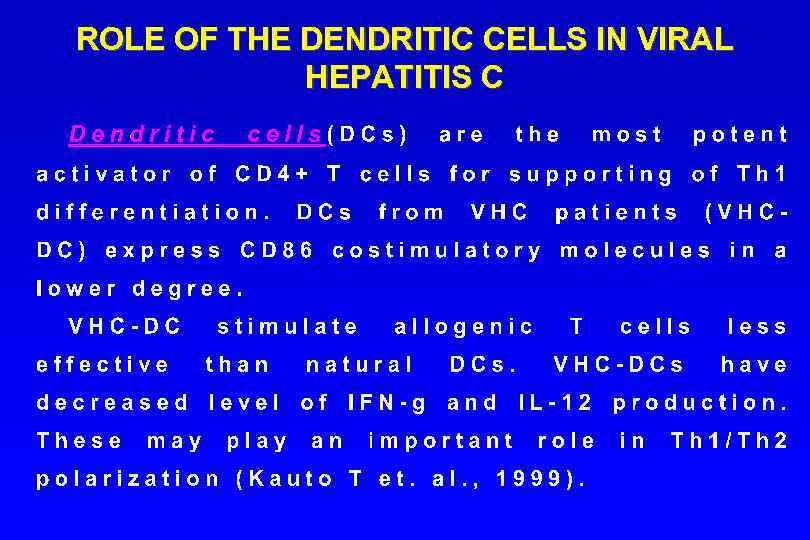 ROLE OF THE DENDRITIC CELLS IN VIRAL HEPATITIS C
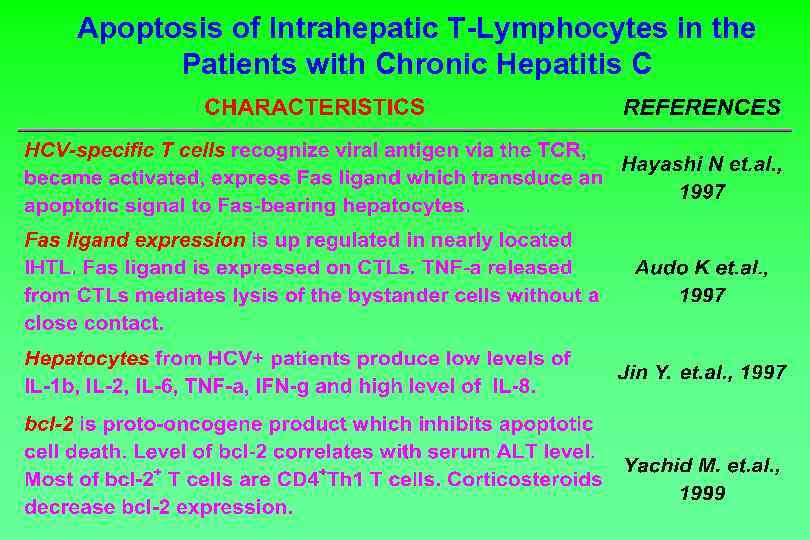 Apoptosis of Intrahepatic T-Lymphocytes in the Patients with Chronic Hepatitis C
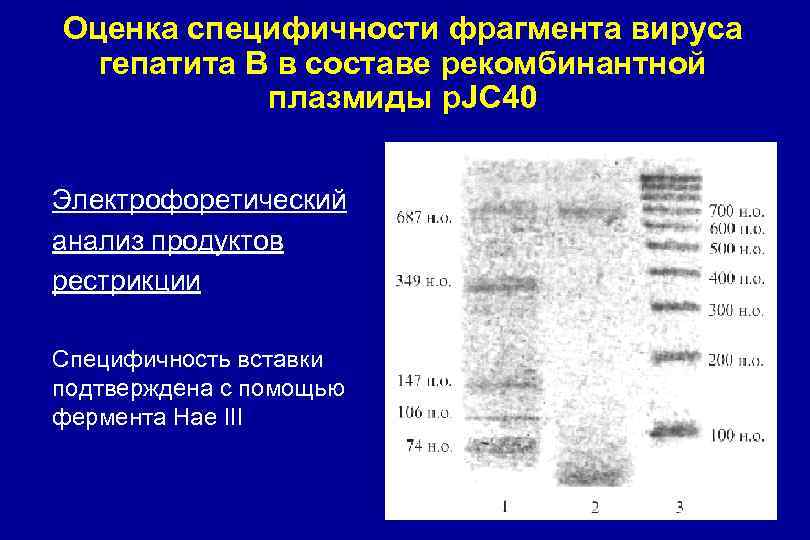 Оценка специфичности фрагмента вируса гепатита В в составе рекомбинантной плазмиды p. JC 40 Электрофоретический анализ продуктов рестрикции Специфичность вставки подтверждена с помощью фермента Hae III
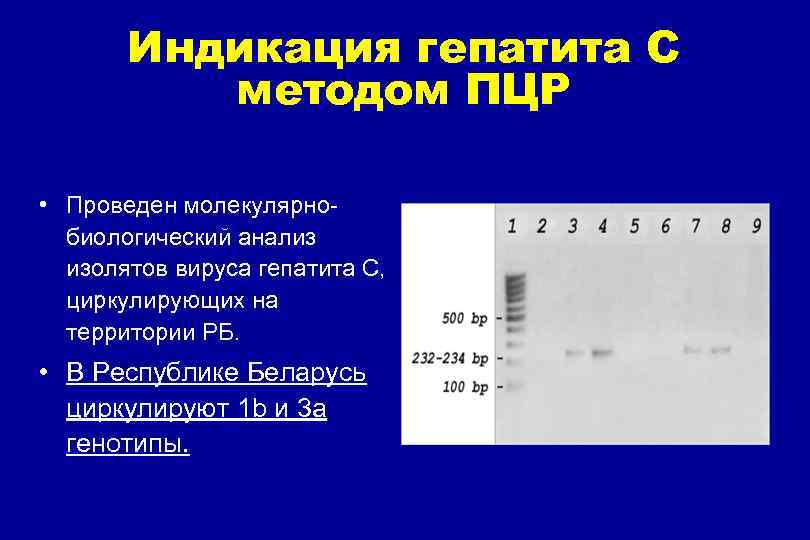 Индикация гепатита С методом ПЦР • Проведен молекулярнобиологический анализ изолятов вируса гепатита С, циркулирующих на территории РБ. • В Республике Беларусь циркулируют 1 b и 3 а генотипы.
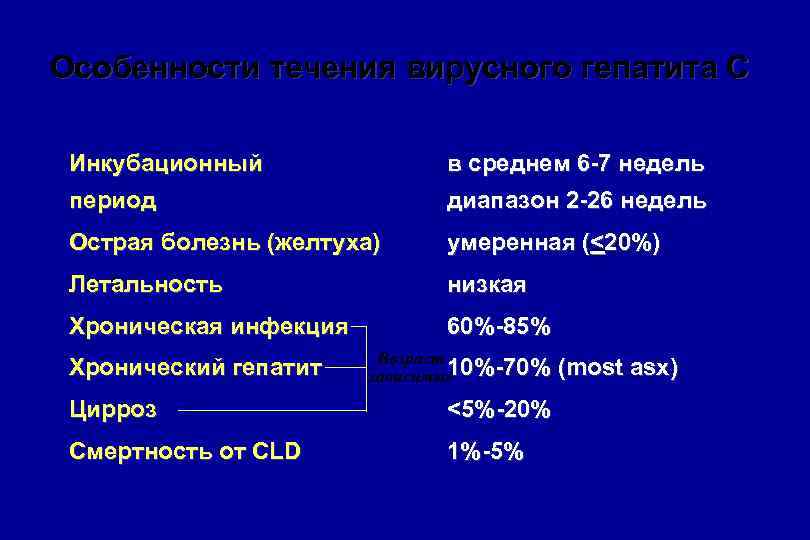 Особенности течения вирусного гепатита С Инкубационный в среднем 6 -7 недель период диапазон 2 -26 недель Острая болезнь (желтуха) умеренная (<20%) Летальность низкая Хроническая инфекция 60%-85% Хронический гепатит Возраст 10%-70% зависимые Цирроз <5%-20% Смертность от CLD 1%-5% (most asx)
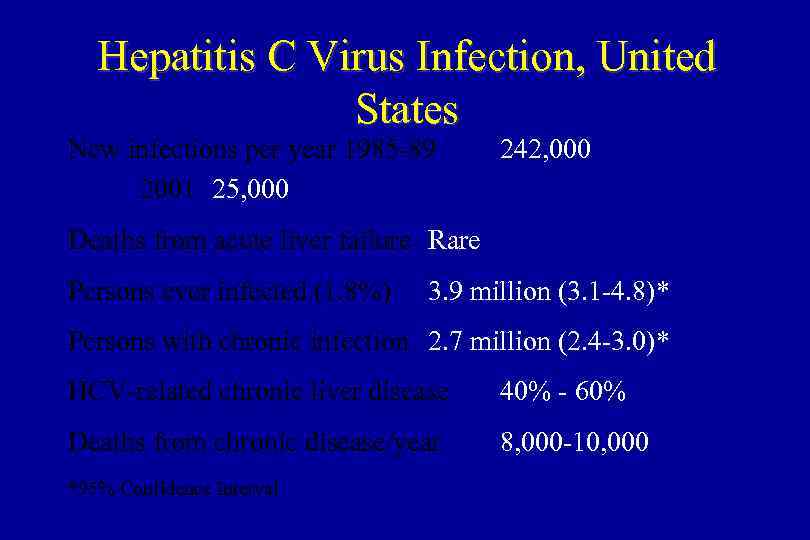 Hepatitis C Virus Infection, United States New infections per year 1985 -89 2001 25, 000 242, 000 Deaths from acute liver failure Rare Persons ever infected (1. 8%) 3. 9 million (3. 1 -4. 8)* Persons with chronic infection 2. 7 million (2. 4 -3. 0)* HCV-related chronic liver disease 40% - 60% Deaths from chronic disease/year 8, 000 -10, 000 *95% Confidence Interval
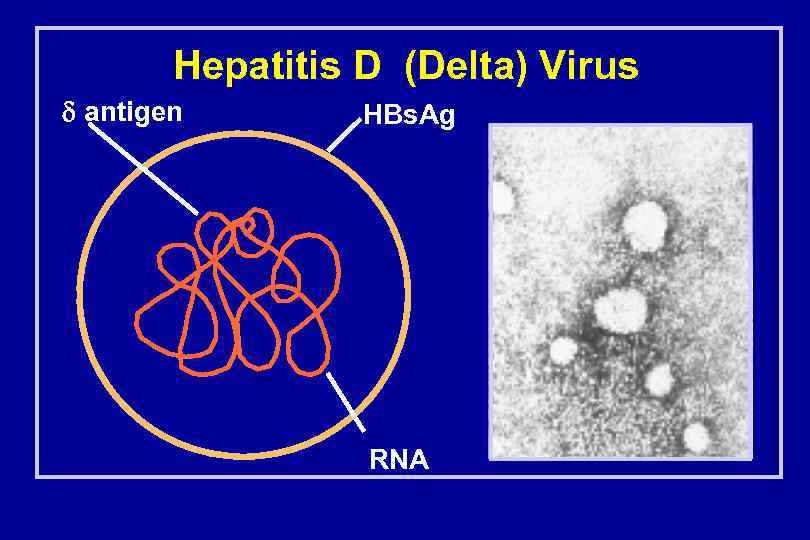 Hepatitis D (Delta) Virus antigen HBs. Ag RNA
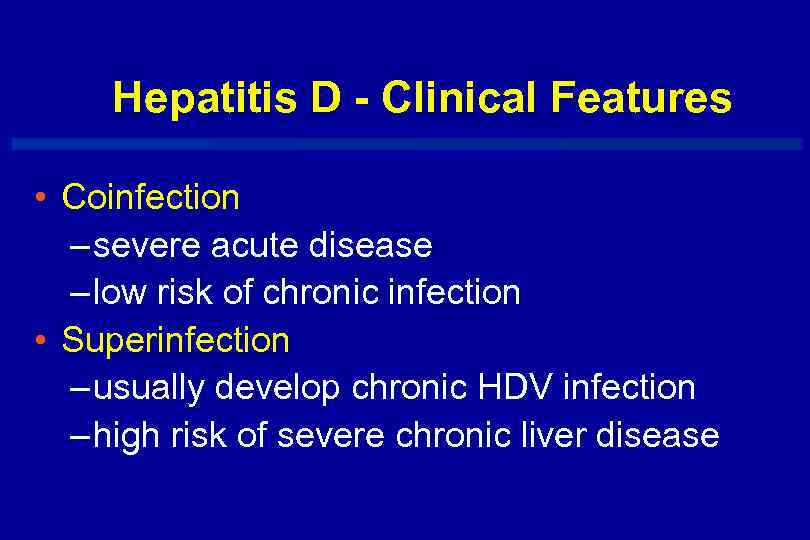 Hepatitis D - Clinical Features • Coinfection – severe acute disease – low risk of chronic infection • Superinfection – usually develop chronic HDV infection – high risk of severe chronic liver disease
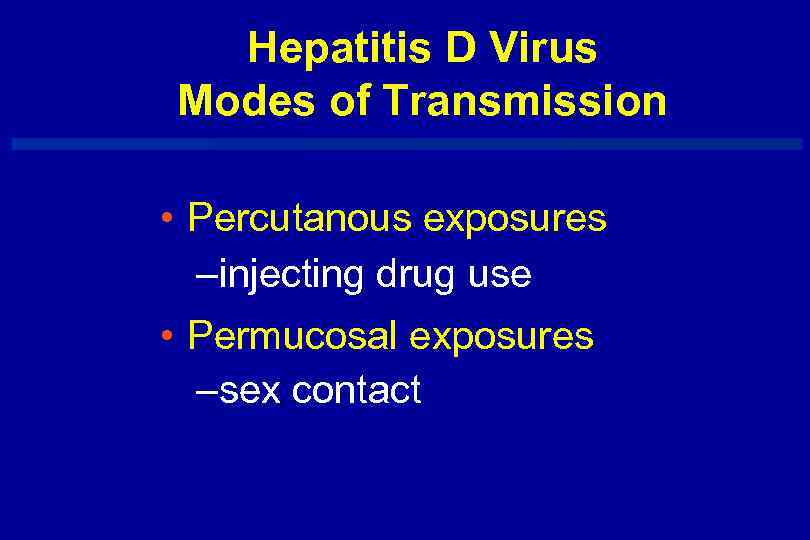 Hepatitis D Virus Modes of Transmission • Percutanous exposures –injecting drug use • Permucosal exposures –sex contact
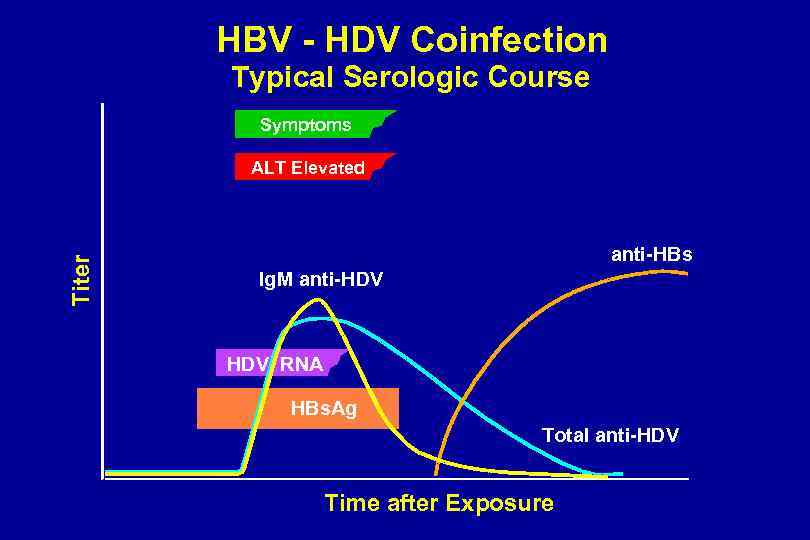 HBV - HDV Coinfection Typical Serologic Course Symptoms Titer ALT Elevated anti-HBs Ig. M anti-HDV RNA HBs. Ag Total anti-HDV Time after Exposure
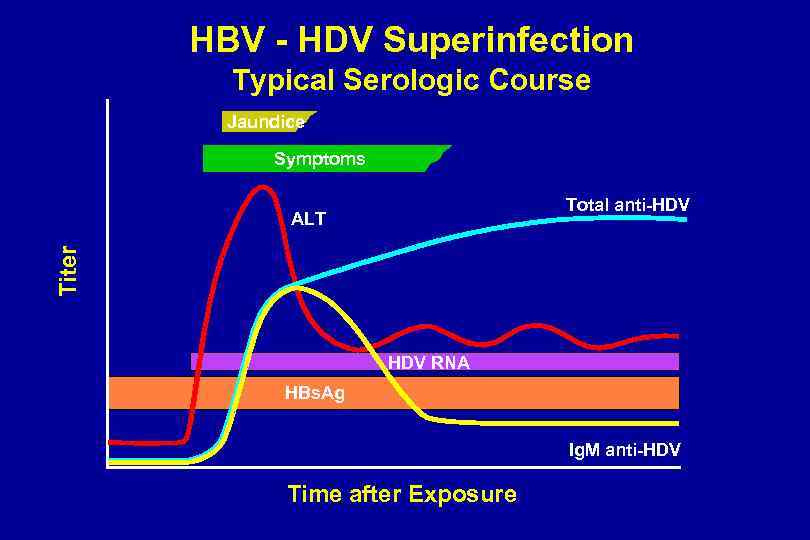 HBV - HDV Superinfection Typical Serologic Course Jaundice Symptoms Total anti-HDV Titer ALT HDV RNA HBs. Ag Ig. M anti-HDV Time after Exposure
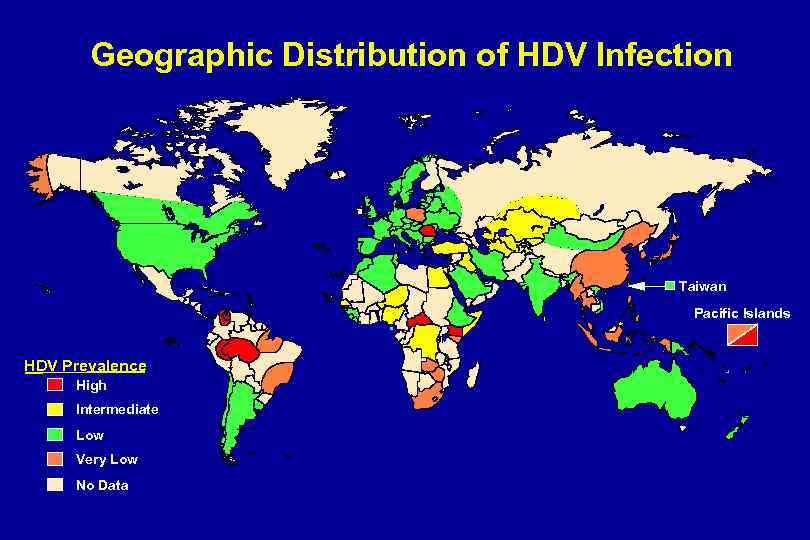 Geographic Distribution of HDV Infection Taiwan Pacific Islands HDV Prevalence High Intermediate Low Very Low No Data
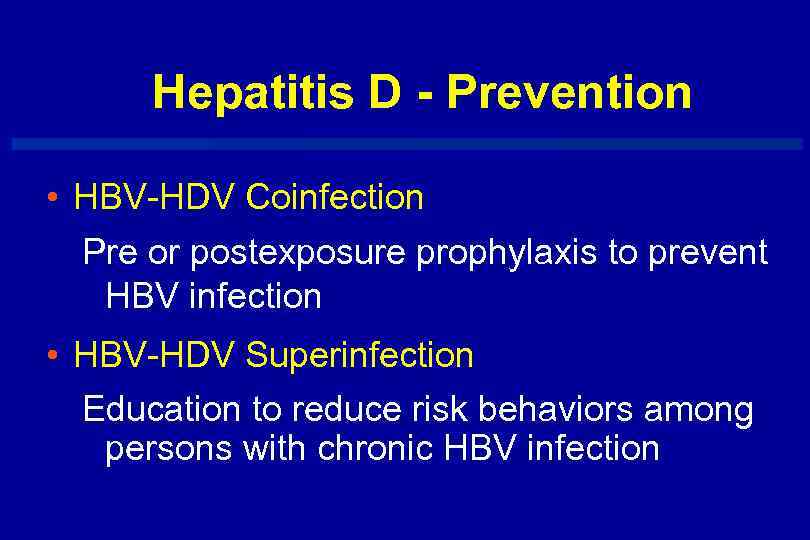 Hepatitis D - Prevention • HBV-HDV Coinfection Pre or postexposure prophylaxis to prevent HBV infection • HBV-HDV Superinfection Education to reduce risk behaviors among persons with chronic HBV infection
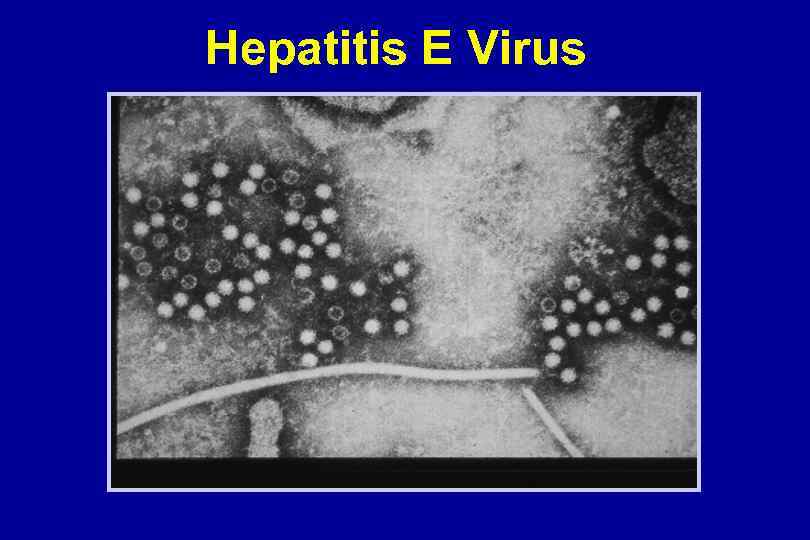 Hepatitis E Virus
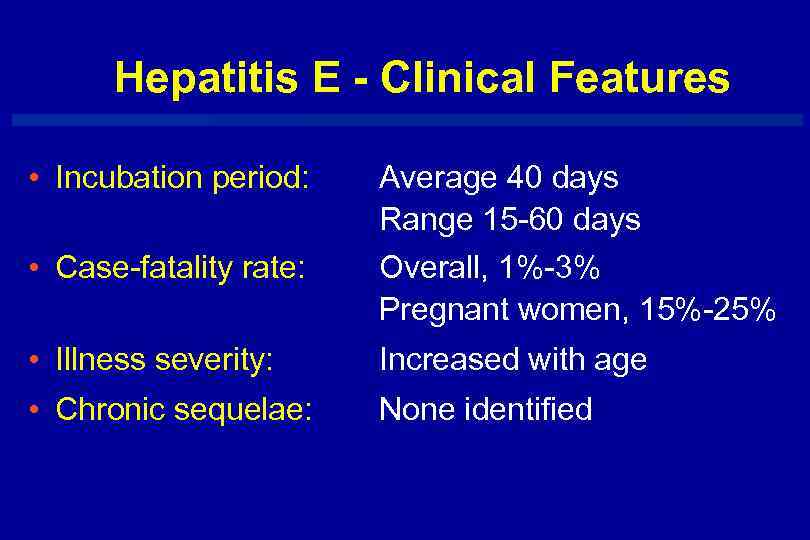 Hepatitis E - Clinical Features • Incubation period: Average 40 days Range 15 -60 days • Case-fatality rate: Overall, 1%-3% Pregnant women, 15%-25% • Illness severity: Increased with age • Chronic sequelae: None identified
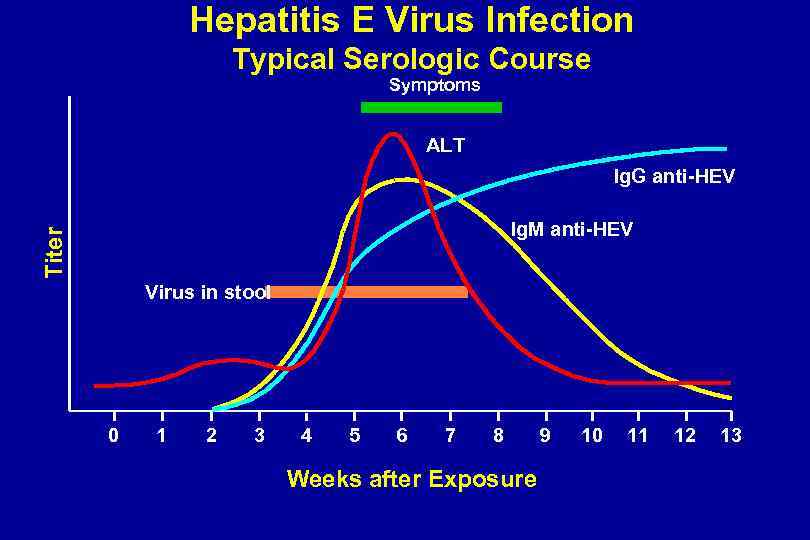 Hepatitis E Virus Infection Typical Serologic Course Symptoms ALT Ig. G anti-HEV Titer Ig. M anti-HEV Virus in stool 0 1 2 3 4 5 6 7 8 Weeks after Exposure 9 10 11 12 13
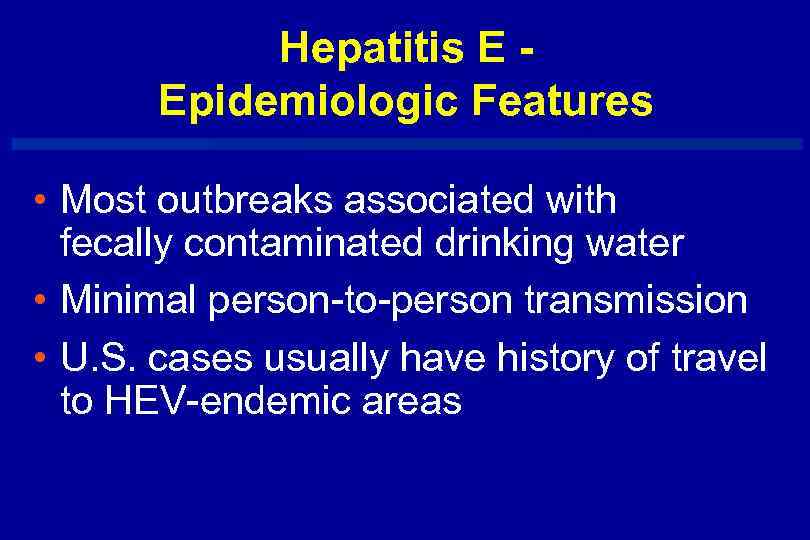 Hepatitis E Epidemiologic Features • Most outbreaks associated with fecally contaminated drinking water • Minimal person-to-person transmission • U. S. cases usually have history of travel to HEV-endemic areas
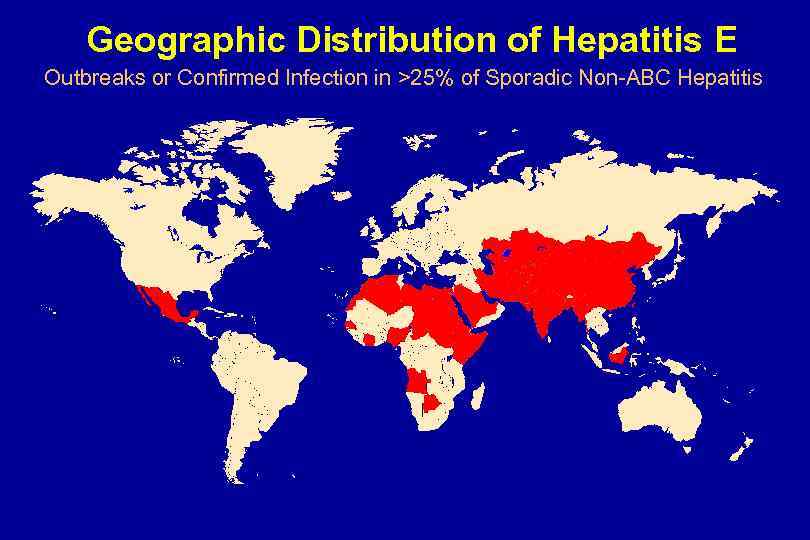 Geographic Distribution of Hepatitis E Outbreaks or Confirmed Infection in >25% of Sporadic Non-ABC Hepatitis
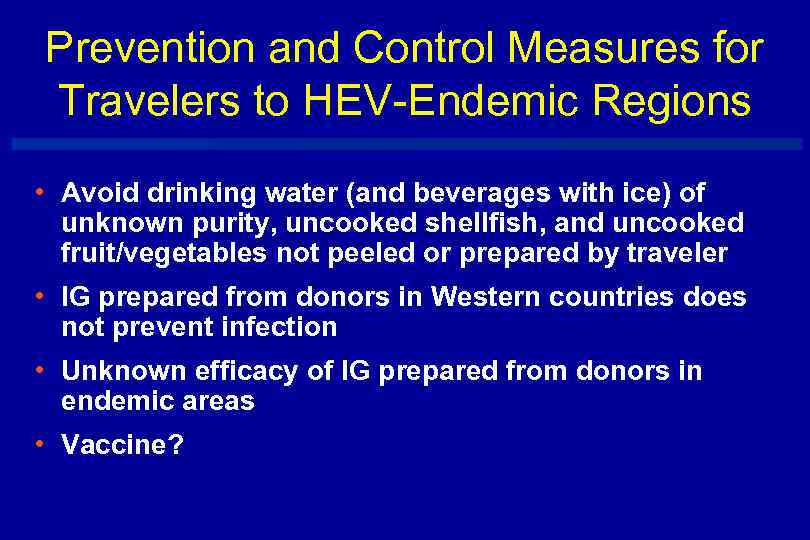 Prevention and Control Measures for Travelers to HEV-Endemic Regions • Avoid drinking water (and beverages with ice) of unknown purity, uncooked shellfish, and uncooked fruit/vegetables not peeled or prepared by traveler • IG prepared from donors in Western countries does not prevent infection • Unknown efficacy of IG prepared from donors in endemic areas • Vaccine?