


 Скачать презентацию Virtual Reality 3 -D computer generated interactive immersion
be57ef8df765d25e8cea7fbd9308d6e8.ppt
- Количество слайдов: 16
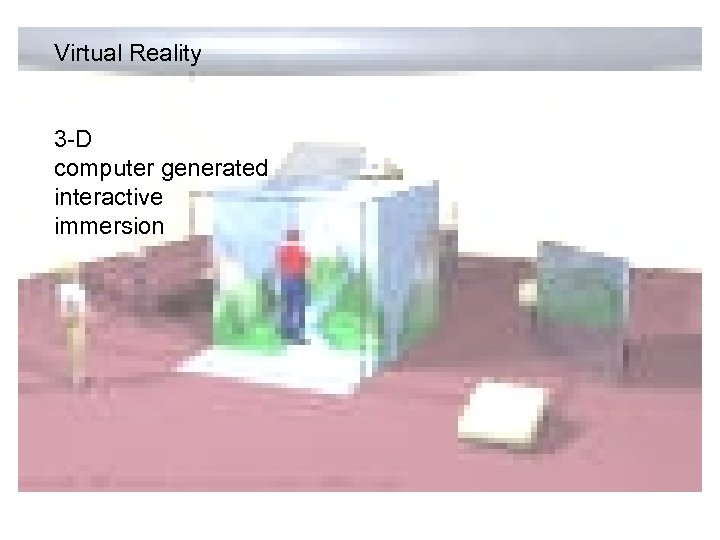 Virtual Reality 3 -D computer generated interactive immersion
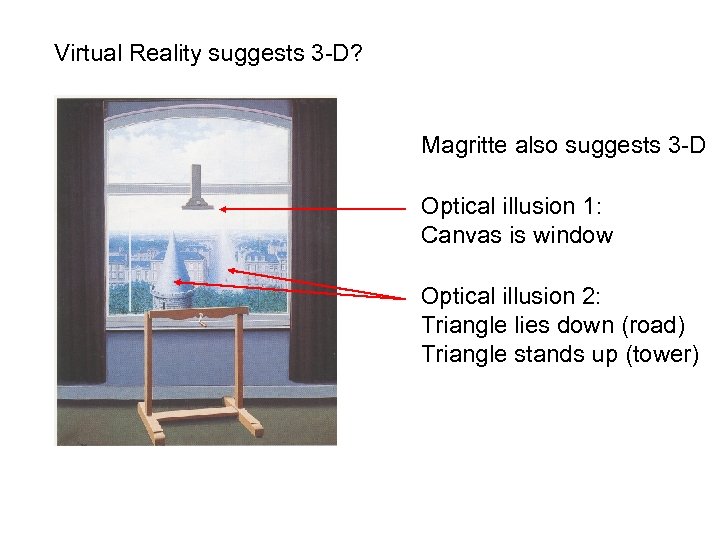 Virtual Reality suggests 3 -D? Magritte also suggests 3 -D Optical illusion 1: Canvas is window Optical illusion 2: Triangle lies down (road) Triangle stands up (tower)
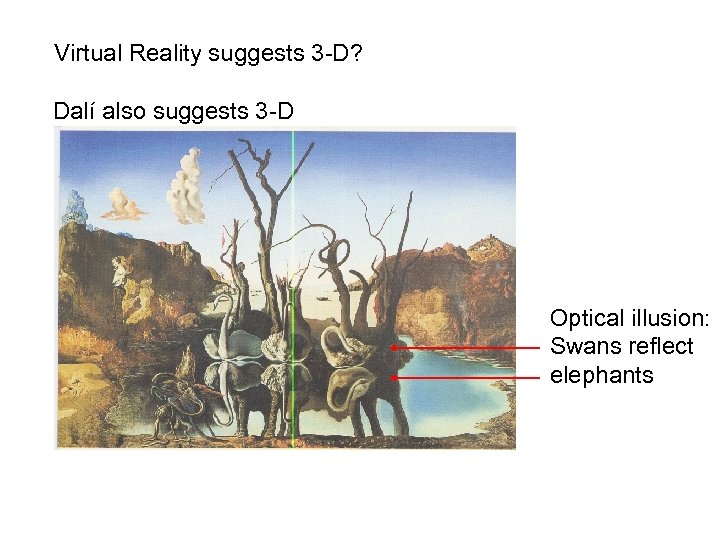 Virtual Reality suggests 3 -D? Dalí also suggests 3 -D Optical illusion: Swans reflect elephants
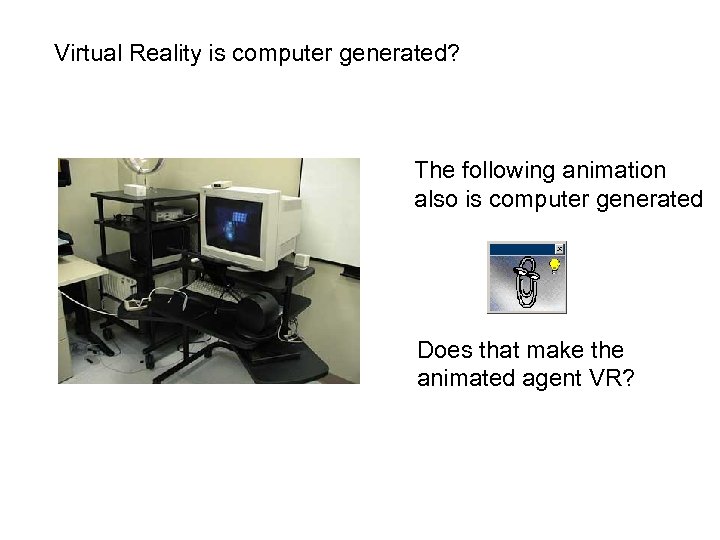 Virtual Reality is computer generated? The following animation also is computer generated Does that make the animated agent VR?
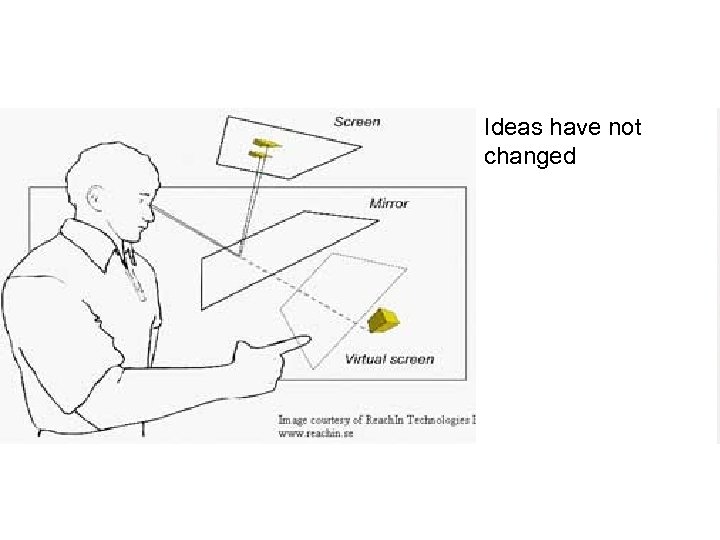 Ideas have not changed
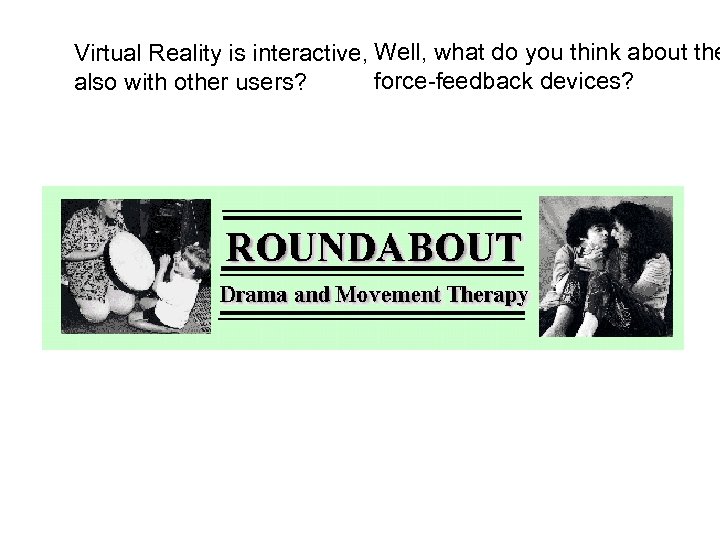 Virtual Reality is interactive, Well, what do you think about the force-feedback devices? also with other users?
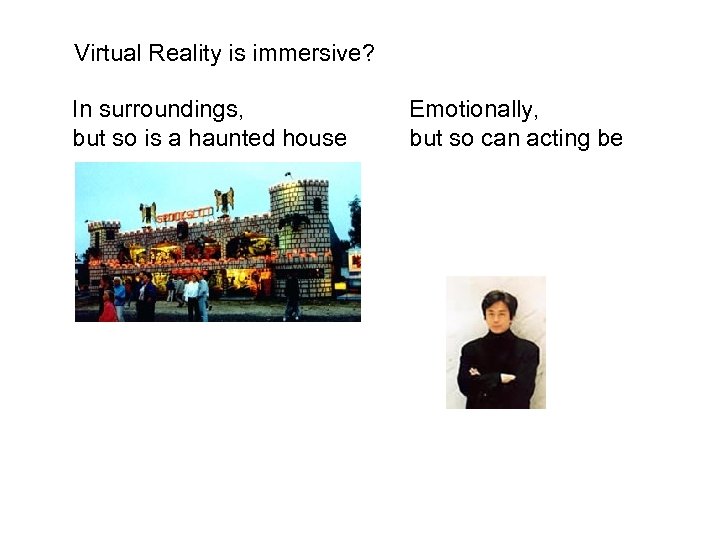 Virtual Reality is immersive? In surroundings, but so is a haunted house Emotionally, but so can acting be
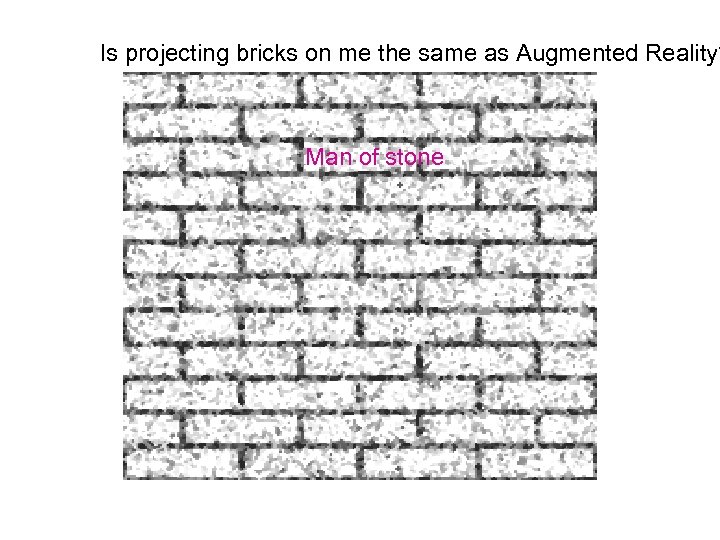 Is projecting bricks on me the same as Augmented Reality? Man of stone
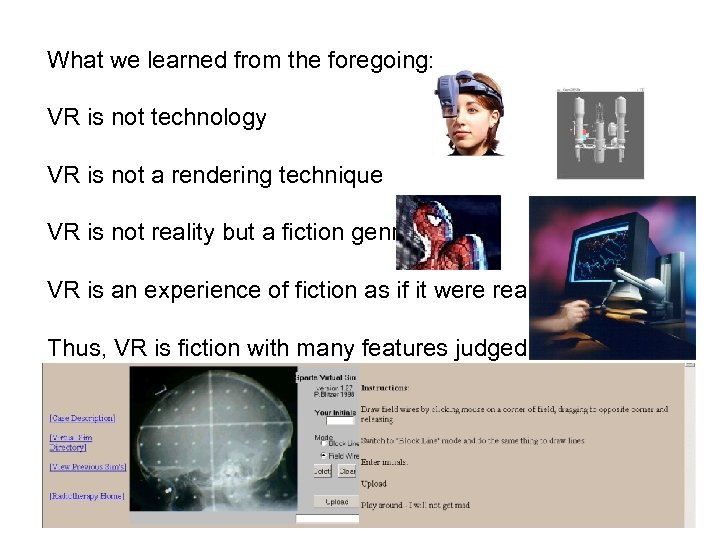 What we learned from the foregoing: VR is not technology VR is not a rendering technique VR is not reality but a fiction genre VR is an experience of fiction as if it were real Thus, VR is fiction with many features judged realistic
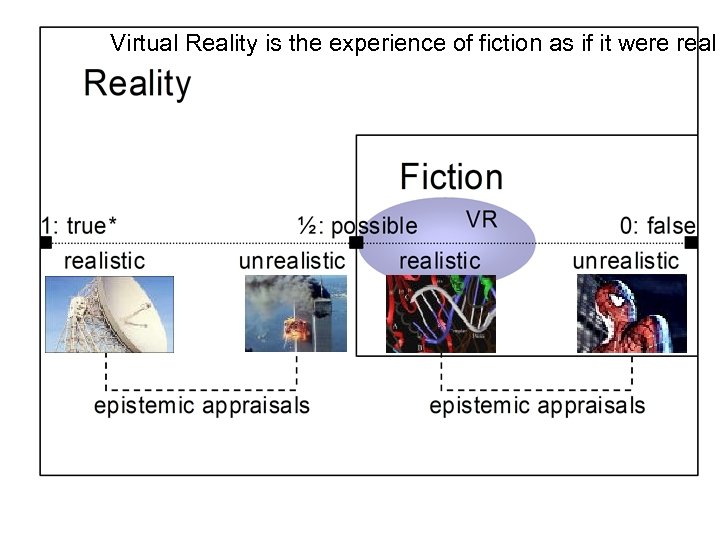 Virtual Reality is the experience of fiction as if it were real
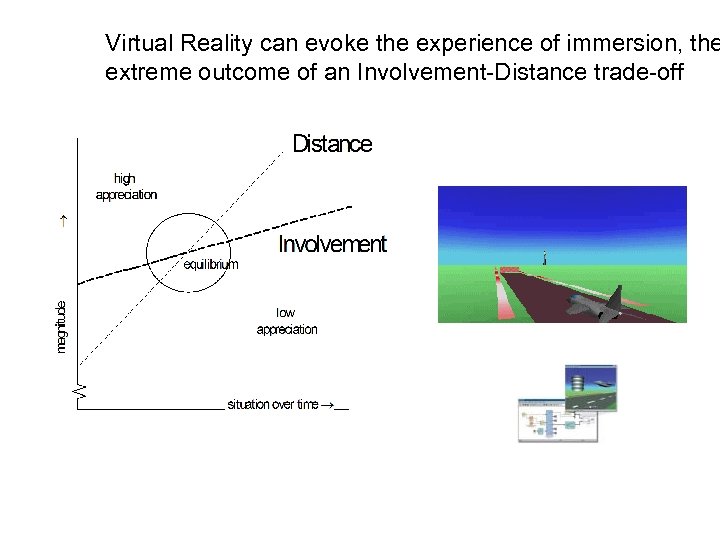 Virtual Reality can evoke the experience of immersion, the extreme outcome of an Involvement-Distance trade-off
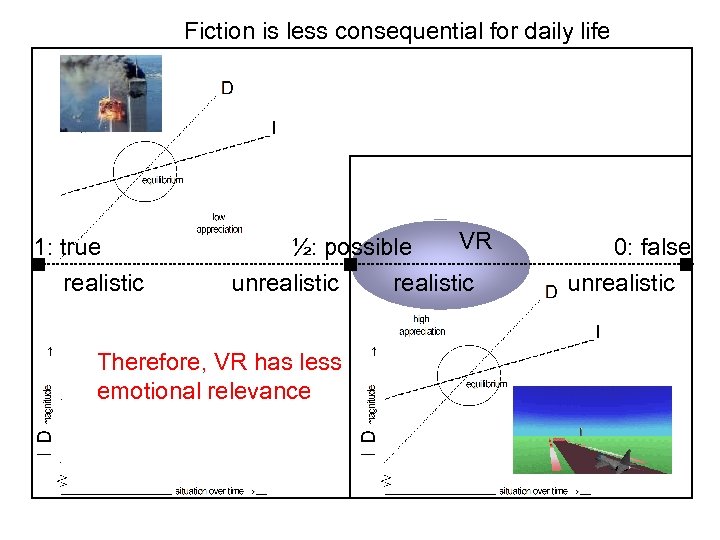 Fiction is less consequential for daily life 1: true realistic VR ½: possible unrealistic Therefore, VR has less emotional relevance 0: false unrealistic
 Because Virtual Reality has less emotional relevance, it is functional for safely exploring dangerous, expensive, and fantastic situations. Relevance is increased by touching upon the goals and concerns of the user. Making VR more immersive, raising more involvement is increasing personal relevance of the experience rather than rendering hyper-realistic features.
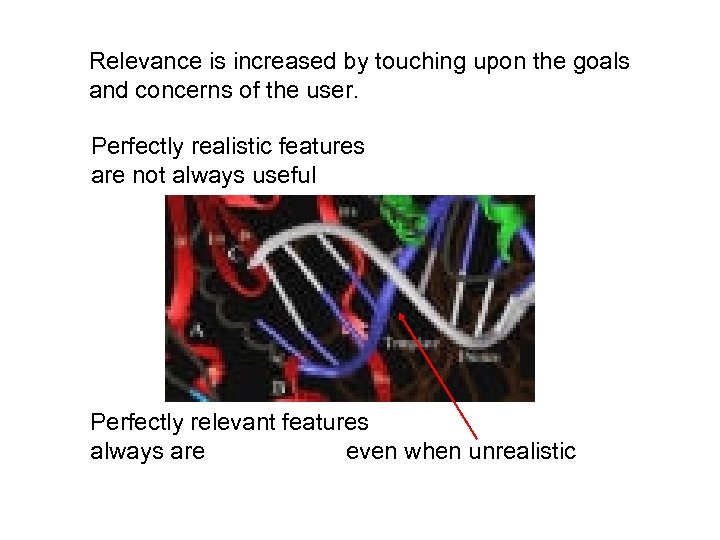 Relevance is increased by touching upon the goals and concerns of the user. Perfectly realistic features are not always useful Perfectly relevant features even when unrealistic always are
 Conclusions In designing a VR-experience, the strive for ‘augmented realit should better be for ‘augmented relevance’ Augmenting relevance should be done not so much by increa the number and quality of realistic features but by increasing t personal meaning of a simulated (work) situation, providing fe that tune in to the goals and concerns of the user To do so, requirements engineering for VR-systems should begin with relevance assessment