


 Скачать презентацию Virtual Free Radical School Protein Oxidation A primer
d57b7e10c5e11038aed88ae116065886.ppt
- Количество слайдов: 30
 Virtual Free Radical School Protein Oxidation: A primer on characterization, detection, and consequences Emily Shacter, Ph. D. Chief, Laboratory of Biochemistry Division of Therapeutic Proteins Center for Biologics Evaluation and Research Food and Drug Administration Bethesda, MD 20892 Ph: 301 -827 -1833 Fax: 301 -480 -3256 Email: shacter@cber. fda. gov Protein Oxidation Oxygen Society Education Program Shacter 1
 What is protein oxidation? Covalent modification of a protein induced by reactive oxygen intermediates or by-products of oxidative stress. Protein Oxidation Oxygen Society Education Program Shacter 2
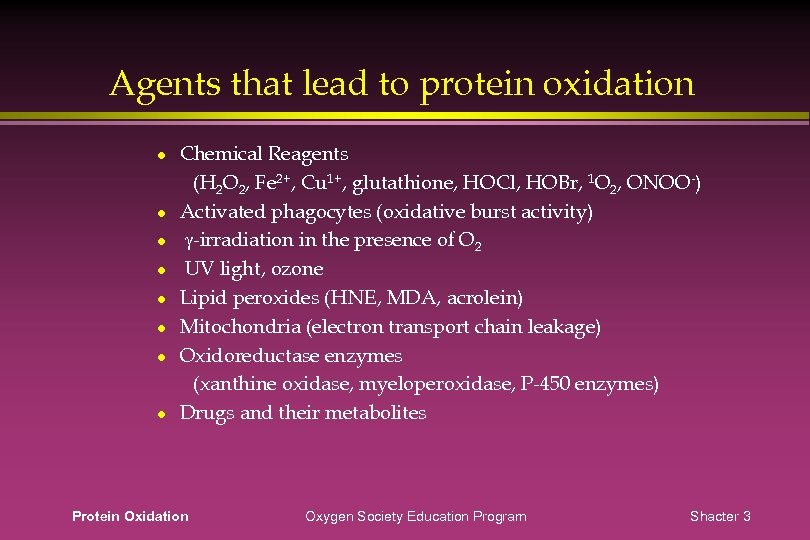 Agents that lead to protein oxidation Chemical Reagents (H 2 O 2, Fe 2+, Cu 1+, glutathione, HOCl, HOBr, 1 O 2, ONOO-) Activated phagocytes (oxidative burst activity) -irradiation in the presence of O 2 UV light, ozone Lipid peroxides (HNE, MDA, acrolein) Mitochondria (electron transport chain leakage) Oxidoreductase enzymes (xanthine oxidase, myeloperoxidase, P-450 enzymes) Drugs and their metabolites Protein Oxidation Oxygen Society Education Program Shacter 3
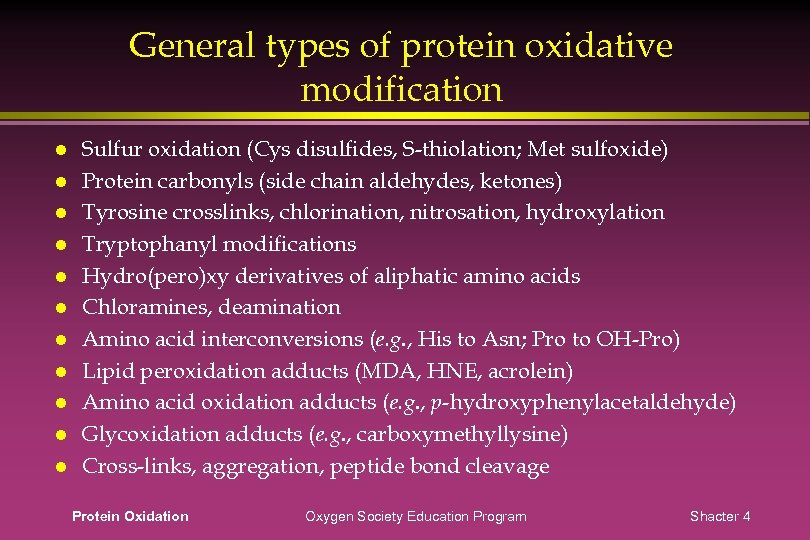 General types of protein oxidative modification Sulfur oxidation (Cys disulfides, S-thiolation; Met sulfoxide) Protein carbonyls (side chain aldehydes, ketones) Tyrosine crosslinks, chlorination, nitrosation, hydroxylation Tryptophanyl modifications Hydro(pero)xy derivatives of aliphatic amino acids Chloramines, deamination Amino acid interconversions (e. g. , His to Asn; Pro to OH-Pro) Lipid peroxidation adducts (MDA, HNE, acrolein) Amino acid oxidation adducts (e. g. , p-hydroxyphenylacetaldehyde) Glycoxidation adducts (e. g. , carboxymethyllysine) Cross-links, aggregation, peptide bond cleavage Protein Oxidation Oxygen Society Education Program Shacter 4
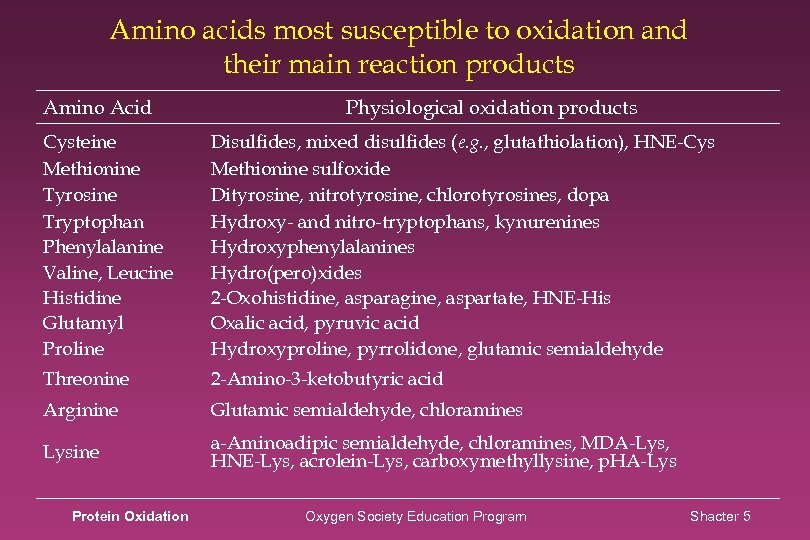 Amino acids most susceptible to oxidation and their main reaction products Amino Acid Physiological oxidation products Cysteine Methionine Tyrosine Tryptophan Phenylalanine Valine, Leucine Histidine Glutamyl Proline Disulfides, mixed disulfides (e. g. , glutathiolation), HNE-Cys Methionine sulfoxide Dityrosine, nitrotyrosine, chlorotyrosines, dopa Hydroxy- and nitro-tryptophans, kynurenines Hydroxyphenylalanines Hydro(pero)xides 2 -Oxohistidine, asparagine, aspartate, HNE-His Oxalic acid, pyruvic acid Hydroxyproline, pyrrolidone, glutamic semialdehyde Threonine 2 -Amino-3 -ketobutyric acid Arginine Glutamic semialdehyde, chloramines Lysine a-Aminoadipic semialdehyde, chloramines, MDA-Lys, HNE-Lys, acrolein-Lys, carboxymethyllysine, p. HA-Lys Protein Oxidation Oxygen Society Education Program Shacter 5
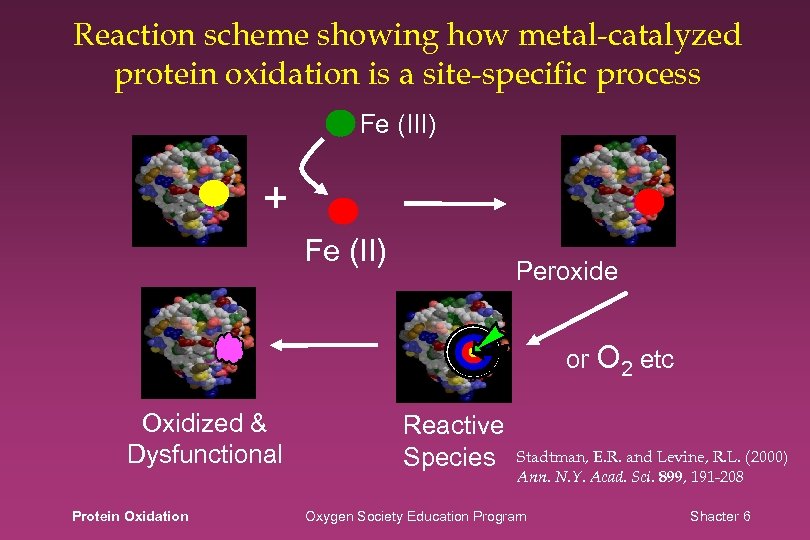 Reaction scheme showing how metal-catalyzed protein oxidation is a site-specific process Fe (III) + Fe (II) Peroxide or O 2 etc Oxidized & Dysfunctional Protein Oxidation Reactive Species Stadtman, E. R. and Levine, R. L. (2000) Ann. N. Y. Acad. Sci. 899, 191 -208 Oxygen Society Education Program Shacter 6
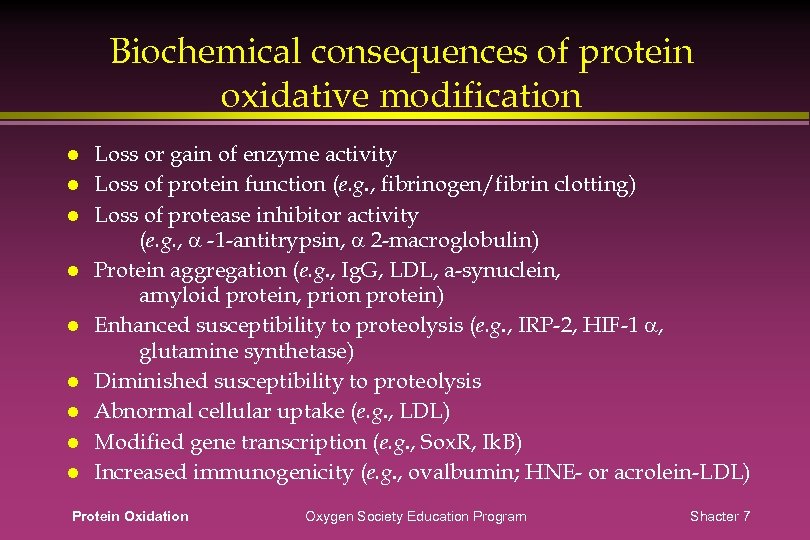 Biochemical consequences of protein oxidative modification Loss or gain of enzyme activity Loss of protein function (e. g. , fibrinogen/fibrin clotting) Loss of protease inhibitor activity (e. g. , -1 -antitrypsin, 2 -macroglobulin) Protein aggregation (e. g. , Ig. G, LDL, a-synuclein, amyloid protein, prion protein) Enhanced susceptibility to proteolysis (e. g. , IRP-2, HIF-1 , glutamine synthetase) Diminished susceptibility to proteolysis Abnormal cellular uptake (e. g. , LDL) Modified gene transcription (e. g. , Sox. R, Ik. B) Increased immunogenicity (e. g. , ovalbumin; HNE- or acrolein-LDL) Protein Oxidation Oxygen Society Education Program Shacter 7
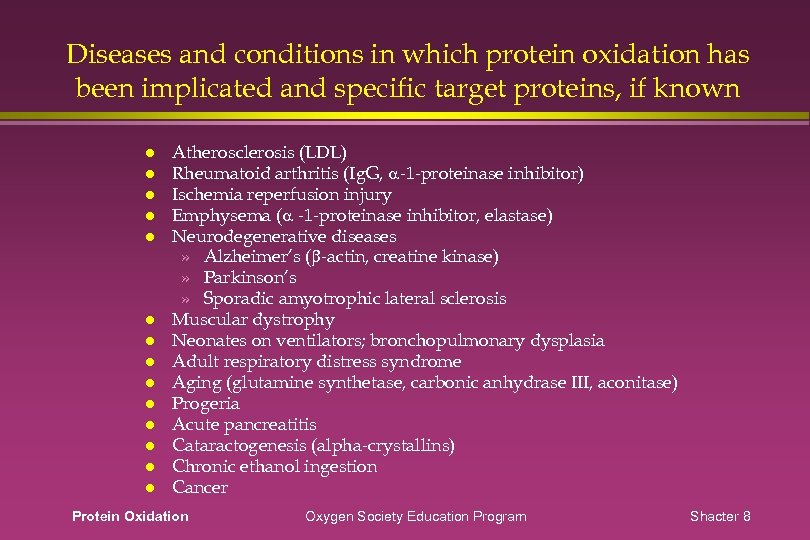 Diseases and conditions in which protein oxidation has been implicated and specific target proteins, if known Atherosclerosis (LDL) Rheumatoid arthritis (Ig. G, -1 -proteinase inhibitor) Ischemia reperfusion injury Emphysema ( -1 -proteinase inhibitor, elastase) Neurodegenerative diseases » Alzheimer’s (b-actin, creatine kinase) » Parkinson’s » Sporadic amyotrophic lateral sclerosis Muscular dystrophy Neonates on ventilators; bronchopulmonary dysplasia Adult respiratory distress syndrome Aging (glutamine synthetase, carbonic anhydrase III, aconitase) Progeria Acute pancreatitis Cataractogenesis (alpha-crystallins) Chronic ethanol ingestion Cancer Protein Oxidation Oxygen Society Education Program Shacter 8
 How can we inhibit protein oxidation? Antioxidants » scavengers (probucol, spin traps, methionine) » antioxidant enzymes (catalase, SOD, peroxiredoxins) » antioxidant enzyme mimics (ebselen, Tempol, TBAPS) » augmentation of cellular antioxidant systems N-acetylcysteine ( intracellular GSH) Chelators (DTPA, Desferal®) Depletion of O 2 Protein Oxidation Oxygen Society Education Program Shacter 9
 Advantages and disadvantages of using proteins as markers of oxidative stress There is no single universal marker for protein oxidation. * With so many different potential reaction products, may need to do several different assays if source of oxidants unknown * If source of oxidation is known, the range narrows (e. g. , metal-catalyzed oxidation does not cause chlorination or nitrosation, and HOCl does not cause lipid peroxidation adducts) Protein Oxidation Oxygen Society Education Program Shacter 10
 Advantages and disadvantages of using proteins as markers of oxidative stress Products are relatively stable Types of modification reveal nature of oxidizing species » » » chlorotyrosine from HOCl nitrotyrosine from • NO + O 2 • - or HOCl glutamic and aminoadipic semialdehydes from metal-catalyzed oxidation Have unique physiological consequences due to the specificity of protein functions Sensitive assays are available (detecting <1 pmol of oxidized product) Protein Oxidation Oxygen Society Education Program Shacter 11
 Advantages and disadvantages of using proteins as markers of oxidative stress Different forms of oxidative modification have different functional consequences * Met is highly susceptible but oxidation often does not affect protein function * Carbonyls are often associated with dysfunction but may require more stringent oxidative conditions Protein Oxidation Oxygen Society Education Program Shacter 12
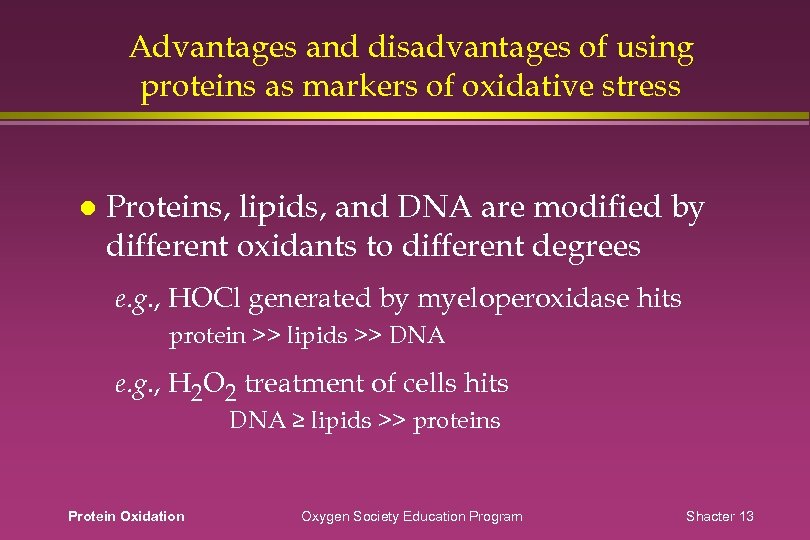 Advantages and disadvantages of using proteins as markers of oxidative stress Proteins, lipids, and DNA are modified by different oxidants to different degrees e. g. , HOCl generated by myeloperoxidase hits protein >> lipids >> DNA e. g. , H 2 O 2 treatment of cells hits DNA ≥ lipids >> proteins Protein Oxidation Oxygen Society Education Program Shacter 13
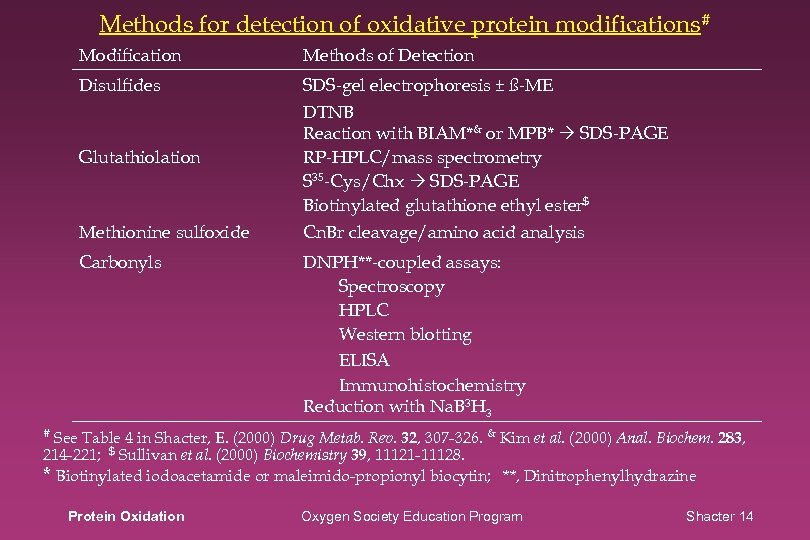 Methods for detection of oxidative protein modifications# Modification Methods of Detection Disulfides SDS-gel electrophoresis ± ß-ME DTNB Reaction with BIAM*& or MPB* SDS-PAGE RP-HPLC/mass spectrometry S 35 -Cys/Chx SDS-PAGE Biotinylated glutathione ethyl ester$ Glutathiolation Methionine sulfoxide Cn. Br cleavage/amino acid analysis Carbonyls DNPH**-coupled assays: Spectroscopy HPLC Western blotting ELISA Immunohistochemistry Reduction with Na. B 3 H 3 # See Table 4 in Shacter, E. (2000) Drug Metab. Rev. 32, 307 -326. & Kim et al. (2000) Anal. Biochem. 283, 214 -221; $ Sullivan et al. (2000) Biochemistry 39, 11121 -11128. * Biotinylated iodoacetamide or maleimido-propionyl biocytin; **, Dinitrophenylhydrazine Protein Oxidation Oxygen Society Education Program Shacter 14
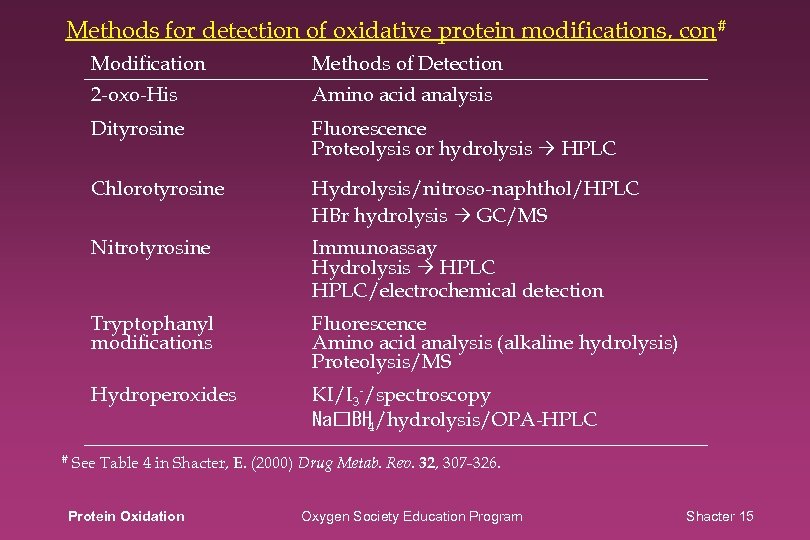 Methods for detection of oxidative protein modifications, con# Modification 2 -oxo-His Amino acid analysis Dityrosine Fluorescence Proteolysis or hydrolysis HPLC Chlorotyrosine Hydrolysis/nitroso-naphthol/HPLC HBr hydrolysis GC/MS Nitrotyrosine Immunoassay Hydrolysis HPLC/electrochemical detection Tryptophanyl modifications Fluorescence Amino acid analysis (alkaline hydrolysis) Proteolysis/MS Hydroperoxides # Methods of Detection KI/I 3 -/spectroscopy Na BH /hydrolysis/OPA-HPLC 4 See Table 4 in Shacter, E. (2000) Drug Metab. Rev. 32, 307 -326. Protein Oxidation Oxygen Society Education Program Shacter 15
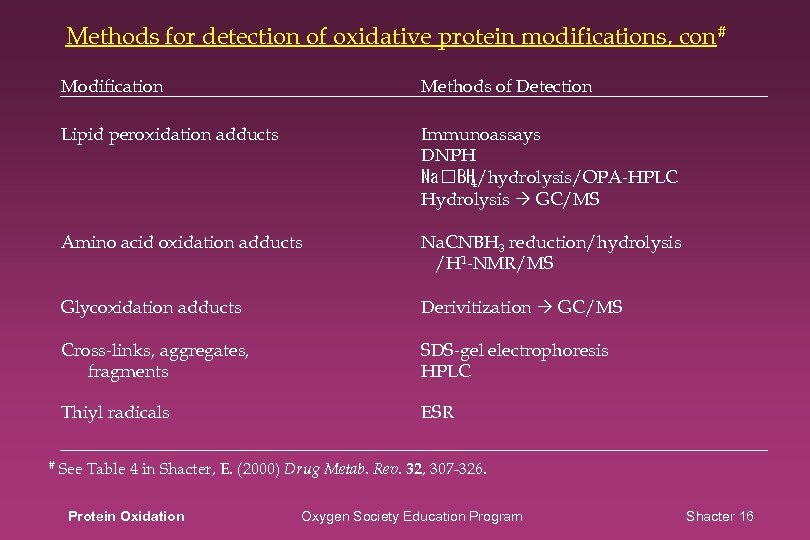 Methods for detection of oxidative protein modifications, con# Modification Lipid peroxidation adducts Immunoassays DNPH Na BH /hydrolysis/OPA-HPLC 4 Hydrolysis GC/MS Amino acid oxidation adducts Na. CNBH 3 reduction/hydrolysis /H 1 -NMR/MS Glycoxidation adducts Derivitization GC/MS Cross-links, aggregates, fragments SDS-gel electrophoresis HPLC Thiyl radicals # Methods of Detection ESR See Table 4 in Shacter, E. (2000) Drug Metab. Rev. 32, 307 -326. Protein Oxidation Oxygen Society Education Program Shacter 16
 A little more about protein carbonyls Carbonyl groups are stable (aids detection and storage) Present at low levels in most protein preparations (~1 nmol/mg protein ~ 0. 05 mol/mol ~ 1/3000 amino acids) See 2 - to 8 - fold elevations of protein carbonyls under conditions of oxidative stress in vivo Induced in vitro by almost all types of oxidants (site-specific metal catalyzed oxidation, -irradiation, HOCl, ozone, 1 O 2, lipid peroxide adducts) Sensitive assays are available (≤ 1 pmol) Protein Oxidation Oxygen Society Education Program Shacter 17
 Amino acids that undergo metal-catalyzed oxidation to form carbonyl products Proline ( -glutamylsemialdehyde) Arginine ( -glutamylsemialdehyde) Lysine (amino-adipicsemialdehyde) Threonine (amino-ketobutyrate) Protein Oxidation Oxygen Society Education Program Shacter 18
 Detection of protein carbonyls Measure total protein carbonyls levels after reaction with DNPH* followed by spectroscopy (A 370), ELISA, or immunohistochemistry Measure carbonyl levels in individual proteins within a mixture of proteins (tissue samples, cell extracts) by reaction with DNPH followed by Western blot immunoassay *DNPH, dinitrophenylhydrazine Protein Oxidation Oxygen Society Education Program Shacter 19
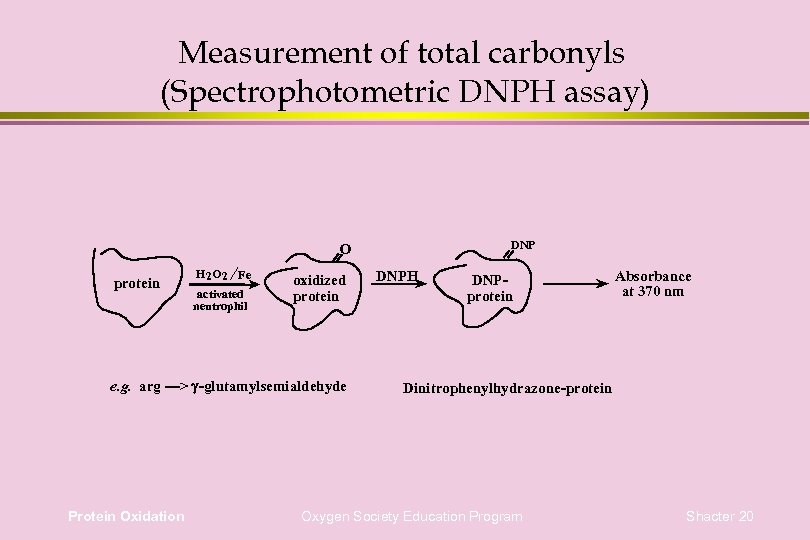 Measurement of total carbonyls (Spectrophotometric DNPH assay) DNP O protein H 2 O 2 Fe activated neutrophil oxidized protein e. g. arg ---> g -glutamylsemialdehyde Protein Oxidation DNPH DNPprotein Absorbance at 370 nm Dinitrophenylhydrazone-protein Oxygen Society Education Program Shacter 20
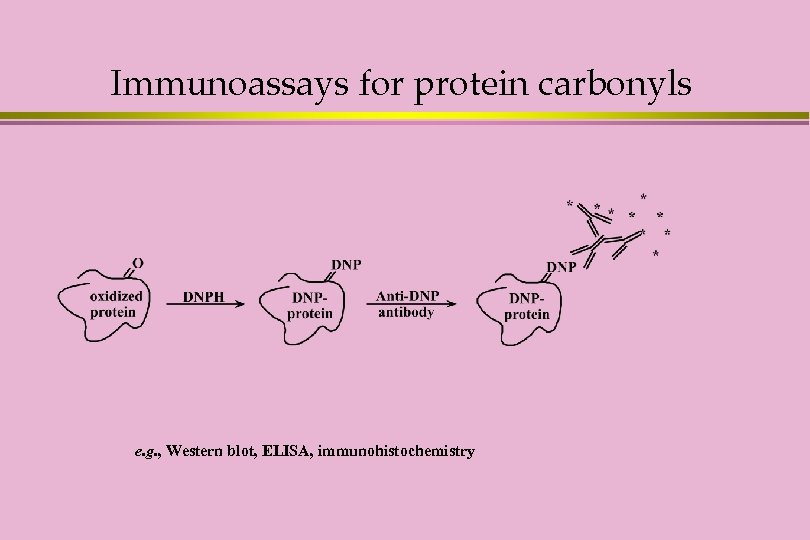 Immunoassays for protein carbonyls e. g. , Western blot, ELISA, immunohistochemistry
 Western blot assay for protein carbonyls Detects individual oxidized proteins within a mixture of proteins Requires ~ 50 ng of protein Sensitivity of ≤ 1 pmol of protein carbonyl » ~50 ng of a 50 k. Da protein oxidized @ 0. 5 mol/mol * Reveals differential susceptibility of individual proteins to oxidative modification* Shacter et al. (1994) Free Radic. Biol. Med. 17, 429 -437 Protein Oxidation Oxygen Society Education Program Shacter 22
 Notes Carbohydrate groups of glycoproteins do not contribute to carbonyl levels* Free aldehyde groups from lipid peroxidation adducts (e. g. , MDA) can react with DNPH » Adduct needs to be stable » if reduction with Na. BH 4 is required to stabilize the adduct, DNPH reactivity will not be seen Western blot assay is only semi-quantitative » use titration to estimate carbonyl content** *Lee, Y-J. and Shacter, E. (1995) Arch. Biochem. Biophys. 321, 175 -181 ** Shacter, E. et al. (1994) Free Radic. Biol. Med. 17, 429 -437 Protein Oxidation Oxygen Society Education Program Shacter 23
 Reagents and equipment* 20 m. M DNPH in 20% trifluoroacetic acid (TFA) 24% SDS in water Neutralizing solution (2 M Tris/30% glycerol ± 20% b-ME) Sample protein(s) Oxidized and native protein samples SDS-gel electrophoresis and Western blotting apparatus and conventional solutions Anti-DNP antibody (Sigma D-8406, Ig. E) Rat anti-mouse Ig. E, conjugated for immunoassay detection (biotin, HRP) * See Shacter (2000) Meth. Enzymol. 319, 428 -436 or Levine, R. L. , Williams, J. , Stadtman, E. R. , and Shacter, E. (1994) Meth. Enzymol. 233, 346 -357 Protein Oxidation Oxygen Society Education Program Shacter 24
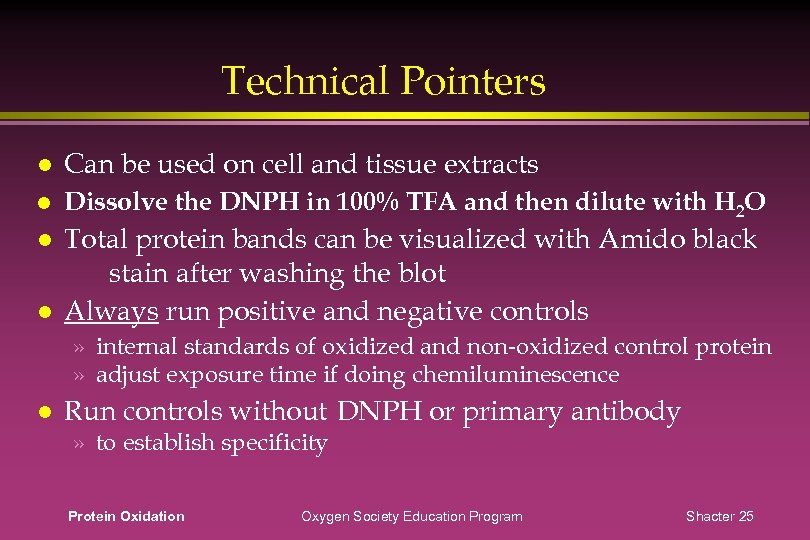 Technical Pointers Can be used on cell and tissue extracts Dissolve the DNPH in 100% TFA and then dilute with H 2 O Total protein bands can be visualized with Amido black stain after washing the blot Always run positive and negative controls » internal standards of oxidized and non-oxidized control protein » adjust exposure time if doing chemiluminescence Run controls without DNPH or primary antibody » to establish specificity Protein Oxidation Oxygen Society Education Program Shacter 25
 Other DNPH immunoassays for protein carbonyls ELISA Buss et al. (1997) Free Radic. Biol. Chem. 23, 361 -366 2 D gel electrophoresis/immunoblotting Yan et al. (1998) Anal. Biochem. 263, 67 -71 Immunohistochemistry Smith et al. (1998) J. Histochem. Cytochem. 46, 731 -735 Protein Oxidation Oxygen Society Education Program Shacter 26
 A little more about protein sulfur group oxidations In general, Cys and Met are the amino acids that are most susceptible to oxidation Distinguished from other oxidative protein modifications in that cells have mechanisms to reverse the oxidation e. g. , methonine sulfoxide reductase e. g. , glutathione or thioredoxin redox systems Hence may serve a regulatory function Reversible oxidation/reduction of methionine may protect proteins from more damaging forms of oxidative modification (e. g. , carbonyl formation)* * Stadtman, E. R. , Moskovitz, J. , Berlett, B. S. , and Levine, R. L. (2002) Mol. Cell. Biochem. 234 -235, 3 -9 Protein Oxidation Oxygen Society Education Program Shacter 27
 A little more about HOCl-induced protein oxidation Primary products are chloro- and di-tyrosyl residues, amino acyl aldehyde adducts, and chloramines Represent unique products of myeloperoxidase activity, reflecting neutrophil and monocyte activity Serve as markers for oxidants generated as part of the inflammatory response Are elevated in atherosclerotic plaques Can be detected with sensitive and specific assays See Heinecke, J. W. (2002) Free Radic. Biol. Med. 32, 1090 -1101 Winterbourne, C. C. and Kettle, A. J. (2000) Free Radic. Biol. Med. 29, 403 -409 Hazell, L. J. et al. (1996) J. Clin. Invest. 97, 1535 -1544 Protein Oxidation Oxygen Society Education Program Shacter 28
 A little more about lipid peroxidation adducts Indirect oxidative protein modification through attachment of lipid peroxidation breakdown products (e. g. , hydroxynonenal, malondialdehyde, acrolein) to Lys, Cys, and His residues in proteins Generated by a variety of oxidizing systems, predominantly metal-catalyzed oxidation and -irradiation Elevated in atherosclerosis and neurodegenerative diseases Detected with immunoassays specific for each type of protein adduct See Uchida, K. (2000) Free Radic. Biol. Med. 28, 1685 -1696 Protein Oxidation Oxygen Society Education Program Shacter 29
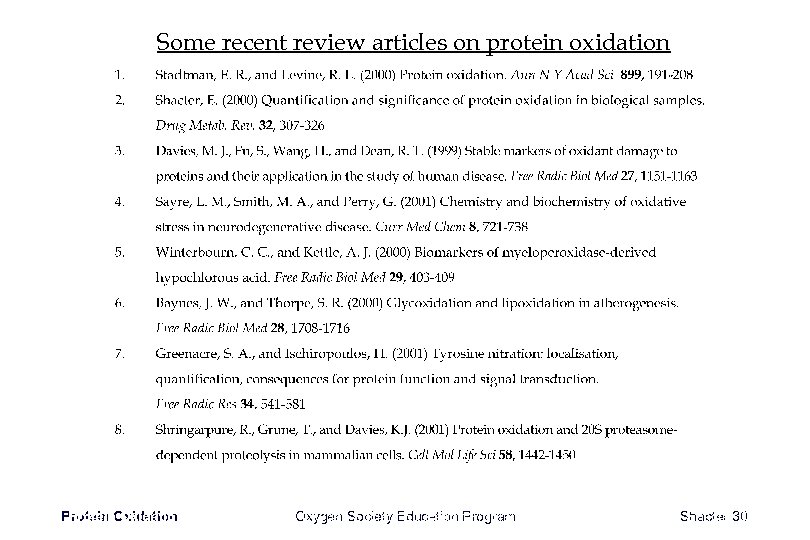 Some recent review articles on protein oxidation Protein Oxidation Oxygen Society Education Program Shacter 30