 Скачать презентацию VIII BRAZILIAN SEMINAR ON BALLAST WATER 4
e5f76a720de8a6972352ea306fc5dcef.ppt
- Количество слайдов: 32



VIII BRAZILIAN SEMINAR ON BALLAST WATER & 4 th GEF-UNDP-IMO Glo. Ballast Global Project Task Force Arraial do Cabo, Brazil 10 -14 November 2014 BALLAST WATER ISSUES AND GLOBALLAST PROJECT IN CROATIA Mr. Sc. Maja Markovcic Kostelac NTF Croatia Brazil, 13 November 2014
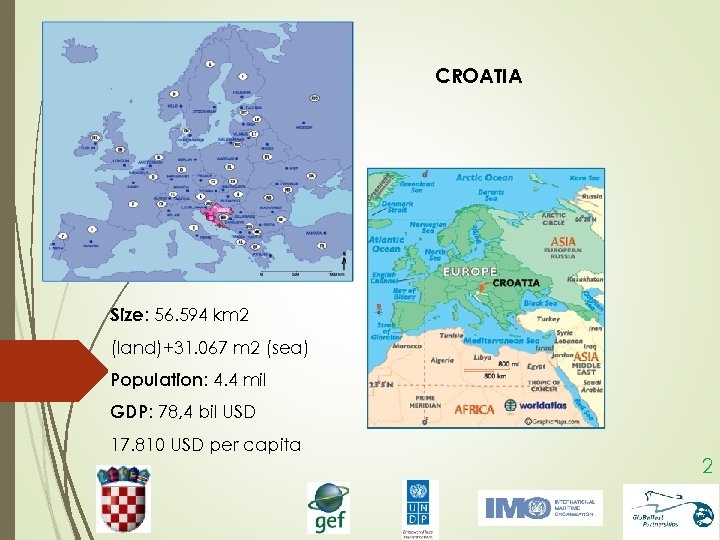
CROATIA Size: 56. 594 km 2 (land)+31. 067 m 2 (sea) Population: 4. 4 mil GDP: 78, 4 bil USD 17. 810 USD per capita 2
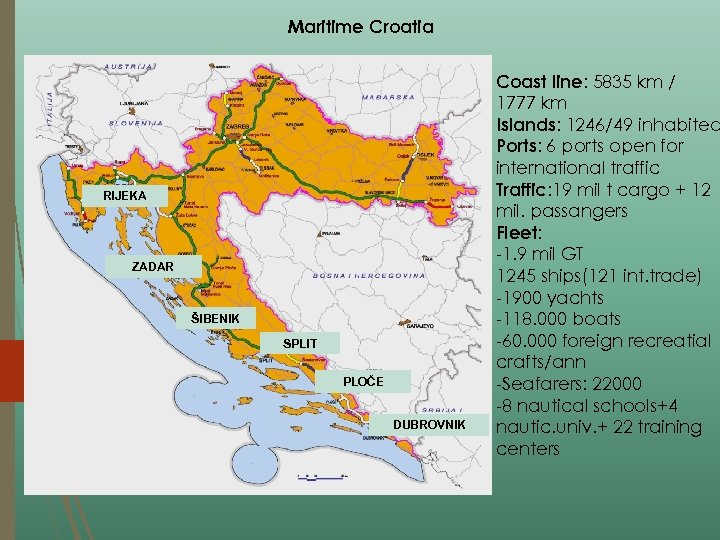
Maritime Croatia RIJEKA ZADAR ŠIBENIK SPLIT PLOČE DUBROVNIK Coast line: 5835 km / 1777 km Islands: 1246/49 inhabited Ports: 6 ports open for international traffic Traffic: 19 mil t cargo + 12 mil. passangers Fleet: -1. 9 mil GT 1245 ships(121 int. trade) -1900 yachts -118. 000 boats -60. 000 foreign recreatial crafts/ann -Seafarers: 22000 -8 nautical schools+4 nautic. univ. + 22 training centers
BW issues in Croatia Ballast Water Management Study- FNI/DNV- Study- FNI (2004 -2005) BW Reporting (since 2005) Ballast Water Management Regulation, 2007 Sub-regional co-operation in the Adriatic Sea Glo. Bballast Partnerships Project- Croatia as “leading partner”, 2008 Ratification of BWM Convention, in 2010 Post- ratification activities- Implementaion phase 4
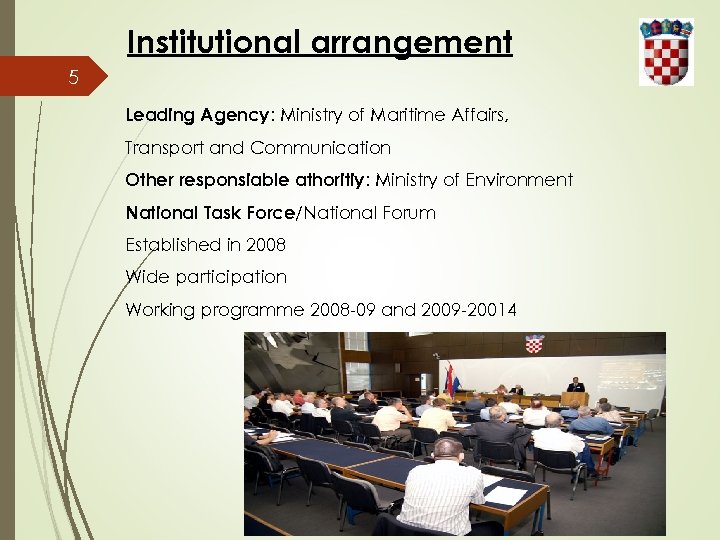
Institutional arrangement 5 Leading Agency: Ministry of Maritime Affairs, Transport and Communication Other responsiable athoritiy: Ministry of Environment National Task Force/National Forum Established in 2008 Wide participation Working programme 2008 -09 and 2009 -20014
6 National Task Force 9 working groups: Seafarers’ education Inspection, sampling and analysis of ballast water Sediment management Assessment and certification of ballast water management systems Risk assessment Regional and Adriatic cooperation Ratification of the BWM Convention and legal issues Raising awareness Research and monitoring of the sea
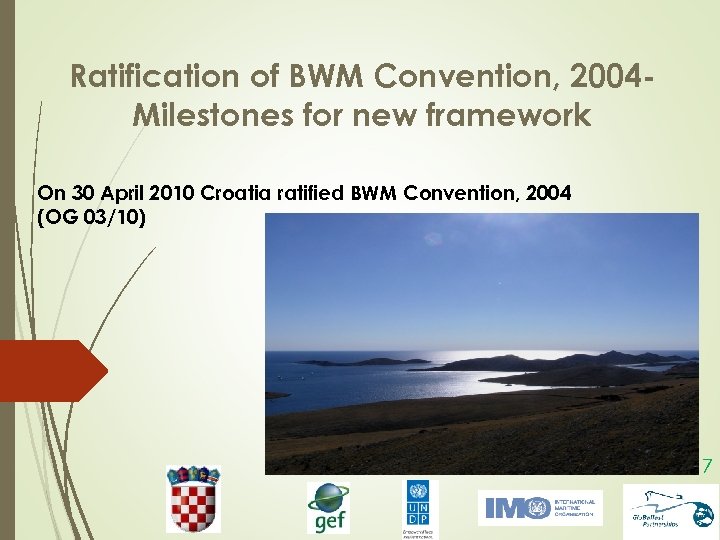
Ratification of BWM Convention, 2004 Milestones for new framework On 30 April 2010 Croatia ratified BWM Convention, 2004 (OG 03/10) 7
8 POST RATIFICATION ACTIVITIES National ballast water status assessment (2011) Strategy on Ballast Water Management in Croatia, with Action plan for 2012 -2015 – adopted in 2011 Regulation on Ballast Water Management, 2012 Economic assessment of implementation of the BWM Convention Port Baseline Survey PSC training and procedures Workshop on treatment technologies Regional co-operation- BALMAS Project
BWM Strategy, 2011 ABSTRACT: INTRODUCTION –PROBLEM DESRIPTION –DISCHARGE OF BW IN CROATIA –LEGAL INSTRUMENTS INSTITUTIONAL FRAMEWORK STRATEGIC PRIORITIES ACTION PLAN (2012 -2015) 9
National BW ECONOMIC ASSESSMENT Outcommes: - Potential damages of introduction of alien invasive species: cca. 1, 5 Bil EUR - Implementation costs: cc 137 mil EUR - Recommendations: Preventive measures; Scientific Programmes; Education. 10 LPC/RC O Logo
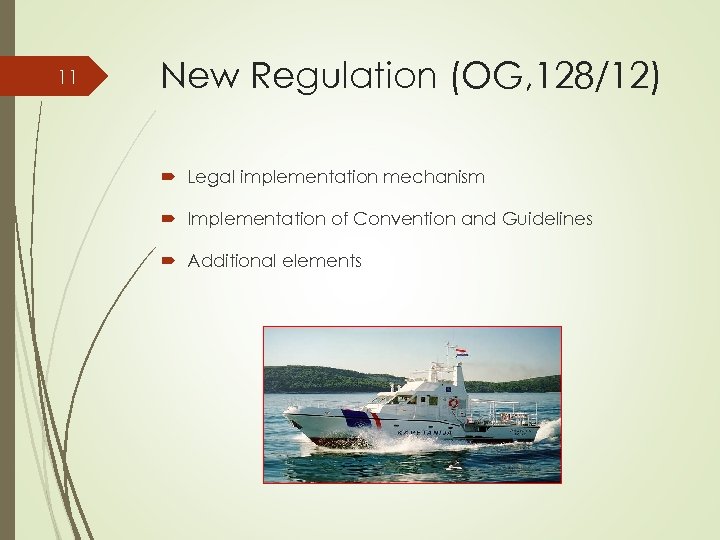
11 New Regulation (OG, 128/12) Legal implementation mechanism Implementation of Convention and Guidelines Additional elements
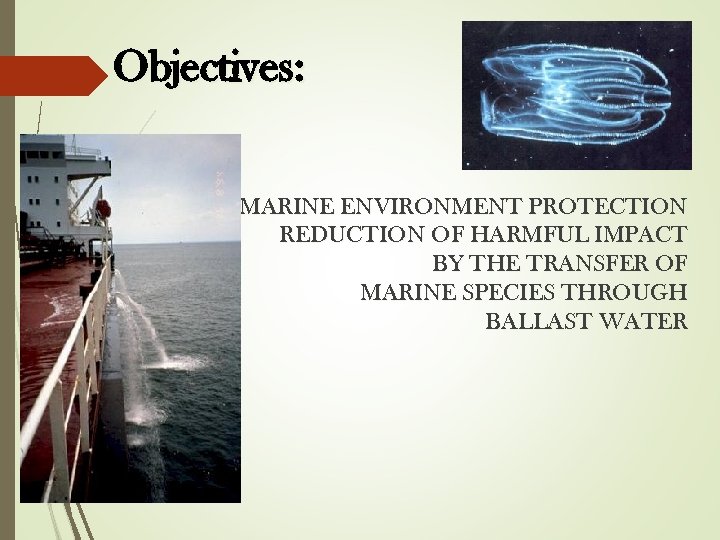
Objectives: MARINE ENVIRONMENT PROTECTION REDUCTION OF HARMFUL IMPACT BY THE TRANSFER OF MARINE SPECIES THROUGH BALLAST WATER
Measures Ballast Water Management Ballast water reporting FSO- ships’ certification, exemption, type approval Port State Control Baseline studies in ports Sediment Management
Application all Croatian flagships in international trade and all ships calling at ports in Croatia or navigating the ISW; TS or EEZ shall not apply: - Ships which navigate exclusively in the internal sea waters or territorial sea - Not designed to carry ballast water or have permanent BW - Warships, public vessels, etc. Extention to national trade (Ministry may, . . . ) Exceptions (safety, same location) Exemptions (Reg. A-4)
Ballast water management ballast water exchange ballast water treatment ballast water discharge into reception facilities retaining ballast water on board the ship
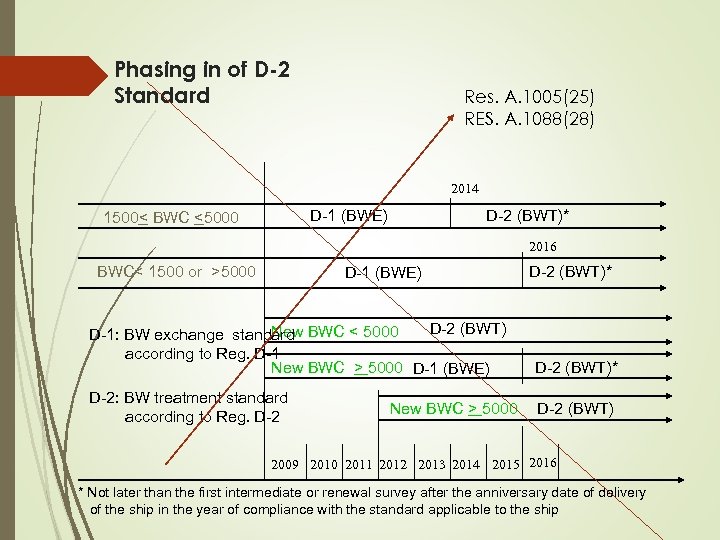
Phasing in of D-2 Standard Res. A. 1005(25) RES. A. 1088(28) 2014 D-1 (BWE) 1500< BWC <5000 D-2 (BWT)* 2016 BWC< 1500 or >5000 D-1 (BWE) D-2 (BWT)* D-2 (BWT) New D-1: BW exchange standard BWC < 5000 according to Reg. D-1 New BWC > 5000 D-1 (BWE) D-2 (BWT)* D-2: BW treatment standard according to Reg. D-2 (BWT) New BWC > 5000 2009 2010 2011 2012 2013 2014 2015 2016 * Not later than the first intermediate or renewal survey after the anniversary date of delivery of the ship in the year of compliance with the standard applicable to the ship
BW Exchange/Control Standard When D-1 Standard is applied. BW on discharge should not have salinity of less than 36%o If yes- additional testing. No more than 105 cells L-1 of mycroplanctons and no dynophlagelate cysts
Barcelona, OSPAR and Helsinki Convention- Guidelines Resolution on temporary voluntary application of D 1 standard for Ballast Water Exchange for ships navigating between the Mediteranean Sea and North. East Atlatic and/or Baltic Sea Application from 1 Oct 2012
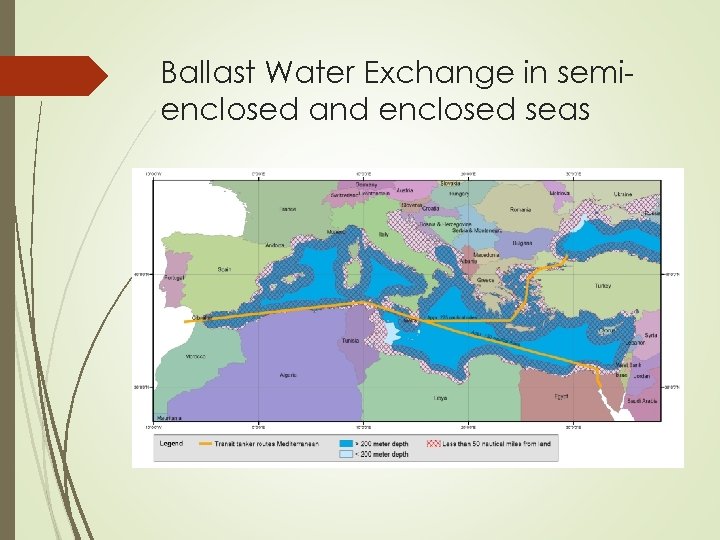
Ballast Water Exchange in semienclosed and enclosed seas
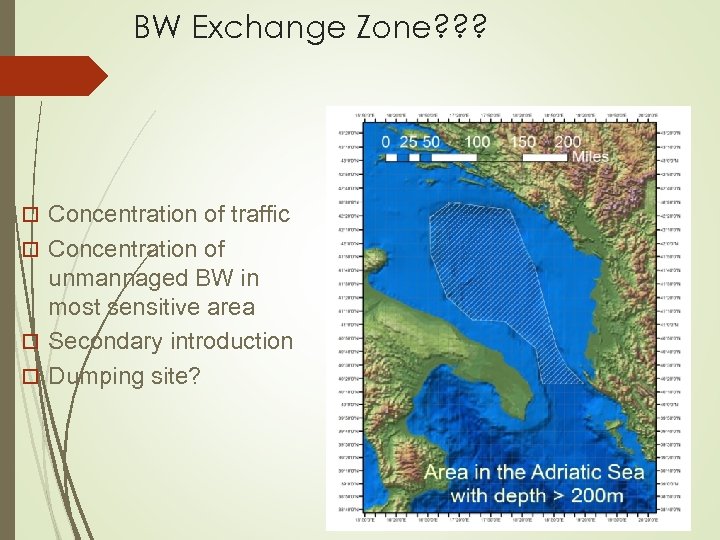
BW Exchange Zone? ? ? o Concentration of traffic o Concentration of unmannaged BW in most sensitive area o Secondary introduction o Dumping site?
Ballast Water Reporting Apply to all ships to which the Convention applies 48 hours in advance or after departure from the last port Standardized form Part of general reporting formalities (CIMIS)

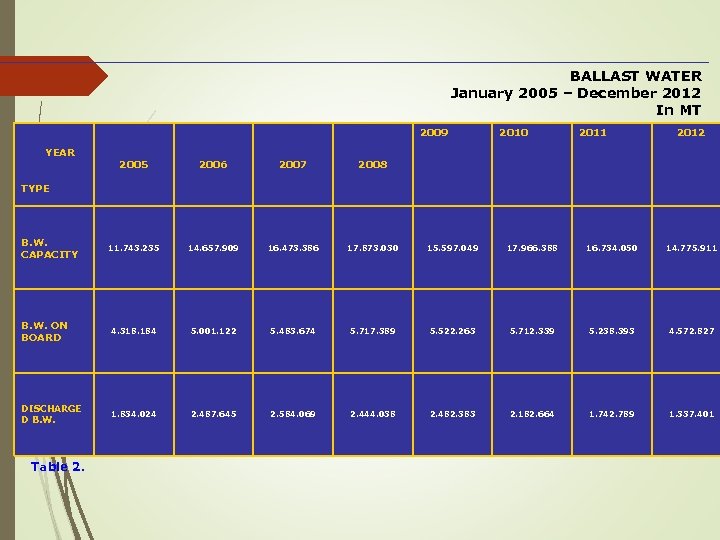
BALLAST WATER January 2005 – December 2012 In MT 2009 YEAR 2010 2011 2012 2005 2006 2007 2008 11. 743. 235 14. 657. 909 16. 473. 386 17. 873. 030 15. 597. 049 17. 966. 388 16. 734. 050 14. 775. 911 B. W. ON BOARD 4. 318. 184 5. 001. 122 5. 483. 674 5. 717. 389 5. 522. 263 5. 712. 339 5. 238. 393 4. 572. 827 DISCHARGE D B. W. 1. 834. 024 2. 487. 645 2. 584. 069 2. 444. 038 2. 482. 383 2. 182. 664 1. 742. 789 1. 337. 401 TYPE B. W. CAPACITY Table 2.

Survey and Certification Section E of the BWM Convention Certificates- ships ≤ 400 GT Approved BWM Plan- all ships (Guidelines G 4) Ballast Water Record Book
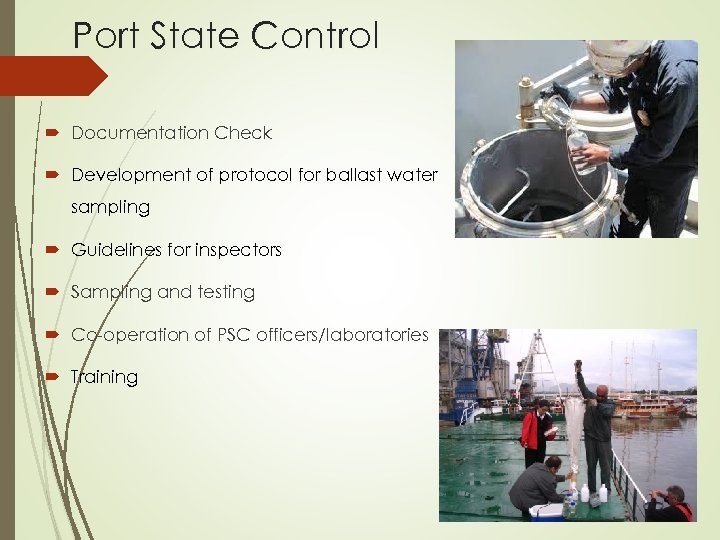
Port State Control Documentation Check Development of protocol for ballast water sampling Guidelines for inspectors Sampling and testing Co-operation of PSC officers/laboratories Training
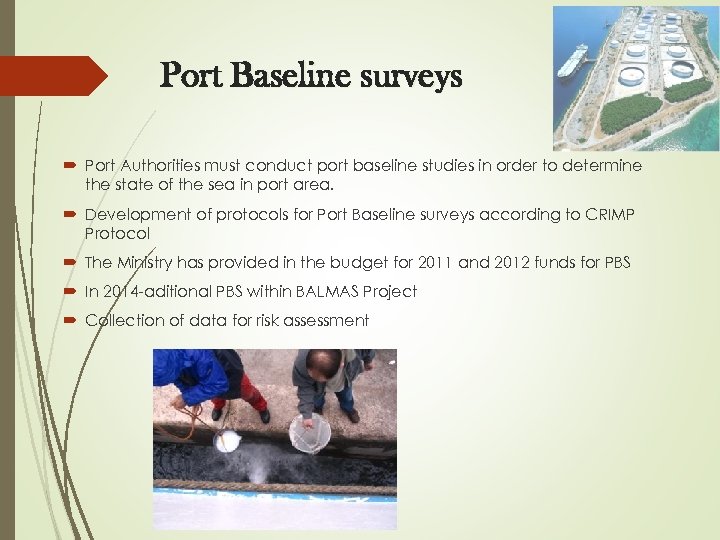
Port Baseline surveys Port Authorities must conduct port baseline studies in order to determine the state of the sea in port area. Development of protocols for Port Baseline surveys according to CRIMP Protocol The Ministry has provided in the budget for 2011 and 2012 funds for PBS In 2014 -aditional PBS within BALMAS Project Collection of data for risk assessment
28 Adriatic co-operation BALMAS Project • Monitoring activities (baseline surveys and monitoring in ports)exchange of information • BW Reporting • BW Risk Assessment (Invasive Alien Species Risk Assessment, Prepare strategic impact assessment) • Early warning system • DSS • PSC including sampling- exchange of info • Training activities • Sediment reception facilities- guidelines and best practice • Promotion of BW Convention implementation
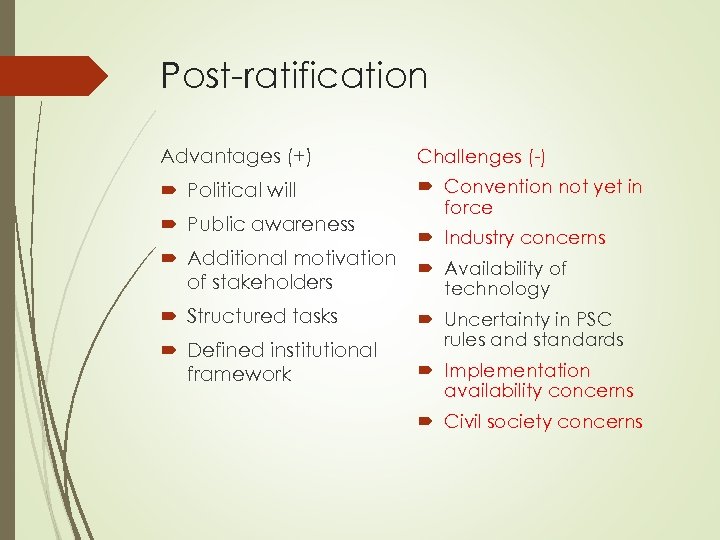
Post-ratification Advantages (+) Challenges (-) Political will Convention not yet in force Public awareness Additional motivation of stakeholders Structured tasks Defined institutional framework Industry concerns Availability of technology Uncertainty in PSC rules and standards Implementation availability concerns Civil society concerns
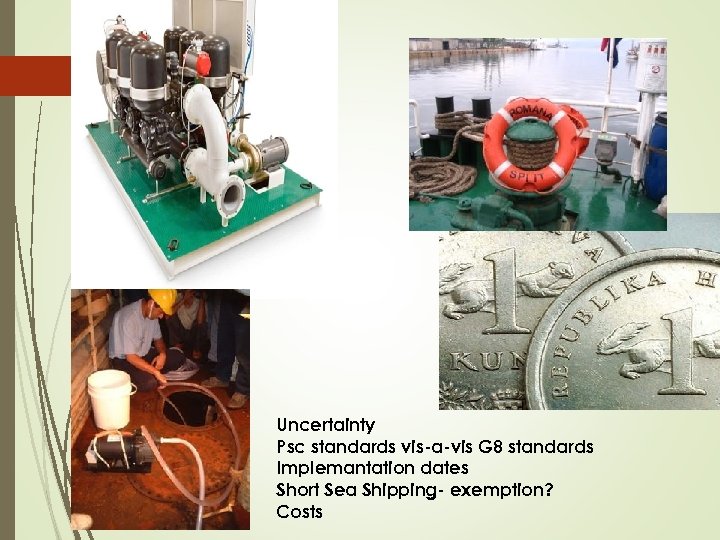
Uncertainty Psc standards vis-a-vis G 8 standards Implemantation dates Short Sea Shipping- exemption? Costs

31
Thank you… 32
Скачать презентацию VIII BRAZILIAN SEMINAR ON BALLAST WATER 4
e5f76a720de8a6972352ea306fc5dcef.ppt