Скачать презентацию Victorian Poetry Victorian poetry developed in the
poetry).ppt
- Количество слайдов: 53
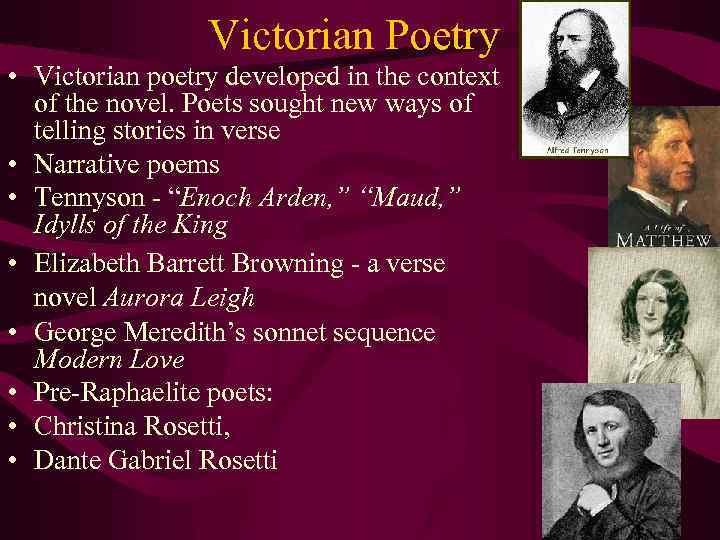 Victorian Poetry • Victorian poetry developed in the context of the novel. Poets sought new ways of telling stories in verse • Narrative poems • Tennyson - “Enoch Arden, ” “Maud, ” Idylls of the King • Elizabeth Barrett Browning - a verse novel Aurora Leigh • George Meredith’s sonnet sequence Modern Love • Pre-Raphaelite poets: • Christina Rosetti, • Dante Gabriel Rosetti
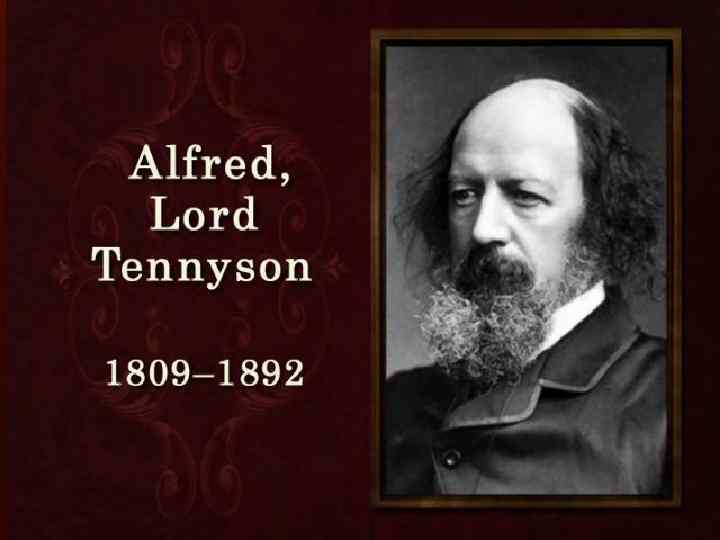
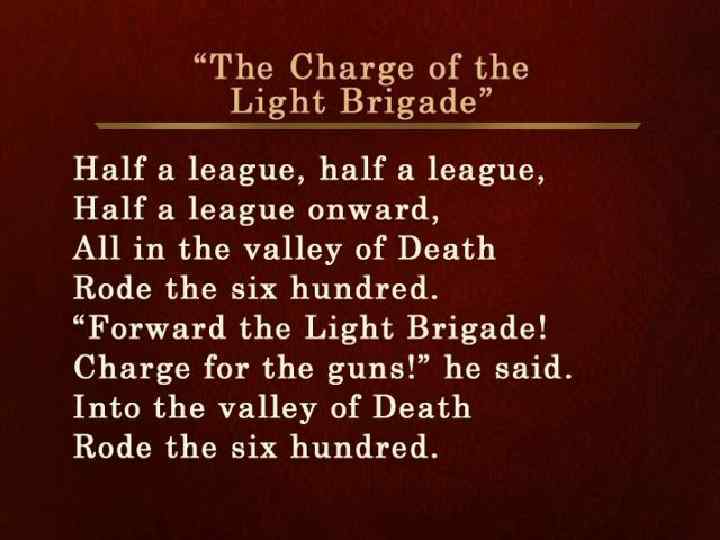
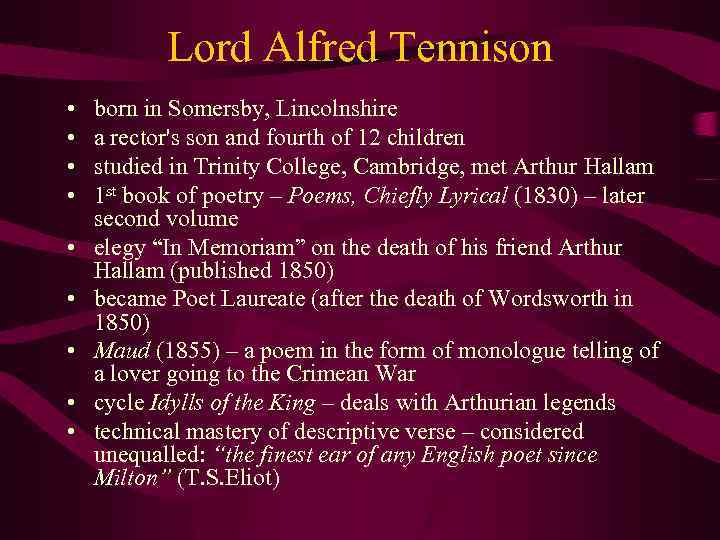 Lord Alfred Tennison • • • born in Somersby, Lincolnshire a rector's son and fourth of 12 children studied in Trinity College, Cambridge, met Arthur Hallam 1 st book of poetry – Poems, Chiefly Lyrical (1830) – later second volume elegy “In Memoriam” on the death of his friend Arthur Hallam (published 1850) became Poet Laureate (after the death of Wordsworth in 1850) Maud (1855) – a poem in the form of monologue telling of a lover going to the Crimean War cycle Idylls of the King – deals with Arthurian legends technical mastery of descriptive verse – considered unequalled: “the finest ear of any English poet since Milton” (T. S. Eliot)
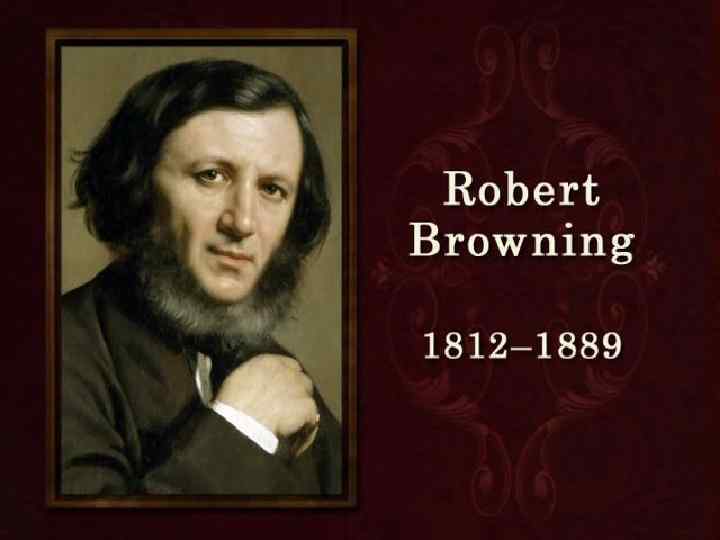
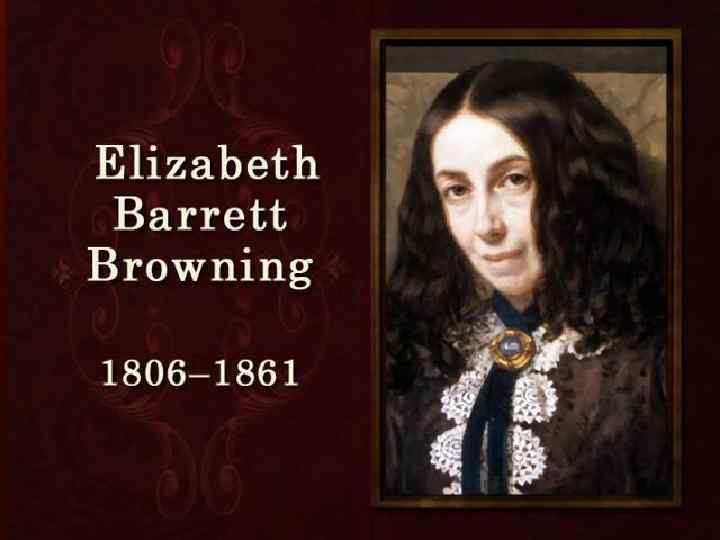
 Robert Browning • Born in Camberwell, a suburb of London • Studied several languages, developed deep interest in religion & music • First poetical influences – Romantic poets, Byron, Shelley & Keats • Gave up studies at the University of London (disliked the intellectual atmosphere) • Early poems: Pauline (1833), Paracelsus (1835), Sordello (1840) – philosophical & sprirtual topics (only God and Browning knew what it meant, and the poet had forgotten ) • Dramatic Lyrics, Dramatic Romances, Men & Women • The Ring and the Book - novel in verse, looks at a 17 -century murder in Italy from 12 different viewpoints • spent 10 years writing plays – unsuccessful • the dramatic monologue, a voice-driven poetic form
 • Tennyson looks back to Shelley and Keats • Browning, we can trace lines of connection forward to Ezra Pound, W. B. Yeats, and T. S. Eliot
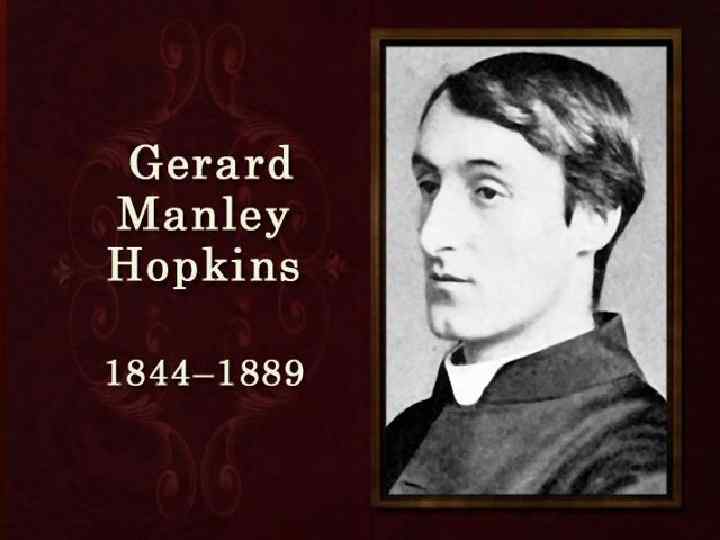
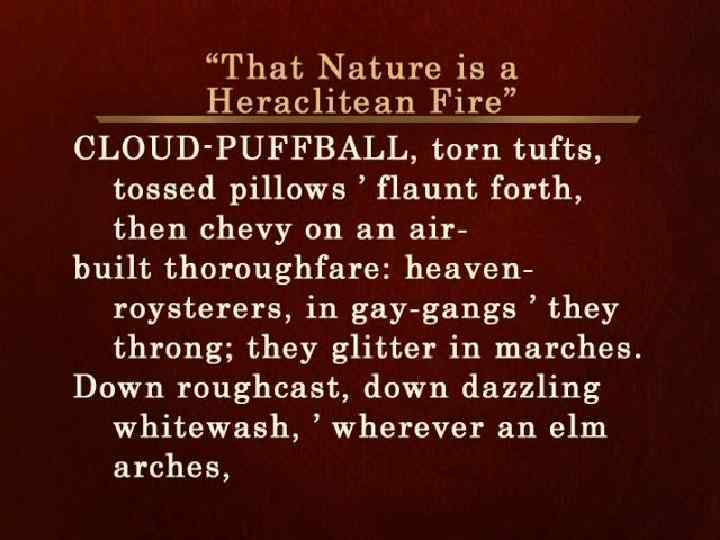
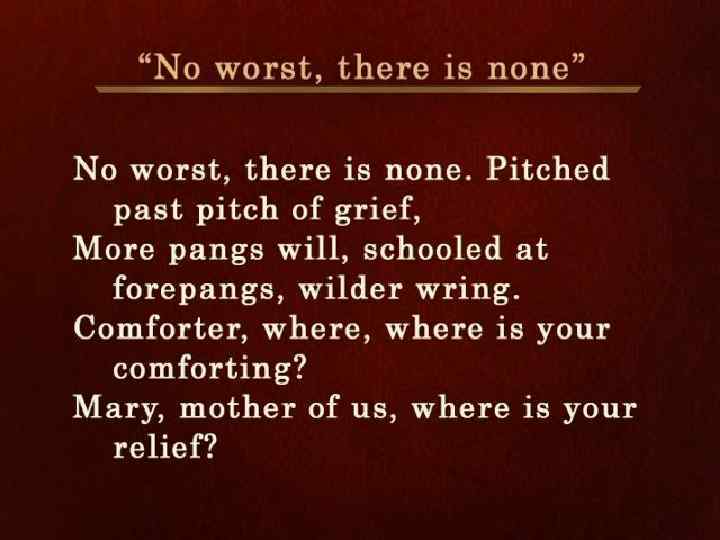
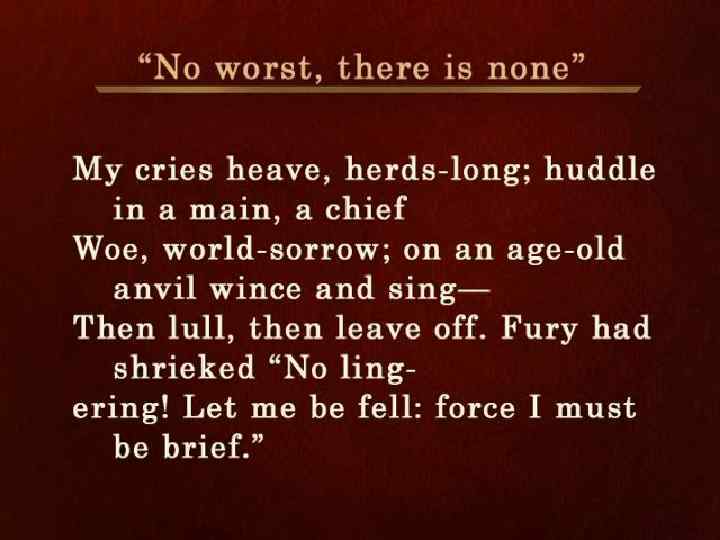
 • broke through Victorianism into Modernism • a Jesuit priest • unknown to the public as a poet until 20 years after his death • sought to create poetry around stress, what he called “sprung rhythm, ” not meter & freed English poetry from the chains of the pentameter • realized that the form of the future would be the short lyric, which allowed for interesting effects in the English language


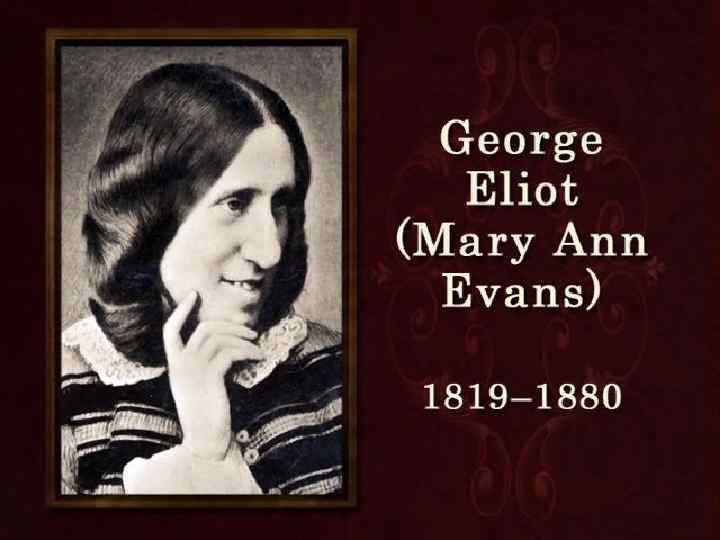
 George Eliot • born and brought up in the environs of Coventry, Warwickshire • Eliot’s father was an estate manager • access to a good library • self-taught, became the leading woman intellectual of her time • taught herself foreign languages and entered theological disputes of the time, notably what was called “higher criticism, ” theory that the Bible was metaphorically rather than literally true • first major literary effort - the translation from the German of David Strauss’s Life of Jesus • Eliot moved to London and became a leading journalist
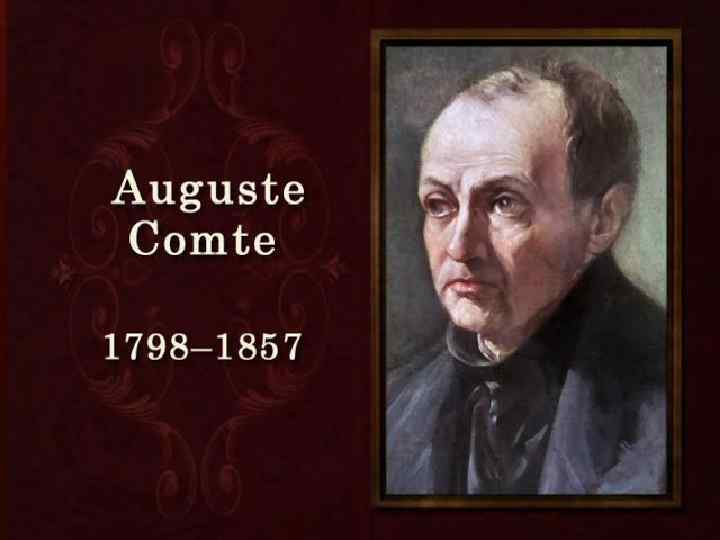
 • society progressed through stages from primitivism to a scientific organization of itself • The final stage would transcend religion, but it could be morally conditioned. Something would replace the religion that had been lost in earlier stages of evolution or development
 George Eliot • 1857 - short stories, published in Blackwood’s Magazine under the title Scenes of Clerical Life • Novel Adam Bede - 1859 in three volumes. The novel is set at the turn of the 19 century during the Methodist revival • Middlemarch; • Felix Holt, the Radical - a study of early trade unionism and proletarian revolt; • Romola - a historical novel, set in the Florence of the time of the fierce moralist Savonorala; • Daniel Deronda - a complex study of marriage, morality
 • Eliot: novels could, like religion, make us better people, and for this reason, they were necessary. Fiction has the power to dissolve egotism and make us more sympathetic to our fellow human beings. • mission of fiction - higher than mere entertainment - to engage in moral reflection
 Middlemarch: A Study of Provincial Life • published initially in eight bimonthly parts over the years 1871 to 1872 and, subsequently, as four massive volumes • Middlemarch is the name of an imaginary town, based on Coventry, in the period of the late 1820 s to early 1830 s • two main plotlines: medical scientist’s - called Lydgate, Dorothea Brooke’s - a young idealist who dreams of being a helpmeet to genius • Eliot asks: How can society be made better? • And her answer is: not by passing bills to allow people to vote but by making people better. • Virginia Woolf - Middlemarch was the first novel in English for “grown-ups, ” meaning for morally mature adults

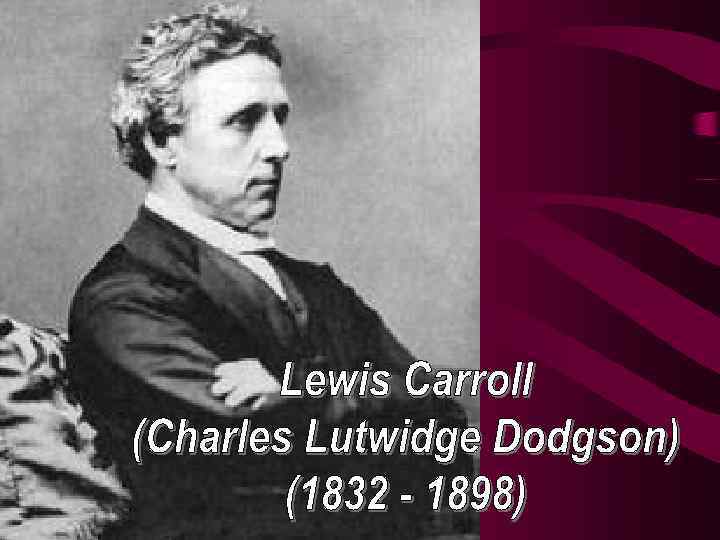
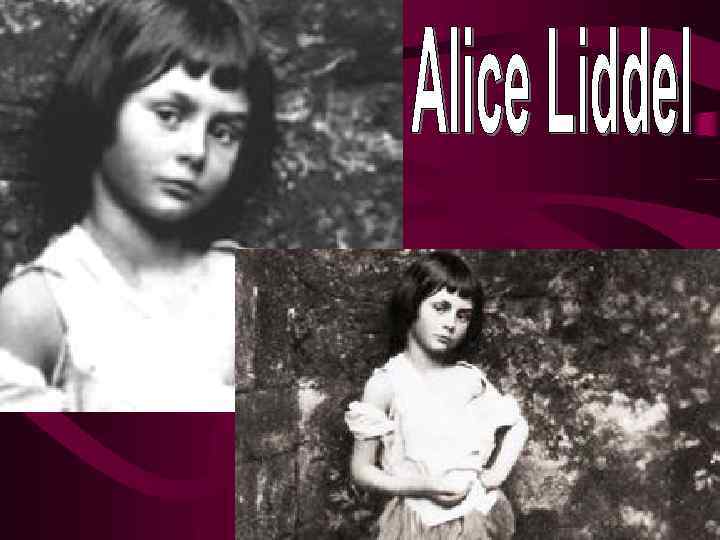
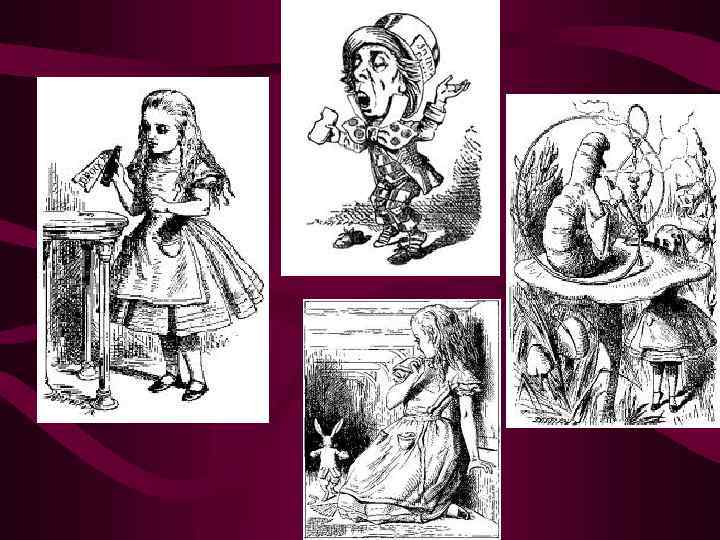
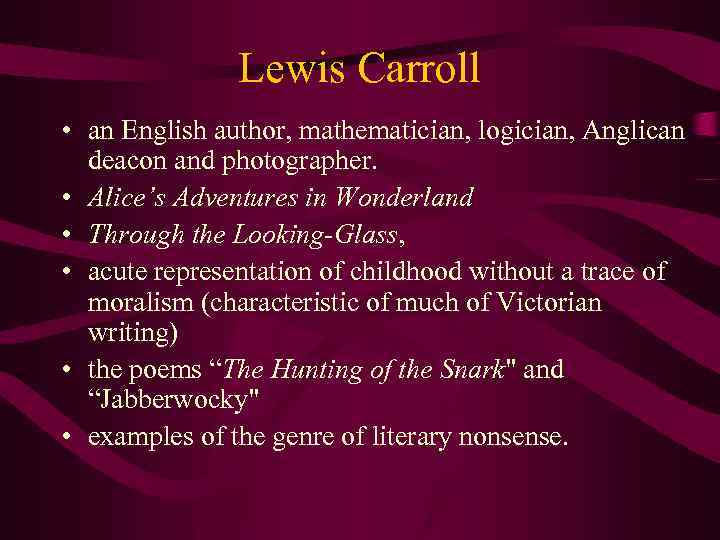 Lewis Carroll • an English author, mathematician, logician, Anglican deacon and photographer. • Alice’s Adventures in Wonderland • Through the Looking-Glass, • acute representation of childhood without a trace of moralism (characteristic of much of Victorian writing) • the poems “The Hunting of the Snark" and “Jabberwocky" • examples of the genre of literary nonsense.
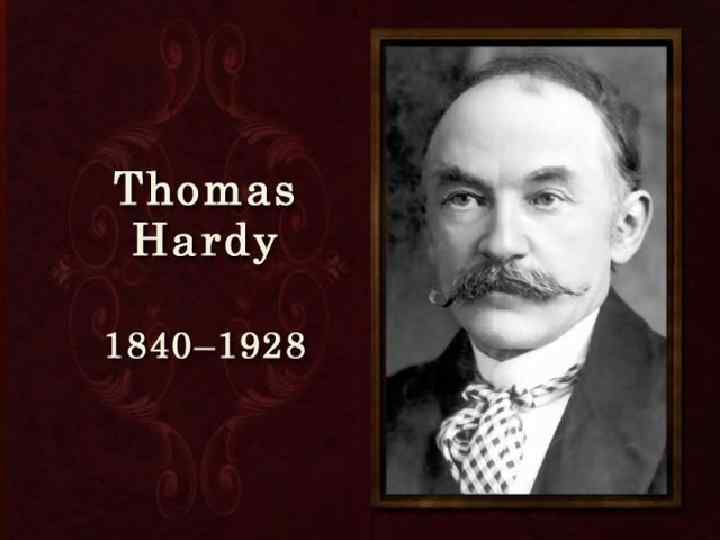
 • “Grand Old Man of English literature, towering over his fellow writers” • a great national writer as well as a regional writer • born in a village called Little Bockhampton in the county of Dorset, the heart of what he would later call Wessex (the West Saxon region, known as the breadbasket of England, the Corn Laws 1846 ) • a great novelist and a great poet • 1860 s - late 1890 s – fiction (are quintessentially of the 19 th century, not Victorian though, not in pursuit of the standards of morality) • The Return of the Native • Tess of the d’Urbervilles • Jude the Obscure • From the turn of the century until his death, he was principally a poet (poetry properly belongs in the Modern period )