


 Скачать презентацию Veterinary Immunology Type II Hypersensitivity Dr Chi-Young Wang
7a37de17511e3bd3b959cfe97266e18e.ppt
- Количество слайдов: 30
 Veterinary Immunology Type II Hypersensitivity Dr. Chi-Young Wang
 n Most red cell-surface antigens are either glycoproteins or glycolipids n The ABO antigens are anion and glucose transporter proteins n If blood is transfused from one animal to another, the red cells
 Type II Hypersensitivity antigens will stimulate an antibody response in the recipient n The rapid elimination of transfused red cells due to intravascular hemolysis by complement and extravascular destruction through mononuclear phagocyte system
 n The complexity of erythrocyte blood group system: L system to complex B system (cattle) n Some are soluble molecules in serum, salivia, blood fluids: J antigen (cattle); R antigen (sheep); dog erythrocyte antigen (DEA) 7
 n Animal make antibodies against foreign blood group antigens (this natural antibody) are derived from contact with foreign red cells or cross-reacting epitope (plants, bacteria, protozoa, and helminths)
 Incompatible Transfusions n The recipient posses preexisting Ig. M antibodies to donor red cell antigens n Agglutination, hemolysis, or stimulate opsonization and phagocytosis of transfused cells n If no preexisting antibody,
 Incompatible Transfusions circulate red cells induce antibodies later n Serious illness: mild febrile to death, hemoglobinemia, hemoglobinuria, blood clotting, DIC, anaphylatoxin production, mast cell degranulation, the vasoactive molecules, shock
 n Cross-matching test: blood cells from donor (without serum) are washed three times with saline. 2 -4% suspension of red cells is made. These donor red cells are mixed with recipient serum and then incubated at 37 ℃ for 15 -30 min n If lysed or agglutination: NO transfusion
 Hemolytic Disease of the Newborn n Female animals become sensitized by incompatible blood transfusion or leakage of fetal red cells through the placenta n These anti-red cell antibodies are concentrated in colostrum n When the newborn suckles… destruction of RBC→HDN
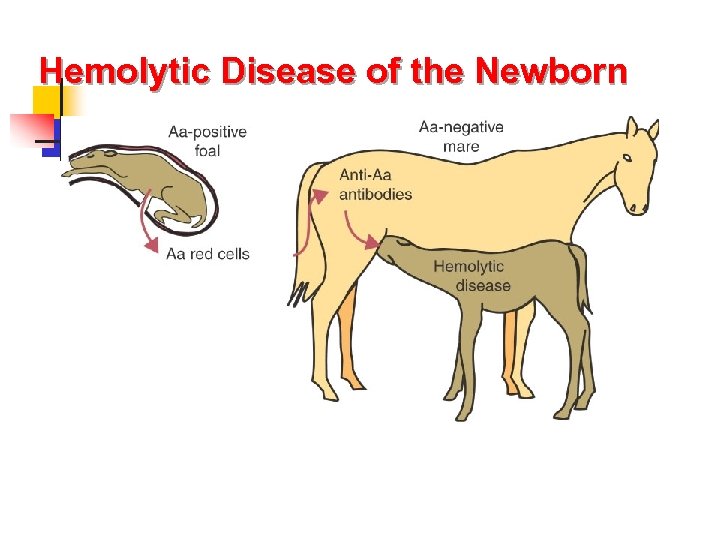 Hemolytic Disease of the Newborn
 Four Conditions for HDN n Young animal must inherit a red cell antigen from its sire that is not present in its mother n The mother must be sensitized to this RBC antigen n The mother’s response must be boosted (transplacental or repeated pregnancy) n Colostrum ingestion (high titers)
 Sheep n Six blood group systems (A, B, C, D, M, and R) n B contains 52 alleles n R system: two soluble antigens, R and O, which are coded by alleles R and r n This R and O is controlled by gene I and its recessive allele I n If a homozygous I → neither R nor O
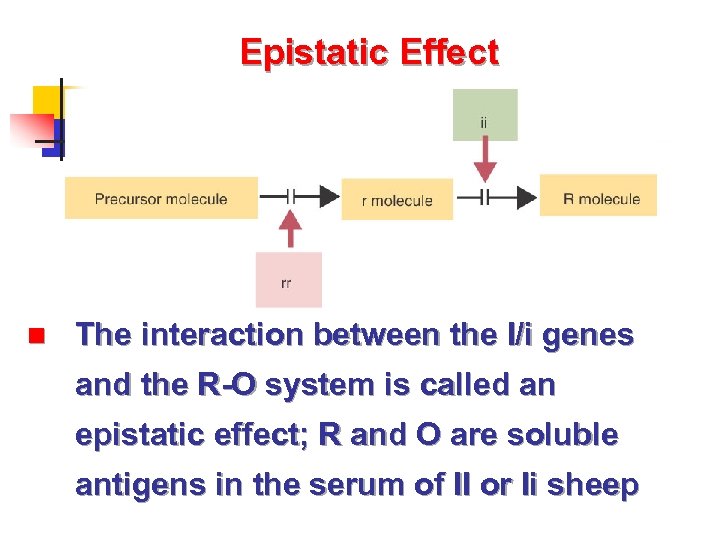 Epistatic Effect n The interaction between the I/i genes and the R-O system is called an epistatic effect; R and O are soluble antigens in the serum of II or Ii sheep
 and are passively adsorbed onto red cells n Natural anti-R antibodies may be founded in R-negative sheep n M blood group (Mb antigen): an inhibitor of potassium transport
 and are passively adsorbed onto red cells n Natural anti-R antibodies may be founded in R-negative sheep n M blood group (Mb antigen): an inhibitor of potassium transport
 n The antigen expressed on the surface of red blood cells-blood group antigens or erythrocyte antigens (EAs) n The expression of blood group antigens is controlled by genes located at different alleles
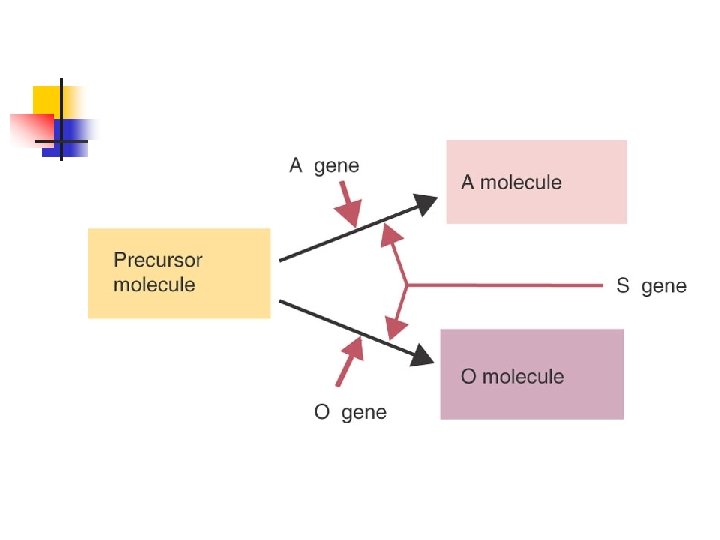
 Pig n Sixteen pig blood systems (EAAEAP) n The EAA system controls the expression of A and O antigens n Expression is regulated by S (secretor) with alleles S and s
 n In homozygous recessive state (ss) this gene can prevent the production of A and O n The amount of these antigens bound to red cells is undetectable n Not true antigen but soluble molecules in serum which absorbed onto red cells
 n Transfusion of A-positive blood into Anegative pigs leads to transient collapse and hemoglobinuria n HDN as a result of use of hog cholera vaccine containing pig blood n This vaccine consisted of pooled blood from viremic pigs activated with the dye crystal violet
 n Affected piglets may show rapidly progressive weakness and pallor of mucous membranes…. longest survivors…show hemoglobinuria and janudice n EAE is also a complex system related to HDN
 Dogs n Eight red cell antigens are recognized (DEA 1. 1, 1. 2, 3, 4, 5, 6, 7, and 8) n DEA 1 is clinically important; 60% dogs express n No naturally occurring antibodies to DEA 1. 1 and 1. 2 n Canine donors be negative for DEA 1. 1, 1. 2, 3, 5, and 7
 Dogs n A universal donor be negative for all the DEA except DEA 4 n Unless the recipient is known, only universal donor can be used and a cross-match performed on all recipients
 Dogs n A DEA 1. 1 -negative bitch is transfused with DEA 1. 1 -positive blood and subsequent bred to a DEA 1. 1 -positive male. The puppies develop a hemolytic anemia n The DEA 7 system is a soluble antigen like sheep R antigen
 Dogs n A DEA 1. 1 -negative bitch is transfused with DEA 1. 1 -positive blood and subsequent bred to a DEA 1. 1 -positive male. The puppies develop a hemolytic anemia n The DEA 7 system is a soluble antigen like sheep R antigen
 Parenting Testing n Examining the blood group antigens of an animal and its alleged parents n Since blood group antigens are inherited, they must be present on the red cells of one or both parents n Only exclude but never prove parentage
 Type II Hypersensitivity Reaction to Drugs n First: the drug and antibody can activate complement, and RBC will be destroyed in a bystander effect n Second: penicillin, L-dopa, sulfonamide, and aminosalicylic acid may adsorb onto the surface of RBC; they may be recognized and eliminated (may be antibody)
 Type II Hypersensitivity Reaction to Drugs n Third: cephalosporins may modify RBC membrane that the cells passively adsorb antibodies and then removed by phagocytic cells
 Type II Hypersensitivity Reaction in Infectious Disease n Lipopolysaccharides, viruses such as equine infectious anemia virus and Aleutian disease virus, Anaplasma, trypanosomes, and Babesia
 Type II Hypersensitivity Reaction in Infectious Disease n Recognized as foreign and lysed by antibody, complement or phagocytosed by mononuclear cells