


 Скачать презентацию Vertical integration and specific assets Vertical Integration
1ae579e8067a85c4d4bdb1cbe79ffede.ppt
- Количество слайдов: 12
 Vertical integration and specific assets
 Vertical Integration ▪ Concepts: ▪ Premise: in a competitive market, better to buy out b/c of specialization ▪ ♦ Managerial: “make or buy” ♦ Legal ♦ Why not specializing within the firm? Core competencies? ♦ Not b/c economies of scale if contractible Examples: ♦ Managerial: outsourcing, contract manufacturing ♦ Also • • self-employment, human capital
 Reasons for vertical integration ▪ Monopoly ♦ Avoiding it: “double marginalization” ♦ Exploiting it • • ▪ ▪ Extending it: MS Price discrimination, integrating industry with more elastic demand: e. g. , Alcoa: aluminum for planes and pottery Regulation ♦ Resale price maintenance: Zara vs Benetton ♦ Tax avoidance Transaction costs ♦ Quality measurement, etc. ♦ Specific Assets
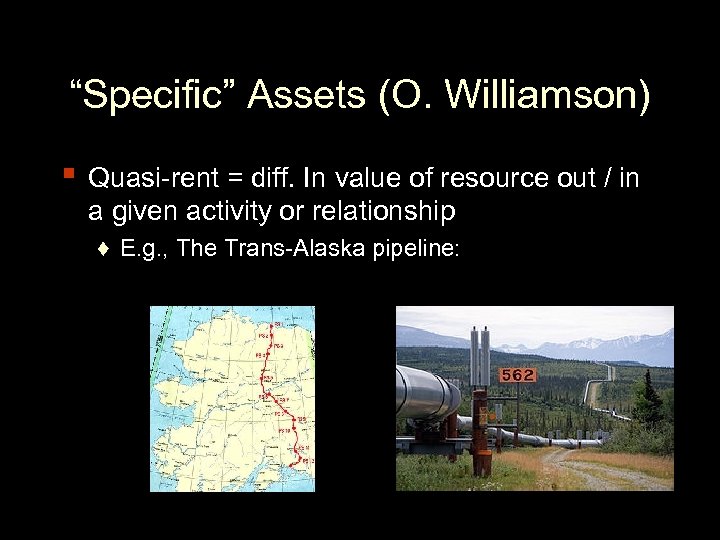 “Specific” Assets (O. Williamson) ▪ Quasi-rent = diff. In value of resource out / in a given activity or relationship ♦ E. g. , The Trans-Alaska pipeline:
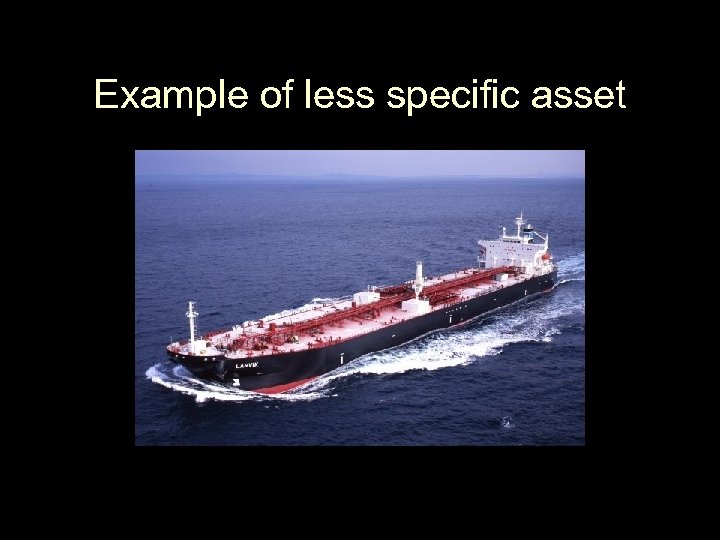 Example of less specific asset
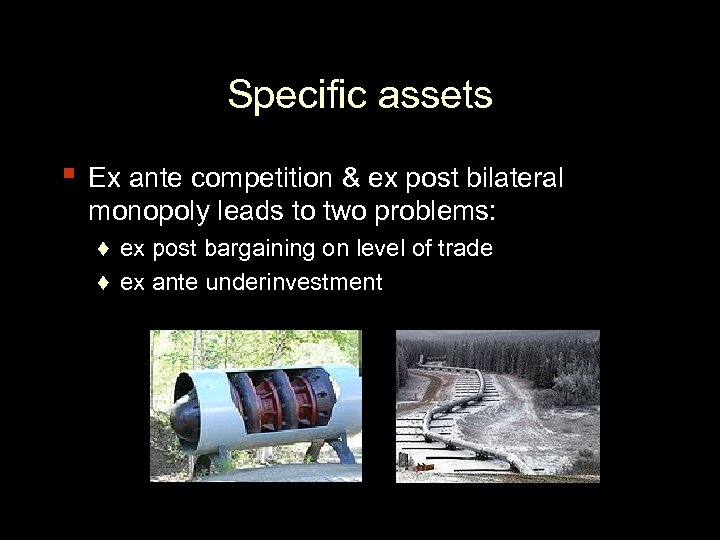 Specific assets ▪ Ex ante competition & ex post bilateral monopoly leads to two problems: ♦ ex post bargaining on level of trade ♦ ex ante underinvestment
 Types of specific assets ▪ Non human assets ▪ Human capital specificity ♦ Integration impossible—why? ♦ Mandatory law often makes general human capital specific to current workers • • Mandatory employment dismissal indemnities Substitution of strikers illegal in Europe – Despite being legal in the US, why few US firms replace workers on strike?
 Example 1: Contract manufacturing (Arruñada & Vázquez, Harvard Business Review ‘ 06) SUMMARY ▪ E. g. monitors, BMW X 3 (Magna), etc. ▪ Specialization advantages of “buy” (vs. “make”) ♦ Focused management: “core competencies” ♦ New “surface mount” technology, etc ▪ Transaction costs of “buy” ♦ Standards ♦ Communication: Internet
 Concept and extent ▪ To subcontract manufacturing with specialists ▪ (Flextronics, Solectron, SCS) that may work for many firms. Common in electronics and PCs, pharmaceuticals, and also in sport shoes (but different here because of technology? )
 Specialization advantages ▪ In management: Focus on core competencies • • ▪ ▪ “by pushing off the pressures of cost and product life cycles to contract manufacturers, the computer industry has largely been able to escape the dirty business of manufacturing. By moving away from manufacturing, high profile companies such as Dell and Cisco increase the value of their remaining assets, as well as their ability to focus on their core competencies around product design, marketing and supply chain efficiency” (Glenn White, PRTM) How to identify core competencies? – Profits? External effects? divisionalization topic Other advantages: ♦ Surface-mount technology ♦ Purchase agreements ♦ Capacity utilization Lower for high quality products
 Transaction costs ▪ Standards ▪ Internet ▪ Low physical asset specificity FMS (flexible ▪ ▪ manufacturing systems) Higher for high quality products and prototypes Potential for negative external effects for the firm: emphasis on low cost may lead to poor quality and bad labor relations (Nike), etc.
 Example 2: Car dealers (Arruñada, Vázquez & Zanarone, Managerial & Decision Economics ‘ 09) ▪ Spanish car dealers directly owned by car ▪ ▪ manufacturers perform much worst (lower productivity and profits, greater labor costs) than franchised dealers Why? Why do manufacturers keep them?