 Скачать презентацию Verbs with irregular YO forms Regular AR
c408cf71e7a8367c70286ad3f4b83704.ppt
- Количество слайдов: 11



Verbs with irregular YO forms
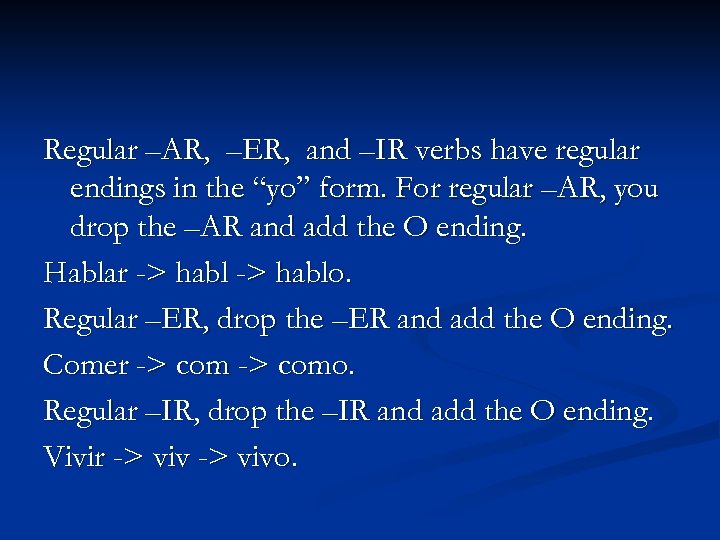
Regular –AR, –ER, and –IR verbs have regular endings in the “yo” form. For regular –AR, you drop the –AR and add the O ending. Hablar -> hablo. Regular –ER, drop the –ER and add the O ending. Comer -> como. Regular –IR, drop the –IR and add the O ending. Vivir -> vivo.
Certain verbs have are formed the regular way for every other form BUUUUT not YO. We are going to learn the different irregular YO forms. The “yo” forms are almost the only unusual ones.
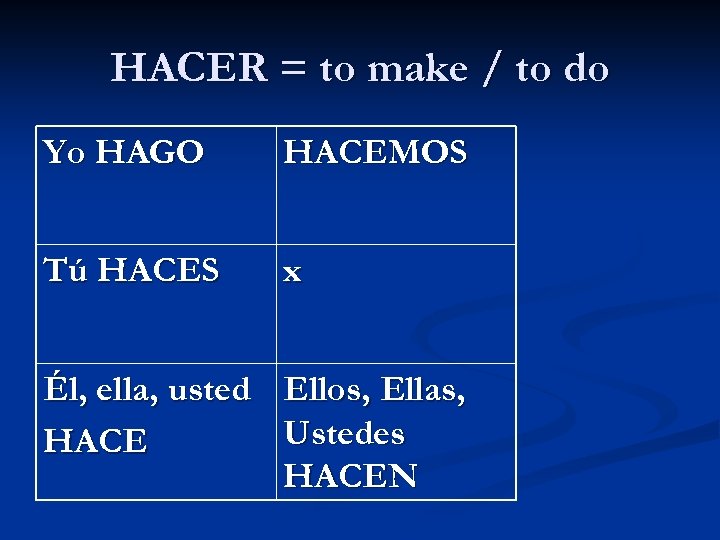
HACER = to make / to do Yo HAGO HACEMOS Tú HACES x Él, ella, usted Ellos, Ellas, Ustedes HACEN
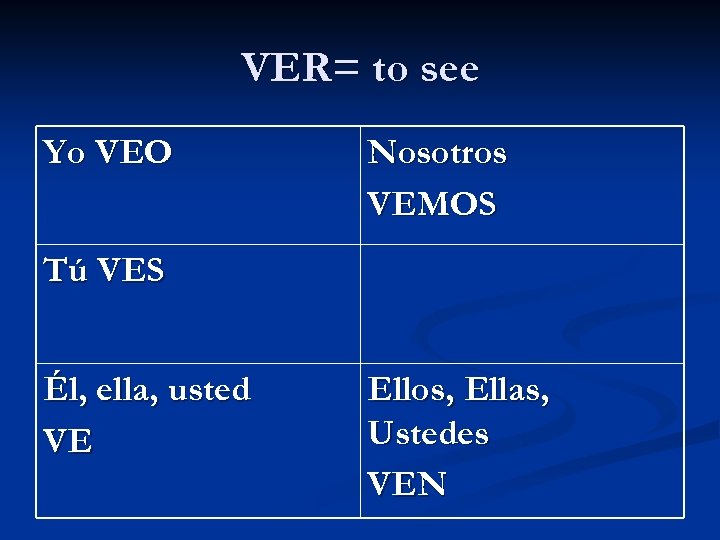
VER= to see Yo VEO Nosotros VEMOS Tú VES Él, ella, usted VE Ellos, Ellas, Ustedes VEN
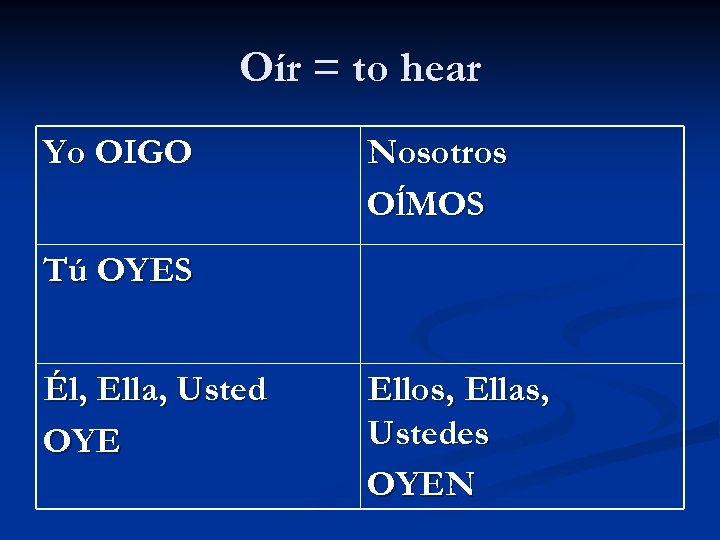
Oír = to hear Yo OIGO Nosotros OĺMOS Tú OYES Él, Ella, Usted OYE Ellos, Ellas, Ustedes OYEN
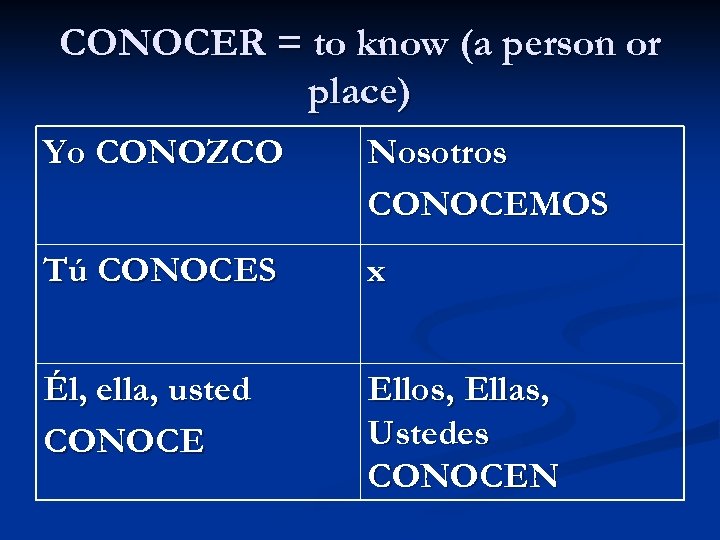
CONOCER = to know (a person or place) Yo CONOZCO Nosotros CONOCEMOS Tú CONOCES x Él, ella, usted CONOCE Ellos, Ellas, Ustedes CONOCEN
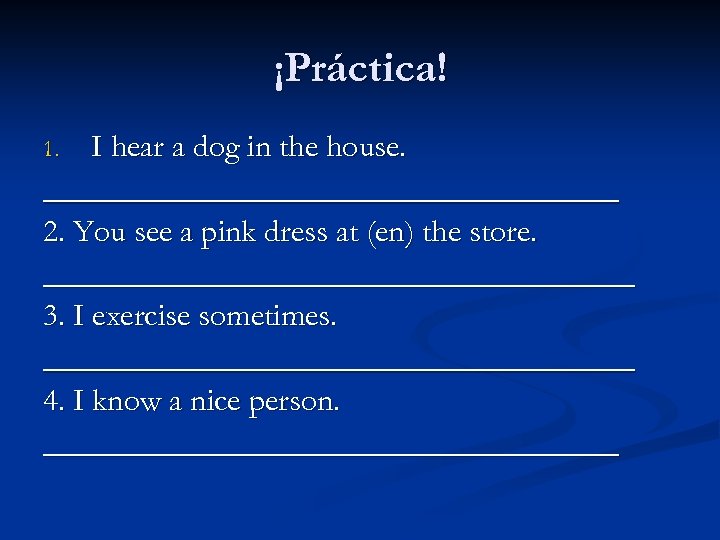
¡Práctica! I hear a dog in the house. __________________ 2. You see a pink dress at (en) the store. ___________________ 3. I exercise sometimes. ___________________ 4. I know a nice person. __________________ 1.
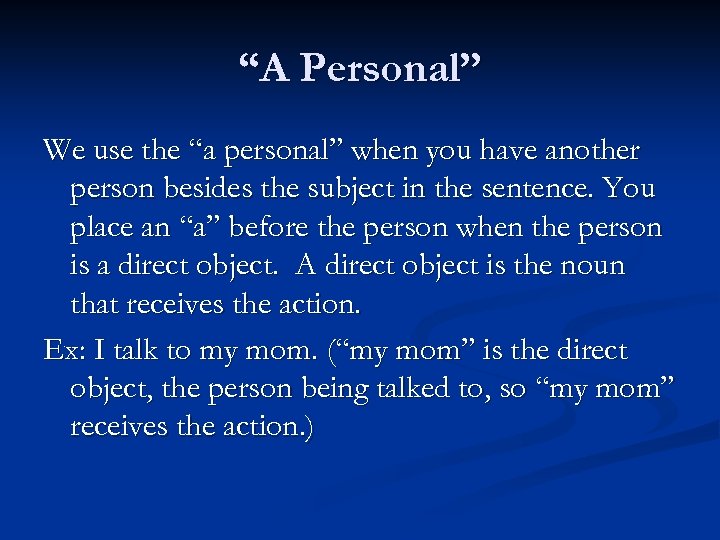
“A Personal” We use the “a personal” when you have another person besides the subject in the sentence. You place an “a” before the person when the person is a direct object. A direct object is the noun that receives the action. Ex: I talk to my mom. (“my mom” is the direct object, the person being talked to, so “my mom” receives the action. )
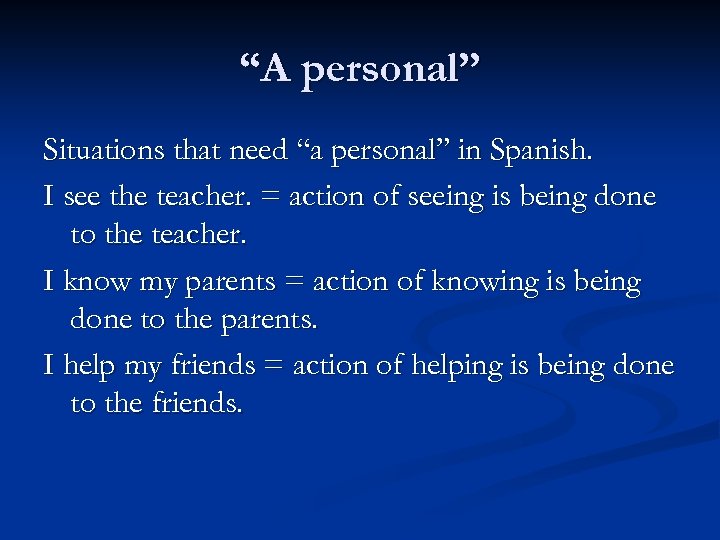
“A personal” Situations that need “a personal” in Spanish. I see the teacher. = action of seeing is being done to the teacher. I know my parents = action of knowing is being done to the parents. I help my friends = action of helping is being done to the friends.
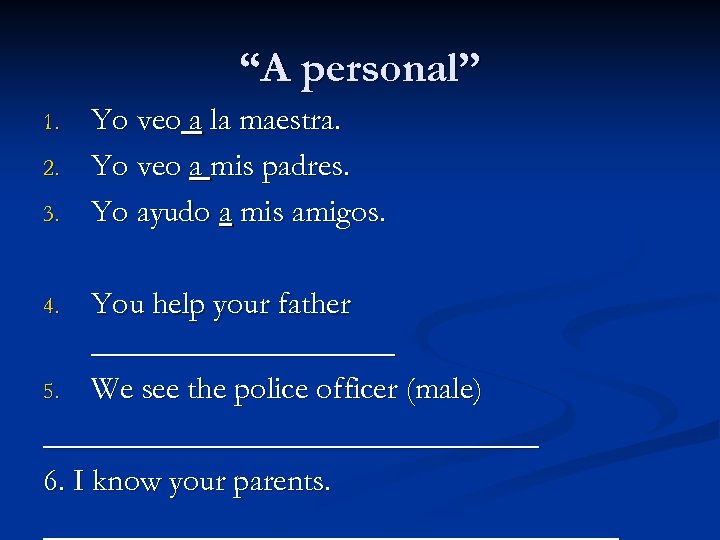
“A personal” 1. 2. 3. Yo veo a la maestra. Yo veo a mis padres. Yo ayudo a mis amigos. You help your father __________ 5. We see the police officer (male) ________________ 6. I know your parents. __________________ 4.
Скачать презентацию Verbs with irregular YO forms Regular AR
c408cf71e7a8367c70286ad3f4b83704.ppt