


 Скачать презентацию Venus Transit June 8 2004 Lou Mayo NASA
faed6dc69037fd1d0fca83866385396f.ppt
- Количество слайдов: 20
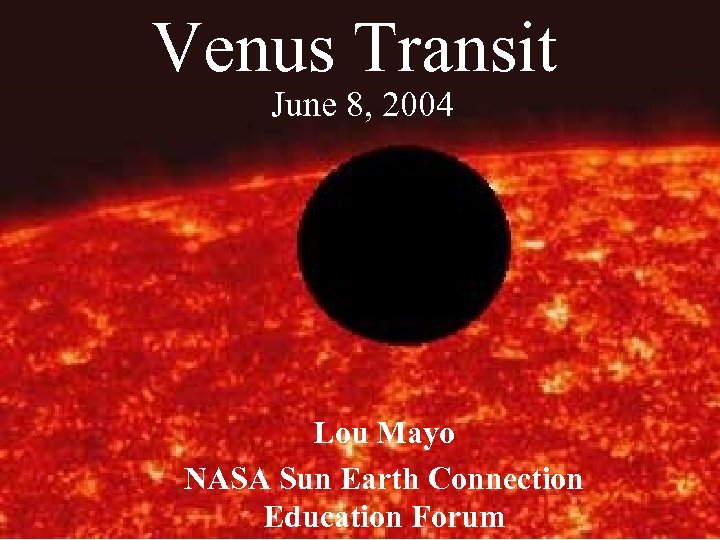 Venus Transit June 8, 2004 Lou Mayo NASA Sun Earth Connection Education Forum
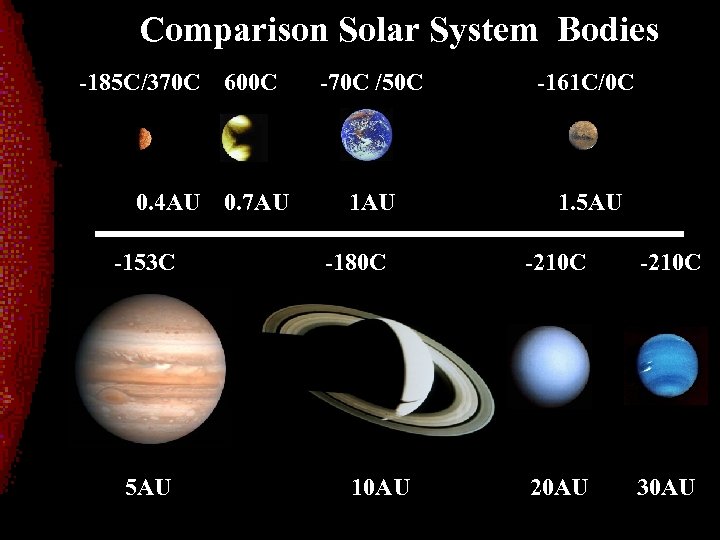 Comparison Solar System Bodies -185 C/370 C 0. 4 AU -153 C 5 AU 600 C -70 C /50 C -161 C/0 C 0. 7 AU 1. 5 AU -180 C 10 AU -210 C 20 AU 30 AU
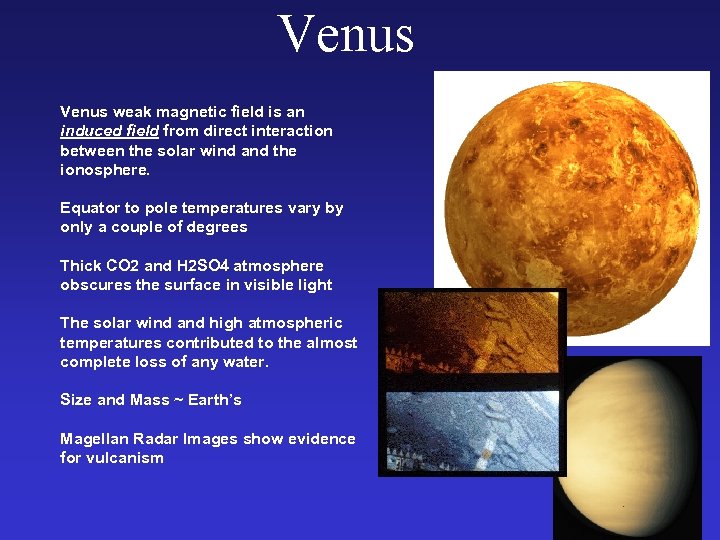 Venus weak magnetic field is an induced field from direct interaction between the solar wind and the ionosphere. Equator to pole temperatures vary by only a couple of degrees Thick CO 2 and H 2 SO 4 atmosphere obscures the surface in visible light The solar wind and high atmospheric temperatures contributed to the almost complete loss of any water. Size and Mass ~ Earth’s Magellan Radar Images show evidence for vulcanism
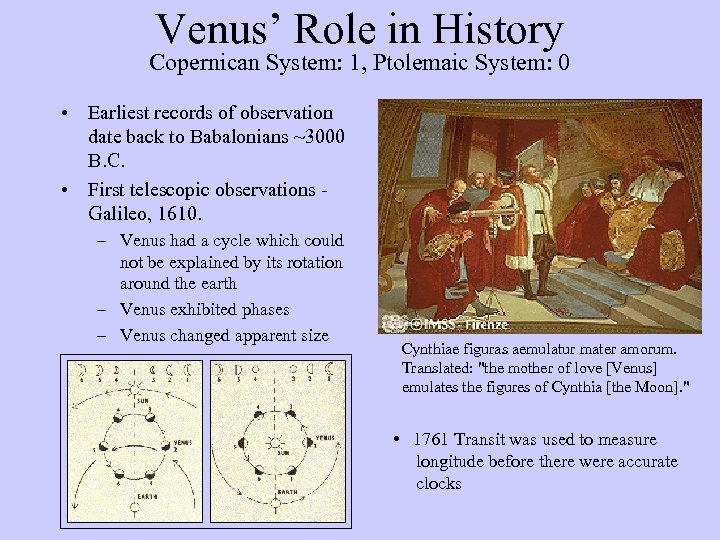 Venus’ Role in History Copernican System: 1, Ptolemaic System: 0 • Earliest records of observation date back to Babalonians ~3000 B. C. • First telescopic observations Galileo, 1610. – Venus had a cycle which could not be explained by its rotation around the earth – Venus exhibited phases – Venus changed apparent size Cynthiae figuras aemulatur mater amorum. Translated: "the mother of love [Venus] emulates the figures of Cynthia [the Moon]. " • 1761 Transit was used to measure longitude before there were accurate clocks
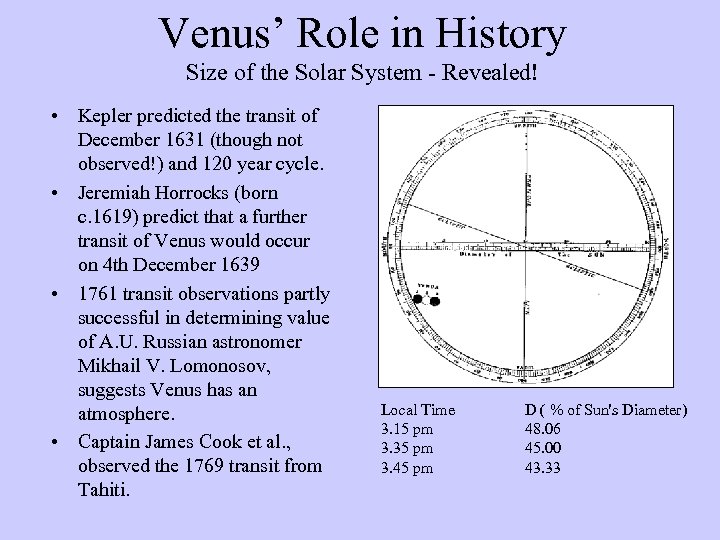 Venus’ Role in History Size of the Solar System - Revealed! • Kepler predicted the transit of December 1631 (though not observed!) and 120 year cycle. • Jeremiah Horrocks (born c. 1619) predict that a further transit of Venus would occur on 4 th December 1639 • 1761 transit observations partly successful in determining value of A. U. Russian astronomer Mikhail V. Lomonosov, suggests Venus has an atmosphere. • Captain James Cook et al. , observed the 1769 transit from Tahiti. Local Time 3. 15 pm 3. 35 pm 3. 45 pm D ( % of Sun's Diameter) 48. 06 45. 00 43. 33
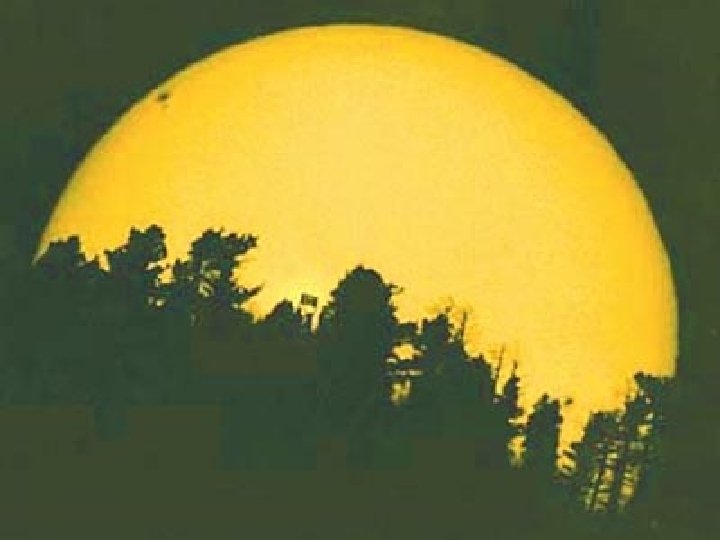
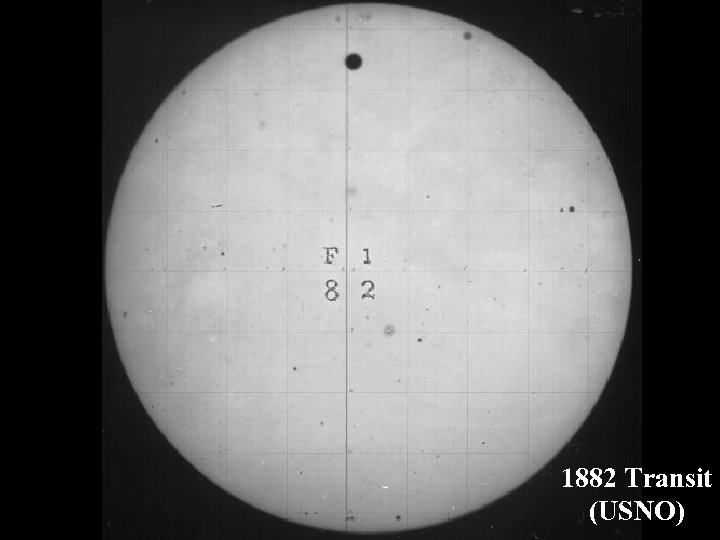 1882 Transit (USNO)
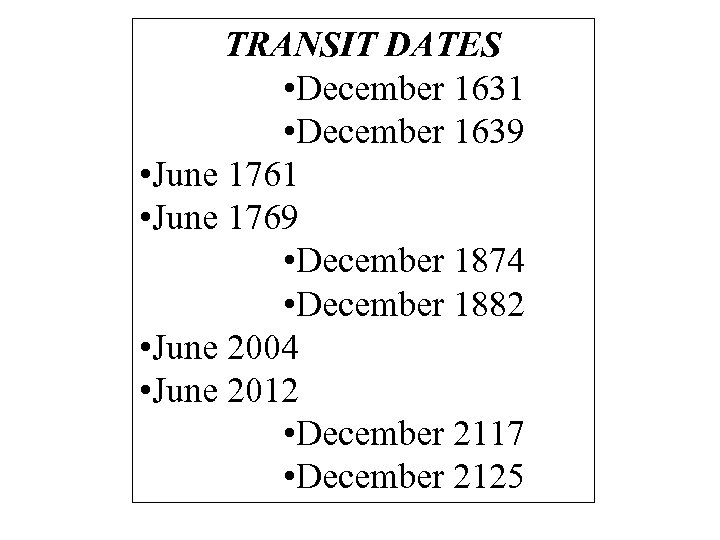 TRANSIT DATES • December 1631 • December 1639 • June 1761 • June 1769 • December 1874 • December 1882 • June 2004 • June 2012 • December 2117 • December 2125
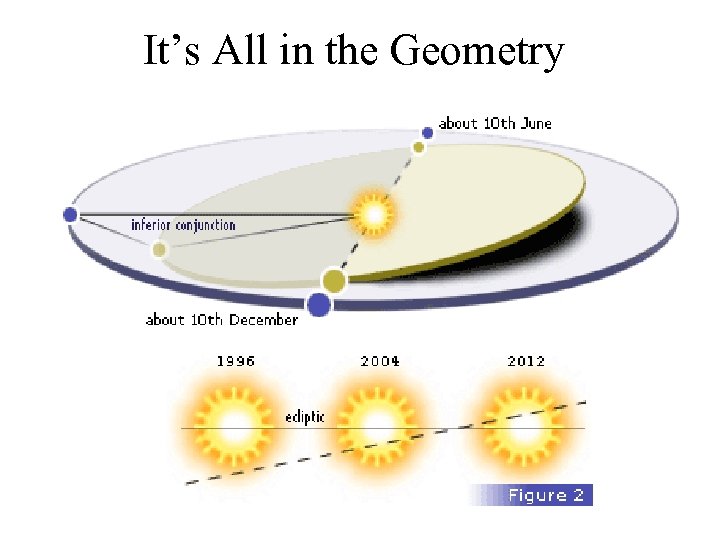 It’s All in the Geometry
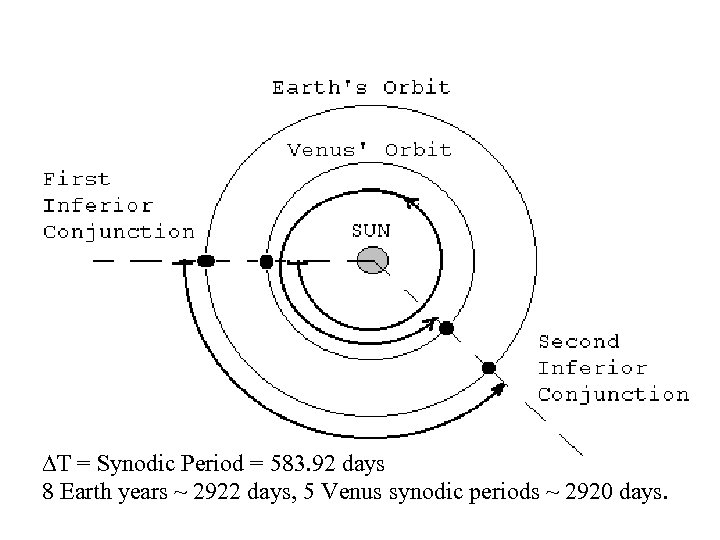 DT = Synodic Period = 583. 92 days 8 Earth years ~ 2922 days, 5 Venus synodic periods ~ 2920 days.
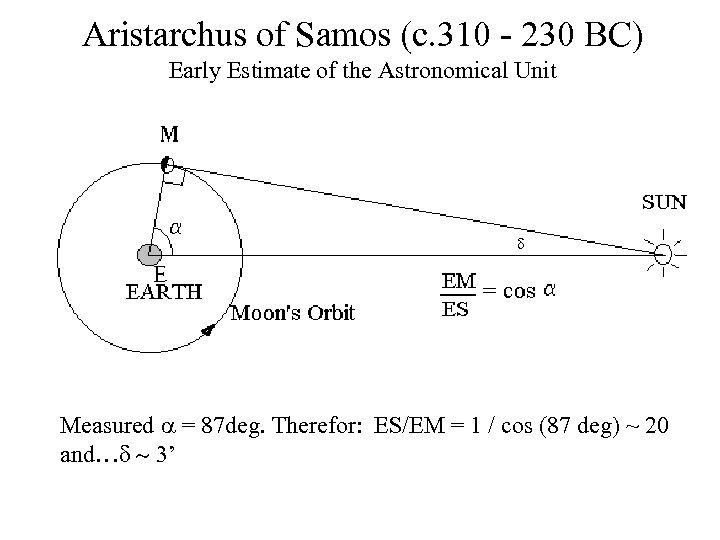 Aristarchus of Samos (c. 310 - 230 BC) Early Estimate of the Astronomical Unit d Measured a = 87 deg. Therefor: ES/EM = 1 / cos (87 deg) ~ 20 and…d ~ 3’
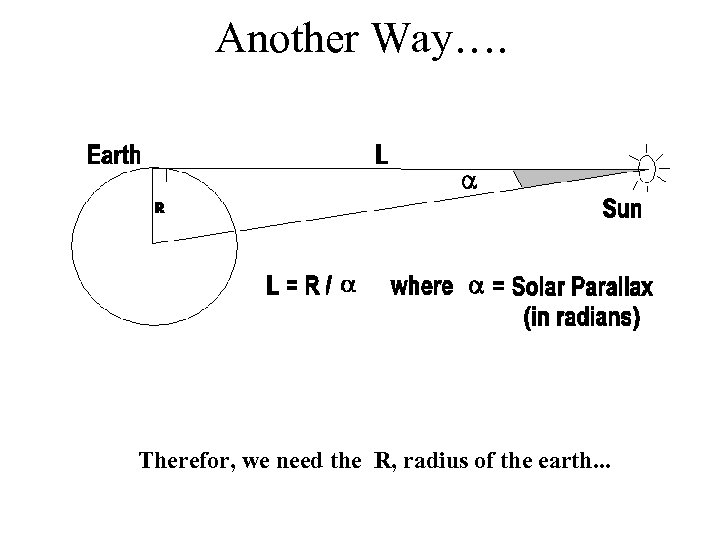 Another Way…. Therefor, we need the R, radius of the earth. . .
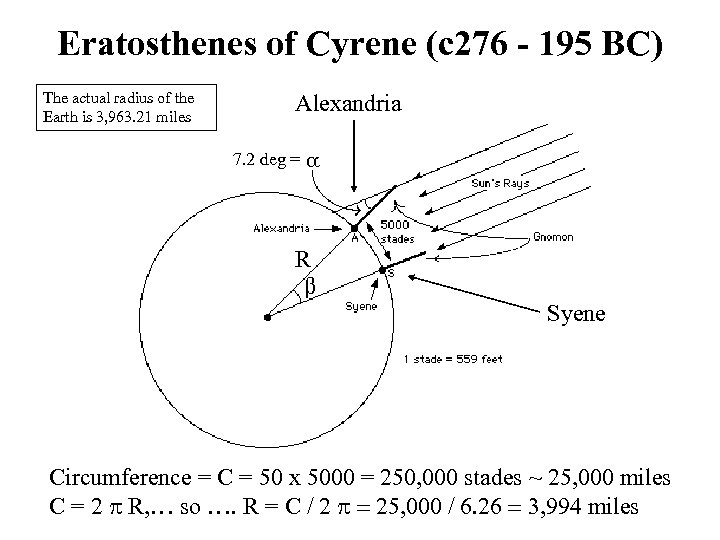 Eratosthenes of Cyrene (c 276 - 195 BC) The actual radius of the Earth is 3, 963. 21 miles Alexandria 7. 2 deg = R Syene Circumference = C = 50 x 5000 = 250, 000 stades ~ 25, 000 miles C = 2 p R, … so …. R = C / 2 p = 25, 000 / 6. 26 = 3, 994 miles
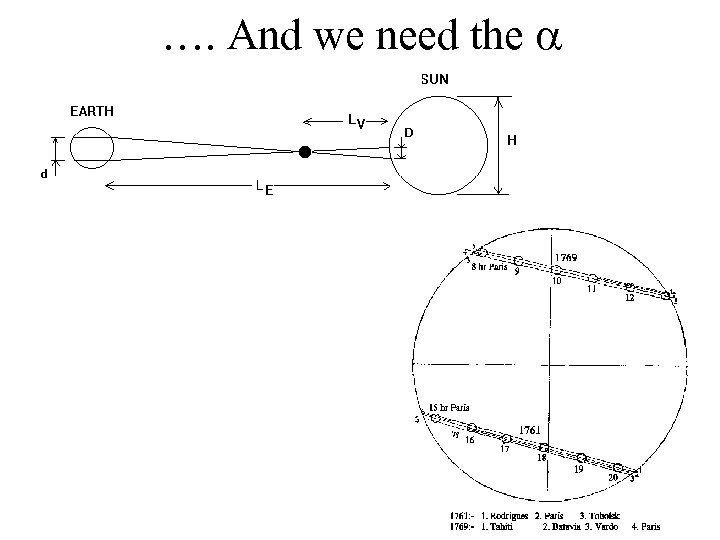 …. And we need the a
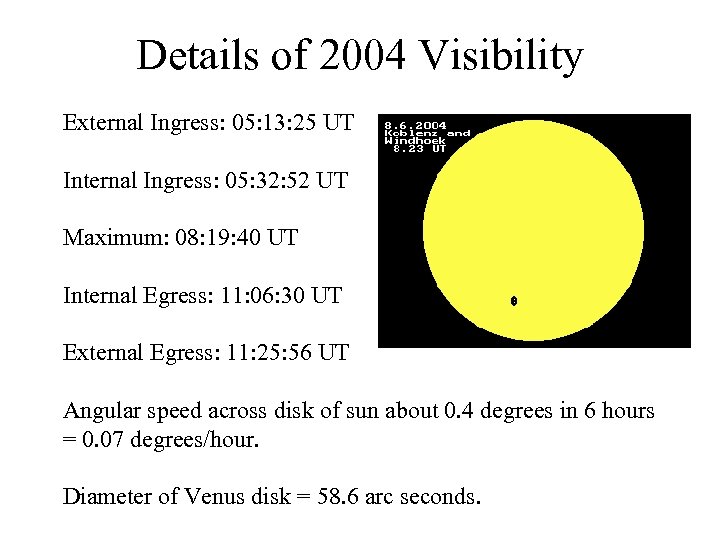 Details of 2004 Visibility External Ingress: 05: 13: 25 UT Internal Ingress: 05: 32: 52 UT Maximum: 08: 19: 40 UT Internal Egress: 11: 06: 30 UT External Egress: 11: 25: 56 UT Angular speed across disk of sun about 0. 4 degrees in 6 hours = 0. 07 degrees/hour. Diameter of Venus disk = 58. 6 arc seconds.
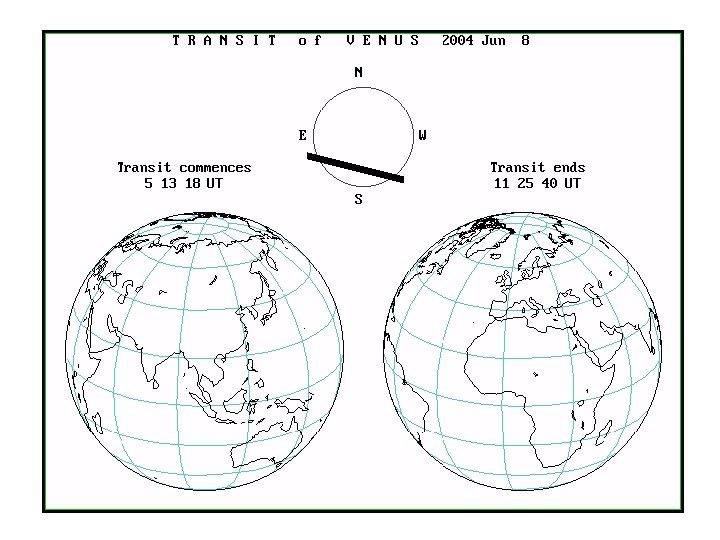
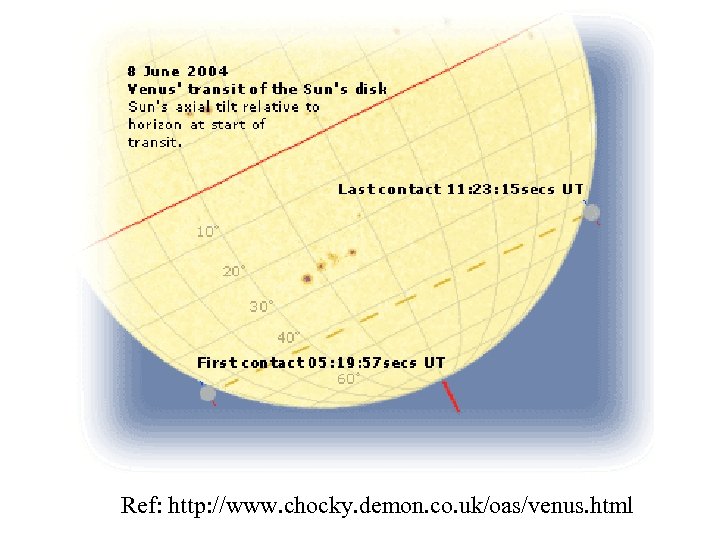 Ref: http: //www. chocky. demon. co. uk/oas/venus. html
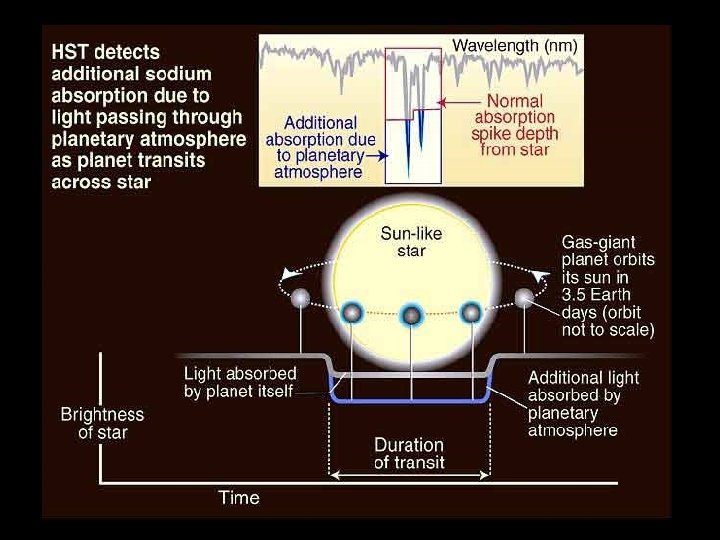
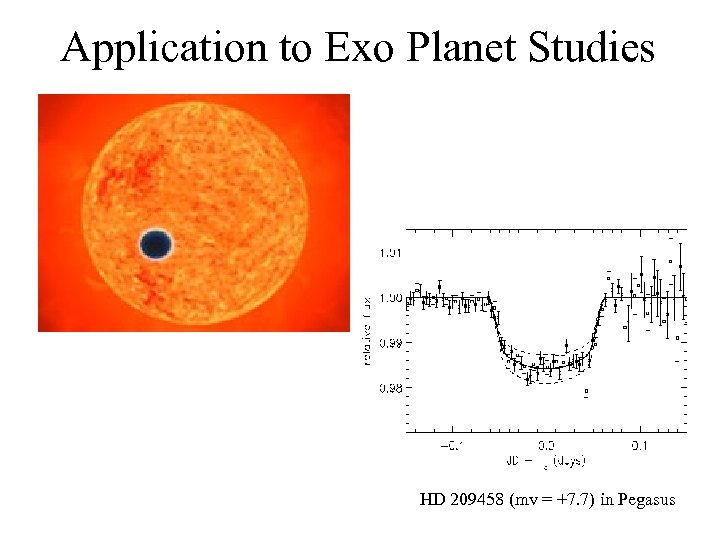 Application to Exo Planet Studies HD 209458 (mv = +7. 7) in Pegasus
 1882, the date of the last Venus transit, quote by William Harkness of the U. S. Naval Observatory (from Sky and Telescope, Feb. 1995): "There will be no other [transit of Venus] till the twentyfirst century of our era has dawned upon the earth, and the June flowers are blooming in 2004. When the last transit occurred the intellectual world was awakening from the slumber of ages, and that wondrous scientific activity which has led to our present advanced knowledge was just beginning. What will be the state of science when the next transit season arrives God only knows. "