

Венерина мухоловка (Dionaea muscipula) — миксотроф: в её

 Скачать презентацию Венерина мухоловка (Dionaea muscipula) — миксотроф: в её
07-8 Гетеротроф, транспорт, выделение.ppt
- Количество слайдов: 23
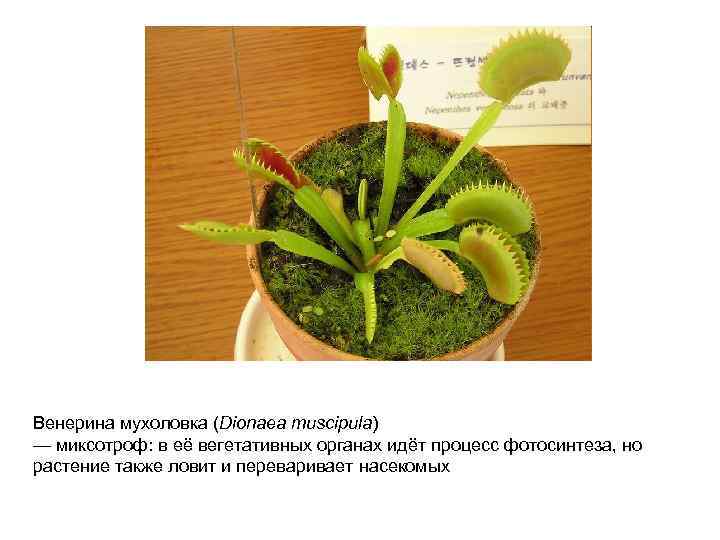
Венерина мухоловка (Dionaea muscipula) — миксотроф: в её вегетативных органах идёт процесс фотосинтеза, но растение также ловит и переваривает насекомых
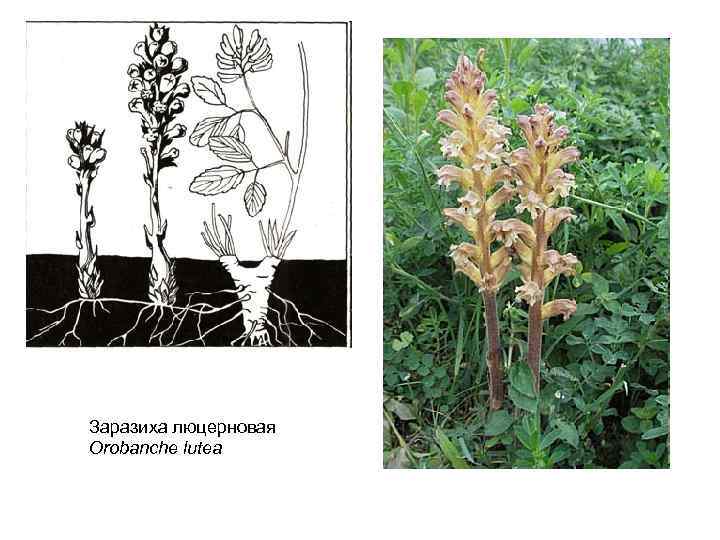
Заразиха люцерновая Orobanche lutea
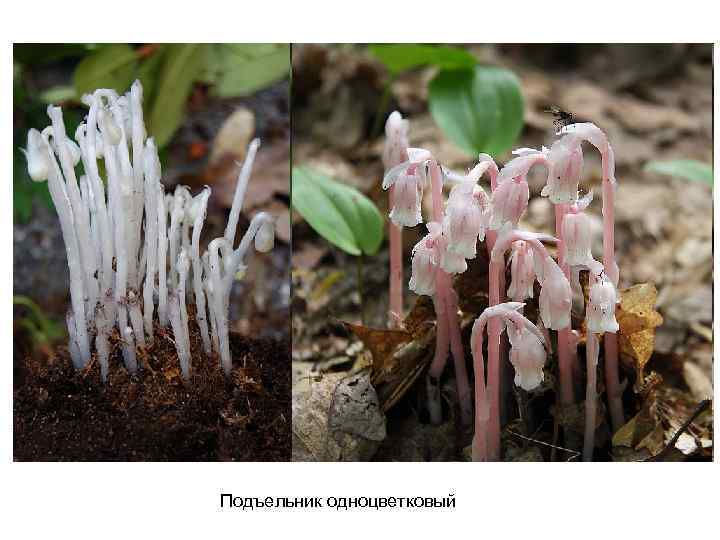
Подъельник одноцветковый
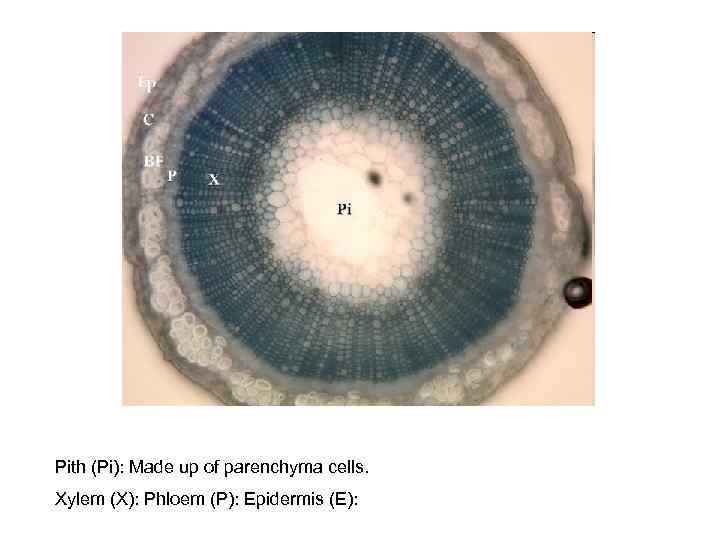
Pith (Pi): Made up of parenchyma cells. Xylem (X): Phloem (P): Epidermis (E):
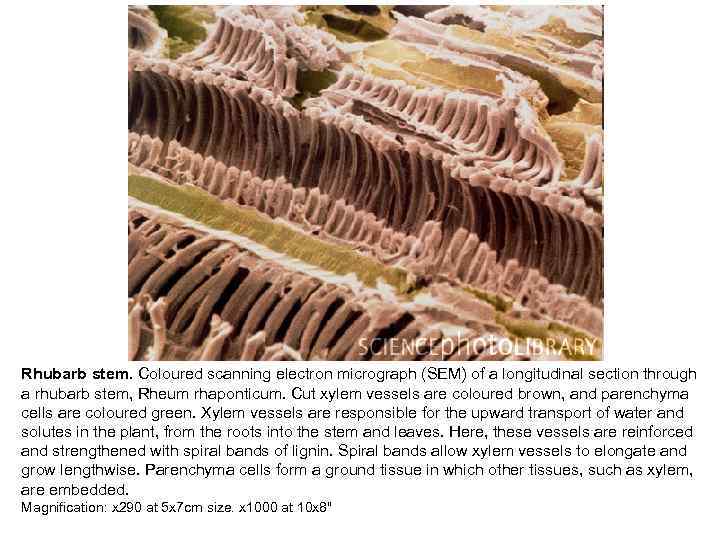
Rhubarb stem. Coloured scanning electron micrograph (SEM) of a longitudinal section through a rhubarb stem, Rheum rhaponticum. Cut xylem vessels are coloured brown, and parenchyma cells are coloured green. Xylem vessels are responsible for the upward transport of water and solutes in the plant, from the roots into the stem and leaves. Here, these vessels are reinforced and strengthened with spiral bands of lignin. Spiral bands allow xylem vessels to elongate and grow lengthwise. Parenchyma cells form a ground tissue in which other tissues, such as xylem, are embedded. Magnification: x 290 at 5 x 7 cm size. x 1000 at 10 x 8"
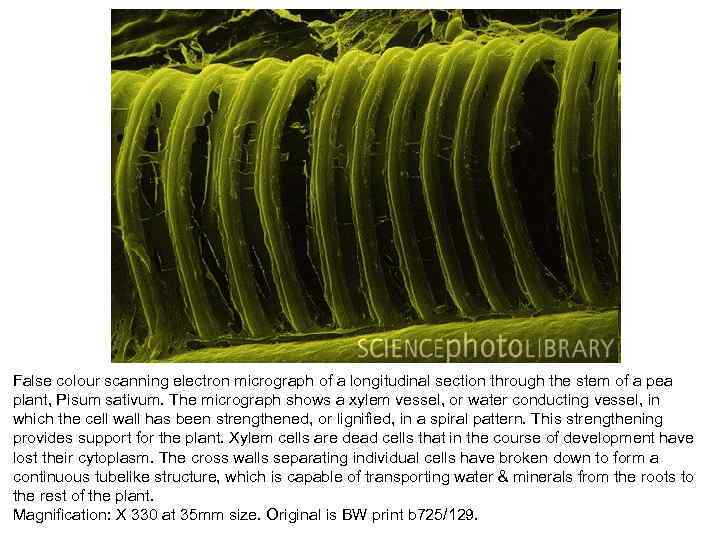
False colour scanning electron micrograph of a longitudinal section through the stem of a pea plant, Pisum sativum. The micrograph shows a xylem vessel, or water conducting vessel, in which the cell wall has been strengthened, or lignified, in a spiral pattern. This strengthening provides support for the plant. Xylem cells are dead cells that in the course of development have lost their cytoplasm. The cross walls separating individual cells have broken down to form a continuous tubelike structure, which is capable of transporting water & minerals from the roots to the rest of the plant. Magnification: X 330 at 35 mm size. Original is BW print b 725/129.
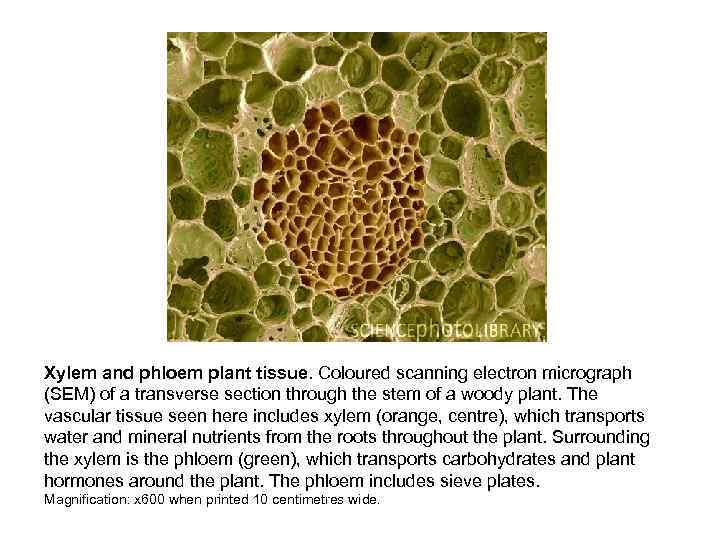
Xylem and phloem plant tissue. Coloured scanning electron micrograph (SEM) of a transverse section through the stem of a woody plant. The vascular tissue seen here includes xylem (orange, centre), which transports water and mineral nutrients from the roots throughout the plant. Surrounding the xylem is the phloem (green), which transports carbohydrates and plant hormones around the plant. The phloem includes sieve plates. Magnification: x 600 when printed 10 centimetres wide.
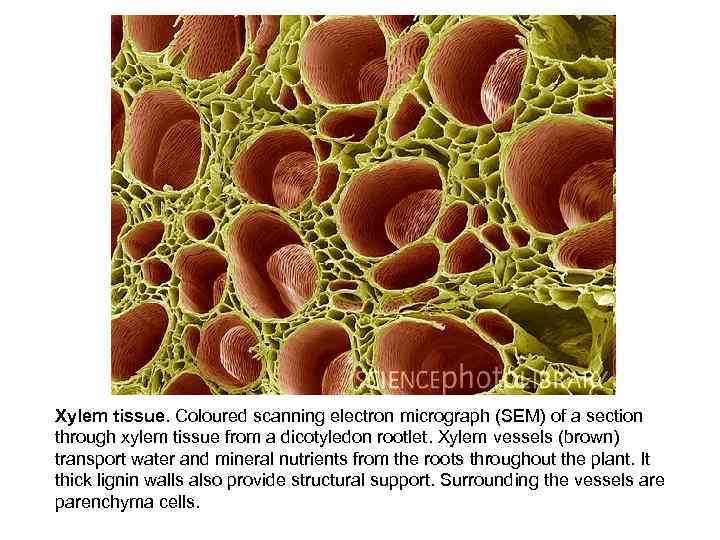
Xylem tissue. Coloured scanning electron micrograph (SEM) of a section through xylem tissue from a dicotyledon rootlet. Xylem vessels (brown) transport water and mineral nutrients from the roots throughout the plant. It thick lignin walls also provide structural support. Surrounding the vessels are parenchyma cells.
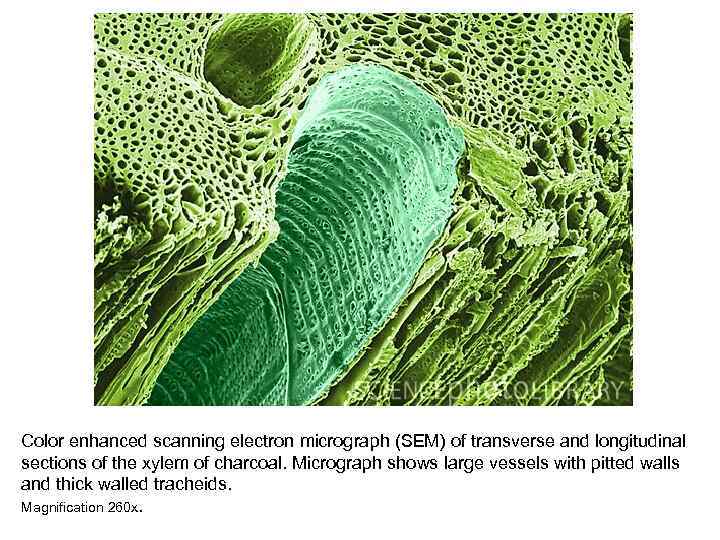
Color enhanced scanning electron micrograph (SEM) of transverse and longitudinal sections of the xylem of charcoal. Micrograph shows large vessels with pitted walls and thick walled tracheids. Magnification 260 x.
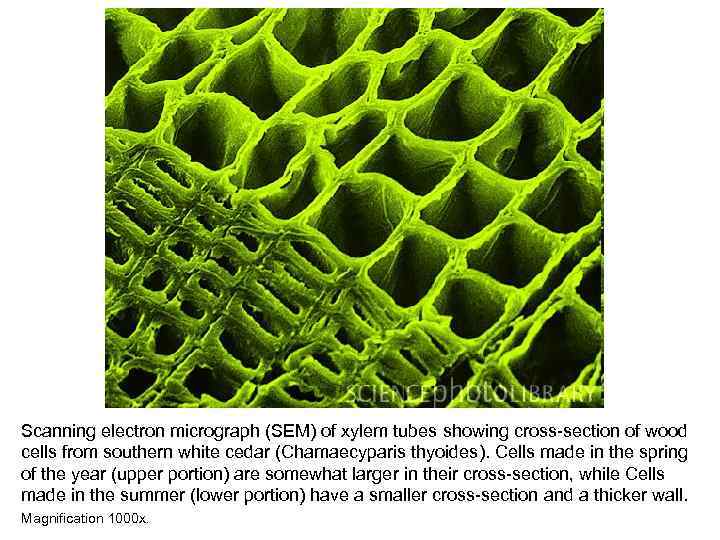
Scanning electron micrograph (SEM) of xylem tubes showing cross-section of wood cells from southern white cedar (Chamaecyparis thyoides). Cells made in the spring of the year (upper portion) are somewhat larger in their cross-section, while Cells made in the summer (lower portion) have a smaller cross-section and a thicker wall. Magnification 1000 x.
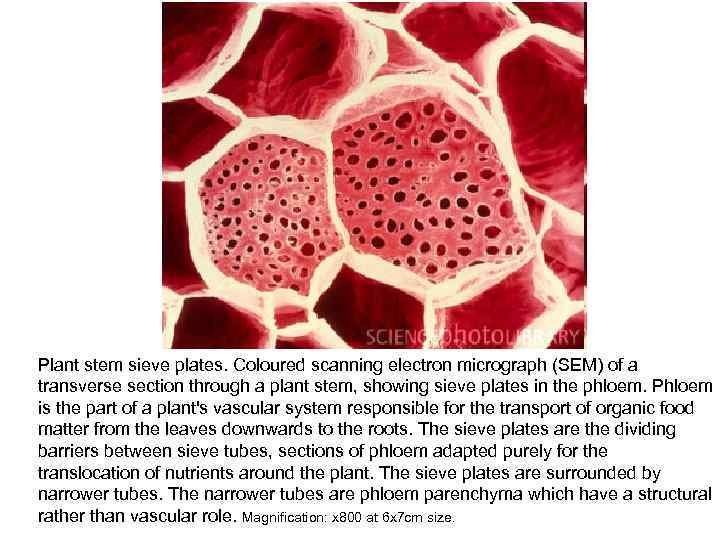
Plant stem sieve plates. Coloured scanning electron micrograph (SEM) of a transverse section through a plant stem, showing sieve plates in the phloem. Phloem is the part of a plant's vascular system responsible for the transport of organic food matter from the leaves downwards to the roots. The sieve plates are the dividing barriers between sieve tubes, sections of phloem adapted purely for the translocation of nutrients around the plant. The sieve plates are surrounded by narrower tubes. The narrower tubes are phloem parenchyma which have a structural rather than vascular role. Magnification: x 800 at 6 x 7 cm size.
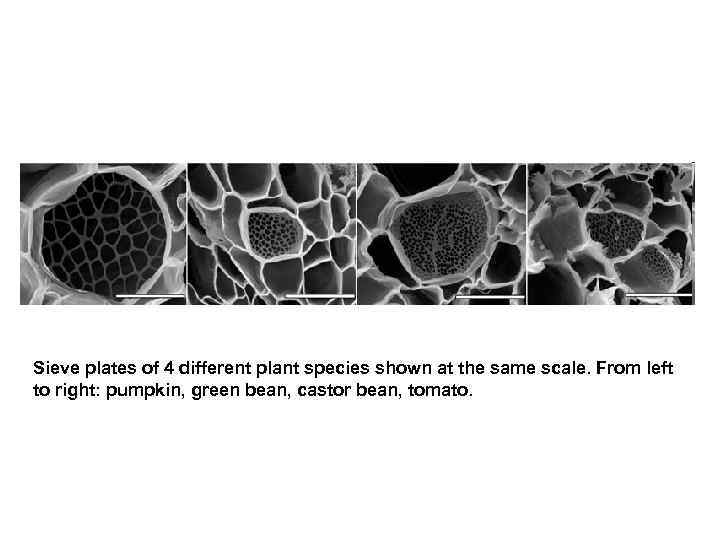
Sieve plates of 4 different plant species shown at the same scale. From left to right: pumpkin, green bean, castor bean, tomato.
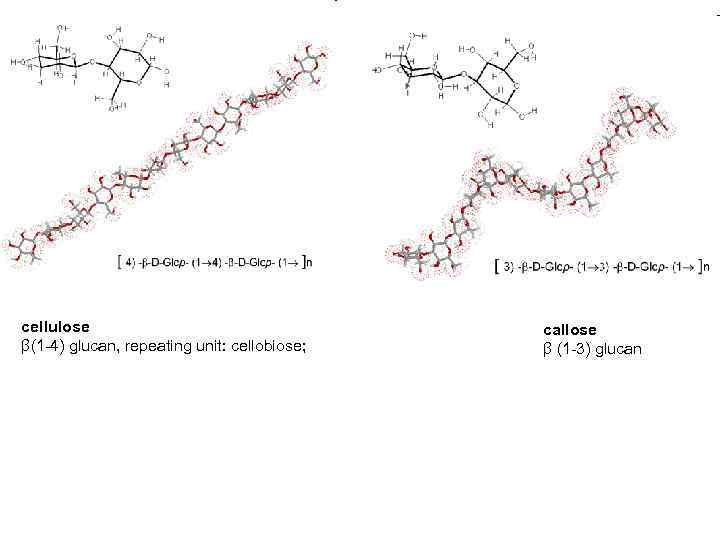
cellulose callose β(1 -4) glucan, repeating unit: cellobiose; β (1 -3) glucan
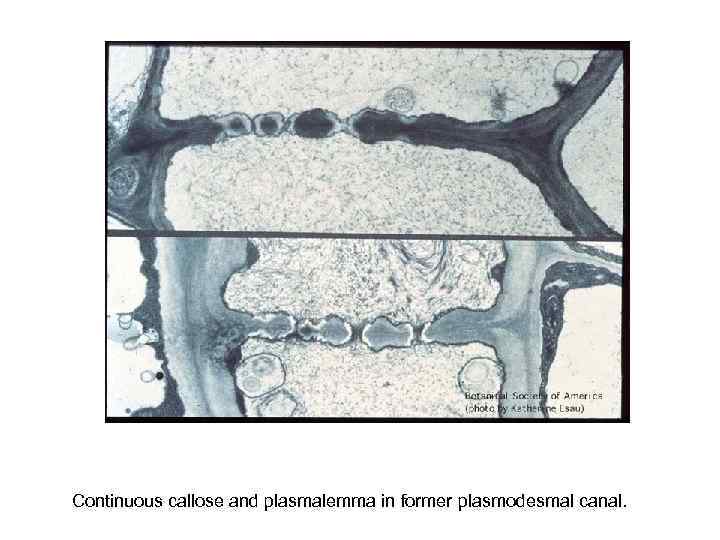
Continuous callose and plasmalemma in former plasmodesmal canal.
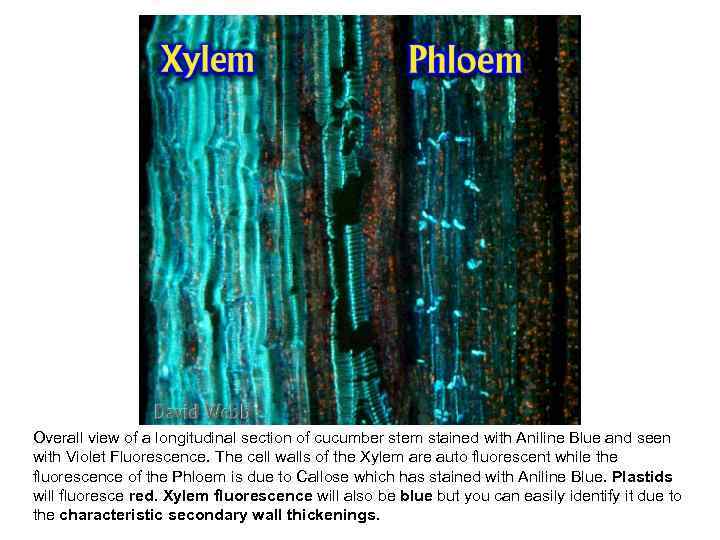
Overall view of a longitudinal section of cucumber stem stained with Aniline Blue and seen with Violet Fluorescence. The cell walls of the Xylem are auto fluorescent while the fluorescence of the Phloem is due to Callose which has stained with Aniline Blue. Plastids will fluoresce red. Xylem fluorescence will also be blue but you can easily identify it due to the characteristic secondary wall thickenings.
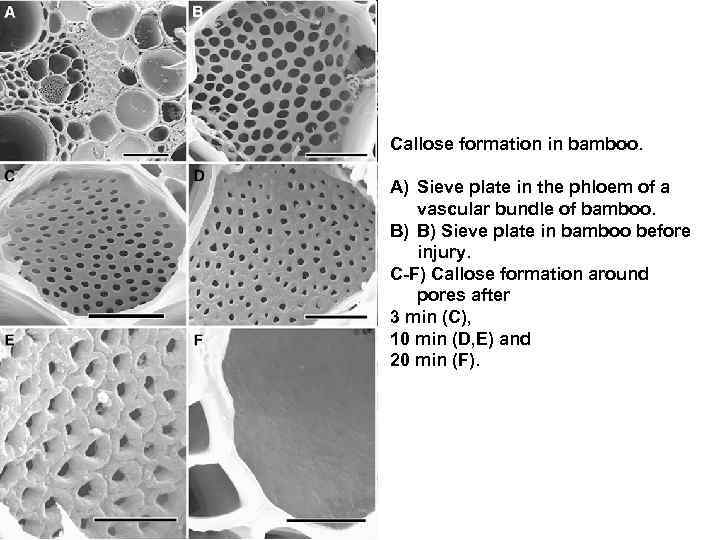
Callose formation in bamboo. A) Sieve plate in the phloem of a vascular bundle of bamboo. B) B) Sieve plate in bamboo before injury. C-F) Callose formation around pores after 3 min (C), 10 min (D, E) and 20 min (F).
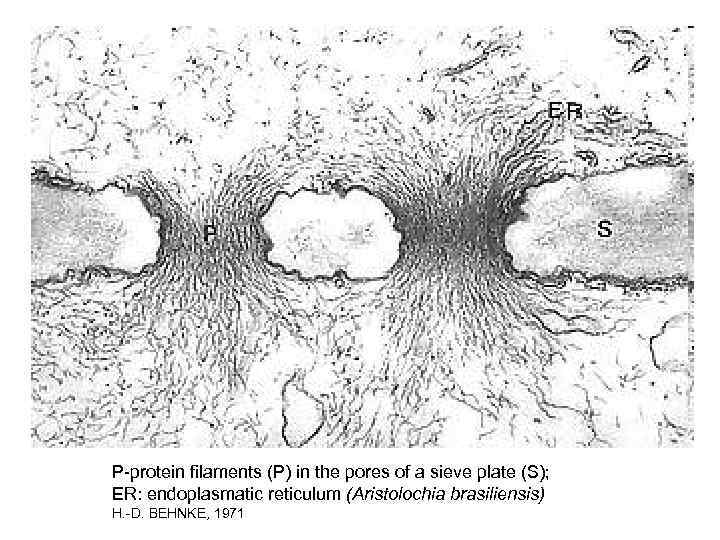
P-protein filaments (P) in the pores of a sieve plate (S); ER: endoplasmatic reticulum (Aristolochia brasiliensis) H. -D. BEHNKE, 1971
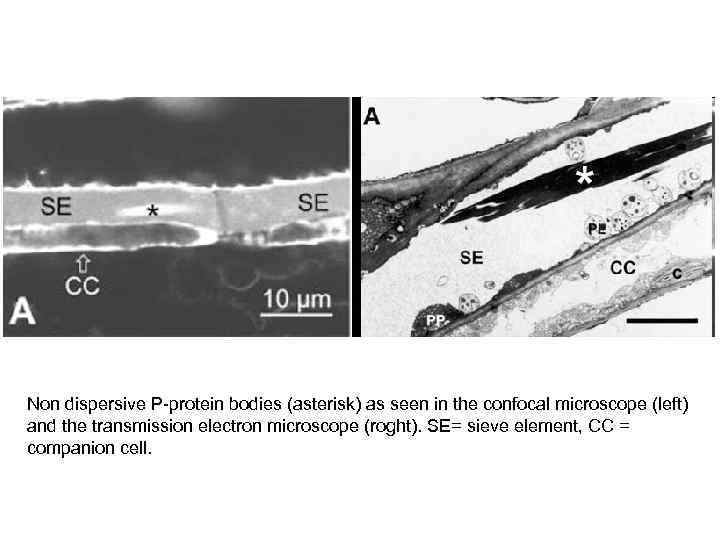
Non dispersive P-protein bodies (asterisk) as seen in the confocal microscope (left) and the transmission electron microscope (roght). SE= sieve element, CC = companion cell.
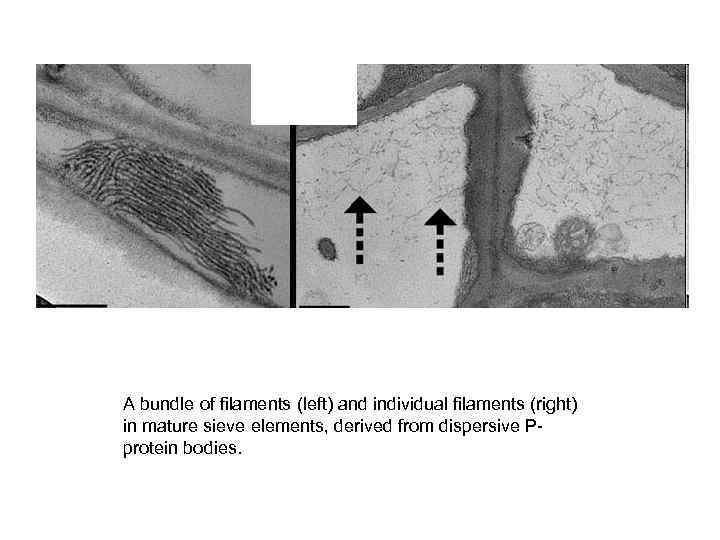
A bundle of filaments (left) and individual filaments (right) in mature sieve elements, derived from dispersive P- protein bodies.
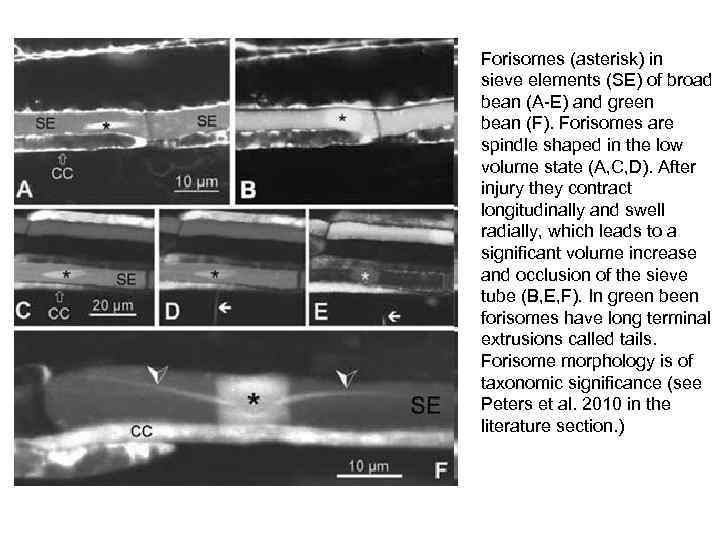
Forisomes (asterisk) in sieve elements (SE) of broad bean (A-E) and green bean (F). Forisomes are spindle shaped in the low volume state (A, C, D). After injury they contract longitudinally and swell radially, which leads to a significant volume increase and occlusion of the sieve tube (B, E, F). In green been forisomes have long terminal extrusions called tails. Forisome morphology is of taxonomic significance (see Peters et al. 2010 in the literature section. )
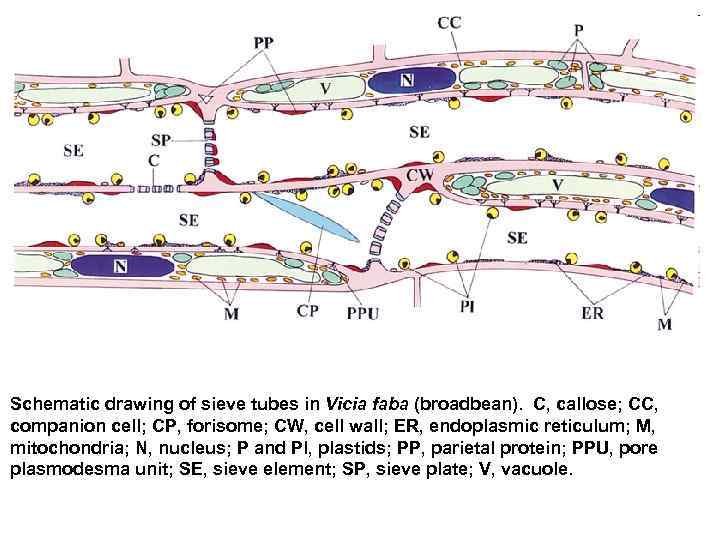
Schematic drawing of sieve tubes in Vicia faba (broadbean). C, callose; CC, companion cell; CP, forisome; CW, cell wall; ER, endoplasmic reticulum; M, mitochondria; N, nucleus; P and Pl, plastids; PP, parietal protein; PPU, pore plasmodesma unit; SE, sieve element; SP, sieve plate; V, vacuole.
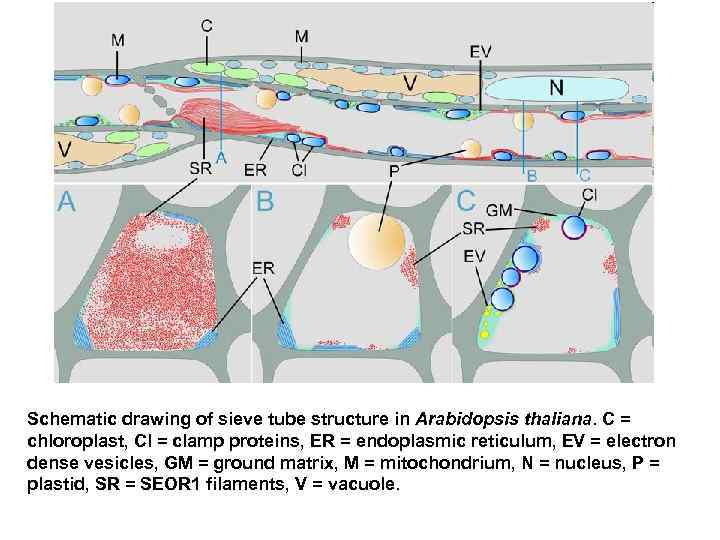
Schematic drawing of sieve tube structure in Arabidopsis thaliana. C = chloroplast, Cl = clamp proteins, ER = endoplasmic reticulum, EV = electron dense vesicles, GM = ground matrix, M = mitochondrium, N = nucleus, P = plastid, SR = SEOR 1 filaments, V = vacuole.
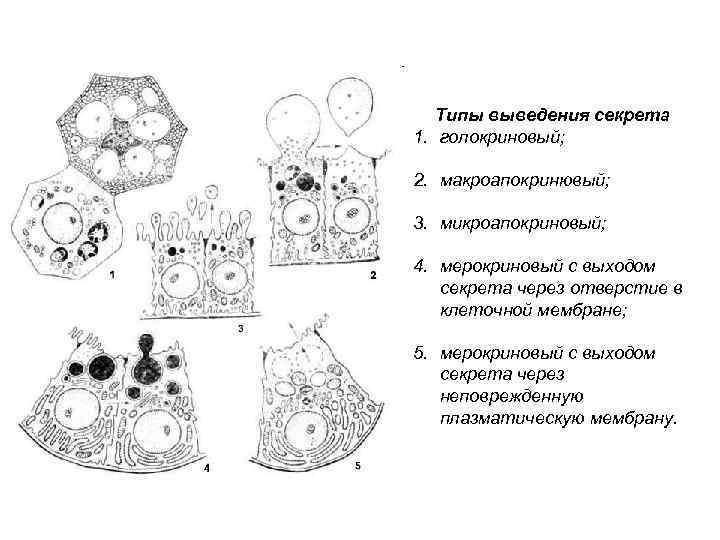
Типы выведения секрета 1. голокриновый; 2. макроапокринювый; 3. микроапокриновый; 4. мерокриновый с выходом секрета через отверстие в клеточной мембране; 5. мерокриновый с выходом секрета через неповрежденную плазматическую мембрану.