


 Скачать презентацию Växjö the Greenest City in Europe The
e6a35d415155f726053cf05ed3b7f6a8.ppt
- Количество слайдов: 10
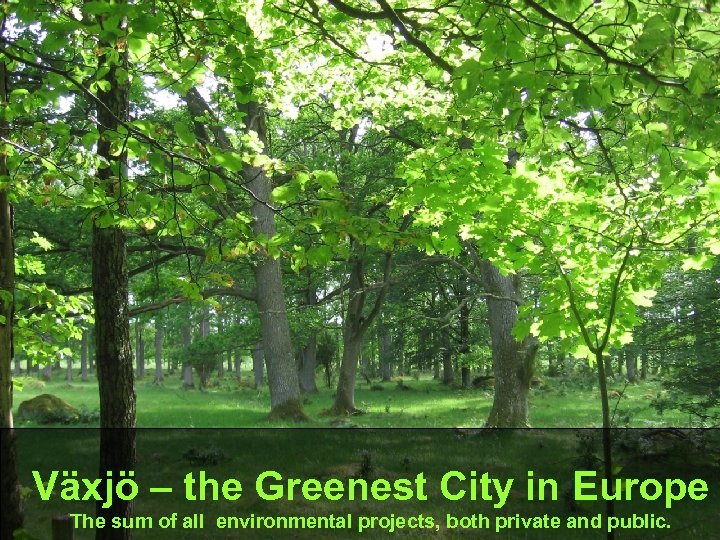 Växjö – the Greenest City in Europe The sum of all environmental projects, both private and public.
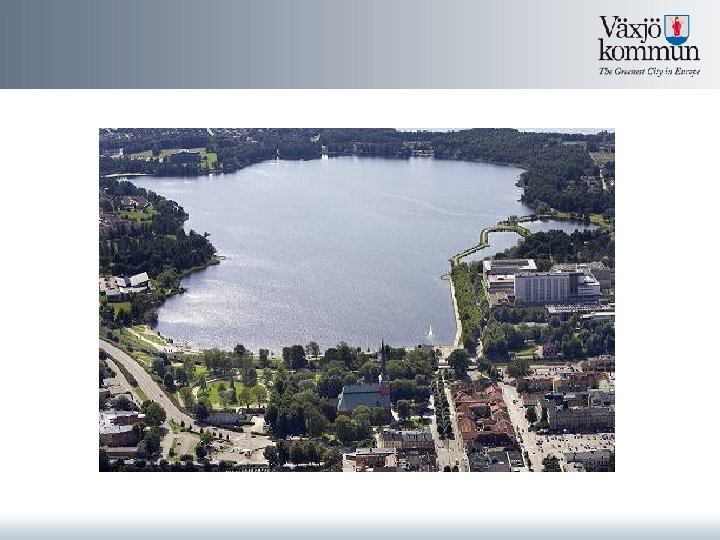
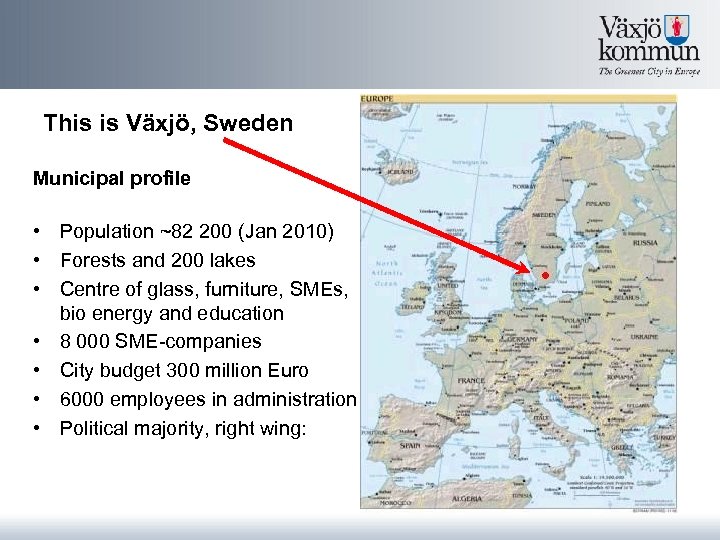 This is Växjö, Sweden Municipal profile • Population ~82 200 (Jan 2010) • Forests and 200 lakes • Centre of glass, furniture, SMEs, bio energy and education • 8 000 SME-companies • City budget 300 million Euro • 6000 employees in administration • Political majority, right wing:
 Sustainable Växjö Indicators: 1. Climate 2. Sustainable growth 3. Income (women’s income compared with men’s) 4. Level of education 5. State of Health allowance 6. Segregation 7. Unemployed/Employed 8. Waste 9. Quality of water 10. Risk of Poverty/Social 11. Creativity index
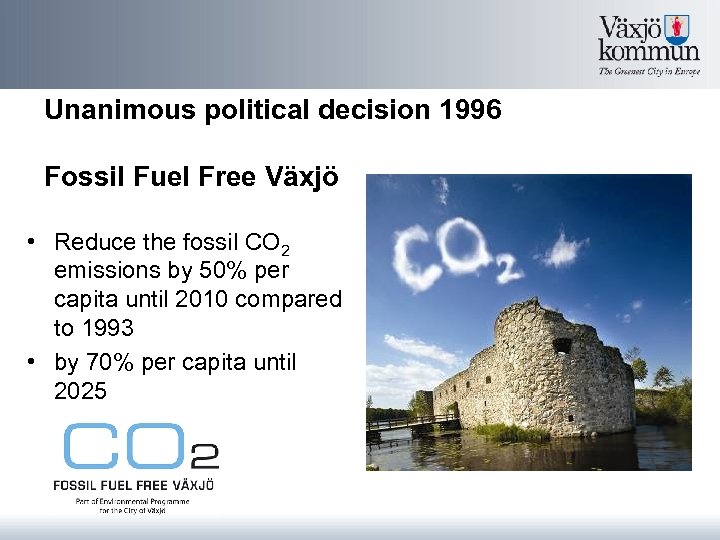 Unanimous political decision 1996 Fossil Fuel Free Växjö • Reduce the fossil CO 2 emissions by 50% per capita until 2010 compared to 1993 • by 70% per capita until 2025
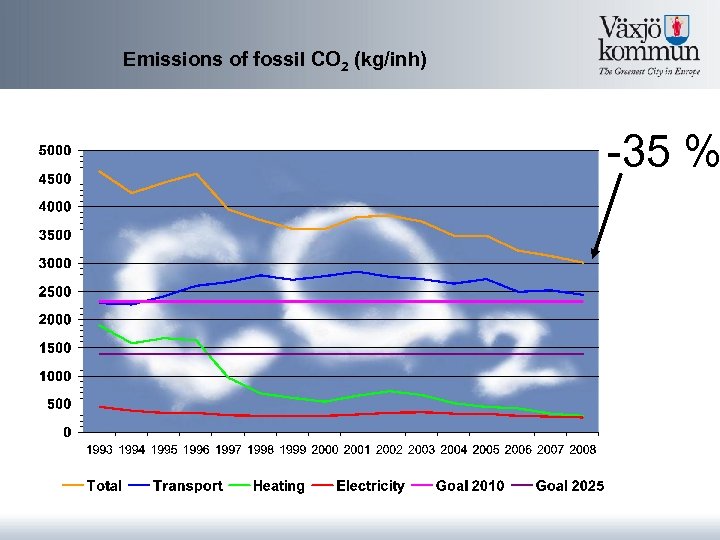 Emissions of fossil CO 2 (kg/inh) -35 %
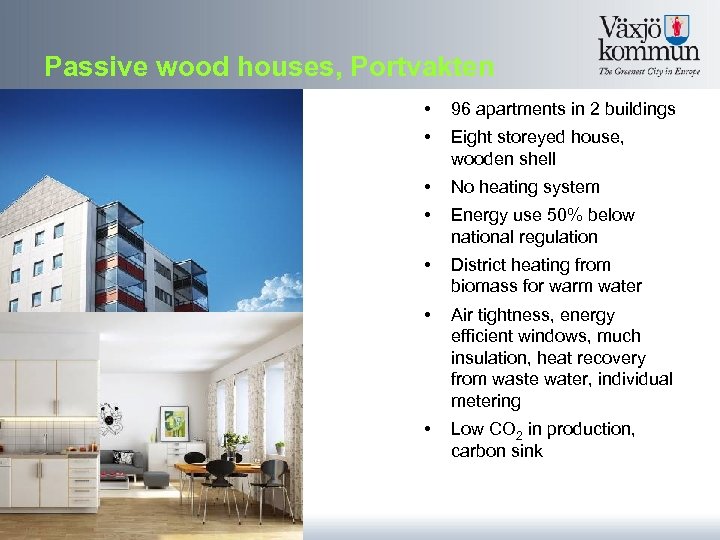 Passive wood houses, Portvakten • 96 apartments in 2 buildings • Eight storeyed house, wooden shell • No heating system • Energy use 50% below national regulation • District heating from biomass for warm water • Air tightness, energy efficient windows, much insulation, heat recovery from waste water, individual metering • Low CO 2 in production, carbon sink
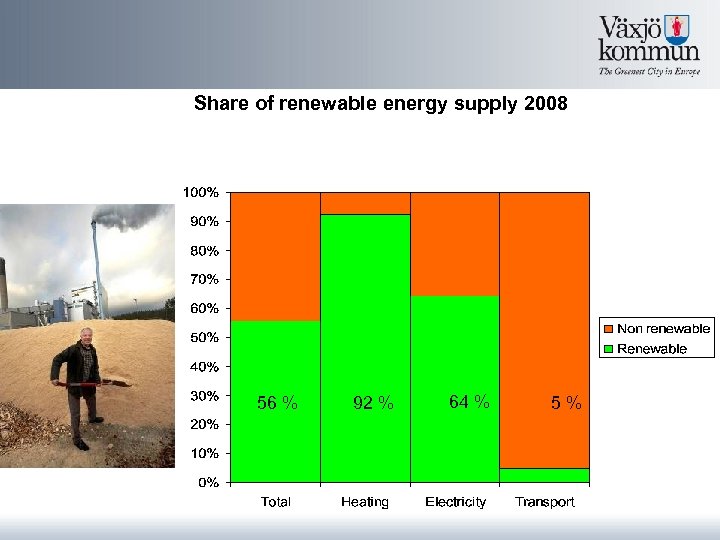 Share of renewable energy supply 2008 56 % 92 % 64 % 5%
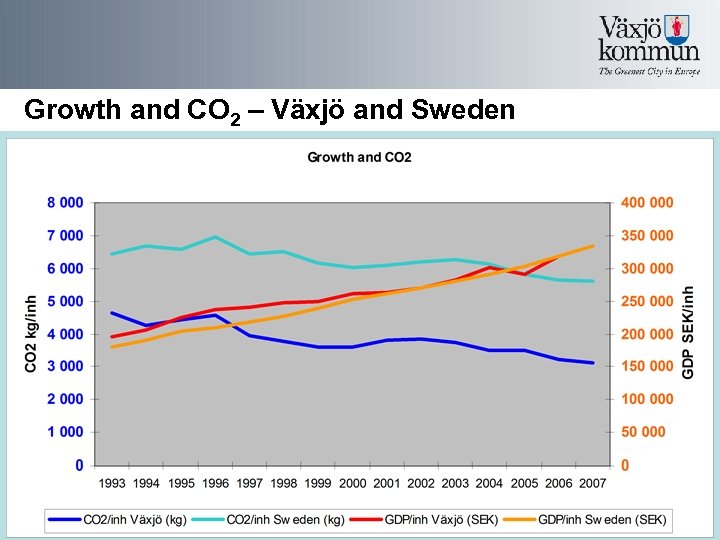 Growth and CO 2 – Växjö and Sweden
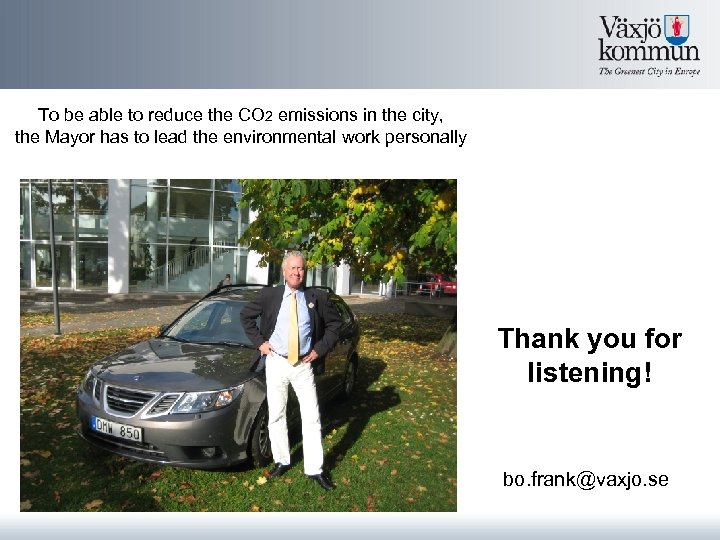 To be able to reduce the CO 2 emissions in the city, the Mayor has to lead the environmental work personally Thank you for listening! bo. frank@vaxjo. se