 Скачать презентацию Vanderbilt Libraries The Sixties at 50 Building an
86bd3e0a7045d255c3970a437e539010.ppt
- Количество слайдов: 25



Vanderbilt Libraries: The Sixties at 50 Building an Exhibition Program
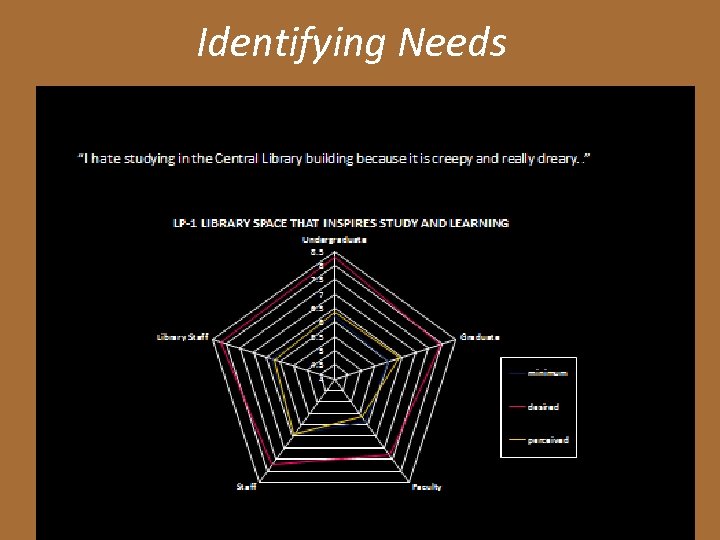
Identifying Needs
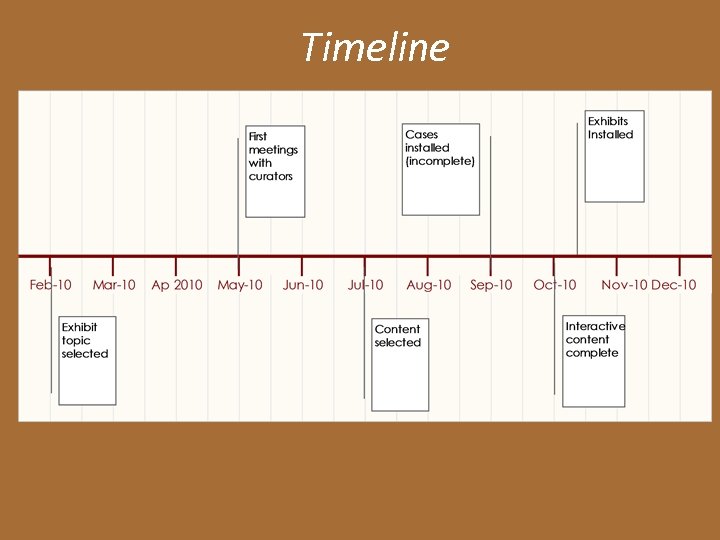
Timeline
Simultaneous Tasks 1. Formalize mission 2. Build cases and touch screens 3. Identify and scan content, write interpretive text 4. Solicit support staff 5. Generate publicity 6. Plan programs
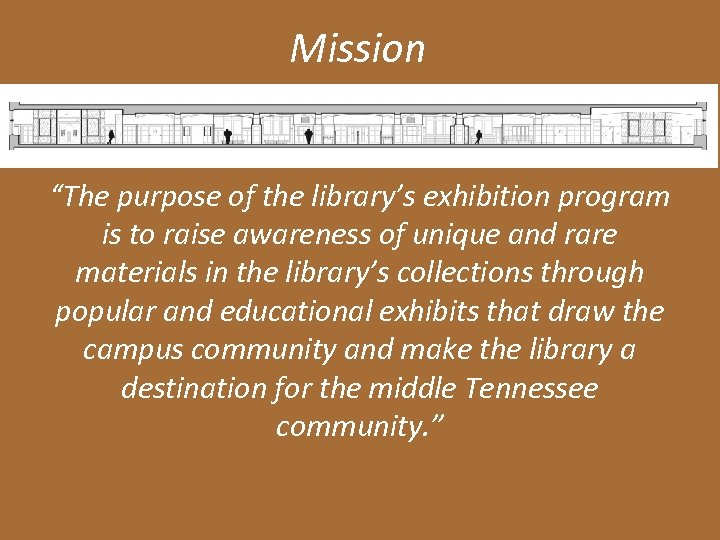
Mission “The purpose of the library’s exhibition program is to raise awareness of unique and rare materials in the library’s collections through popular and educational exhibits that draw the campus community and make the library a destination for the middle Tennessee community. ”
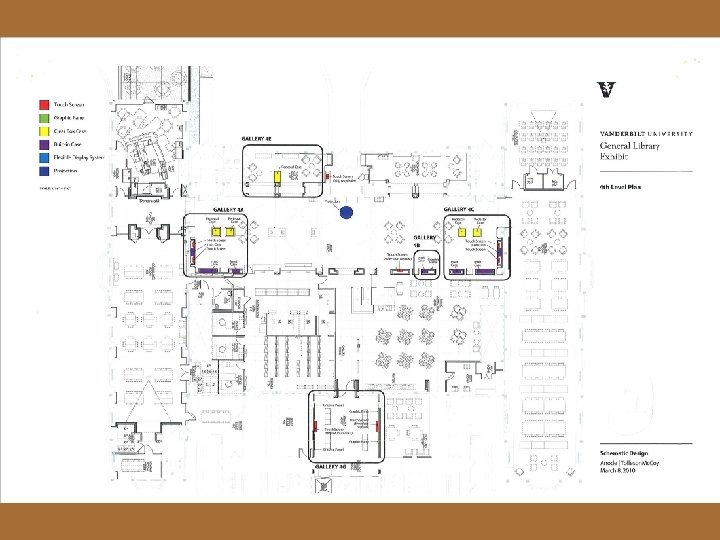
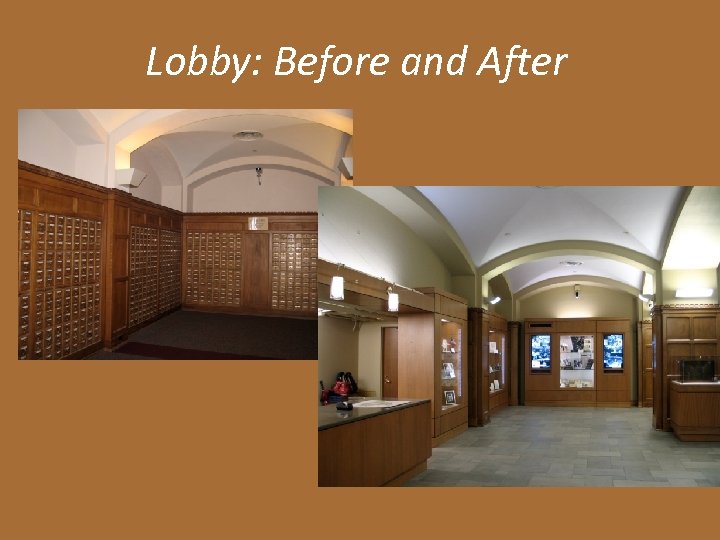
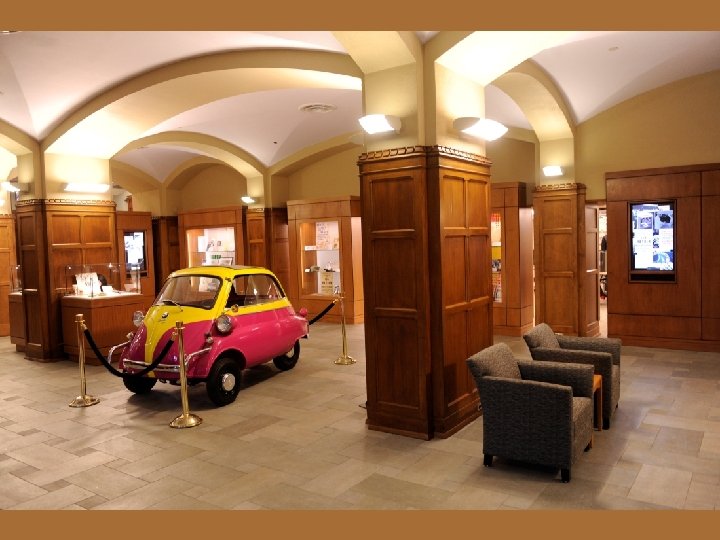
Lobby: Before and After
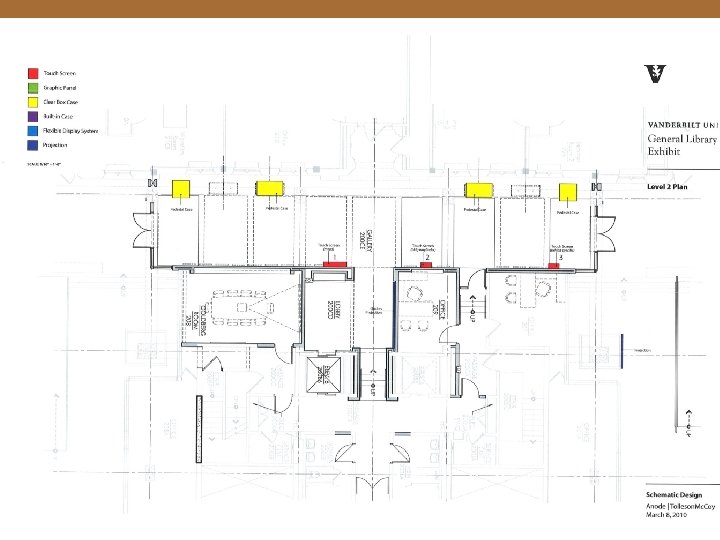
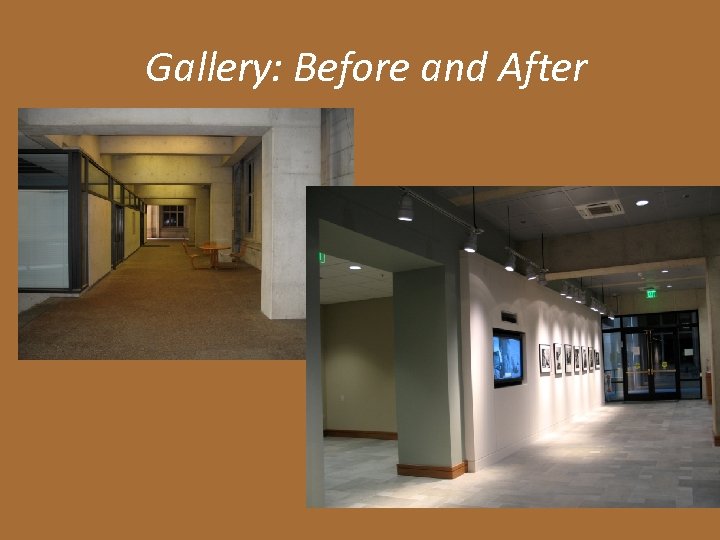
Gallery: Before and After
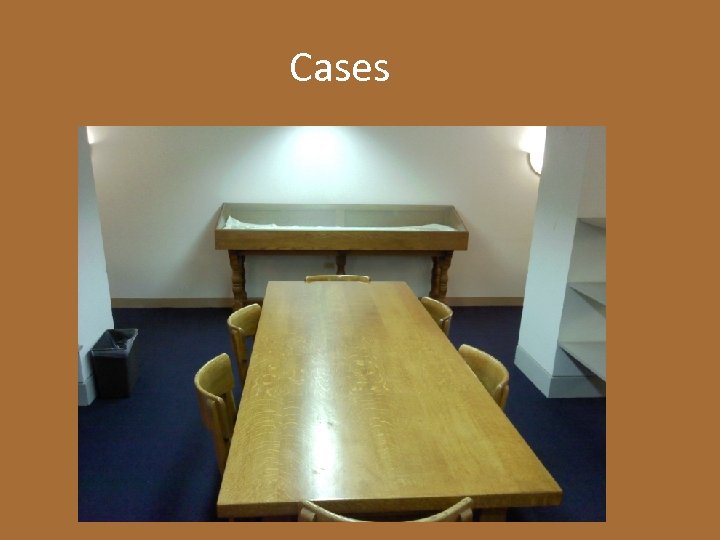
Cases
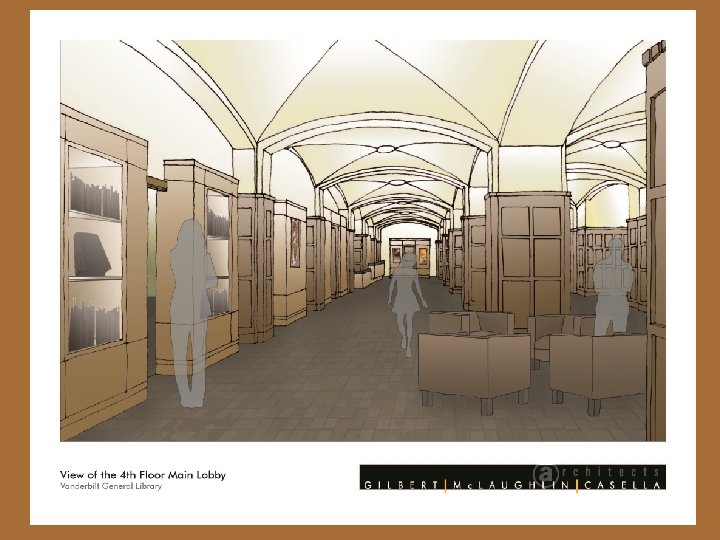
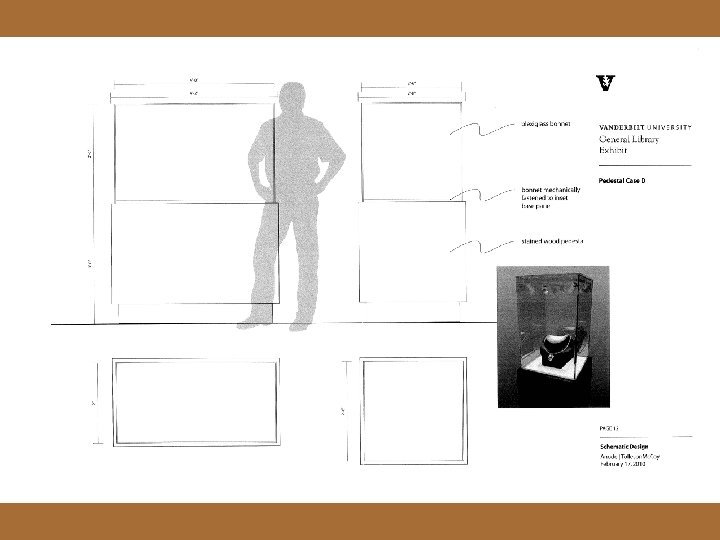
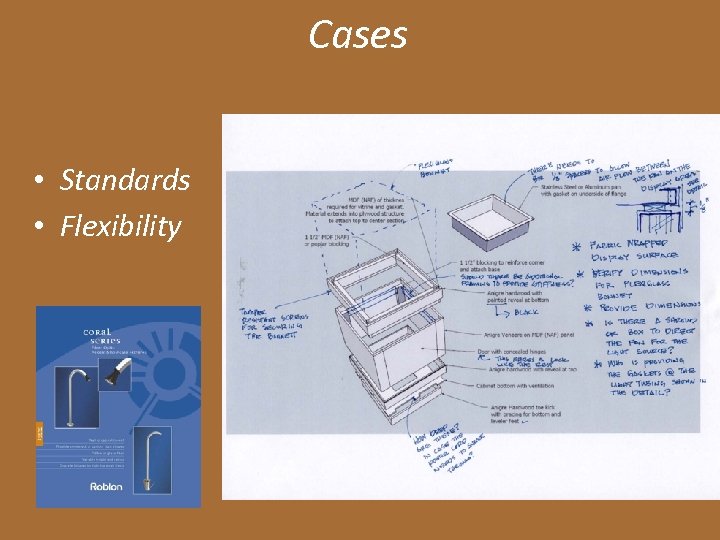
Cases • Standards • Flexibility
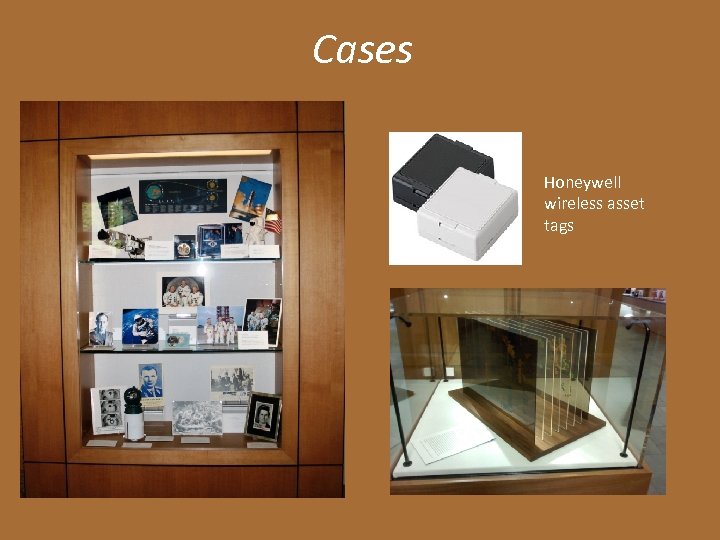
Cases Honeywell wireless asset tags
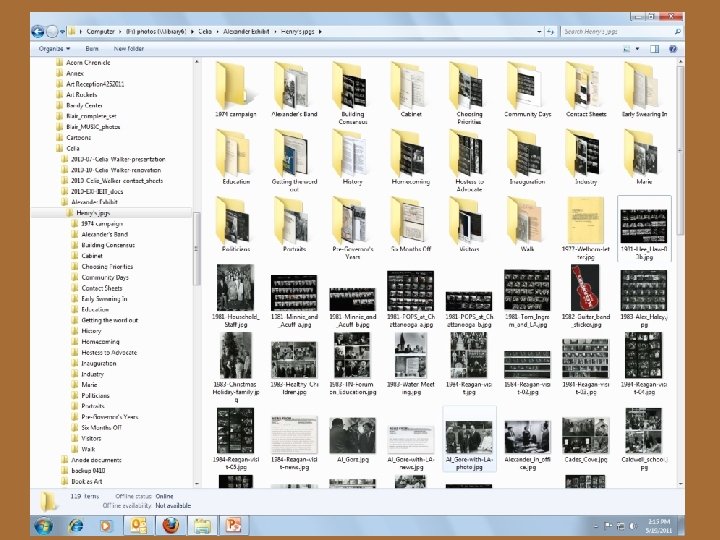
Support Staff Borrowing from Museum Methodology Curators = Subject Specialists Preparator = Collection Assistant Registrar = Digital Imaging Specialist
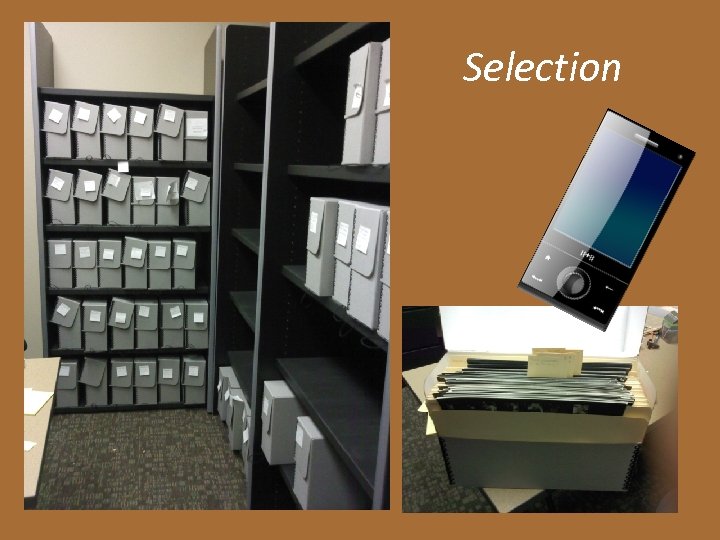
Selection
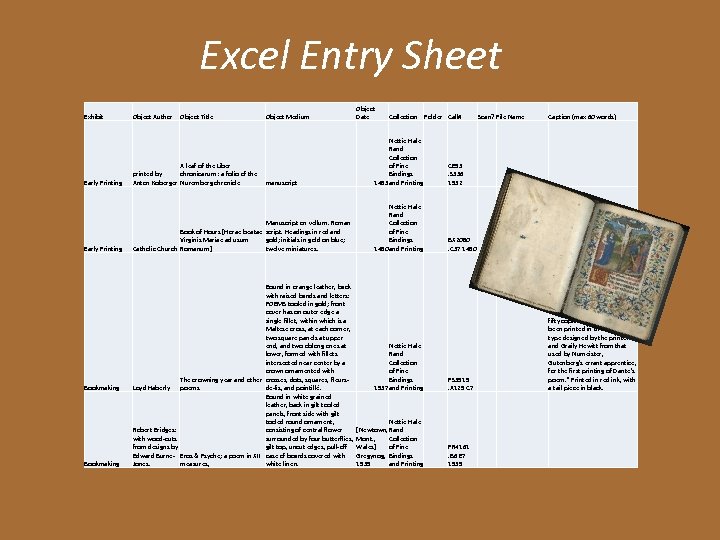
Excel Entry Sheet Exhibit Early Printing Object Author Object Title A leaf of the Liber printed by chronicarum : a folio of the Anton Koberger Nuremberg chronicle Object Medium manuscript Manuscript on vellum. Roman Book of Hours [Horae beatae script. Headings in red and Virginis Mariae ad usum gold; initials in gold on blue; Catholic Church Romanum] twelve miniatures. Bookmaking Loyd Haberly Bookmaking Robert Bridges: with wood-cuts from designs by Edward Burne. Jones. Bound in orange leather, back with raised bands and letters: POEMS tooled in gold; front cover has on outer edge a single fillet, within which is a Maltese cross, at each corner, two square panels at upper end, and two oblong ones at lower, formed with fillets intersected near center by a crown ornamented with The crowning year and other crosses, dots, squares, fleurspoems de-lis, and pointillé. Bound in white grained leather, back in gilt tooled panels, front side with gilt tooled round ornament, consisting of central flower surrounded by four butterflies, gilt top, uncut edges, pull-off Eros & Psyche; a poem in XII case of boards covered with measures, white linen. Object Date Collection Folder Call# Nettie Hale Rand Collection of Fine Bindings 1483 and Printing Caption (max 60 words) CE 53. S 336 1932 Nettie Hale Rand Collection of Fine Bindings 1480 and Printing Scan? File Name BX 2080. C 37 1480 Nettie Hale Rand Collection of Fine Bindings 1937 and Printing Nettie Hale [Newtown, Rand Mont. , Collection Wales] of Fine Gregynog, Bindings 1935 and Printing PS 3515. A 125 C 7 PR 4161. B 6 E 7 1935 Colophon: "One hundred & fifty copies of this book have been printed in the Paradiso type designed by the printer and Graily Hewitt from that used by Numeister, Gutenberg's errant apprentice, for the first printing of Dante's poem. " Printed in red ink, with a tail piece in black.
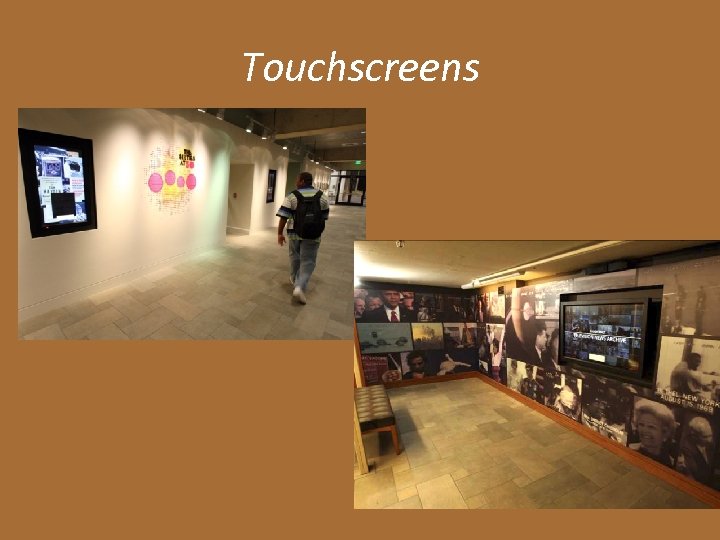
Touchscreens
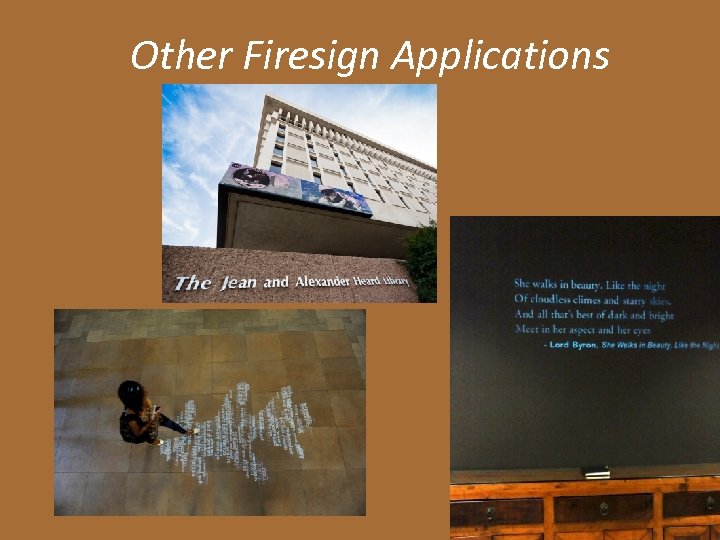
Other Firesign Applications
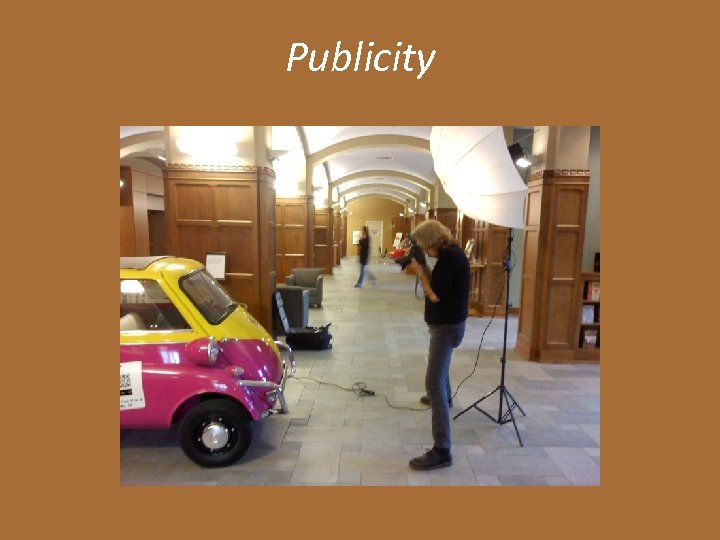
Publicity
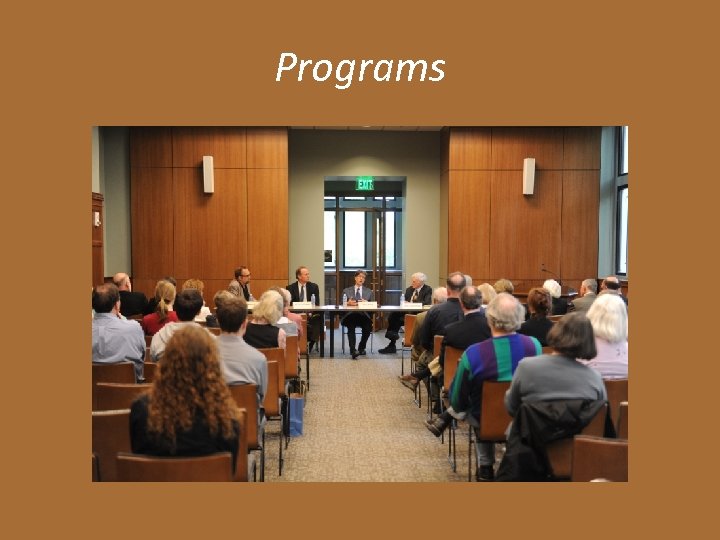
Programs
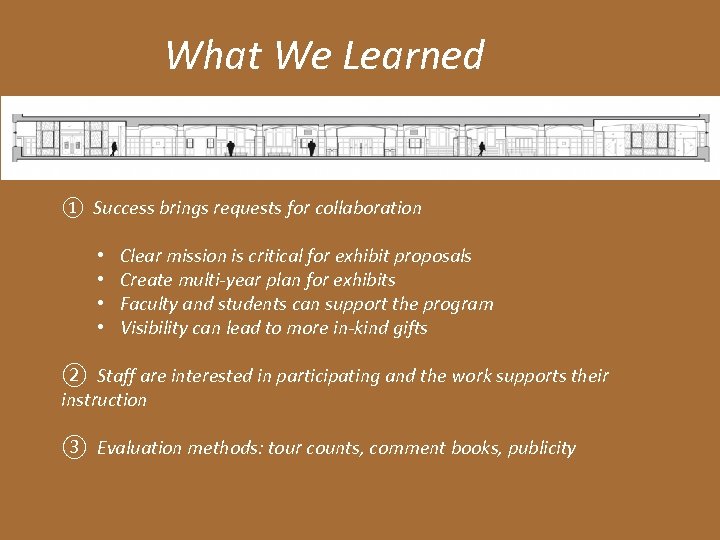
What We Learned ① Success brings requests for collaboration • • Clear mission is critical for exhibit proposals Create multi-year plan for exhibits Faculty and students can support the program Visibility can lead to more in-kind gifts ② Staff are interested in participating and the work supports their instruction ③ Evaluation methods: tour counts, comment books, publicity
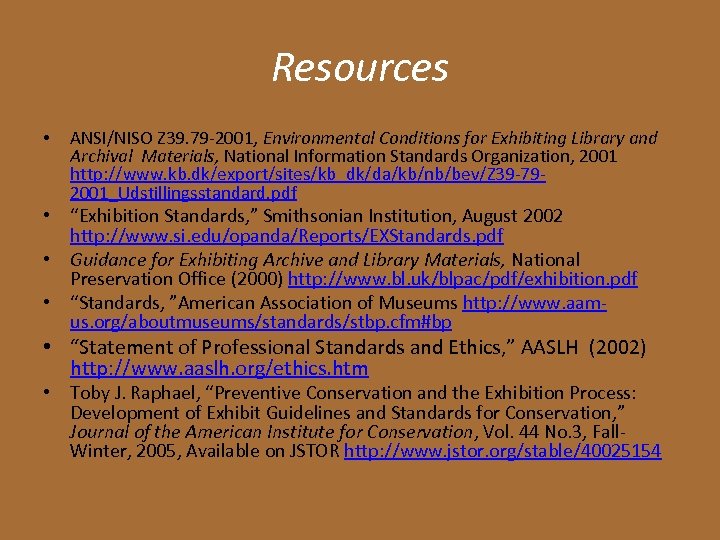
Resources • ANSI/NISO Z 39. 79 -2001, Environmental Conditions for Exhibiting Library and Archival Materials, National Information Standards Organization, 2001 http: //www. kb. dk/export/sites/kb_dk/da/kb/nb/bev/Z 39 -792001_Udstillingsstandard. pdf • “Exhibition Standards, ” Smithsonian Institution, August 2002 http: //www. si. edu/opanda/Reports/EXStandards. pdf • Guidance for Exhibiting Archive and Library Materials, National Preservation Office (2000) http: //www. bl. uk/blpac/pdf/exhibition. pdf • “Standards, ”American Association of Museums http: //www. aamus. org/aboutmuseums/standards/stbp. cfm#bp • “Statement of Professional Standards and Ethics, ” AASLH (2002) http: //www. aaslh. org/ethics. htm • Toby J. Raphael, “Preventive Conservation and the Exhibition Process: Development of Exhibit Guidelines and Standards for Conservation, ” Journal of the American Institute for Conservation, Vol. 44 No. 3, Fall. Winter, 2005, Available on JSTOR http: //www. jstor. org/stable/40025154
Скачать презентацию Vanderbilt Libraries The Sixties at 50 Building an
86bd3e0a7045d255c3970a437e539010.ppt