


 Скачать презентацию Value of Information An application in health economic
1af0ac2f389aa343378104ce609720d5.ppt
- Количество слайдов: 19
 Value of Information An application in health economic evaluation of renal replacement therapy in Thailand Yot Teerawattananon, MD International Health Policy Program, Ministry of Public Health Ph. D candidate in Health Economics, University of East Anglia, UK yot@ihpp. thaigov. net or yot. t@uea. ac. uk 1
 Outline • Policy issues • Theoretical ground • A case study • Conclusions 2
 The policy issues? § A growing attention for the use of economic evaluation for making reimbursement decision § The evaluation needs numerous parameters relating to treatment effects, utilities, resource use and costs. § These parameters contain degree of uncertainties § Reject or accept the technology based on existing evidence 3
 Decision rules § Maximising social welfare (health gain e. g. QALY) § Comparing expected incremental CE ratio (ICER) with the willingness to pay threshold--ceiling ratio Accept the technology if ICER < ceiling ratio Reject the technology if ICER > ceiling ratio 4
 Decision options Policy makers are facing one of these four situations in making decision: §Confidently accept the technology base on existing evidence §Confidently reject the technology based on existing evidence §Accept the technology but demand additional research to inform this decision in the future §Reject (or defer decision about) the technology now but demand further research to inform this decision in the future 5
 Analysis of value of information 1. The expected cost of uncertainty (pop EVPI) the maximum that the health system should be willing to pay for additional information 2. The relative value of information for each model parameters (partial EVPI) 3. The value of an additional sample the optimal sample size for collecting additional data (sample EVPI) 6
 10£ A B 10£ A Imperfect information B 5£ 5£ 5£ = ? ? ? £ 7
 10£ 10 £ A 5£ B 5£ A 10 £ B 10£ 10 £ A Imperfect information 5£ B 10 £ 5£ 5£ 5£ = 25 £ 8
 10 £ A 5£ A 10 £ B 10 £ A Perfect information 5£ B 10 £ = 30 £ 9
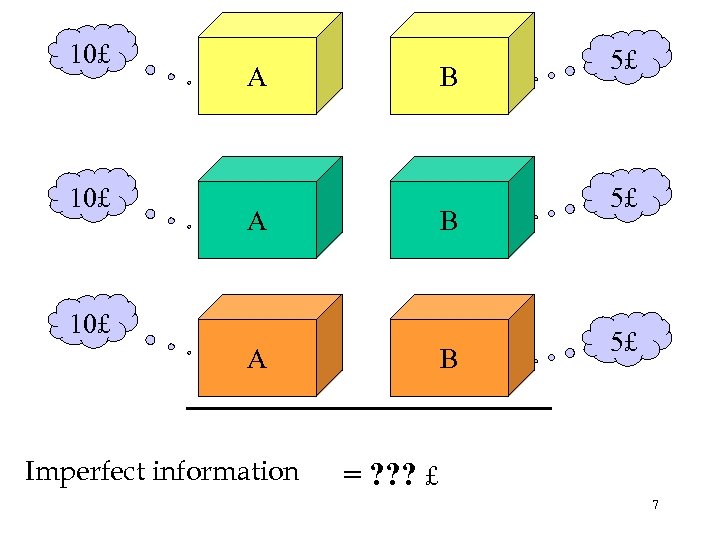
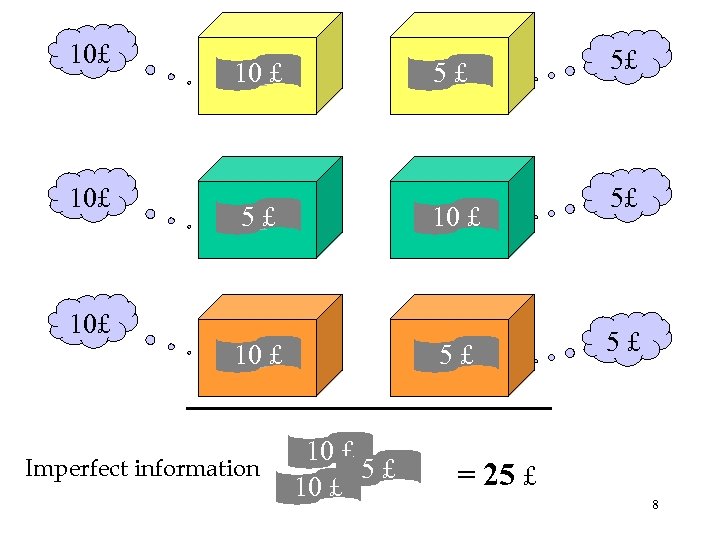
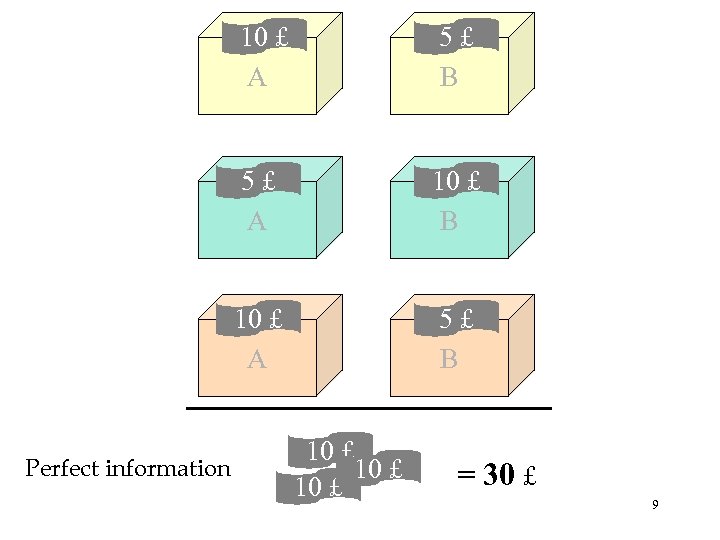
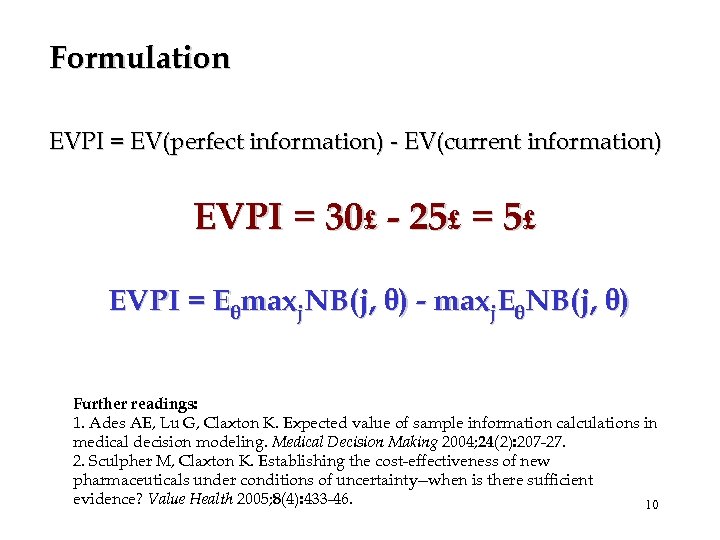 Formulation EVPI = EV(perfect information) - EV(current information) EVPI = 30£ - 25£ = 5£ EVPI = Eθmaxj. NB(j, θ) - maxj. EθNB(j, θ) Further readings: 1. Ades AE, Lu G, Claxton K. Expected value of sample information calculations in medical decision modeling. Medical Decision Making 2004; 24(2): 207 -27. 2. Sculpher M, Claxton K. Establishing the cost-effectiveness of new pharmaceuticals under conditions of uncertainty--when is there sufficient evidence? Value Health 2005; 8(4): 433 -46. 10
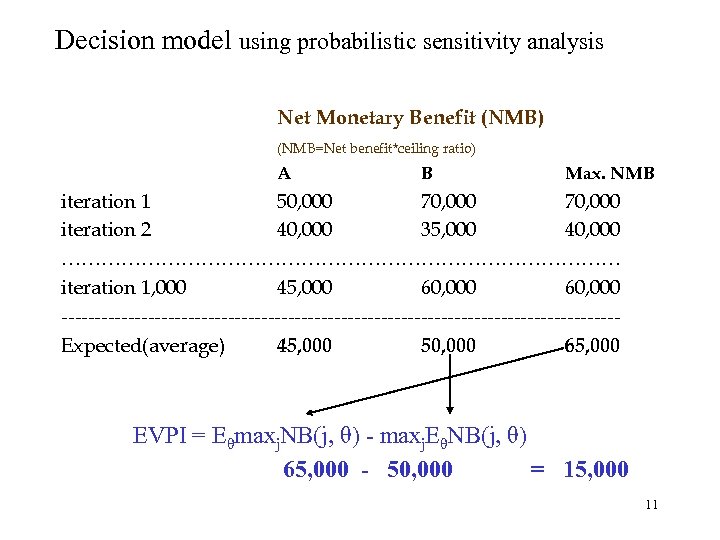 Decision model using probabilistic sensitivity analysis Net Monetary Benefit (NMB) (NMB=Net benefit*ceiling ratio) A B Max. NMB iteration 1 50, 000 70, 000 iteration 2 40, 000 35, 000 40, 000 …………………………………… iteration 1, 000 45, 000 60, 000 ------------------------------------------Expected(average) 45, 000 50, 000 65, 000 EVPI = Eθmaxj. NB(j, θ) - maxj. EθNB(j, θ) 65, 000 - 50, 000 = 15, 000 11
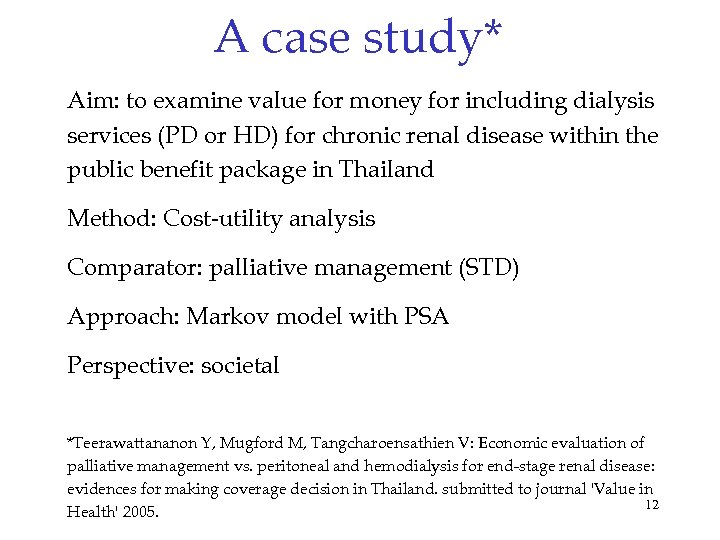 A case study* Aim: to examine value for money for including dialysis services (PD or HD) for chronic renal disease within the public benefit package in Thailand Method: Cost-utility analysis Comparator: palliative management (STD) Approach: Markov model with PSA Perspective: societal *Teerawattananon Y, Mugford M, Tangcharoensathien V: Economic evaluation of palliative management vs. peritoneal and hemodialysis for end-stage renal disease: evidences for making coverage decision in Thailand. submitted to journal 'Value in 12 Health' 2005.
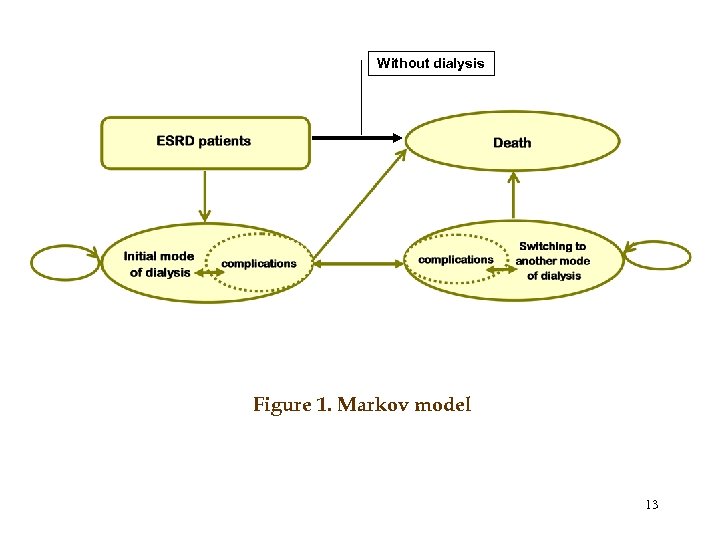 Without dialysis Figure 1. Markov model 13
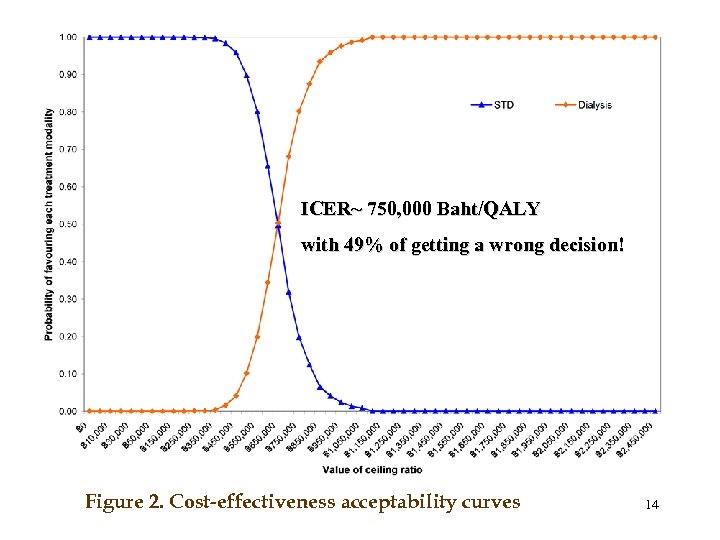 ICER~ 750, 000 Baht/QALY with 49% of getting a wrong decision! Figure 2. Cost-effectiveness acceptability curves 14
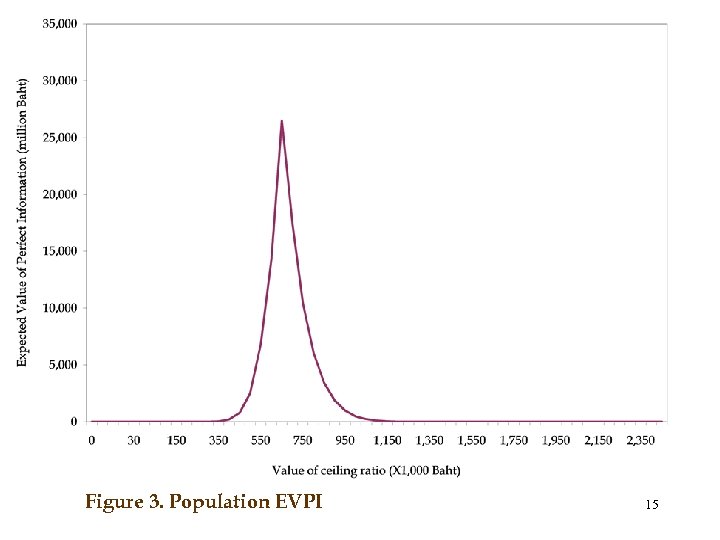 Figure 3. Population EVPI 15
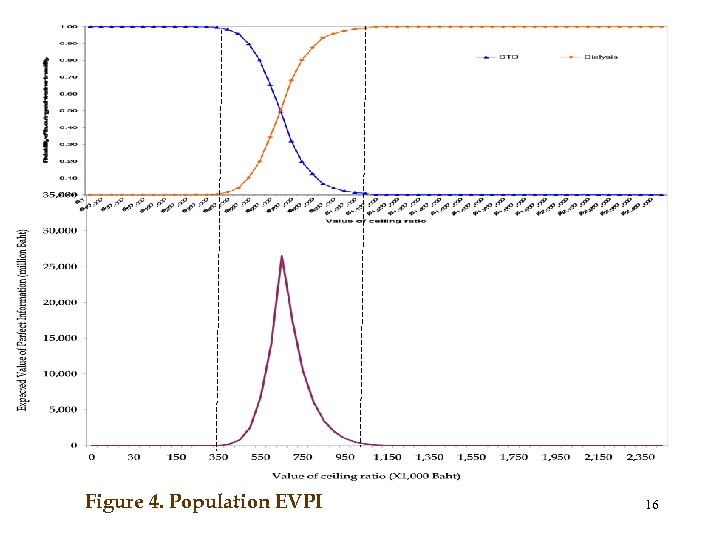 Figure 4. Population EVPI 16
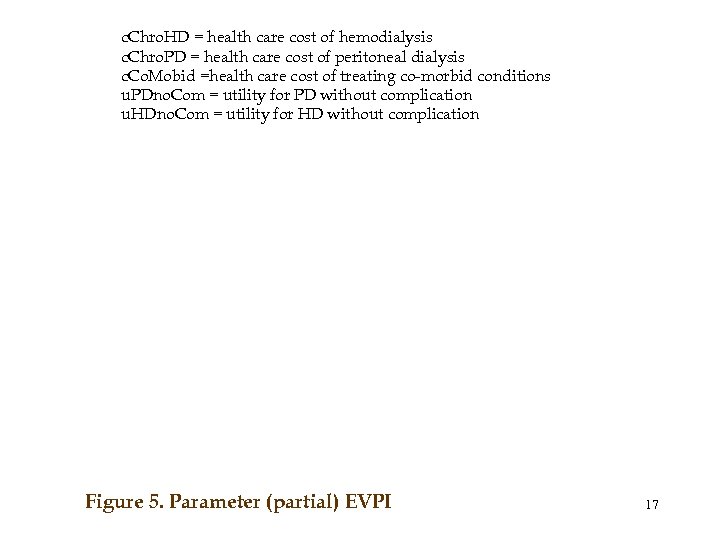 c. Chro. HD = health care cost of hemodialysis c. Chro. PD = health care cost of peritoneal dialysis c. Co. Mobid =health care cost of treating co-morbid conditions u. PDno. Com = utility for PD without complication u. HDno. Com = utility for HD without complication Figure 5. Parameter (partial) EVPI 17
 Conclusions • Economic evaluation always involves a degree of uncertainty • Analysis of value of information offers a way to determine whether additional research is required and at what cost? • It is valuable because it shows the need for setting research priorities 18
 Acknowledgement § Fellowship program of World Health Organization § National Health Security Office, Thailand § Prof. Miranda Mugford & Dr. Steve Russell, University of East Anglia, UK 19