


 Скачать презентацию Value Chain Programme implementation Merten Sievers- Value Chain
90ed6f50b124de97add3afe496a3cd4b.ppt
- Количество слайдов: 21
 Value Chain Programme implementation Merten Sievers- Value Chain Development and Business Services Coordinator, Enterprise Department, ILO Geneva And Haritha Wedathantri – LED Consultant, Sri Lnaka. Bangkok, June 2010
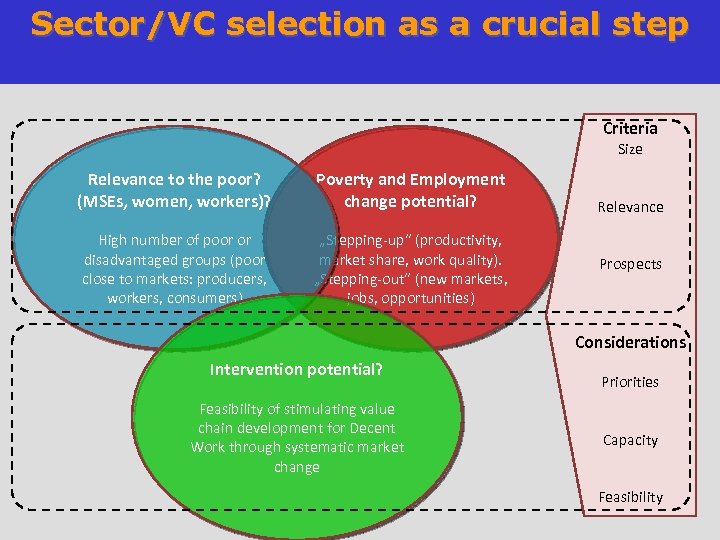 Sector/VC selection as a crucial step Criteria Size Relevance to the poor? (MSEs, women, workers)? Poverty and Employment change potential? High number of poor or disadvantaged groups (poor close to markets: producers, workers, consumers) „Stepping-up“ (productivity, market share, work quality). „Stepping-out“ (new markets, jobs, opportunities) Relevance Prospects Considerations Intervention potential? Feasibility of stimulating value chain development for Decent Work through systematic market change Priorities Capacity Feasibility
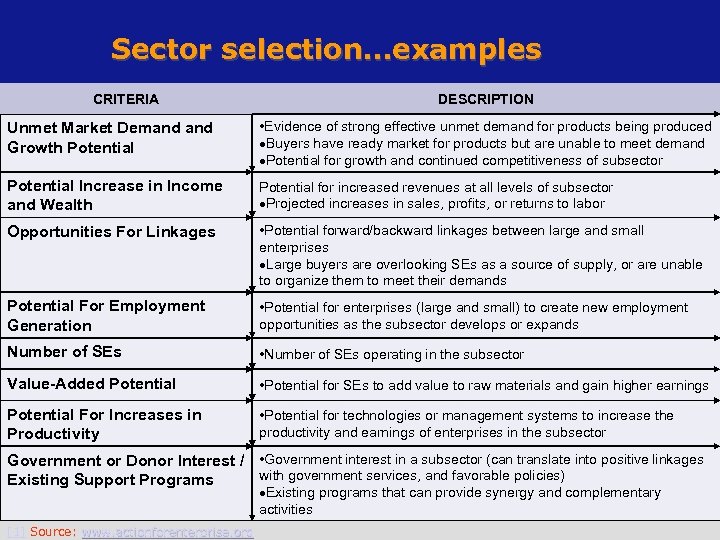 Sector selection…examples CRITERIA DESCRIPTION Unmet Market Demand Growth Potential • Evidence of strong effective unmet demand for products being produced Buyers have ready market for products but are unable to meet demand Potential for growth and continued competitiveness of subsector Potential Increase in Income and Wealth Potential for increased revenues at all levels of subsector Projected increases in sales, profits, or returns to labor Opportunities For Linkages • Potential forward/backward linkages between large and small enterprises Large buyers are overlooking SEs as a source of supply, or are unable to organize them to meet their demands Potential For Employment Generation • Potential for enterprises (large and small) to create new employment opportunities as the subsector develops or expands Number of SEs • Number of SEs operating in the subsector Value-Added Potential • Potential for SEs to add value to raw materials and gain higher earnings Potential For Increases in Productivity • Potential for technologies or management systems to increase the productivity and earnings of enterprises in the subsector Government or Donor Interest / • Government interest in a subsector (can translate into positive linkages with government services, and favorable policies) Existing Support Programs Existing programs that can provide synergy and complementary activities [1] Source: www. actionforenterprise. org
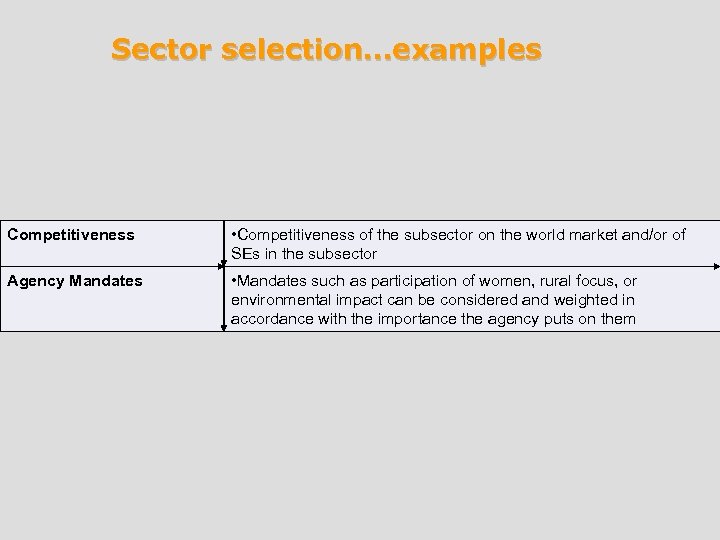 Sector selection…examples Competitiveness • Competitiveness of the subsector on the world market and/or of SEs in the subsector Agency Mandates • Mandates such as participation of women, rural focus, or environmental impact can be considered and weighted in accordance with the importance the agency puts on them
 Principle #1 Significant Pro-Poor Impact – our mission Ø • Focus on poverty reduction • Linking target SEs to effective markets • Breadth of impact - #’s • Depth of impact – increased income / improved livelihoods • Relates to cost efficiency of program
 Principle #2 Tailored, Demand-Driven Programs and Services – meeting local needs Ø • Customized to target population • Adapted to local context • Designed to reach a specific target market • Overcomes identified constraints • Leverages existing opportunities
 Principle #3 Sustainability – long term benefit Ø • Support sustainable business models • Commercial businesses • Profitable basis • Costing and pricing models • Social sustainability • Environmental sustainability • Well designed facilitation and exit strategy
 Principle #4 Develop Market Systems – systemic change for long term and widespread impact Ø • Beyond a few targeted • Beyond a few buyers • Entire market systems from input supplies to support markets, end markets, enabling environment, value chain relationships etc. • Strengthen a system to promote sustainability and competitiveness of the industry 9
 Principle #5 Replication and Resiliency: Market uptake and learning Ø • Supporting sustainability and scale-up • Building learning systems • Trade associations • Private service markets • Informal learning • Formal institutions
 The VCD intervention… what can we do? 1. Strengthening vertical business linkages and embedded services 2. Strengthening the capacities of member-based organizations and horizontal linkages 3. Engage national and International lead buyers or suppliers in the chain e. g. through PPPs 4. Strengthening business service providers (generic or sector specific) 5. Value Chain Finance (direct and indirect) 6. Introducing certification, social and quality standards 7. Improving the business environment for Value Chains 8. More…?
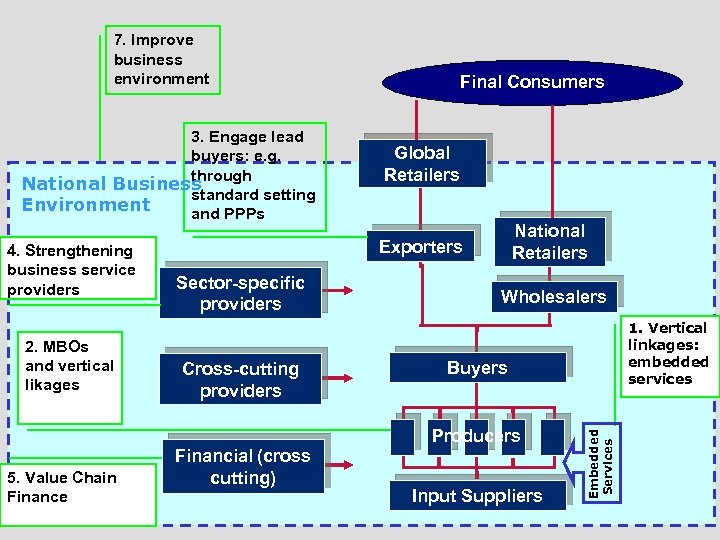 3. Engage lead buyers: e. g. through National Business standard setting Environment and PPPs 4. Strengthening business service providers 2. MBOs and vertical likages Final Consumers Global Retailers National Retailers Exporters Sector-specific providers Cross-cutting providers Wholesalers Buyers Producers 5. Value Chain Finance Financial (cross cutting) 1. Vertical linkages: embedded services Input Suppliers Embedded Services 7. Improve business environment
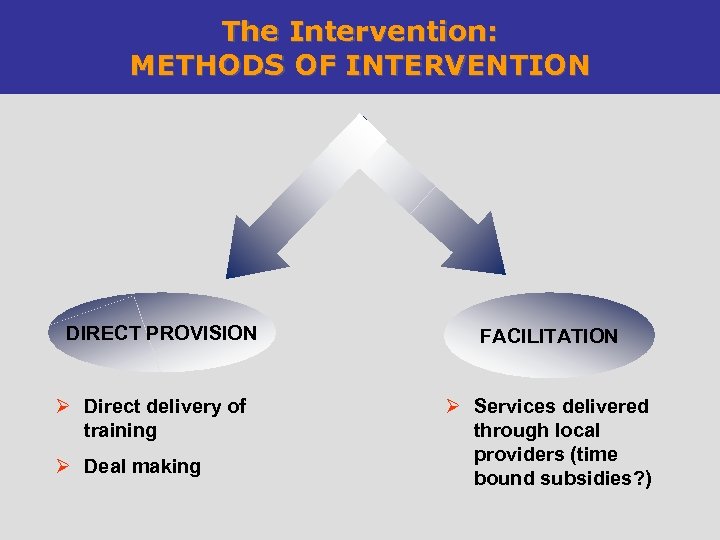 The Intervention: METHODS OF INTERVENTION DIRECT PROVISION Ø Direct delivery of training Ø Deal making FACILITATION Ø Services delivered through local providers (time bound subsidies? )
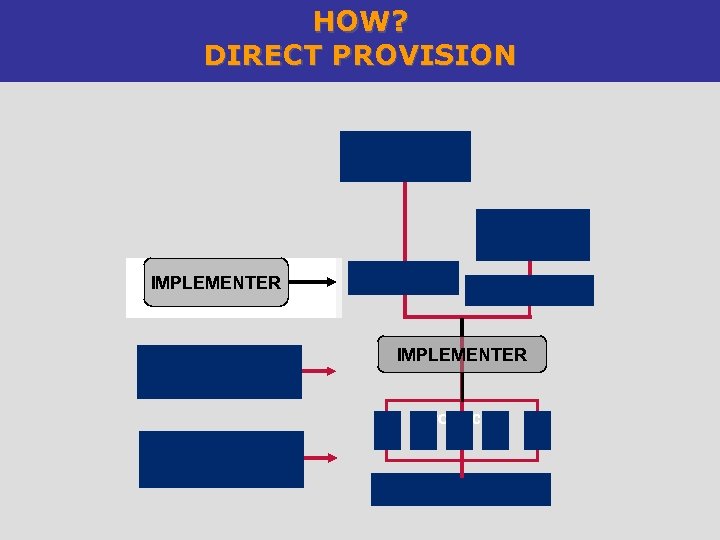 HOW? DIRECT PROVISION IMPLEMENTER Producers
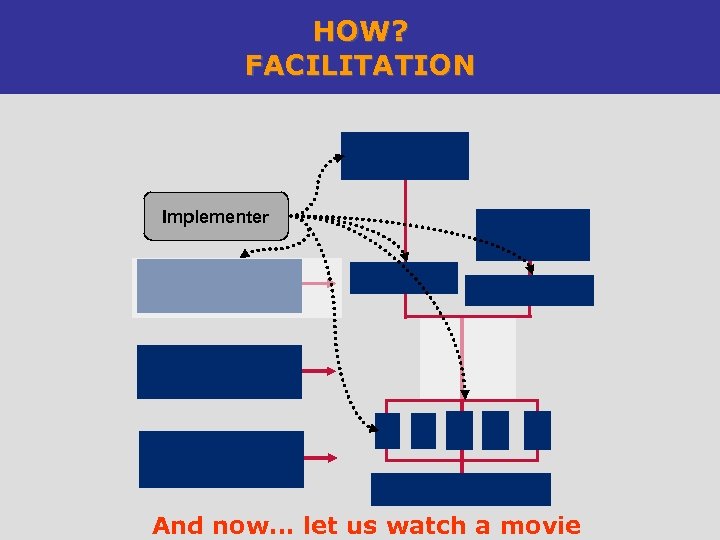 HOW? FACILITATION Implementer And now… let us watch a movie
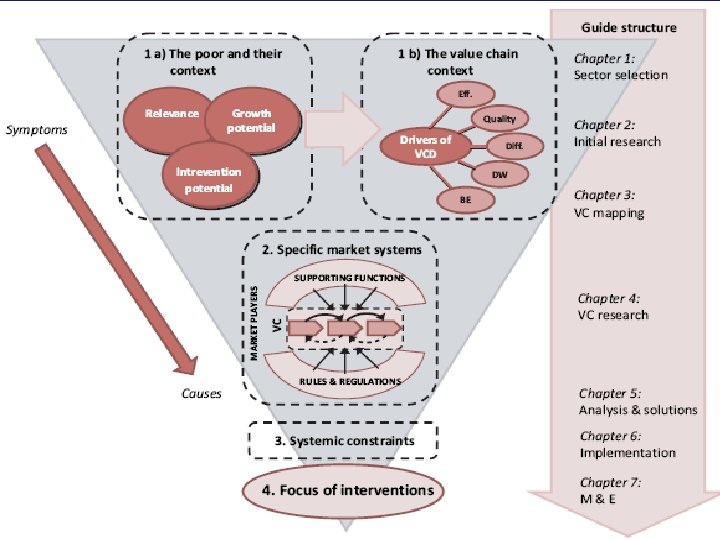
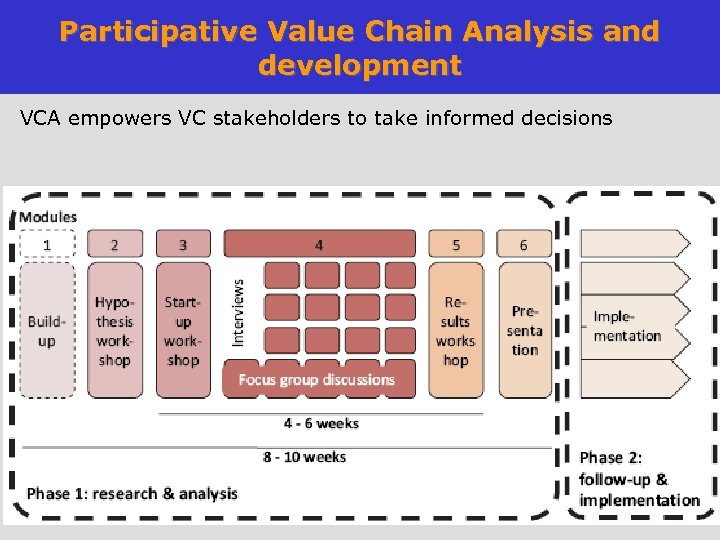 Participative Value Chain Analysis and development VCA empowers VC stakeholders to take informed decisions
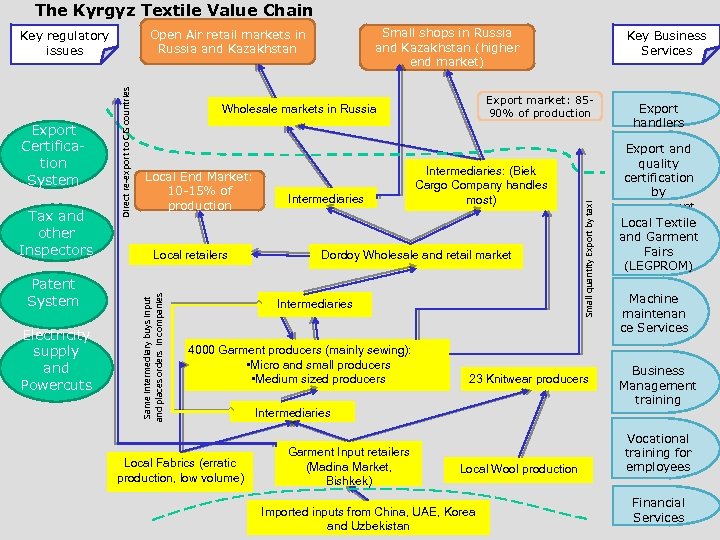 The Kyrgyz Textile Value Chain Electricity supply and Powercuts Local retailers Intermediaries: (Biek Cargo Company handles most) Dordoy Wholesale and retail market Intermediaries 4000 Garment producers (mainly sewing): • Micro and small producers • Medium sized producers Local Fabrics (erratic production, low volume) 23 Knitwear producers Intermediaries Garment Input retailers (Madina Market, Bishkek) Small quantity Export by taxi Patent System Local End Market: 10 -15% of production Key Business Services Export market: 8590% of production Wholesale markets in Russia Same Intermediary buys input and places orders in companies Tax and other Inspectors Direct re-export to CIS countries Export Certification System Small shops in Russia and Kazakhstan (higher end market) Open Air retail markets in Russia and Kazakhstan Key regulatory issues Local Wool production Imported inputs from China, UAE, Korea and Uzbekistan Export handlers Export and quality certification by government Local Textile and Garment Fairs (LEGPROM) Machine maintenan ce Services Business Management training Vocational training for employees Financial Services
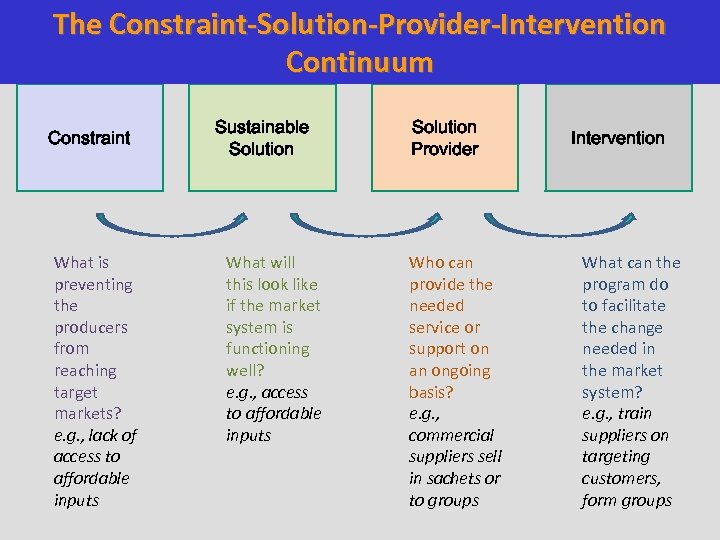 The Constraint-Solution-Provider-Intervention Continuum Constraint What is preventing the producers from reaching target markets? e. g. , lack of access to affordable inputs Sustainable Solution What will this look like if the market system is functioning well? e. g. , access to affordable inputs Solution Provider Who can provide the needed service or support on an ongoing basis? e. g. , commercial suppliers sell in sachets or to groups Intervention What can the program do to facilitate the change needed in the market system? e. g. , train suppliers on targeting customers, form groups
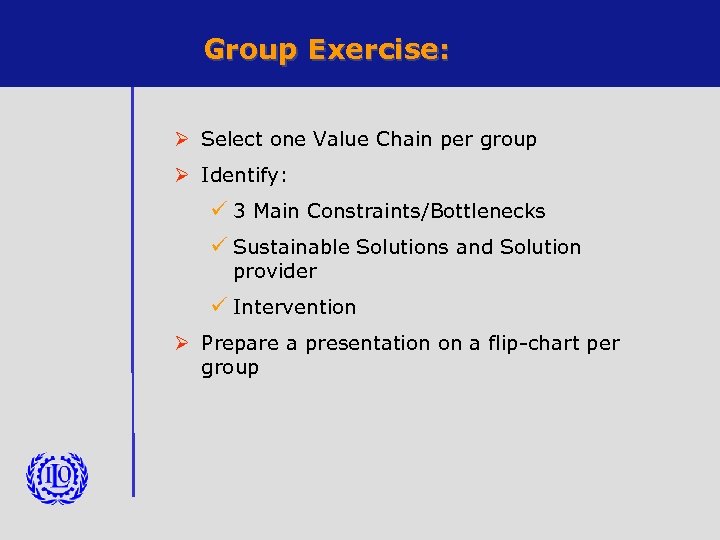 Group Exercise: Ø Select one Value Chain per group Ø Identify: ü 3 Main Constraints/Bottlenecks ü Sustainable Solutions and Solution provider ü Intervention Ø Prepare a presentation on a flip-chart per group
 Thank You sievers@ilo. org BDS: www. bdsknowledge. org www. microlinks. org www Business environment: www. businessenvironment. org www. doingbusiness. org