 Скачать презентацию Valências Ambientais 2014 2015 Prof Tânia Sousa taniasousa ist utl
dcb2ae9988af51091793f8c4cef8b433.ppt
- Количество слайдов: 112



Valências Ambientais: 2014/2015 Prof. Tânia Sousa taniasousa@ist. utl. pt
I - ENERGY UNITS AND SCALES
Energy Units and Scales • How much energy should we ingest daily? • How much energy do you spend per hour using an electric heater?
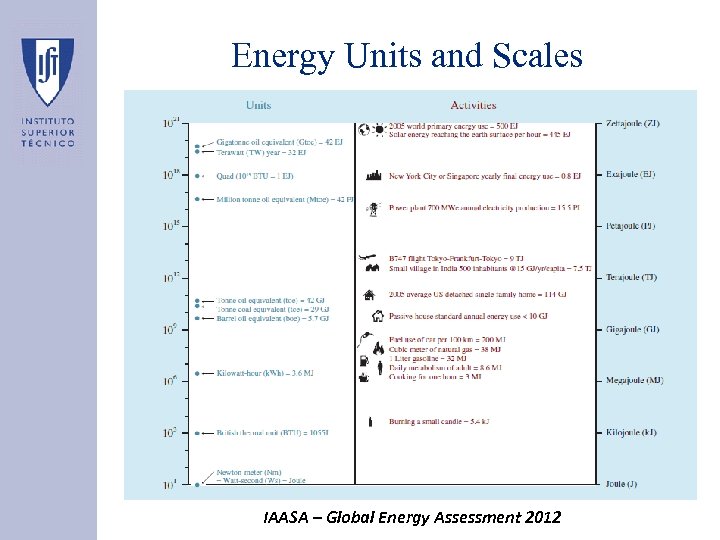
Energy Units and Scales IAASA – Global Energy Assessment 2012
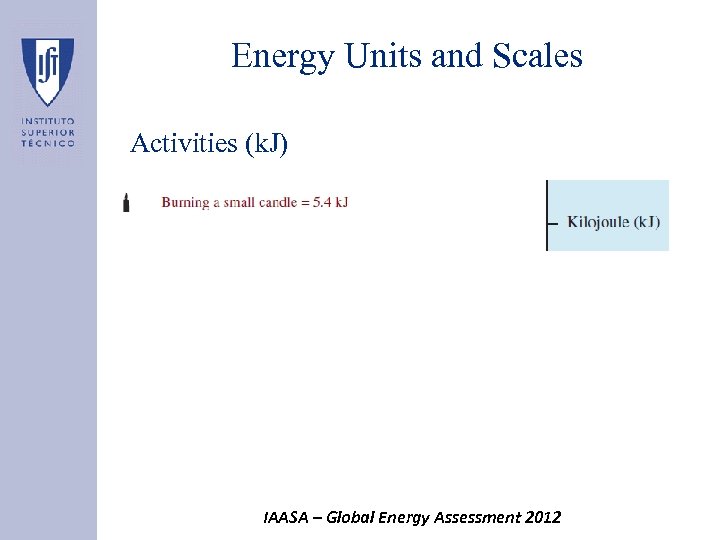
Energy Units and Scales Activities (k. J) IAASA – Global Energy Assessment 2012
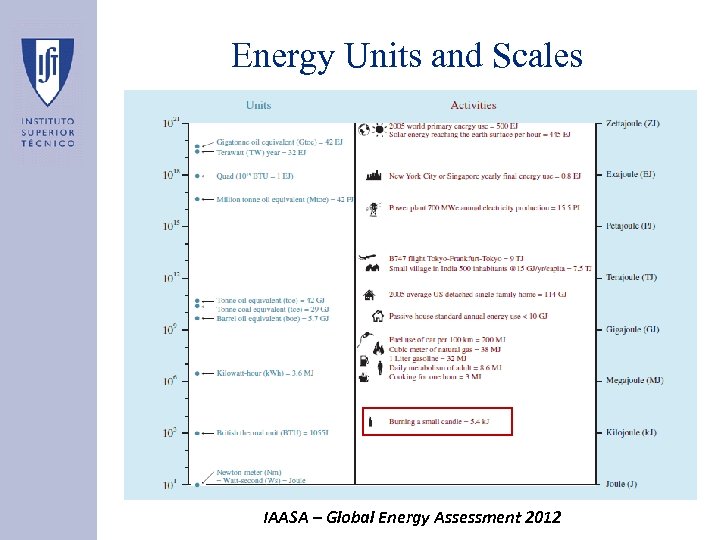
Energy Units and Scales IAASA – Global Energy Assessment 2012
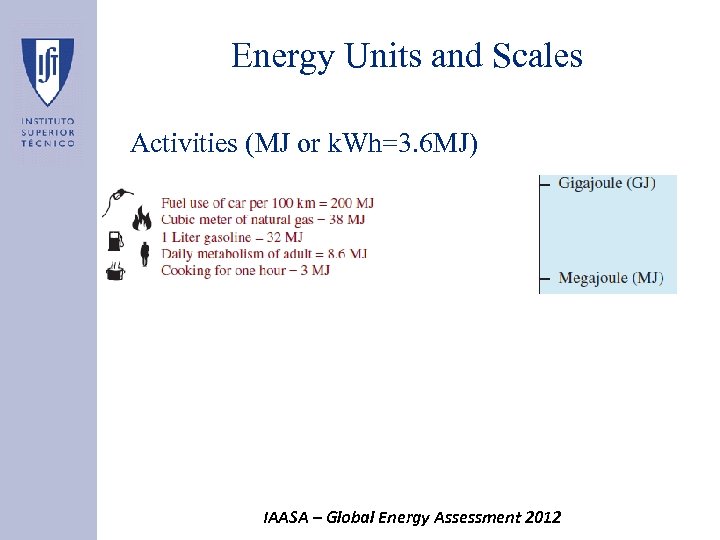
Energy Units and Scales Activities (MJ or k. Wh=3. 6 MJ) IAASA – Global Energy Assessment 2012
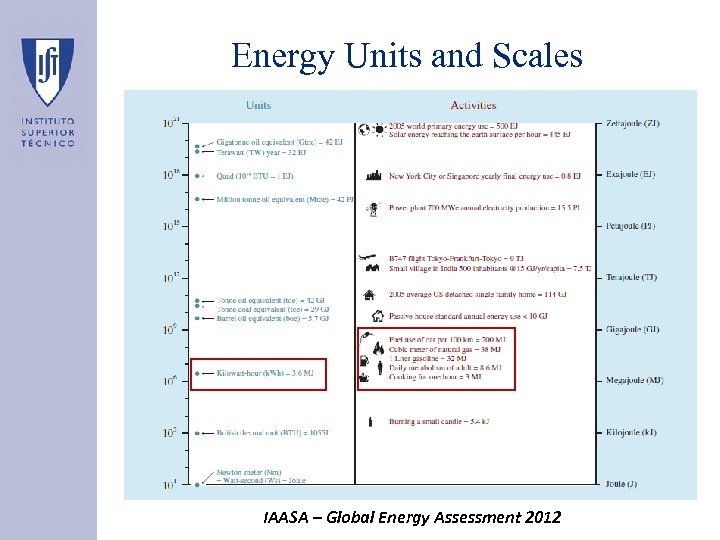
Energy Units and Scales IAASA – Global Energy Assessment 2012
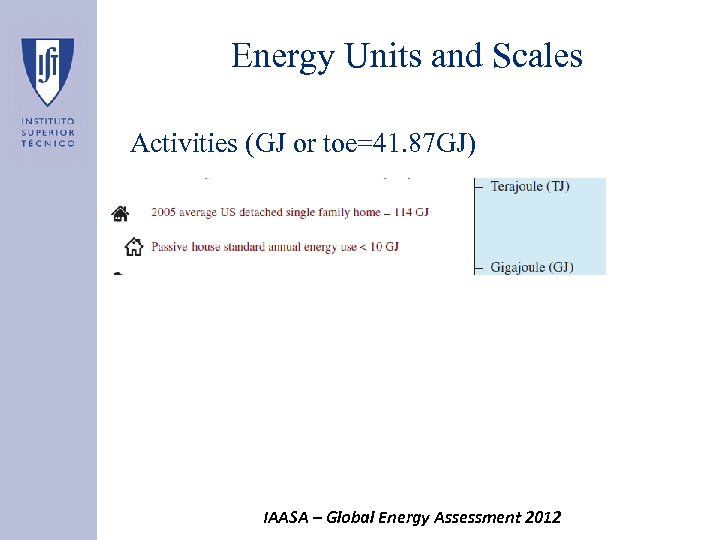
Energy Units and Scales Activities (GJ or toe=41. 87 GJ) IAASA – Global Energy Assessment 2012
Energy Units and Scales Activities (GJ or toe=41. 87 GJ) • In early agricultural societies – 10 -20 GJ/capita/year – 2/3 for food and feed – 1/3 for cooking, heating and early industrial activities • In UK in the mid-19 th century – 100 GJ/capita/year • In Portugal in 2010 – 108 GJ/capita/year
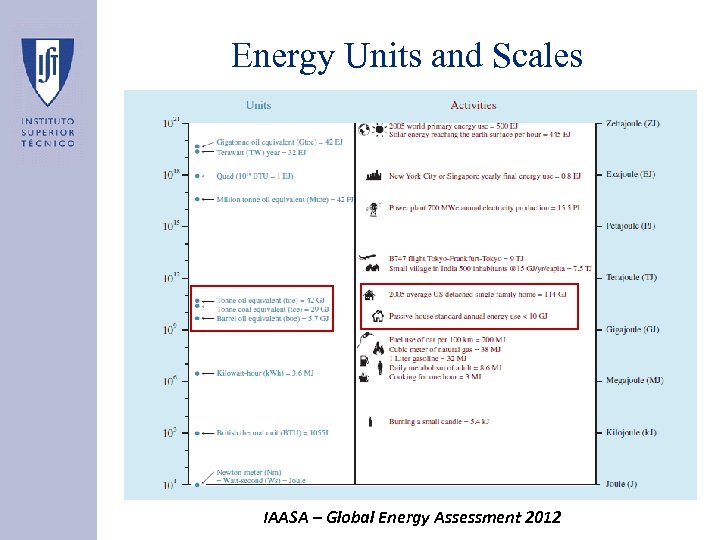
Energy Units and Scales IAASA – Global Energy Assessment 2012
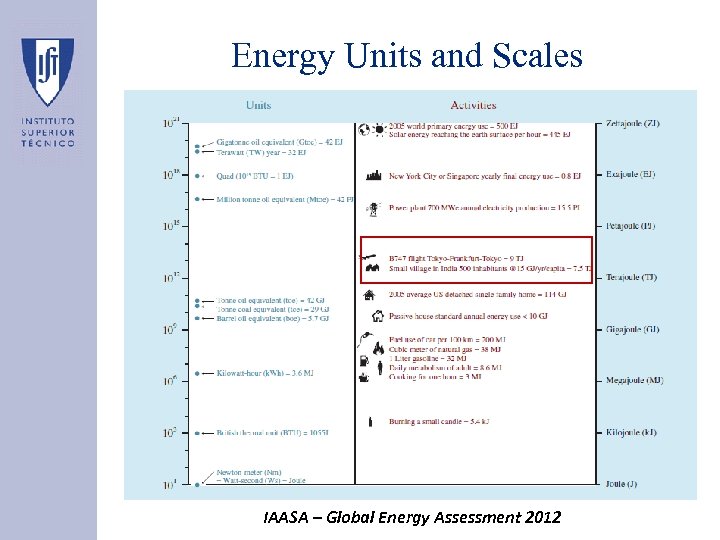
Energy Units and Scales IAASA – Global Energy Assessment 2012
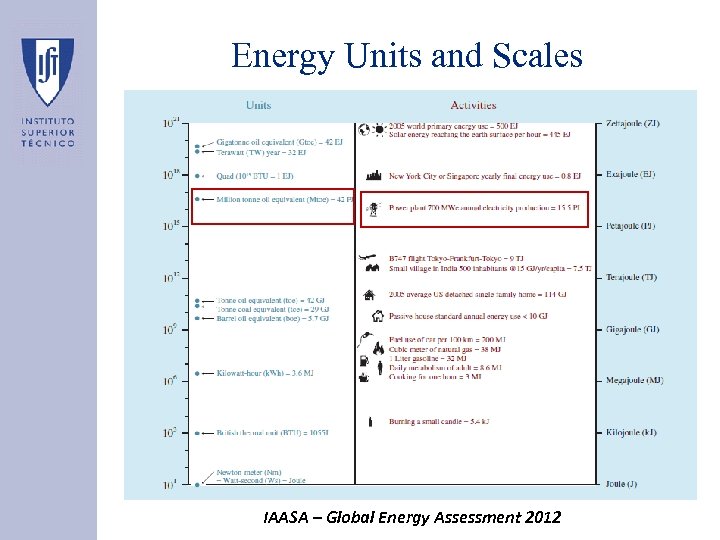
Energy Units and Scales IAASA – Global Energy Assessment 2012
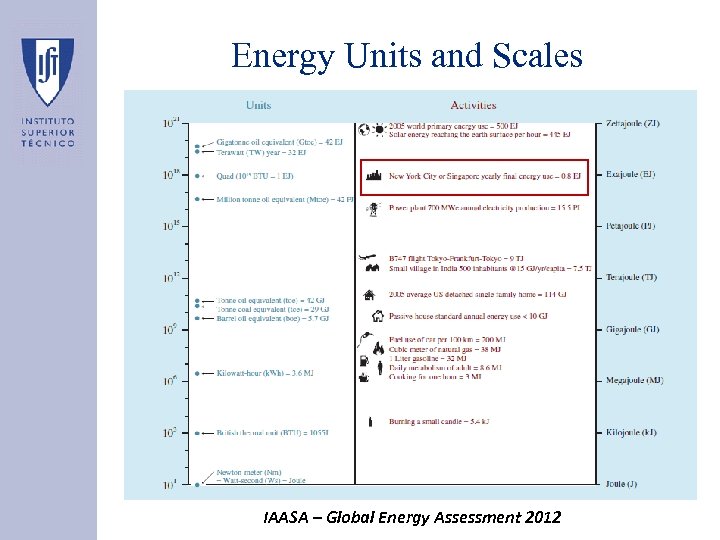
Energy Units and Scales IAASA – Global Energy Assessment 2012
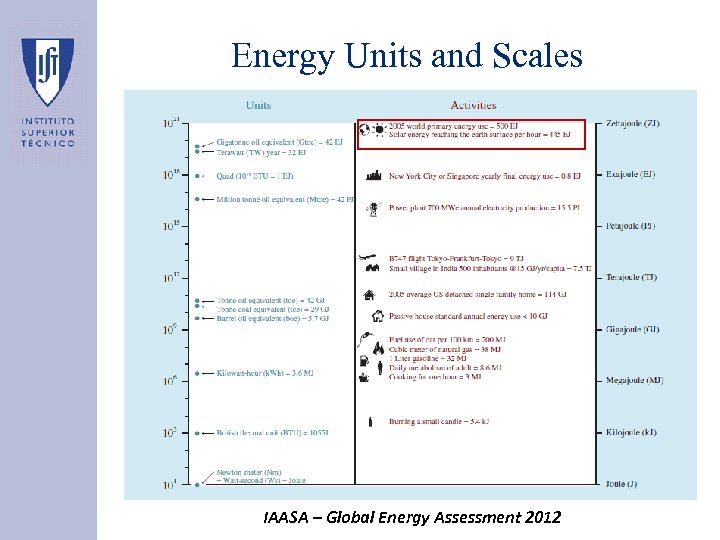
Energy Units and Scales IAASA – Global Energy Assessment 2012

II - ENERGY FORMS
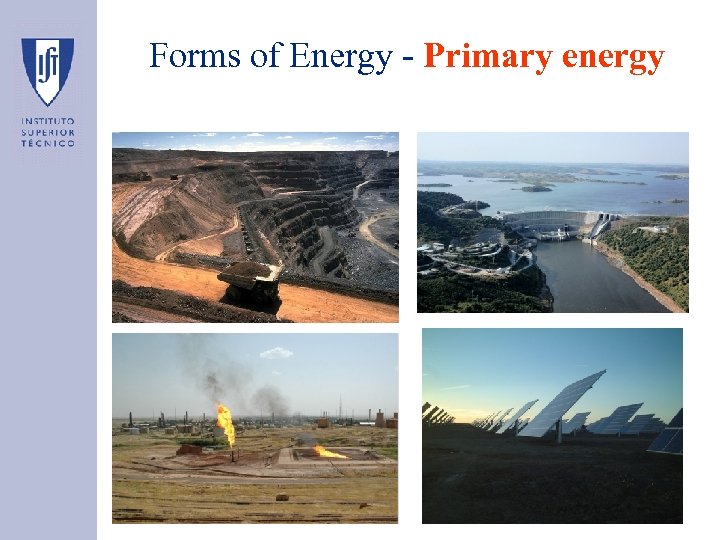
Forms of Energy - Primary energy
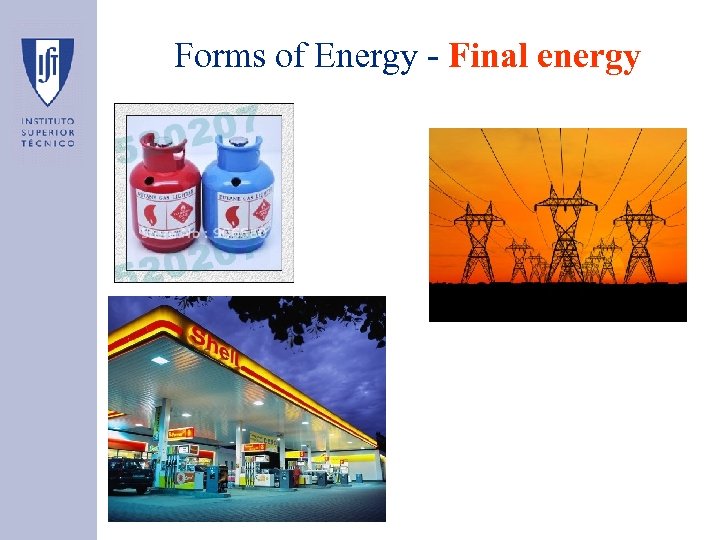
Forms of Energy - Final energy
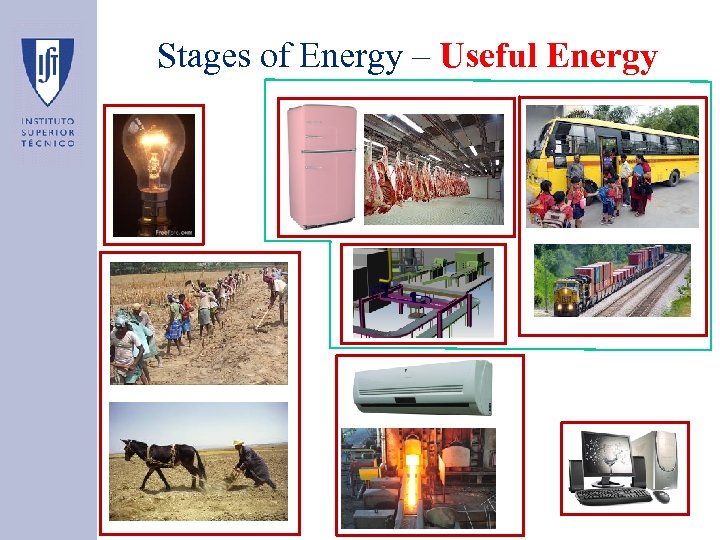
Stages of Energy – Useful Energy
Forms of Energy • Primary energy – embodied in resources as it is found in nature (coal, oil, natural gas in the ground) • Final energy – sold to final consumers such as households or firms (electricity, diesel, processed natural gas) • Useful energy – in the form that is used: light, heat, cooling and mechanical power (stationary or transport) • Productive energy – the fraction of useful energy that we actually use
III – FROM PRIMARY ENERGY TO FINAL ENERGY TO ENERGY SERVICES
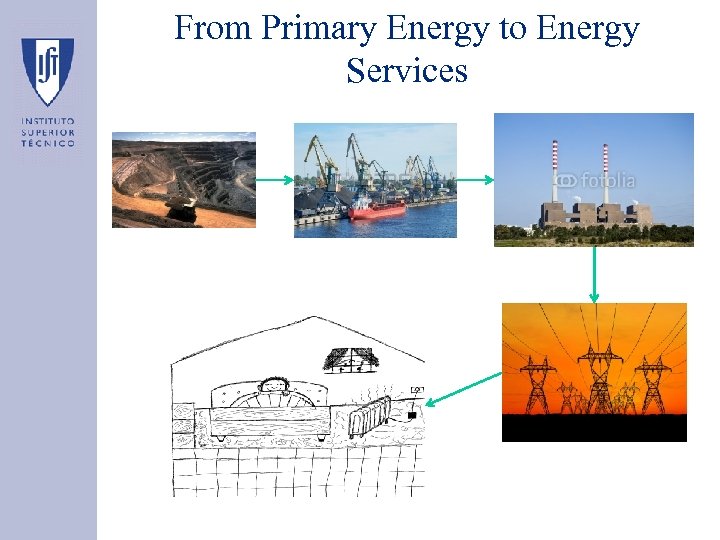
From Primary Energy to Energy Services
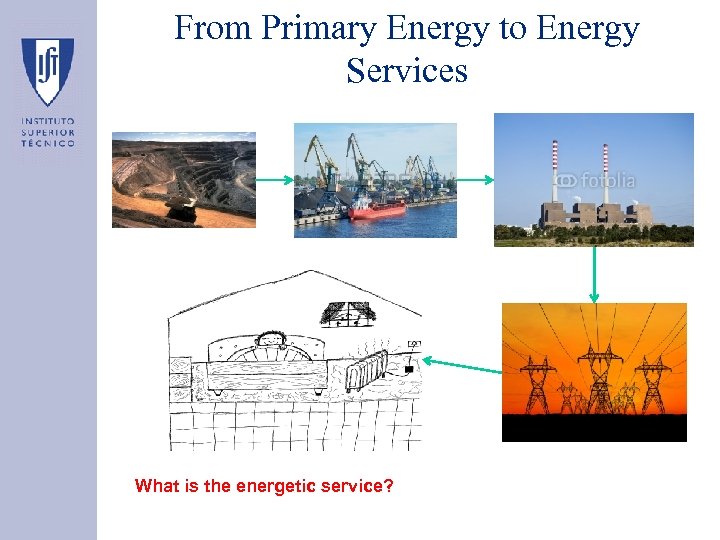
From Primary Energy to Energy Services What is the energetic service?
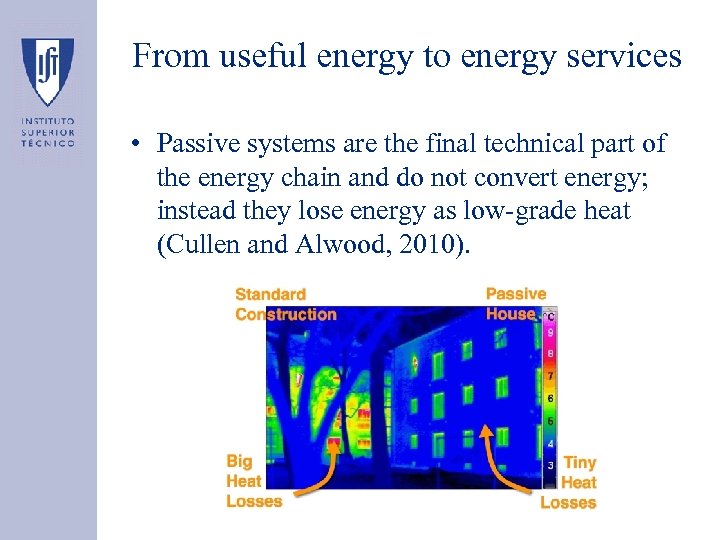
From useful energy to energy services • Passive systems are the final technical part of the energy chain and do not convert energy; instead they lose energy as low-grade heat (Cullen and Alwood, 2010).
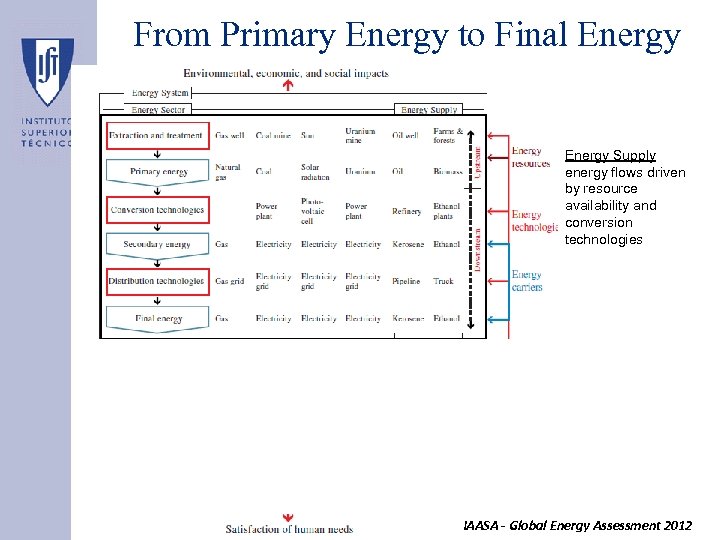
From Primary Energy to Final Energy Supply energy flows driven by resource availability and conversion technologies IAASA - Global Energy Assessment 2012
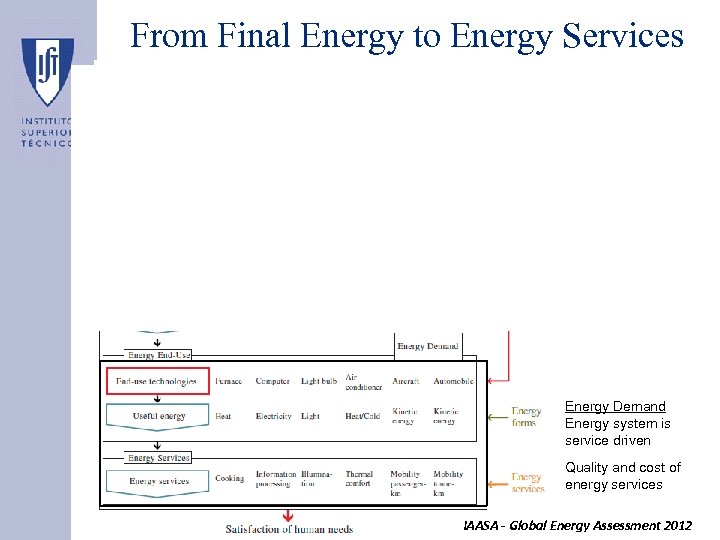
From Final Energy to Energy Services Energy Demand Energy system is service driven Quality and cost of energy services IAASA - Global Energy Assessment 2012
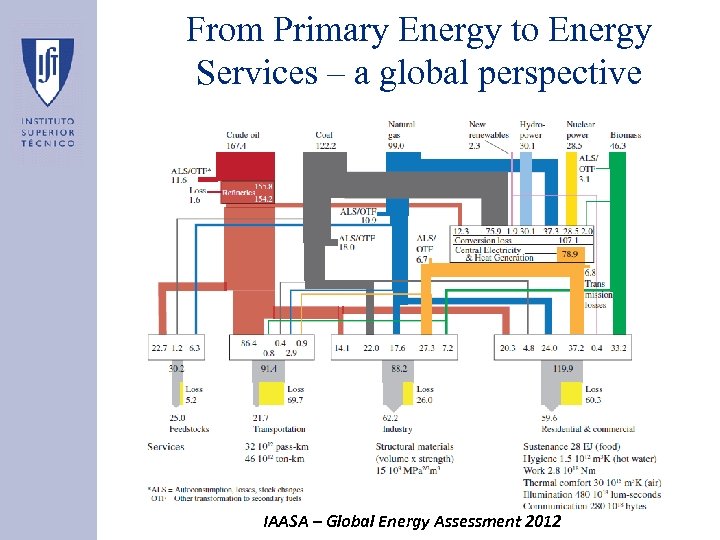
From Primary Energy to Energy Services – a global perspective IAASA – Global Energy Assessment 2012
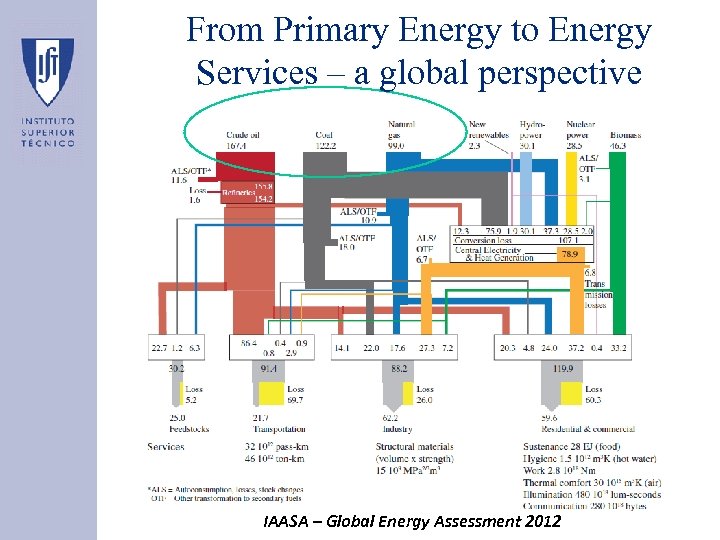
From Primary Energy to Energy Services – a global perspective IAASA – Global Energy Assessment 2012
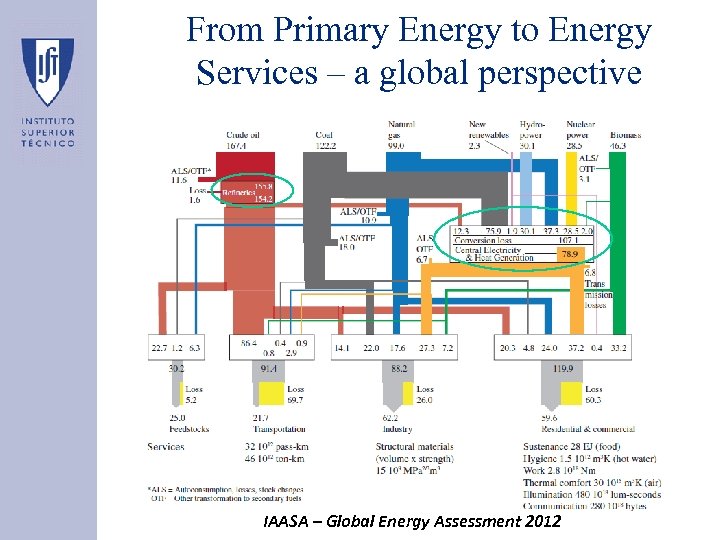
From Primary Energy to Energy Services – a global perspective IAASA – Global Energy Assessment 2012
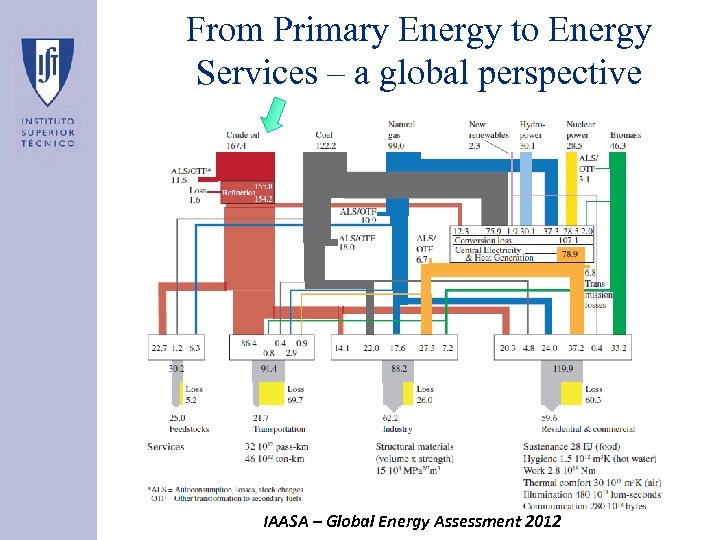
From Primary Energy to Energy Services – a global perspective IAASA – Global Energy Assessment 2012
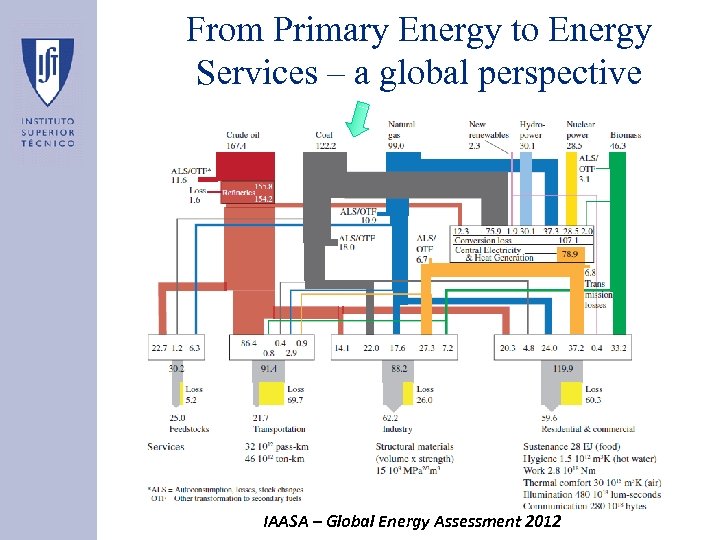
From Primary Energy to Energy Services – a global perspective IAASA – Global Energy Assessment 2012
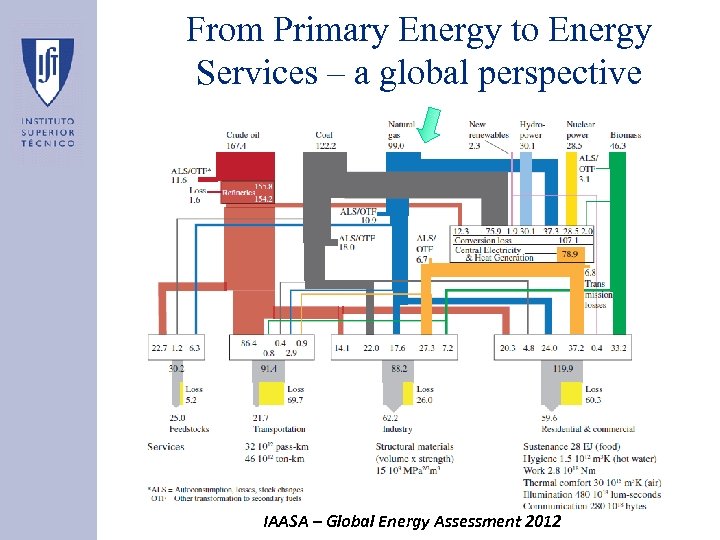
From Primary Energy to Energy Services – a global perspective IAASA – Global Energy Assessment 2012
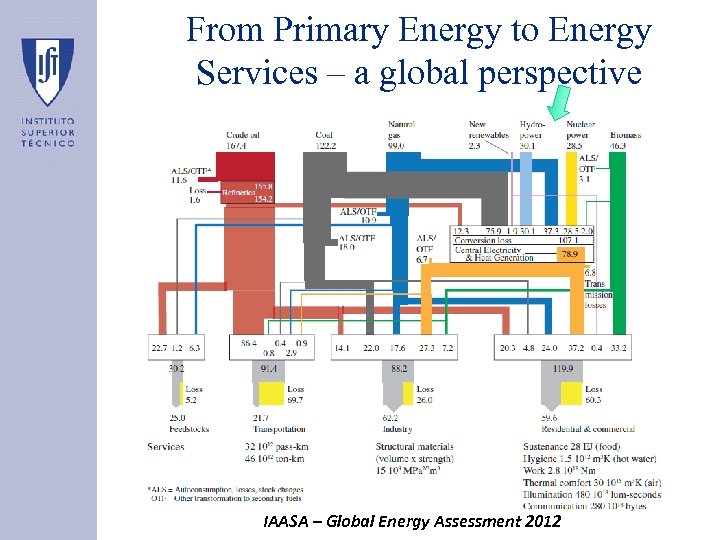
From Primary Energy to Energy Services – a global perspective IAASA – Global Energy Assessment 2012
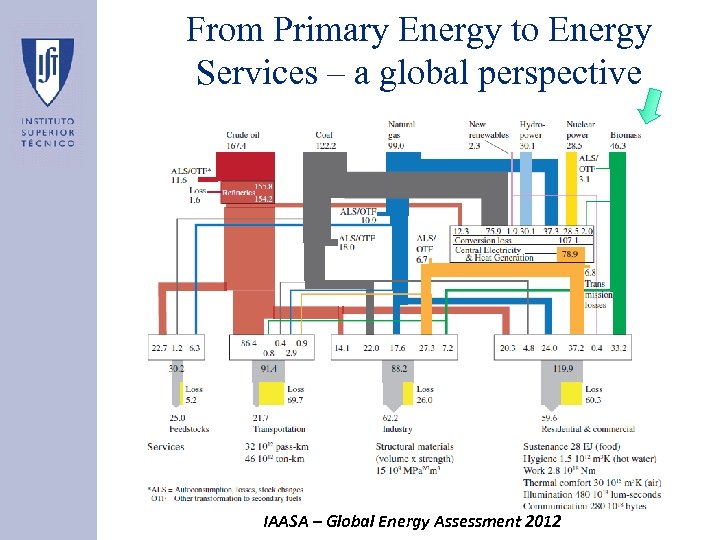
From Primary Energy to Energy Services – a global perspective IAASA – Global Energy Assessment 2012
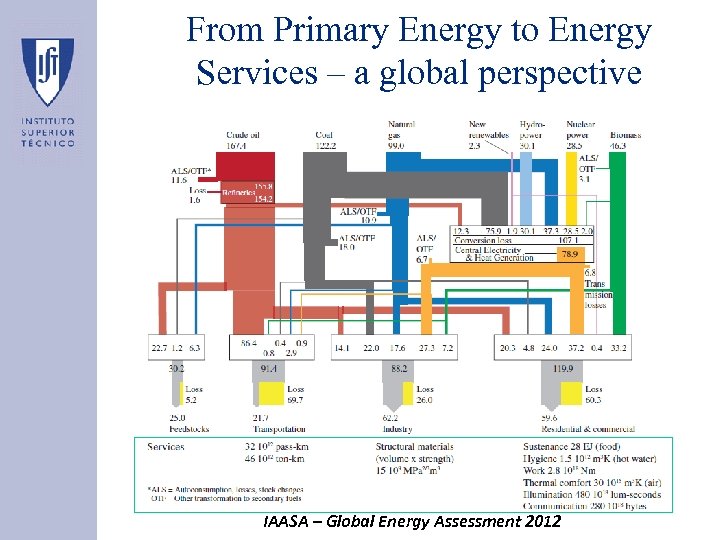
From Primary Energy to Energy Services – a global perspective IAASA – Global Energy Assessment 2012
IV – ENERGY ANALYSIS SANKEY DIAGRAMS & 1 st & 2 nd LAW EFFICIENCIES
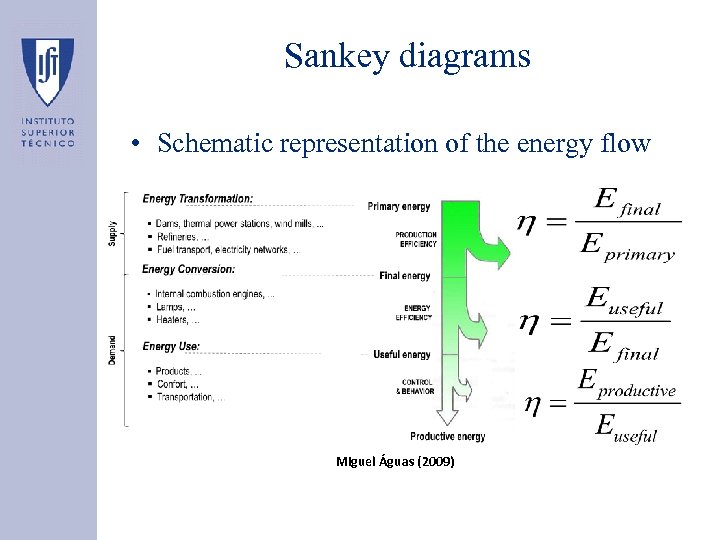
Sankey diagrams • Schematic representation of the energy flow Miguel Águas (2009)
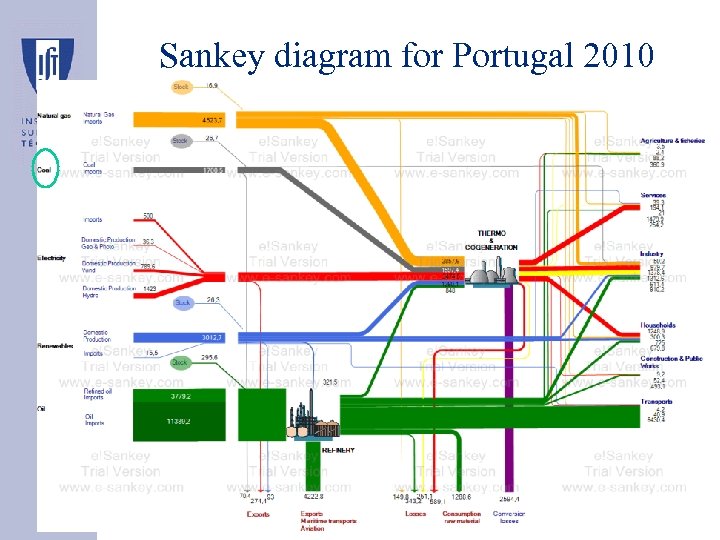
Sankey diagram for Portugal 2010
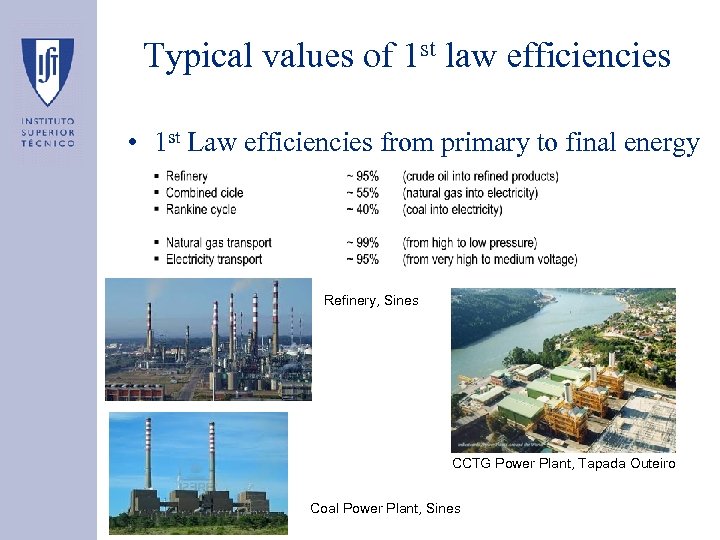
Typical values of 1 st law efficiencies • 1 st Law efficiencies from primary to final energy Refinery, Sines CCTG Power Plant, Tapada Outeiro Coal Power Plant, Sines
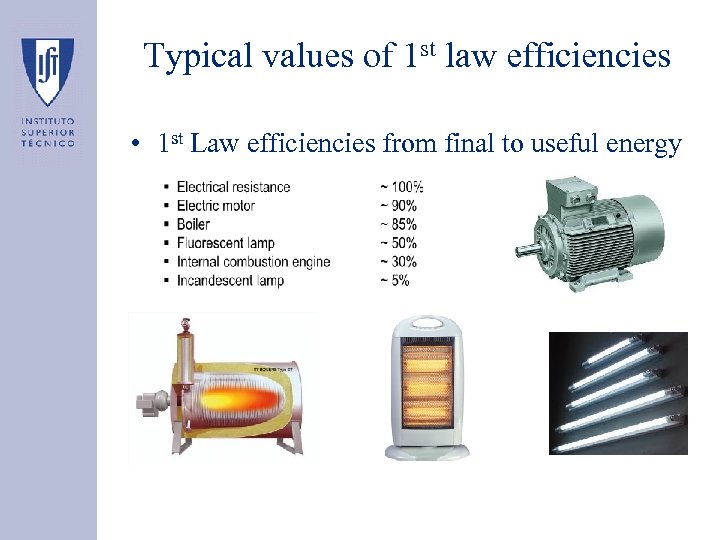
Typical values of 1 st law efficiencies • 1 st Law efficiencies from final to useful energy
Sankey Diagram for an Energy Service • Example?
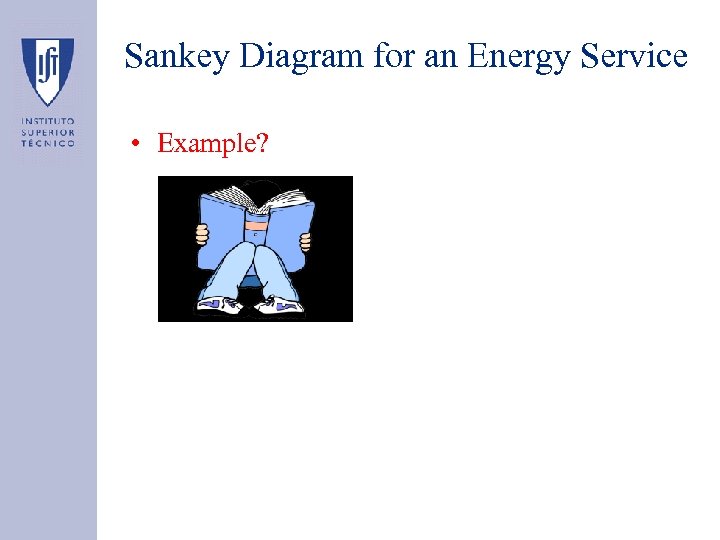
Sankey Diagram for an Energy Service • Example?
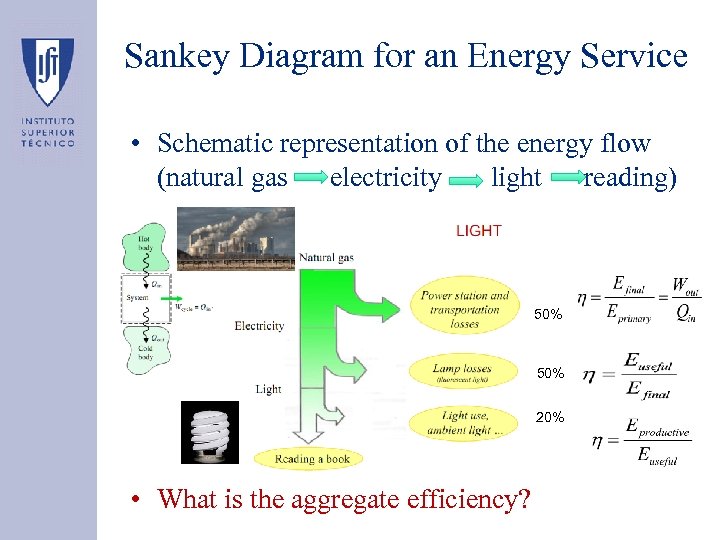
Sankey Diagram for an Energy Service • Schematic representation of the energy flow (natural gas electricity light reading) 50% 20% • What is the aggregate efficiency?
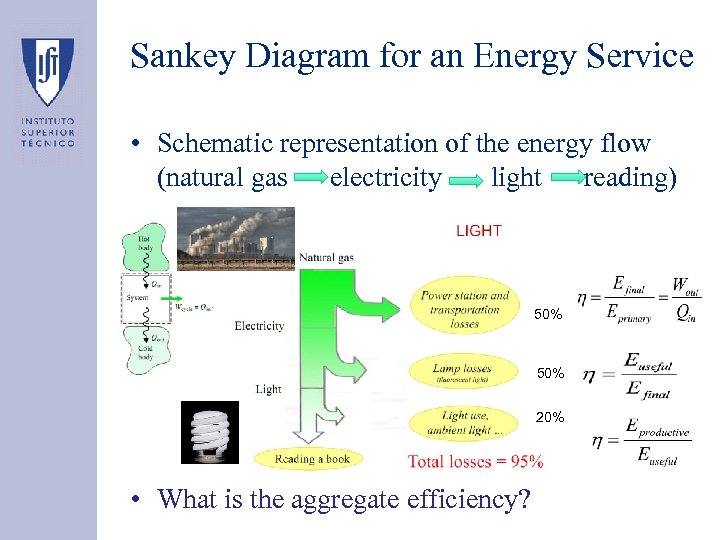
Sankey Diagram for an Energy Service • Schematic representation of the energy flow (natural gas electricity light reading) 50% 20% • What is the aggregate efficiency?
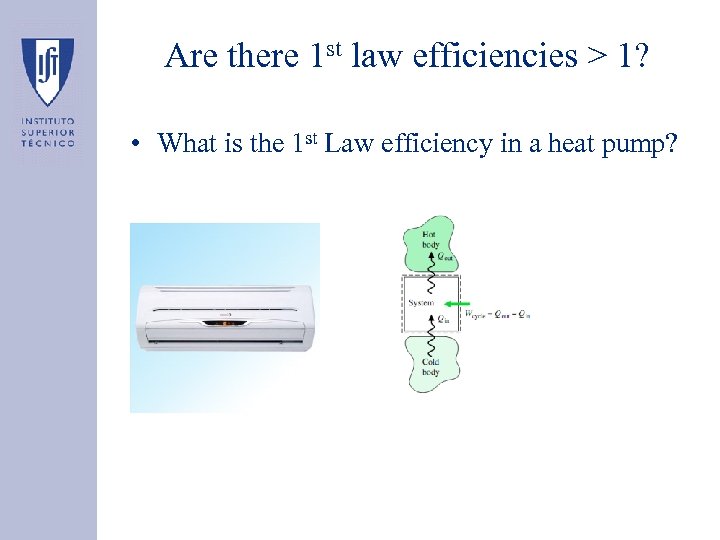
Are there 1 st law efficiencies > 1? • What is the 1 st Law efficiency in a heat pump?
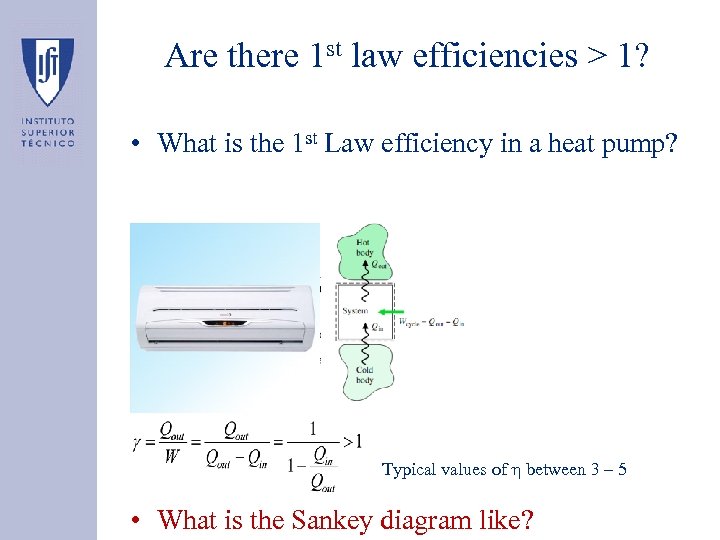
Are there 1 st law efficiencies > 1? • What is the 1 st Law efficiency in a heat pump? Typical values of between 3 – 5 • What is the Sankey diagram like?
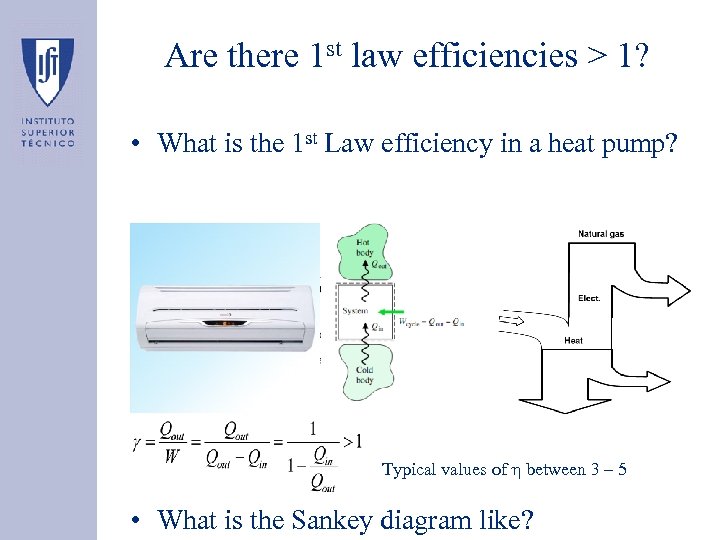
Are there 1 st law efficiencies > 1? • What is the 1 st Law efficiency in a heat pump? Typical values of between 3 – 5 • What is the Sankey diagram like?
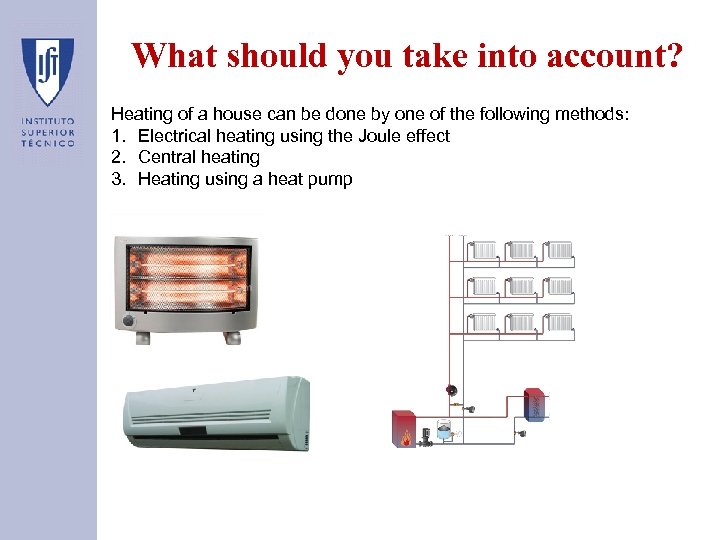
What should you take into account? Heating of a house can be done by one of the following methods: 1. Electrical heating using the Joule effect 2. Central heating 3. Heating using a heat pump
What should you take into account? Heating of a house can be done by one of the following methods: 1. Electrical heating using the Joule effect 2. Central heating (burning natural gas in a furnace with a 90% efficiency) 3. Heating using a heat pump (COP=3). Suppose that electricity has a production efficiency of 45% and costs 0. 12 euros per k. Wh, natural gas is transported with a 99% efficiency, and costs 0. 0708 euros per k. Wh. a) Compare the alternatives in terms of primary energy, final energy and cost for 1 k. Wh of thermal energy. Draw the Sankey Diagrams b) Discuss the investment associated with each solution.
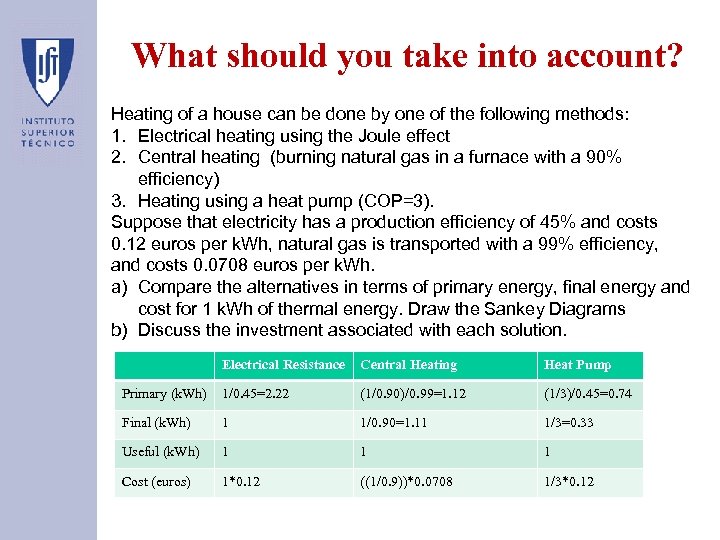
What should you take into account? Heating of a house can be done by one of the following methods: 1. Electrical heating using the Joule effect 2. Central heating (burning natural gas in a furnace with a 90% efficiency) 3. Heating using a heat pump (COP=3). Suppose that electricity has a production efficiency of 45% and costs 0. 12 euros per k. Wh, natural gas is transported with a 99% efficiency, and costs 0. 0708 euros per k. Wh. a) Compare the alternatives in terms of primary energy, final energy and cost for 1 k. Wh of thermal energy. Draw the Sankey Diagrams b) Discuss the investment associated with each solution. Electrical Resistance Central Heating Heat Pump Primary (k. Wh) 1/0. 45=2. 22 (1/0. 90)/0. 99=1. 12 (1/3)/0. 45=0. 74 Final (k. Wh) 1 1/0. 90=1. 11 1/3=0. 33 Useful (k. Wh) 1 1 1 Cost (euros) 1*0. 12 ((1/0. 9))*0. 0708 1/3*0. 12
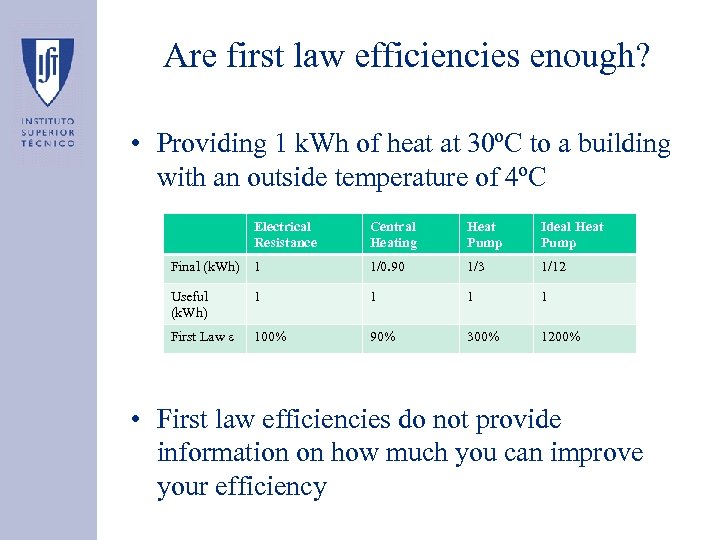
Are first law efficiencies enough? • Providing 1 k. Wh of heat at 30ºC to a building with an outside temperature of 4ºC Electrical Resistance Central Heating Heat Pump Ideal Heat Pump Final (k. Wh) 1 1/0. 90 1/3 1/12 Useful (k. Wh) 1 1 First Law 100% 90% 300% 1200% • First law efficiencies do not provide information on how much you can improve your efficiency
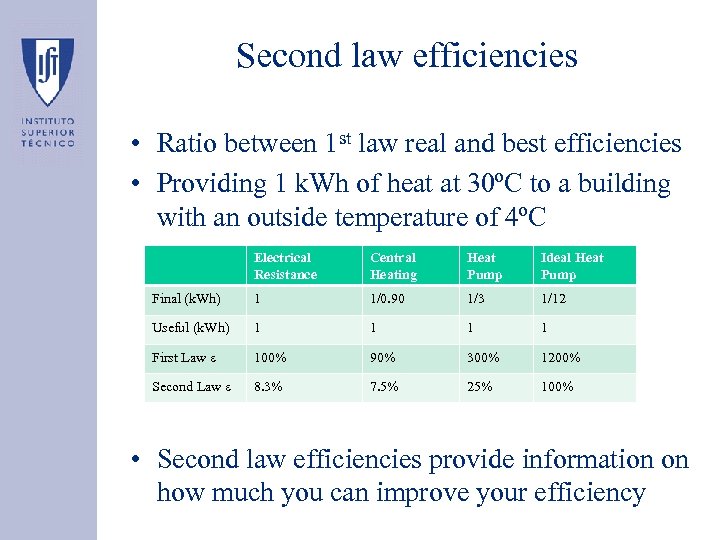
Second law efficiencies • Ratio between 1 st law real and best efficiencies • Providing 1 k. Wh of heat at 30ºC to a building with an outside temperature of 4ºC Electrical Resistance Central Heating Heat Pump Ideal Heat Pump Final (k. Wh) 1 1/0. 90 1/3 1/12 Useful (k. Wh) 1 1 First Law 100% 90% 300% 1200% Second Law 8. 3% 7. 5% 25% 100% • Second law efficiencies provide information on how much you can improve your efficiency
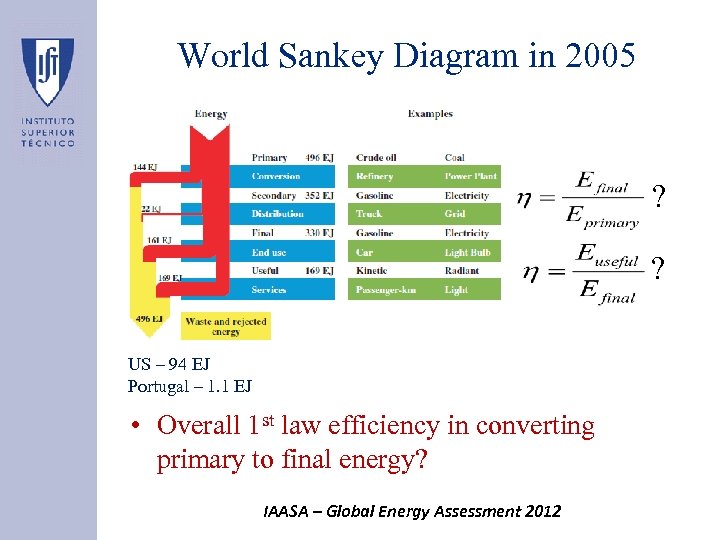
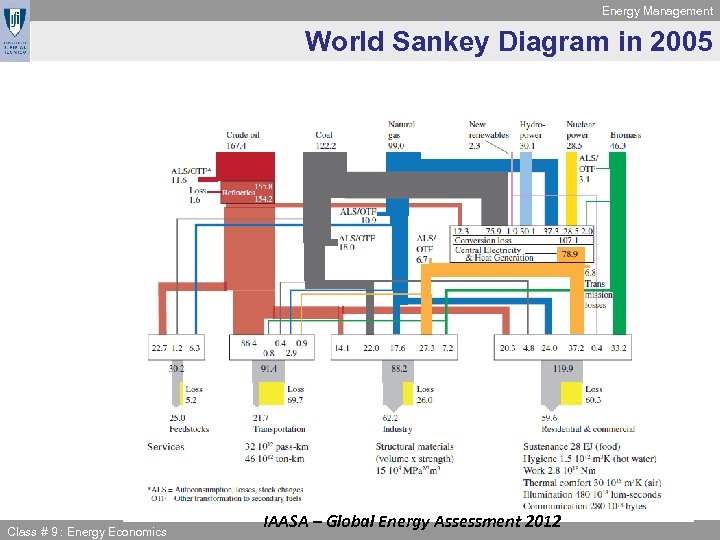
World Sankey Diagram in 2005 ? ? US – 94 EJ Portugal – 1. 1 EJ • Overall 1 st law efficiency in converting primary to final energy? IAASA – Global Energy Assessment 2012
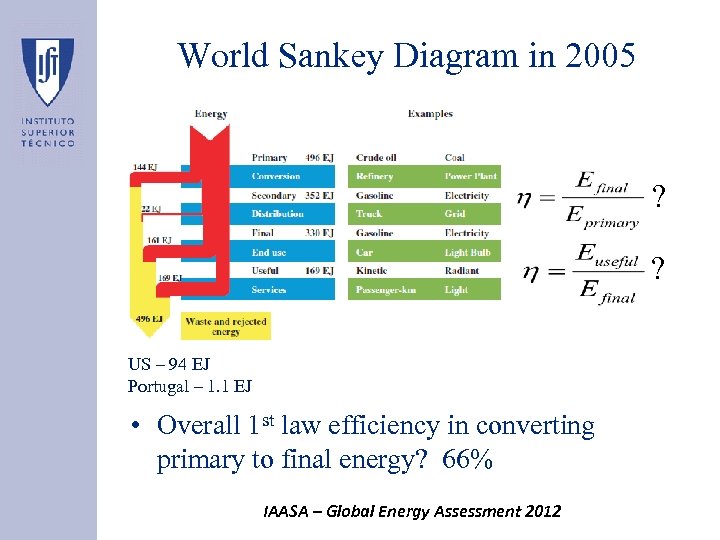
World Sankey Diagram in 2005 ? ? US – 94 EJ Portugal – 1. 1 EJ • Overall 1 st law efficiency in converting primary to final energy? 66% IAASA – Global Energy Assessment 2012
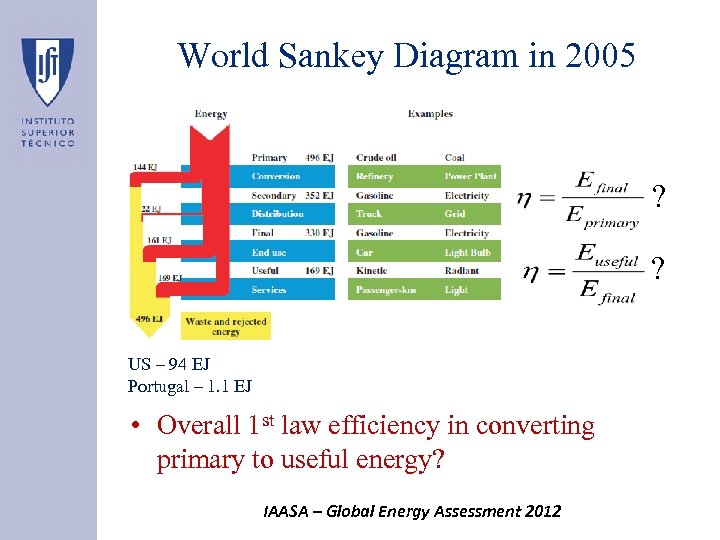
World Sankey Diagram in 2005 ? ? US – 94 EJ Portugal – 1. 1 EJ • Overall 1 st law efficiency in converting primary to useful energy? IAASA – Global Energy Assessment 2012
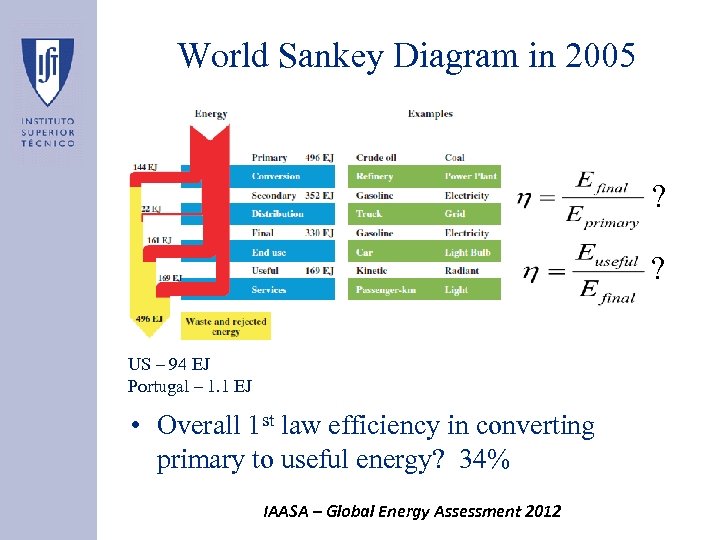
World Sankey Diagram in 2005 ? ? US – 94 EJ Portugal – 1. 1 EJ • Overall 1 st law efficiency in converting primary to useful energy? 34% IAASA – Global Energy Assessment 2012
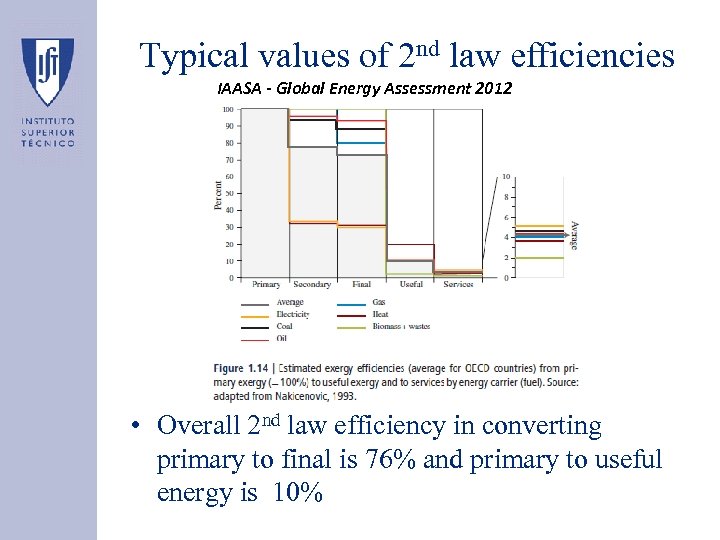
Typical values of 2 nd law efficiencies IAASA - Global Energy Assessment 2012 • Overall 2 nd law efficiency in converting primary to final is 76% and primary to useful energy is 10%
V – ENERGY ANALYSIS EMBODIED ENERGY
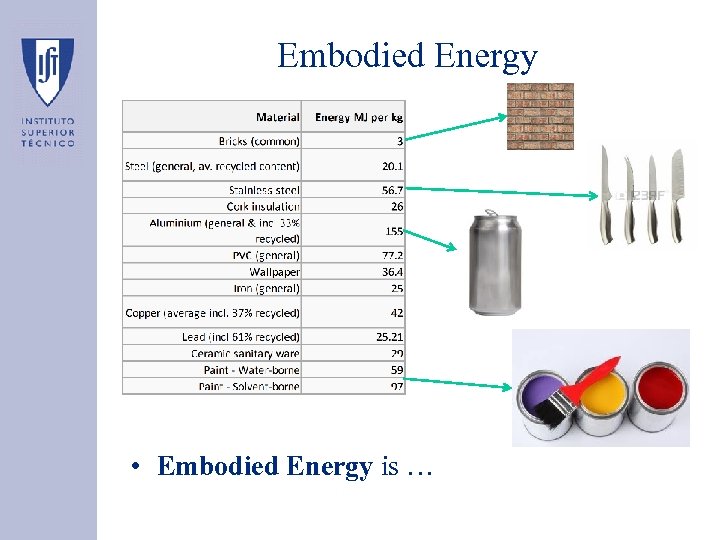
Embodied Energy • Embodied Energy is …
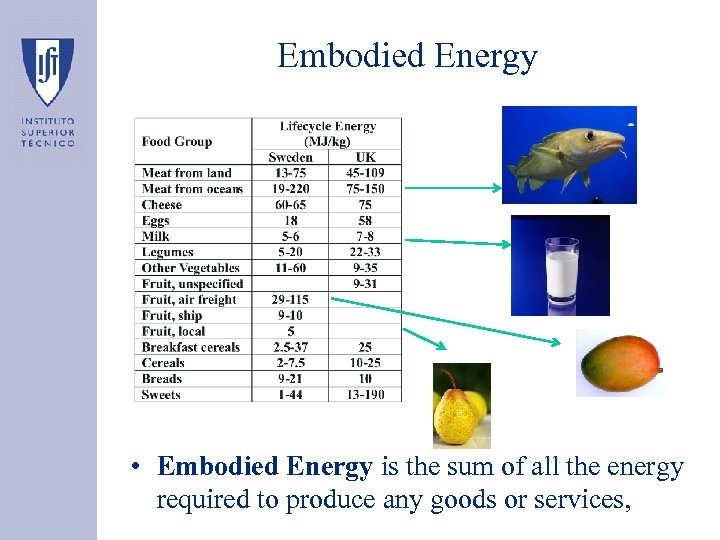
Embodied Energy • Embodied Energy is the sum of all the energy required to produce any goods or services,
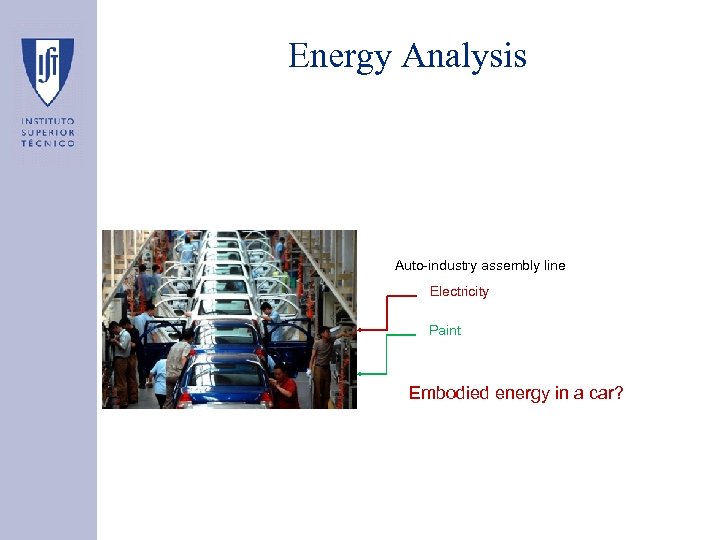
Energy Analysis Auto-industry assembly line Electricity Paint Embodied energy in a car?
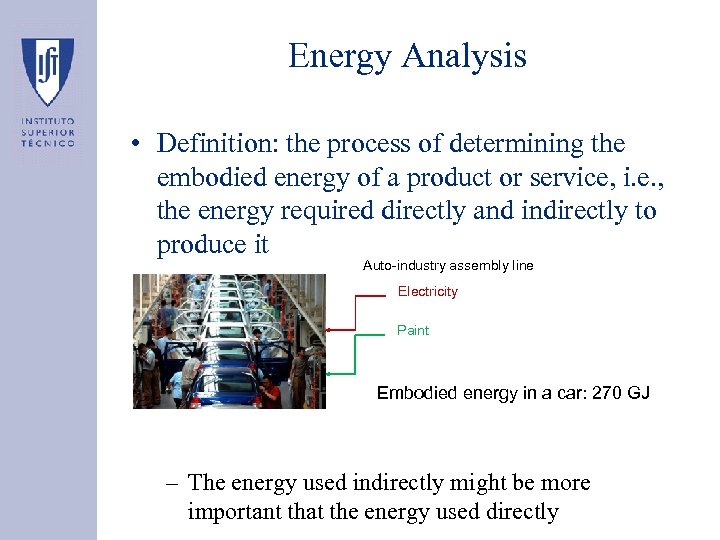
Energy Analysis • Definition: the process of determining the embodied energy of a product or service, i. e. , the energy required directly and indirectly to produce it Auto-industry assembly line Electricity Paint Embodied energy in a car: 270 GJ – The energy used indirectly might be more important that the energy used directly
Energy Analysis • What is Energy Analysis useful for:
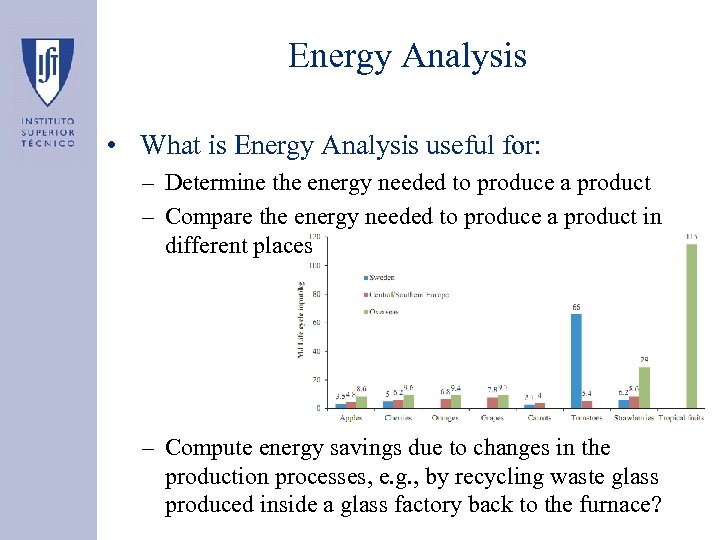
Energy Analysis • What is Energy Analysis useful for: – Determine the energy needed to produce a product – Compare the energy needed to produce a product in different places – Compute energy savings due to changes in the production processes, e. g. , by recycling waste glass produced inside a glass factory back to the furnace?
VI – WORLD PRIMARY ENERGY USE 1800 -2010
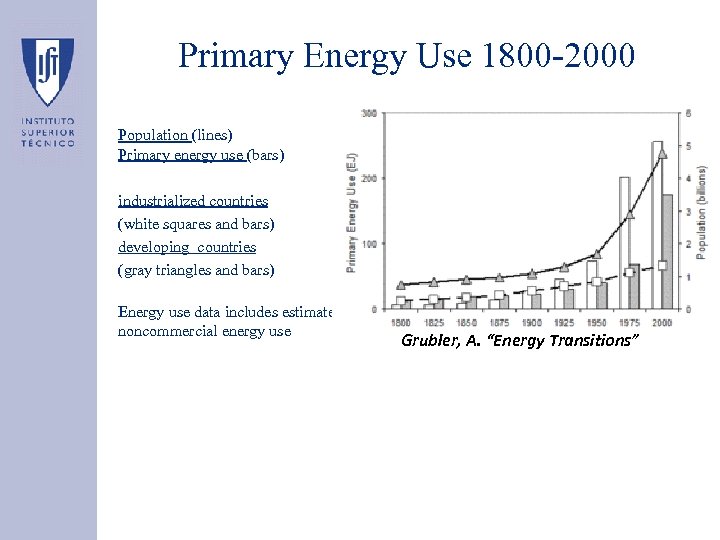
Primary Energy Use 1800 -2000 Population (lines) Primary energy use (bars) industrialized countries (white squares and bars) developing countries (gray triangles and bars) Energy use data includes estimates of noncommercial energy use Grubler, A. “Energy Transitions”
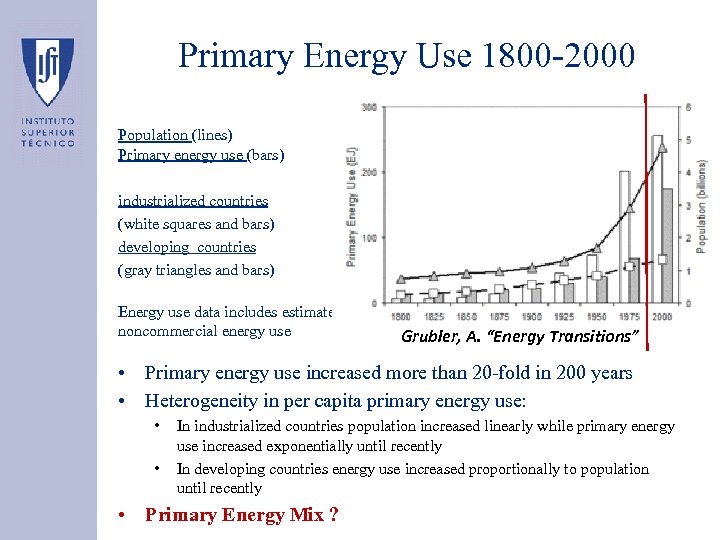
Primary Energy Use 1800 -2000 Population (lines) Primary energy use (bars) industrialized countries (white squares and bars) developing countries (gray triangles and bars) Energy use data includes estimates of noncommercial energy use Grubler, A. “Energy Transitions” • Primary energy use increased more than 20 -fold in 200 years • Heterogeneity in per capita primary energy use: • • In industrialized countries population increased linearly while primary energy use increased exponentially until recently In developing countries energy use increased proportionally to population until recently • Primary Energy Mix ?
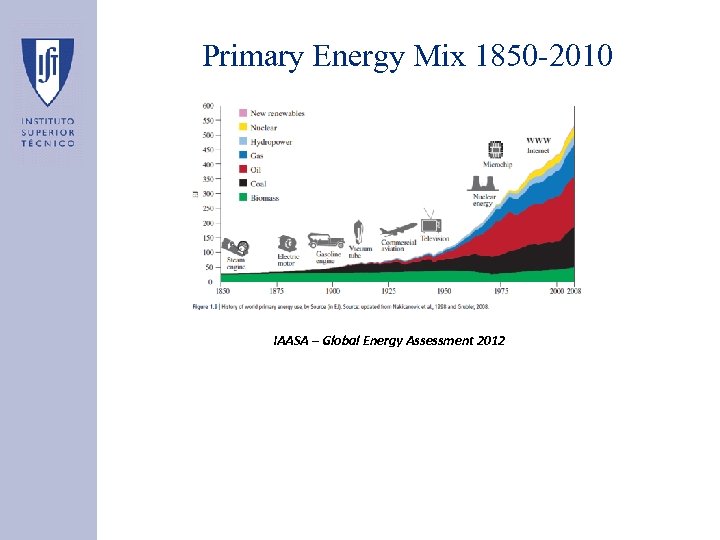
Primary Energy Mix 1850 -2010 Grubler, A. “Energy Transitions” IAASA – Global Energy Assessment 2012
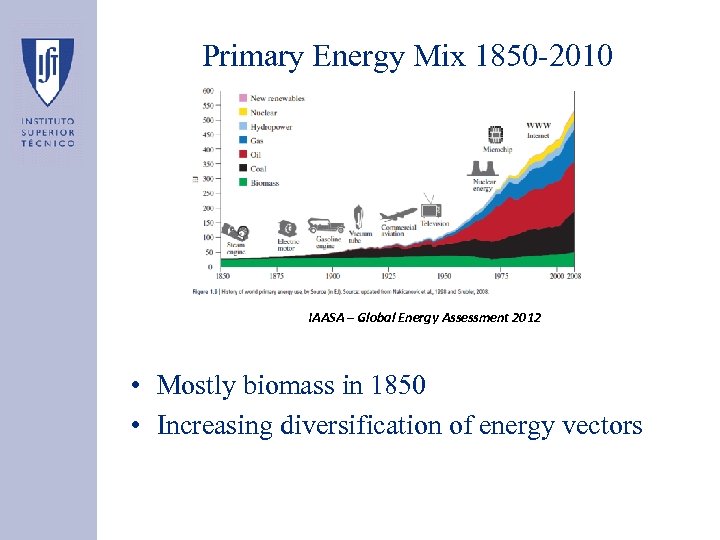
Primary Energy Mix 1850 -2010 Grubler, A. “Energy Transitions” IAASA – Global Energy Assessment 2012 • Mostly biomass in 1850 • Increasing diversification of energy vectors
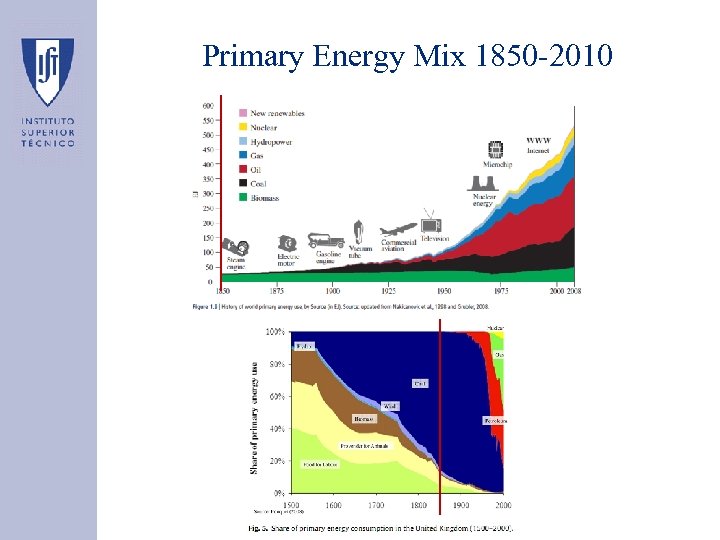
Primary Energy Mix 1850 -2010 Grubler, A. “Energy Transitions”
VII –ENERGY TRANSITIONS
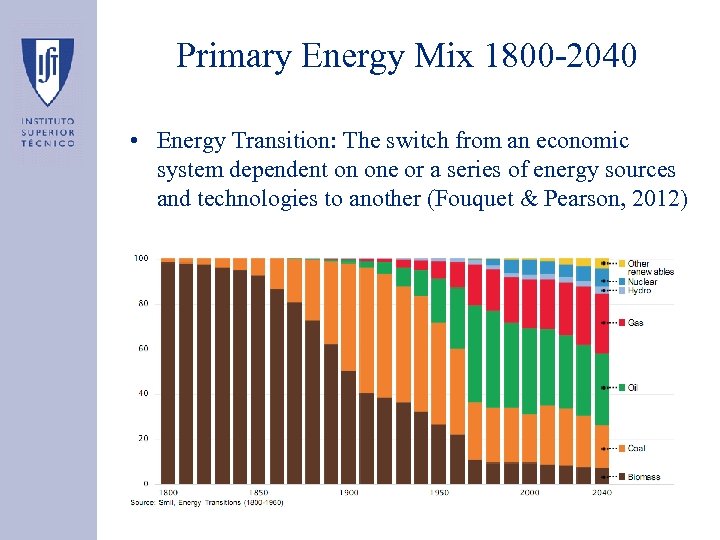
Primary Energy Mix 1800 -2040 • Energy Transition: The switch from an economic system dependent on one or a series of energy sources and technologies to another (Fouquet & Pearson, 2012)
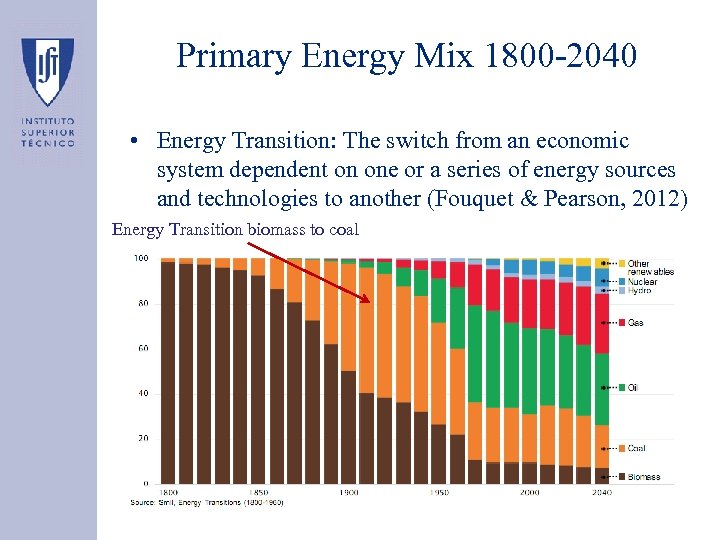
Primary Energy Mix 1800 -2040 • Energy Transition: The switch from an economic system dependent on one or a series of energy sources and technologies to another (Fouquet & Pearson, 2012) Energy Transition biomass to coal
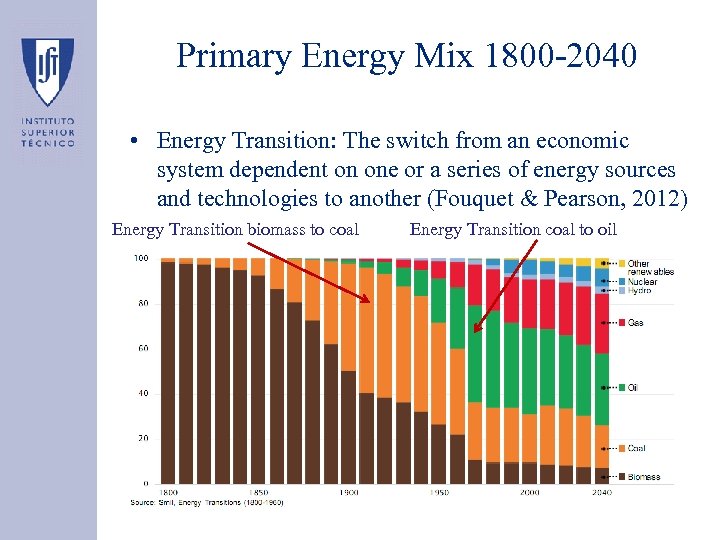
Primary Energy Mix 1800 -2040 • Energy Transition: The switch from an economic system dependent on one or a series of energy sources and technologies to another (Fouquet & Pearson, 2012) Energy Transition biomass to coal Energy Transition coal to oil
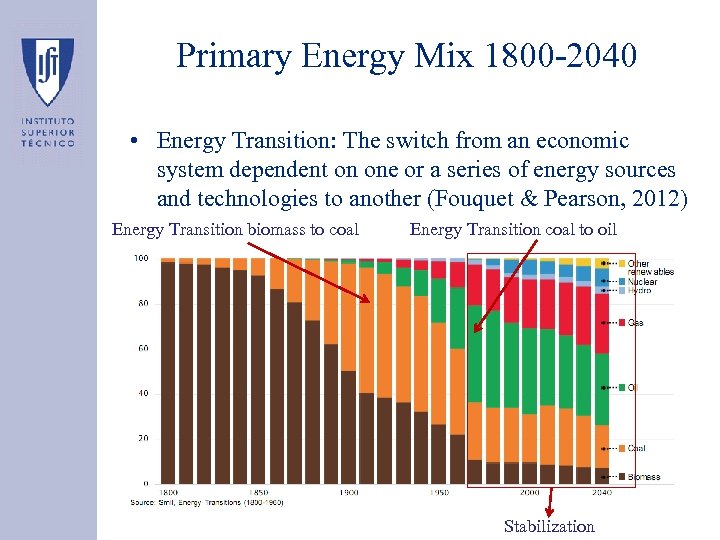
Primary Energy Mix 1800 -2040 • Energy Transition: The switch from an economic system dependent on one or a series of energy sources and technologies to another (Fouquet & Pearson, 2012) Energy Transition biomass to coal Energy Transition coal to oil Stabilization
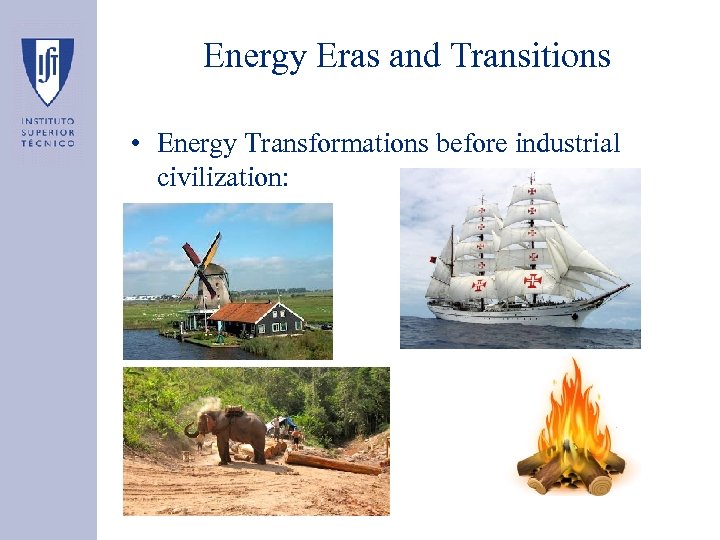
Energy Eras and Transitions • Energy Transformations before industrial civilization:
Energy Eras and Transitions • Energy Transformations before industrial civilization: – Solar radiation – food & feed, light and heat – Animate labor from humans and work animals (levers, inclined planes, pulleys) – mechanical work & transport – Kinetic energies of water & wind – mechanical work & transport – Biomass fuels (wood, charcoal, crop residues, dung) – residential & industrial heat and light
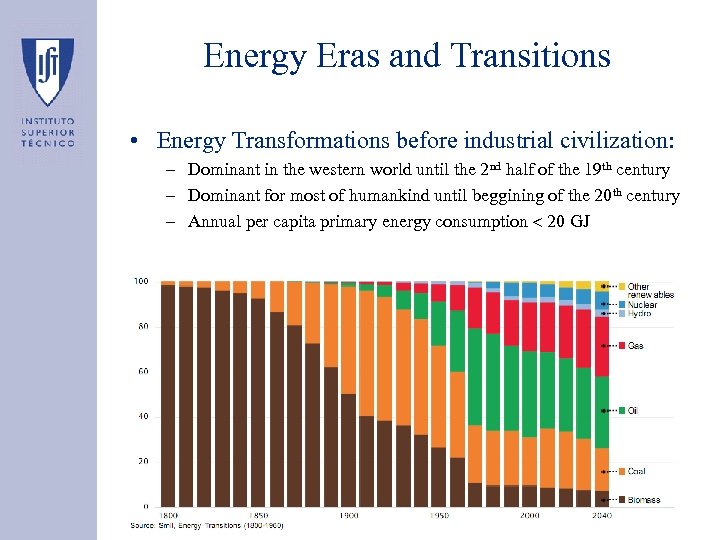
Energy Eras and Transitions • Energy Transformations before industrial civilization: – Dominant in the western world until the 2 nd half of the 19 th century – Dominant for most of humankind until beggining of the 20 th century – Annual per capita primary energy consumption 20 GJ
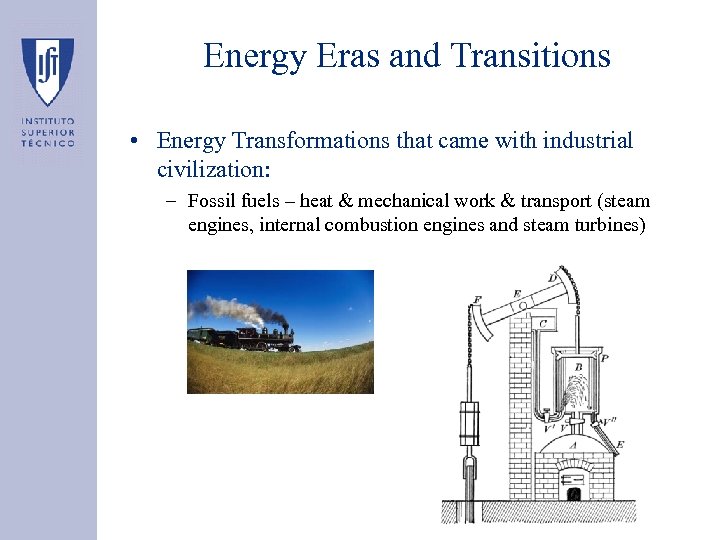
Energy Eras and Transitions • Energy Transformations that came with industrial civilization: – Fossil fuels – heat & mechanical work & transport (steam engines, internal combustion engines and steam turbines)
Energy Transitions • An aggregated transition to other energy source(s) includes numerous services and sectors
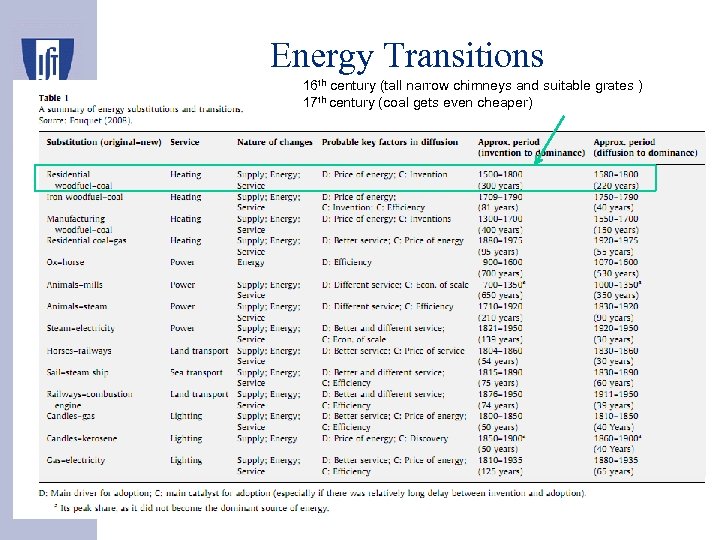
Energy Transitions 16 th century (tall narrow chimneys and suitable grates ) 17 th century (coal gets even cheaper) • The switch from an economic system dependent on one or a series of energy sources and technologies to another (Fouquet & Pearson, 2012)
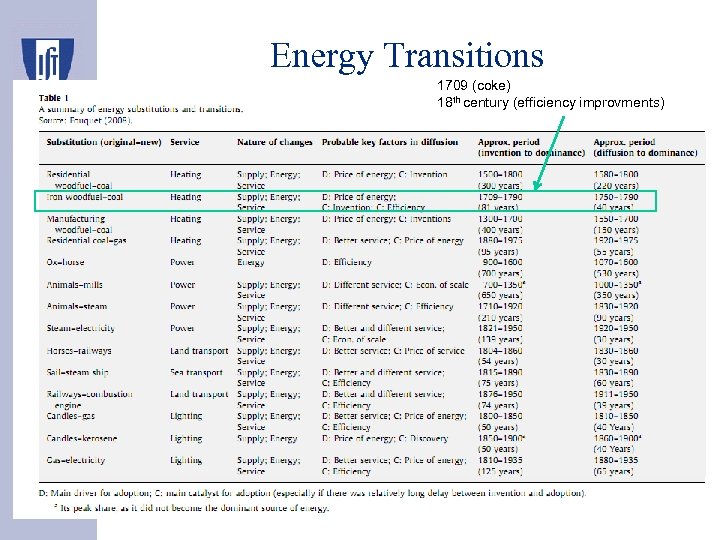
Energy Transitions 1709 (coke) 18 th century (efficiency improvments) • The switch from an economic system dependent on one or a series of energy sources and technologies to another (Fouquet & Pearson, 2012)
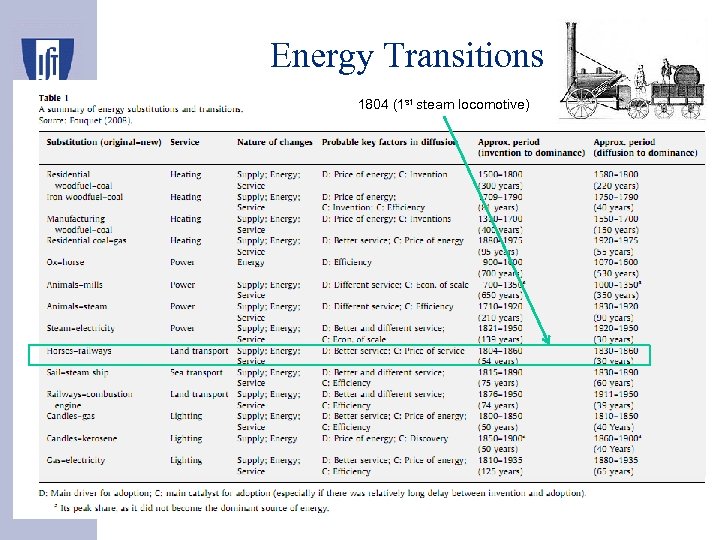
Energy Transitions 1804 (1 st steam locomotive) • The switch from an economic system dependent on one or a series of energy sources and technologies to another (Fouquet & Pearson, 2012)
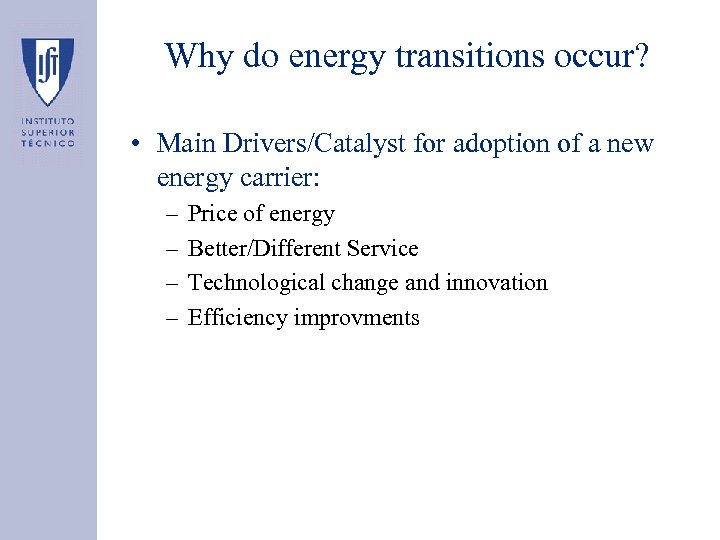
Why do energy transitions occur? • Main Drivers/Catalyst for adoption of a new energy carrier: – – Price of energy Better/Different Service Technological change and innovation Efficiency improvments
VIII – WORLD FINAL ENERGY USE 1800 -2010
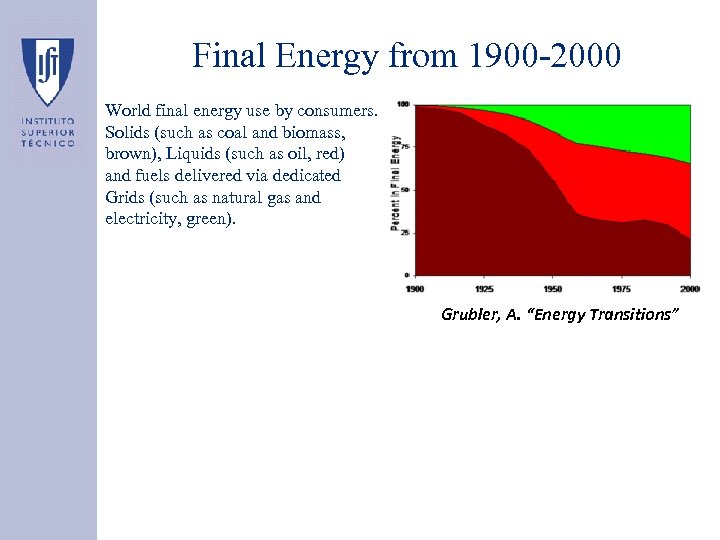
Final Energy from 1900 -2000 World final energy use by consumers. Solids (such as coal and biomass, brown), Liquids (such as oil, red) and fuels delivered via dedicated Grids (such as natural gas and electricity, green). Grubler, A. “Energy Transitions”
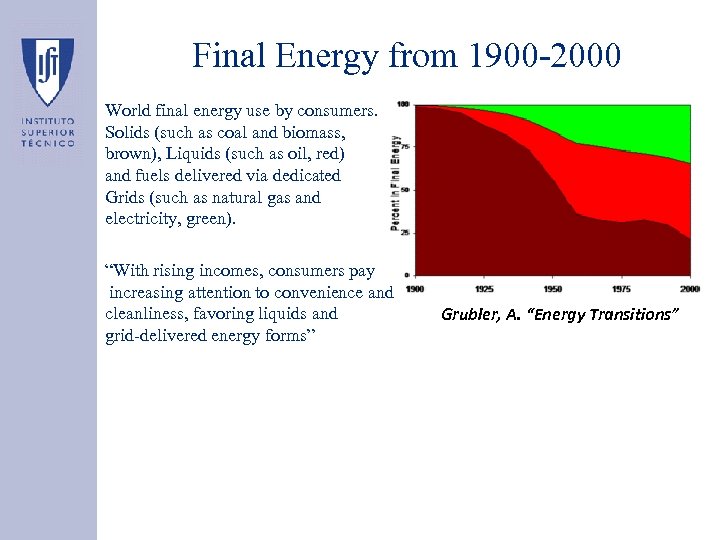
Final Energy from 1900 -2000 World final energy use by consumers. Solids (such as coal and biomass, brown), Liquids (such as oil, red) and fuels delivered via dedicated Grids (such as natural gas and electricity, green). “With rising incomes, consumers pay increasing attention to convenience and cleanliness, favoring liquids and grid-delivered energy forms” Grubler, A. “Energy Transitions”
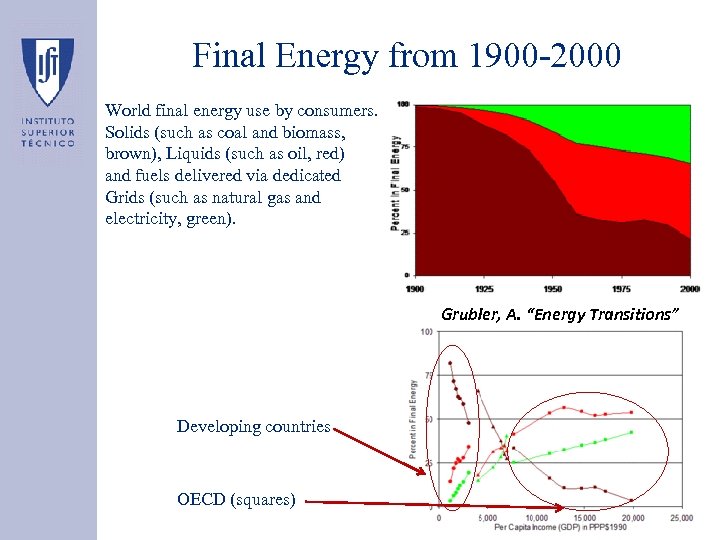
Final Energy from 1900 -2000 World final energy use by consumers. Solids (such as coal and biomass, brown), Liquids (such as oil, red) and fuels delivered via dedicated Grids (such as natural gas and electricity, green). Grubler, A. “Energy Transitions” Developing countries OECD (squares)
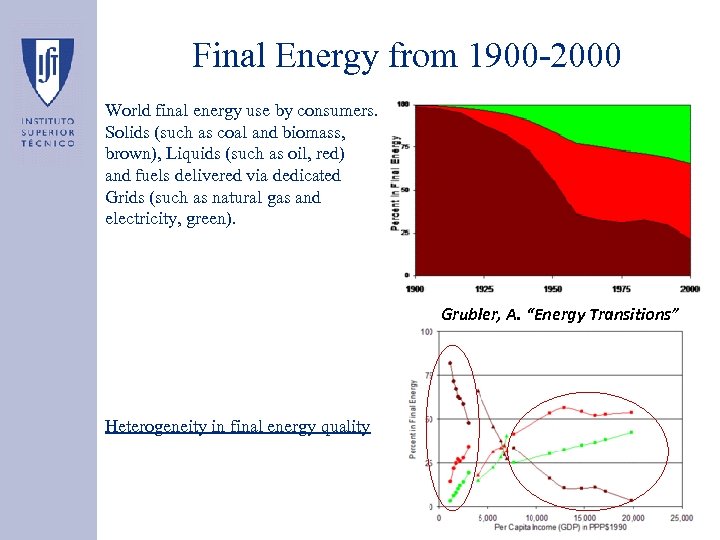
Final Energy from 1900 -2000 World final energy use by consumers. Solids (such as coal and biomass, brown), Liquids (such as oil, red) and fuels delivered via dedicated Grids (such as natural gas and electricity, green). Grubler, A. “Energy Transitions” Heterogeneity in final energy quality
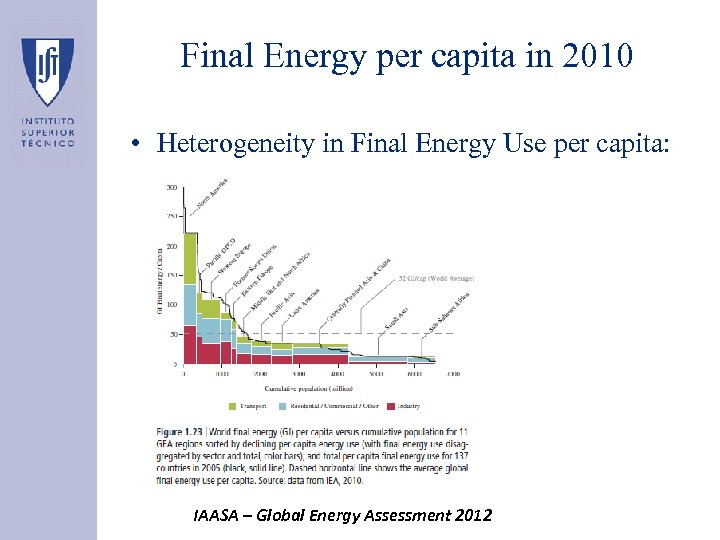
Final Energy per capita in 2010 • Heterogeneity in Final Energy Use per capita: IAASA – Global Energy Assessment 2012
What is Final Energy used for?
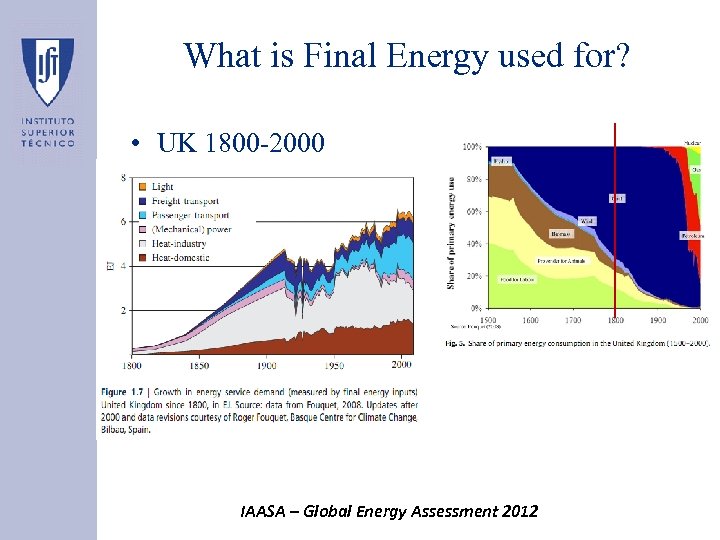
What is Final Energy used for? • UK 1800 -2000 IAASA – Global Energy Assessment 2012
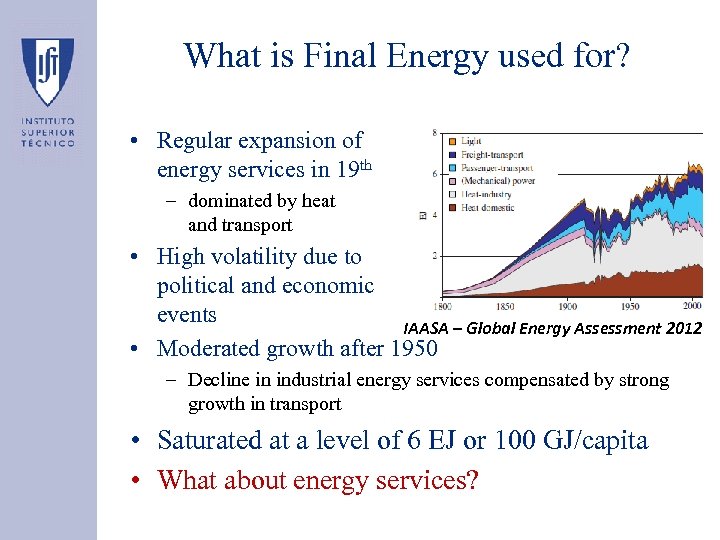
What is Final Energy used for? • Regular expansion of energy services in 19 th – dominated by heat and transport • High volatility due to political and economic events IAASA – Global Energy Assessment 2012 • Moderated growth after 1950 – Decline in industrial energy services compensated by strong growth in transport • Saturated at a level of 6 EJ or 100 GJ/capita • What about energy services?
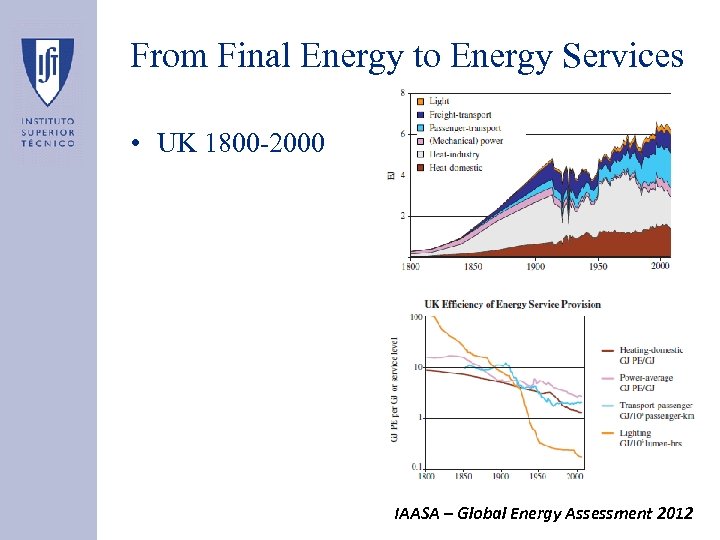
From Final Energy to Energy Services • UK 1800 -2000 IAASA – Global Energy Assessment 2012
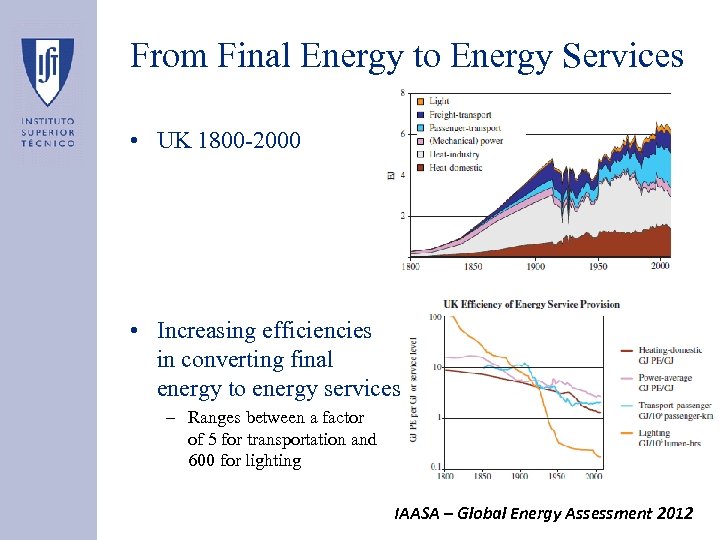
From Final Energy to Energy Services • UK 1800 -2000 • Increasing efficiencies in converting final energy to energy services – Ranges between a factor of 5 for transportation and 600 for lighting IAASA – Global Energy Assessment 2012
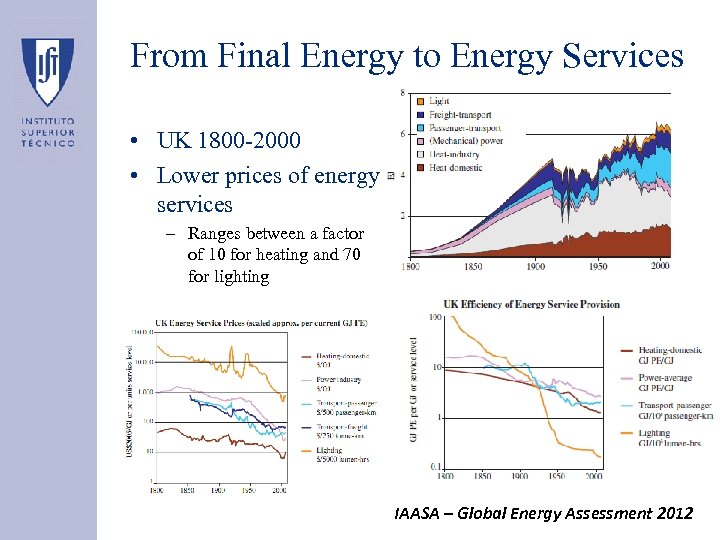
From Final Energy to Energy Services • UK 1800 -2000 • Lower prices of energy services – Ranges between a factor of 10 for heating and 70 for lighting IAASA – Global Energy Assessment 2012
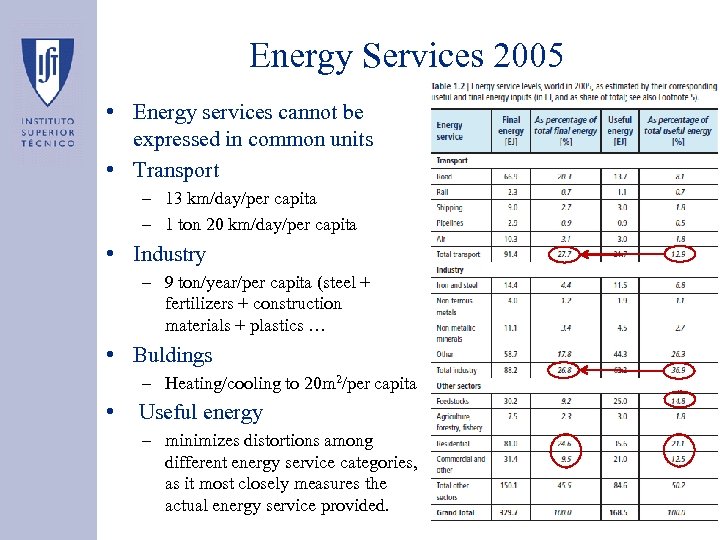
Energy Services 2005 • Energy services cannot be expressed in common units • Transport – 13 km/day/per capita – 1 ton 20 km/day/per capita • Industry – 9 ton/year/per capita (steel + fertilizers + construction materials + plastics … • Buldings – Heating/cooling to 20 m 2/per capita • Useful energy – minimizes distortions among different energy service categories, as it most closely measures the actual energy service provided.
IX – ENERGY & ECONOMICS
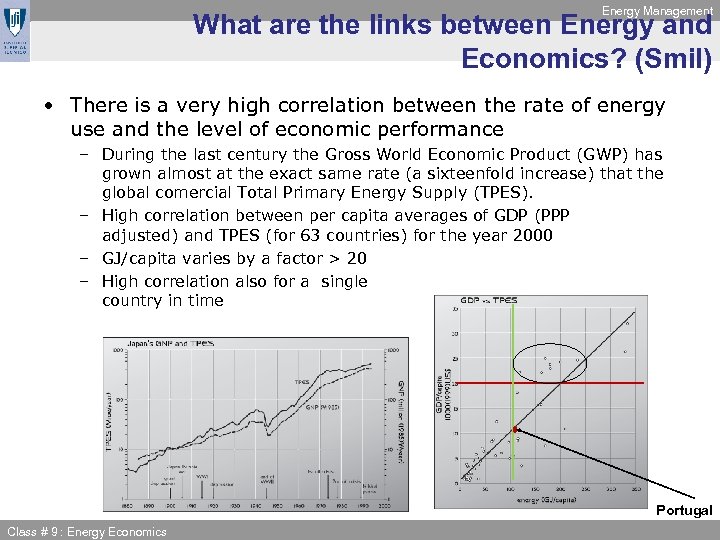
Energy Management What are the links between Energy and Economics? (Smil) • There is a very high correlation between the rate of energy use and the level of economic performance – During the last century the Gross World Economic Product (GWP) has grown almost at the exact same rate (a sixteenfold increase) that the global comercial Total Primary Energy Supply (TPES). – High correlation between per capita averages of GDP (PPP adjusted) and TPES (for 63 countries) for the year 2000 – GJ/capita varies by a factor > 20 – High correlation also for a single country in time Portugal Class # 9 : Energy Economics
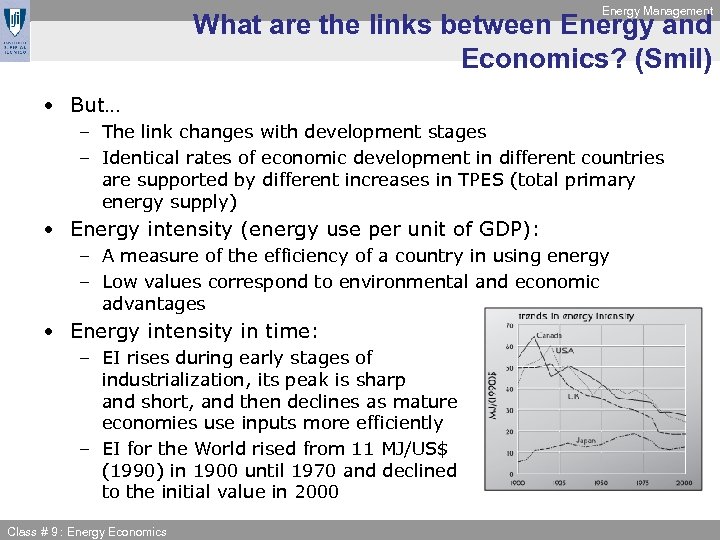
Energy Management What are the links between Energy and Economics? (Smil) • But… – The link changes with development stages – Identical rates of economic development in different countries are supported by different increases in TPES (total primary energy supply) • Energy intensity (energy use per unit of GDP): – A measure of the efficiency of a country in using energy – Low values correspond to environmental and economic advantages • Energy intensity in time: – EI rises during early stages of industrialization, its peak is sharp and short, and then declines as mature economies use inputs more efficiently – EI for the World rised from 11 MJ/US$ (1990) in 1900 until 1970 and declined to the initial value in 2000 Class # 9 : Energy Economics
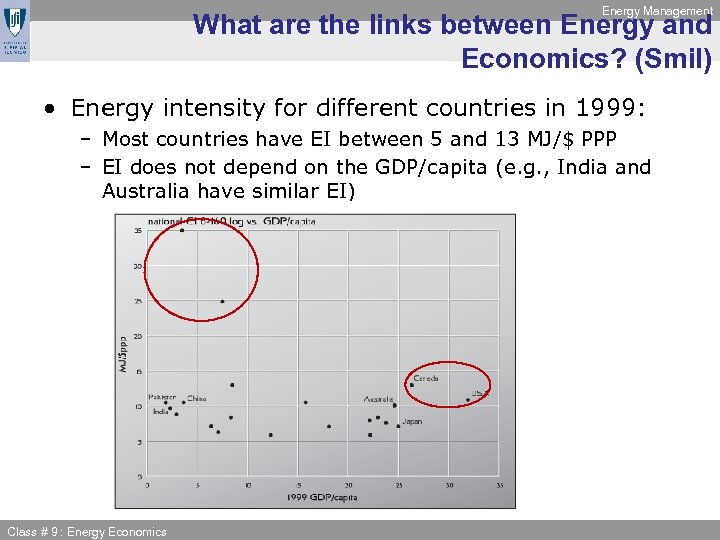
Energy Management What are the links between Energy and Economics? (Smil) • Energy intensity for different countries in 1999: – Most countries have EI between 5 and 13 MJ/$ PPP – EI does not depend on the GDP/capita (e. g. , India and Australia have similar EI) Class # 9 : Energy Economics
Energy Management What are the links between Energy and Economics? (Smil) • Factors that control EI: – – – Degree of energy self-sufficiency Composition on primary energy supply Differences in industrial structure Country size Climate • Problems with EI: – Treatment of Primary Electricity (e. g. Sweden vs. Denmark) – the method of partial substitution will inflate all large-scale producers of electricity – It is misleading if it counts only with commercial forms of energy – animate labor and biomass were the most important forms of energy for most of humankind until middle of the 20 th century Class # 9 : Energy Economics
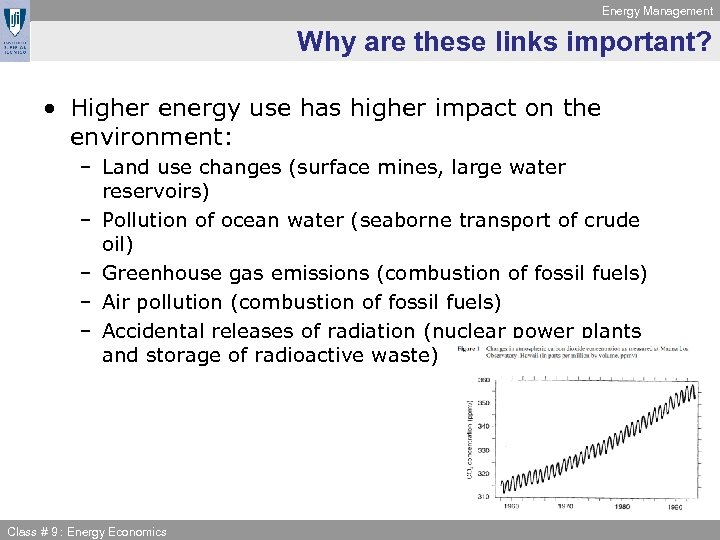
Energy Management Why are these links important? • Higher energy use has higher impact on the environment: – Land use changes (surface mines, large water reservoirs) – Pollution of ocean water (seaborne transport of crude oil) – Greenhouse gas emissions (combustion of fossil fuels) – Air pollution (combustion of fossil fuels) – Accidental releases of radiation (nuclear power plants and storage of radioactive waste) Class # 9 : Energy Economics
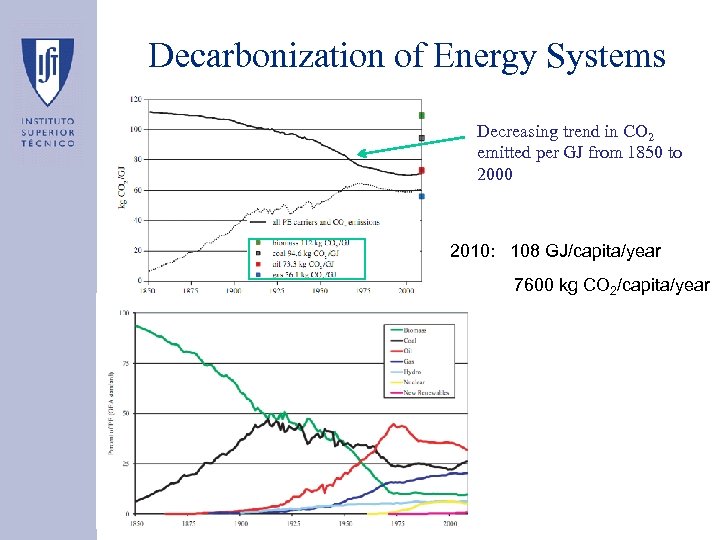
Decarbonization of Energy Systems Decreasing trend in CO 2 emitted per GJ from 1850 to 2000 2010: 108 GJ/capita/year 7600 kg CO 2/capita/year
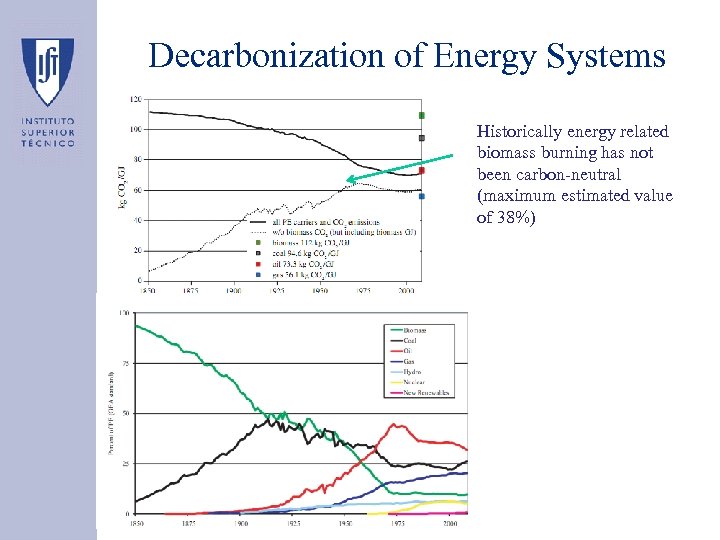
Decarbonization of Energy Systems Historically energy related biomass burning has not been carbon-neutral (maximum estimated value of 38%)
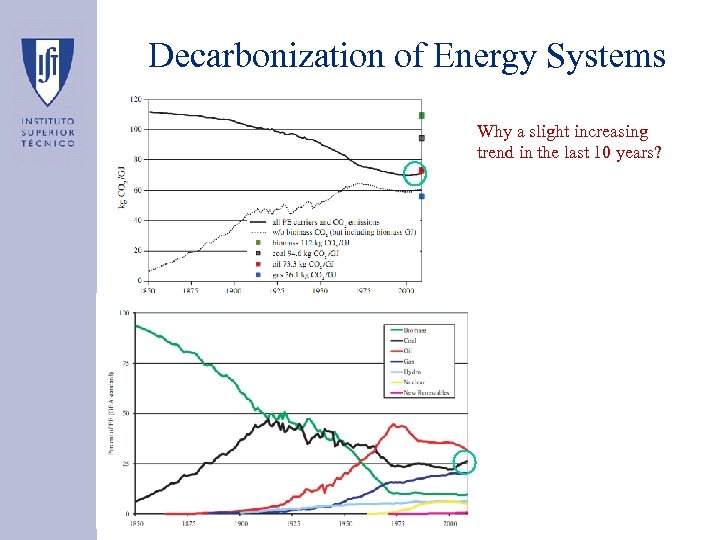
Decarbonization of Energy Systems Why a slight increasing trend in the last 10 years?
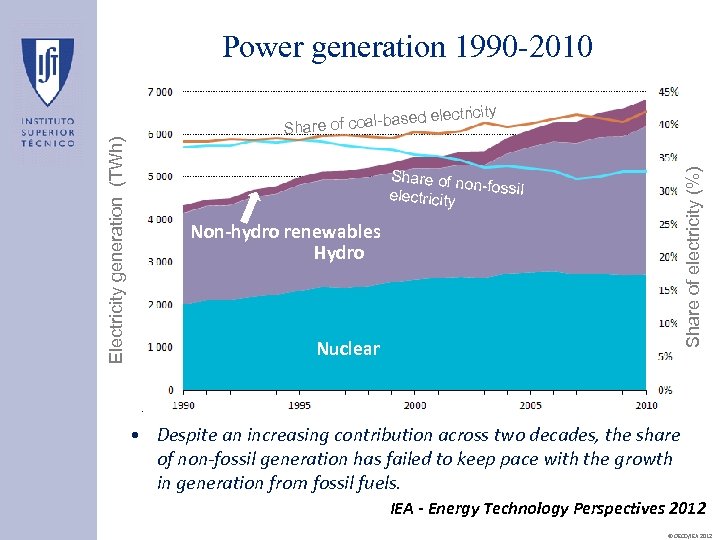
Power generation 1990 -2010 Share of no n-fossil electricity Share of electricity (%) Electricity generation (TWh) ed electricity bas Share of coal- Non-hydro renewables Hydro Nuclear • Despite an increasing contribution across two decades, the share of non-fossil generation has failed to keep pace with the growth in generation from fossil fuels. IEA - Energy Technology Perspectives 2012 © OECD/IEA 2012
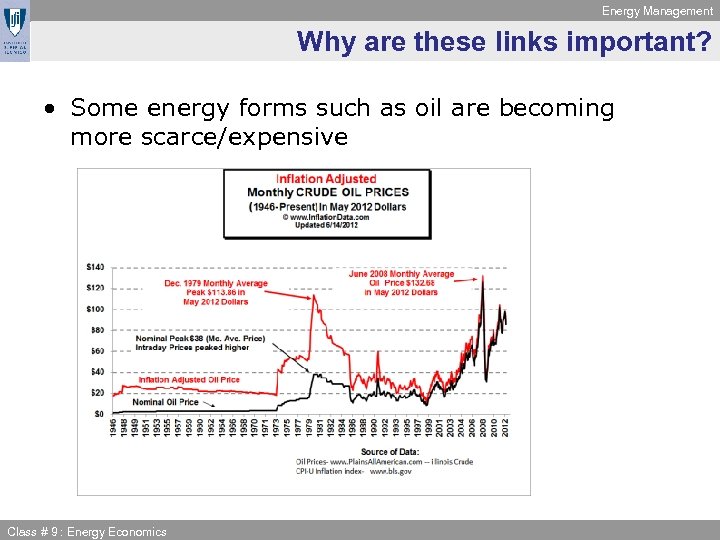
Energy Management Why are these links important? • Some energy forms such as oil are becoming more scarce/expensive Class # 9 : Energy Economics
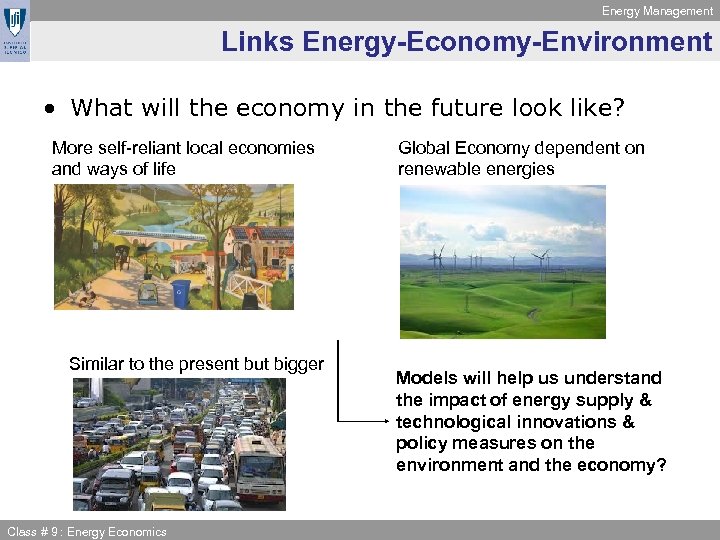
Energy Management Links Energy-Economy-Environment • What will the economy in the future look like? More self-reliant local economies and ways of life Similar to the present but bigger Class # 9 : Energy Economics Global Economy dependent on renewable energies Models will help us understand the impact of energy supply & technological innovations & policy measures on the environment and the economy?
X – WORLD ENERGY USE IN 2005
Energy Management World Sankey Diagram in 2005 Class # 9 : Energy Economics IAASA – Global Energy Assessment 2012
Energy Management Regional Energy Use in 2005 Class # 9 : Energy Economics
Скачать презентацию Valências Ambientais 2014 2015 Prof Tânia Sousa taniasousa ist utl
dcb2ae9988af51091793f8c4cef8b433.ppt