


 Скачать презентацию Vacuum Techniques Haji Shirinzadeh h_szadeh merc ac ir Workshop
ccea8f298d1aac5980b9418f99233126.ppt
- Количество слайдов: 68
 Vacuum Techniques Haji Shirinzadeh h_szadeh@merc. ac. ir Workshop on vacuum and thin film technology, Karaj. 2007
 Why do we want to learn about a vacuum? Vacuum technology is widely used in a variety of industries. Here are some applications you would have certainly heard about: i) An early application of vacuum technology came around 1900 when the first major industrial use was for light bulbs and TV tube production (later on). It has been shown that filaments emit electrons under vacuum which is the major property used in television technology. ii) The second major application is in the electronic industry. Many processes that occur in a semiconductor fabrication facility require vacuums of different levels, including the deposition of thin films of material on computer chips. iii) Another major application is in space technology. The main issue in space technology is how to design the space station or shuttle in order to maintain a pressurized cabin. Also, it is important to design safe space-suits to protect astronauts during their missions in open space. These are examples of how vacuum technology helps us. Now we will proceed to learn about vaccum and how it is created and measured. In order to learn about vacuum, you will first need to understand the concept of pressure.
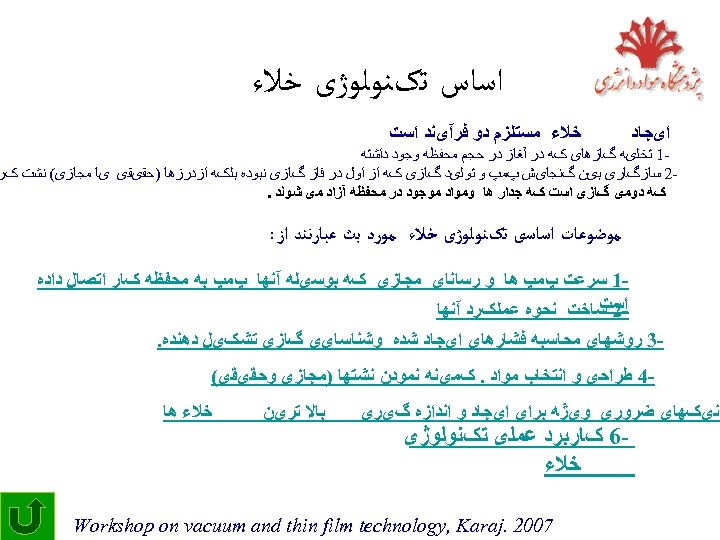 ﺍﺳﺎﺱ ﺗکﻨﻮﻟﻮژی ﺧﻼﺀ ﺍیﺠﺎﺩ ﺧﻼﺀ ﻣﺴﺘﻠﺰﻡ ﺩﻭ ﻓﺮآیﻨﺪ ﺍﺳﺖ 1 ﺗﺨﻠیﻪ گﺎﺯﻫﺎی کﻪ ﺩﺭ آﻐﺎﺯ ﺩﺭ ﺣﺠﻢ ﻣﺤﻔﻈﻪ ﻭﺟﻮﺩ ﺩﺍﺷﺘﻪ 2 ﺳﺎﺯگﺎﺭی ﺑیﻦ گﻨﺠﺎیﺶ پﻤپ ﻭ ﺗﻮﻟیﺪ گﺎﺯی کﻪ ﺍﺯ ﺍﻭﻝ ﺩﺭ ﻓﺎﺯ گﺎﺯی ﻧﺒﻮﺩﻩ ﺑﻠکﻪ ﺍﺯﺩﺭﺯﻫﺎ )ﺣﻘیﻘی یﺎ ﻣﺠﺎﺯی( ﻧﺸﺖ کﺮ کﻪ ﺩﻭﻣی گﺎﺯی ﺍﺳﺖ کﻪ ﺟﺪﺍﺭ ﻫﺎ ﻭﻣﻮﺍﺩ ﻣﻮﺟﻮﺩ ﺩﺭ ﻣﺤﻔﻈﻪ آﺰﺍﺩ ﻣی ﺷﻮﻧﺪ. ﻣﻮﺿﻮﻋﺎﺕ ﺍﺳﺎﺳی ﺗکﻨﻮﻟﻮژی ﺧﻼﺀ ﻣﻮﺭﺩ ﺑﺙ ﻋﺒﺎﺭﻧﻨﺪ ﺍﺯ : 1 ﺳﺮﻋﺖ پﻤپ ﻫﺎ ﻭ ﺭﺳﺎﻧﺎی ﻣﺠﺎﺯی کﻪ ﺑﻮﺳیﻠﻪ آﻨﻬﺎ پﻤپ ﺑﻪ ﻣﺤﻔﻈﻪ کﺎﺭ ﺍﺗﺼﺎﻝ ﺩﺍﺩﻩ ﺍﺳﺖ 2 ﺳﺎﺧﺖ ﻧﺤﻮﻩ ﻋﻤﻠکﺮﺩ آﻨﻬﺎ 3 ﺭﻭﺷﻬﺎی ﻣﺤﺎﺳﺒﻪ ﻓﺸﺎﺭﻫﺎی ﺍیﺠﺎﺩ ﺷﺪﻩ ﻭﺷﻨﺎﺳﺎیی گﺎﺯی ﺗﺸکیﻞ ﺩﻫﻨﺪﻩ. -4 ﻃﺮﺍﺣی ﻭ ﺍﻧﺘﺨﺎﺏ ﻣﻮﺍﺩ. کﻤیﻨﻪ ﻧﻤﻮﺩﻥ ﻧﺸﺘﻬﺎ )ﻣﺠﺎﺯی ﻭﺣﻘیﻘی( کﻨیکﻬﺎی ﺿﺮﻭﺭی ﻭیژﻪ ﺑﺮﺍی ﺍیﺠﺎﺩ ﻭ ﺍﻧﺪﺍﺯﻩ گیﺮی 6 کﺎﺭﺑﺮﺩ ﻋﻤﻠی ﺗکﻨﻮﻟﻮژی ﺧﻼﺀ ﺑﺎﻻ ﺗﺮیﻦ ﺧﻼﺀ ﻫﺎ 7002. Workshop on vacuum and thin film technology, Karaj
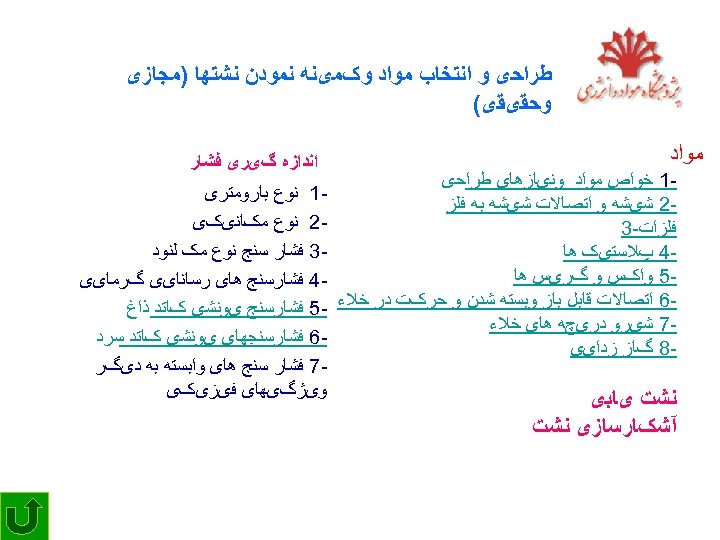 ﻃﺮﺍﺣی ﻭ ﺍﻧﺘﺨﺎﺏ ﻣﻮﺍﺩ ﻭکﻤیﻨﻪ ﻧﻤﻮﺩﻥ ﻧﺸﺘﻬﺎ )ﻣﺠﺎﺯی ﻭﺣﻘیﻘی( ﻣﻮﺍﺩ 1 ﺧﻮﺍﺹ ﻣﻮﺍﺩ ﻭﻧیﺎﺯﻫﺎی ﻃﺮﺍﺣی 2 ﺷیﺸﻪ ﻭ ﺍﺗﺼﺎﻻﺕ ﺷیﺸﻪ ﺑﻪ ﻓﻠﺰﺍﺕ-3 4 پﻼﺳﺘیک ﻫﺎ 5 ﻭﺍکﺲ ﻭ گﺮیﺲ ﻫﺎ 6 ﺍﺗﺼﺎﻻﺕ ﻗﺎﺑﻞ ﺑﺎﺯ ﻭﺑﺴﺘﻪ ﺷﺪﻥ ﻭ ﺣﺮکﺖ ﺩﺭ ﺧﻼﺀ 7 ﺷیﺮﻭ ﺩﺭیچﻪ ﻫﺎی ﺧﻼﺀ -8 گﺎﺯ ﺯﺩﺍیی ﻧﺸﺖ یﺎﺑی آﺸکﺎﺭﺳﺎﺯی ﻧﺸﺖ ﺍﻧﺪﺍﺯﻩ گیﺮی ﻓﺸﺎﺭ 1 ﻧﻮﻉ ﺑﺎﺭﻭﻣﺘﺮی 2 ﻧﻮﻉ ﻣکﺎﻧیکی 3 ﻓﺸﺎﺭ ﺳﻨﺞ ﻧﻮﻉ ﻣک ﻟﻨﻮﺩ 4 ﻓﺸﺎﺭﺳﻨﺞ ﻫﺎی ﺭﺳﺎﻧﺎیی گﺮﻣﺎیی 5 ﻓﺸﺎﺭﺳﻨﺞ یﻮﻧﺸی کﺎﺗﺪ ﺫﺍﻍ 6 ﻓﺸﺎﺭﺳﻨﺠﻬﺎی یﻮﻧﺸی کﺎﺗﺪ ﺳﺮﺩ 7 ﻓﺸﺎﺭ ﺳﻨﺞ ﻫﺎی ﻭﺍﺑﺴﺘﻪ ﺑﻪ ﺩیگﺮ ﻭیژگیﻬﺎی ﻓیﺰیکی
 _____کﺎﺭﺑﺮﺩ ﻋﻤﻠی ﺗکﻨﻮﻟﻮژی ﺧﻼﺀ 1 ﺧﻼﺀ ﺑﻪ ﻋﻨﻮﺍﻥ ﻳﻚ ﻋﺎﻳﻖ ﺍﻟﻜﺘﺮﻳﻜﻲ 2 ﺟﺪﺍ ﺳﺎﺯﻱ ﺗﻮﺳﻂ ﺗﻘﻄﻴﺮ ﺩﺭ ﺧﻼﺀ 3 ﺍﻧﺠﻤﺎﺩ ﺧﺸﻚ 4 ﺳﺎﺧﺘﻼﻣپ ﻫﺎ، ﻟﻮﺍﺯﻡ گﺮﻣﺎ ﻳﻮﻧﻲ ﻭ ﻧﻴﻤﻪ ﺭﺳﺎﻧﺎ 5 ﻣﺘﺎﻟﻮژﻲ ﺧﻼﺀ ﻣﺤﻴﻂ آﺰﻣﺎﻳﺸﻲ ﻓﻀﺎپﻴﻤﺎ-6 ﺧﻼﺀ ﺑﻪ ﻋﻨﻮﺍﻥ ﻋﺎﻳﻖ گﺮﻣﺎﻳﻲ-7 ﻭ ﻏﻴﺮﻩ. . .
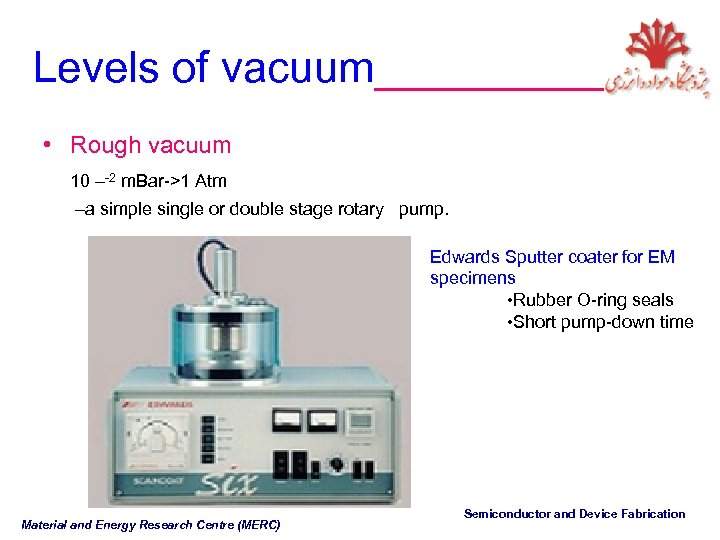 Levels of vacuum_____ • Rough vacuum 10 –-2 m. Bar->1 Atm –a simple single or double stage rotary pump. Edwards Sputter coater for EM specimens • Rubber O-ring seals • Short pump-down time Material and Energy Research Centre (MERC) Semiconductor and Device Fabrication
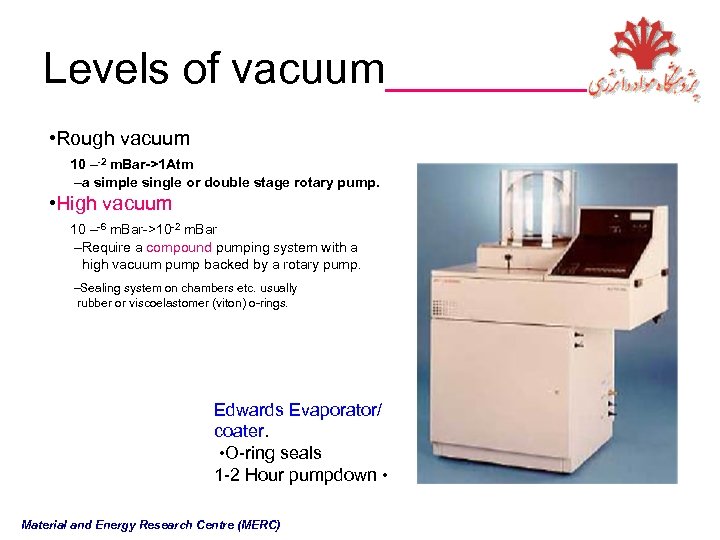 Levels of vacuum_____ • Rough vacuum 10 –-2 m. Bar->1 Atm –a simple single or double stage rotary pump. • High vacuum 10 –-6 m. Bar->10 -2 m. Bar –Require a compound pumping system with a high vacuum pump backed by a rotary pump. –Sealing system on chambers etc. usually rubber or viscoelastomer (viton) o-rings. Edwards Evaporator/ coater. • O-ring seals 1 -2 Hour pumpdown • Material and Energy Research Centre (MERC)
 Requirements for Vacuum_____ • Units –A wide variety of units are used in pressure measurement for vacuum. –Although the SI unit is Pa, m. Bars are widely used on virtually all instrumentation. 1 –Bar = 1 Atm = 105 Pa = 103 m. Bar = 760 Torr
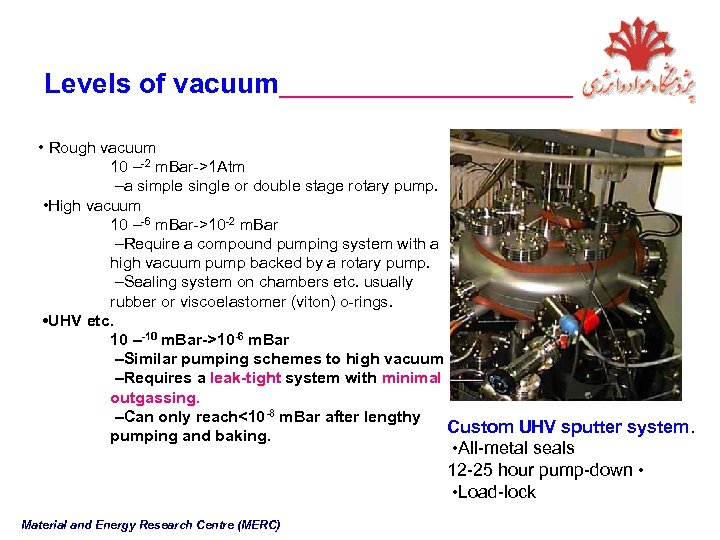 Levels of vacuum___________ • Rough vacuum 10 –-2 m. Bar->1 Atm –a simple single or double stage rotary pump. • High vacuum 10 –-6 m. Bar->10 -2 m. Bar –Require a compound pumping system with a high vacuum pump backed by a rotary pump. –Sealing system on chambers etc. usually rubber or viscoelastomer (viton) o-rings. • UHV etc. 10 –-10 m. Bar->10 -6 m. Bar –Similar pumping schemes to high vacuum –Requires a leak-tight system with minimal outgassing. –Can only reach<10 -8 m. Bar after lengthy Custom UHV sputter system. pumping and baking. • All-metal seals 12 -25 hour pump-down • • Load-lock Material and Energy Research Centre (MERC)
 Applications____________ • Controlled atmosphere –Furnaces • Required for processing reactive materials. • Can compensate for poor vacuum by increasing the inert gas flow. • Mean free path • The mean free path (mfp) depends inversely on the pressure. –film deposition • Required for any thin film deposition process. • Low arrival rate of impurity atoms • Control the mean free path in the gas. –electron microscopes • Are vacuum systems, though pretty poor ones in most cases. • Electrons must get from the gun to the sample without scattering. Material and Energy Research Centre (MERC)
 Applications: Surface contamination______ –Ultra-high vacuum systems are required if surface contamination issues are paramount. –The time taken to cover a monolayer provides a measure of the degree of vacuum required. –The monolayer arrival time is greater than 1 hour only for p < 10 – 9 mbar; • High purity growth –High purity thin films require high quality vacuum. –The most stringent requirements are for epitaxial growth. • Surface analysis –Require very low surface arrival rates of reactive impurities to ensure that measurements are not corrupted by the vacuum environment. Material and Energy Research Centre (MERC)
 Pumping systems_____________ • The selection of pump type and capacity depends on the system requirements and the available budget. • The pumping speed, S, is the volumetric flow through the pump intake port: S= d. V/ dt. (Units- L/s, m 3/h, cm 3/s. ( • A vacuum pump is characterised by its throughput, Q, as product of the S and the inlet pressure of the pump, P: Q=SP (1( • Throughput=pumping capacity= quantity of gas moved by the pump over a unit of time (Units - mbar⋅L/s( Material and Energy Research Centre (MERC)
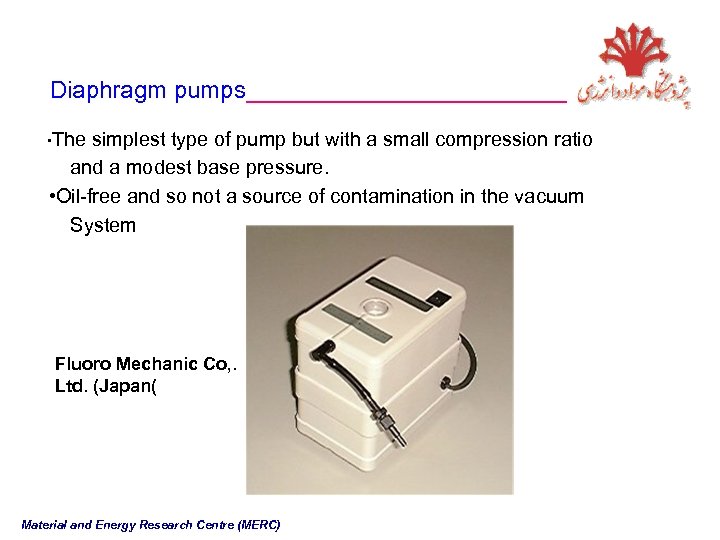 Diaphragm pumps____________ • The simplest type of pump but with a small compression ratio and a modest base pressure. • Oil-free and so not a source of contamination in the vacuum System Fluoro Mechanic Co, . Ltd. (Japan( Material and Energy Research Centre (MERC)
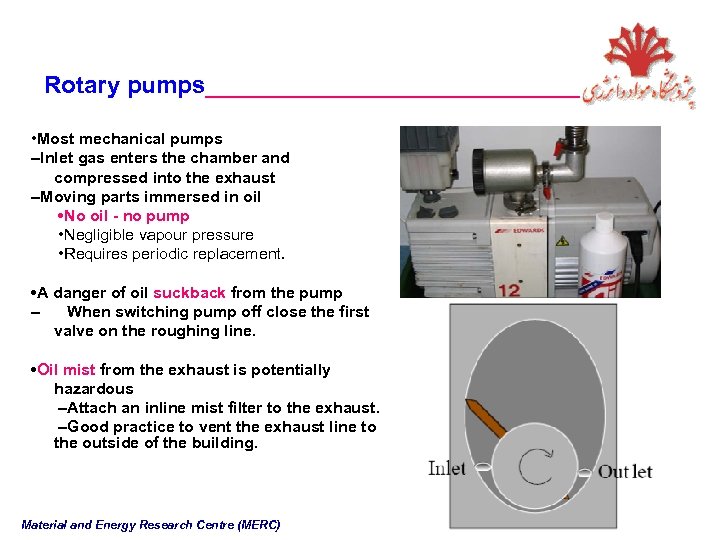 Rotary pumps______________ • Most mechanical pumps –Inlet gas enters the chamber and compressed into the exhaust –Moving parts immersed in oil • No oil - no pump • Negligible vapour pressure • Requires periodic replacement. • A danger of oil suckback from the pump – When switching pump off close the first valve on the roughing line. • Oil mist from the exhaust is potentially hazardous –Attach an inline mist filter to the exhaust. –Good practice to vent the exhaust line to the outside of the building. Material and Energy Research Centre (MERC)
 Functions of Oil_____ • Seals – Oil surface tension seals the duo-seal – Fills gaps between the vanes, rotors & stators • Lubricates – Bearing areas and blade contact surfaces • Cools – Moves heat from rotors & stators to the • Protects parts from rust and corrosion –Coats surfaces to protect from aggressive gas Material and Energy Research Centre (MERC) oil box
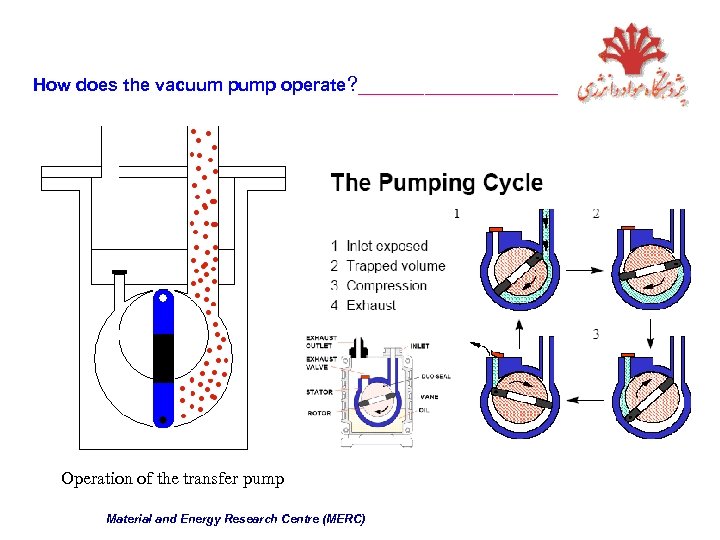 How does the vacuum pump operate? _________ Operation of the transfer pump Material and Energy Research Centre (MERC)
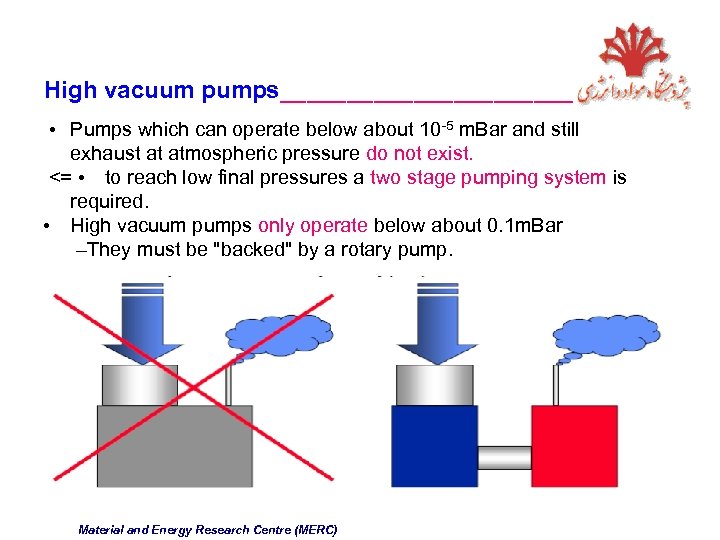 High vacuum pumps___________ • Pumps which can operate below about 10 -5 m. Bar and still exhaust at atmospheric pressure do not exist. <= • to reach low final pressures a two stage pumping system is required. • High vacuum pumps only operate below about 0. 1 m. Bar –They must be "backed" by a rotary pump. Material and Energy Research Centre (MERC)
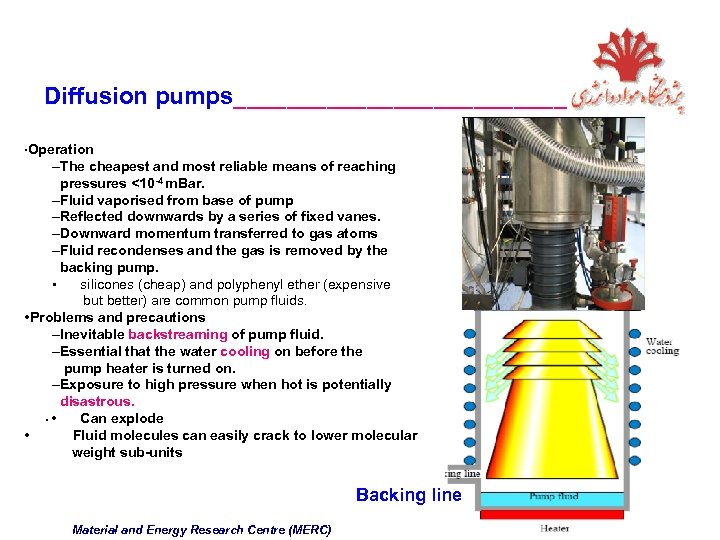 Diffusion pumps_____________ • Operation –The cheapest and most reliable means of reaching pressures <10 -4 m. Bar. –Fluid vaporised from base of pump –Reflected downwards by a series of fixed vanes. –Downward momentum transferred to gas atoms –Fluid recondenses and the gas is removed by the backing pump. • silicones (cheap) and polyphenyl ether (expensive but better) are common pump fluids. • Problems and precautions –Inevitable backstreaming of pump fluid. –Essential that the water cooling on before the pump heater is turned on. –Exposure to high pressure when hot is potentially disastrous. . • Can explode • Fluid molecules can easily crack to lower molecular weight sub-units Backing line Material and Energy Research Centre (MERC)
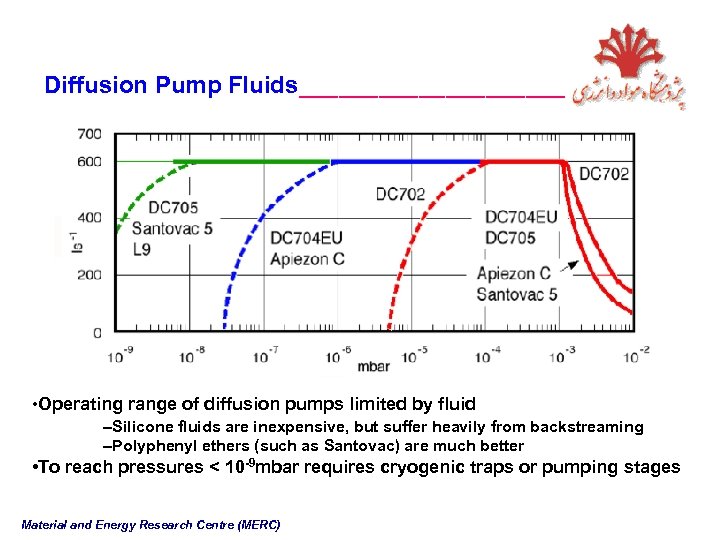 Diffusion Pump Fluids__________ • Operating range of diffusion pumps limited by fluid –Silicone fluids are inexpensive, but suffer heavily from backstreaming –Polyphenyl ethers (such as Santovac) are much better • To reach pressures < 10 -9 mbar requires cryogenic traps or pumping stages Material and Energy Research Centre (MERC)
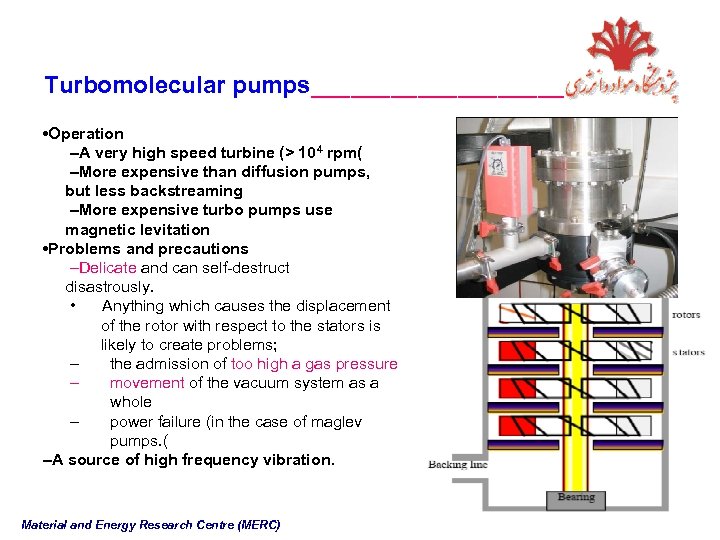 Turbomolecular pumps__________ • Operation –A very high speed turbine (> 104 rpm( –More expensive than diffusion pumps, but less backstreaming –More expensive turbo pumps use magnetic levitation • Problems and precautions –Delicate and can self-destruct disastrously. • Anything which causes the displacement of the rotor with respect to the stators is likely to create problems; – the admission of too high a gas pressure – movement of the vacuum system as a whole – power failure (in the case of maglev pumps. ( –A source of high frequency vibration. Material and Energy Research Centre (MERC)
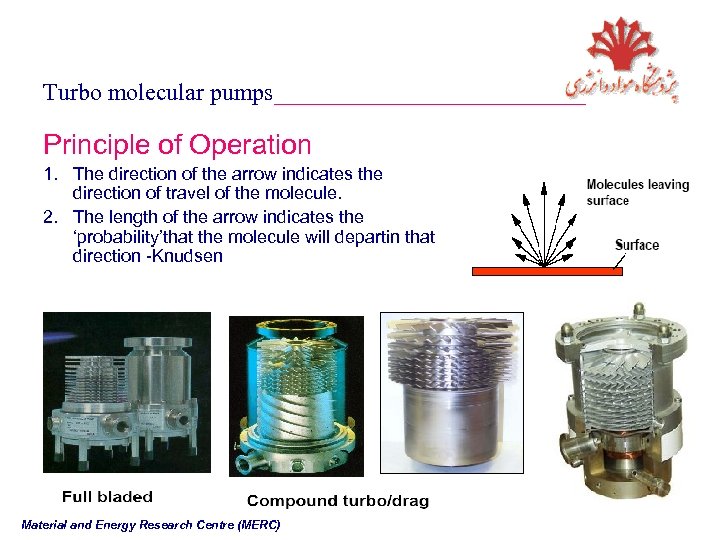 Turbo molecular pumps_____________ Principle of Operation 1. The direction of the arrow indicates the direction of travel of the molecule. 2. The length of the arrow indicates the ‘probability’that the molecule will departin that direction -Knudsen Material and Energy Research Centre (MERC)
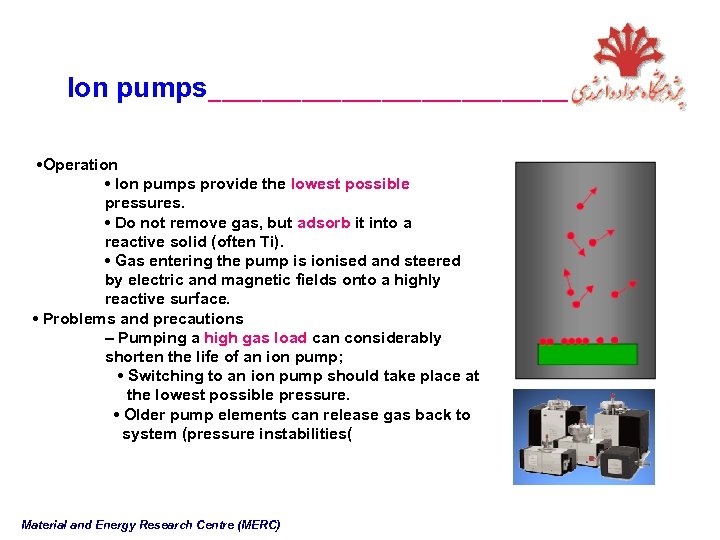 Ion pumps______________ • Operation • Ion pumps provide the lowest possible pressures. • Do not remove gas, but adsorb it into a reactive solid (often Ti). • Gas entering the pump is ionised and steered by electric and magnetic fields onto a highly reactive surface. • Problems and precautions – Pumping a high gas load can considerably shorten the life of an ion pump; • Switching to an ion pump should take place at the lowest possible pressure. • Older pump elements can release gas back to system (pressure instabilities( Material and Energy Research Centre (MERC)
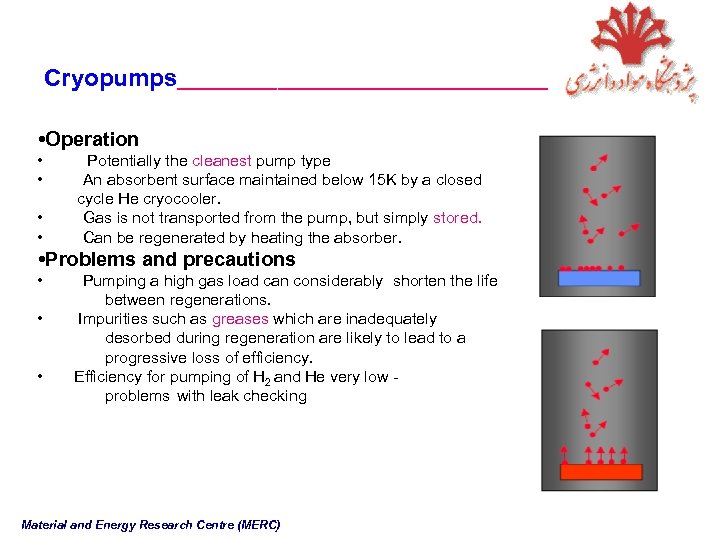 Cryopumps___________________ • Operation • • Potentially the cleanest pump type An absorbent surface maintained below 15 K by a closed cycle He cryocooler. Gas is not transported from the pump, but simply stored. Can be regenerated by heating the absorber. • Problems and precautions • • • Pumping a high gas load can considerably shorten the life between regenerations. Impurities such as greases which are inadequately desorbed during regeneration are likely to lead to a progressive loss of efficiency. Efficiency for pumping of H 2 and He very low problems with leak checking Material and Energy Research Centre (MERC)
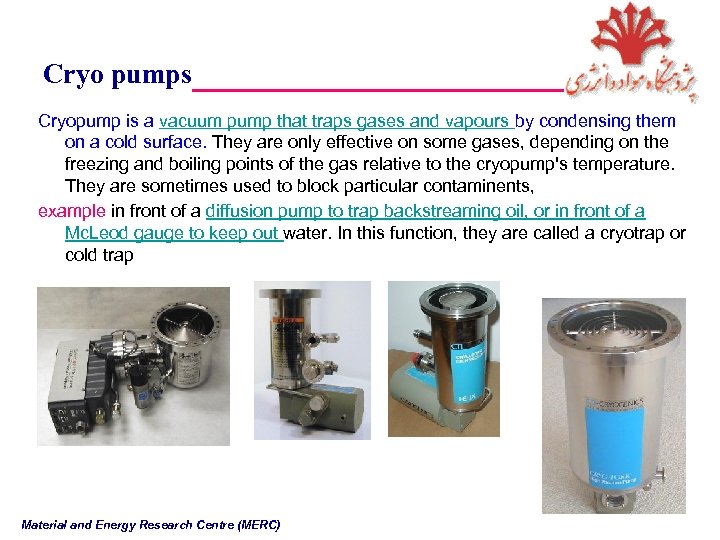 Cryo pumps_________ Cryopump is a vacuum pump that traps gases and vapours by condensing them on a cold surface. They are only effective on some gases, depending on the freezing and boiling points of the gas relative to the cryopump's temperature. They are sometimes used to block particular contaminents, example in front of a diffusion pump to trap backstreaming oil, or in front of a Mc. Leod gauge to keep out water. In this function, they are called a cryotrap or cold trap Material and Energy Research Centre (MERC)
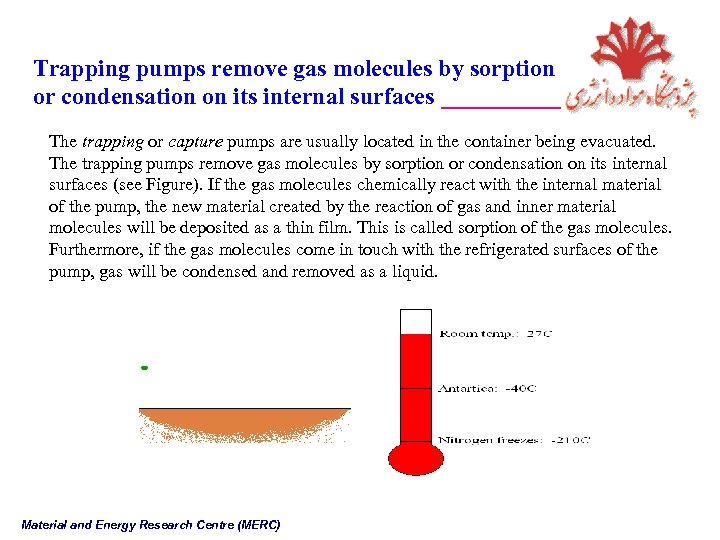 Trapping pumps remove gas molecules by sorption or condensation on its internal surfaces _____ The trapping or capture pumps are usually located in the container being evacuated. The trapping pumps remove gas molecules by sorption or condensation on its internal surfaces (see Figure). If the gas molecules chemically react with the internal material of the pump, the new material created by the reaction of gas and inner material molecules will be deposited as a thin film. This is called sorption of the gas molecules. Furthermore, if the gas molecules come in touch with the refrigerated surfaces of the pump, gas will be condensed and removed as a liquid. Material and Energy Research Centre (MERC)
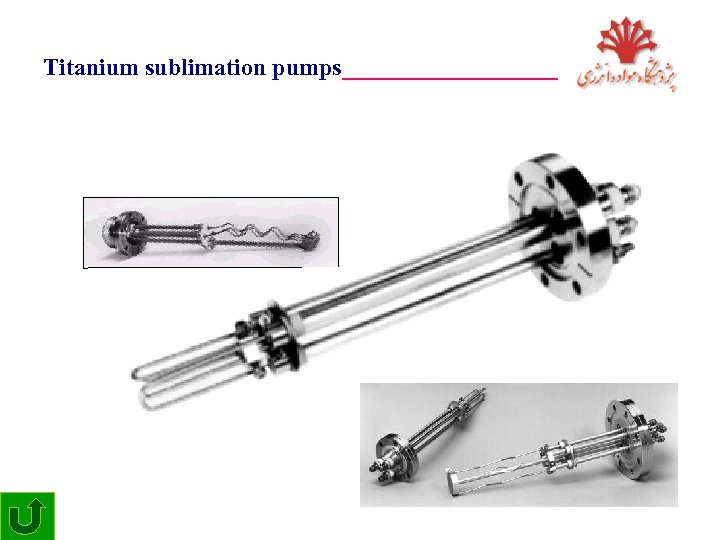 Titanium sublimation pumps_________
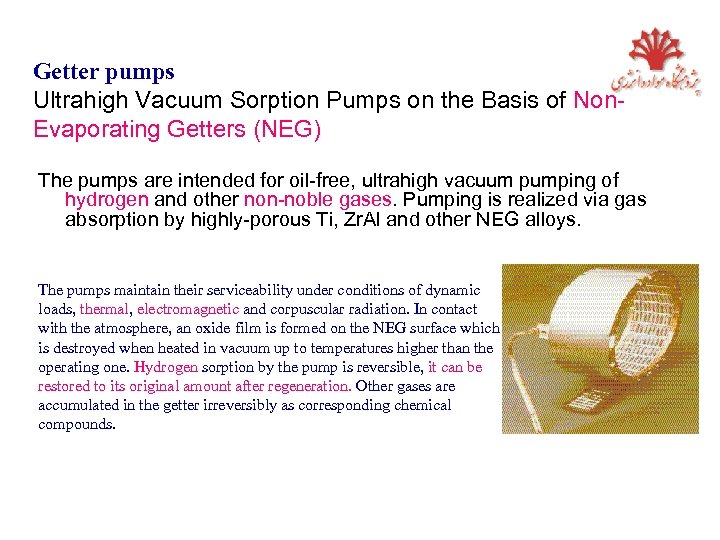 Getter pumps Ultrahigh Vacuum Sorption Pumps on the Basis of Non. Evaporating Getters (NEG) The pumps are intended for oil-free, ultrahigh vacuum pumping of hydrogen and other non-noble gases. Pumping is realized via gas absorption by highly-porous Ti, Zr. Al and other NEG alloys. The pumps maintain their serviceability under conditions of dynamic loads, thermal, electromagnetic and corpuscular radiation. In contact with the atmosphere, an oxide film is formed on the NEG surface which is destroyed when heated in vacuum up to temperatures higher than the operating one. Hydrogen sorption by the pump is reversible, it can be restored to its original amount after regeneration. Other gases are accumulated in the getter irreversibly as corresponding chemical compounds.
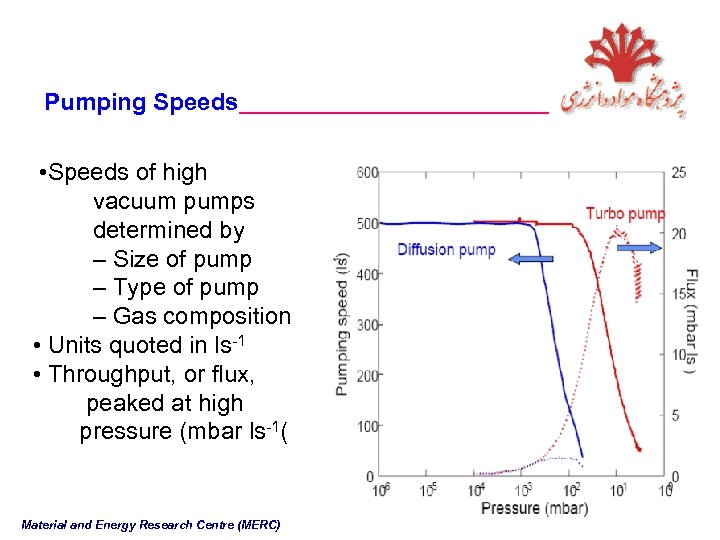 Pumping Speeds________________ • Speeds of high vacuum pumps determined by – Size of pump – Type of pump – Gas composition • Units quoted in ls-1 • Throughput, or flux, peaked at high pressure (mbar ls-1( Material and Energy Research Centre (MERC)
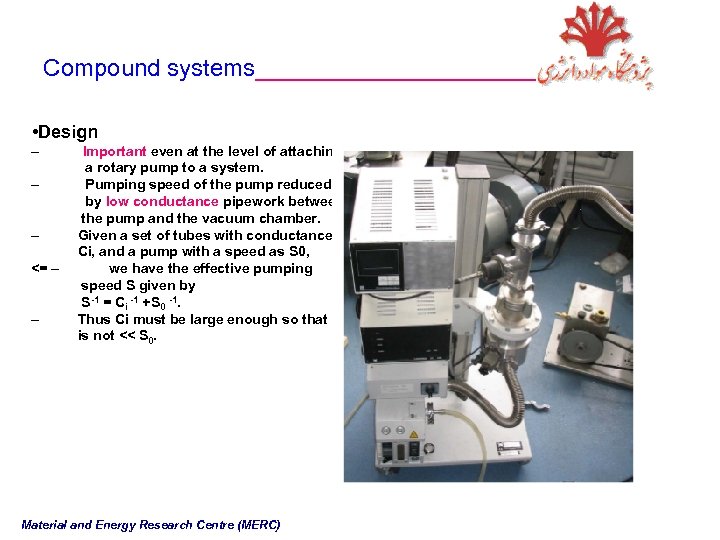 Compound systems___________ • Design – – – <= – – Important even at the level of attaching a rotary pump to a system. Pumping speed of the pump reduced by low conductance pipework between the pump and the vacuum chamber. Given a set of tubes with conductances Ci, and a pump with a speed as S 0, we have the effective pumping speed S given by S-1 = Ci -1 +S 0 -1. Thus Ci must be large enough so that S is not << S 0. Material and Energy Research Centre (MERC)
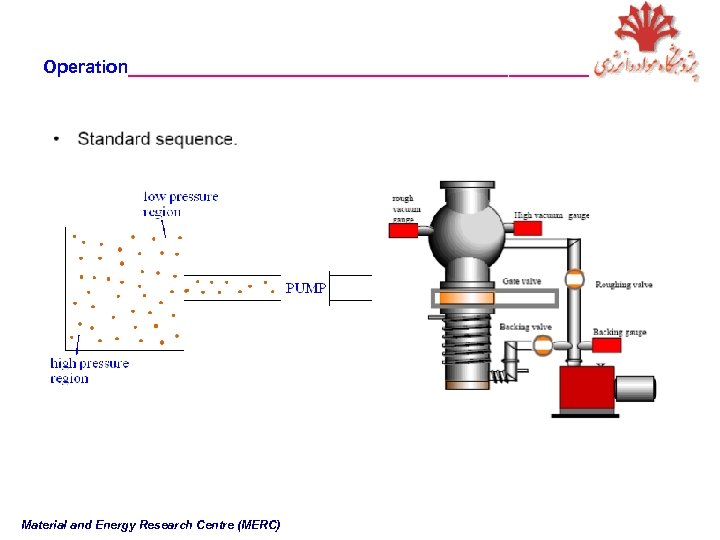 Operation_______________________ Material and Energy Research Centre (MERC)
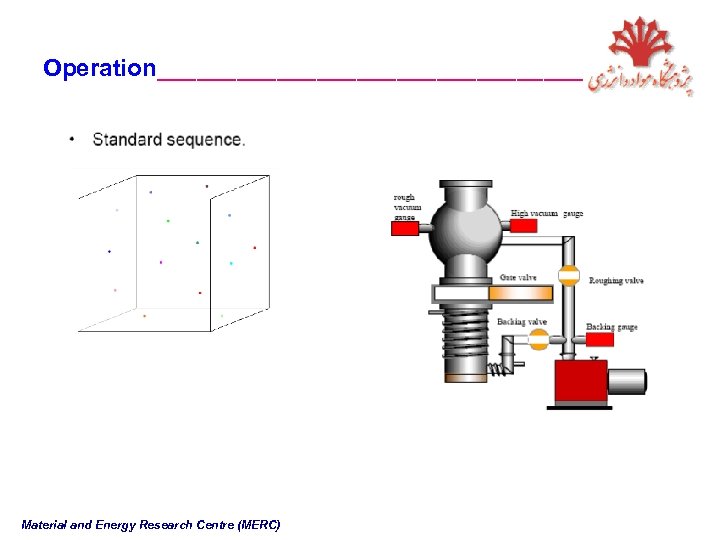 Operation________________ Material and Energy Research Centre (MERC)
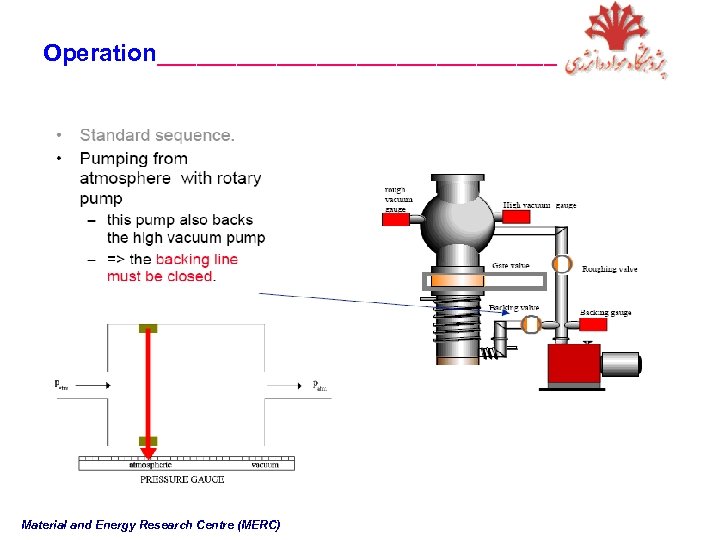 Operation_______________ Material and Energy Research Centre (MERC)
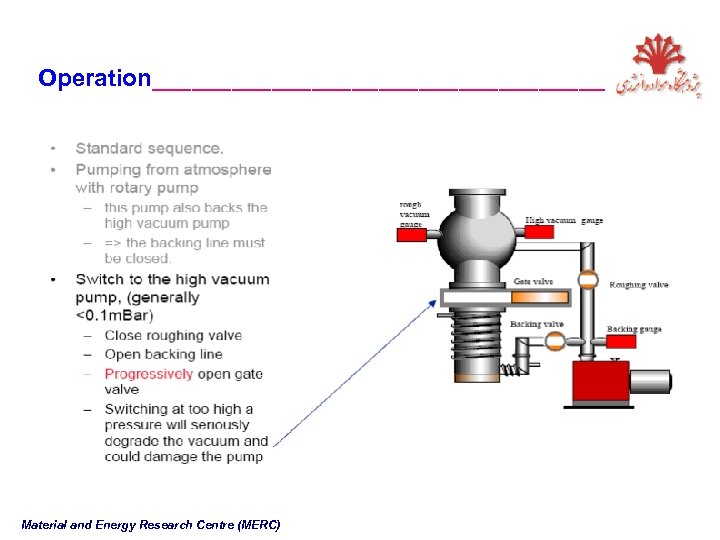 Operation_________________ Material and Energy Research Centre (MERC)
 Vacuum Seals_______________ –To assemble vacuum systems, seals must be created between the various components. Material and Energy Research Centre (MERC)
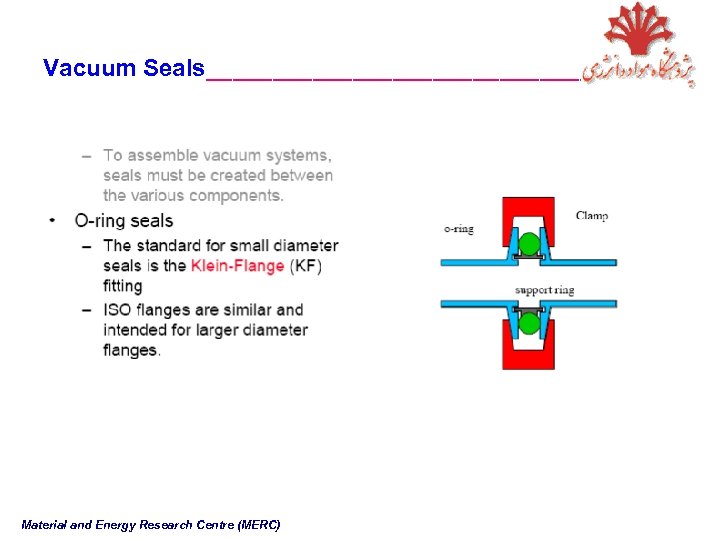 Vacuum Seals_______________ Material and Energy Research Centre (MERC)
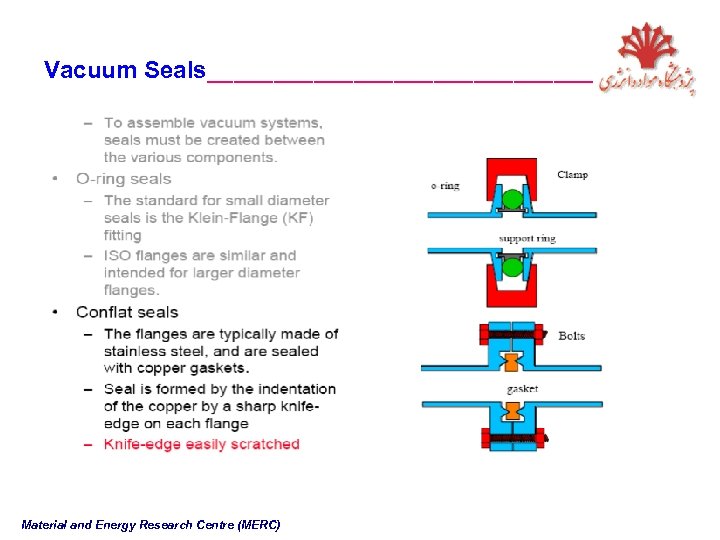 Vacuum Seals_______________ Material and Energy Research Centre (MERC)
 Pressure measurement_________ • Rough vacuum pressures – • • Pirani & thermocouple gauges Depend on the increase in thermal conductivity of a gas with its pressure. –The temperature (thermocouple gauge), or –Resistance (Pirani gauge) of a heated wire is measured. –increasing pressure => increasing cooling –qualitative monitoring of rough vacuum. –Capacitance gauge (Baratron, Capacitron( Deflection of a membrane due to pressure changes –sensed by the change in capacitance –extremely precise above 10 -4 mbar, –measures true pressure. • High vacuum / UHV – • Ion gauge The ion gauge works by ionisation of the gas molecules –measures ion current –works well below 10 -3 mbar - lower limit typically 10 -11 mbar Penning gauge Simply an ion gauge in which the plasma is struck from a cold cathode – plasma not self-sustaining below ~10 -7 m. Bar.
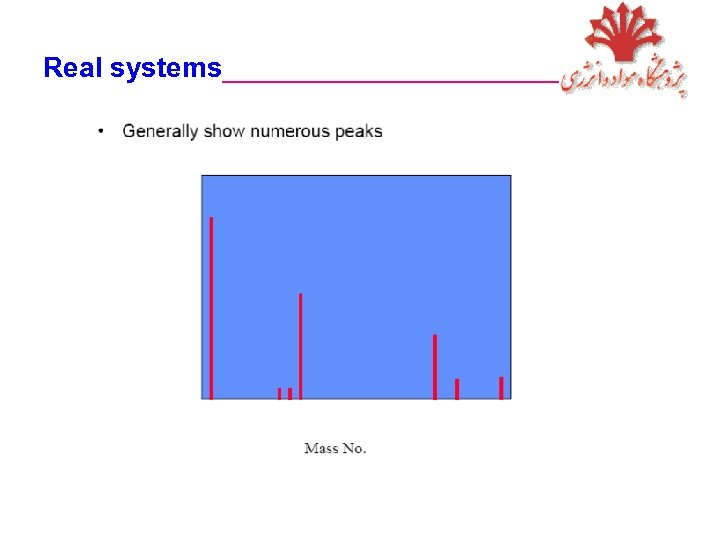
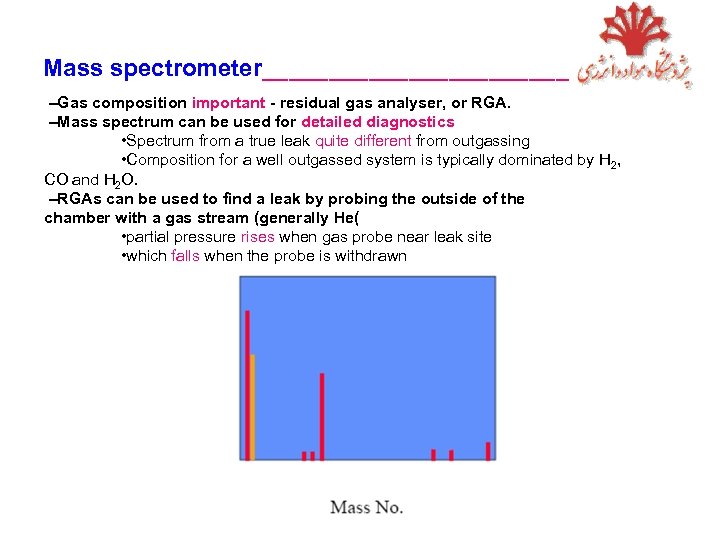 Mass spectrometer____________ –Gas composition important - residual gas analyser, or RGA. –Mass spectrum can be used for detailed diagnostics • Spectrum from a true leak quite different from outgassing • Composition for a well outgassed system is typically dominated by H 2, CO and H 2 O. –RGAs can be used to find a leak by probing the outside of the chamber with a gas stream (generally He( • partial pressure rises when gas probe near leak site • which falls when the probe is withdrawn
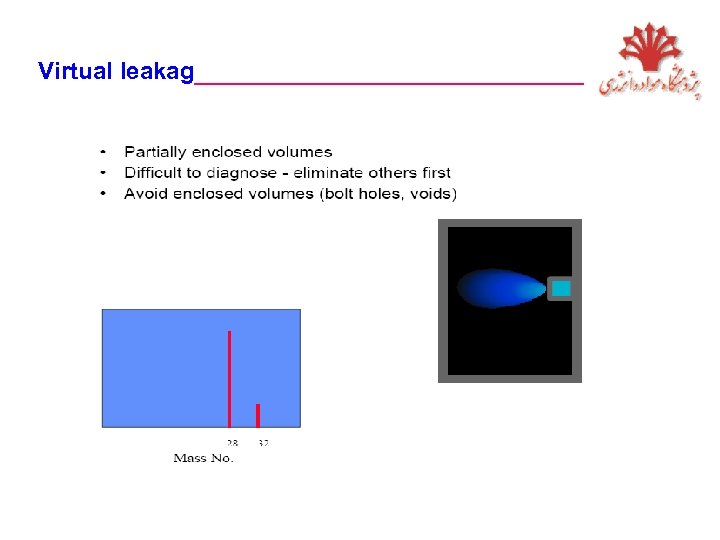
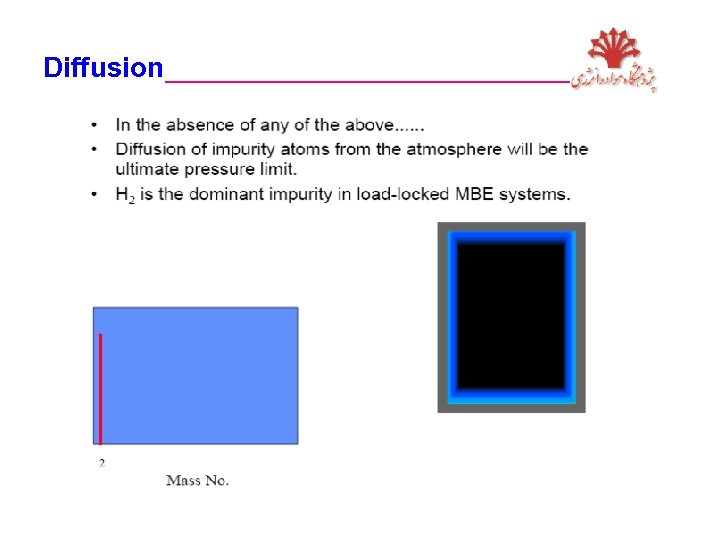
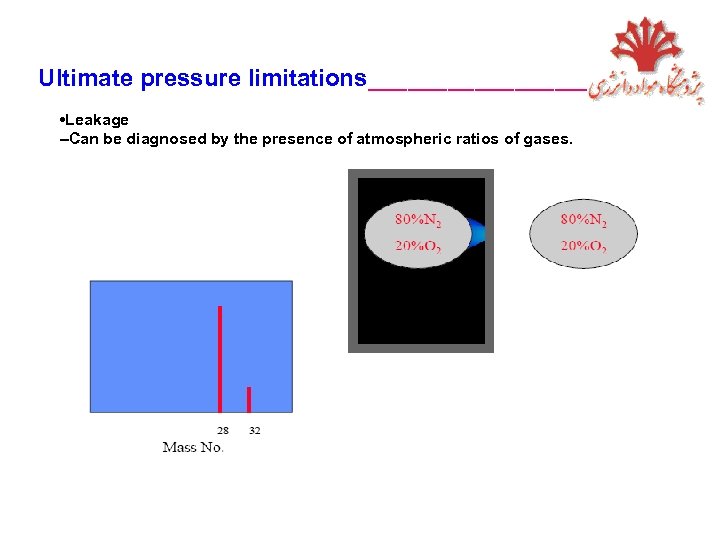 Ultimate pressure limitations_________ • Leakage –Can be diagnosed by the presence of atmospheric ratios of gases.
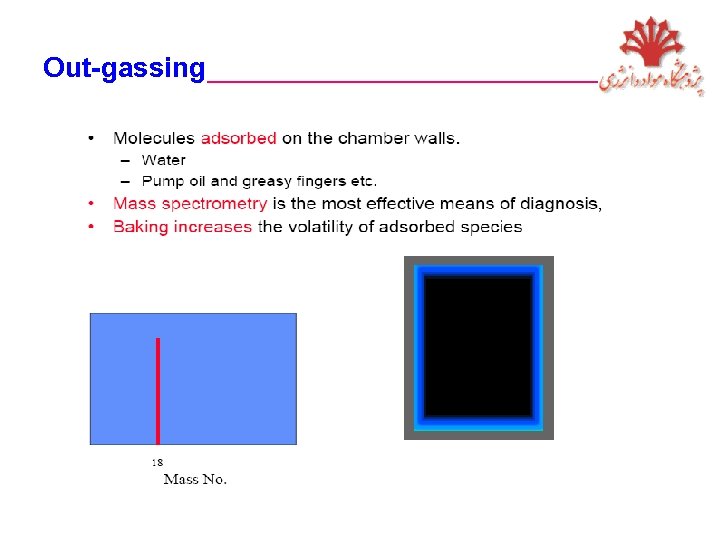 Out-gassing_____________
 Virtual leakag_____________
 Diffusion_____________
 Real systems___________
 Potential faults___________ • Metering problems –All pressure gauges drift with time –ion gauges and mass spectrometers highly sensitive to previous abuse • Leakage and outgassing • Poor pump performance –Poorly treated pumps will not reach either their specified pumping speed or ultimate base pressure. • Valve failures –The failure of a valve to open or close correctly is a frequent source of misdiagnosis of problems. • Electronics failures –The above is compounded if the control system in automated systems fails to function correctly.
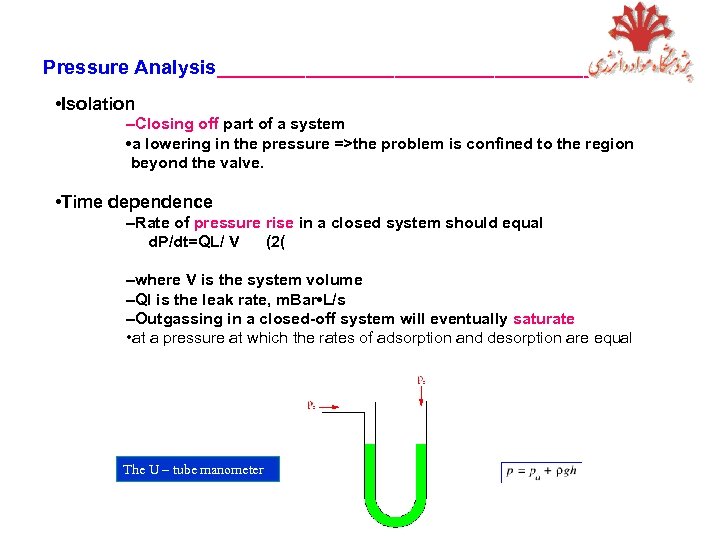 Pressure Analysis_________________ • Isolation –Closing off part of a system • a lowering in the pressure =>the problem is confined to the region beyond the valve. • Time dependence –Rate of pressure rise in a closed system should equal d. P/dt=QL/ V (2( –where V is the system volume –Ql is the leak rate, m. Bar • L/s –Outgassing in a closed-off system will eventually saturate • at a pressure at which the rates of adsorption and desorption are equal The U – tube manometer
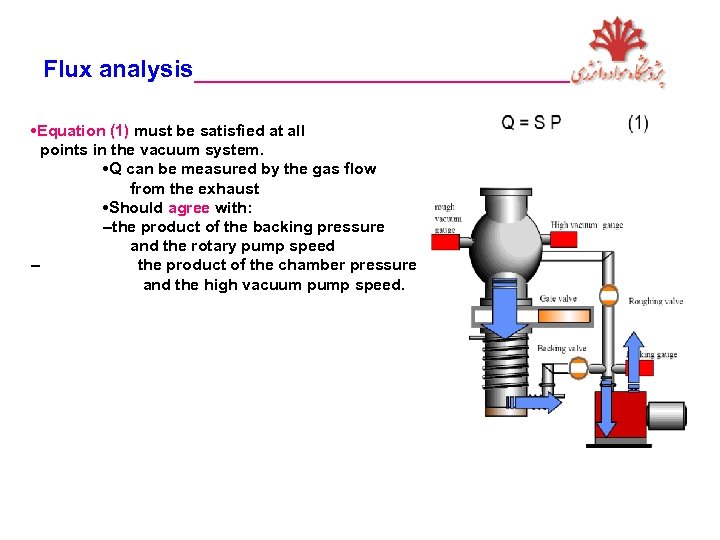 Flux analysis_____________ • Equation (1) must be satisfied at all points in the vacuum system. • Q can be measured by the gas flow from the exhaust • Should agree with: –the product of the backing pressure and the rotary pump speed – the product of the chamber pressure and the high vacuum pump speed.
 Leak detection____________ • Easiest in systems which have been fully baked • Often tedious and frustrating • Search –recently replaced flanges –any grease sealed shaft seals –ceramic and glass to metal seals (windows and feedthroughs( –thermally cycled connectors (cooling pipes( –the interiors of bellows sealed valves –welds • If all else fails then try filling a plastic bag which entirely encloses the suspect portions of the system with He and waiting.
 Good Practice & Maintenance_______ • Understand the principles of operation • Understand the effect of changing the state of any valve • Monitor any change you make • Pumps etc. need inspection & maintenance • Don’t use vacuum grease • Don’t overtighten anything. • Keep systems clean and always wear gloves. Material and Energy Research Centre (MERC)
 Material and Energy Research Centre (MERC) The End Semiconductor and Device Fabrication
 ﺧﻼﺀ ﺑﻪ ﻋﻨﻮﺍﻥ ﻳﻚ ﻋﺎﻳﻖ ﺍﻟﻜﺘﺮﻳﻜﻲ ﻣﺒﻨﺎﻱ ﻓﻴﺰﻳﻚ ﻋﺎﻳﻖ ﺑﻨﺪﻱ ﺧﻼﺀ ﺑﺎ ﻭﻟﺘﺎژ ﺑﺎﻻ ﺗﻮﺳﻄﺒﺎﻟﺘﺰﻣﻦ 8891 ﺑﺮﺳﻲ ﺷﺪﻩ ﺍﺳﺖ. ﺭﻟﻪ ﻫﺎ،ﻛﻠﻴﺪﻫﺎ، ﻗﻄﻊ ﻛﻨﻨﺪﻩ ﻫﺎﻱ ﺧﻼﺀ ﺩﺭ ﺑﺎﺯﺍﺭ ﻣﻮﺟﻮﺩﻧﺪ. ﻳﻜﻲ ﺍﺯ ﺍﻳﻦ ﺍﺳﺖ ﻛﻪ ﻭﻟﺘﺎژ ﺷﻜﺴﺖ ﺑﺮﺍﻱ ﻳﻚ ﻓﺎﺻﻠﻪ ﻣﻌﻴﻦ ﺩﺭ ﺧﻼﺀ ﻣﺰﻳﺖ ، ﺑﻴﺸﺘﺮ ﺍﺯ ﻫﻮﺍ ﺩﺭﺍﺗﻤﺴﻔﺮ ﺍﺳﺖ ﻭ ﻗﺘﻲ ﻛﻪ ﺷﻜﺴﺖ ﺑﻪ ﻭﻗﻮﻉ ﻣﻲ پﻴﻮﻧﺪﺩ، ﺍﻣﻜﺎﻥ ﻗﻮﺱ ﺯﻧﻲ ﺍﺯ ﺑﻴﻦ ﺭﻓﺘﻪ ﺑﺎﺯﻳﺎﻓﺖ ﻛﻮﺗﺎﻩ ﺗﺮ ﻣﻲ ﺷﻮﺩ.
 ﺟﺪﺍ ﺳﺎﺯﻱ ﺗﻮﺳﻂ ﺗﻘﻄﻴﺮ ﺩﺭ ﺧﻼﺀ ﻣﺘﺮﺍﻛﻢ ﻧﻤﻮﺩﻥ آ ﻧﻬﺎ ﺭﻭﻱ ﺳﻄﺢ ﻳﻚ ﺍﺯ ﻳﻚ ﻣﺎﻳﻊ ﻭ ﺩﻭﺑﺎﺭﻩ ﺗﻘﻄﻴﺮﺷﺎﻣﻞ ﻧﺒﺨﻴﺮ ﻣﻮﻛﻠﻮﻝ ﻫﺎﻱ گﻴﺮﻧﺪﻩ ﺳﺮﺩ ﻣﻲ ﺷﻮﺩ. ﺍگﺮ ﺍﻳﻦ ﻓﺮآﻴﻨﺪ ﺩﺭ ﻫﻮﺍ ﺩﺭ ﻓﺸﺎﺭ ﺍﺗﻤﺴﻔﺮ ﺻﻮﺭﺕ گﻴﺮﺩ ﺑﻴﺸﺘﺮ ﻣﻮﻛﻠﻮﻝ ﻫﺎﻱ ﺗﺒﺨﻴﺮﻱ ﺑﺎ ﻣﻮﻟﻜﻮﻝ ﻫﺎﻱ ﻫﻮﺍ ﻓﻮﺭﺃ ﺩﺭ ﺑﺎﻻﻱ ﺳﻄﺢ ﻣﺎﻳﻊ ﺑﺮﺧﻮﺭﺩ ﻛﺮﺩﻩ ﻭ ﺑﻪ ﻓﺎﺯﻣﺎﻳﻊ ﺑﺮ ﻣﻲ گﺮﺩﺩ. ﻣﻮﺍﺩ ﺑﺮﺍﻱ ﺧﺸﻚ ﻛﺮﺩﻥ ﻣﻲ ﺗﻮﺍﻧﺪ ﺑﻪ ﻳﻜﻲ ﺍﺯ ﺳﻪ ﺷﻜﻞ ﺯﻳﺮﺑﺎﺷﺪ. ﺍﻟﻒ- ﻳﻚ ﻣﺎﻳﻊ ﻣﻨﺠﻤﺪ ﺷﺪﻩ ﺩﺭ ﺗﻤﺎﺱ ﺑﺎ ﺩﻳﻮﺍﺭﻩ ﻫﺎﻱ ﻣﺤﻔﻈﻪ ﺍﻳﻲ ﻛﻪ ﺑﻴﺸﺘﺮ گﺮﻣﺎﻱ ﺗﺼﻌﻴﺪ ﺍﺯ ﻛﻒ ﻣﺤﻔﻈﻪ ﻣﺬﻛﻮﺭ ﻭ ﺑﻪ ﺳﻄﺢ ﺟﺪﺍﻳﻲ ﻳﺎ ﻗﺴﻤﺖ ﺟﻠﻮﻱ ﺟﺴﻢ ﻣﻮﺭﺩ ﺍﻧﺠﻤﺎﺩ ﺧﺸﻚ ﺑﺮﻭﺩ. ﻋﺒﻮﺭ ﺷﺪﻩ ﺗﺎ ﻣﻮﺍﺩ آﻦ ﻣﻨﺠﻤﺪ ﺷﺪﻩ ﺏ- ﻳﻚ ﻗﺴﻤﺖ ﻣﺎﻳﻊ ﻣﻨﺠﻤﺪﻳﺎ ﺟﺎﻣﺪ ﺧﻴﺲ ﻛﻪ ﺗﺼﻌﻴﺪ ﻣﻲ ﺗﻮﺍﻧﺪ ﺍﺯ ﻛﻞ ﻣﺤﺪﻭﺩﻩ ﺧﺎﺭﺟﻲ ﺍﺛﺮ ﻳﻮﻗﻮﻉ ﺑپﻴﻮﻧﺪﺩ، ﺑﻄﻮﺭﻱ ﻛﻪ ﺣﺮﺍﺭﺕ ﻓﻘﻂ ﺍﺯ ﻃﺮﻳﻖ ﻻﻳﻪ ﺧﺸﻜﺒﻪ آﻦ ﺑﺮﺳﺪ. ﺝ- ﻗﺴﻤﺖ ﻫﺎﻱ ﻛﻮچﻚ ﻳﺎﺗﻜﻪ ﻫﺎﻱ ﻛﻮچﻚ ﻣﺜﻞ ﻗﺴﻤﺖ )ﺏ( ﺍﻣﺎ ﺩﺍﺭﺍﻱ ﺷﻜﻞ ﻳﻚ ﺑﺴﺘﺮﻱ ﺍﺯﺷﺎﺭﻩ ﺑﺎﺷﺪ ﻛﻪ ﺑﻴﺸﺘﺮ گﺮﻣﺎﻱ ﺗﺼﻌﻴﺪ ﺍﺯ گﺴﺘﺮﻩ ﺑﺨﺎﺭ آﻦ ﻋﺒﻮﺭ ﻛﻨﺪ.
 ﺍﻧﺠﻤﺎﺩ ﺧﺸﻚ ﻭﻗﺘﻲ ﻛﻪ ﺟﺎﻣﺪﺍﺕ ﺧﻴﺲ ﺷﺎﻣﻞ ﻣﻮﺍﺩ ﺣﻞ ﻧﺸﺪﻩ ﻭ ﻳﺎ ﻣﻌﻠﻖ ﺩﺭ ﺷﺮﺍﻳﻂ ﻋﺎﺩﻱ ﺗﻮﺳﻂ ﺣﺮﺍﺭﺕ ﺩﺍﺩﻥ ﺧﺸﻚ ﺷﻮﻧﺪ،گﺮﻓﺘﻦ آﺐ ﺍﺯ آﻨﻬﺎ ﺍﻏﻠﺐ ﺑﺎﻏﺚ ﺟﺎﺑﺤﺎﻳﻲ ﻣﻮﺛﺮ ﺩﺭ آﻨﻬﺎ ﺷﺪﻩ ﻭ ﻓﺮآﻴﻨﺪ ﺑﺎ ﺩﻭﺑﺎﺭﻩ ﺧﻴﺲ ﻛﺮﺩﻥ آ ﻧﻬﺎ ﺑﺮگﺸﺖ ﻧﺎپﺬﻳﺮ ﺍﺳﺖ. ﺍﻧﺠﻤﺎﺩ ﺧﺸﻚ ﻳﻚ ﺭﻭﺷﻲ ﺑﺮﺍﻱ گﺮﻓﺘﻦ آﺐ ﺑﻮﺳﻴﻠﻪ ﺳﺮﻣﺎﻳﺶ ﺍﺯﻓﺎﺯﻳﺦ ﺑﻮﺩﻩ ﻭ ﺟﺎﺑﺠﺎﻳﻲ ﻣﺬﻛﻮﺭ ﺩﺭآﻨﺤﺬﻑ ﻣﻲ گﺮﺩﺩ. ﺑﺮﺍﻱ ﺯﺩﻭﺩﻥ ﻣﻮﺍﺩ ﺣﻞ ﺷﺪﻩ ﺯﺍﻳﺪ ﺍﺯ ﻣﻮﺍﺩ ﻣﺘﺨﻠﺨﻞ، آﻨﻬﺎ ﺭﺍ ﻣﻨﺠﻤﺪ ﻧﻤﻮﺩﻩ ﻭ ﻳﺦ ﺭﺍ ﺩﺭ ﺷﺮﺍﻳﻂ ﺗﺨﺖ ﺧﻼﺀ ﺩﻭﺑﺎﺭﻩ ﺳﺮﻣﺎﻳﻴﺪﻩ ﻣﻲ ﻛﻨﻨﺪ.
 ﺳﺎﺧﺘﻼﻣپ ﻫﺎ، ﻟﻮﺍﺯﻡ گﺮﻣﺎ ﻳﻮﻧﻲ ﻭ ﻧﻴﻤﻪ ﺭﺳﺎﻧﺎ ﻳﻚ ﻻﺯﻣﻪ ﻣﻬﻢ ﺩﺭ ﺳﺎﺧﺖ ﻻﻣپ ﺗﺪﺍﻭﻡ ﻣﻌﻘﻮﻝ ﻋﻤﺮ ﻗﻴﻼﻣﺎﻥ آﻦ ﺍﺳﺖ، ﺧﺎﺭﺝ ﺳﺎﺯﻱ گﺎﺯﻫﺎﻳﻲ ﻣﺜﻞ ﻛﻪ ﺑﺎ ﻓﻴﻼﻣﺎﻥ ﺗﻨگﺴﺘﻦ ، ﺩﺍﺭﺍﻱ ﻭﺍﻛﻨﺶ ﺷﻴﻤﻴﺎﻳﻲ ﺍﺳﺖ ﻭ ﻭﺭﻭﺩ گﺎﺯ ﻫﺎﻱ H 2 O ﺑﻲ ﺍﺛﺮ ﻣﺜﻞ N 2 , Ar ﻛﻪ ﻣﻴﺰﺍﻥ ﺗﺼﻌﻴﺪ ﺭﺍ ﻛﺎﻫﺶ ﻣﻲ ﺩﻫﻨﺪ ﺿﺮﻭﺕ ﺩﺍﺭﺩ.
 ﻣﺘﺎﻟﻮژﻲ ﺧﻼﺀ ﺗﻜﻨﻮﻟﻮژﻲ ﺧﻼﺀ ﻛﺎﺭﺑﺮﺩ ﻫﺎﻱ ﻗﺎﺑﻞ ﻣﻼﺣﻈﻪ ﺍﻱ ﺩﺭ ﻣﺘﺎ ﻟﻮژﻲ ﺩﺍﺭﺩ، چﻮﻧﻜﻪ ﺧﻴﻠﻲ ﺍﺯ ﻓﺮآﻴﻨﺪ ﻫﺎﻱ ﻣﺘﺎﻟﻮژﻲ،ﺷﺎﻣﻞ ﺣﺮﺍﺭﺕ ﺩﺍﺩﻥ ﺍﺳﺖ ﻭ ﺑﻴﺸﺘﺮ ﻓﻠﺰﺍﺕ ﻭﻗﺘﻲ ﺣﺮﺍﺭﺕ ﺩﺍﺩﻩ ﺷﻮﻧﺪ ﺑﺎ ﻫﻮﺍﻱ ﺍﺗﻤﺴﻔﺮﻱ ﻭﺍﻛﻨﺶ ﻣﻲ ﻛﻨﻨﺪ، ﻟﺬﺍ ﺧﻼﺀ ﺍﻫﻤﻴﺖ ﻣﺐ ﻳﺎﺑﺪ. ﻓﺮآﻴﻨﺪ ﻫﺎﻱ ﻣﺘﺎﻟﻮژﻲ ﺧﻼﺀﺭﺍ ﻣﻲ ﺗﻮﺍﻥ ﺑﻪ ﻗﺴﻤﺖ ﺩﺳﺘﻪ ﺑﻨﺪﻱ ﻛﺮﺩ، ﺑﻴﺮﻭﻥ ﺳﺎﺯﻱ گﺎﺯﻫﺎ ﻣﻮﺟﻮﺩ ﻳﺎ ﻧﻤﻮﻧﻪ ﻫﺎﻱ ﻧﺎﺧﻮﺳﺘﻪ ﺩﻳگﺮ ﺍﺯ ﻓﻠﺰﺍﺕ ﻭ ﺍﻧﺠﺎﻡ ﻛﺎﺭﻫﺎﻳﻲ ﻛﻪ ﻭﺟﻮﺩ ﻫﻮﺍ ﻣﻤﻨﻮﻉ ﺍﺳﺖ.
 ﻣﺤﻴﻂ آﺰﻣﺎﻳﺸﻲ ﻓﻀﺎپﻴﻤﺎ ﺳﻮﺀ ﻋﻤﻠکﺮﺩ یک ﻓﻀﺎ پﻴﻤﺎ ﺩﺭ ﺣﺎﻝ کﺎﺭ. ﻓﺎﺟﻌﻪ ﺑﺰﺭگی ﺍﺳﺖ، ﺑﻨﺎﺑﺮﺍیﻦ ﺿﺮﻭﺕ ﺑﺮﺍی ﺗﺴﺖ آﺰﻣﺎیﺸی ﻣﺤیﻂ آﻨﻬﺎ ﺩﺭ ﺧﻼﺀ ﻻﺯﻡ ﺍﺳﺖ. ﺍﺛﺮ ﻫﺎی ﻣﻬﻢ ﺧﻼﺀ ﺭﻭی ﻓﻀﺎ پیﻤﺎ، ﺷﺎﻣﻞ کﺎﻫﺶ ﻓﺸﺎﺭ ﻧﺎگﻬﺎﻧی ﺩﺭ ﻃی ﺻﻌﻮﺩ، ﺣﺬﻑ ﻋﻤﻠی گﺎﺯ ﻫﺎی ﺭﺳﺎﻧﺶ گﺮﻣﺎیی ﺩﺭ ﻣﺴیﺮ، ﻗﺮﺍﺭیﺖ ﻣﻮﺍﺩ ﻭ یﺎ ﺑﻌﻀی ﺍﺟﺮﺍی آﻨﻬﺎ ﻭ ﺍﺛﺮﺧﻼﺀ ﺭﻭی ﻧﺤﻮﻩ ﻋﻤﻠکﺮﺩ ﺑﻠﺒﺮیﻨگ ﻫﺎ ﺭﺍ ﺩﺭ ﺑﺮ ﻣی کیﺮﺩ. ﺍﺛﺮﺍﺕ ﺍیﻦ ﻣ ﺋﻠﻪ ﺭﻭی ﺷﺮﺍیﻂ ﺻﻌﻮﺩ کﻪ ﺍیﺠﺎﺩ ﺗﺨﻠیﻪ ﺍﻟکﺘﺮیکی کﺮﻭﻧﺎ ﺩﺭ ﺩﺳﺘگﺎﻩ ﻫﺎی ﺍﻟکﺘﺮیکی ﻭ ﺗﻨﺶ ﻫﺎی ﻣکﺎﻧیکی ﺑیﻦ ﺩﺳﺘگﺎﻩ ﻫﺎی ﺩﺭﻭﻥ ﺍیﻦ ﻭﺳیﻠﻪ ﻧﻘﻠیﻪ ﻭ ﻣﺤﻄﺶ ﻣی کﻨﺪ.
 ﺧﻼﺀ ﺑﻪ ﻋﻨﻮﺍﻥ ﻋﺎﻳﻖ گﺮﻣﺎﻳﻲ ﻭﻗﺘی کﻪ ﻓﺸﺎﺭ ﺩﺭ یک ﻣﺤﻔﻈﻪ یﺎ ﻓﻀﺎیی ﺧﻼﺀ ﺷﺪﻩ،کﺎﻫﺶ یﺎﺑﺪ ، ﺑﻪ ﻣﻘﺪﺍﺭ کﻪ ﻓﺎﺻﻠﻪ ﻣﺘﻮﺳﻂ ﺣﺮکﺖ ﻫﺎی ﺑﺮﺧﻮﺭﺩی ﻣﻮﻟکﻮﻝ ﻫﺎی گﺎﺯ ﺩﺭﻭﻥ آﻨﻬﺎ ﺑﻪ ﻭﺳیﻠﻪ ﺑﺮﺧﻮﺭﺩﻫﺎ یﺸﺎﻥ ﺑﺎ ﻣﻮﺍﻧﻊ ﺟﺎﻣﺪ )ﺩیﻮﺍﺭﻫﺎ،ﺑﺮﻋکﺲ ﺑﺮﺧﻮﺭﺩ ﺑﺎ ﻣﻮﻟکﻮﻝ ﻫﺎی ﺩیگﺮ گﺎﺯ( ﻣﺤﺪﻭﺩ ﺷﻮﺩ، ﺭﺳﺎﻧﺎیی گﺮﻣﺎیی ﻣﻮﺛﺮ ﺑﻪ ﻣﻘﺪﺍﺭی ﻗﺎﺑﻞ ﻣﻼﺣﻈﻪ ﺍی ﺍﻓﺖ ﻣی کﻨﺪ. ﺍیﻦ ﻣﺴﺌﻠﻪ ﺑﺮﺍی ﻓﻼﺳک ﻫﺎی پیک ﻧیک ﻋﺎﺩی )ﺧﺎﻧگی( ﺑﻪ کﺎﺭ گﺮﻓﺘﻪ ﻣی ﺷﻮﺩ. ﺩﺭ ﻣﺤیﻄﻬﺎیی ﺩﺭ ﻣﻘیﺎﺱ ﻫﺎی ﺻﻨﻌﺘی ﺑﺮﺍی ﻣﺎیﻊ ﺳﺎﺯی گﺎﺯﻫﺎ،ﻣﺜﻞ ﻣﺎیﻊ ﺍکﺴیژﻦ ﻭﻧیﺘﺮﻭژﻦ ﺑﻪ کﺎﺭ ﻣی ﺭﻭﺩ. ﻣﻌﻤﻮﻻ، ﻋﺎیﻖ گﺮﻣﺎیی ﺍیﻦ گﻮﻧﻪ ﻣﺤﻔﻈﻪ ﻫﺎی ﺻﻨﻌﺘی ﺷﺎﻣﻞ ﻓﻀﺎی ﺩﺍیﺮﻭی ﺗﺨﻠیﻪ ﺷﺪﻩ ﺍی ﻫﺴﺘﻨﺪ، ﺑﺎ پﻮﺩﺭ ﻋﺎیﻖ گﺮﻣﺎیی پﺮ ﺷﺪﻩ،کﻪ ﺳﺎیﺰ ﻣﺘﻮﺳﻂ آﻨﻬﺎ ﺩﺭ ﻣﻘﺎیﺴﻪ ﺑﺎ ﻣیﺎﻧگیﻦ آﺰﺍﺩ ﻣﻨﺎﺳﺐ ﺑﺮﺍی ﺑﺮﺧﻮﺭﺩ ﻫﺎی گﺎﺯ،گﺎﺯ کﻮچک ﺍﺳﺖ.
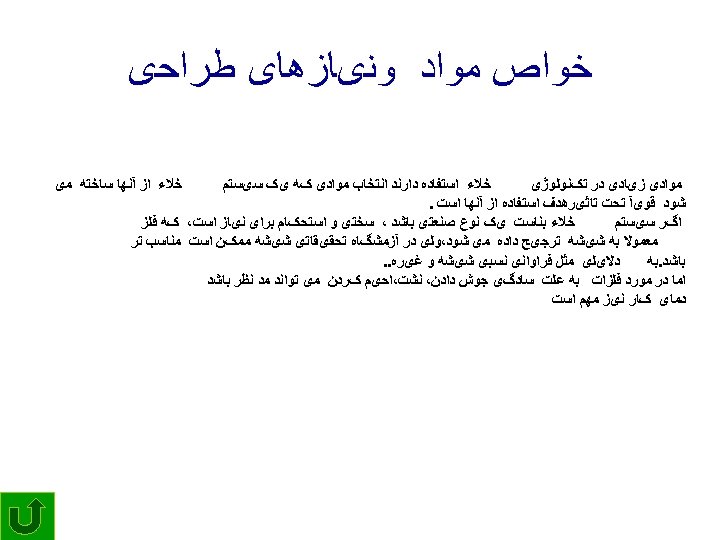 ﺧﻮﺍﺹ ﻣﻮﺍﺩ ﻭﻧیﺎﺯﻫﺎی ﻃﺮﺍﺣی ﺧﻼﺀ ﺍﺯ آﻨﻬﺎ ﺳﺎﺧﺘﻪ ﻣی ﺧﻼﺀ ﺍﺳﺘﻔﺎﺩﻩ ﺩﺍﺭﻧﺪ ﺍﻧﺘﺨﺎﺏ ﻣﻮﺍﺩی کﻪ یک ﺳیﺴﺘﻢ ﻣﻮﺍﺩی ﺯیﺎﺩی ﺩﺭ ﺗکﻨﻮﻟﻮژی ﺷﻮﺩ ﻗﻮیآ ﺗﺤﺖ ﺗﺎﺛیﺮﻫﺪﻑ ﺍﺳﺘﻔﺎﺩﻩ ﺍﺯ آﻨﻬﺎ ﺍﺳﺖ. ﺧﻼﺀ ﺑﻨﺎﺳﺖ یک ﻧﻮﻉ ﺻﻨﻌﺘی ﺑﺎﺷﺪ ، ﺳﺨﺘی ﻭ ﺍﺳﺘﺤکﺎﻡ ﺑﺮﺍی ﻧیﺎﺯ ﺍﺳﺖ، کﻪ ﻓﻠﺰ ﺍگﺮ ﺳیﺴﺘﻢ ﻣﻌﻤﻮﻻ ﺑﻪ ﺷیﺸﻪ ﺗﺮﺟیﺢ ﺩﺍﺩﻩ ﻣی ﺷﻮﺩ،ﻭﻟی ﺩﺭ آﺰﻣﺸگﺎﻩ ﺗﺤﻘیﻘﺎﺗی ﺷیﺸﻪ ﻣﻤکﻦ ﺍﺳﺖ ﻣﻨﺎﺳﺐ ﺗﺮ ﺩﻻیﻠی ﻣﺜﻞ ﻓﺮﺍﻭﺍﻧی ﻧﺴﺒی ﺷیﺸﻪ ﻭ ﻏیﺮﻩ. . ﺑﺎﺷﺪ. ﺑﻪ ﺍﻣﺎ ﺩﺭ ﻣﻮﺭﺩ ﻓﻠﺰﺍﺕ ﺑﻪ ﻋﻠﺖ ﺳﺎﺩگی ﺟﻮﺵ ﺩﺍﺩﻥ، ﻧﺸﺖ،ﺍﺣیﻢ کﺮﺩﻥ ﻣی ﺗﻮﺍﻧﺪ ﻣﺪ ﻧﻈﺮ ﺑﺎﺷﺪ ﺩﻣﺎی کﺎﺭ ﻧیﺰ ﻣﻬﻢ ﺍﺳﺖ
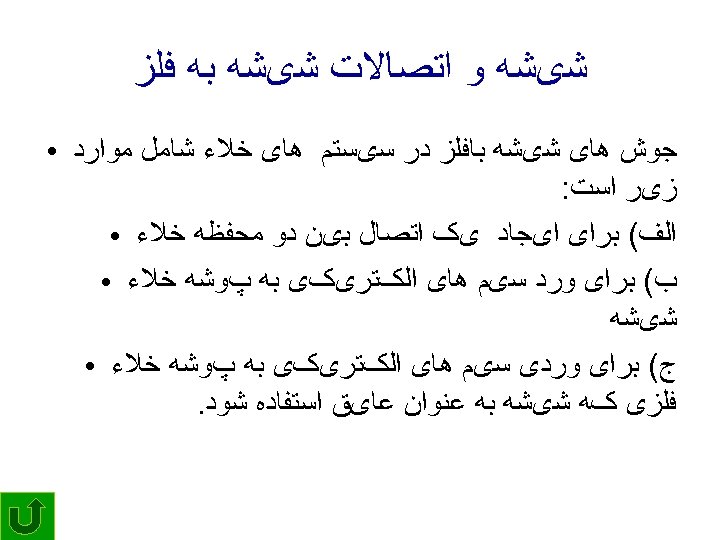 ﺷیﺸﻪ ﻭ ﺍﺗﺼﺎﻻﺕ ﺷیﺸﻪ ﺑﻪ ﻓﻠﺰ ﺟﻮﺵ ﻫﺎی ﺷیﺸﻪ ﺑﺎﻓﻠﺰ ﺩﺭ ﺳیﺴﺘﻢ ﻫﺎی ﺧﻼﺀ ﺷﺎﻣﻞ ﻣﻮﺍﺭﺩ ﺯیﺮ ﺍﺳﺖ: ﺍﻟﻒ( ﺑﺮﺍی ﺍیﺠﺎﺩ یک ﺍﺗﺼﺎﻝ ﺑیﻦ ﺩﻭ ﻣﺤﻔﻈﻪ ﺧﻼﺀ ● ﺏ( ﺑﺮﺍی ﻭﺭﺩ ﺳیﻢ ﻫﺎی ﺍﻟکﺘﺮیکی ﺑﻪ پﻮﺷﻪ ﺧﻼﺀ ● ﺷیﺸﻪ ﺝ( ﺑﺮﺍی ﻭﺭﺩی ﺳیﻢ ﻫﺎی ﺍﻟکﺘﺮیکی ﺑﻪ پﻮﺷﻪ ﺧﻼﺀ ● ﻓﻠﺰی کﻪ ﺷیﺸﻪ ﺑﻪ ﻋﻨﻮﺍﻥ ﻋﺎیﻖ ﺍﺳﺘﻔﺎﺩﻩ ﺷﻮﺩ. ●
 پﻼﺳﺘیک ﻫﺎ ﺑﻪ ﻣﻔﻬﻮﻡ ﻣﻮﺍﺩ ﺍﺭگﺎﻧیکی ﺳﺨﺖ ﺑﻪ ﻋﻨﻮﺍﻥ ﻣﻮﺍﺩی کﻪ ﺳﺎﺧﺘﺎﺭ ﺗکﻨﻮﻟﻮژی ﺧﻼﺀ ﺑﺎﻻ ﺑکﺎﺭ ﻣی ﺭﻭﺩ ﺍﺳﺘﻔﺎﺩﻩ کﻤی ﺩﺍﺭﺩ ﻣﺜﻞ ﻭﺍﺷﺮﻫﺎی پﻮﻟی آﻤیﺪ ﺑیﻦ ﺍﺗﺼﺎﻻﺕ ﻓﻮﻻﺩ آﺒکﺎﺭی ﺷﺪﻩ ﺍﺳﺘﻔﺎﺩﻩ کﺮﺩ.
 ﻭﺍکﺲ ﻭ گﺮیﺲ ﻫﺎ ● ﻭﺍکﺲ ﻫﺎ ﺑﺮﺍی ﺍﺗﺼﺎﻻﺕ ﺧﻼﺀ ﺩﺭ آﺰﻣﺎیﺸگﺎﺕ ﻧیﻤﻪ ﺩﺋﻤی ﺩﺳﺘگﺎﻩ ﻫﺎی ﺧﻼﺀ ﻣﻔیﺪ ﻫﺴﺘﻨﺪ آﻨﻬﺎ ﺑﺎیﺪ ﺩﺍﺭﺍی ﻓﺸﺎﺭ ﺗﺒﺨیﺮی کﻤی ﺑﺎﺷﻨﺪ ﻭﻧﻘﻄﻪ ﻧﺮﻡ ﺷﺪگی ﺑﺎﻻﺗﺮ ﺍﺯ ﺑﺎﻻﺗﺮیﻦ ﺩﻣﺎی کﺎﺭی ﺩﺍﺷﺘﻪ ﺑﺎﺷﻨﺪ ﻭ ﻧﺒﺎیﺪ ﻭﻗﺘی ﺩﺭ ﻃی کﺎﺭﺑﺮﺩ ﺣﺮﺍﺭﺕ ﻣی ﺑیﻨﻨﺪ ﺗﺠﺰیﻪ ﺷﻮﻧﺪ. ﻭﺍکﺲ ﻫﺎی ﺧﻼﺀ ﺑﺎﻧﻘﻄﻪ ﺫﻭﺏ 54 -58 ﺳﺎﻧﺘی گﺮﺍﺩ ﻭ ﻓﺸﺎﺭی ﺗﺒﺨیﺮی ﺑﻌﺪ ﺍﺯ ﺧﺎﺭﺝ ﺳﺎﺧﺘﻦ ﻫﻮﺍی ﺩﺭﻭﻥ آﻨﻬﺎ ﺣﺪﻭﺩآ 01 -3 ﻣیﻠی ﺑﺎﺭ ﺩﺭﺩﻣﺎ08 1 ﺳﺎﻧﺘی گﺮﺍﺩ ﺭﺍ ﺑﺎﺯﺍﺭ یﺎﺑی ﻣی کﻨﻨﺪ. ﻭ گﺮیﺲ ﻫﺎ ﺑﻪ ﻋﻨﻮﺍﻥ ﺍﺗﺼﺎﻝ ﺩﻫﻨﺪﻩ ﻭ ﺭﻭﻋﻨکﺎﺭی ﺩﺭ ﺷیﺮﻫﺎی ﺧﻼﺀ ﺷیﺸﻪ ﺍی ﻭ ﺍﺗﺼﺎﻻﺕ پﺎیﻪ ﺍی ﺍﺳﺘﻔﺎﺩﻩ ﻣی ﺷﻮﻧﺪ
 ﺍﺗﺼﺎﻻﺕ ﻗﺎﺑﻞ ﺑﺎﺯ ﻭﺑﺴﺘﻪ ﺷﺪﻧﺎ ﺍﺗﺼﺎﻻﺕ ﻗﺎﺑﻞ ﺑﺎﺯ ﻭﺑﺴﺘﻪ ﺷﺪﻥ ﺍیﻦ ﺍﺗﺼﺎﻻﺕ ﻣﻌﻤﻮﻻ ﺩﺍﺭﺍی ﺳﻄﺢ ﺩﺍیﺮﻭی ﻫﺴﺘﻨﺪ ﻭ ﺗﻐییﺮی ﺍﻻﺳﺘﻮﻣﺘﺮی )ﺑﺎﻟﻮ( یﺎ ﻭﺍﺷﺮی ﻓﻠﺰی ﻣﺜﻞ پﻬﺖ )ﺩﻭﻣی ﺑﺮگﺸﺖ ﻧﺎپﺬیﺮﺍﺳﺖ( کﻪ ﺗﻮﺳﻂ یک ﺩﺳﺘگﺎﻩ ﻣکﺎﻧیکی ﻓﺸﺮﺩﻩ ﻣی ﺷﻮﻧﺪ کﻪ ﺩﺭ ﺳیﺴﺘﻢ ﻫﺎی ﺧﻼﺍیی ﺑکﺎﺭگﺮﻓﺘﻪ ﻣی ﺷﻮﻧﺪ ﻭ ﻗﺎﺑﻞ گﺮﻡ ﺷﺪﻥ ﺗﺎ 052 ﺩﺭﺟﻪ ﺳﺎﻧﺘی کﺮﺍﺩ ﺑکﺎﺭ ﻣی ﺭﻭﻧﺪ
 ﺷیﺮﻭ ﺩﺭیچﻪ ﻫﺎی ﺧﻼﺀ ● ﺑﺮﺍی ﺩﺳﺘگﺎﻫﻬﺎی کﻮچک آﺰﻣﺎیﺸگﺎﻫی ،ﻫﻨﻮﺯ ﺍﻏﻠﺐ ﺷیﺮﻫﺎی ﻣﺨﺮﻭﻃی پیﺮکﺲ گﺮیﺲ ﺯﺩﻩ ﺷﺪﻩ ﺍﺳﺘﻔﺎﺩﻩ ﻣی ﺷﻮﺩ. آﻨﻬﺎ ﺍﺯ یک ﺷیﺸﻪ ﻣﺨﺮﻭﻃی کﻪ ﺑﺎ ﺍﺣﺘیﺎﻁ ﺩﺭﺩﺭﻭﻥ یک ﻣﺤﻔﻈﻪ ﺧﺎﺭﺟی ﺷیﺸﻪ ﺍیی ﺟﺎ گﺮﻓﺘﻪ ﺍﺳﺖ ﺗﺸکیﻞ ﻣی ﺷﻮﻧﺪ،ﻭﺩﺍﺭﺍی یک ﺑﺎﺯﻭیچﺮﺧﺸی ﺷیﺸﻪ ﺍیی ﺟﺎ گﺮﻓﺘﻪ ﺍﺳﺖ ﺗﺸگیﻞ ﻣی ﺷﻮﻧﺪ، ﻭ ﺩﺍﺭﺍی یک ﺑﺎﺯﻭی چﺮﺧﺸی ﺷیﺸﻪ ﺍی ﻧیﺰ ﻫﺴﺘﻨﺪ. ﺩﺭ ک ﻧﻮﻉ آﻨﻬﺎ ﺣﺮکﺖ ﻗﻄﺮی ﺍﺳﺖ،یﻌﻨی ﻭ ﻗﺘی ﺩﻫﺎﻧﻪ ﺩﺭ یک ﺭﺍﺳﺘﺎ ﺑﺎ ﺑﺎﺯﻭی ﻣﺬکﻮﺭﻗﺮﺍﺭ گیﺮﺩ ﺷیﺮﺑﺎﺯ ﺍﺳﺖ. ﺩﺭ ﺍﺳﺘﻔﺎﺩﻩ ﻣﺪﺍﻭﻡ ﺍﺯ ﺷیﺮ، ﺟﺮﺧﺶ ﻫﺎ ﺑﺎﻋﺚ ﺍیﺠﺎﺩﺷیﺎﺭﻫﺎی ﺩﺍیﺮﻭی ﺩﺭ گﺮیﺲ ﻧﻤﻮﺩﻩ ﻭ ﻣﻤکﻦ ﺍﺳﺖ ﺑﺎﻻﺧﺮﻩ ﺑﻪ کﻮﺗﺎﻩ ﺷﺪﻥ ﻣﺪﺍﺭ ﺷیﺮ ﻣﻨﺠﺮﺷﻮﺩ ﺍﻧﻮﺍﻉ ﺩیگﺮ ﺷیﺮﻫﺎی ﻏیﺮﻗﺎﺑﻞ گﺮﻡ کﺮﺩﻥ ﺷﺎﻣﻞ ﻧﻮﻉ ﺩﺭﻭﺍﺯﻩ ﺍی، کﻪ ﺩﺭ ﻣﺴﺪﻭﺩ ﺷﺪﻥ ﺗﻮﺳﻂ ﺣﺮکﺖ ﺍﻓﻘی یک ﺳﻄﺢ ﺩﺭ ﺻﻔﺤﻪ ﺧﻮﺩﺵ ﺍﻧﺠﺎﻡ ﻣی پﺬیﺮﺩ،ﺍﺗﺼﺎﻝ ﺍﻻﺳﺘﻮﻣﺮ ﺑﻮﺩﻩ ﻭ ﺩﺍﺭﺍی ﺣﺮکﺖ ﺭﺑﻌی )پﺮﻭﺍﻧﻪ ﺍی( ﺍﺳﺖ، کﻪ ﺩﺭآﻦ یک ﺩیﺴک ﺣﻮﻝ یک ﻣیﻠﻪ ﺍﻓﻘی کﻪ ﺍﺯ ﻣیﺪﺍﻥ ﻗﻄﺮﺵ ﻋﺒﻮﺭ کﺮﺩﻩ ﺟﺨﺶ ﻣی کﻨﺪ ﺩﺭیچﻪ ﺩﺍیﺮﻭی آﻦ ﺑﺴﺘﻪ ﻣی ﺷﻮﺩ.
 گﺎﺯ ﺯﺩﺍیی ﻭ ﻗﺘی یک ﻓﻠﺰ ﺑﺮﺍی ﺍﻭﻟیﻦ ﺑﺎﺭ ﺩﺭ ﻣﻌﺮﺽ ﺧﻼﺀ ﻗﺮﺍﺭگیﺮﺩ ﺍﺯآﻦ گﺎﺯ ﺭﻫﺎ ﻣی ﺷﻮﺩ ﻭ ﺍیﻦ ﺭﻫﺎیی ﻫﻤیﺸﻪ ﺑﺎ ﺳیﺮ کﺎﻫﺸی ﺍﺩﺍﻣﻪ ﻣی یﺎﺑﺪ. گﺎﺯﺭﻫﺎ ﺷﺪﻩ ﻣﻤکﻦ ﺍﺳﺖ ﺍﺳﺎﺳآ ﺑﻪ ﺩﻭ ﺻﻮﺭﺕ ﺩﺭ ﻧﻈﺮ گﺮﻓﺘﻪ ﺷﻮﺩ. آﻨﻬﺎیی کﻪ ﺍﺯ ﺳﻄﺢ آﺰﺍﺩ ﻣی ﺷﻮﻧﺪ ﻭ آ ﻧﻬﺎیی کﻪ ﺩﺭ ﺩﺍﺧﻞ پﺨﺶ ﻣی ﺷﻮﻧﺪ،ﺍﻣﺎ چﻮﻥ گﺎﺯآﺰﺍﺩ ﺷﺪﻩ ﺍﺯﺳﻄﻮﺡ ﺑﻪ ﻃﻮﺭ ﺛﺎﺑﺖ ﺑﺎ آﻨﻬﺎیی کﻪ ﺍﺯ ﺩﺍﺧﻞ ﻣی آیﻨﺪ ﺟﺎﻳگﺰﻳﻦ ﻣﻲ ﺷﻮﻧﺪ،ﺗﺸﺨﻴﺾ ﺃﻨﻬﺎ ﻓﻘﻂ ﺣﺎﻟﺖ ﻧﻄﺮﻱ ﺩﺍﺭﺩ. گﺮچﻪ ﺍﻏﻠﺐ ﺻﺤﻴﺢ ﺍﺳﺖ گﺎﺅ ﺍﻭﻟﻴﻪ ﺭﻫﺎ ﺷﺪﻩ ﺍﺅ ﺳﻄﺢ ﺑﻪ ﻫﺮ ﻣﻴﺮﺍﻧﻲ ﺍﺭ
 ﻓﻠﺰﺍﺕ ﻣﻬﻤﺘﺮیﻦ ﻓﻠﺰﺍﺕ کﻪ ﺩﺭ ﺧﻼﺀ ﻣی ﺗﻮﺍﻥ ﺍﺳﺘﻔﺎﺩﻩ کﺮﺩ ﻋﺒﺎﺭﺗﻨﺪ ﺍﺯ: ﺑﺮﻧﺞ، ﻣﺲ، ﻓﻮﻻﺩ آﺒکﺎﺭی ﺷﺪﻩ،ﺑﺮﻧﺞ ﺑﺎآﻠیﺎژی ﺍﺯ ﻣﺲ ﻭ ﺭﻭی ﻣی ﺗﻮﺍﻥ ﺗﺎ ﺩﻣﺎی 001 ﺍﻟی 051 ﺩﺭﺟﻪ ﺳﺎﻧﺘی گﺮﺍﺩ ﺍﺳﺘﻔﺎﺩﻩ کﺮﺩ. ﺍﻣﺎ ﻣﺲ ﺑﻪ ﺩﻟیﻞ ﻓﺸﺎﺭ ﺑﺨﺎﺭکﻤﺘﺮ ﻣی ﺗﻮﺍﻥ ﺗﺎ ﺩﻣﺎی ﺑﺎﻻﺗﺮ ﺩﺭ ﺧﻼﺀ ﺍﺯآﻦ ﺑﺮﺍی ﻗﺴﻤﺘی ﺍﺯ ﻣﺤﻔﻈﻪ ﺍﺳﺘﻔﺎﺩﻩ کﺮﺩ. ﺍگﺮ ﺳﻄﺢ ﺧﺎﺭﺟی ﻣﺤﻔﻈﻪ ﻣﺴی ﺩﺭﻣﻌﺮﺽ ﻫﻮﺍ ﺩﺭ ﺑیﺸﺘﺮ ﺍﺯ ﺟﻨﺪ ﺩﺭﺟﻪ ﺳﺎﻧﺘی گﺮﺍﺩ ﻗﺮﺍﺭ گیﺮﺩ ﺟﺪی ﺍکﺴیﺪ ﻣی ﺷﻮﺩ. ﻭﻗﺘی ﺣﺮﺍﺭﺕ ﺑﻨﺎﺳﺖ ﺍﺯ ﻗﺴﻤی ﺑﻪ ﻗﺴﻤﺖ ﺩیگﺮ ﻫﺪﺍیﺖ ﺷﻮﺩ ﻣﺲ ﺑﺴیﺎﺭ ﻣﻔیﺪ ﺍﺳﺖ،ﺑﻮیژﻪ ﻣﺲ ﺑﺪﻭﻥ ﺍکﺴیژﻦ ﺑﺎ ﺭﺳﺎﻧﺎیی ﺯیﺎﺩ کﻪ ﻣﻌﻤﻮ ﻻ ﺑکﺎﺭ گﺮﻓﺘﻪ ﻣی ﺷﻮﺩ.
 گﺴیﻞ گﺮﻣﺎ یﻮﻧی ﺗﺒﺨیﺮ ﺍﻟکﺘﺮﻭﻧﻬﺎ ﺍﺯ ﺍﺟﺴﺎﻡ ﺟﺎﻣﺪ ﺩﺍﻍ ﺭﺍ گﺴیﻞ گﺮﻣﺎ یﻮﻧی گﻮیﻨﺪ، ﻣﺜﻞ ﺗﺨیﺮ ﻭ گﺎﺯﺯﺩﺍیی آﻦ ﻫﻢ ﺗﺎﺑﻊ ﺍﻓﺰﺍیﺸی ﻗﻮی ﺍﺯ ﺩﻣﺎ ﺍﺳﺖ، ﻭ ﺍیﻦ ﺍﻫﻤیﺖ ﺯیﺎﺩی ﺩﺍﺭﺩ، چﻮﻧکﻪ ﺷﺪﺕ ﺟﺮیﺎﻥ ﺍﻟکﺘﺮﻭﻥ ﻫﺎی ﺑﻤﺒﺎﺭﺍﻧی ﺩﺭ ﻓﺸﺎﺭ ﺳﻨﺞ یﻮﻧﺸی ﺑﺎ کﺎﺗﺪ ﺩﺍﻍ ﺭﺍ ﺍیﺠﺎﺩ ﻣی کﻨﺪ یﺎ ﺑﺮﺍی ﻣﺜﺎﻝ ﺩﺭیک پﺮﺗﻮ ﺍﻟکﺘﺮﻭﻧی ﺑﺎی ﺟﻮﺷگﺎﺭی.
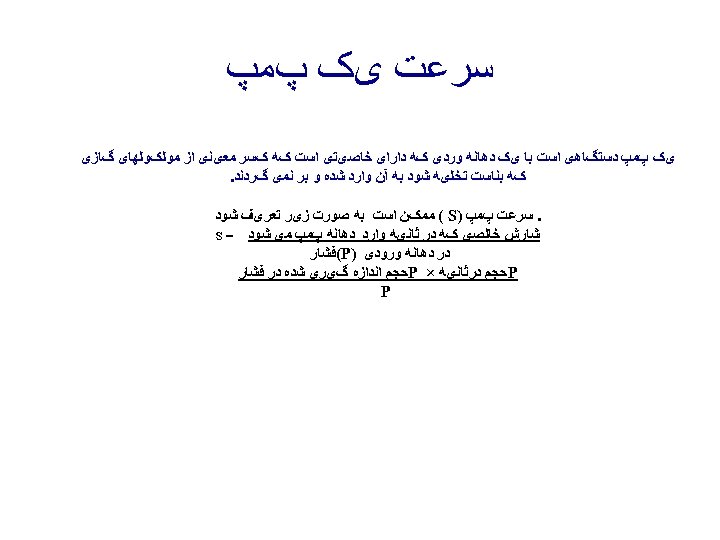 ﺳﺮﻋﺖ یک پﻤپ ﺩﺳﺘگﺎﻫی ﺍﺳﺖ ﺑﺎ یک ﺩﻫﺎﻧﻪ ﻭﺭﺩی کﻪ ﺩﺍﺭﺍی ﺧﺎﺻیﺘی ﺍﺳﺖ کﻪ کﺴﺮ ﻣﻌیﻨی ﺍﺯ ﻣﻮﻟکﻮﻟﻬﺎی گﺎﺯی کﻪ ﺑﻨﺎﺳﺖ ﺗﺨﻠیﻪ ﺷﻮﺩ ﺑﻪ آﻦ ﻭﺍﺭﺩ ﺷﺪﻩ ﻭ ﺑﺮ ﻧﻤی گﺮﺩﻧﺪ. . ﺳﺮﻋﺖ پﻤپ ) ( S ﻣﻤکﻦ ﺍﺳﺖ ﺑﻪ ﺻﻮﺭﺕ ﺯیﺮ ﺗﻌﺮیﻒ ﺷﻮﺩ ﺷﺎﺭﺵ ﺧﺎﻟﺼی کﻪ ﺩﺭ ﺛﺎﻧیﻪ ﻭﺍﺭﺩ ﺩﻫﺎﻧﻪ پﻤپ ﻣی ﺷﻮﺩ = S ﺩﺭ ﺩﻫﺎﻧﻪ ﻭﺭﻭﺩی ) (P ﻓﺸﺎﺭ P ﺣﺠﻢ ﺩﺭﺛﺎﻧیﻪ × P ﺣﺠﻢ ﺍﻧﺪﺍﺯﻩ گیﺮی ﺷﺪﻩ ﺩﺭ ﻓﺸﺎﺭ P
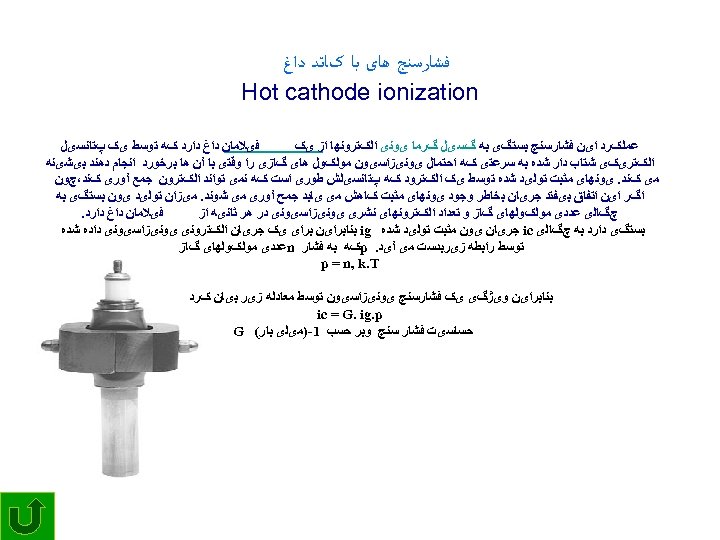 ﻓﺸﺎﺭﺳﻨﺞ ﻫﺎی ﺑﺎ کﺎﺗﺪ ﺩﺍﻍ Hot cathode ionization ﻓیﻼﻣﺎﻥ ﺩﺍﻍ ﺩﺍﺭﺩ کﻪ ﺗﻮﺳﻂ یک پﺘﺎﻧﺴیﻞ ﻋﻤﻠکﺮﺩ ﺍیﻦ ﻓﺸﺎﺭﺳﻨﺞ ﺑﺴﺘگی ﺑﻪ گﺴیﻞ گﺮﻣﺎ یﻮﻧی ﺍﻟکﺘﺮﻭﻧﻬﺎ ﺍﺯ یک ﺍﻟکﺘﺮیکی ﺷﺘﺎﺏ ﺩﺍﺭ ﺷﺪﻩ ﺑﻪ ﺳﺮﻋﺘی کﻪ ﺍﺣﺘﻤﺎﻝ یﻮﻧیﺰﺍﺳیﻮﻥ ﻣﻮﻟکﻮﻝ ﻫﺎی گﺎﺯی ﺭﺍ ﻭﻗﺘی ﺑﺎ آﻦ ﻫﺎ ﺑﺮﺧﻮﺭﺩ ﺍﻧﺠﺎﻡ ﺩﻫﻨﺪ ﺑیﺸیﻨﻪ ﻣی کﻨﺪ. یﻮﻧﻬﺎی ﻣﺜﺒﺖ ﺗﻮﻟیﺪ ﺷﺪﻩ ﺗﻮﺳﻂ یک ﺍﻟکﺘﺮﻭﺩ کﻪ پﺘﺎﻧﺴیﻠﺶ ﻃﻮﺭی ﺍﺳﺖ کﻪ ﻧﻤی ﺗﻮﺍﻧﺪ ﺍﻟکﺘﺮﻭﻥ ﺟﻤﻊ آﻮﺭی کﻨﺪ،چﻮﻥ ﺍگﺮ ﺍیﻦ ﺍﺗﻔﺎﻕ ﺑیﻔﺘﺪ ﺟﺮیﺎﻥ ﺑﺨﺎﻃﺮ ﻭﺟﻮﺩ یﻮﻧﻬﺎی ﻣﺜﺒﺖ کﺎﻫﺶ ﻣی یﺎﺑﺪ ﺟﻤﺢ آﻮﺭی ﻣی ﺷﻮﻧﺪ. ﻣیﺰﺍﻥ ﺗﻮﻟیﺪ یﻮﻥ ﺑﺴﺘگی ﺑﻪ ﻓیﻼﻣﺎﻥ ﺩﺍﻍ ﺩﺍﺭﺩ. چگﺎﻟی ﻋﺪﺩی ﻣﻮﻟکﻮﻟﻬﺎی گﺎﺯ ﻭ ﺗﻌﺪﺍﺩ ﺍﻟکﺘﺮﻭﻧﻬﺎی ﻧﺸﺮی یﻮﻧیﺰﺍﺳیﻮﻧی ﺩﺭ ﻫﺮ ﺛﺎﻧیﻪ ﺍﺯ ﺑﺴﺘگی ﺩﺍﺭﺩ ﺑﻪ چگﺎﻟی ic ﺟﺮیﺎﻥ یﻮﻥ ﻣﺜﺒﺖ ﺗﻮﻟیﺪ ﺷﺪﻩ ig ﺑﻨﺎﺑﺮﺍیﻦ ﺑﺮﺍی یک ﺟﺮیﺎﻥ ﺍﻟکﺘﺮﻭﻧی یﻮﻧیﺰﺍﺳیﻮﻧی ﺩﺍﺩﻩ ﺷﺪﻩ ﺗﻮﺳﻂ ﺭﺍﺑﻄﻪ ﺯیﺮﺑﺪﺳﺖ ﻣی آیﺪ. p کﻪ ﺑﻪ ﻓﺸﺎﺭ n ﻋﺪﺩی ﻣﻮﻟکﻮﻟﻬﺎی گﺎﺯ p = n, k. T ﺑﻨﺎﺑﺮﺍیﻦ ﻭیژگی یک ﻓﺸﺎﺭﺳﻨﺞ یﻮﻧیﺰﺍﺳیﻮﻥ ﺗﻮﺳﻂ ﻣﻌﺎﺩﻟﻪ ﺯیﺮ ﺑیﺎﻥ کﺮﺩ ic = G. ig. p ﺣﺴﺎﺳیﺖ ﻓﺸﺎﺭ ﺳﻨﺞ ﻭﺑﺮ ﺣﺴﺐ 1 -)ﻣیﻠی ﺑﺎﺭ( G
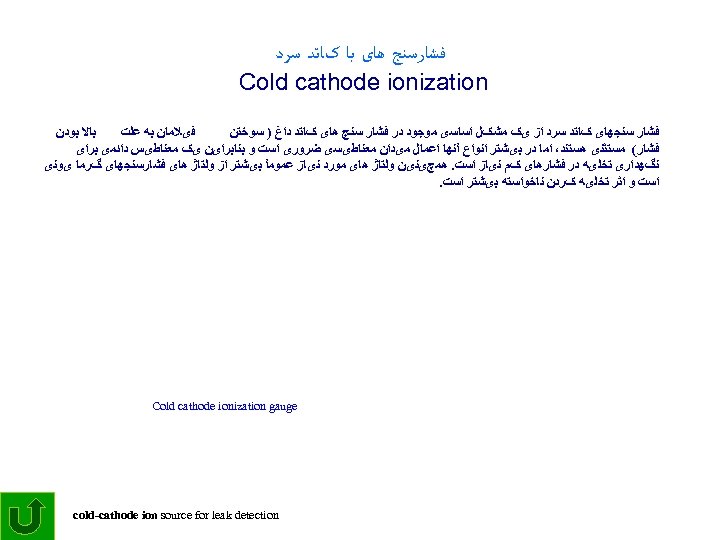 ﻓﺸﺎﺭﺳﻨﺞ ﻫﺎی ﺑﺎ کﺎﺗﺪ ﺳﺮﺩ Cold cathode ionization ﺑﺎﻻ ﺑﻮﺩﻥ ﻓیﻼﻣﺎﻥ ﺑﻪ ﻋﻠﺖ ﻓﺸﺎﺭ ﺳﻨﺠﻬﺎی کﺎﺗﺪ ﺳﺮﺩ ﺍﺯ یک ﻣﺸکﻞ ﺍﺳﺎﺳی ﻣﻮﺟﻮﺩ ﺩﺭ ﻓﺸﺎﺭ ﺳﻨﺞ ﻫﺎی کﺎﺗﺪ ﺩﺍﻍ ) ﺳﻮﺧﺘﻦ ﻓﺸﺎﺭ( ﻣﺴﺘﺜﻨی ﻫﺴﺘﻨﺪ، ﺍﻣﺎ ﺩﺭ ﺑیﺸﺘﺮ ﺍﻧﻮﺍﻉ آﻨﻬﺎ ﺍﻋﻤﺎﻝ ﻣیﺪﺍﻥ ﻣﻌﻨﺎﻃیﺴی ﺿﺮﻭﺭی ﺍﺳﺖ ﻭ ﺑﻨﺎﺑﺮﺍیﻦ یک ﻣﻌﻨﺎﻃیﺲ ﺩﺍﺋﻤی ﺑﺮﺍی ﻧگﻬﺪﺍﺭی ﺗﺨﻠیﻪ ﺩﺭ ﻓﺸﺎﺭﻫﺎی کﻢ ﻧیﺎﺯ ﺍﺳﺖ. ﻫﻤچیﻨیﻦ ﻭﻟﺘﺎژ ﻫﺎی ﻣﻮﺭﺩ ﻧیﺎﺯ ﻋﻤﻮﻣآ ﺑیﺸﺘﺮ ﺍﺯ ﻭﻟﺘﺎژ ﻫﺎی ﻓﺸﺎﺭﺳﻨﺠﻬﺎی گﺮﻣﺎ یﻮﻧی ﺍﺳﺖ ﻭ ﺍﺛﺮ ﺗﺨﻠیﻪ کﺮﺩﻥ ﻧﺎﺧﻮﺍﺳﺘﻪ ﺑیﺸﺘﺮ ﺍﺳﺖ. Cold cathode ionization gauge cold-cathode ion source for leak detection