 Скачать презентацию v Customer Christian Bonneau Daniel Byrne Stefanie Jones
b301e9974d4ffbf66c245a78759e8fcc.ppt
- Количество слайдов: 94




v. Customer: Christian Bonneau Daniel Byrne Stefanie Jones Lindsay Rosenthal Optimizing a Global Footprint
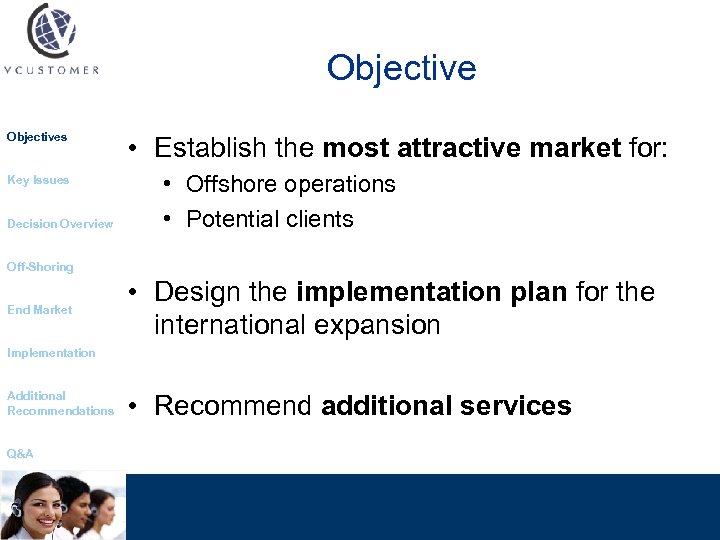
Objectives Key Issues Decision Overview • Establish the most attractive market for: • Offshore operations • Potential clients Off-Shoring End Market • Design the implementation plan for the international expansion Implementation Additional Recommendations Q&A • Recommend additional services
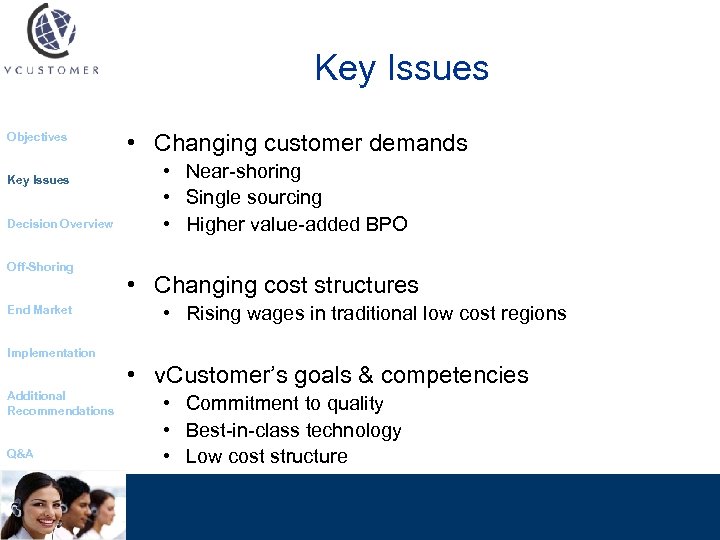
Key Issues Objectives Key Issues Decision Overview Off-Shoring End Market • Changing customer demands • Near-shoring • Single sourcing • Higher value-added BPO • Changing cost structures • Rising wages in traditional low cost regions Implementation • v. Customer’s goals & competencies Additional Recommendations Q&A • Commitment to quality • Best-in-class technology • Low cost structure
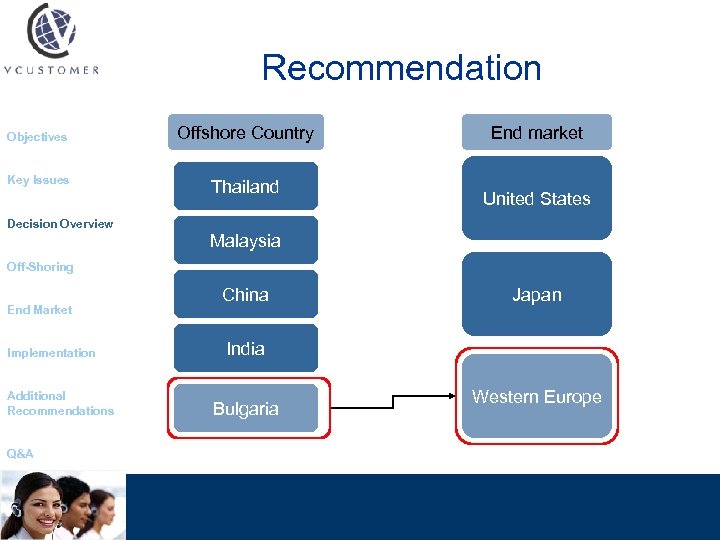
Recommendation Objectives Key Issues Offshore Country Thailand End market United States Decision Overview Malaysia Off-Shoring End Market Implementation Additional Recommendations Q&A China Japan India Bulgaria Western Europe
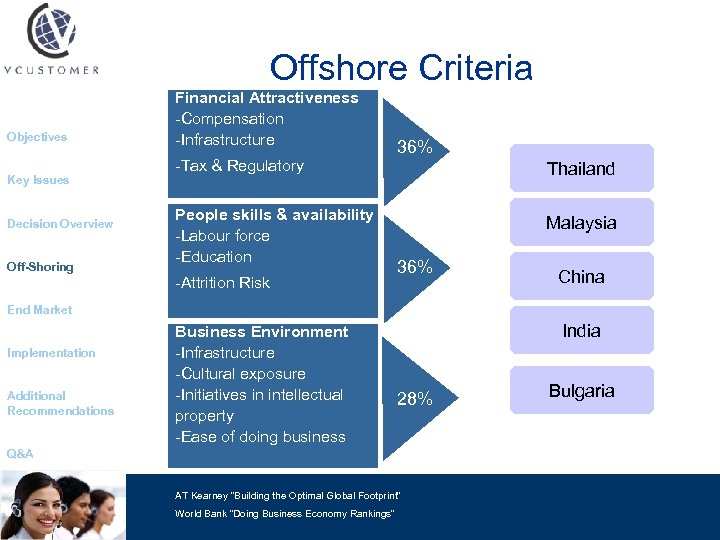
Offshore Criteria Objectives Key Issues Decision Overview Off-Shoring Financial Attractiveness -Compensation -Infrastructure -Tax & Regulatory People skills & availability -Labour force -Education -Attrition Risk 36% Thailand Malaysia 36% China End Market Implementation Additional Recommendations Business Environment -Infrastructure -Cultural exposure -Initiatives in intellectual property -Ease of doing business India 28% Q&A AT Kearney “Building the Optimal Global Footprint” World Bank “Doing Business Economy Rankings” Bulgaria
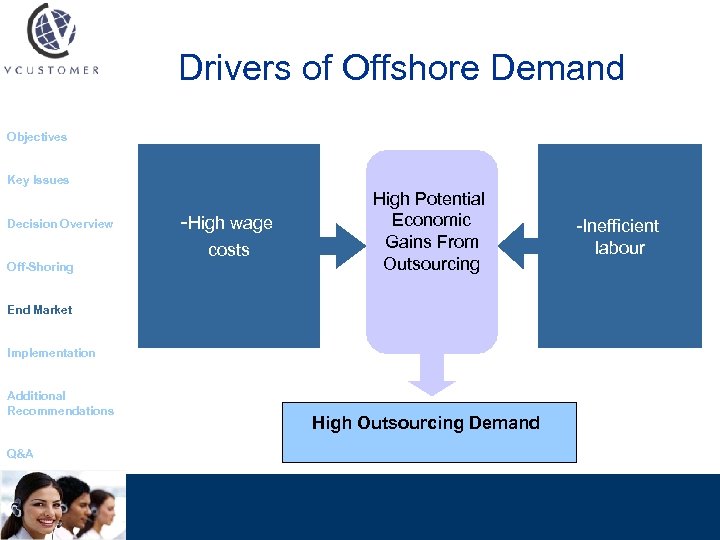
Drivers of Offshore Demand Objectives Key Issues Decision Overview Off-Shoring -High wage costs High Potential Economic Gains From Outsourcing End Market Implementation Additional Recommendations Q&A High Outsourcing Demand -Inefficient labour
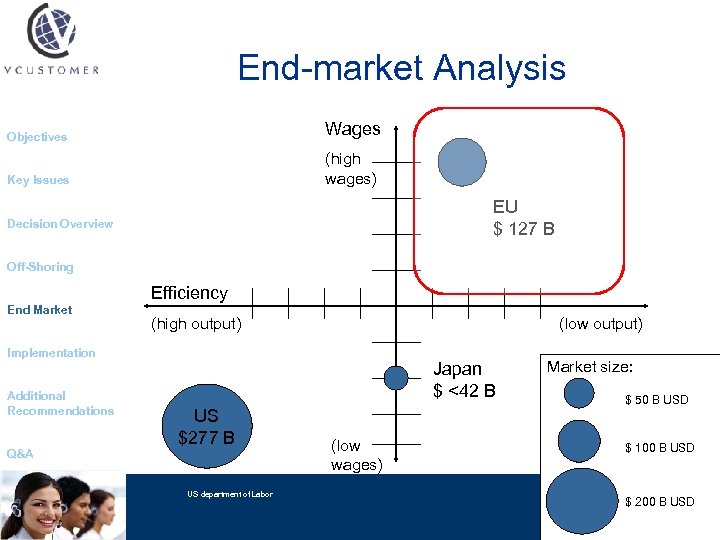
End-market Analysis Objectives Wages Key Issues (high wages) EU $ 127 B Decision Overview Off-Shoring Efficiency End Market (high output) (low output) Implementation Additional Recommendations Q&A Japan $ <42 B US $277 B US department of Labor (low wages) Market size: $ 50 B USD $ 100 B USD $ 200 B USD
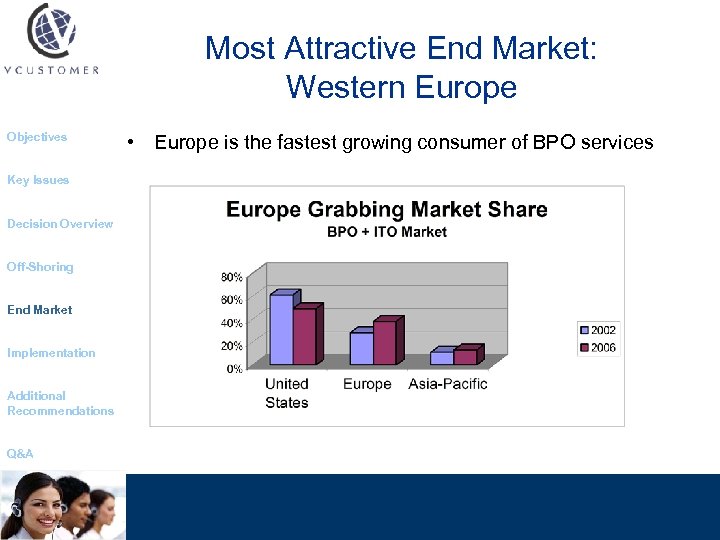
Most Attractive End Market: Western Europe Objectives Key Issues Decision Overview Off-Shoring End Market Implementation Additional Recommendations Q&A • Europe is the fastest growing consumer of BPO services
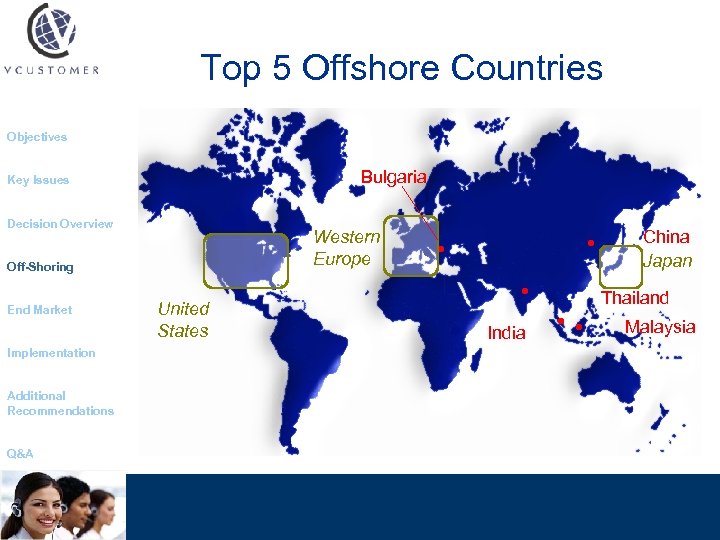
Top 5 Offshore Countries Objectives Bulgaria Key Issues Decision Overview Western Europe Off-Shoring End Market Implementation Additional Recommendations Q&A United States China Japan Thailand India Malaysia
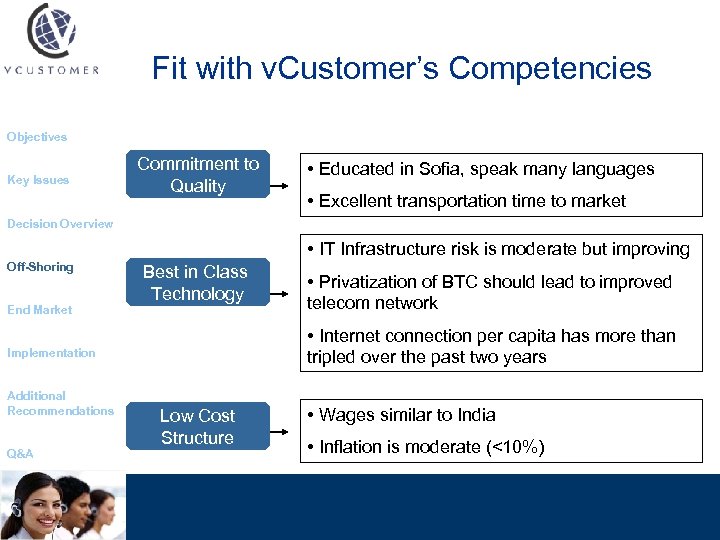
Fit with v. Customer’s Competencies Objectives Key Issues Commitment to Quality • Educated in Sofia, speak many languages • Excellent transportation time to market Decision Overview • IT Infrastructure risk is moderate but improving Off-Shoring End Market Best in Class Technology • Internet connection per capita has more than tripled over the past two years Implementation Additional Recommendations Q&A • Privatization of BTC should lead to improved telecom network Low Cost Structure • Wages similar to India • Inflation is moderate (<10%)
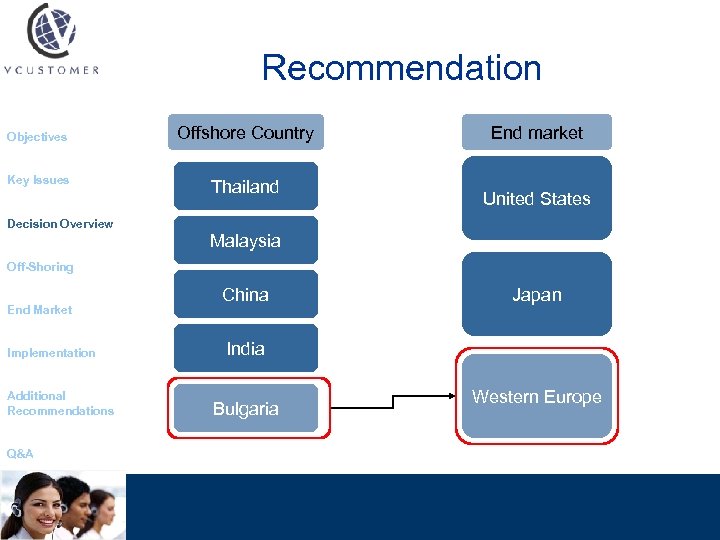
Recommendation Objectives Key Issues Offshore Country Thailand End market United States Decision Overview Malaysia Off-Shoring End Market Implementation Additional Recommendations Q&A China Japan India Bulgaria Western Europe
Critical Implementation Issues Objectives Key Issues Decision Overview Off-Shoring End Market Implementation Additional Recommendations Q&A • Issues related to maintaining v. Customer’s core competencies • Maintaining low-cost structure as Bulgaria’s labour market becomes more mobile • Best in class technology – guarantee reliable access to broadband • Dedication to quality
Low Cost Structure Implementation Objectives Key Issues Decision Overview Off-Shoring End Market Implementation Additional Recommendations Q&A • Very limited short-term wage pressures • Labour force mobility effecting longterm wage pressure • EU labour mobility agreements (2011) • Offer programs to retain employees
Best in Class Technology Objectives Key Issues Decision Overview Off-Shoring End Market Implementation Additional Recommendations Q&A • Bulgaria Telecom being privatized • Long-term increase in quality of infrastructure • Meet with Mayor of Sofia and Telecom head to reach access agreement • Potential for 1000+ job creation powerful bargaining tool
Commitment to Quality Objectives Key Issues Decision Overview Off-Shoring End Market Implementation Additional Recommendations Q&A • Critical to client relationships • Competence of employees key to consistent service • Large # unemployed university grads • Continual training and quality monitoring
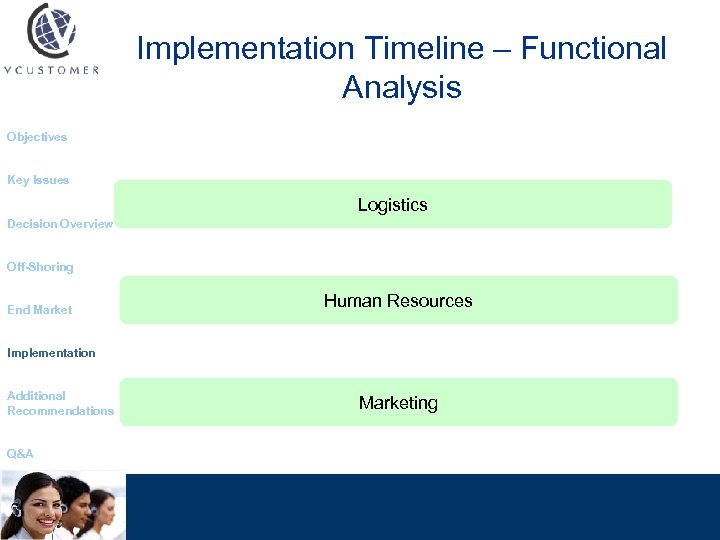
Implementation Timeline – Functional Analysis Objectives Key Issues Logistics Decision Overview Off-Shoring End Market Human Resources Implementation Additional Recommendations Q&A Marketing
Logistics Objectives Key Issues Decision Overview Off-Shoring End Market Implementation Additional Recommendations Q&A • Timeframe: 0 -6 Months • Analyze and execute entry method • Continued partnership, acquisition, go it alone • Site identification and secure leasing • Starting with 11, 500 sq. ft, • Expandable to 23, 000 sq. ft. • Regulatory Approval (32 days) • Establishment and testing of telecom services • Install first 200 workstations
Logistics Objectives Key Issues Decision Overview • Timeframe: 6 -12 Months • Install 450 workstations • Evaluate operations Off-Shoring End Market Implementation Additional Recommendations Q&A • Timeframe: 18 -24 months • Install 450 workstations (total 1100) • Increase proportion of BPO trained CSRs
Human Resources Strategy Objectives Key Issues Decision Overview Off-Shoring • Sales consultants (20 initial, 5 annually subsequent) • On-campus recruitment of European MBAgraduates • Headhunting of established professionals End Market Implementation Additional Recommendations Q&A • CSRs, BPO clerks, admin staff (1100 by year 3) • Recruit through universities • Screen for language, personality and aptitude
HR Strategy Continued Objectives Key Issues Decision Overview Off-Shoring End Market Implementation Additional Recommendations Q&A • Hands-on training for sales consultants in India • Work in service centres and on site with clients • CSRs and BPO clerks will receive language and technical training • Career evolution • CSR → BPO Clerk → Sales Consultant
Marketing Plan Objectives Key Issues Decision Overview Off-Shoring End Market Implementation Additional Recommendations Q&A • Pitch Euro divisions of current clients • Target market for sales staff: • Medium sized international companies • European based multinationals • France, Germany and Spain • Concentrate on established verticals • Upsell CRM customers to BPO
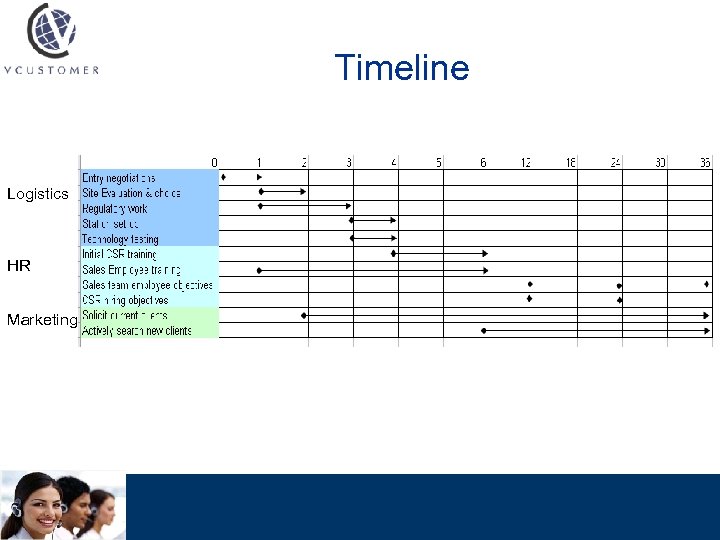
Timeline Logistics HR Marketing

Financial Projections Objectives Key Issues Decision Overview Off-Shoring End Market Implementation Additional Recommendations Q&A
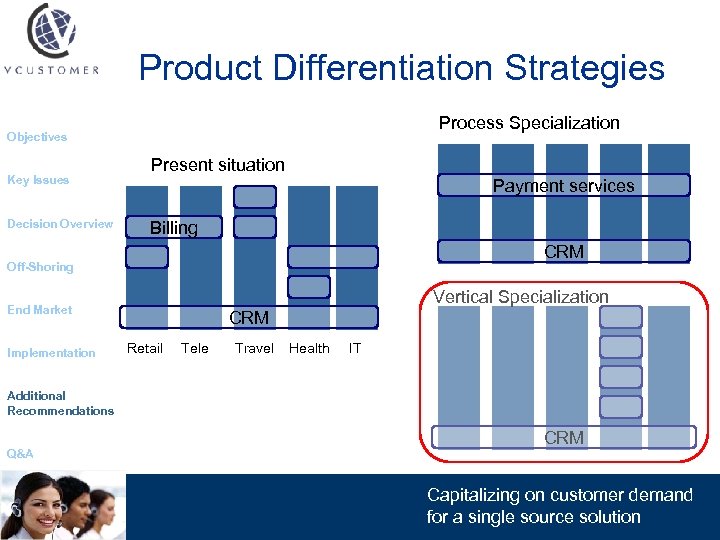
Product Differentiation Strategies Process Specialization Objectives Key Issues Decision Overview Present situation Payment services Billing CRM Off-Shoring Vertical Specialization End Market Implementation CRM Retail Tele Travel Health IT Additional Recommendations Q&A CRM Capitalizing on customer demand for a single source solution
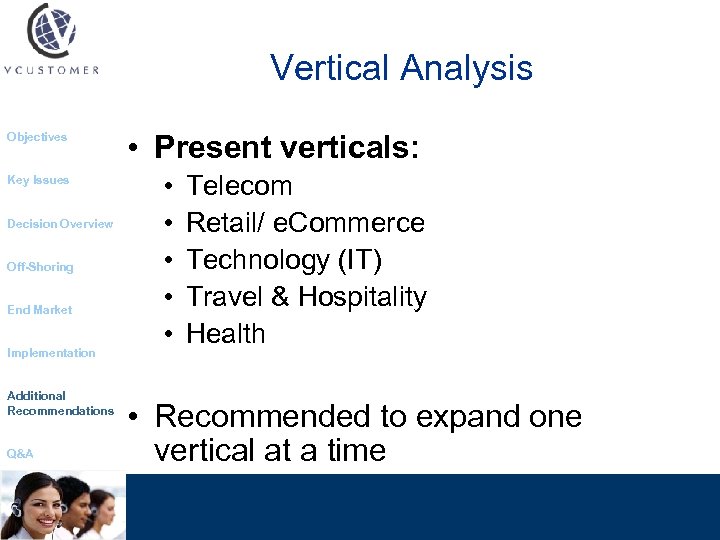
Vertical Analysis Objectives Key Issues Decision Overview Off-Shoring End Market Implementation Additional Recommendations Q&A • Present verticals: • • • Telecom Retail/ e. Commerce Technology (IT) Travel & Hospitality Health • Recommended to expand one vertical at a time
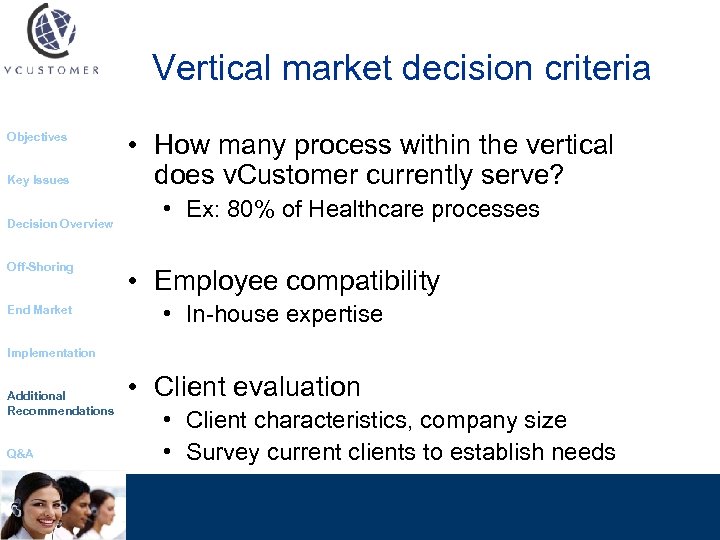
Vertical market decision criteria Objectives Key Issues Decision Overview Off-Shoring End Market • How many process within the vertical does v. Customer currently serve? • Ex: 80% of Healthcare processes • Employee compatibility • In-house expertise Implementation Additional Recommendations Q&A • Client evaluation • Client characteristics, company size • Survey current clients to establish needs
Additional Consulting Services: General Off-shoring Objectives Key Issues Determine optimal entry strategy • Require more in-depth information about partner and current agreement Decision Overview Off-Shoring End Market Implementation Additional Recommendations Q&A Contract Design • Termination and buy-out clauses Off-shore location monitoring • Labour mobility and rapid wage adjustment • Bi-Annual tailored reporting indicating trends
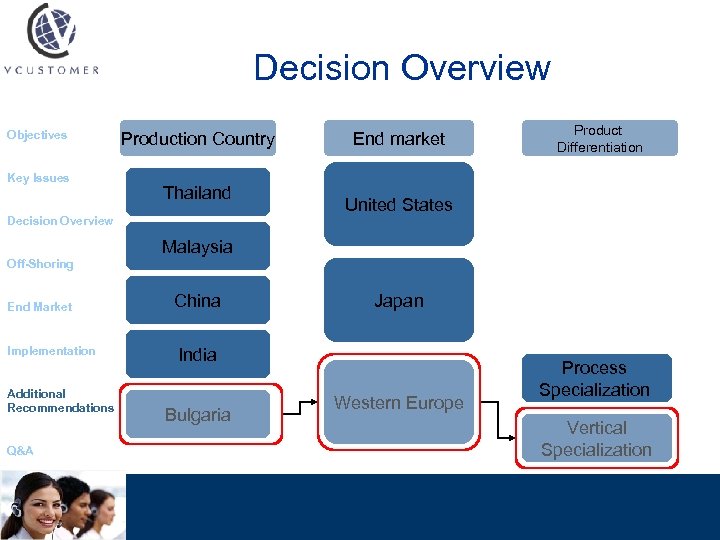
Decision Overview Objectives Key Issues Production Country Thailand Decision Overview End market Product Differentiation United States Malaysia Off-Shoring End Market Implementation Additional Recommendations Q&A China Japan India Bulgaria Western Europe Process Specialization Vertical Specialization
Key Issues Revisited Objectives Key Issues Decision Overview • Changing customer demands • Near-shoring • Single sourcing • Higher value-added BPO Off-Shoring • Changing cost structures End Market • Rising wages in traditional low cost regions Implementation Additional Recommendations Q&A • v. Customer’s goals & competencies • Commitment to quality • Best-in-class technology • Low cost structure

Question & Answer Lindsay Stefanie Daniel Christian

Appendix slides
Appendix: End Market Analysis
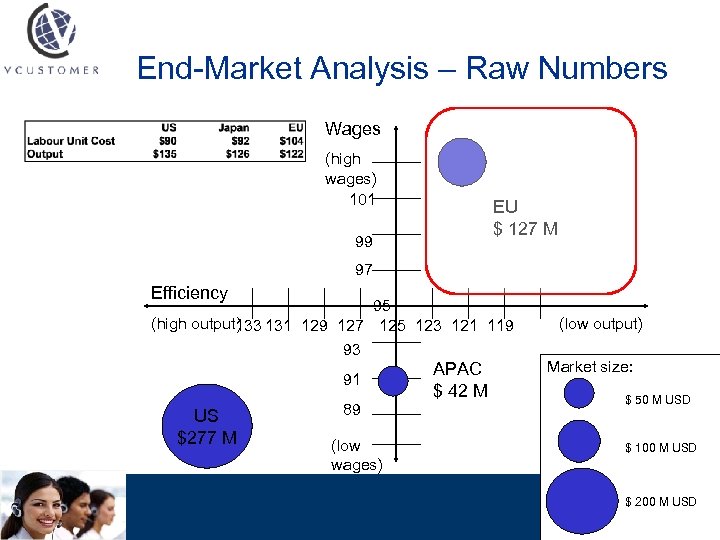
End-Market Analysis – Raw Numbers Wages (high wages) 101 EU $ 127 M 99 97 Efficiency 95 (high output) 133 131 129 127 125 123 121 119 93 91 US $277 M 89 (low wages) APAC $ 42 M (low output) Market size: $ 50 M USD $ 100 M USD $ 200 M USD
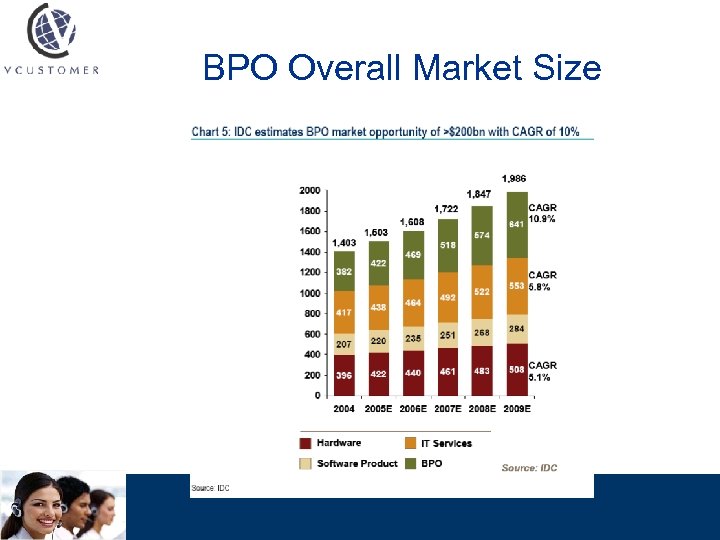
BPO Overall Market Size
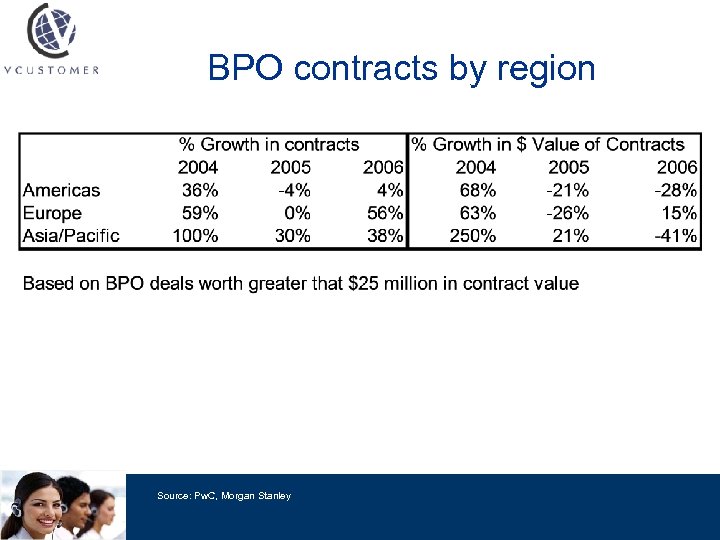
BPO contracts by region Source: Pw. C, Morgan Stanley
Appendix: Financial Analysis
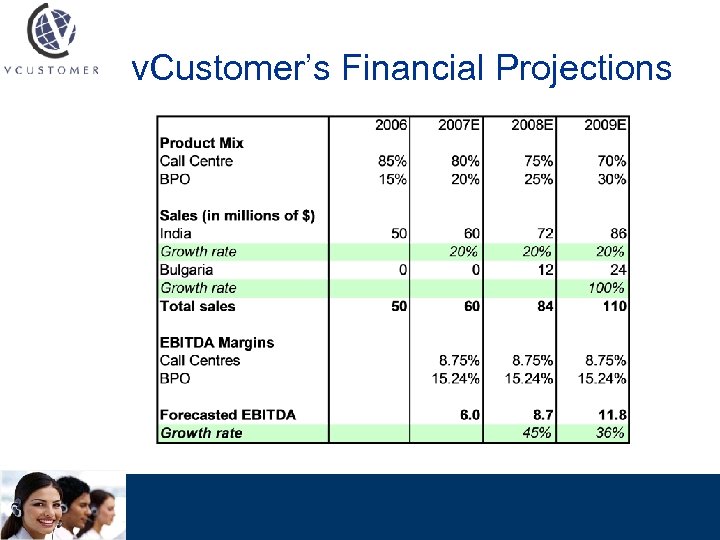
v. Customer’s Financial Projections

EBITDA Margins of Comparable Companies
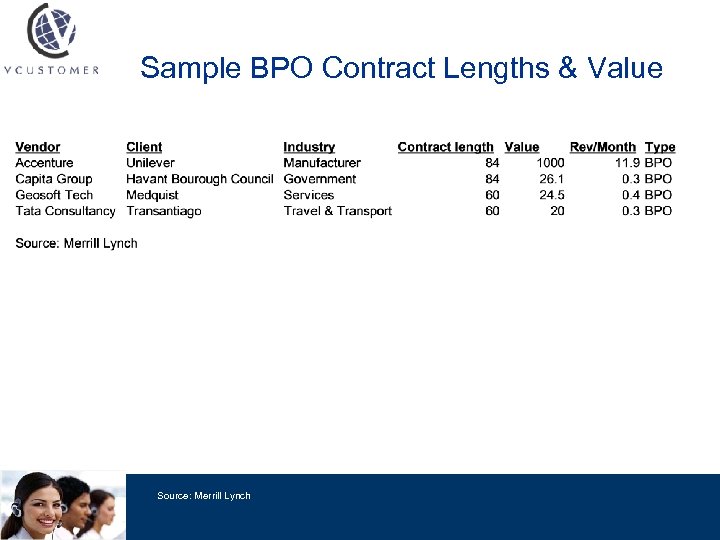
Sample BPO Contract Lengths & Value Source: Merrill Lynch
Precedent Transactions in the IT Industry Source: Merrill Lynch
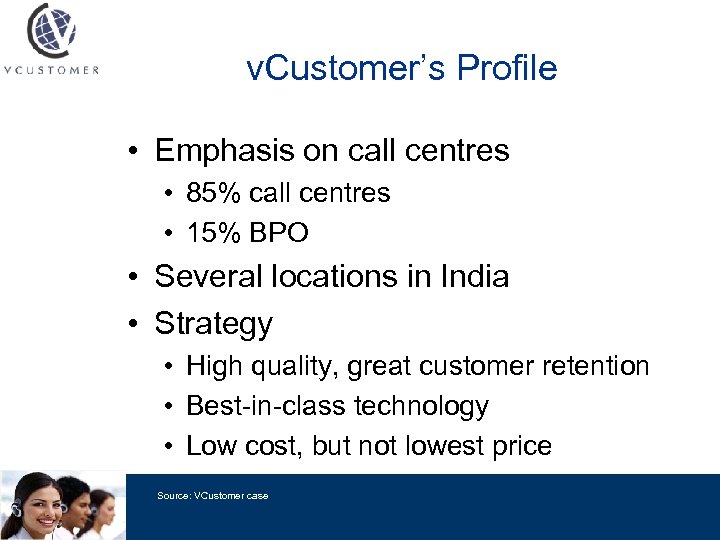
v. Customer’s Profile • Emphasis on call centres • 85% call centres • 15% BPO • Several locations in India • Strategy • High quality, great customer retention • Best-in-class technology • Low cost, but not lowest price Source: VCustomer case
Target Acquisition Profile • Emphasis on quality & customer service • Excellent technology • Good reputation • Extension of BPO opportunity • Small to Mid sized firm within our price range Source: VCustomer case
Web. Help - Profile • • • Located in Algeria & Eastern Europe Strong client base in Europe Same business model Potential candidate for merger Average price/sales of precedent transactions: 1. 22 Source: Merrill Lynch, VCustomer Case
Appendix: Country Analysis
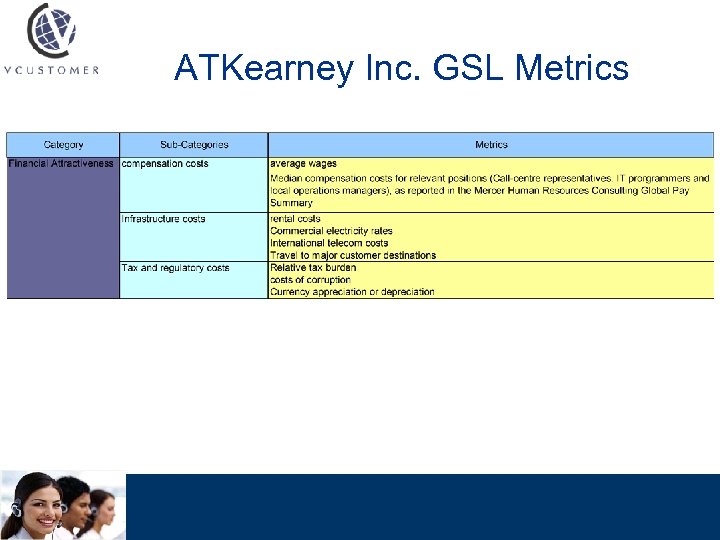
ATKearney Inc. GSL Metrics
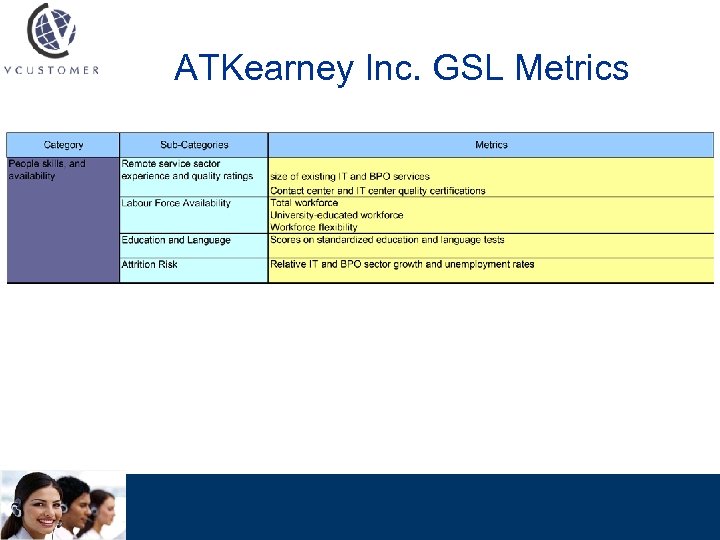
ATKearney Inc. GSL Metrics
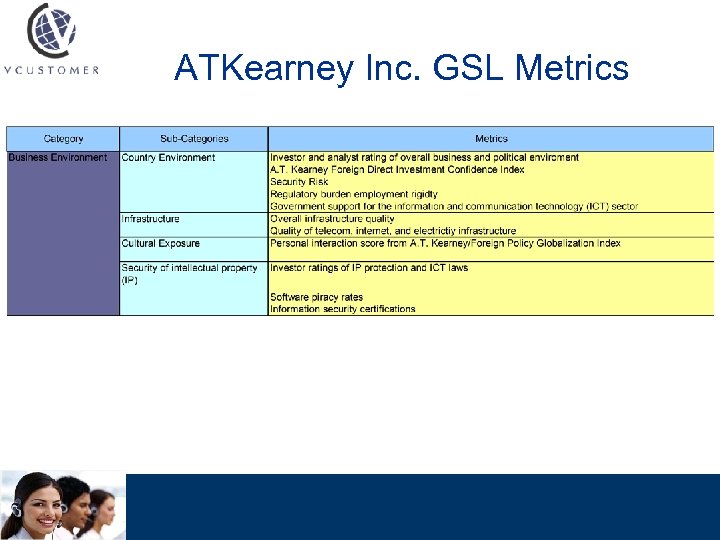
ATKearney Inc. GSL Metrics
Additional countries to GSL report • Albania, Belarus, Bosnia & Herzegovina, Croatia, Lithuania, Macedonia, Moldova, Serbia • People: World Bank indexes difficulty of firing, hiring, etc • Financial: Tax rate as % of profit, cost as % property value, (world bank) • Business Environment: Corruption Index
Augmented weighting to Offshore Country Analysis • GSL categories: Financial (40%), People (40%), Business environment (20%) • Total weight (90%) • World Bank: Ease of doing business rank • Total weight (10%) • Overall weights: • • Financial 36% People 36% Environment 18% Ease of business 10%
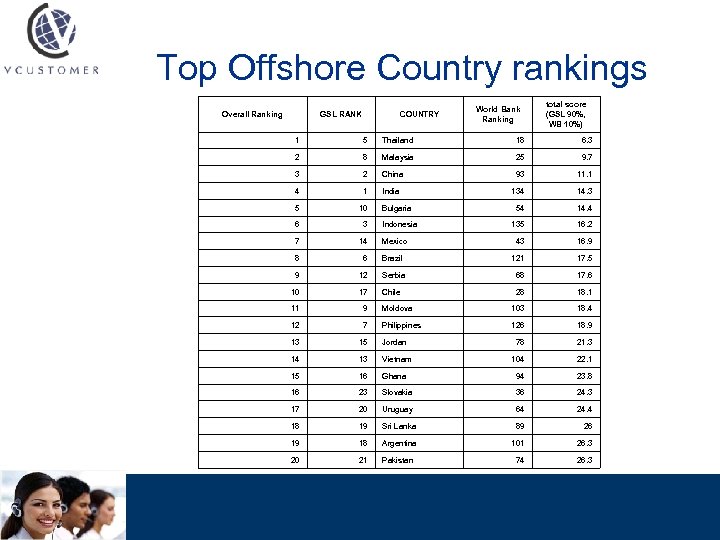
Top Offshore Country rankings Overall Ranking GSL RANK COUNTRY World Bank Ranking total score (GSL 90%, WB 10%) 1 5 Thailand 18 6. 3 2 8 Malaysia 25 9. 7 3 2 China 93 11. 1 4 1 India 134 14. 3 5 10 54 14. 4 6 3 135 16. 2 7 14 43 16. 9 8 6 Brazil 121 17. 5 9 12 Serbia 68 17. 6 10 17 Chile 28 18. 1 11 9 Moldova 103 18. 4 12 7 Philippines 126 18. 9 13 15 Jordan 78 21. 3 14 13 Vietnam 104 22. 1 15 16 Ghana 94 23. 8 16 23 Slovakia 36 24. 3 17 20 Uruguay 64 24. 4 18 19 Sri Lanka 89 26 19 18 Argentina 101 26. 3 20 21 Pakistan 74 26. 3 Bulgaria Indonesia Mexico
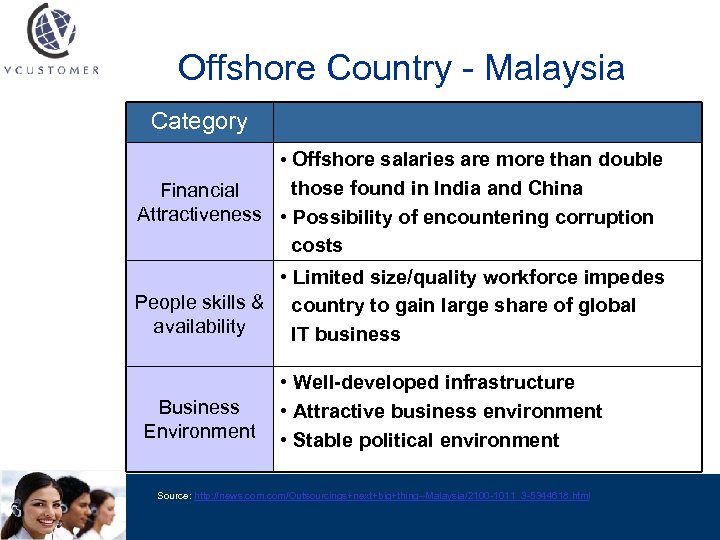
Offshore Country - Malaysia Category • Offshore salaries are more than double those found in India and China Financial Attractiveness • Possibility of encountering corruption costs • Limited size/quality workforce impedes People skills & country to gain large share of global availability IT business Business Environment • Well-developed infrastructure • Attractive business environment • Stable political environment Source: http: //news. com/Outsourcings+next+big+thing--Malaysia/2100 -1011_3 -5344618. html
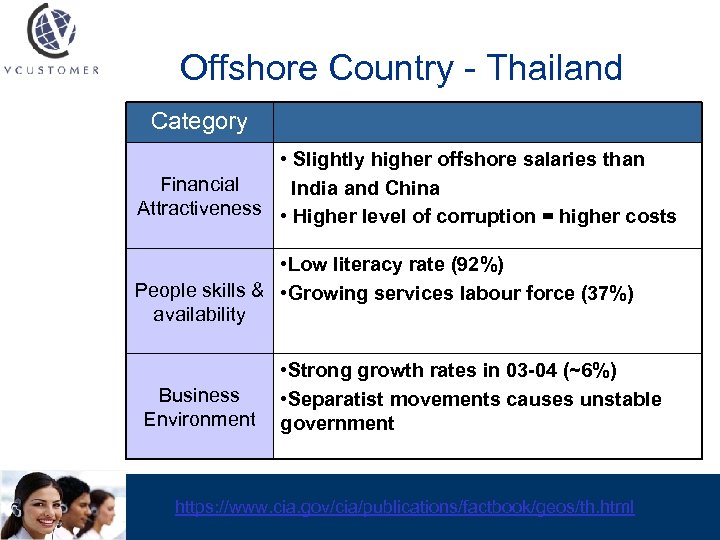
Offshore Country - Thailand Category • Slightly higher offshore salaries than Financial India and China Attractiveness • Higher level of corruption = higher costs • Low literacy rate (92%) People skills & • Growing services labour force (37%) availability Business Environment • Strong growth rates in 03 -04 (~6%) • Separatist movements causes unstable government https: //www. cia. gov/cia/publications/factbook/geos/th. html
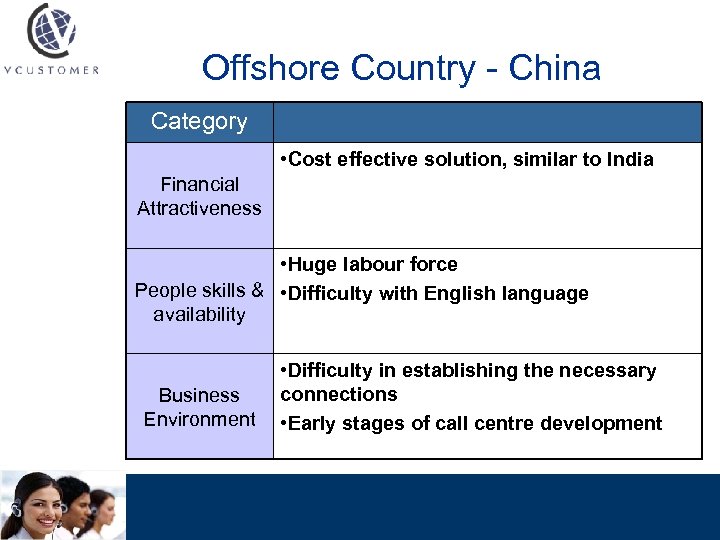
Offshore Country - China Category • Cost effective solution, similar to India Financial Attractiveness • Huge labour force People skills & • Difficulty with English language availability Business Environment • Difficulty in establishing the necessary connections • Early stages of call centre development
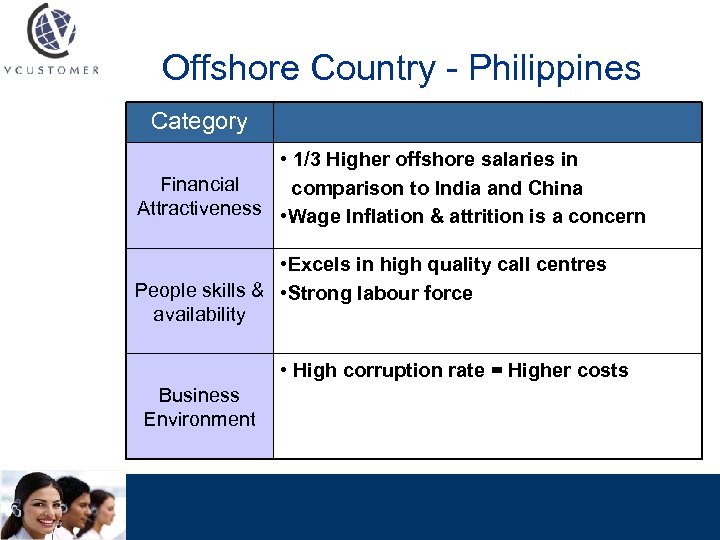
Offshore Country - Philippines Category • 1/3 Higher offshore salaries in Financial comparison to India and China Attractiveness • Wage Inflation & attrition is a concern • Excels in high quality call centres People skills & • Strong labour force availability • High corruption rate = Higher costs Business Environment
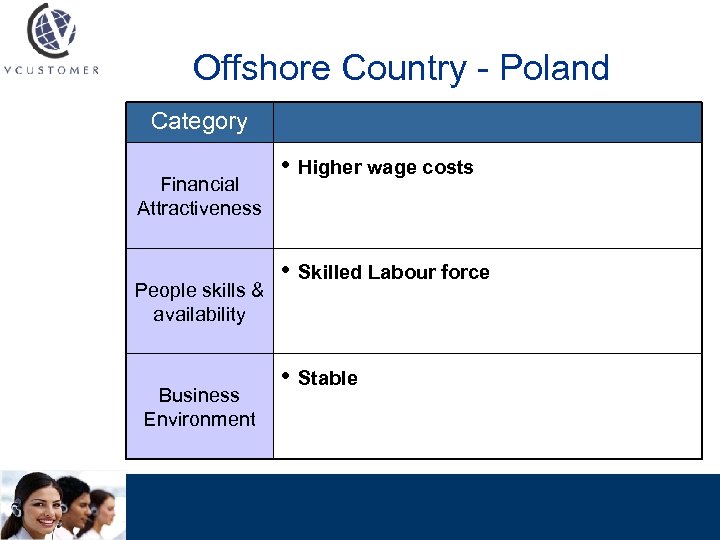
Offshore Country - Poland Category Financial Attractiveness People skills & availability Business Environment • Higher wage costs • Skilled Labour force • Stable
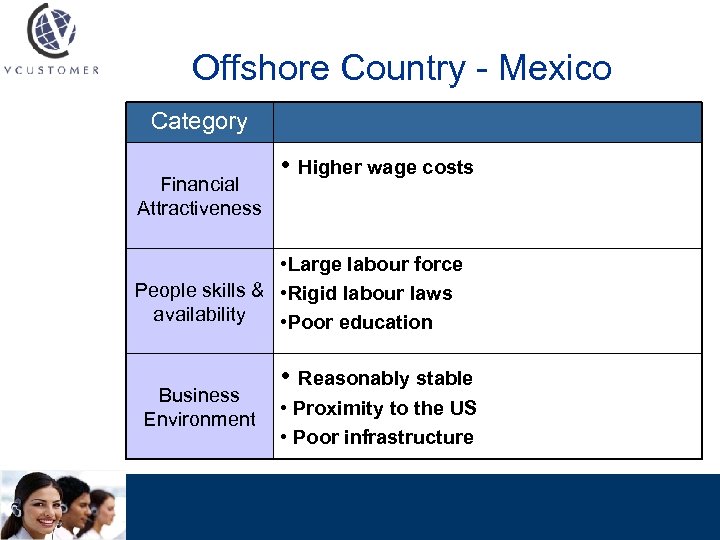
Offshore Country - Mexico Category Financial Attractiveness • Higher wage costs • Large labour force People skills & • Rigid labour laws availability • Poor education Business Environment • Reasonably stable • Proximity to the US • Poor infrastructure
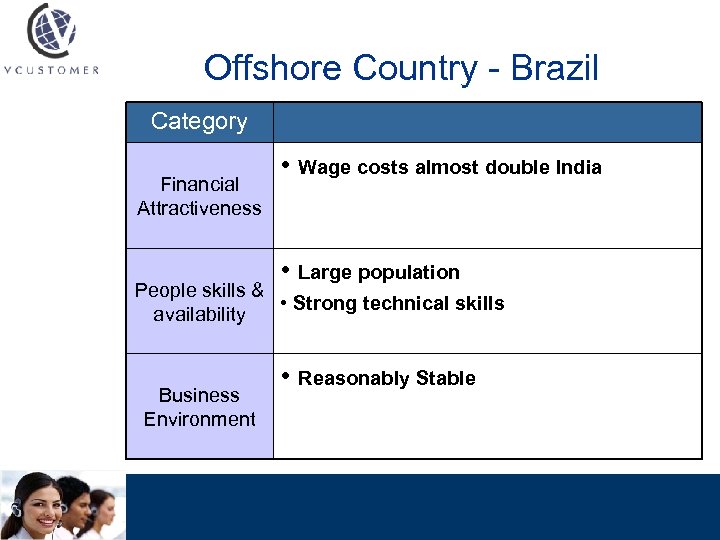
Offshore Country - Brazil Category Financial Attractiveness • Wage costs almost double India • Large population People skills & • Strong technical skills availability Business Environment • Reasonably Stable
Appendix: BPO Trends
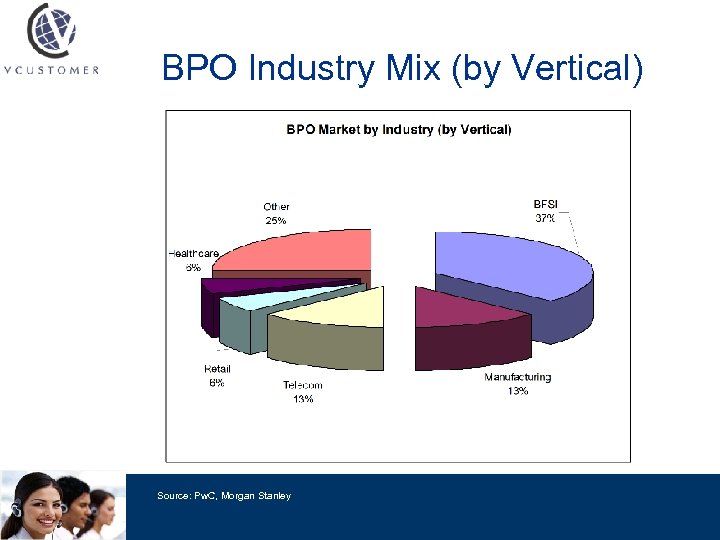
BPO Industry Mix (by Vertical) Source: Pw. C, Morgan Stanley
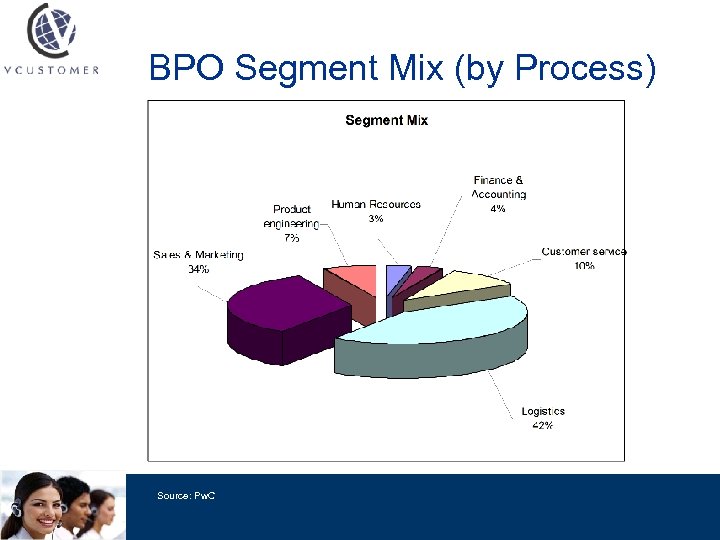
BPO Segment Mix (by Process) Source: Pw. C
BPO Segment Growth Rates Source: Morgan Stanley
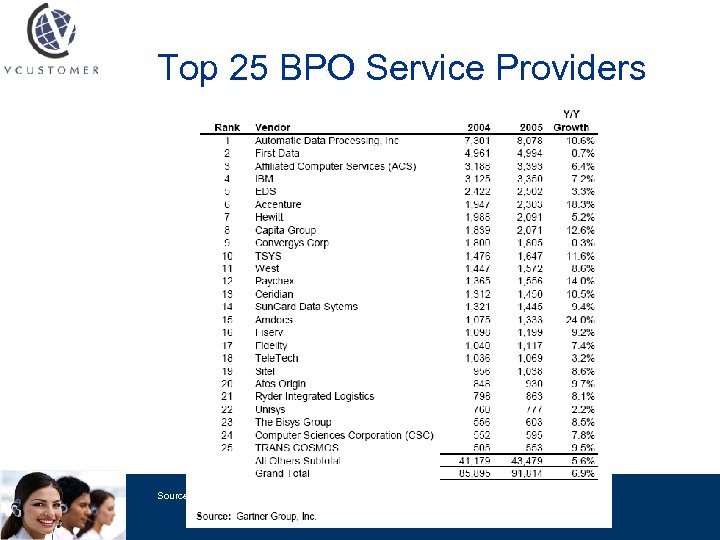
Top 25 BPO Service Providers Source:
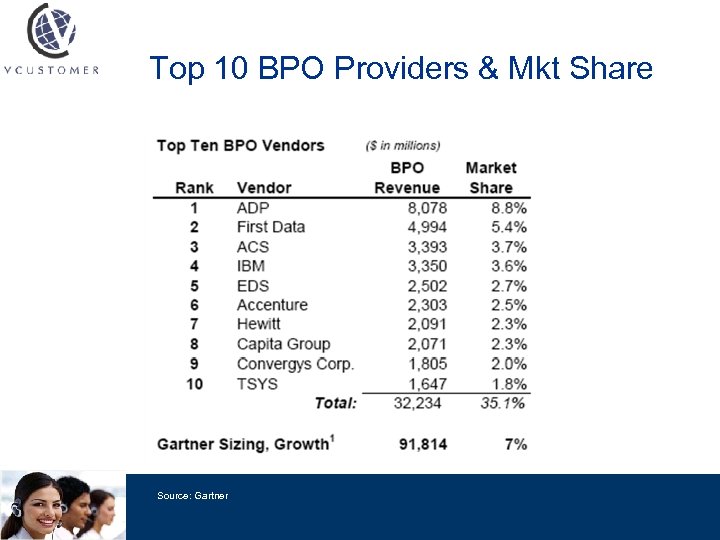
Top 10 BPO Providers & Mkt Share Source: Gartner
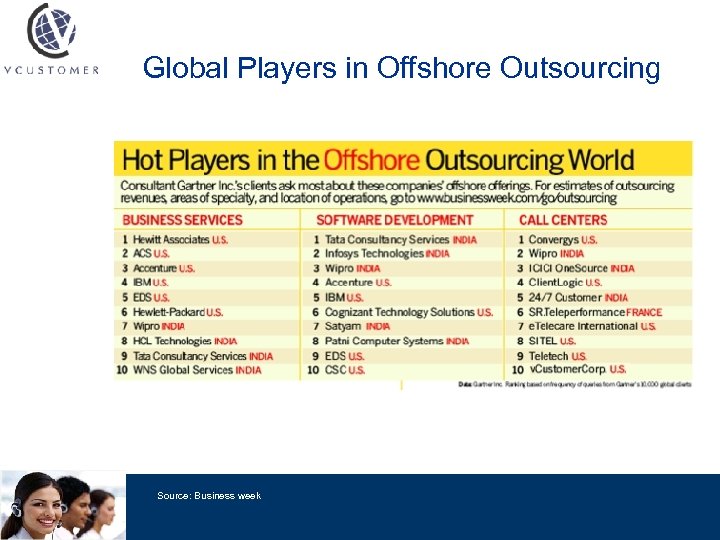
Global Players in Offshore Outsourcing Source: Business week
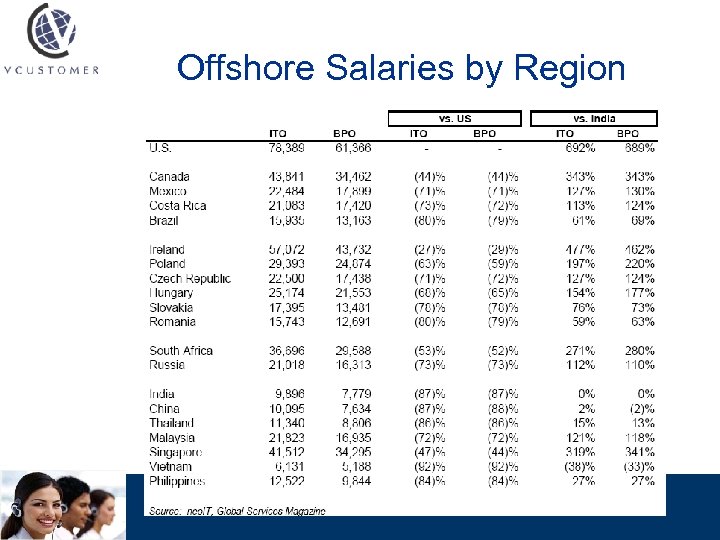
Offshore Salaries by Region Source:
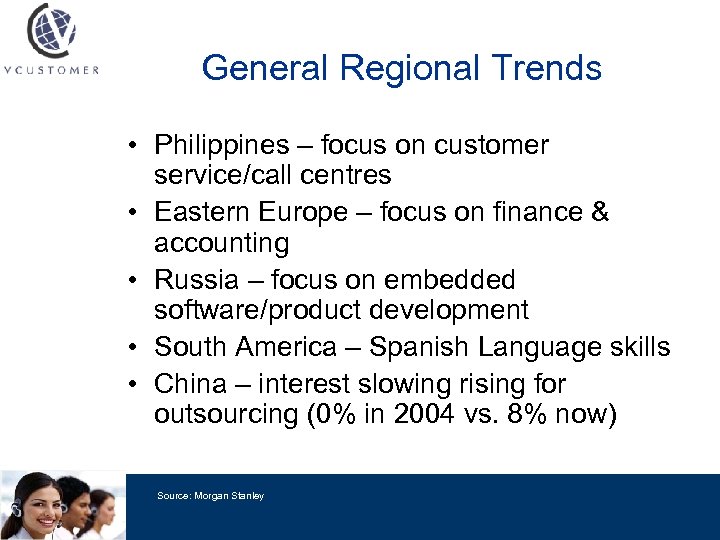
General Regional Trends • Philippines – focus on customer service/call centres • Eastern Europe – focus on finance & accounting • Russia – focus on embedded software/product development • South America – Spanish Language skills • China – interest slowing rising for outsourcing (0% in 2004 vs. 8% now) Source: Morgan Stanley
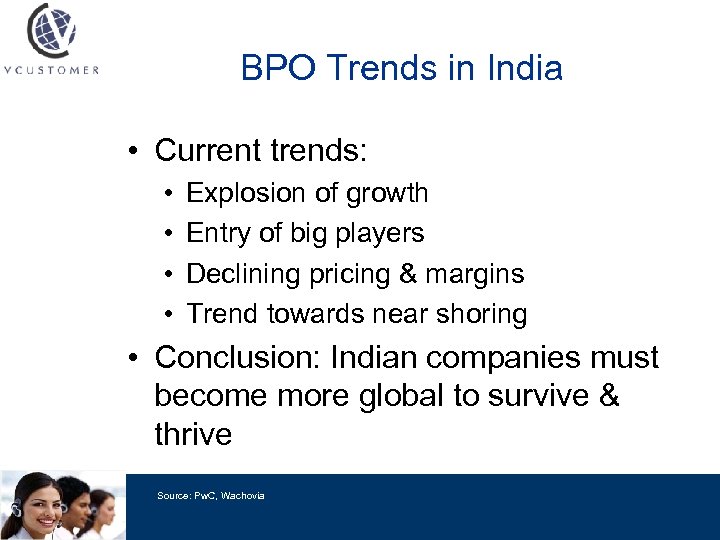
BPO Trends in India • Current trends: • • Explosion of growth Entry of big players Declining pricing & margins Trend towards near shoring • Conclusion: Indian companies must become more global to survive & thrive Source: Pw. C, Wachovia
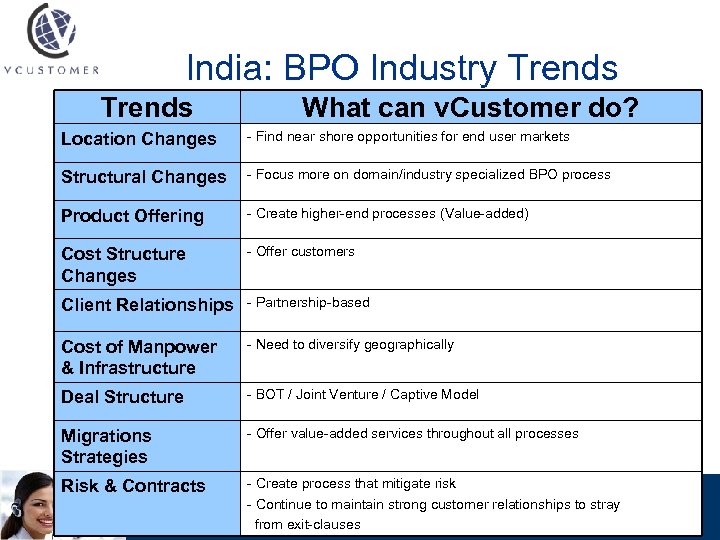
India: BPO Industry Trends What can v. Customer do? Location Changes - Find near shore opportunities for end user markets Structural Changes - Focus more on domain/industry specialized BPO process Product Offering - Create higher-end processes (Value-added) Cost Structure Changes - Offer customers Client Relationships - Partnership-based Cost of Manpower & Infrastructure - Need to diversify geographically Deal Structure - BOT / Joint Venture / Captive Model Migrations Strategies - Offer value-added services throughout all processes - Create process that mitigate risk Source: PWC Report: - Continue of BPO in India –strong customer relationships to stray The Evolution to maintain April 2005 from exit-clauses Risk & Contracts
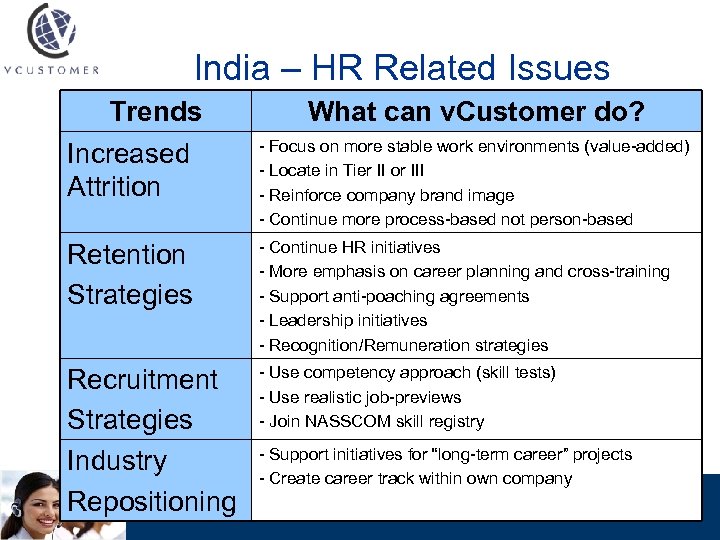
India – HR Related Issues Trends Increased Attrition What can v. Customer do? - Focus on more stable work environments (value-added) - Locate in Tier II or III - Reinforce company brand image - Continue more process-based not person-based Retention Strategies - Continue HR initiatives - More emphasis on career planning and cross-training - Support anti-poaching agreements - Leadership initiatives - Recognition/Remuneration strategies Recruitment Strategies Industry Repositioning - Use competency approach (skill tests) - Use realistic job-previews - Join NASSCOM skill registry - Support initiatives for “long-term career” projects - Create career track within own company
Appendix: Bulgarian Market
Bulgaria – Key Strengths • Stable • Part of the EU • Currency pegged to the Euro • BB+ rating • Innovative • Ranked #2 in the EMEA in IT • Best time to market • According to World bank report on business climate Source: Invest Bulgaria Agency, World Bank
Bulgaria – Key Strengths • Set up time: • Average of 32 days with 9 processes • Prices of goods are declining • Recently invested a significant amount in transportation infrastructure • Average annual wage in Bulgaria in 2006 was 4, 255 leva (2, 175. 55 euro) http: //www. sofiaecho. com/article/expectations-for-bulgarias-economic-growth-in-2007 -reach-58 -per-cent/id_22042/catid_67 http: //www. sofiaecho. com/article/world-bank-grants-bulgaria-409 m-euro-for-trade-and-transportation-projects/id_22039/catid_67
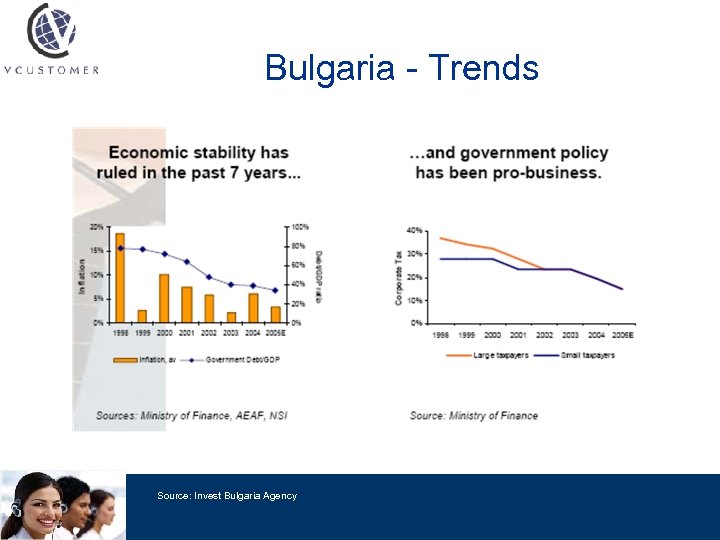
Bulgaria - Trends Source: Invest Bulgaria Agency
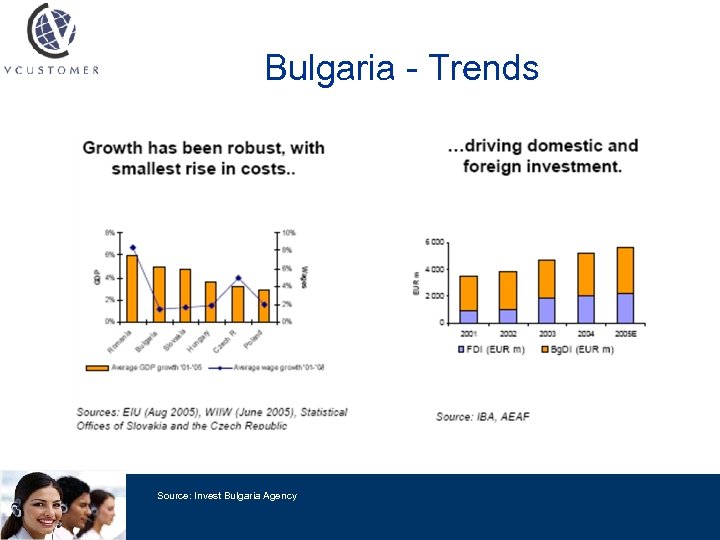
Bulgaria - Trends Source: Invest Bulgaria Agency
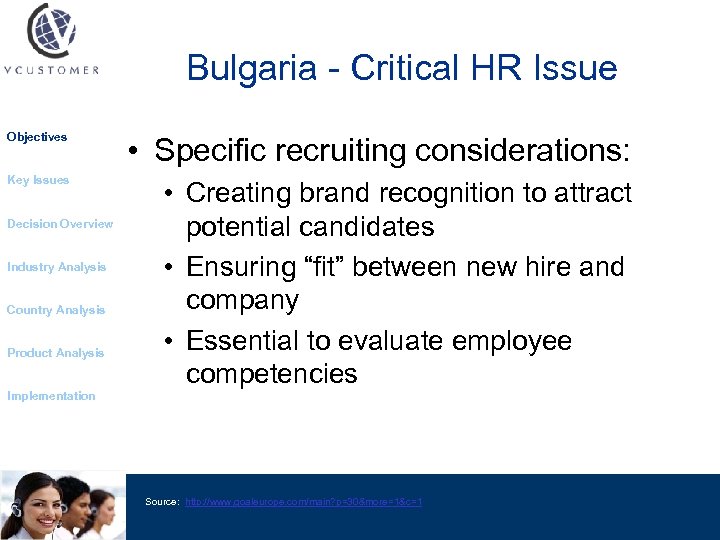
Bulgaria - Critical HR Issue Objectives • Specific recruiting considerations: Key Issues • Creating brand recognition to attract potential candidates • Ensuring “fit” between new hire and company • Essential to evaluate employee competencies Decision Overview Industry Analysis Country Analysis Product Analysis Implementation Source: http: //www. goaleurope. com/main? p=30&more=1&c=1
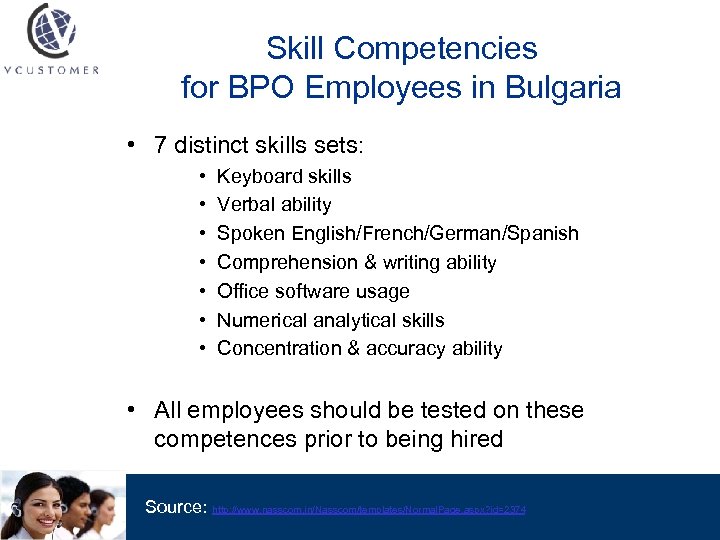
Skill Competencies for BPO Employees in Bulgaria • 7 distinct skills sets: • • Keyboard skills Verbal ability Spoken English/French/German/Spanish Comprehension & writing ability Office software usage Numerical analytical skills Concentration & accuracy ability • All employees should be tested on these competences prior to being hired Source: http: //www. nasscom. in/Nasscom/templates/Normal. Page. aspx? id=2374
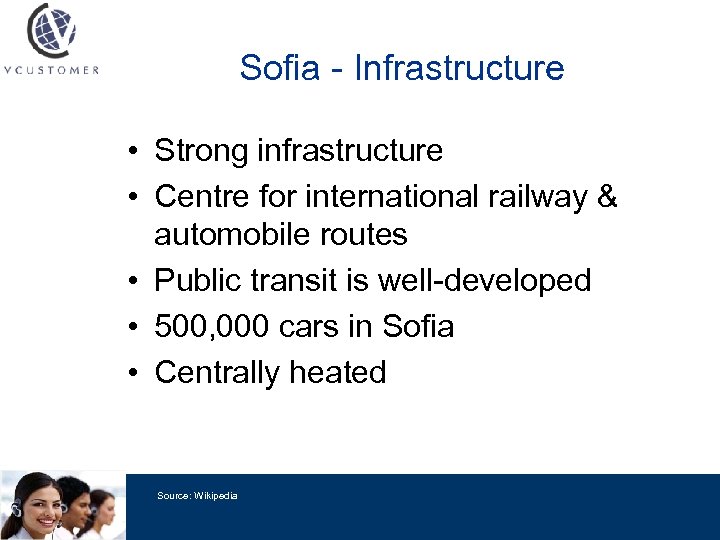
Sofia - Infrastructure • Strong infrastructure • Centre for international railway & automobile routes • Public transit is well-developed • 500, 000 cars in Sofia • Centrally heated Source: Wikipedia
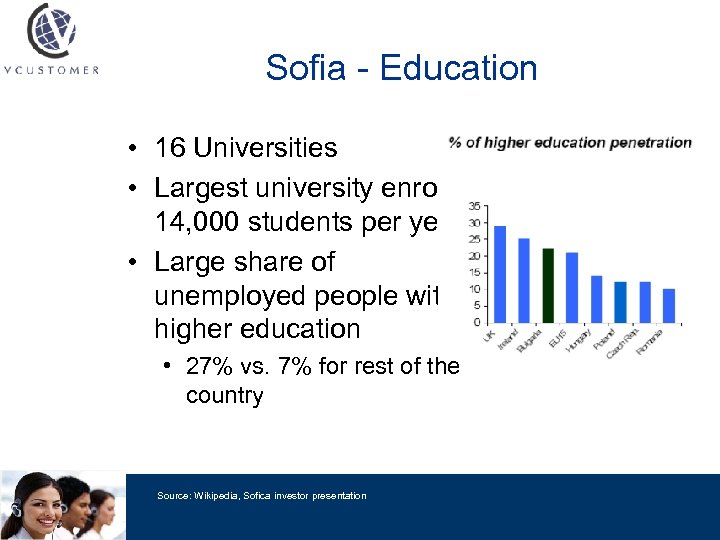
Sofia - Education • 16 Universities • Largest university enrolls 14, 000 students per year • Large share of unemployed people with higher education • 27% vs. 7% for rest of the country Source: Wikipedia, Sofica investor presentation
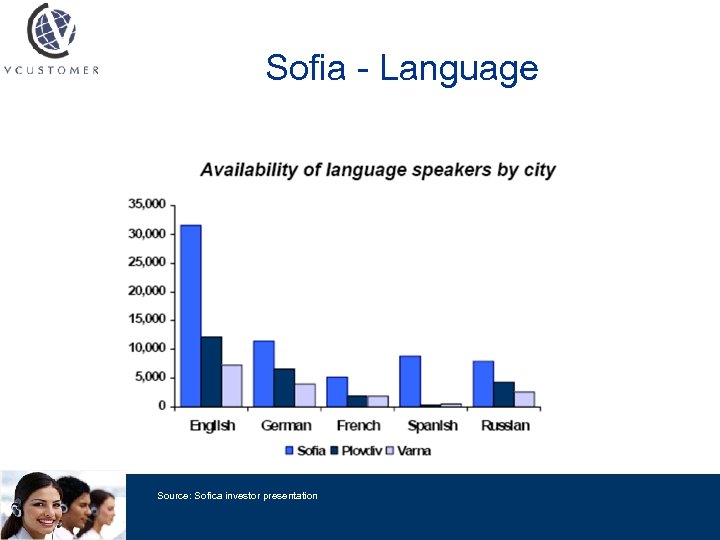
Sofia - Language Source: Sofica investor presentation
Sofia - Wages • Average annual wage in 2006 was 4, 255 leva (3000 USD) • BPO wages similar to India: 7, 5008, 000 • Relatively low inflation: approx 10% (versus mid-teens for India) Source: Bulgarian News Net
Sofia - Government • Mayor - Boyko Borisov • Founder of GERB • • • New political organization Stated goal is to fight crime & corruption Preserving family as cornerstone of society Becoming energy independent 2 nd in popular polls • Karate expert – coach of national team Source: Wikipedia
Bulgarian Competitors • Sofica • Approx. 40 agents • Serves IT, telecom, transport, utilities and financial sector customers • Differentiating on service quality, foreign language fluency, cultural and business compatibility Source: Sofica
Bulgarian Competitors • Call Centre Bulgaria • Approx. 75+ agents • Use VOIP technology • Provides inbound and outbound services for European, East European and domestic (Bulgaria) clients • Multi-language low cost platform Source: Call Centre Bulgaria
Bulgarian Competitors • Aii Data Processing • Approx. 250+ agents • Focused on information and editorial services, data processing and business services • Provides BPO activities in credit management, billing, telemarketing & telesales Source: Aii data processing
Contingency Plan - Slovakia • Capital city – Bratislava • Economy based on: • Services from high tech firms (e. g. IBM, Dell, Accenture) • Engineering • Chemical and electrical industries • Recent trends: • Service and high-tech oriented businesses are thriving • Many global companies are building their outsourcing and service centres or have plans to build in the near future here Source: Wikipedia
Appendix: Implementation Plan
Implementation – Facility Size • 1 employee per $21 K in sales • $24 M in sales → 1150 Employees • 20 sq. ft. per employee • 1150 Employees → 23 K sq. ft.
Implementation – Labour Force • 1 employee per $21 K in sales* • $24 M in sales → 1150 Employees • 93% staff billable, 7% support and sales** • 1150 Employees → 80 support and sales → 40 sales and consultants *Benchmarked from Tata and WNS **Benchmarked from WNS
Bulgaria IT Infrastructure • Infrastructure risk is moderate • The main risk arises from the unreliable quality of the telephone network that can make access to the Internet slow • The quality of telecoms infrastructure is likely to improve now that the privatisation of the fixed-line telecoms operator, BTC, has been completed • Although historically low, the total international connection per capita has more than tripled for the past two years
Vertical initial analysis: • Present verticals: • Telecom • Small addressable market, high offshore penetration • Retail/ e. Commerce • Largest addressable market • Technology (IT) • Many large clients • Travel & Hospitality • Lowest addressable market, do it yourself trend • Health • High level of trust, two tier systems
Sources • Morgan Stanley – IT Services – Outsourcing & Consulting – 2007 Outlook & Trends Report, January 22, 2007 • Businessweek feature on outsourcing http: //www. businessweek. com/magazine/toc/06_05/B 3969 0605 outsourcing. htm • Merrill Lynch – Mid-Quarter IT outsourcing Review – September 7, 2006 • Price Waterhouse Coopers – The Evolution of BPO in India – April 2005 • Wachovia – Global Delivery of IT/BPO Outsourcing – November 16, 2006 • A. T. Kearney – Building the Optimal Global Footprint – 2005
Sources • Company websites (v. Customer, Call Centre Bulgaria, Sofica, Aii Data Processing) • Invest Bulgaria Agency • World Bank • Wikipedia • Credit Suisse, EXLService Holdings, March 2, 2007 • Credit Suisse, WNS Global Services, March 2, 2007 • Bulgarian news net
Bulgaria • Reasons for high graduate unemployment rates: • A sluggish market causes periodic fluctuations in the labour market • Youngest and oldest workers tend to be the most because firms recruit few young graduates and lay off the oldest workers Source: http: //www. eurydice. org/portal/page/portal/Eurydice/Figure. Page? pub=052 EN&fig=A 7&Size. Code=null&SVG=TRUE
Bulgaria • Reasons for Bulgarian labour force staying in Bulgaria: • EU 15 states are very reluctant to open labour market to Bulgaria • CE-8 is currently under scrutiny, not favouring Bulgaria’s labour force • Trends for governments to create incentives to keep skilled labour force within Source: http: //transitioneconomies. blogspot. com/2006/10/bulgaria-and-romania-green-light. html
Скачать презентацию v Customer Christian Bonneau Daniel Byrne Stefanie Jones
b301e9974d4ffbf66c245a78759e8fcc.ppt