


 Скачать презентацию UTAH GEOLOGICAL SURVEY WEST DESERT GROUNDWATER MONITORING PROJECT
384498aa2779dc16493497d39474bad5.ppt
- Количество слайдов: 26
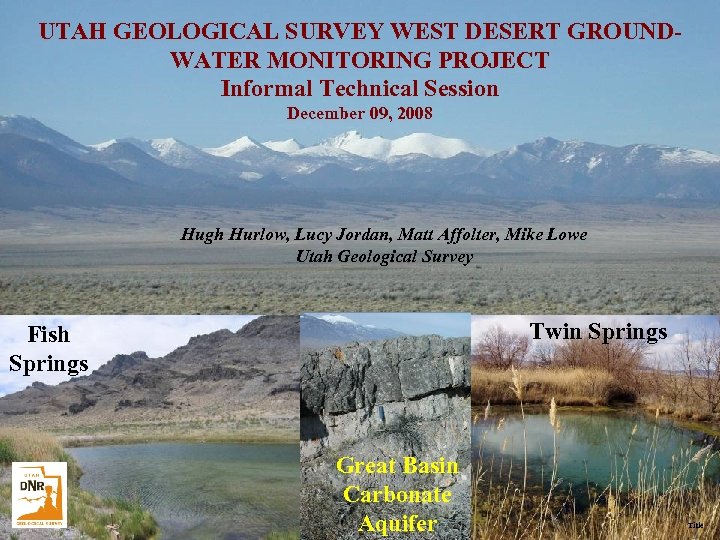 UTAH GEOLOGICAL SURVEY WEST DESERT GROUNDWATER MONITORING PROJECT Informal Technical Session December 09, 2008 Hugh Hurlow, Lucy Jordan, Matt Affolter, Mike Lowe Utah Geological Survey Twin Springs Fish Springs Great Basin Carbonate Aquifer Title
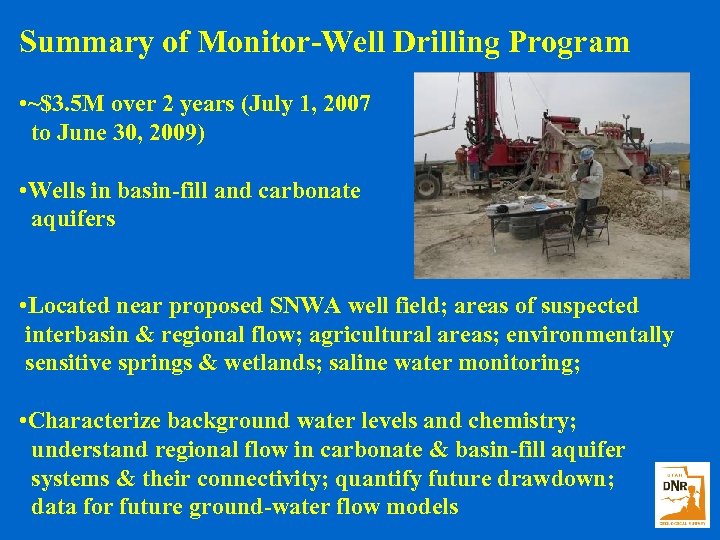 Summary of Monitor-Well Drilling Program • ~$3. 5 M over 2 years (July 1, 2007 to June 30, 2009) • Wells in basin-fill and carbonate aquifers • Located near proposed SNWA well field; areas of suspected interbasin & regional flow; agricultural areas; environmentally sensitive springs & wetlands; saline water monitoring; • Characterize background water levels and chemistry; understand regional flow in carbonate & basin-fill aquifer systems & their connectivity; quantify future drawdown; data for future ground-water flow models Program summary
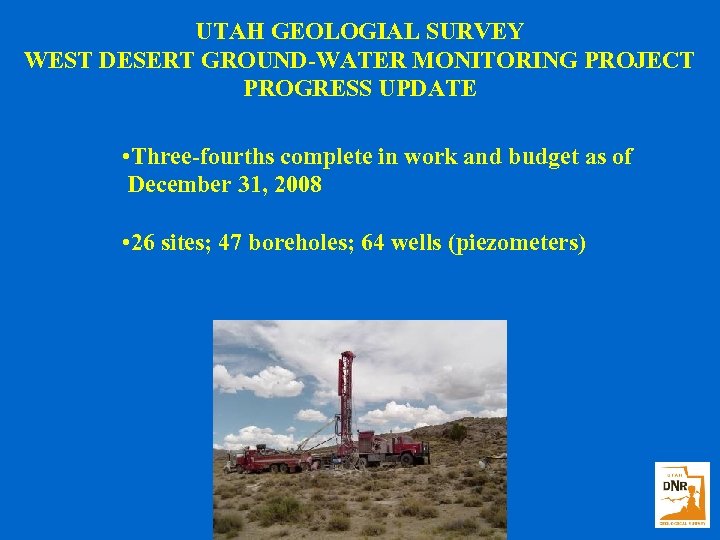 UTAH GEOLOGIAL SURVEY WEST DESERT GROUND-WATER MONITORING PROJECT PROGRESS UPDATE • Three-fourths complete in work and budget as of December 31, 2008 • 26 sites; 47 boreholes; 64 wells (piezometers) Update
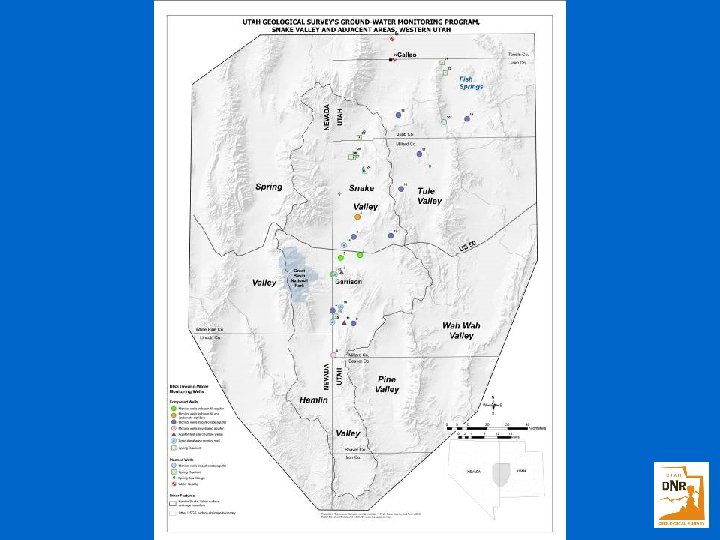 Project map 1
 Water levels
 Water levels 2
 Previous Data chemistry 1 UGS Monitor Wells
 3 H pmc 13 C Per mil T. U. Age (yr) Aquifer 240 -260 59. 8 -8. 21 5 modern Basin Fill - Quaternary PW 01 B 945 -965 27. 33 -7. 14 0. 8 5000 Basin Fill - Tertiary PW 03 A 280 -320 62. 73 -8. 26 1. 8 modern Carbonate - Devonian PW 03 B 820 -860 67. 12 -8. 68 2. 3 modern Carbonate - Devonian PW 04 A 730 -750 67. 74 -10. 40 0. 3 <50 Volcanic - Tertiary PW 04 B 895 -915 55. 22 -10. 16 0. 3 <50 Volcanic - Tertiary PW 05 A 138 -158 50. 63 -8. 35 0. 3 <50 Basin Fill - Quaternary PW 05 C 860 -880 4. 81 -5. 69 0. 5 19, 500 m Basin Fill - Tertiary PW 06 A 150 -170 19. 75 -5. 31 0. 3 7, 500 Basin Fill - Quaternary PW 06 B 315 -335 26. 93 -6. 17 0. 2 5, 000 Basin Fill - Quaternary PW 06 C 370 -390 30. 6 -6. 53 1 4, 000 m Carbonate - Permian PW 06 D 533 -553 32. 2 -5. 68 0. 4 3, 500 Carbonate - Permian PW 07 A 530 -570 3. 58 -3. 30 <0. 2 21, 500 Basin Fill - Quaternary PW 07 B 1245 -1285 33. 52 -7. 08 0. 2 3, 500 Basin Fill - Tertiary PW 09 A 245 -265 35. 96 -7. 00 0. 5 2, 500 m Carbonate - Silurian PW 09 B 700 -720 36. 14 -7. 77 <0. 2 2, 500 Carbonate - Silurian Data table 14 C Sample Screen Depth (ft) PW 01 A
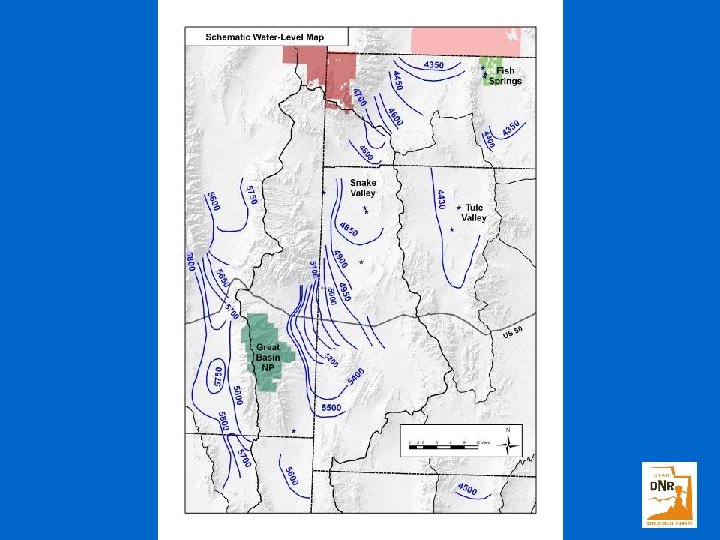
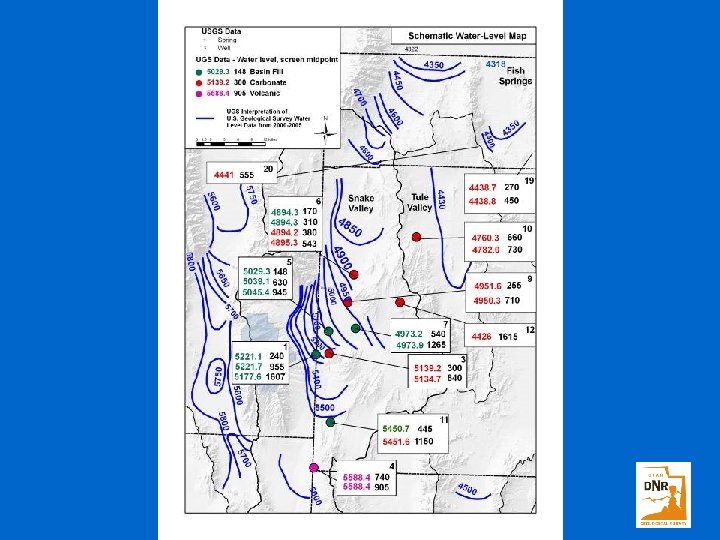
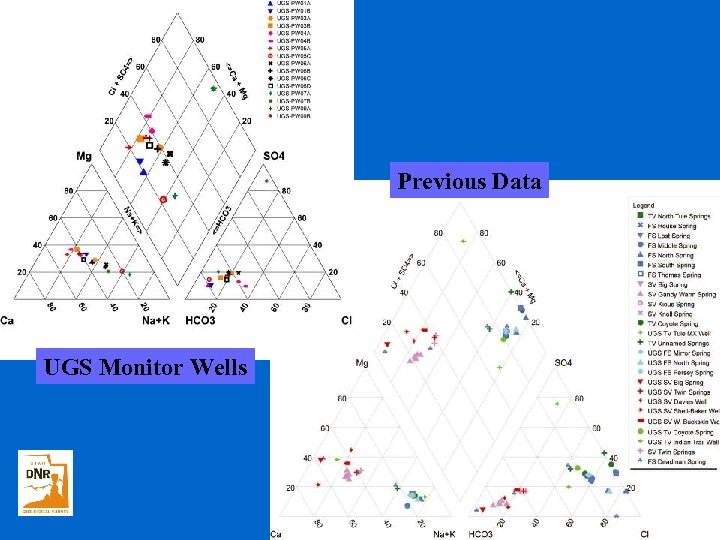
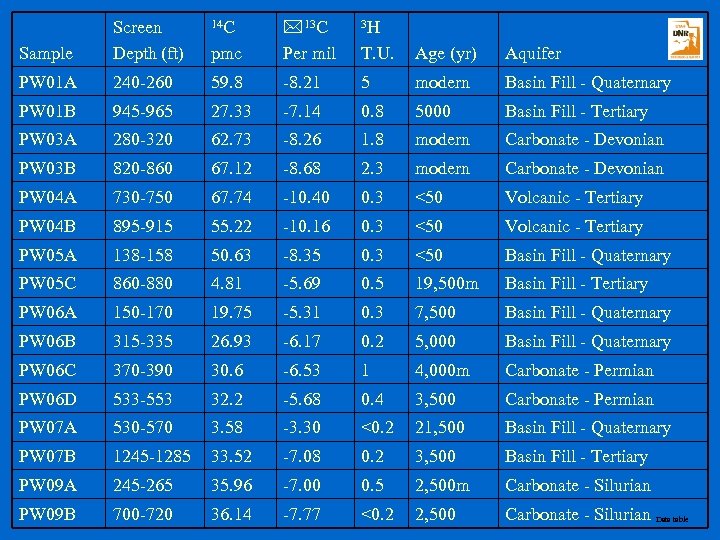
 Results · Water quality is typically good (<500 ppm total-dissolved-solids concentrations) in the upper 1000 feet of both the basin-fill and bedrock aquifers. TDS increases markedly below 1000 feet. · Water levels vary from 22 to 1426 feet below land surface. Water levels are shallowest in the Snake Valley basin center, and deepest in the Confusion Range east of Snake Valley. In our new monitor wells on the eastern and western margins of Snake Valley, water levels are similar in the basin-fill and bedrock aquifers, suggesting close connection of the two aquifers. These wells show a slight downward vertical gradient, suggesting recharge to the carbonate aquifer. Upward vertical gradients are observed in the Snake Valley basin center, indicating discharge from the basin-fill aquifer toward the land surface. · Preliminary data suggest that most ground water in Snake Valley is a mixture of ” modern” (recharged <50 years ago) and “old” (recharged 2, 000 to 22, 000 years ago) waters. · Our preliminary aquifer test of the carbonate aquifer yielded a fairly high transmissivity, consistent with results from SNWA’s test of the same aquifer in Spring Valley. Results
 UTAH GEOLOGIAL SURVEY WEST DESERT GROUND-WATER MONITORING PROJECT PROGRESS UPDATE Work for 2009 • Aquifer tests (2 – Site 11 The Cove & Site 3 East of Garrison) • Boreholes (1 to 5 – Sand Pass, Gandy Salt Marsh South, Upper Swazey Wash, other? ? ? ) • Spring-Discharge Gauges (Miller Ranch, Foote Reservoir, Twin Springs, ? Coyote Spring, ? Dearden Ranch • Saline-water monitoring wells • Re-sample selected wells Future work
 Uses and Implications · This ground-water monitoring system will provide an “early warning” of future ground-water level changes in Snake Valley. · Long-term, continuous water-level monitoring will help define trends under current conditions, better quantify available resources, and quantify changes if/when new pumping occurs. · Aquifer-test data will help quantify the capacity of the bedrock (carbonate) aquifer to transmit and store ground water. · Spatial distribution of sites will help understand regional-scale flow patterns including interbasin flow. · We expect that our results will be incorporated into SNWA’s ground-water flow model for their pipeline EIS, and the model they will present to the Nevada State Engineer at the Snake Valley hearing in Fall of 2009. Results & benefits
 UTAH GEOLOGIAL SURVEY WEST DESERT GROUND-WATER MONITORING PROJECT PROGRESS UPDATE Dissemination • Project Description and Results available on UGS web page: http: //www. ugs. state. ut. us/esp/snake_valley_project/index. htm (updated quarterly) • Summary report at end of project Uses of Data • Detect water-level changes early to allow mitigation • Calibration of new ground-water flow model for US BLM EIS for SNWA pipeline • ? ? Monitoring system as part of interstate and/or stipulated agreement (neither currently in place) dissemi nation
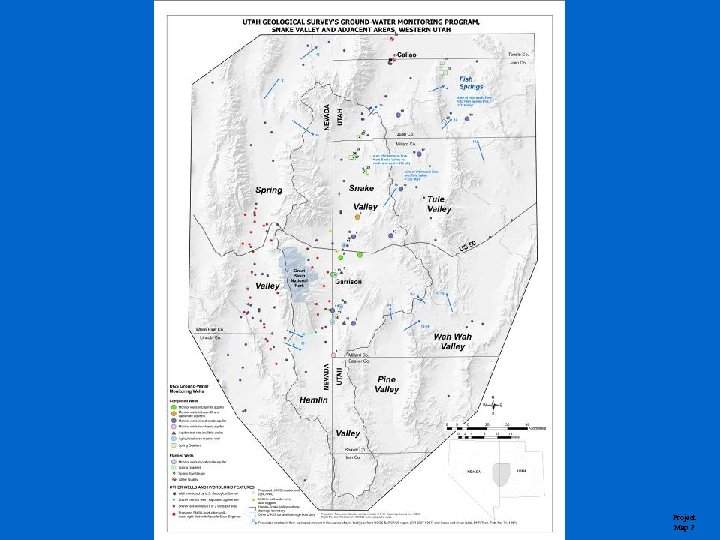 Project Map 2
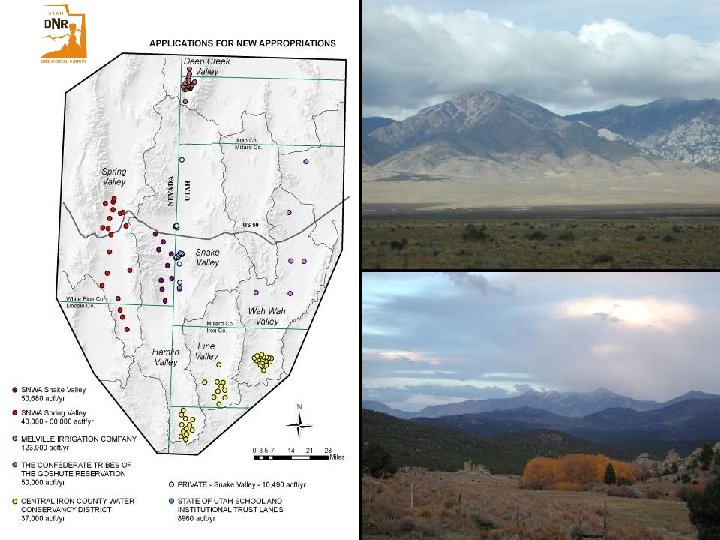 All applic ations
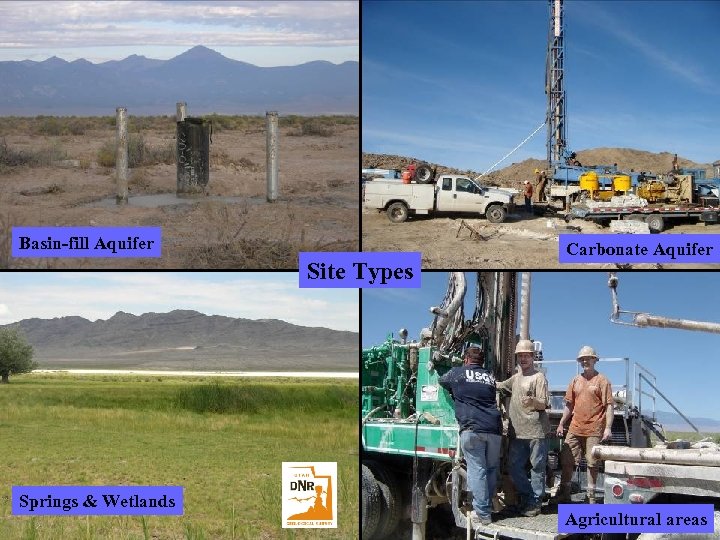 Site types Basin-fill Aquifer Site Types Springs & Wetlands Carbonate Aquifer Agricultural areas
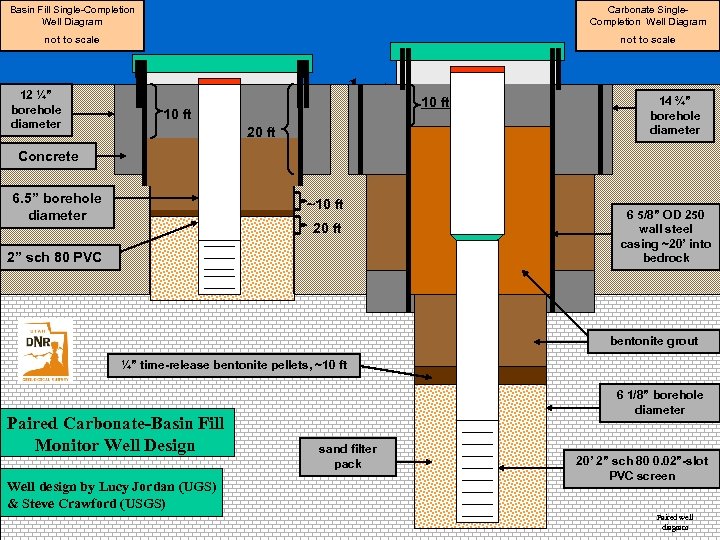 Basin Fill Single-Completion Well Diagram Carbonate Single. Completion Well Diagram not to scale 12 ¼” borehole diameter 10 ft completion 1 10 ft 20 ft 14 ¾” borehole diameter Concrete 6. 5” borehole diameter ~10 ft 2” sch 80 PVC 6 5/8” OD 250 wall steel casing ~20’ into bedrock bentonite grout ¼” time-release bentonite pellets, ~10 ft Paired Carbonate-Basin Fill Monitor Well Design Well design by Lucy Jordan (UGS) & Steve Crawford (USGS) 6 1/8” borehole diameter sand filter pack 20’ 2” sch 80 0. 02”-slot PVC screen Paired well diagram
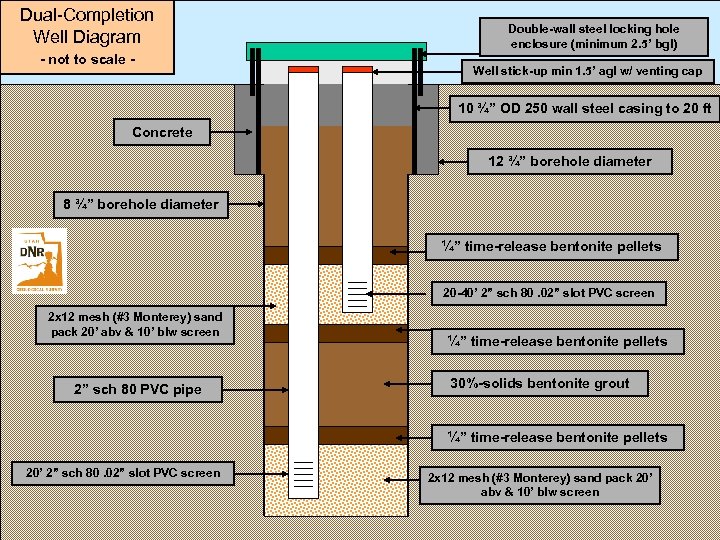 Dual-Completion Well Diagram Double-wall steel locking hole enclosure (minimum 2. 5’ bgl) - not to scale - completion 2 Well stick-up min 1. 5’ agl w/ venting cap 10 ¾” OD 250 wall steel casing to 20 ft Concrete 12 ¾” borehole diameter 8 ¾” borehole diameter ¼” time-release bentonite pellets 20 -40’ 2” sch 80. 02” slot PVC screen 2 x 12 mesh (#3 Monterey) sand pack 20’ abv & 10’ blw screen 2” sch 80 PVC pipe ¼” time-release bentonite pellets 30%-solids bentonite grout ¼” time-release bentonite pellets 20’ 2” sch 80. 02” slot PVC screen 2 x 12 mesh (#3 Monterey) sand pack 20’ abv & 10’ blw screen
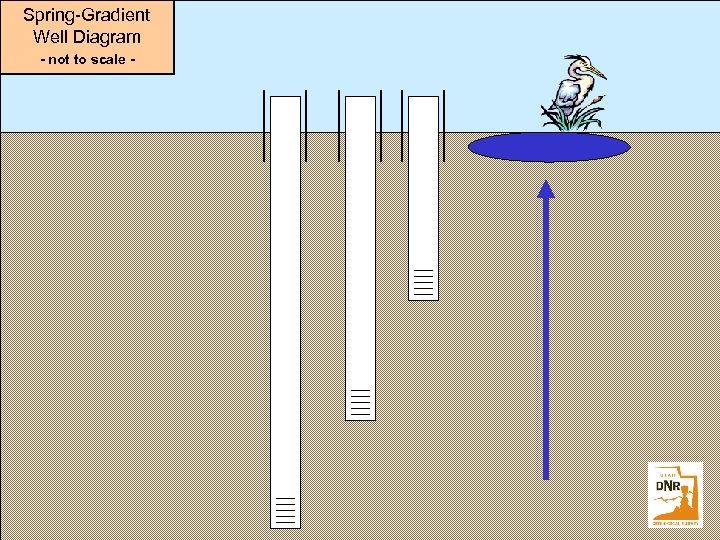 Spring-Gradient Well Diagram - not to scale - completion 2 completion 3
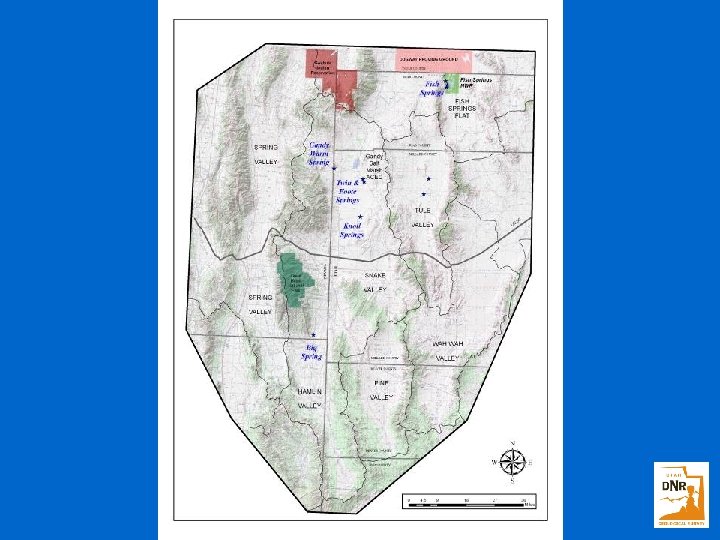 Regio nal map
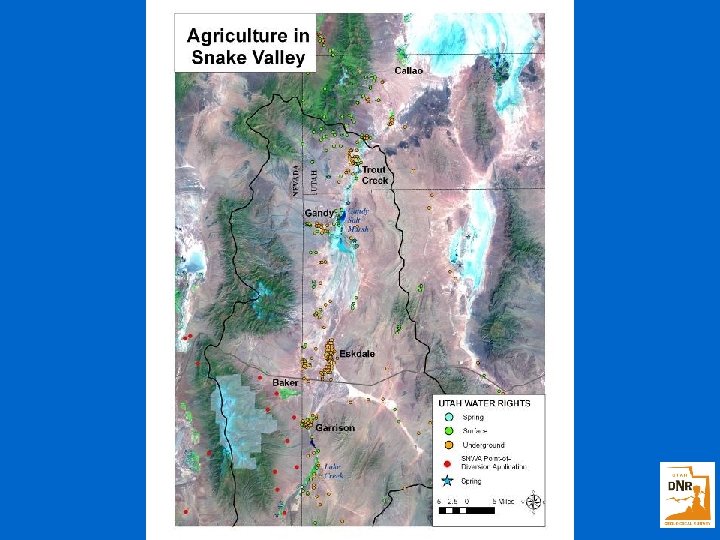 ag 1
ag 1
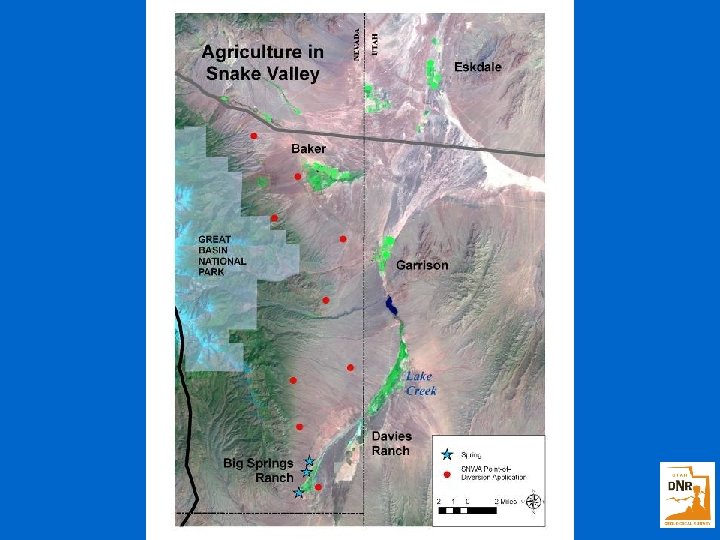 ag 2
ag 2
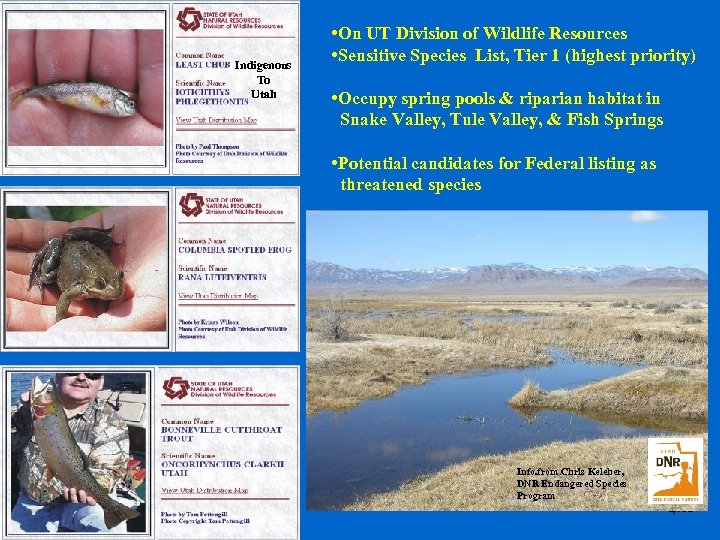 Indigenous To Utah • On UT Division of Wildlife Resources • Sensitive Species List, Tier 1 (highest priority) • Occupy spring pools & riparian habitat in Snake Valley, Tule Valley, & Fish Springs • Potential candidates for Federal listing as threatened species Info. from Chris Keleher, DNR Endangered Species Program Sensitive Species
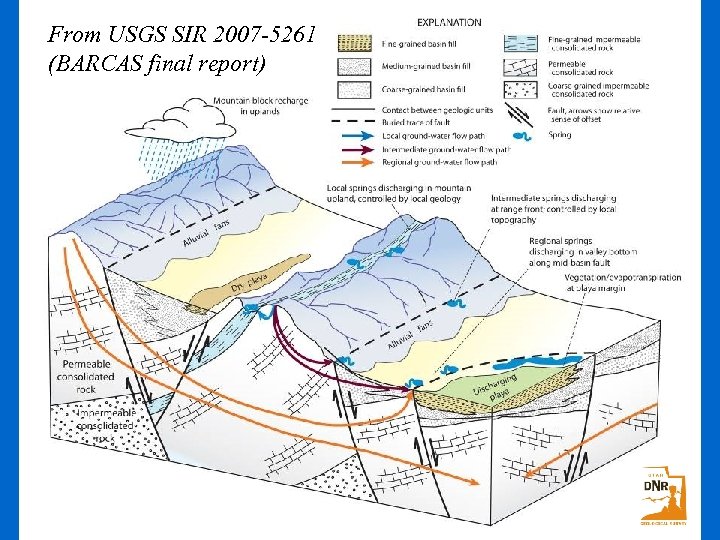 From USGS SIR 2007 -5261 (BARCAS final report) Conceptual flow
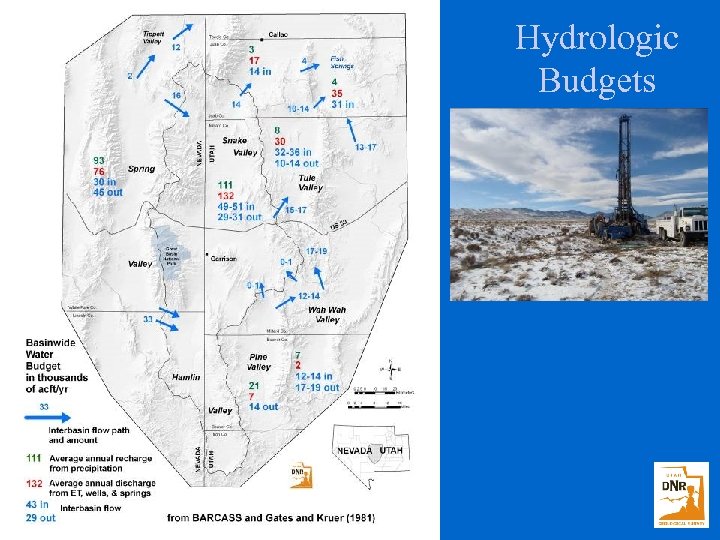 Hydrologic Budgets
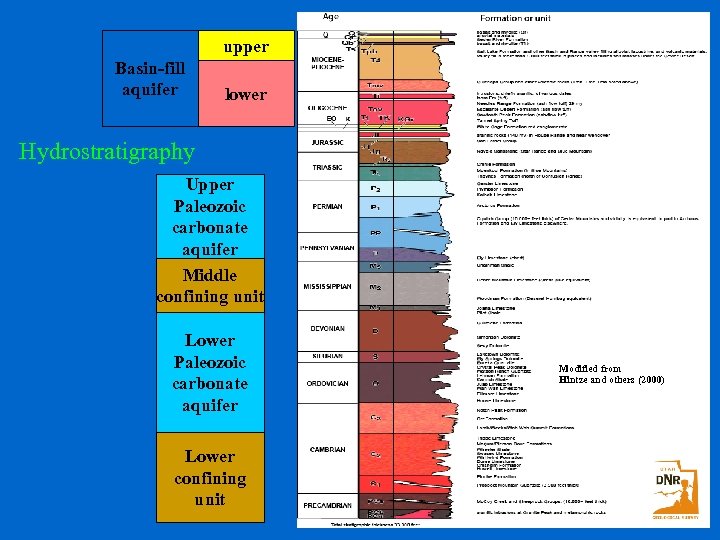 upper Basin-fill aquifer lower Hydrostratigraphy Upper Paleozoic carbonate aquifer Middle confining unit Lower Paleozoic carbonate aquifer Lower confining unit Modified from Hintze and others (2000) hydrostratig raphy hydrostratig Hydrostratigraphy
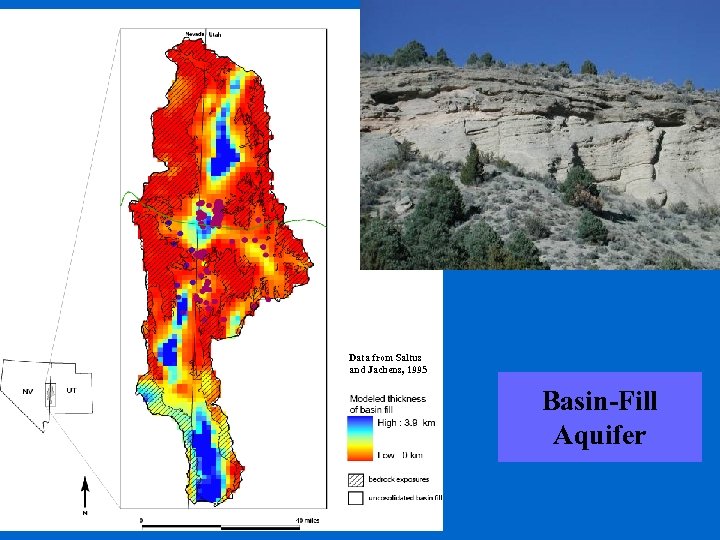 Basin fill 2 Data from Saltus and Jachens, 1995 Basin-Fill Aquifer Basin Fill