


 Скачать презентацию Using Second Life Simulations to Enhance and Develop
98ea1e5f3907cc94b1b88a3a760cb16b.ppt
- Количество слайдов: 17
 Using Second Life Simulations to Enhance and Develop the Learning Environment for Occupational Psychology Students Dr Kelly Barklamb, Dr Ray Randall & Sue Harrington School of Psychology OCCUPATIONAL SECTION 106 New Walk Leicester LE 1 7 EA · UK Tel: +44 (0) 116 223 1486 Fax: +44 (0) 116 223 1325
 Overview of Presentation • Background and context • Second Life (SL) as a learning environment • The acquisition of Occupational Psychology (OP) knowledge and skills • Case study: The Oil Rig • Evaluation
 Background: DUCKLING Project • Developing University Curricula: Knowledge, Learning and INnovation Gains (DUCKLING) • Beyond Distance Research Alliance (BDRA) • Aim: To identify new opportunities for enhancing curriculum delivery using innovative technology-based responses • Students: – Part-time distance learners – MSc in OP or MSc/Diploma in Psychology of Work
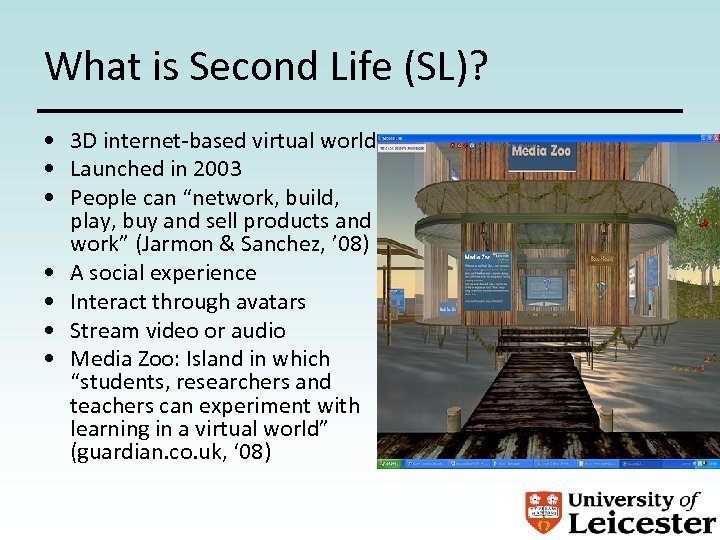 What is Second Life (SL)? • 3 D internet-based virtual world • Launched in 2003 • People can “network, build, play, buy and sell products and work” (Jarmon & Sanchez, ’ 08) • A social experience • Interact through avatars • Stream video or audio • Media Zoo: Island in which “students, researchers and teachers can experiment with learning in a virtual world” (guardian. co. uk, ‘ 08)
 Using SL Simulations in a Learning Environment: Existing Research • Role playing activities in learning environment • Emerging area • Medicine, Health, Languages – (e. g. Boulos et al, 2007; Edwards et al, 2008) • Replicating cultures and societies – (Edirisingha et al, 2009) • How to run a business – (Antonacci & Modaress, 2005)
 Potential Gains for OP from SL • Overcoming practical and ethical constraints • Using simulations as a ‘prelude’ into organisations • Enhancing feelings of preparedness and capability • Enhancing the quality of practitioner-based work • Improving the quality of courses by engaging students through enhanced delivery
 How can OP’s Use SL? • • • Explanation Discussion Demonstration Problem engagement Role playing • OP issues: Teamwork; Leadership; Training and Development; Ergonomics; Applied experimentation • THE OIL RIG SIMULATION
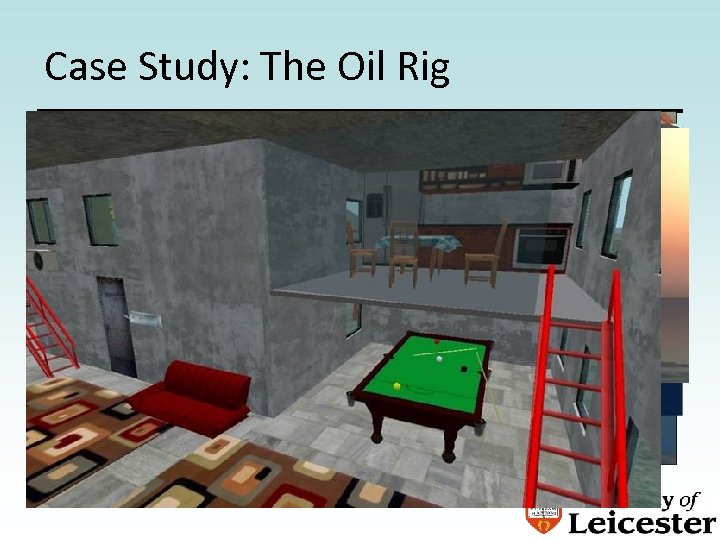 Case Study: The Oil Rig
 The Pilot Task • The Client is The New Walks Oil Exploration Company (NWOEC) • NWOEC wants to comply with Health & Safety regulations, focusing on emergency response • Occupational Psychology Consultancy Team (students) are recruited to identify issues that should be considered during evacuation • Visit the platform, prepare observations and present to the client • Participate in live evacuation event to test recommendations
 Why an Oil Rig? • A novel environment with which students are probably not familiar • Unfamiliar technologies and high risk work environments • Allows students to carry out multiple tasks: – Planning work; – Designing teams; – Developing training • Practice in a safe and non-threatening environment where mistakes are less risky
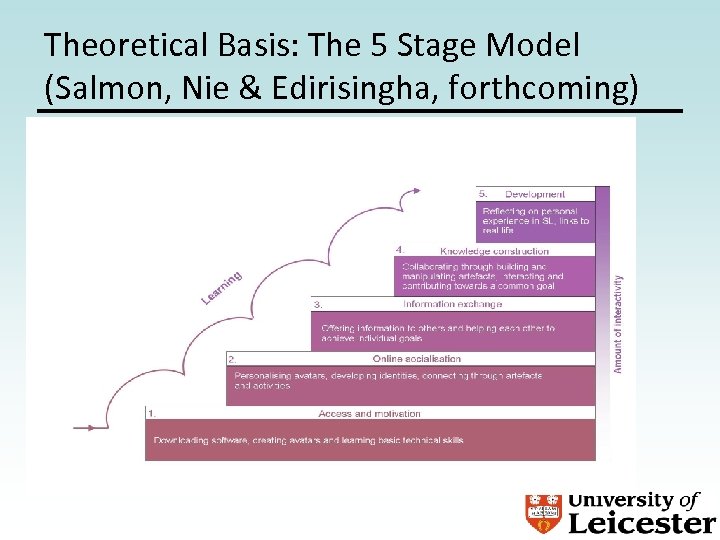 Theoretical Basis: The 5 Stage Model (Salmon, Nie & Edirisingha, forthcoming)
 Implementation • • • Four participants involved in this pilot Consent form and training guide (BDRA) Download software and check equipment Create account and avatar Explore SL in the Media Zoo Log of experiences
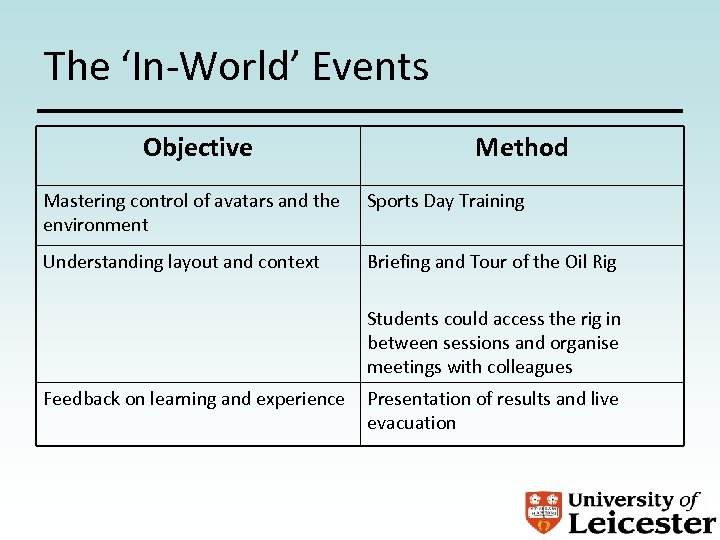 The ‘In-World’ Events Objective Method Mastering control of avatars and the environment Sports Day Training Understanding layout and context Briefing and Tour of the Oil Rig Students could access the rig in between sessions and organise meetings with colleagues Feedback on learning and experience Presentation of results and live evacuation
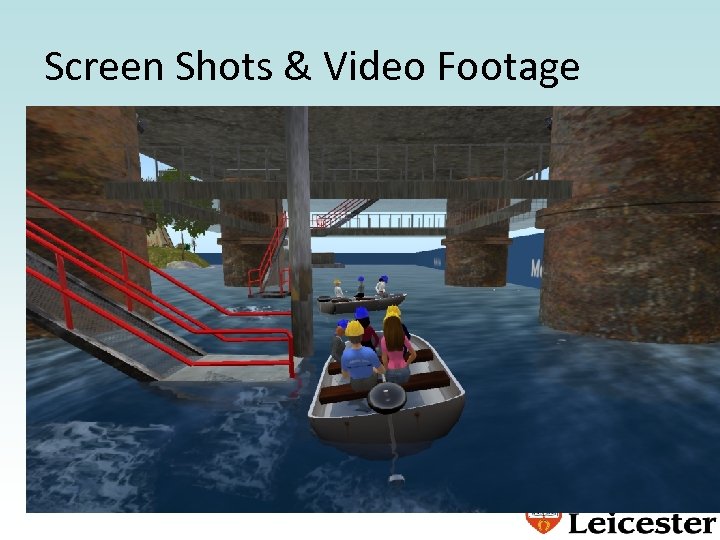 Screen Shots & Video Footage
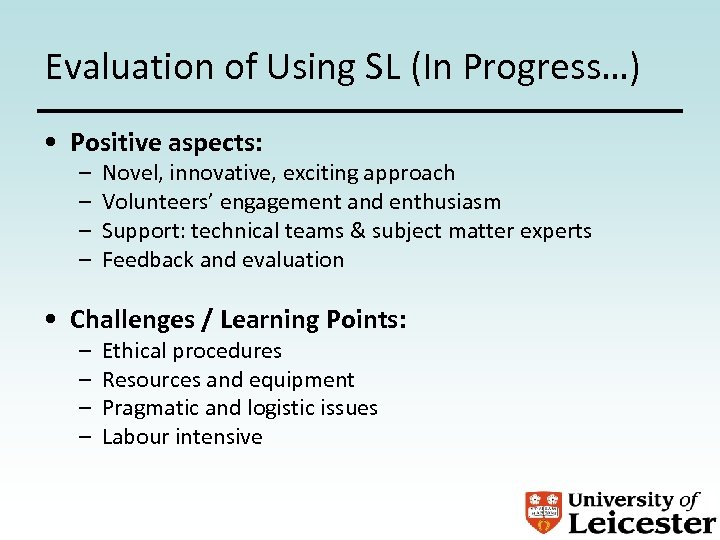 Evaluation of Using SL (In Progress…) • Positive aspects: – – Novel, innovative, exciting approach Volunteers’ engagement and enthusiasm Support: technical teams & subject matter experts Feedback and evaluation • Challenges / Learning Points: – – Ethical procedures Resources and equipment Pragmatic and logistic issues Labour intensive
 Acknowledgements • • Dr Andrew Shepherd (OP Course Team) Beyond Distance Research Alliance JISC All participants
 Thank You… • Questions? • Comments? • Suggestions? • DUCKLING project blog: https: //swww 2. le. ac. uk/departments/beyond-distanceresearch-alliance/projects/duckling-blog • Contact Details: Dr Kelly Barklamb – Email: kb 179@le. ac. uk – Telephone: 07939 107958