


 Скачать презентацию Using Investor Psychology To read understand connect with
3b91e3e682ac27f374f5a7a9a0c90b39.ppt
- Количество слайдов: 23
 Using Investor Psychology To read, understand connect with your target market Pamela Holloway
 Understand your client’s psychology • • how they see the world what they value what motivates and inspires them how they prefer to communicate and receive information • how they make decisions
 Use psychological knowledge to: • • communicate connect co-create solutions build meaningful relationships
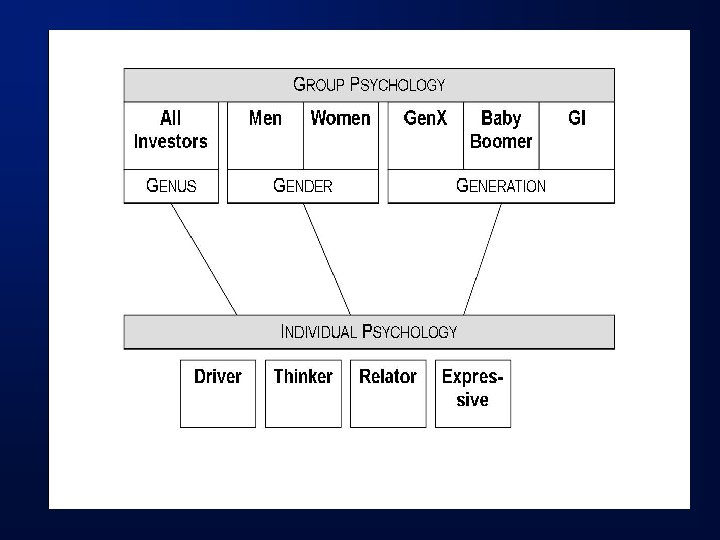
 Two paths into the Psyche of the Investor 1. Group 2. Individual
 Two paths into the Psyche of the Investor 1. Group (G-Factors) 1. 2. 3. 4. 5. Genus (common to all humans) Gender (Males vs. females) Generation (Gen. X, Baby Boomer, GI Gen) Geography (where you grew up, live now) Guild (vocation or profession) 2. Individual (I-Factors) 1. 2. 3. Personality Mental Filters Values & Criteria
 Investor Group Psychology Most investors: • Are loss-averse (and make irrational decisions to avoid loss) • Think the world/market is more predictable than it really is • Believe they know more than the really do • Think they have more control than they really do
 Men Vs Women in Investing • Women are more cautious and less impulsive in their investing • Men are able to tolerate more risk • Women are more likely to make regular contributions • Men are typically more optimistic about the economy • More women use professional advice
 Generational Differences • Baby Boomers are overly optimistic about their personal situations and the economy. • Baby Boomers’ individualist nature makes them less likely to accept a generic, tried-and-true approach. • GI-s are more likely to look to outside financial experts for advice and guidance. • GI-s trust government and institutions much more than Baby Boomers or Gen. X-ers.
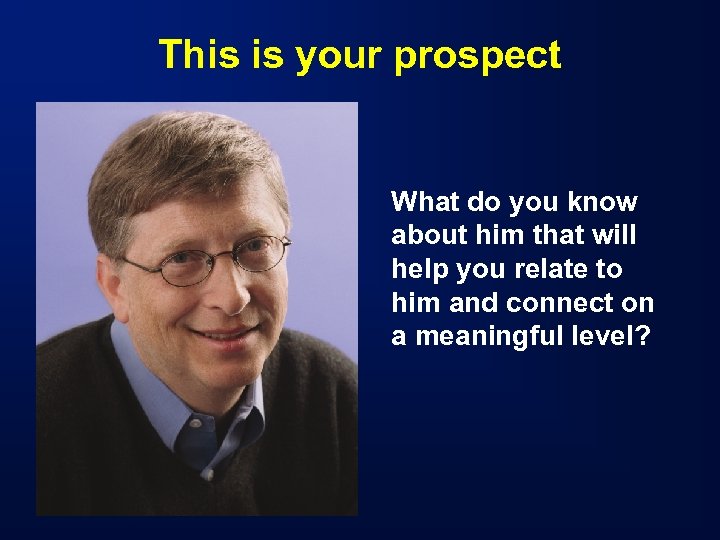 This is your prospect What do you know about him that will help you relate to him and connect on a meaningful level?
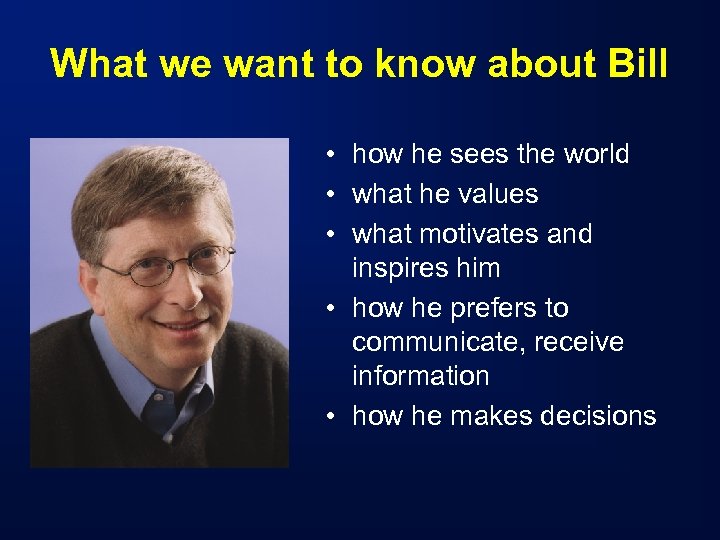 What we want to know about Bill • how he sees the world • what he values • what motivates and inspires him • how he prefers to communicate, receive information • how he makes decisions

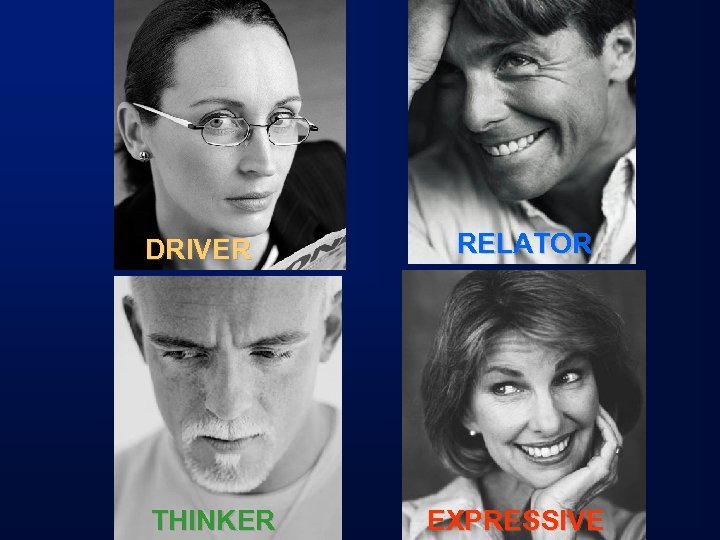 DRIVER THINKER RELATOR EXPRESSIVE
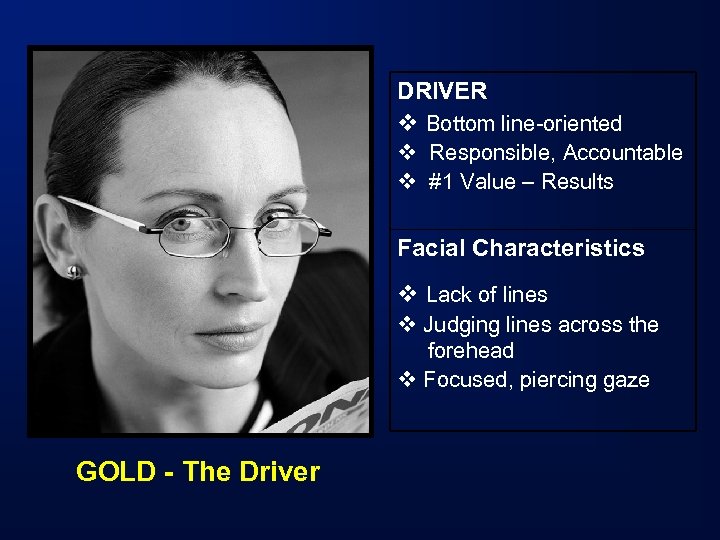 DRIVER v Bottom line-oriented v Responsible, Accountable v #1 Value – Results Facial Characteristics v Lack of lines v Judging lines across the forehead v Focused, piercing gaze GOLD - The Driver
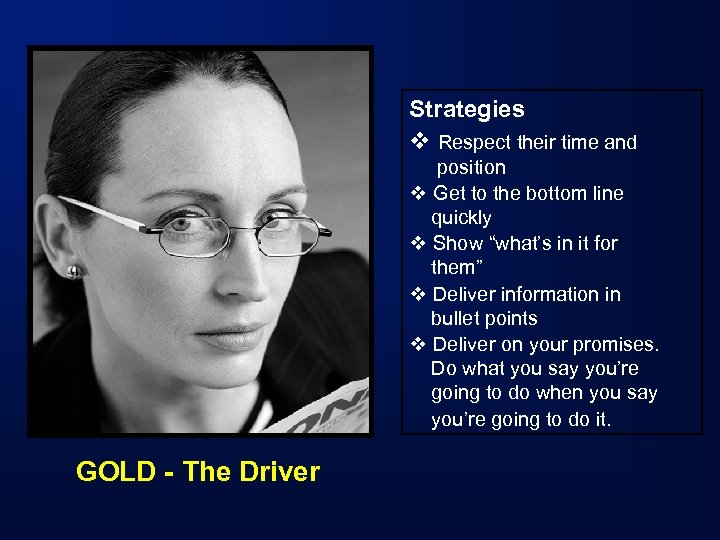 Strategies v Respect their time and position v Get to the bottom line quickly v Show “what’s in it for them” v Deliver information in bullet points v Deliver on your promises. Do what you say you’re going to do when you say you’re going to do it. GOLD - The Driver
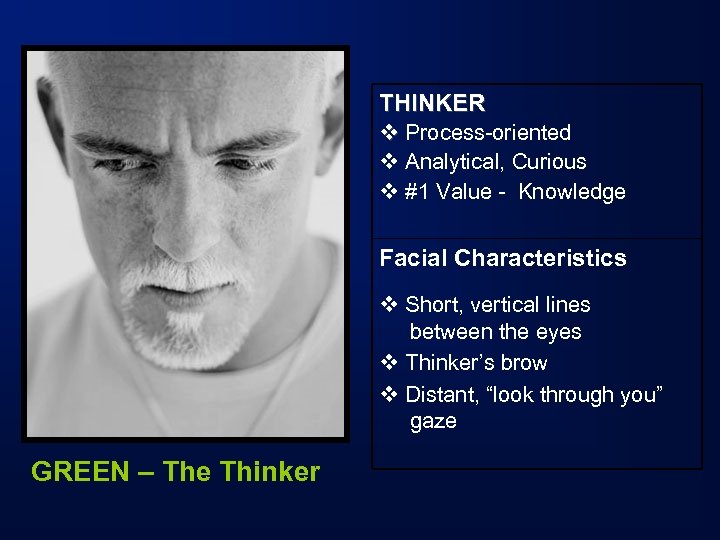 THINKER v Process-oriented v Analytical, Curious v #1 Value - Knowledge Facial Characteristics v Short, vertical lines between the eyes v Thinker’s brow v Distant, “look through you” gaze GREEN – The Thinker
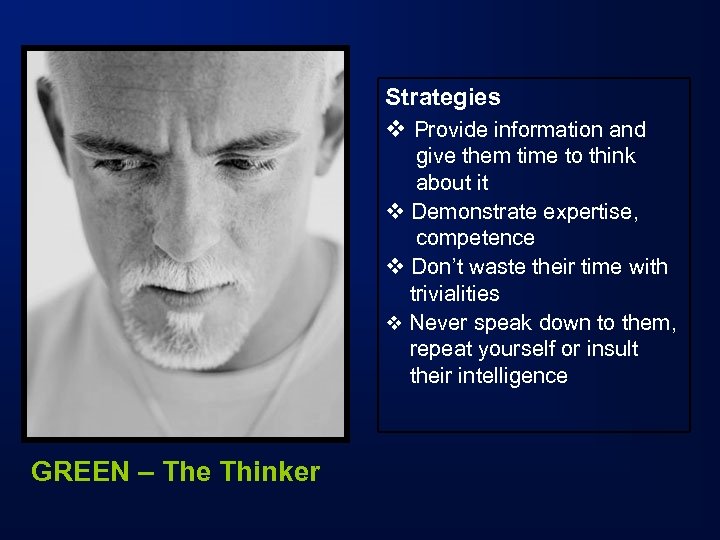 Strategies v Provide information and give them time to think about it v Demonstrate expertise, competence v Don’t waste their time with trivialities v Never speak down to them, repeat yourself or insult their intelligence GREEN – The Thinker
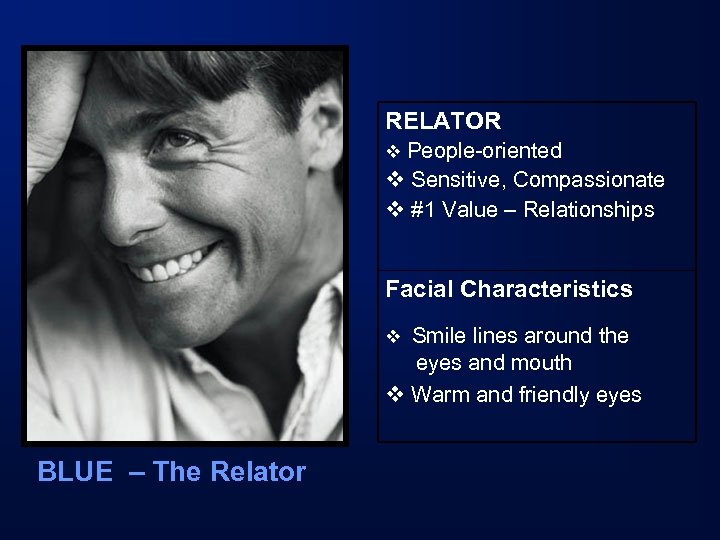 RELATOR v People-oriented v Sensitive, Compassionate v #1 Value – Relationships Facial Characteristics v Smile lines around the eyes and mouth v Warm and friendly eyes BLUE – The Relator
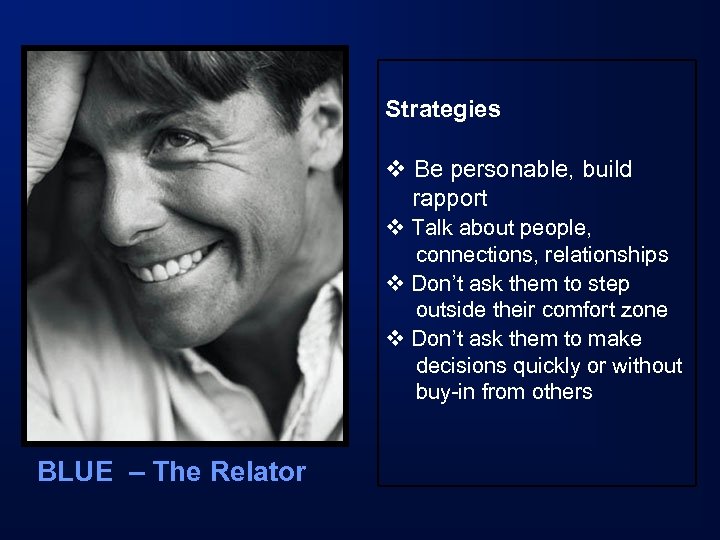 Strategies v Be personable, build rapport v Talk about people, connections, relationships v Don’t ask them to step outside their comfort zone v Don’t ask them to make decisions quickly or without buy-in from others BLUE – The Relator
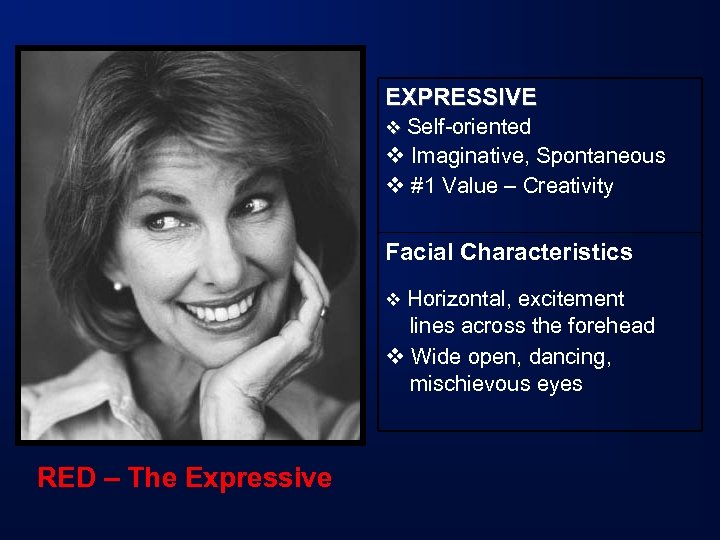 EXPRESSIVE v Self-oriented v Imaginative, Spontaneous v #1 Value – Creativity Facial Characteristics v Horizontal, excitement lines across the forehead v Wide open, dancing, mischievous eyes RED – The Expressive
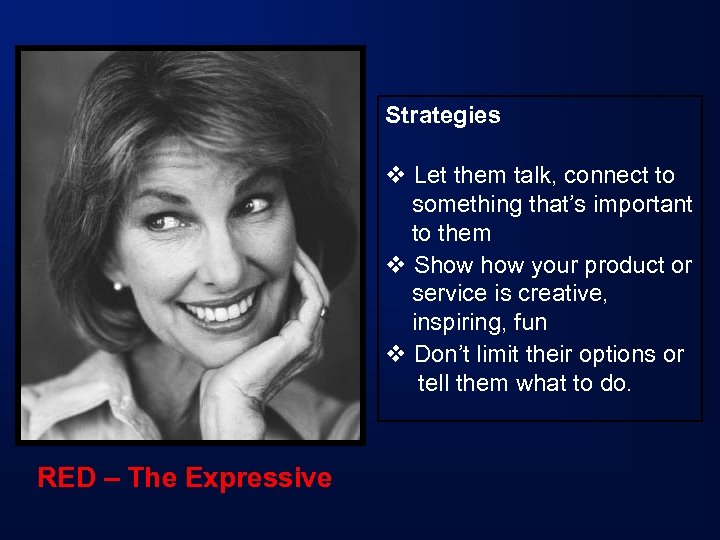 Strategies v Let them talk, connect to something that’s important to them v Show your product or service is creative, inspiring, fun v Don’t limit their options or tell them what to do. RED – The Expressive
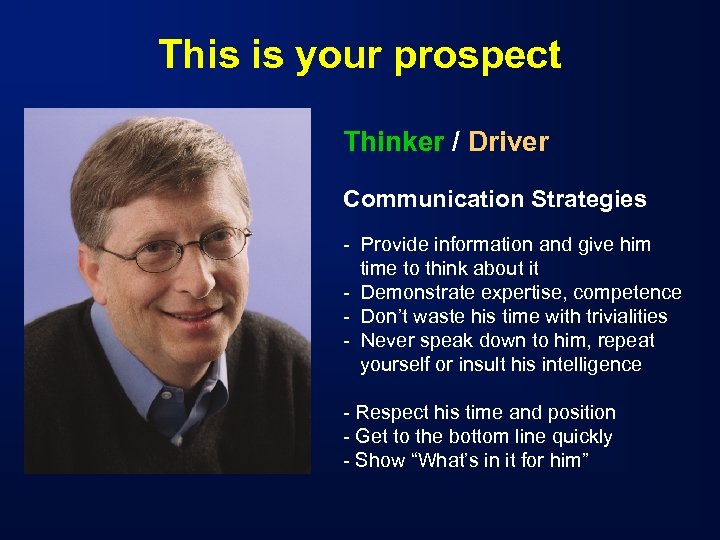 This is your prospect Thinker / Driver Communication Strategies - Provide information and give him time to think about it - Demonstrate expertise, competence - Don’t waste his time with trivialities - Never speak down to him, repeat yourself or insult his intelligence - Respect his time and position - Get to the bottom line quickly - Show “What’s in it for him”
 Thank You! Pamela Holloway