 Скачать презентацию Using decision trees to build an a framework
007cdc9fe1b89a8c52c568661f1b7754.ppt
- Количество слайдов: 17




Using decision trees to build an a framework for multivariate timeseries classification Present By Xiayi Kuang 1
Outline • Introduction – Goal, context & challenges • Proposed approach – Overview – Clustering stage – Classification stage • Experiments – Visual Surveillance Context • Video sequence 2
Introduction Goal To build a flexible and generic system that can model possibly complex spatio-temporal events 3
Introduction Context • Computer vision applications – Ex: Automated Visual surveillance • Medical domain – Ex: electronic graph classification • Gesture Recognition 4
Introduction Challenges with MTS classification – Machine learning techniques cannot be directly applied to time-series data – Large dataset with many temporal attributes are hard to handle because of the number of combinatorial possibilities between the features – Invariance of the events with respect to times 5
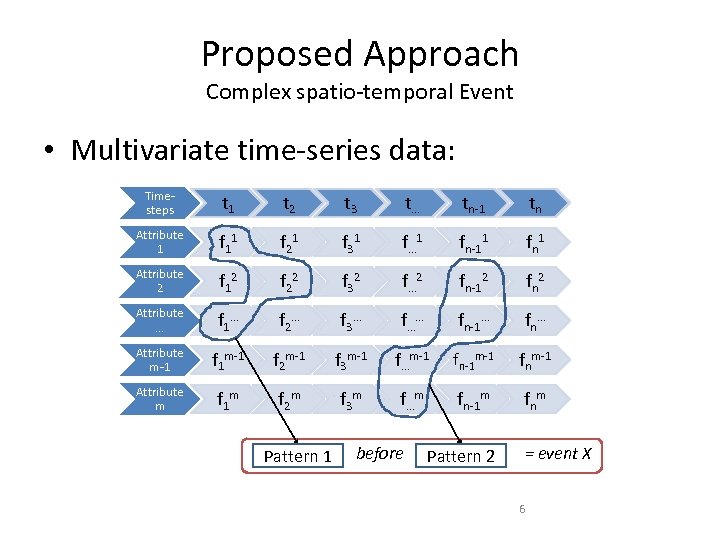
Proposed Approach Complex spatio-temporal Event • Multivariate time-series data: Timesteps t 1 t 2 t 3 t… tn-1 tn Attribute 1 f 1 1 f 2 1 f 3 1 f… 1 fn-11 fn 1 Attribute 2 f 1 2 f 2 2 f 3 2 f… 2 fn-12 fn 2 Attribute … f 1 … f 2 … f 3 … f…… fn-1… fn … Attribute m-1 f 1 m-1 f 2 m-1 f 3 m-1 f…m-1 fn-1 m-1 fnm-1 Attribute m f 1 m f 2 m f 3 m f…m fn-1 m fn m Pattern 1 before Pattern 2 = event X 6
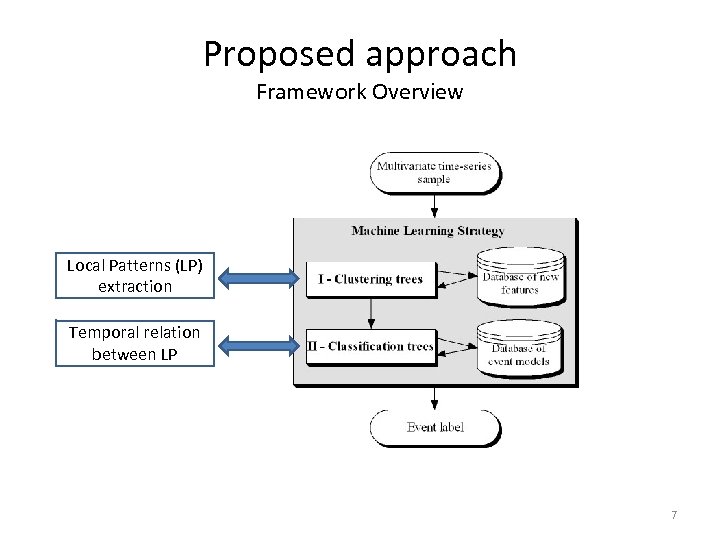
Proposed approach Framework Overview Local Patterns (LP) extraction Temporal relation between LP 7
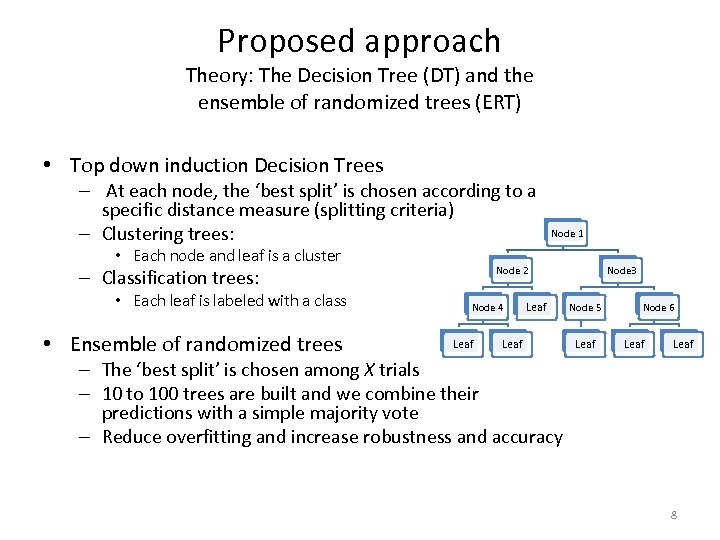
Proposed approach Theory: The Decision Tree (DT) and the ensemble of randomized trees (ERT) • Top down induction Decision Trees – At each node, the ‘best split’ is chosen according to a specific distance measure (splitting criteria) – Clustering trees: • Each node and leaf is a cluster Node 2 – Classification trees: • Each leaf is labeled with a class • Ensemble of randomized trees Node 1 Node 4 Leaf Node 3 Node 5 Leaf Node 6 Leaf – The ‘best split’ is chosen among X trials – 10 to 100 trees are built and we combine their predictions with a simple majority vote – Reduce overfitting and increase robustness and accuracy 8
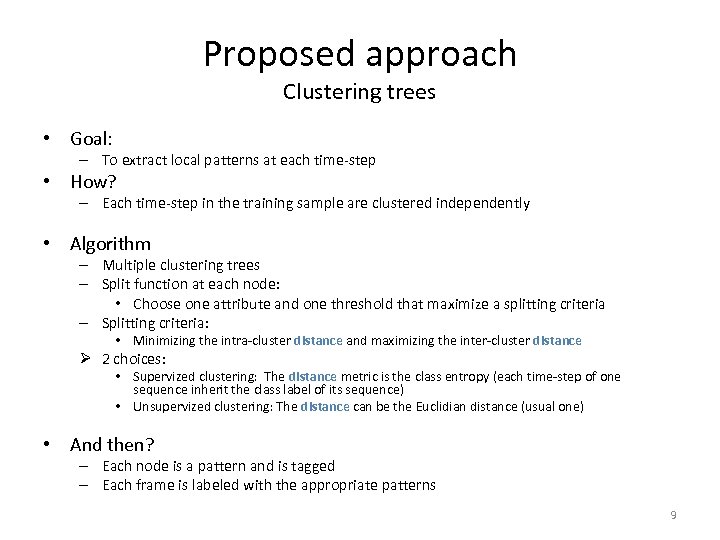
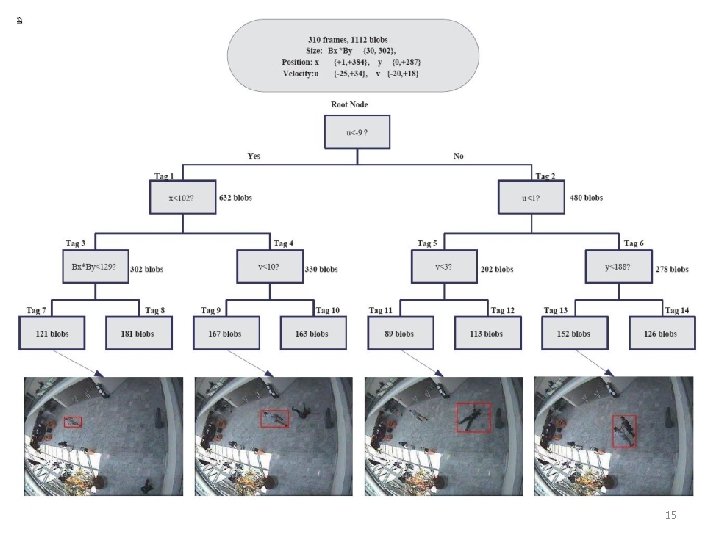
Proposed approach Clustering trees • Goal: – To extract local patterns at each time-step • How? – Each time-step in the training sample are clustered independently • Algorithm – Multiple clustering trees – Split function at each node: • Choose one attribute and one threshold that maximize a splitting criteria – Splitting criteria: • Minimizing the intra-cluster distance and maximizing the inter-cluster distance Ø 2 choices: • Supervized clustering: The distance metric is the class entropy (each time-step of one sequence inherit the class label of its sequence) • Unsupervized clustering: The distance can be the Euclidian distance (usual one) • And then? – Each node is a pattern and is tagged – Each frame is labeled with the appropriate patterns 9
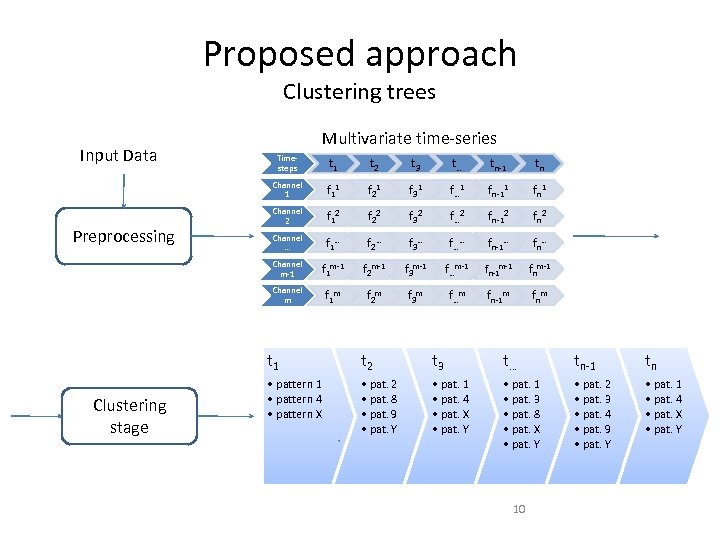
Proposed approach Clustering trees Input Data Multivariate time-series t 1 t 2 t 3 t… tn-1 tn Channel 1 f 11 f 21 f 31 f… 1 fn-11 fn 1 Channel 2 f 12 f 22 f 32 f… 2 fn-12 fn 2 Channel … f 1… f 2… f 3… f…… fn-1… fn… Channel m-1 f 1 m-1 f 2 m-1 f 3 m-1 f…m-1 fn-1 m-1 fnm-1 Channel m Preprocessing Timesteps f 1 m f 2 m f 3 m f…m fn-1 m fnm t 1 Clustering stage t 2 t 3 t… tn-1 tn • pattern 1 • pattern 4 • pattern X • pat. 2 • pat. 8 • pat. 9 • pat. Y • pat. 1 • pat. 4 • pat. X • pat. Y • pat. 1 • pat. 3 • pat. 8 • pat. X • pat. Y • pat. 2 • pat. 3 • pat. 4 • pat. 9 • pat. Y • pat. 1 • pat. 4 • pat. X • pat. Y 10
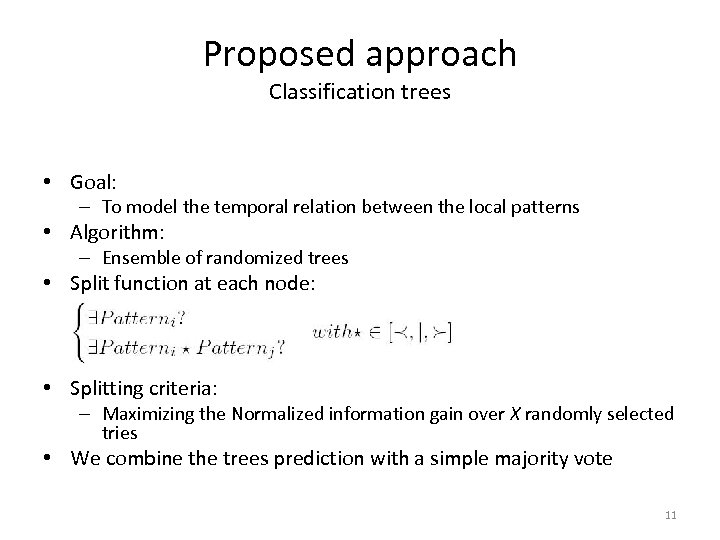
Proposed approach Classification trees • Goal: – To model the temporal relation between the local patterns • Algorithm: – Ensemble of randomized trees • Split function at each node: • Splitting criteria: – Maximizing the Normalized information gain over X randomly selected tries • We combine the trees prediction with a simple majority vote 11
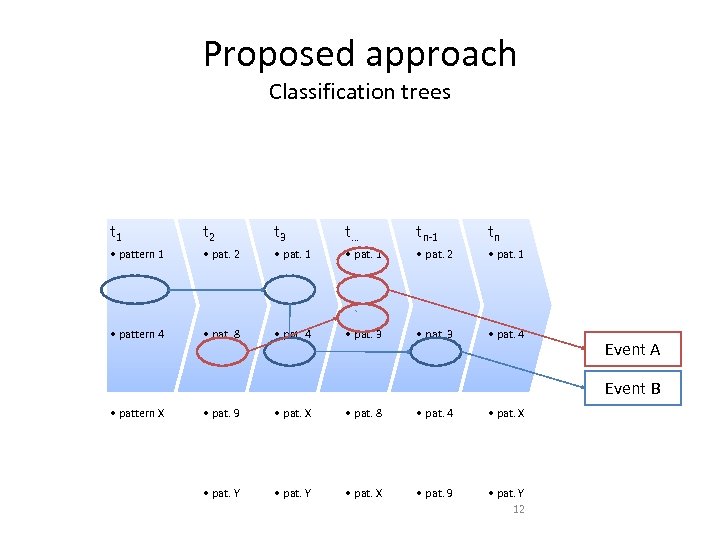
Proposed approach Classification trees t 1 t 2 t 3 t… tn-1 tn • pattern 1 • pat. 2 • pat. 1 • pattern 4 • pat. 8 • pat. 4 • pat. 3 • pat. 4 Event A Event B • pattern X • pat. 9 • pat. X • pat. 8 • pat. 4 • pat. X • pat. Y • pat. X • pat. 9 • pat. Y 12
Application Visual surveillance events • Additional Challenges in automated visual surveillance – Segmentation and tracking are often not robust – Events are semantically complex and often subjective – Few training data available for interesting events – Events are extremely variable in length 13
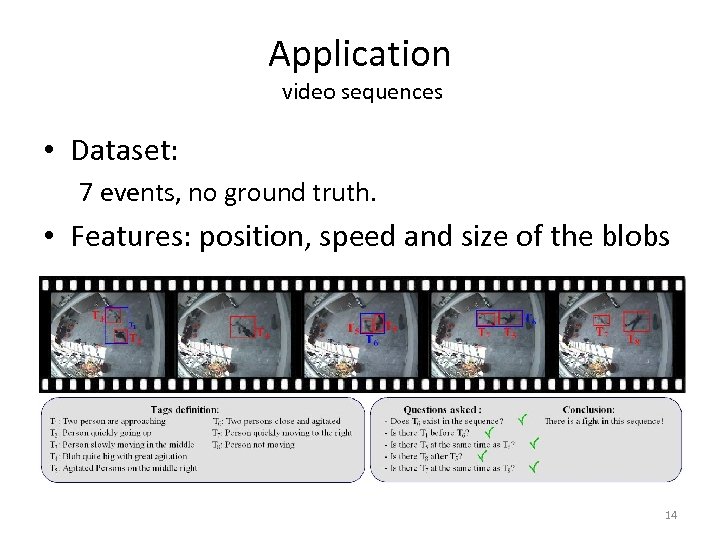
Application video sequences • Dataset: 7 events, no ground truth. • Features: position, speed and size of the blobs 14
15
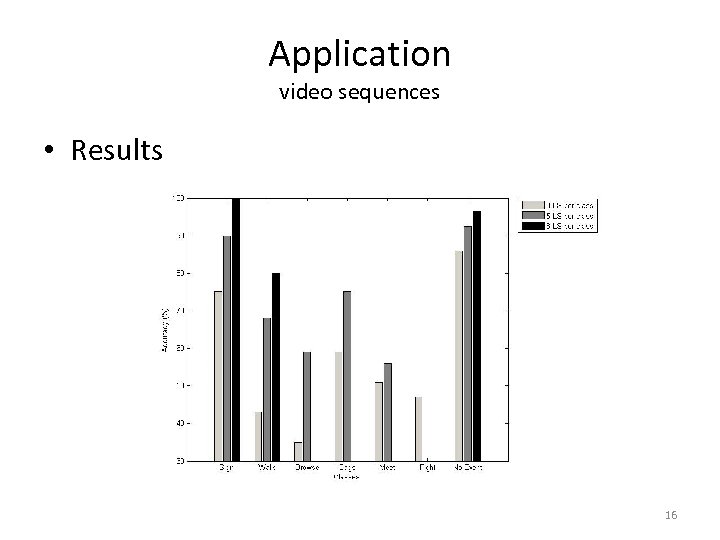
Application video sequences • Results 16

Thanks 12/03/2008 17
Скачать презентацию Using decision trees to build an a framework
007cdc9fe1b89a8c52c568661f1b7754.ppt