 Скачать презентацию Using Data for Decision Making Learning Objectives
05404d07448aceee59cf3f25369b336b.ppt
- Количество слайдов: 30



Using Data for Decision Making
Learning Objectives By the end of the session, participants will be able to: 1. Raise awareness of the importance of using data to inform decisions 2. Discuss and share strategies for overcoming barriers ensuring that health-related data are being used to make decisions at all levels 3. Learn strategies for using data in program management, implementation, and decision-making
What is Decision Making? The process of choosing from among various alternatives using information in light of a given objective
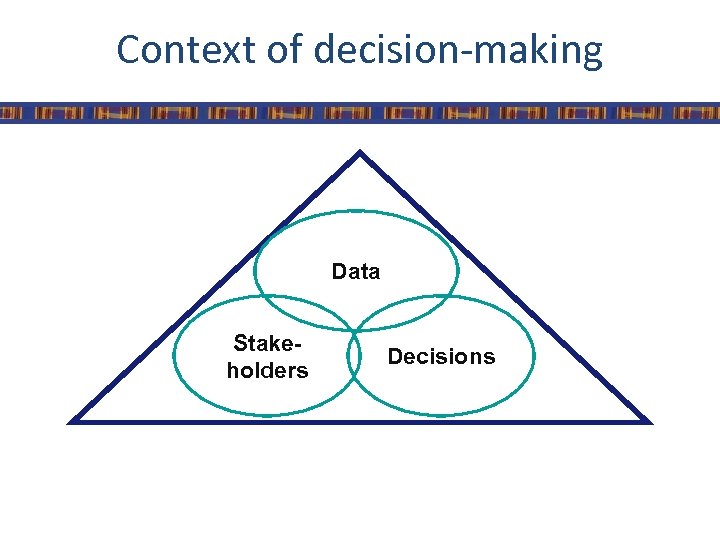
Context of decision-making Data Stakeholders Decisions
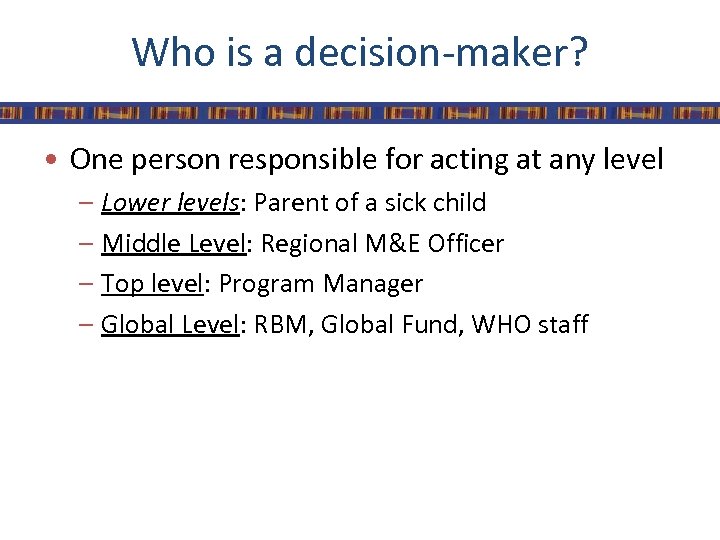
Who is a decision-maker? • One person responsible for acting at any level – Lower levels: Parent of a sick child – Middle Level: Regional M&E Officer – Top level: Program Manager – Global Level: RBM, Global Fund, WHO staff
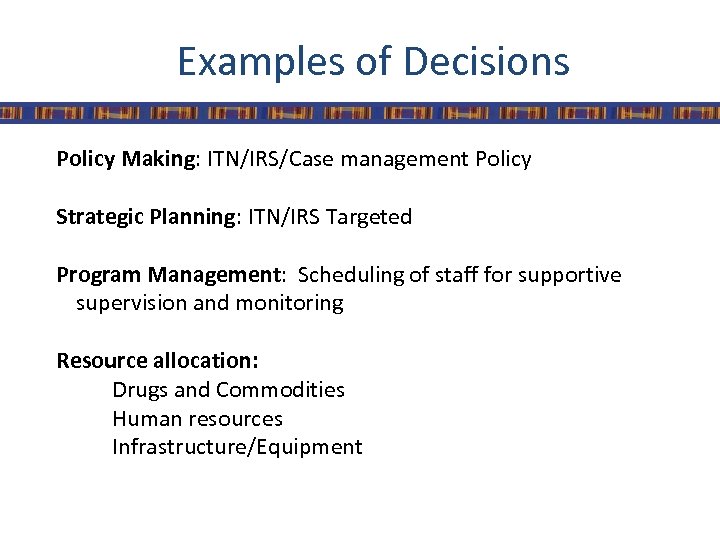
Examples of Decisions Policy Making: ITN/IRS/Case management Policy Strategic Planning: ITN/IRS Targeted Program Management: Scheduling of staff for supportive supervision and monitoring Resource allocation: Drugs and Commodities Human resources Infrastructure/Equipment
Who is a Stakeholder? Any person or group with a particular interest in a policy or program
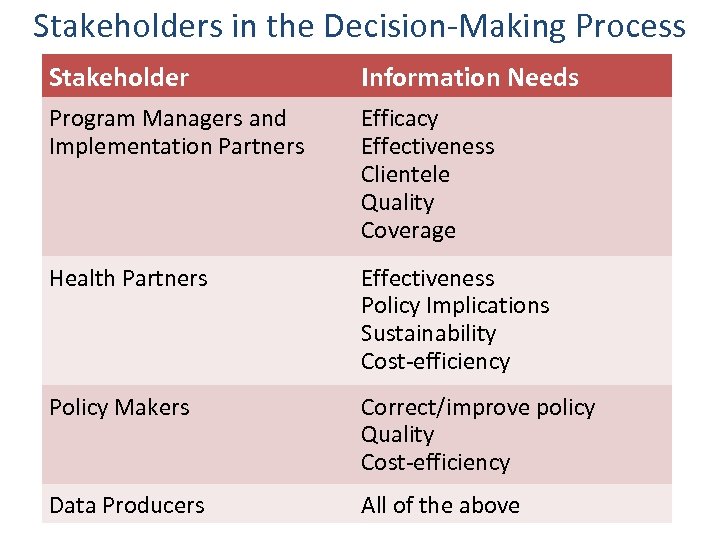
Stakeholders in the Decision-Making Process Stakeholder Information Needs Program Managers and Implementation Partners Efficacy Effectiveness Clientele Quality Coverage Health Partners Effectiveness Policy Implications Sustainability Cost-efficiency Policy Makers Correct/improve policy Quality Cost-efficiency Data Producers All of the above
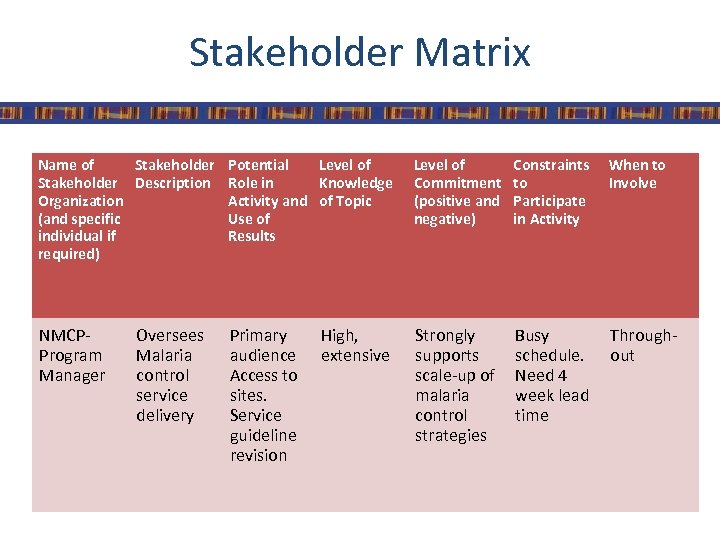
Stakeholder Matrix Name of Stakeholder Potential Level of Stakeholder Description Role in Knowledge Organization Activity and of Topic (and specific Use of individual if Results required) Level of Commitment (positive and negative) Constraints to Participate in Activity When to Involve NMCPProgram Manager Strongly supports scale-up of malaria control strategies Busy schedule. Need 4 week lead time Throughout Oversees Malaria control service delivery Primary audience Access to sites. Service guideline revision High, extensive
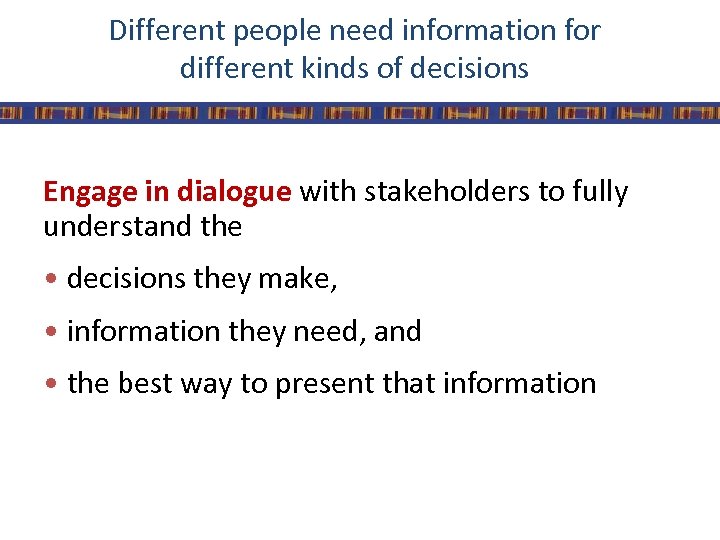
Different people need information for different kinds of decisions Engage in dialogue with stakeholders to fully understand the • decisions they make, • information they need, and • the best way to present that information
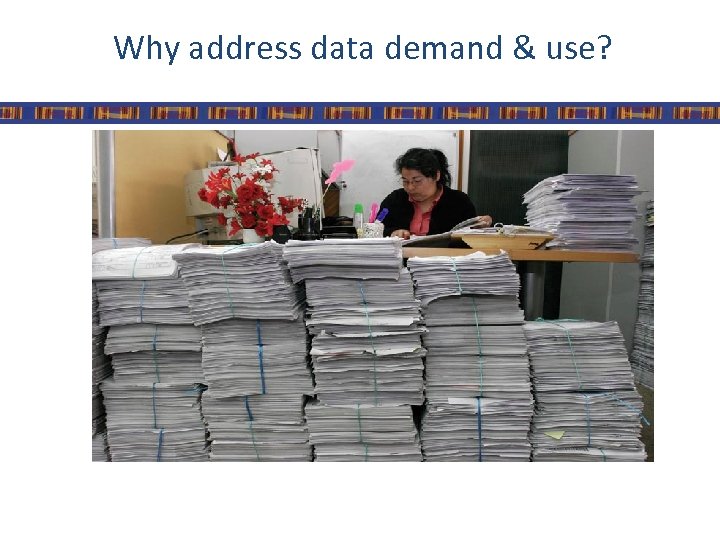
Why address data demand & use?
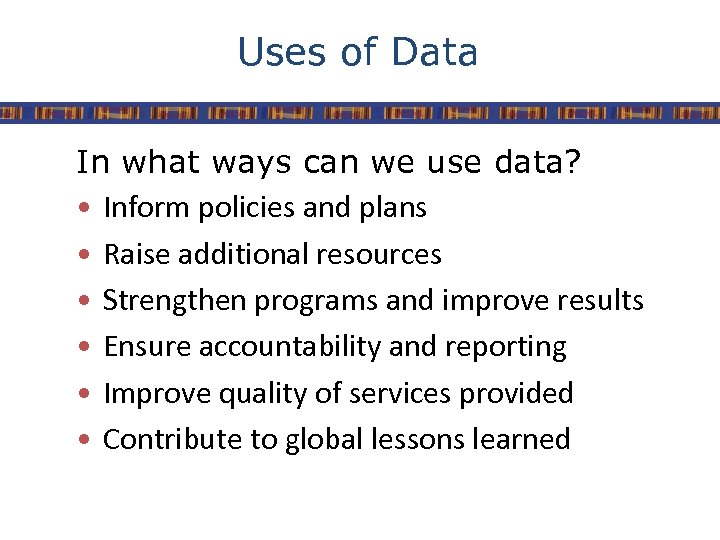
Uses of Data In what ways can we use data? • Inform policies and plans • Raise additional resources • Strengthen programs and improve results • Ensure accountability and reporting • Improve quality of services provided • Contribute to global lessons learned
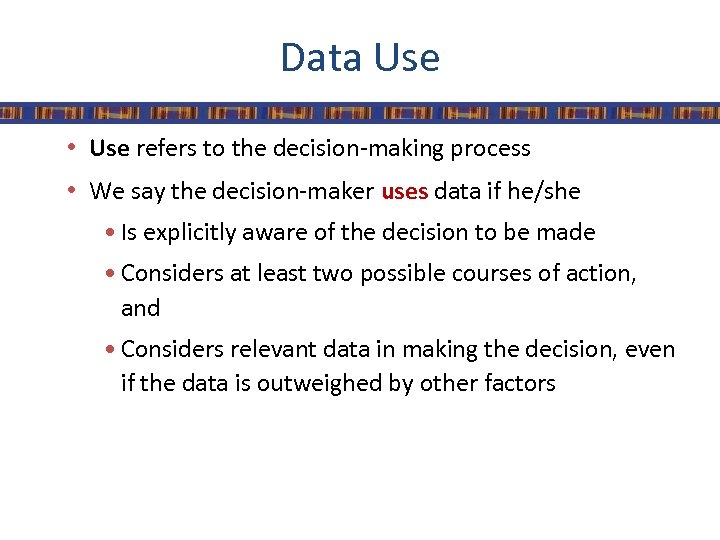
Data Use • Use refers to the decision-making process • We say the decision-maker uses data if he/she • Is explicitly aware of the decision to be made • Considers at least two possible courses of action, and • Considers relevant data in making the decision, even if the data is outweighed by other factors
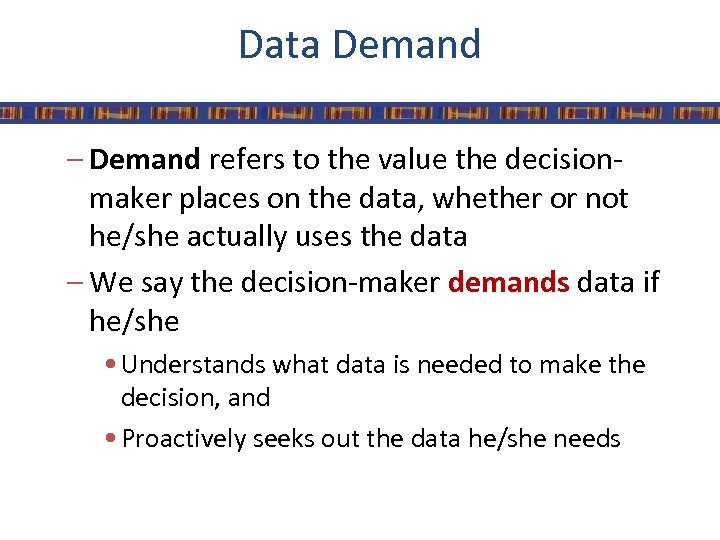
Data Demand – Demand refers to the value the decisionmaker places on the data, whether or not he/she actually uses the data – We say the decision-maker demands data if he/she • Understands what data is needed to make the decision, and • Proactively seeks out the data he/she needs
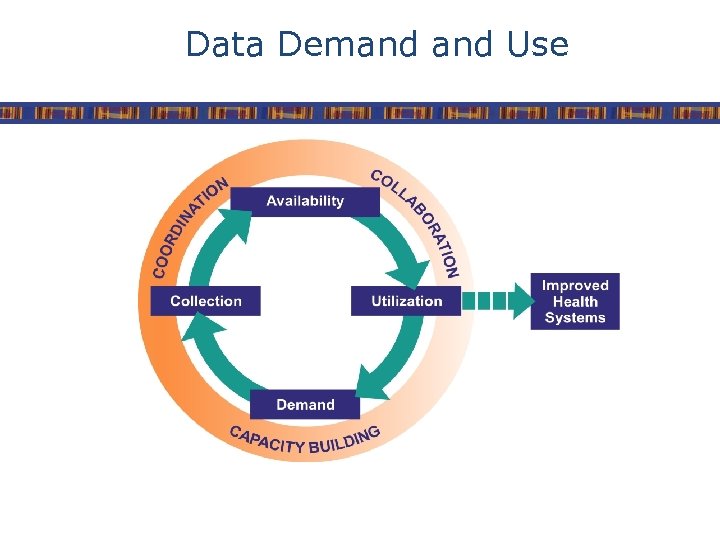
Data Demand Use
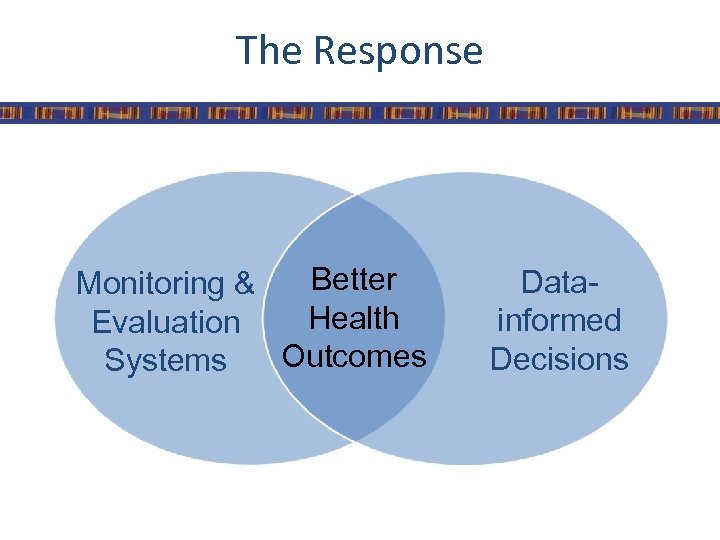
The Response Better Monitoring & Health Evaluation Outcomes Systems Datainformed Decisions
What is the role of M&E personnel in decision making? • Provide the data needed to make decisions • Help decision-makers interpret data • Help decision-makers understand what kinds of questions they should ask from the data
“… without information, things are done arbitrarily and one becomes unsure of whether a policy or program will fail or succeed. If we allow our policies to be guided by empirical facts and data, there will be a noticeable change in the impact of what we do. ” National-level Policymaker, Nigeria
Class Discussion • Consider the last time you used or wanted to use data to make a decision or recommendation about a program – Who were the decisionmakers/stakeholders? – What information was used? – What decision was made?
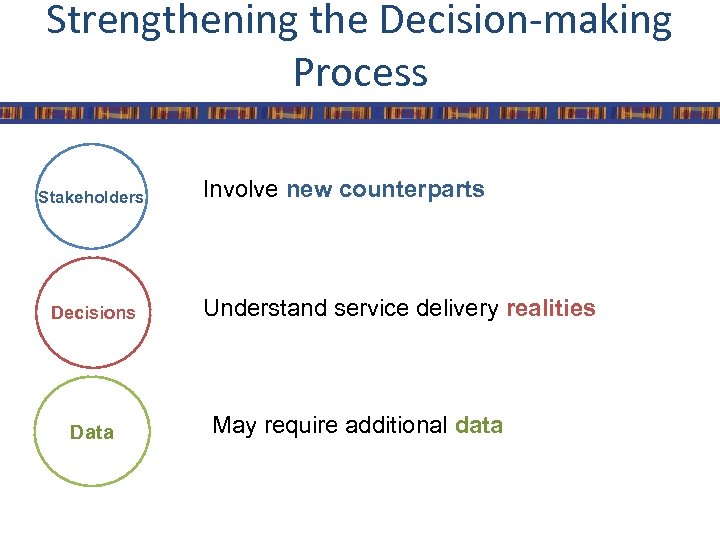
Strengthening the Decision-making Process Stakeholders Decisions Data Involve new counterparts Understand service delivery realities May require additional data
Class Discussion: Barriers to Data Use What barriers have you faced to using or getting others to use data?
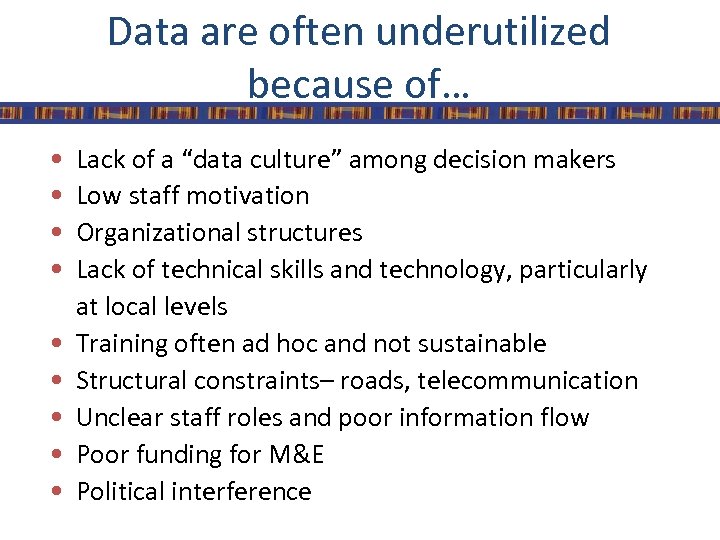
Data are often underutilized because of… • • • Lack of a “data culture” among decision makers Low staff motivation Organizational structures Lack of technical skills and technology, particularly at local levels Training often ad hoc and not sustainable Structural constraints– roads, telecommunication Unclear staff roles and poor information flow Poor funding for M&E Political interference
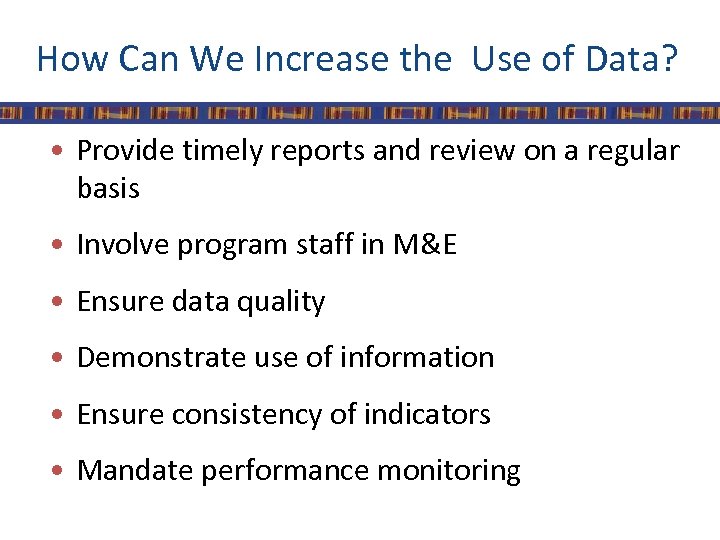
How Can We Increase the Use of Data? • Provide timely reports and review on a regular basis • Involve program staff in M&E • Ensure data quality • Demonstrate use of information • Ensure consistency of indicators • Mandate performance monitoring
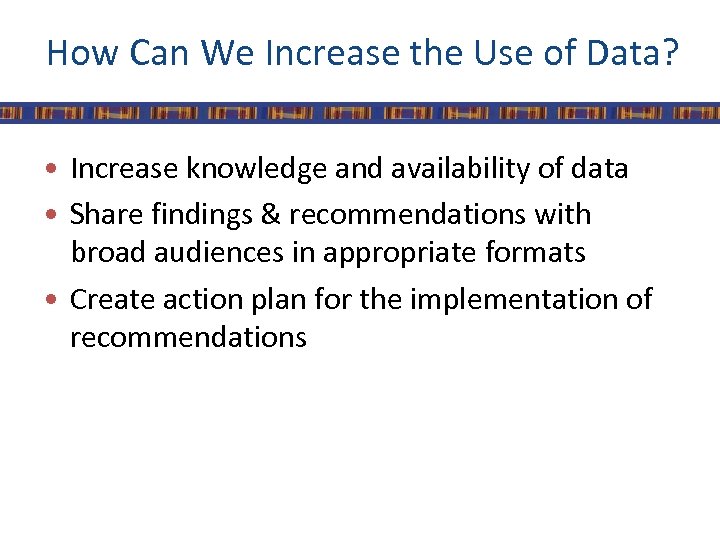
How Can We Increase the Use of Data? • Increase knowledge and availability of data • Share findings & recommendations with broad audiences in appropriate formats • Create action plan for the implementation of recommendations
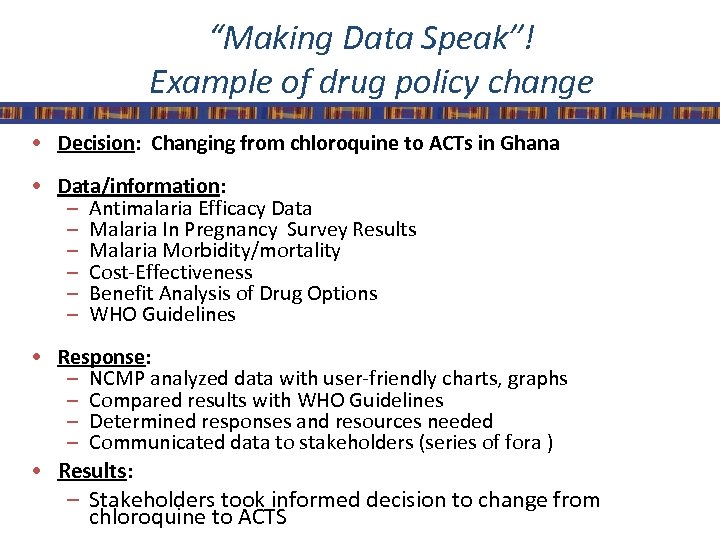
“Making Data Speak”! Example of drug policy change • Decision: Changing from chloroquine to ACTs in Ghana • Data/information: – Antimalaria Efficacy Data – Malaria In Pregnancy Survey Results – Malaria Morbidity/mortality – Cost-Effectiveness – Benefit Analysis of Drug Options – WHO Guidelines • Response: – NCMP analyzed data with user-friendly charts, graphs – Compared results with WHO Guidelines – Determined responses and resources needed – Communicated data to stakeholders (series of fora ) • Results: – Stakeholders took informed decision to change from chloroquine to ACTS
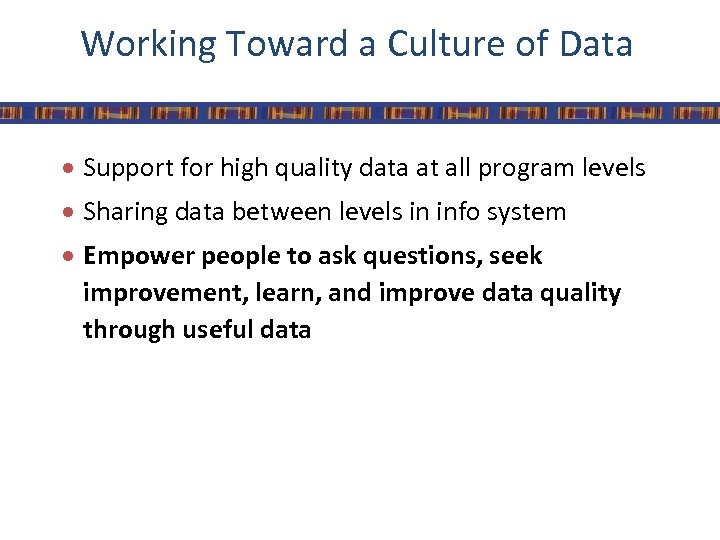
Working Toward a Culture of Data Support for high quality data at all program levels Sharing data between levels in info system Empower people to ask questions, seek improvement, learn, and improve data quality through useful data
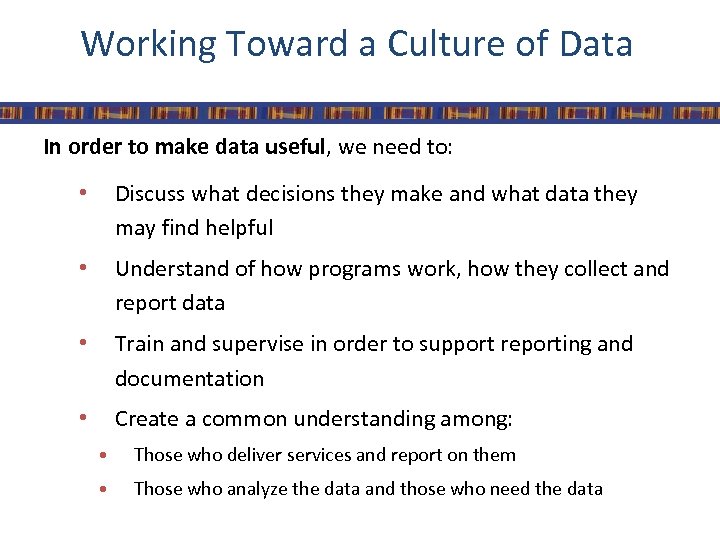
Working Toward a Culture of Data In order to make data useful, we need to: • Discuss what decisions they make and what data they may find helpful • Understand of how programs work, how they collect and report data • Train and supervise in order to support reporting and documentation • Create a common understanding among: • Those who deliver services and report on them • Those who analyze the data and those who need the data
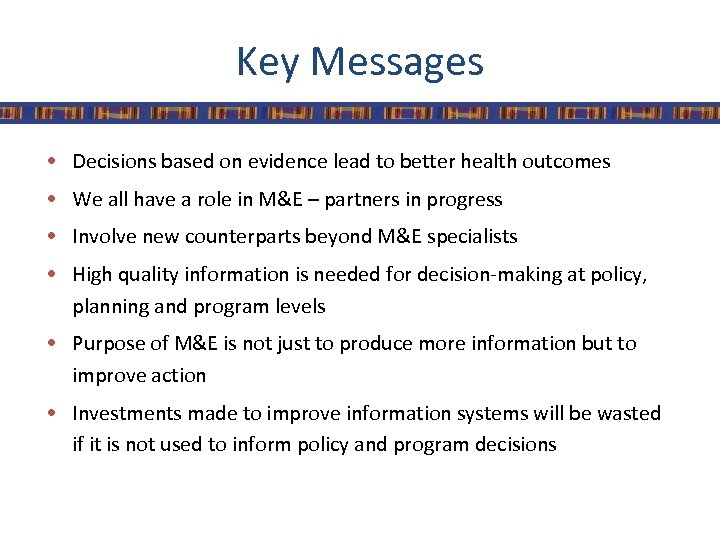
Key Messages • Decisions based on evidence lead to better health outcomes • We all have a role in M&E – partners in progress • Involve new counterparts beyond M&E specialists • High quality information is needed for decision-making at policy, planning and program levels • Purpose of M&E is not just to produce more information but to improve action • Investments made to improve information systems will be wasted if it is not used to inform policy and program decisions
References MEASURE Evaluation, Addis Ababa University. Decision-Making and Strategic Information. Workshop on M&E of PHN Programs July 24 -August 11, 2006 Addis Ababa Available at: https: //www. cpc. unc. edu/measure/training/materials
MEASURE Evaluation is a MEASURE program project funded by the U. S. Agency for International Development (USAID) through Cooperative Agreement GHA-A-00 -08 -00003 -00 and is implemented by the Carolina Population Center at the University of North Carolina at Chapel Hill, in partnership with Futures Group International, John Snow, Inc. , ICF Macro, Management Sciences for Health, and Tulane University. Visit us online at http: //www. cpc. unc. edu/measure.
Скачать презентацию Using Data for Decision Making Learning Objectives
05404d07448aceee59cf3f25369b336b.ppt