 Скачать презентацию Using Biochar in Soil Biochar Characterization physical
0ac11bf65df57693bcab9f7ff7f1f112.ppt
- Количество слайдов: 10



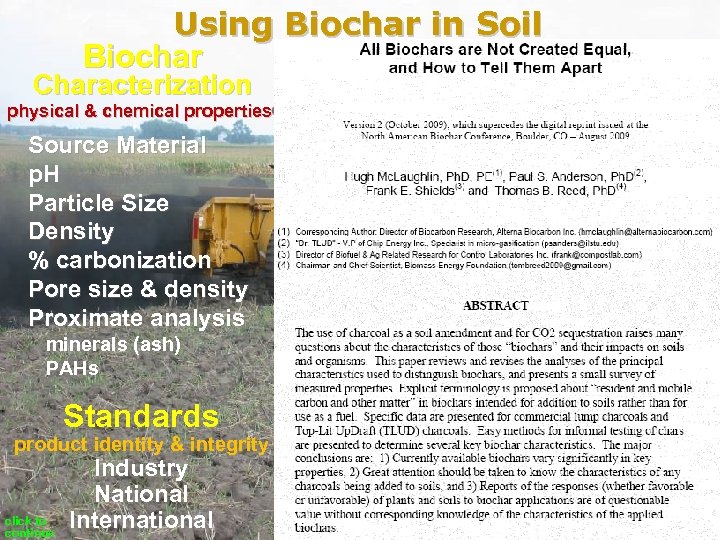
Using Biochar in Soil Biochar Characterization physical & chemical properties Source Material p. H Particle Size Density % carbonization Pore size & density Proximate analysis minerals (ash) PAHs Standards product identity & integrity click to continue Industry National International
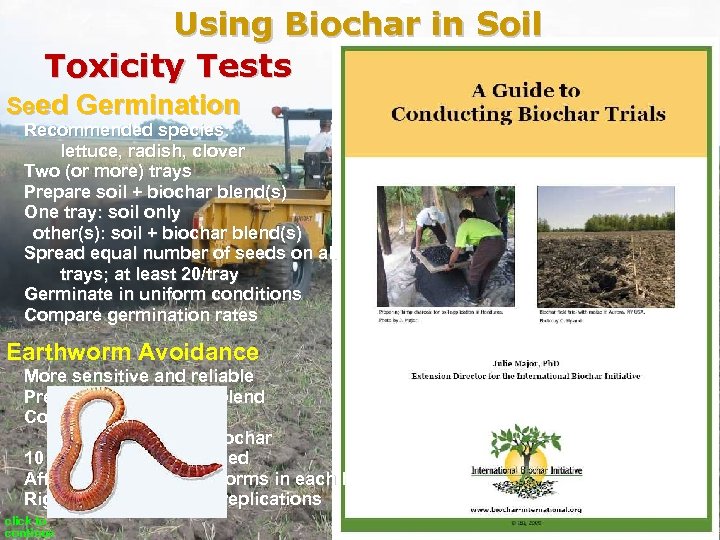
Using Biochar in Soil Toxicity Tests Seed Germination Recommended species: lettuce, radish, clover Two (or more) trays Prepare soil + biochar blend(s) One tray: soil only other(s): soil + biochar blend(s) Spread equal number of seeds on all trays; at least 20/tray Germinate in uniform conditions Compare germination rates Earthworm Avoidance More sensitive and reliable Prepare soil + biochar blend Container: half with soil half soil + biochar 10 earthworms introduced After 48 hours: count worms in each half Rigorous test requires replications click to continue
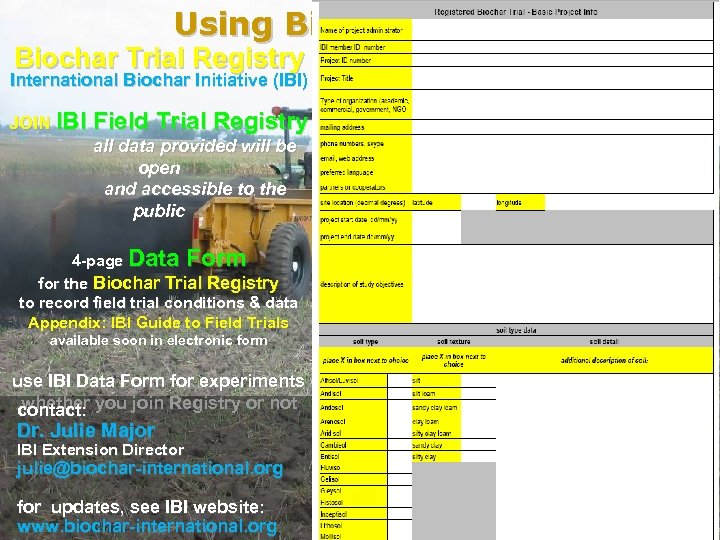
Using Biochar in Soil Biochar Trial Registry International Biochar Initiative (IBI) JOIN IBI Field Trial Registry all data provided will be open and accessible to the public 4 -page Data Form for the Biochar Trial Registry to record field trial conditions & data Appendix: IBI Guide to Field Trials available soon in electronic form use IBI Data Form for experiments whether contact: you join Registry or not Dr. Julie Major IBI Extension Director julie@biochar-international. org for updates, see IBI website: www. biochar-international. org
Using Biochar in Soil Moisture Preparing Biochar Initially, fresh char is hydrophobic = repels water Quench, sprinkle or spray for safety and reduced particle size Steam – immediately after burn, create live steam Fracture (pop open) micropore matrix = activation Urine (pee) Minerals Cation & Anion adsorption capacity as delivery media Mineral mix tailored to target soil Major Minerals: Ca, P – also N especially trace elements as in sea minerals Micronized Microbial-scale mixing: more than surface area Maximum physical intimacy Microbes click to continue Inoculation: seeding fully functional microbial complexes compost, compost tea, BD preps, EM, mycorrhizae, etc. Nitrogen-fixing bacteria Nightsoil (poop) compost toilet instead of water-borne sewage
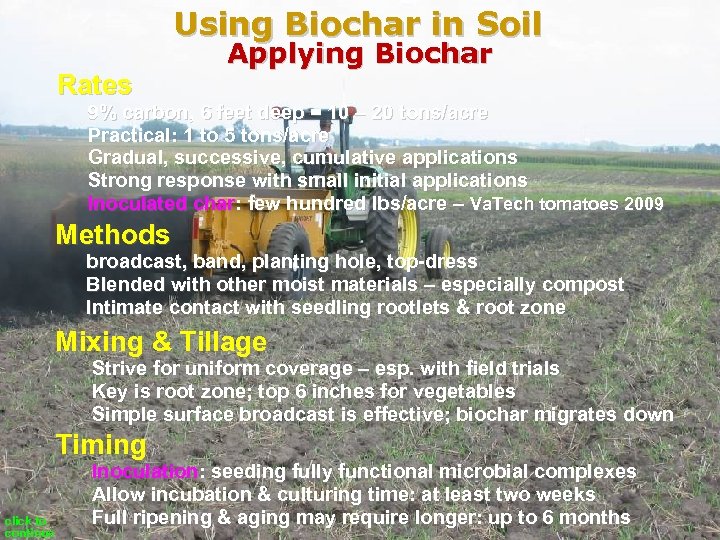
Using Biochar in Soil Rates Applying Biochar 9% carbon, 6 feet deep = 10 – 20 tons/acre Practical: 1 to 5 tons/acre Gradual, successive, cumulative applications Strong response with small initial applications Inoculated char: few hundred lbs/acre – Va. Tech tomatoes 2009 Methods broadcast, band, planting hole, top-dress Blended with other moist materials – especially compost Intimate contact with seedling rootlets & root zone Mixing & Tillage Strive for uniform coverage – esp. with field trials Key is root zone; top 6 inches for vegetables Simple surface broadcast is effective; biochar migrates down Timing click to continue Inoculation: seeding fully functional microbial complexes Allow incubation & culturing time: at least two weeks Full ripening & aging may require longer: up to 6 months
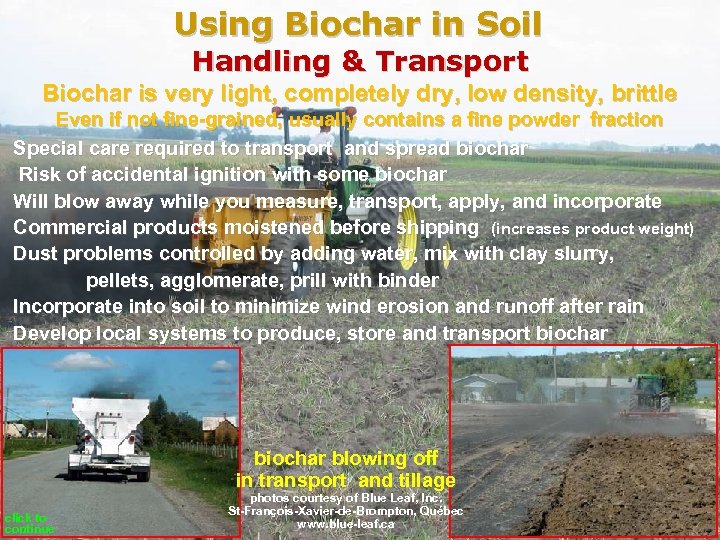
Using Biochar in Soil Handling & Transport Biochar is very light, completely dry, low density, brittle Even if not fine-grained, usually contains a fine powder fraction Special care required to transport and spread biochar Risk of accidental ignition with some biochar Will blow away while you measure, transport, apply, and incorporate Commercial products moistened before shipping (increases product weight) Dust problems controlled by adding water, mix with clay slurry, pellets, agglomerate, prill with binder Incorporate into soil to minimize wind erosion and runoff after rain Develop local systems to produce, store and transport biochar blowing off in transport and tillage click to continue photos courtesy of Blue Leaf, Inc. St-François-Xavier-de-Brompton, Québec www. blue-leaf. ca
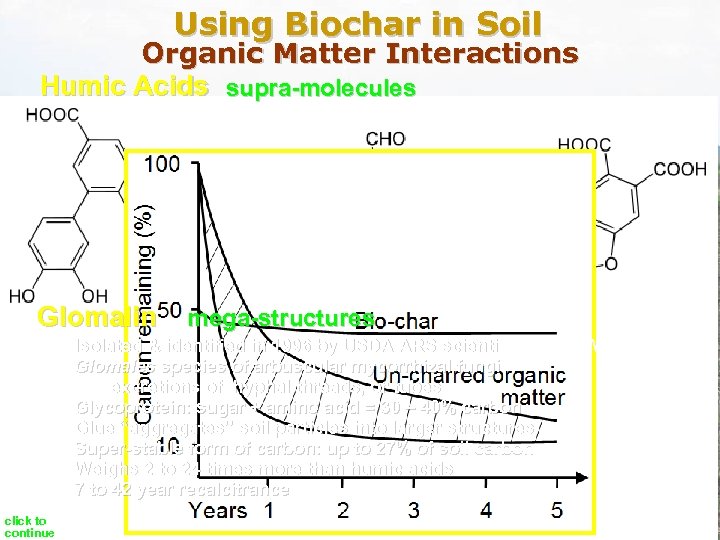
Using Biochar in Soil Organic Matter Interactions Humic Acids supra-molecules Humus into Humic acids (10– 15% of original organic carbon) Super-stable form of carbon: 8 to 10% of soil carbon Indigestible complex carbon molecules Extremely large carbon molecules: tens to hundreds of carbon atoms Held together by subtle inter-atom electromagnetic forces: hydrogen bonds, vander Walls, hydrophobicity Fulvic (alkali) versus Humic acids (acid) Structural and chemical interactions with charred carbon Glomalin mega-structures Isolated & identified in 1996 by USDA ARS scientist Sara F. Wright Glomales species of arbuscular mycorrhizal fungi excretions of hyphal threads, or tubes Glycoprotein: sugar + amino acid = 30 – 40% carbon Glue “aggregates” soil particles into larger structures Super-stable form of carbon: up to 27% of soil carbon Weighs 2 to 24 times more than humic acids 7 to 42 year recalcitrance click to continue
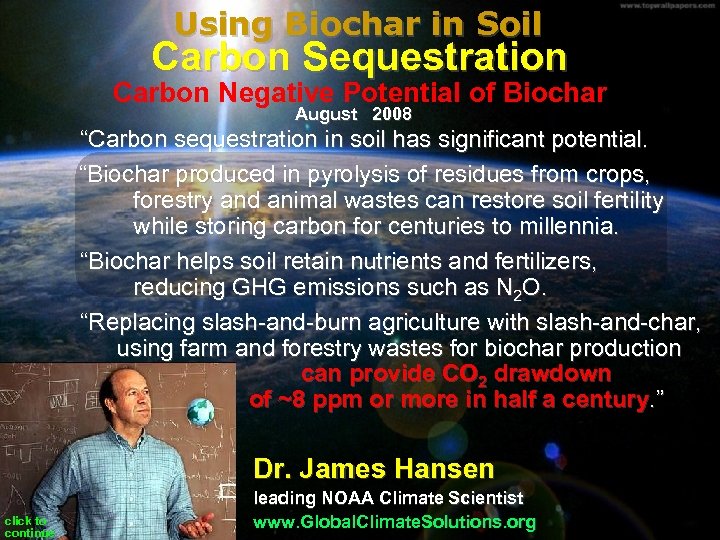
Using Biochar in Soil Carbon Sequestration Carbon Negative Potential of Biochar August 2008 “Carbon sequestration in soil has significant potential. “Biochar produced in pyrolysis of residues from crops, forestry and animal wastes can restore soil fertility while storing carbon for centuries to millennia. “Biochar helps soil retain nutrients and fertilizers, reducing GHG emissions such as N 2 O. “Replacing slash-and-burn agriculture with slash-and-char, using farm and forestry wastes for biochar production can provide CO 2 drawdown of ~8 ppm or more in half a century. ” Dr. James Hansen click to continue leading NOAA Climate Scientist www. Global. Climate. Solutions. org
are you ready for the next PARADIGM SHIFT? THE END If we produce food labeled “nutrient dense” and “carbon negative” will people buy it? Anybody want to make biochar this winter?
 Скачать презентацию Using Biochar in Soil Biochar Characterization physical
0ac11bf65df57693bcab9f7ff7f1f112.ppt