 USA – part 2
 Political System of the USA - Overview • The United States is a presidential federal republic. • The President of the United States (the head of state and head of government), Congress, and judiciary share powers reserved to the national government, and the federal government shares sovereignty with the state governments. • Federal and state elections take place within a twoparty system, although this is not enshrined in law. • American politics has been dominated by two parties, the Democratic Party and the Republican Party, since the American Civil War, although other parties have also existed.
 Political System of the USA – Overview (2) • The executive branch is headed by the President and is independent of the legislature. Legislative power is vested in the two chambers of Congress, the Senate and the House of Representatives. • Judicial power is exercised by the judicial branch (or judiciary), composed of the Supreme Court and lower federal courts. • The judiciary's function is to interpret the United States Constitution as well as federal laws and regulations. • This includes resolving disputes between the executive and legislative branches.
 President of the United States • The President of the United States is the head of state and head of government of the United States. • The President leads the executive branch of the federal government.
 Powers of the US President: Legislative role • U. S. Constitution, Article I: The first power conferred upon the president is the legislative power of the presidential veto. • The Presentment Clause requires any bill passed by Congress to be presented to the president before it can become law. • Once the legislation has been presented, the president has three options: 1. Sign the legislation the bill then becomes law. 2. Veto the legislation and return it to Congress, expressing any objections the bill does not become law, unless each House of Congress votes to override the veto by a two-thirds vote. 3. Take no action. In this instance, the president neither signs nor vetoes the legislation. After 10 days, not counting Sundays, two possible outcomes emerge: a) b) If Congress is still convened, the bill becomes law. If Congress has adjourned, thus preventing the return of the legislation, the bill does not become law. – This latter outcome is known as the pocket veto.
 Powers of the US President: Executive powers (Art. II) • War and foreign affairs powers: • The Founding Fathers limited the powers of the head of the state, who in the US cannot declare war like the King of England did - only the Congress can. • Congress, pursuant to the War Powers Resolution, must authorize any troop deployments more than 60 days in length. • Additionally, Congress controls military spending and regulation.
 Powers of the US President: Executive powers (Art. II) (2) • Administrative powers: • The president is the chief executive of the United States, putting him at the head of the executive branch of the government, whose responsibility is to "take care that the laws be faithfully executed. "
 Powers of the US President: Juridical powers • The president has the power to nominate federal judges, including members of the United States courts of appeals and the Supreme Court of the United States. • However, these nominations require Senate confirmation. • The President may be impeached by a majority in the House and removed from office by a two-thirds majority in the Senate for "treason, bribery, or other high crimes and misdemeanors". • The President may not dissolve Congress or call special elections.
 Vice President • The Vice President is the second-highest executive official in rank of the government. • As first in the U. S. presidential line of succession, the Vice President becomes President upon the death, resignation, or removal of the President. • Under the Constitution, the Vice President is President of the Senate.
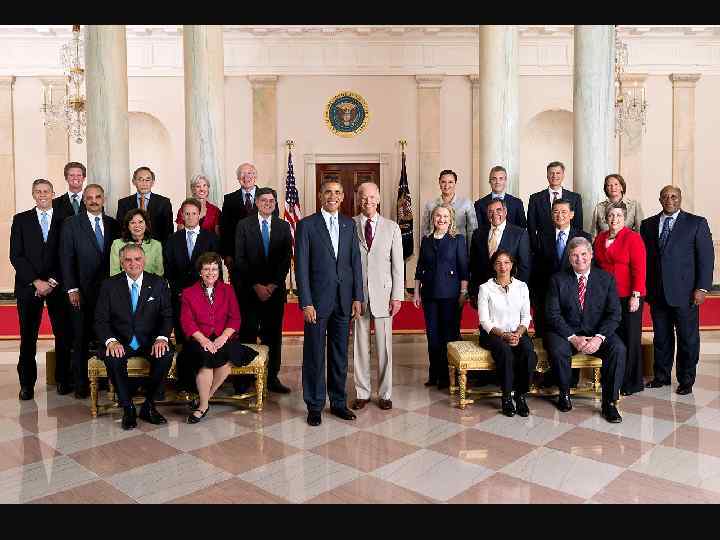
 Cabinet and executive departments • The day-to-day administration and enforcement of federal laws is made by the various federal executive departments, created by Congress to deal with specific areas of national and international affairs. • The heads of the 15 departments, chosen by the President and approved with the "advice and consent" of the U. S. Senate, form a council of advisers generally known as the President's "Cabinet".
 Executive Office of the President • In addition to departments, a number of staff organizations are grouped into the Executive Office of the President. • These include the White House staff, the National Security Council, the Office of Management and Budget, the Council of Economic Advisers, the Council on Environmental Quality, the Office of the U. S. Trade Representative, the Office of National Drug Control Policy and the Office of Science and Technology Policy. • The employees in these United States government agencies are called federal civil servants.
 Independent agencies • There also independent agencies such as the United States Postal Service, the National Aeronautics and Space Administration (NASA), the Central Intelligence Agency (CIA), the Environmental Protection Agency, and the United States Agency for International Development. • In addition, there are government-owned corporations such as the Federal Deposit Insurance Corporation and the National Railroad Passenger Corporation.
 State government (1) • The 50 state governments have the power to make laws on all subjects that are not granted to the national government or denied to the states in the U. S. Constitution. • These include education, family law, contract law, and most crimes. • Unlike the national government, which only has those powers granted to it in the Constitution, a state government has inherent powers allowing it to act unless limited by a provision of the state or national constitution.
 State government (2) • State governments, too, have three branches: executive, legislative, and judicial. • The chief executive of a state is its popularly elected governor, who typically holds office for a four-year term (although in a some states the term is two years). • Except for Nebraska, which has unicameral legislature, all states have a bicameral legislature, with the upper house usually called the Senate and the lower house called the House of Representatives, the House of Delegates, Assembly or something similar.
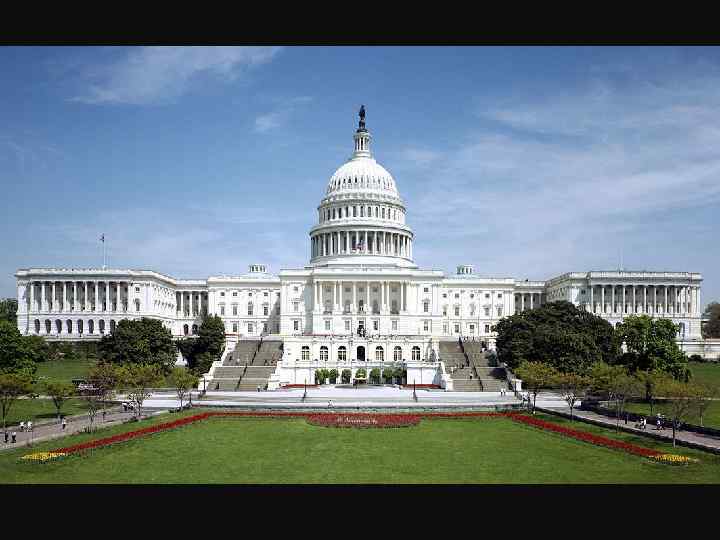
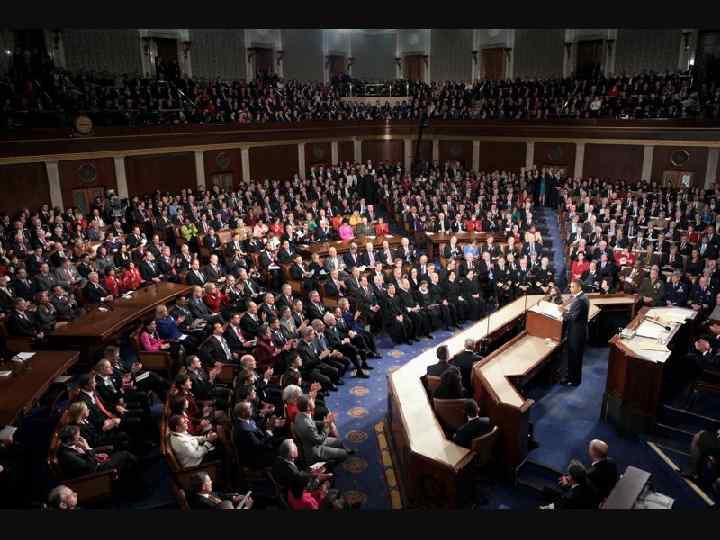
 The US Congress • The United States Congress is the legislative branch of the federal government. • The Constitution - Article I, Section 8 - grants numerous powers to Congress. • The powers of Congress, however, are limited to those enumerated in the Constitution; all other powers are reserved to the states and the people. • The Congress is bicameral, comprising the House of Representatives and the Senate.
 House of Representatives • The House currently consists of 435 voting members, each of whom represents a congressional district. • The number of representatives each state has in the House is based on each state's population. • All representatives serve a two-year term. • Each state receives a minimum of one representative in the House.
 Senate • The Senate is made up of two senators from each state, regardless of population. • There are currently 100 senators (two from each of the 50 states), who each serve six-year terms. • Approximately one third of the Senate stands for election every two years.
 Different powers of H. of Representatives and Senate • The House and Senate each have particular exclusive powers. • For example, the Senate must approve (give "advice and consent" to) many important Presidential appointments, including cabinet officers, federal judges (including nominees to the Supreme Court), department secretaries (ministers), U. S. military and naval officers, and ambassadors to foreign countries. • All legislative bills for raising revenue must originate in the House of Representatives. The approval of both chambers is required to pass any legislation, which then may only become law by being signed by the President.
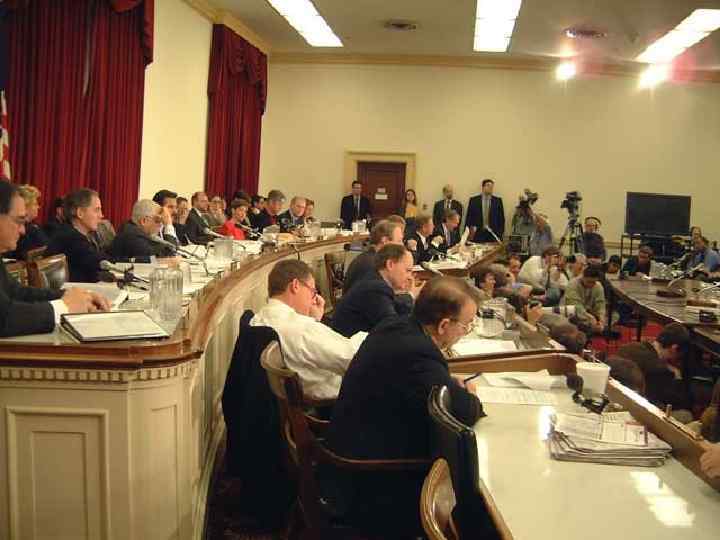
 Congressional oversight • Congressional oversight - the ongoing control by the US Congress over the acts of the President and the whole executive branch - is an extremely important function. • It is intended to prevent waste and fraud, protect civil liberties and individual rights, ensure executive compliance with the law, gather information for making laws and educating the public, and evaluate executive performance. • It applies to cabinet departments, executive agencies, regulatory commissions and the presidency. • It is performed by many specialized committees of the Congress.
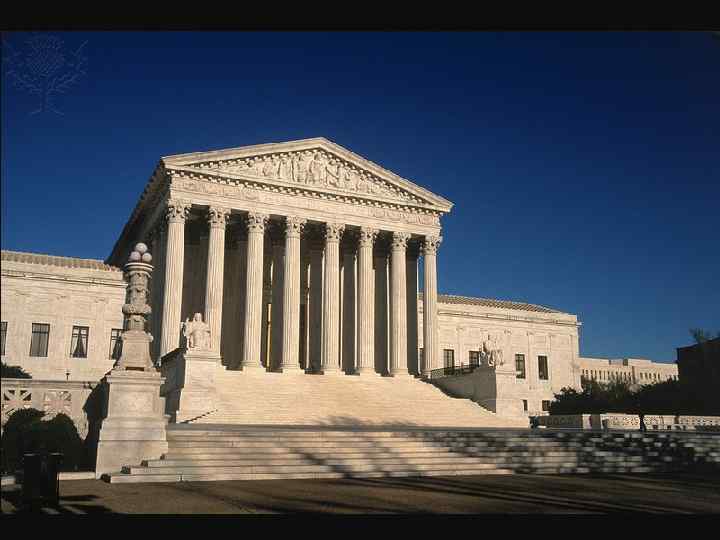
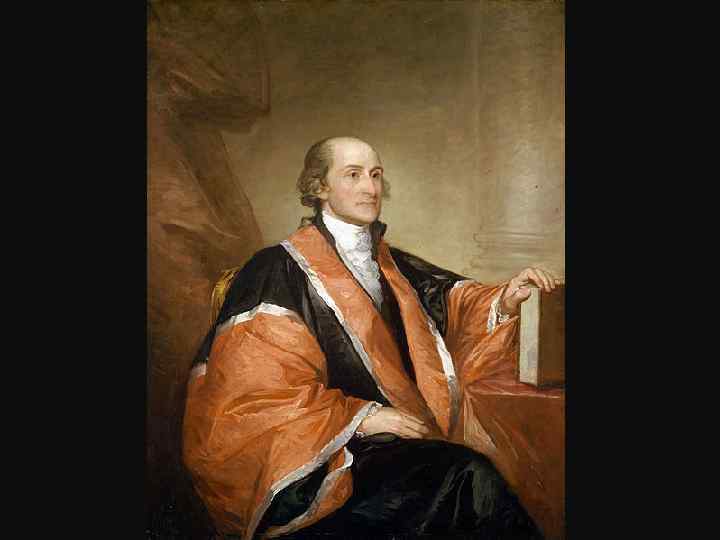
 Judiciary (1) • Article III section I of the Constitution establishes the Supreme Court of the United States and authorizes the United States Congress to establish inferior courts as their need shall arise. • The Judiciary Act of 1789 subdivided the nation into judicial districts and created federal courts for each district. • This act established the basic structure of the national judiciary: the Supreme Court, 13 courts of appeals, 94 district courts, and two courts of special jurisdiction. • Congress retains the power to re-organize or even abolish federal courts lower than the Supreme Court.
 Judiciary (2) • The U. S. Supreme Court adjudicates “cases and controversies” — matters pertaining to the federal government, disputes between states, and interpretation of the United States Constitution, and, in general, can declare legislation or executive action made at any level of the government as unconstitutional, nullifying the law and creating precedent for future law and decisions. • The United States Constitution does not grant the judicial branch the power of judicial review (the power to declare a law unconstitutional).
 Judiciary (3) • Rather, the power to declare laws unconstitutional has been deemed an implied power, derived from Article III and Article VI. • The power of judicial review was asserted by Chief Justice Marshall in the landmark Supreme Court Case Marbury v. Madison (1803). • In Marbury v. Madison, the Supreme Court ruled that the federal courts have the duty to review the constitutionality of acts of Congress and to declare them void when they are contrary to the Constitution. • Marbury, written by Chief Justice John Marshall, was the first Supreme Court case to strike down an act of Congress as unconstitutional. • Judicial review was always a very debated question, because it limits the democratic principle embodied in the Congress, but is now generally accepted.
 Judiciary (4) • The Federalist Papers (published in 1787– 1788 to promote ratification of the Constitution) made several references to the power of judicial review. • The most extensive discussion of judicial review was in Federalist No. 78, written by Alexander Hamilton, which clearly explained that the federal courts would have the power of judicial review. • Hamilton stated that under the Constitution, the federal judiciary would have the power to declare laws unconstitutional. • Hamilton asserted that this was appropriate because it would protect the people against abuse of power by Congress. • The matter is discussed also in the Federalist no. 80 and 82.
 Judiciary (5) • Below the U. S. Supreme Court are 1. the United States Courts of Appeals, and below them in turn are 2. the United States District Courts, which are the general trial courts for federal law. • Each state has its own independent judicial hierarchy and significantly different laws.
 Judiciary (6) • The U. S. Constitution safeguards judicial independence by providing that federal judges shall hold office "during good behavior”. – (In practice, this usually means they serve until they die, retire, or resign). • A judge who commits an offense while in office may be impeached in the same way as the President or other officials of the federal government. • U. S. federal judges are appointed by the President, subject to confirmation by the Senate.
 Suffrage (1) • Suffrage (the right to vote) is nearly universal for citizens 18 years of age and older. • All states and the District of Columbia contribute to the electoral vote for President. However, the District, and U. S. territories like Puerto Rico and Guam, lack representation in Congress. • These constituencies do not have the right to choose any political figure outside their respective areas. • Each commonwealth, territory, or district can only elect a non-voting delegate to serve in the House of Representatives.
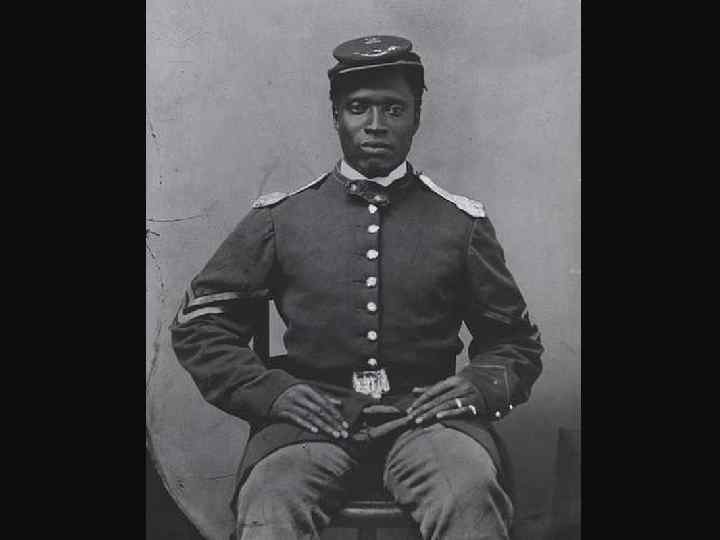
 Suffrage (2) • Suffrage was originally limited to white citizens with a certain economic position, and was gradually extended over a long period. • In 1870, the 15 th Amendment removed limitations due to "race, color, or previous condition of servitude". • In 1920, the 19 th Amendment gave women the right to vote. • Native Americans were admitted to voting in 1924.
 Elections (1) • Unlike in some parliamentary systems, Americans vote for a specific candidate instead of directly selecting a particular political party. • With a federal government, officials are elected at the federal (national), state and local levels. • On a national level, the President is elected indirectly by the people, through an Electoral College. • In modern times, the electors virtually always vote with the popular vote of their state. All members of Congress, and the offices at the state and local levels are directly elected.
 Elections (2) • In the Electoral College, the number of electors in each state is equal to the number of members of Congress to which the state is entitled. • In the Electoral College there are 538 electors, based on there being 435 representatives and 100 senators, plus the three electors from the District of Columbia. • Each state legislature determines how electors for the state are to be chosen. • Any person holding a federal office, either elected or appointed, may not be an elector. • The Electoral College never actually meets as one body.
 Elections (3) • Both federal and state laws regulate elections. • The United States Constitution defines (to a basic extent) how federal elections are held, in Article One and Article Two and various amendments. • State law regulates most aspects of electoral law, including primaries, the eligibility of voters (beyond the basic constitutional definition), the running of each state's Electoral College, and the running of state and local elections.
 Presidential elections (1) • The election of the President and the Vice President of the United States is an indirect vote in which citizens cast ballots for a slate of members of the U. S. Electoral College; these electors in turn directly elect the President and Vice President. • Article II of the United States Constitution originally established the method of presidential elections, including the Electoral College. • This was a result of a compromise between those constitutional framers who wanted the Congress to choose the president, and those who preferred a national popular vote. • Presidential elections occur every four years (the count beginning with the year 1792) on Election Day, the Tuesday between November 2 and 8.
 Presidential elections (2) • Each state is allocated a number of Electoral College electors equal to the number of its Senators and Representatives in the U. S. Congress. • Additionally, Washington, D. C. (District of Columbia) is given a number of electors equal to the number held by the smallest state. • In 1961, the 23 rd Amendment extended the right to choose electors to the District of Columbia. • Citizens of the D. C. , however, are no longer permitted to vote for U. S. Congressional elections, nor State Elections. • U. S. territories (e. g. Puerto Rico, Guam, Northern Mariana Islands, U. S. Virgin Islands) are not represented in the Electoral College.
 Presidential elections (3) • Under the U. S. Constitution, each state legislature is allowed to designate a way of choosing electors. • Thus, the popular vote on Election Day is conducted by the various states and not directly by the federal government.
 Nominating process • The modern nominating process of U. S. presidential elections currently consists of two major parts: a series of presidential primary elections and caucuses held in each state, and the presidential nominating conventions held by each political party. • This process was never included in the United States Constitution, and thus evolved over time by the political parties to clear the field of candidates. • The primary elections are run by state and local governments, while the caucuses are organized directly by the political parties. • Some states hold only primary elections, some hold only caucuses, and others use a combination of both.
 Primary elections • In partisan elections, candidates are chosen by primary elections (abbreviated to primaries) and caucuses in the states, the District of Columbia, Puerto Rico, American Samoa, Guam, and the U. S. Virgin Islands. • A primary election is an election in which registered voters in a jurisdiction (nominating primary) select a political party's candidate for a later election.
 Caucuses • Caucuses also nominate candidates by election, but they are very different from primaries. • They are organized by the political parties, not by the state and local governments. • Caucuses are meetings that involve discussion of each party's platform and issues such as voter turnout in addition to voting. • Eleven states (Iowa, New Mexico, North Dakota, Maine, Nevada, Hawaii, Minnesota, Kansas, Alaska, Wyoming, Colorado and the District of Columbia) use caucuses.
 Political parties (1) • The US political system is based on just two parties, mostly due to historical reasons and to the nature of the voting system that encourages this structure. • Most officials in America are elected from singlemember districts and win office by beating out their opponents in a system for determining winners called first-past-the-post: • the one who gets the plurality wins (which is also called "relative majority" and is not the same thing as actually getting a majority of votes).
 Political parties (2) • The two main parties are the Democratic Party and the Republican Party. • Political parties are not mentioned in the US Constitution; in fact, the Founding Fathers of the US judged parties and partisan politics very negatively (see the Federalist No. 10 for a very good explanation of this position). • The Founding Fathers saw in political parties the prevalence of particular interests over the common good of the nation, and a clear danger of an oppressive majority.
 Political parties (3) • Political parties, however, started to develop immediately after the US was created, and by the 1790 s the so called First Party System was born. • The followers of Alexander Hamilton were called "Federalists"; they favored a strong central government that would support the interests of national defense, commerce and industry. • The followers of Thomas Jefferson took up the name "Republicans"; they preferred a decentralized agrarian republic in which the federal government had limited power.
 Political parties (4) • This configuration called First Party System lasted until 1828. • Two new parties emerged from the remnants of the Jeffersonian Democracy, forming the Second Party System with the Whigs, brought to life in opposition to President Andrew Jackson and his new Democratic Party. • The forces of Jacksonian Democracy, based among urban workers, Southern poor whites, and western farmers, dominated the era.
 Political parties (5) • In the 1850 s, the issue of slavery took center stage, with disagreement in particular over the question of whether slavery should be permitted in the country's new territories in the West. • The primary Republican policy was that slavery be excluded from all the territories. • This new party won the presidency with Abraham Lincoln in 1860. • Since the end of the Civil War (1865), US politics has been dominated by the Democratic Party and the Republican Party.
 Political parties (6) • Even if at the national level there are only two dominating parties, the different political systems, traditions, and political cultures in the 50 states lead to significant differences among the positions and the policies of each party in the various states. • Also, in the US political parties were never very organized and stable organizations like in Europe. • US political parties have much less control over candidates and over the voters, while European-style parties have a strong organization, sometimes with a vast bureaucracy, strong internal discipline, and sometimes even reach out to control and organize large parts of society itself.
 Other parties • In the US there are many other parties besides Democrats and Republicans. – For example: – Libertarian Party – Reform Party of the United States of America – Socialist Party USA – Green Party of the United States. • Their weight, however, is negligible compared to the two main parties.