Скачать презентацию US Steps to World War II Road
65d7fa26b693eaf07f46a5cb2e7666fd.ppt
- Количество слайдов: 22
 US Steps to World War II
 Road for the US… ► In the 1920 s, US remained isolationist due to economic recovery and the fallout of Wilsonian ideology. ► By the early 1930’s the goal for the US was to detach from European politics and remain neutral. (“The America First Movement”) ► By 1940, due to German and Japanese aggression, the US will become pro-Ally.
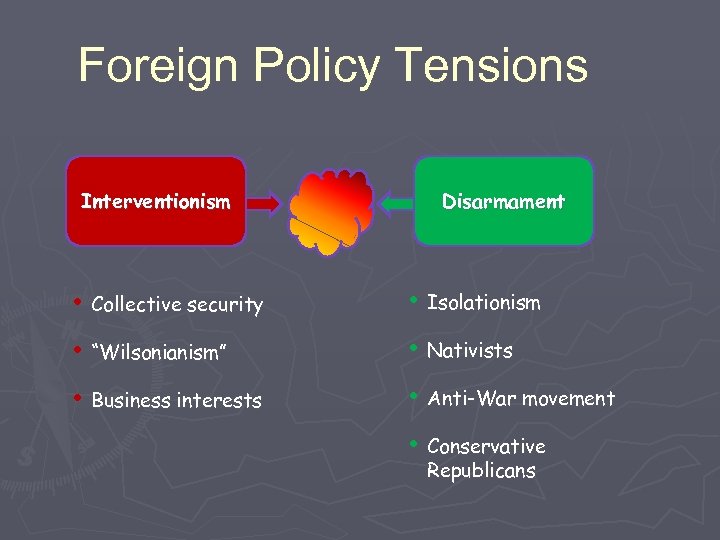 Foreign Policy Tensions Interventionism Disarmament • Collective security • Isolationism • “Wilsonianism” • Nativists • Business interests • Anti-War movement • Conservative Republicans
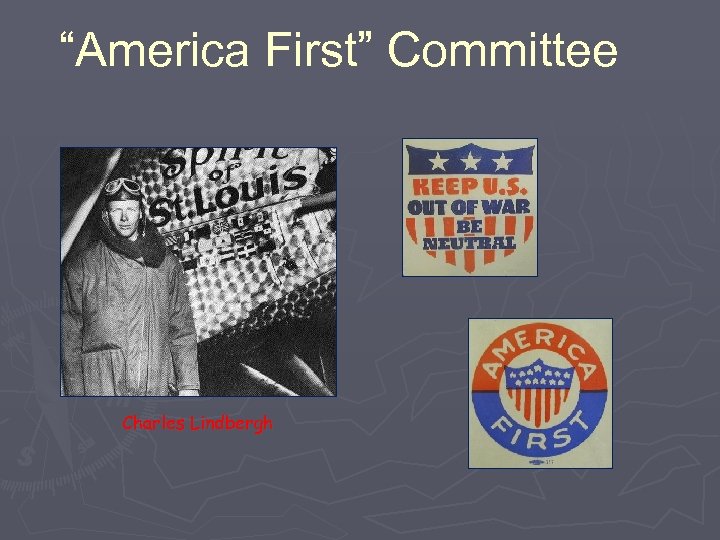 “America First” Committee Charles Lindbergh
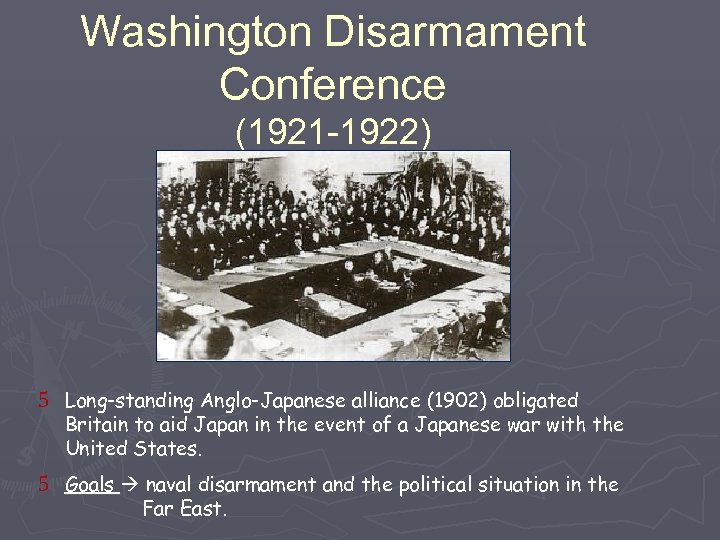 Washington Disarmament Conference (1921 -1922) 5 Long-standing Anglo-Japanese alliance (1902) obligated Britain to aid Japan in the event of a Japanese war with the United States. 5 Goals naval disarmament and the political situation in the Far East.
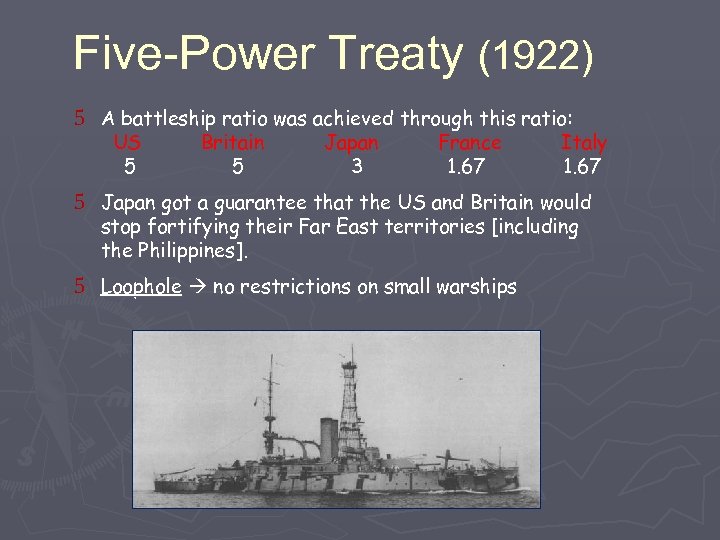 Five-Power Treaty (1922) 5 A battleship ratio was achieved through this ratio: US 5 Britain 5 Japan 3 France 1. 67 Italy 1. 67 5 Japan got a guarantee that the US and Britain would stop fortifying their Far East territories [including the Philippines]. 5 Loophole no restrictions on small warships
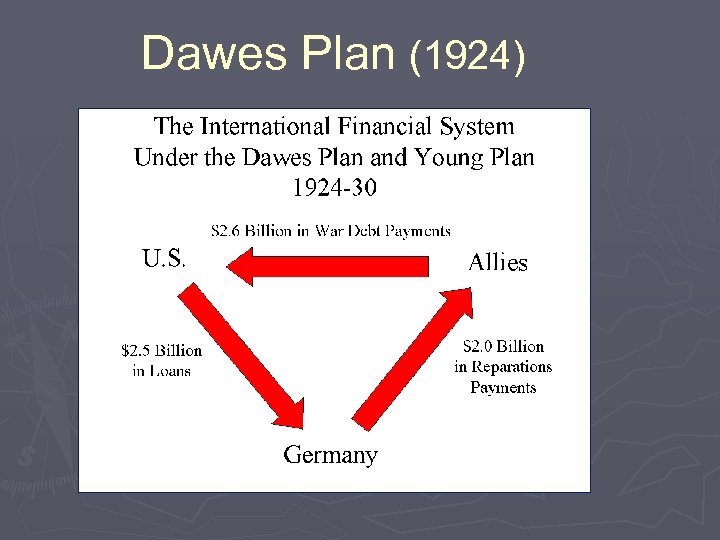 Dawes Plan (1924)
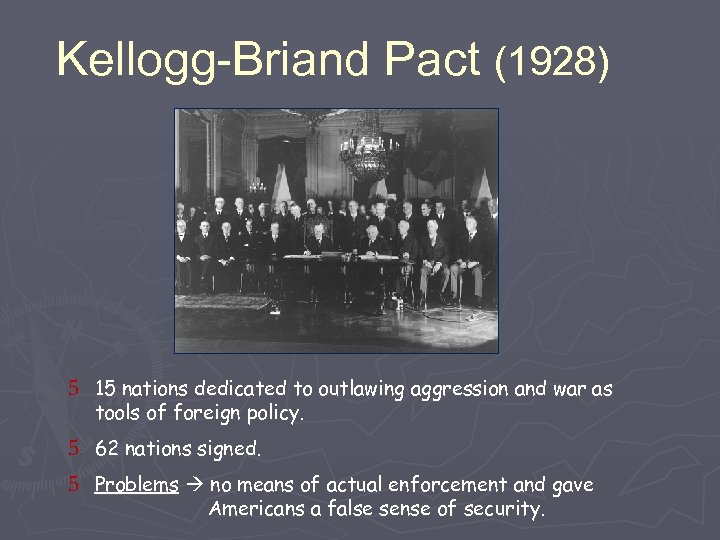 Kellogg-Briand Pact (1928) 5 15 nations dedicated to outlawing aggression and war as tools of foreign policy. 5 62 nations signed. 5 Problems no means of actual enforcement and gave Americans a false sense of security.
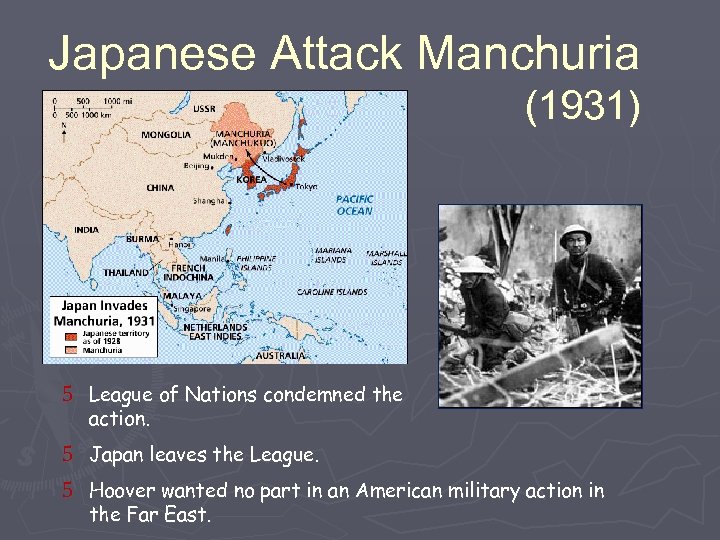 Japanese Attack Manchuria (1931) 5 League of Nations condemned the action. 5 Japan leaves the League. 5 Hoover wanted no part in an American military action in the Far East.
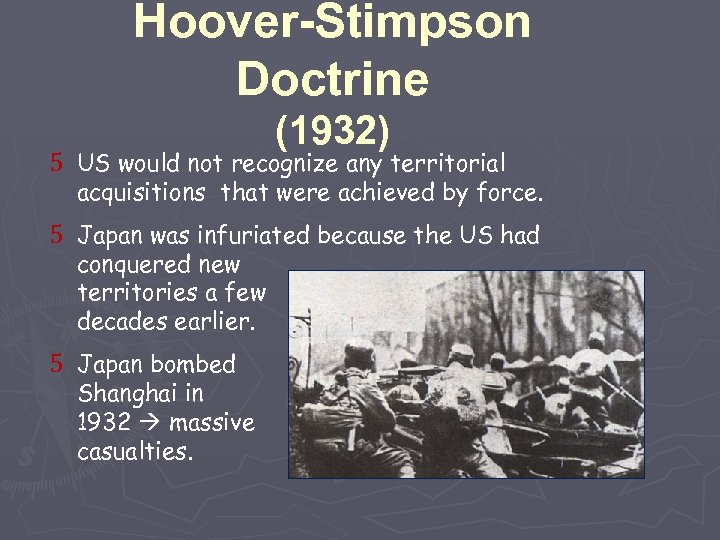 Hoover-Stimpson Doctrine (1932) 5 US would not recognize any territorial acquisitions that were achieved by force. 5 Japan was infuriated because the US had conquered new territories a few decades earlier. 5 Japan bombed Shanghai in 1932 massive casualties.
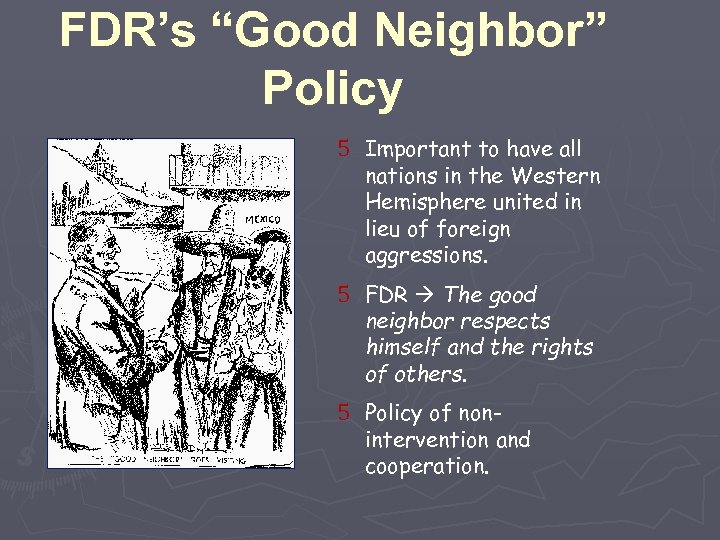 FDR’s “Good Neighbor” Policy 5 Important to have all nations in the Western Hemisphere united in lieu of foreign aggressions. 5 FDR The good neighbor respects himself and the rights of others. 5 Policy of non- intervention and cooperation.
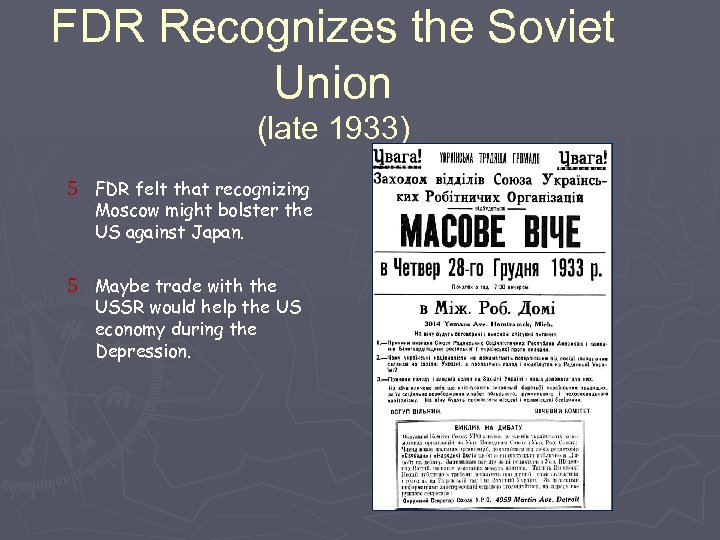 FDR Recognizes the Soviet Union (late 1933) 5 FDR felt that recognizing Moscow might bolster the US against Japan. 5 Maybe trade with the USSR would help the US economy during the Depression.
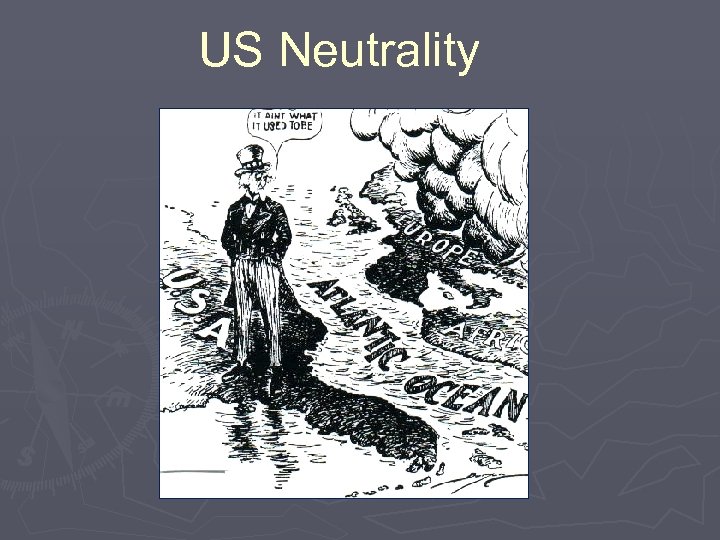 US Neutrality
 Neutrality Acts: 1935, 1936, 1937 5 When the President proclaimed the existence of a foreign war, certain restrictions would automatically go into effect: § § § Prohibited sales of arms to belligerent nations. Prohibited loans and credits to belligerent nations. Forbade Americans to travel on vessels of nations at war [in contrast to WW I]. § Non-military goods must be purchased on a “cash-andcarry” basis pay when goods are picked up. § Banned involvement in the Spanish Civil War. 5 This limited the options of the President in a crisis. 5 America in the 1930 s declined to build up its forces!
 1939 Neutrality Act 5 In response to Germany’s invasion of Poland. 5 FDR persuades Congress in special session to allow the US to aid European democracies in a limited way: § The US could sell weapons to the European democracies on a “cash-and-carry” basis. § FDR was authorized to proclaim danger zones which US ships and citizens could not enter. 5 Results of the 1939 Neutrality Act: § Aggressors could not send ships to buy US munitions. § The US economy improved as European demands for war goods helped bring the country out of the 1937 -38 recession. 5 America becomes the “Arsenal of Democracy. ”
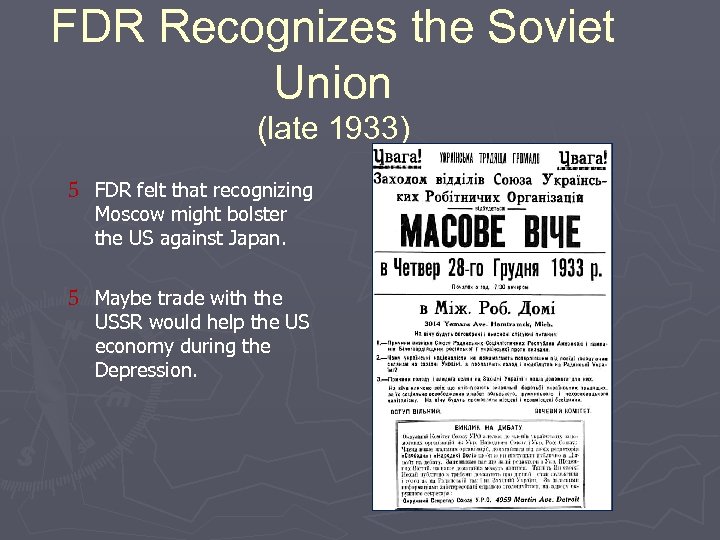 FDR Recognizes the Soviet Union (late 1933) 5 FDR felt that recognizing Moscow might bolster the US against Japan. 5 Maybe trade with the USSR would help the US economy during the Depression.
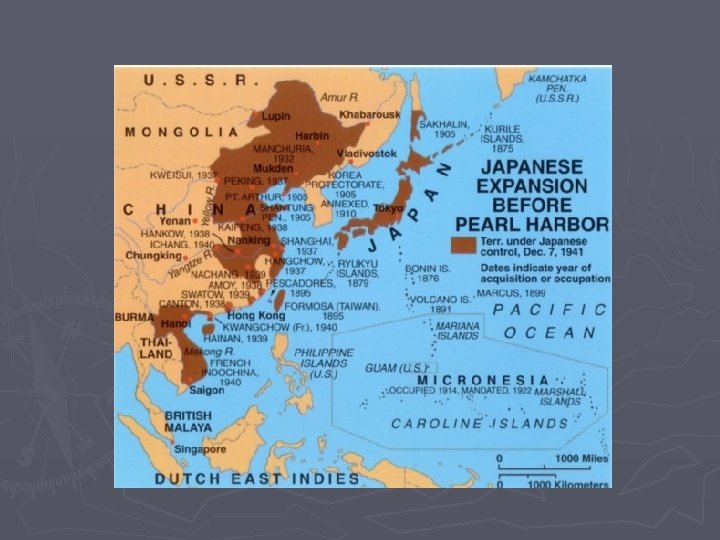
 Showdown with Japan… ► During the 1930 s ► As a response to an Japan had increased its increase presence in empire by invading the pacific, the US China and parts of freezes Japanese Southeast Asia Assets and place an oil embargo. ► 1937 -Panay incident ► 1940 Tripartite Pact signed
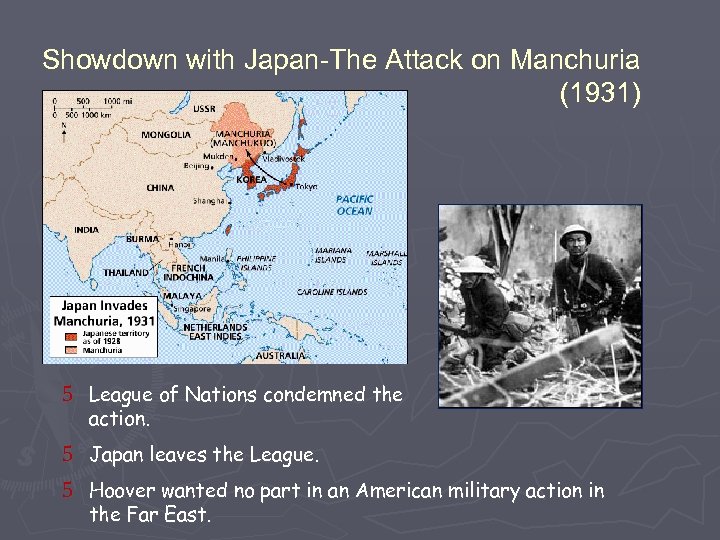 Showdown with Japan-The Attack on Manchuria (1931) 5 League of Nations condemned the action. 5 Japan leaves the League. 5 Hoover wanted no part in an American military action in the Far East.
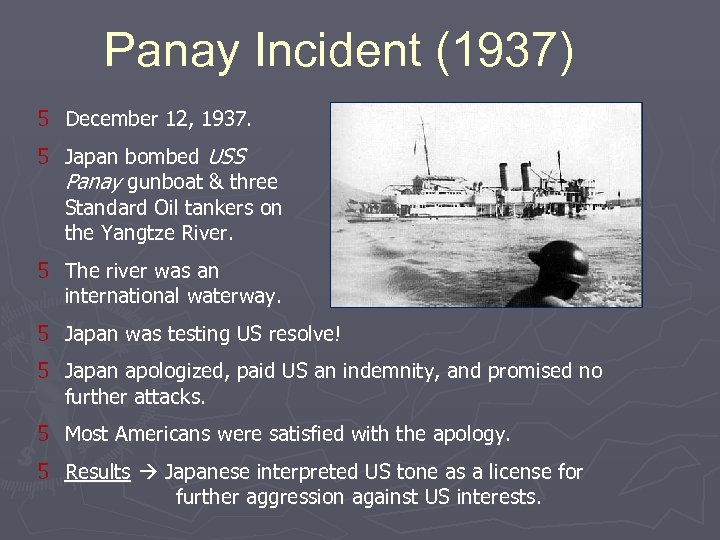 Panay Incident (1937) 5 December 12, 1937. 5 Japan bombed USS Panay gunboat & three Standard Oil tankers on the Yangtze River. 5 The river was an international waterway. 5 Japan was testing US resolve! 5 Japan apologized, paid US an indemnity, and promised no further attacks. 5 Most Americans were satisfied with the apology. 5 Results Japanese interpreted US tone as a license for further aggression against US interests.
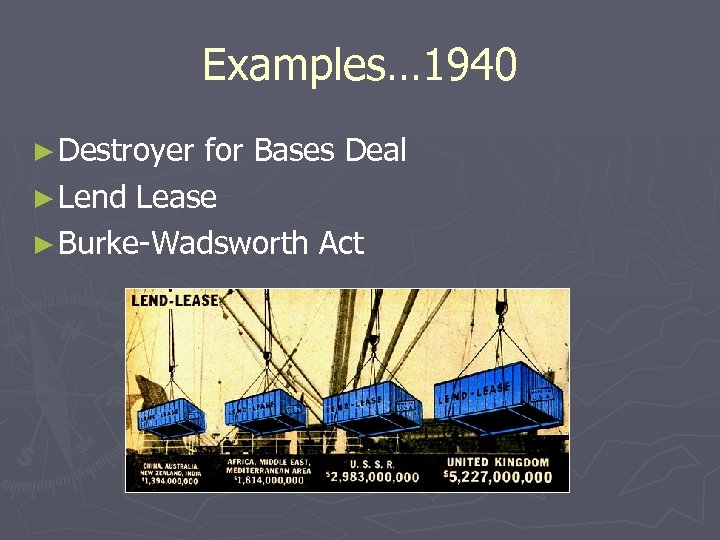 Examples… 1940 ► Destroyer for Bases Deal ► Lend Lease ► Burke-Wadsworth Act
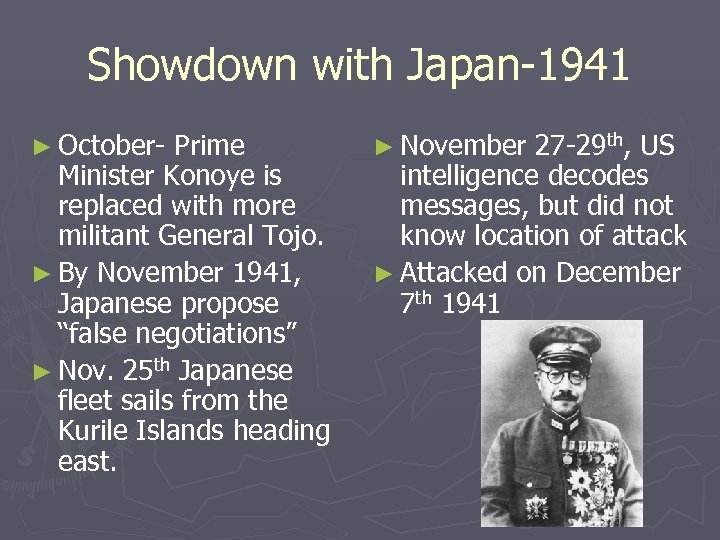 Showdown with Japan-1941 ► October- Prime Minister Konoye is replaced with more militant General Tojo. ► By November 1941, Japanese propose “false negotiations” ► Nov. 25 th Japanese fleet sails from the Kurile Islands heading east. ► November 27 -29 th, US intelligence decodes messages, but did not know location of attack ► Attacked on December 7 th 1941