


 Скачать презентацию Urinary Incontinence in Community Dwelling Populations Issues
21e1813878034f5f003f5e2919ed780b.ppt
- Количество слайдов: 11

 Urinary Incontinence in Community. Dwelling Populations: Issues & Challenges for Continence Care Assoc Prof Winsome St John RN, Ph. D School of Nursing & Midwifery Gold Coast Campus Research Centre for Clinical & Community Practice Innovation (RCCCPI) 2
 Acknowledgements • Prof Marianne Wallis RN, Ph. D – Clinical Chair GCHSD & Griffith University • Shona Mc. Kenzie RN, BSc, Ass. Dip. Health. Ed, Post. Grad. Cert in Geronot. Nurs, CNA, NP – Nurse Practitioner – continence, RBH • Susan Griffiths BA – Project manager, Griffith University • Heather James BN, MN – Research assistant, Griffith University • Waterworx Centre Clinical Team – – – Shona Mc. Kenzie Sheridan Guyatt BPhyso Jennifer Rayner RN, CNA, Stomal Therapist Sue Walker RN, CNA Lisa Sissons BPhysio
 Why are community continence services important? • Epidemiology and an ageing population • The community is where people are • Policy issues – Demand for services will increase – Urinary incontinence is expensive – Urinary incontinence is a major reason for nursing home admission • Prevention - 1 , 2 & 3 • Just because it is low tech, doesn’t mean it isn’t important • Urinary incontinence has a major impact
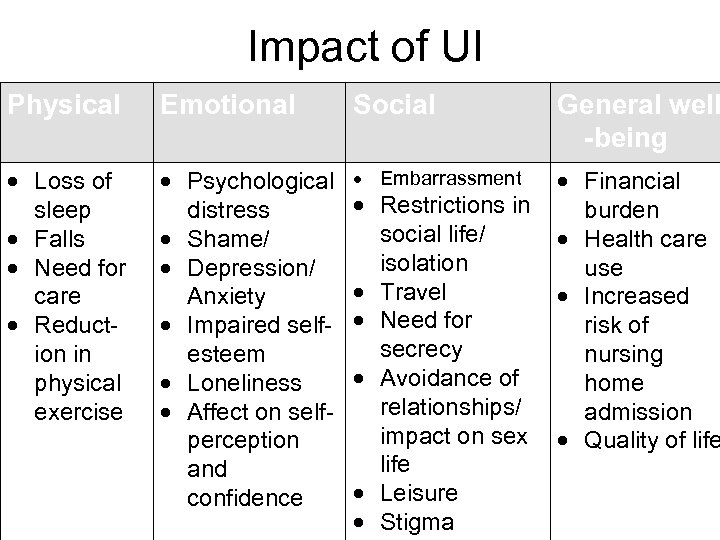 Impact of UI Physical Emotional Social Loss of sleep Falls Need for care Reduction in physical exercise Psychological distress Shame/ Depression/ Anxiety Impaired selfesteem Loneliness Affect on selfperception and confidence Embarrassment General well -being Financial Restrictions in burden social life/ Health care isolation use Travel Increased Need for risk of secrecy nursing Avoidance of home relationships/ admission impact on sex Quality of life Leisure Stigma
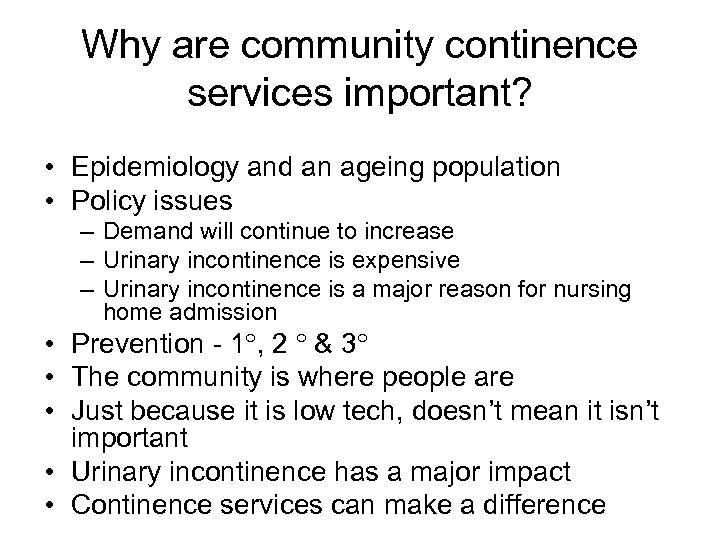 Why are community continence services important? • Epidemiology and an ageing population • Policy issues – Demand will continue to increase – Urinary incontinence is expensive – Urinary incontinence is a major reason for nursing home admission • Prevention - 1 , 2 & 3 • The community is where people are • Just because it is low tech, doesn’t mean it isn’t important • Urinary incontinence has a major impact • Continence services can make a difference
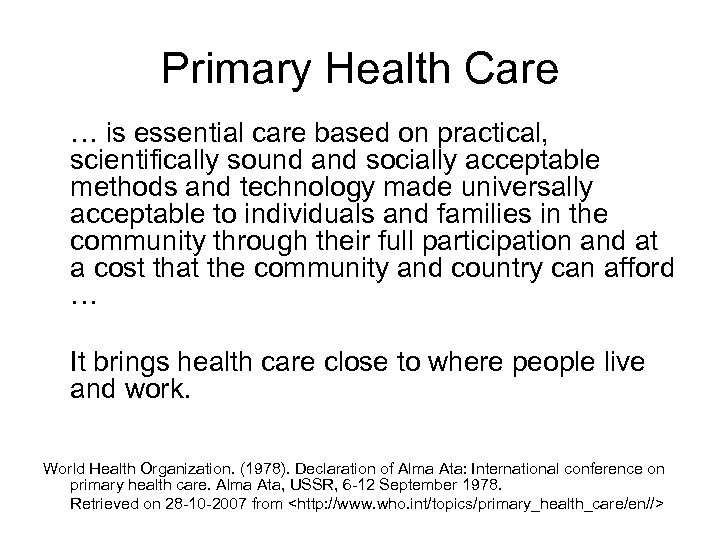 Primary Health Care … is essential care based on practical, scientifically sound and socially acceptable methods and technology made universally acceptable to individuals and families in the community through their full participation and at a cost that the community and country can afford … It brings health care close to where people live and work. World Health Organization. (1978). Declaration of Alma Ata: International conference on primary health care. Alma Ata, USSR, 6 -12 September 1978. Retrieved on 28 -10 -2007 from
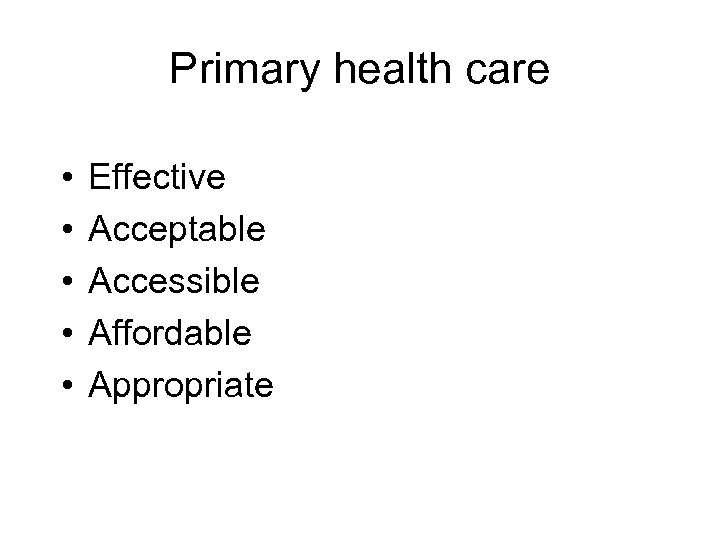 Primary health care • • • Effective Acceptable Accessible Affordable Appropriate
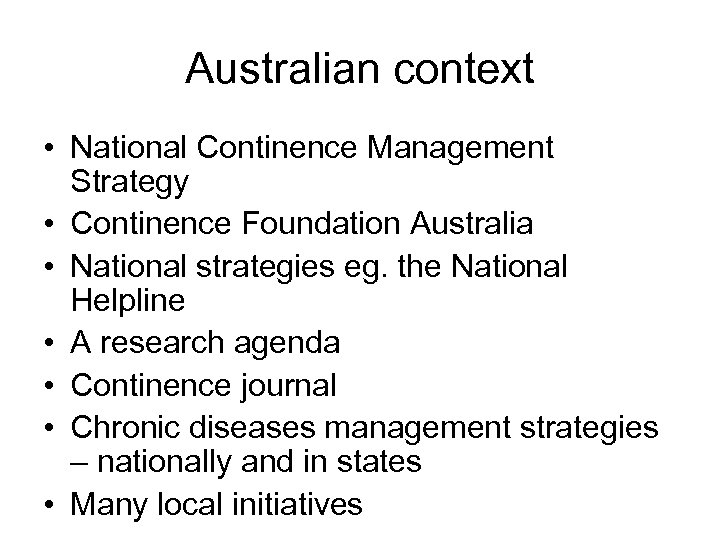 Australian context • National Continence Management Strategy • Continence Foundation Australia • National strategies eg. the National Helpline • A research agenda • Continence journal • Chronic diseases management strategies – nationally and in states • Many local initiatives
 Effectiveness What has been achieved? • Research into effectiveness of therapies and treatments • More precise diagnostics • Evidence based clinical guidelines – First steps & second steps (HACC) – Assessment guidelines • Evaluation of demonstration projects and models of service delivery • Better research tools (Sansoni et al, 2006) (St John & Mackenzie, 2002; St John et al, 2004; St John & Wallis, 2004)
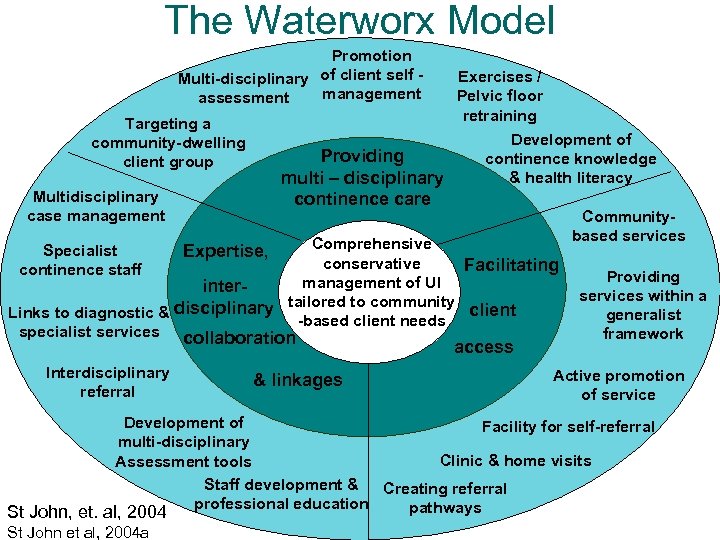 The Waterworx Model Promotion Multi-disciplinary of client self - management assessment Exercises / Pelvic floor retraining Development of Providing continence knowledge & health literacy multi – disciplinary Targeting a community-dwelling client group Multidisciplinary case management continence care Comprehensive conservative Facilitating management of UI intertailored to community client Links to diagnostic & disciplinary Ensuring -based client needs specialist services collaboration Specialist continence staff Interdisciplinary referral Expertise, & linkages Providing services within a generalist framework access Community- based services Providing services within a generalist framework Active promotion of service Development of Facility for self-referral multi-disciplinary Clinic & home visits Assessment tools Creating referral pathways Staff development & Creating referral professional education pathways St John, et. al, 2004 St John et al, 2004 a