 Скачать презентацию Urban Lunch-Time A call for a Paradigm Shift
ff106040ecfcf4ab3a360c572e17c321.ppt
- Количество слайдов: 51



Urban Lunch-Time A call for a Paradigm Shift in Policy Global H ou s in g St r a t eg y PLACING HOUSING AT THE CENTER The GLOBAL HOUSING STRATEGY” promotes a paradigm shift to achieve adequate shelter for all by placing housing at the center of our thinking, policy and the city http: //www. urbangateway. org/
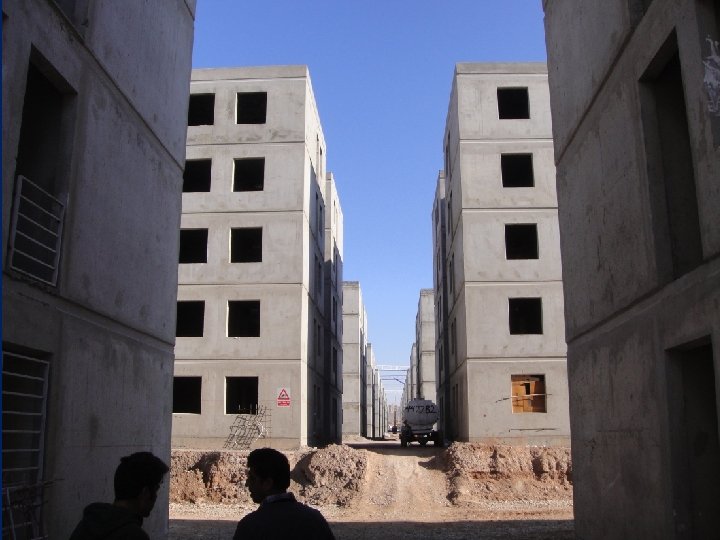
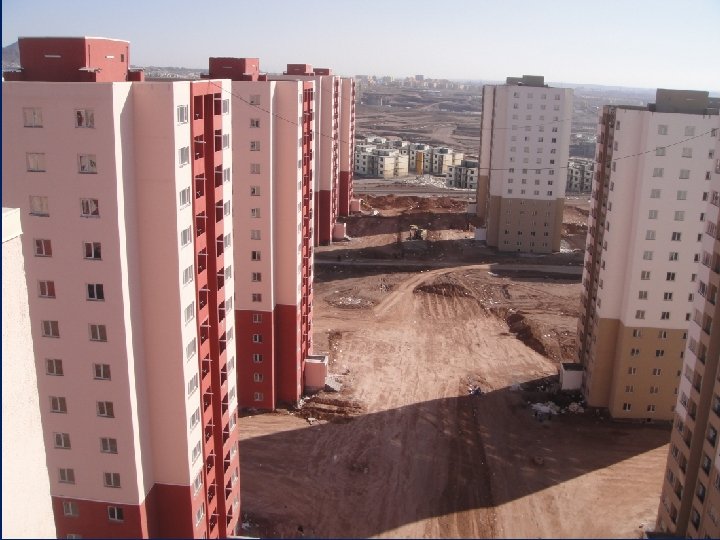
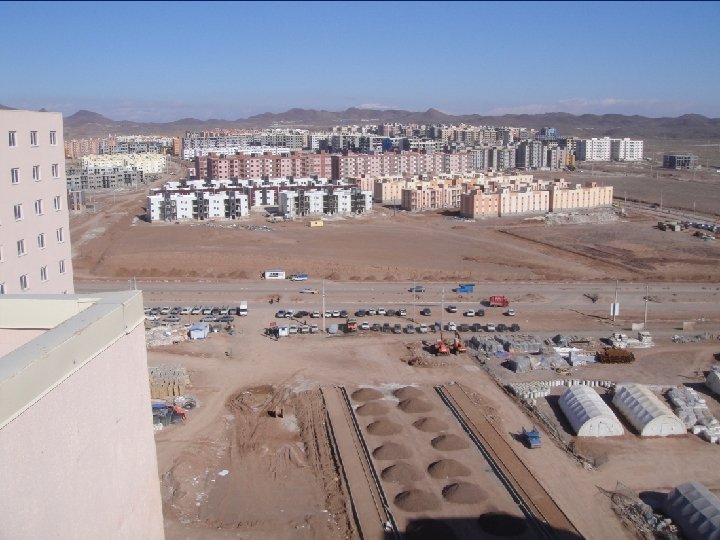
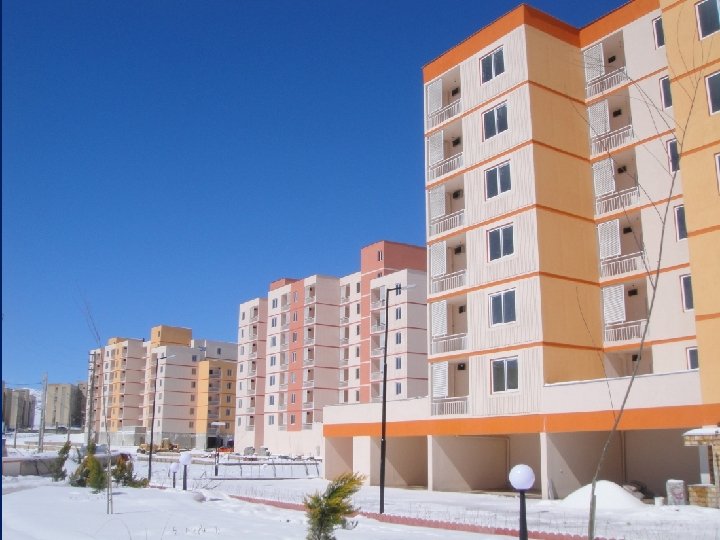

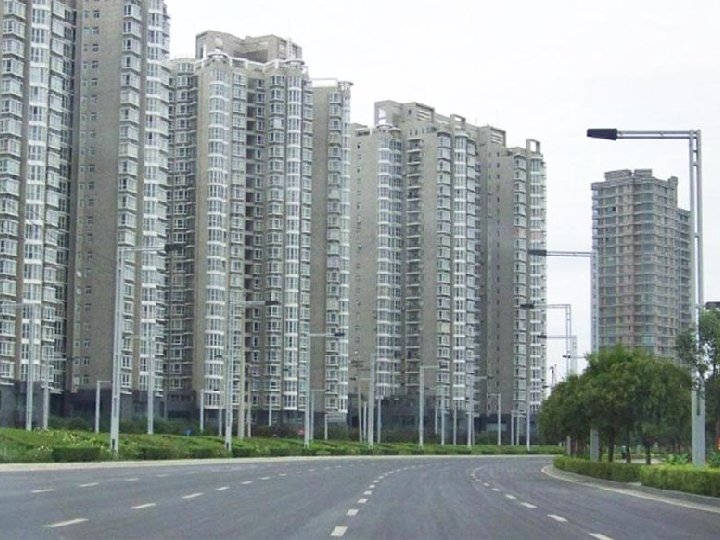

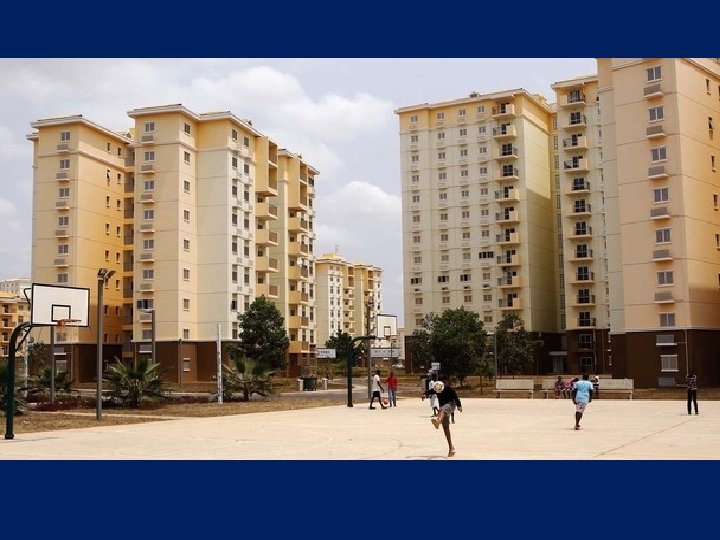
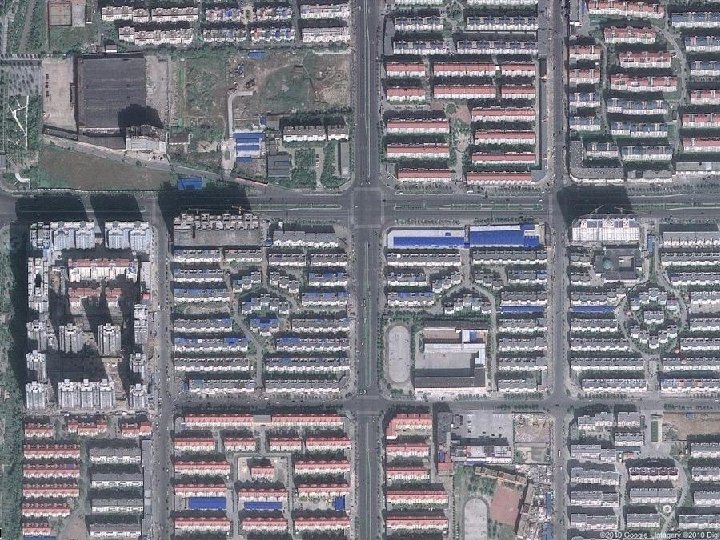
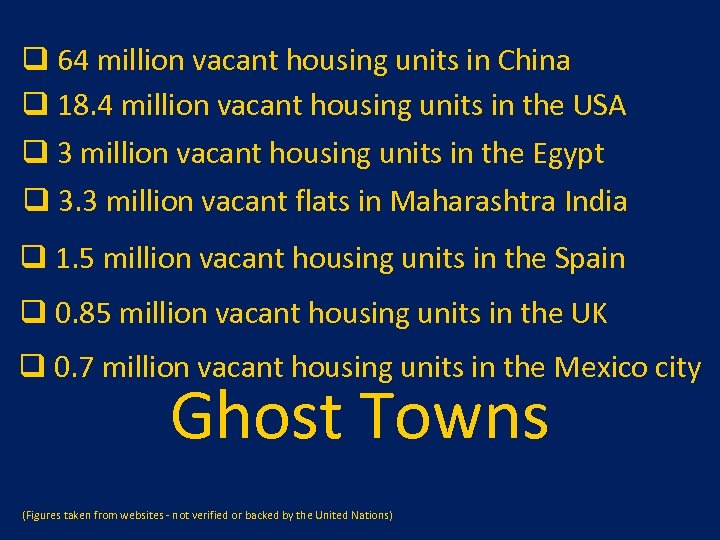
q 64 million vacant housing units in China q 18. 4 million vacant housing units in the USA q 3 million vacant housing units in the Egypt q 3. 3 million vacant flats in Maharashtra India q 1. 5 million vacant housing units in the Spain q 0. 85 million vacant housing units in the UK q 0. 7 million vacant housing units in the Mexico city Ghost Towns (Figures taken from websites - not verified or backed by the United Nations)
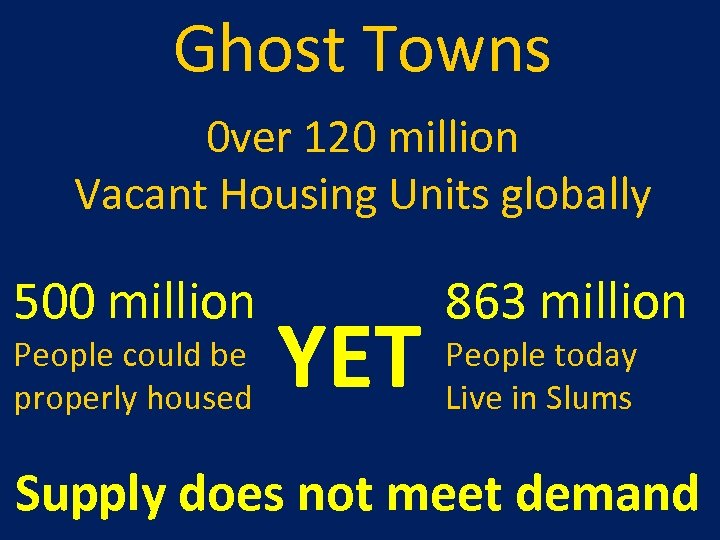
Ghost Towns 0 ver 120 million Vacant Housing Units globally 500 million People could be properly housed YET 863 million People today Live in Slums Supply does not meet demand
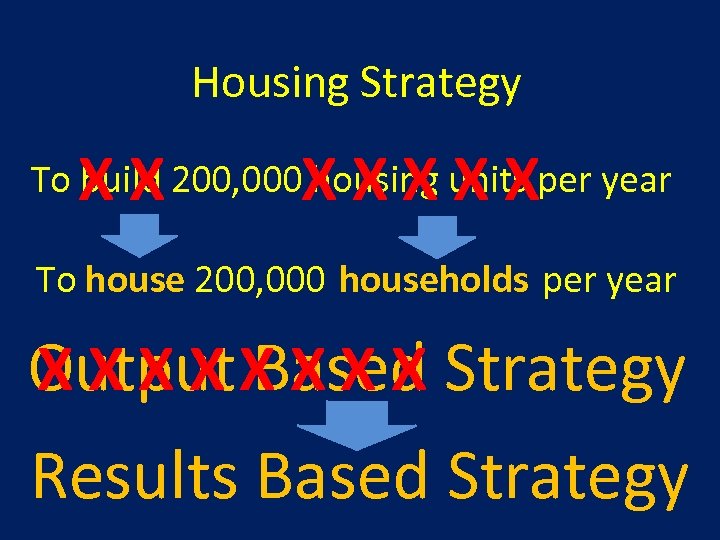
Housing Strategy XX XXXXX To build 200, 000 housing units per year To house 200, 000 households per year in Output X X Strategy X X Based Results Based Strategy
Housing Strategy To house 200, 000 households per year in Results Based Strategy
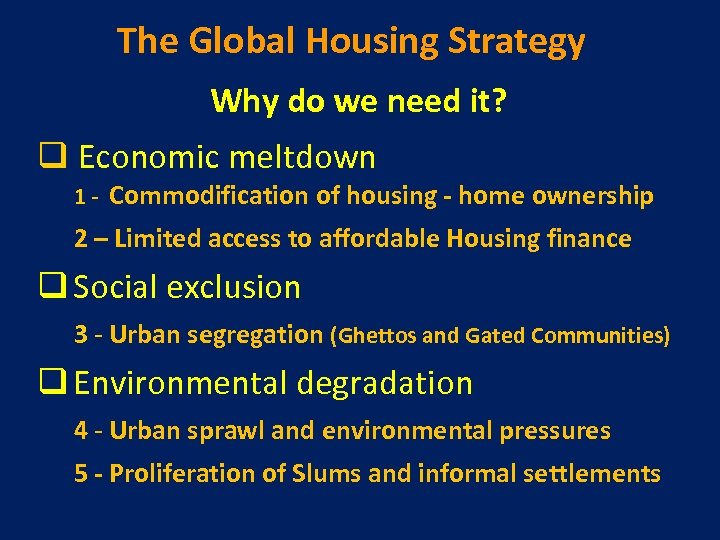
The Global Housing Strategy Why do we need it? q Economic meltdown 1 - Commodification of housing - home ownership 2 – Limited access to affordable Housing finance q Social exclusion 3 - Urban segregation (Ghettos and Gated Communities) q Environmental degradation 4 - Urban sprawl and environmental pressures 5 - Proliferation of Slums and informal settlements
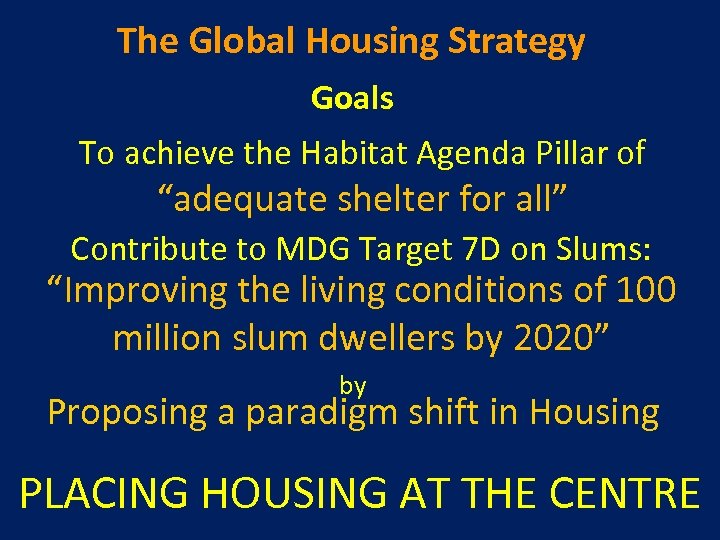
The Global Housing Strategy Goals To achieve the Habitat Agenda Pillar of “adequate shelter for all” Contribute to MDG Target 7 D on Slums: “Improving the living conditions of 100 million slum dwellers by 2020” by Proposing a paradigm shift in Housing PLACING HOUSING AT THE CENTRE
The Global Housing Strategy PLACING HOUSING AT THE CENTRE
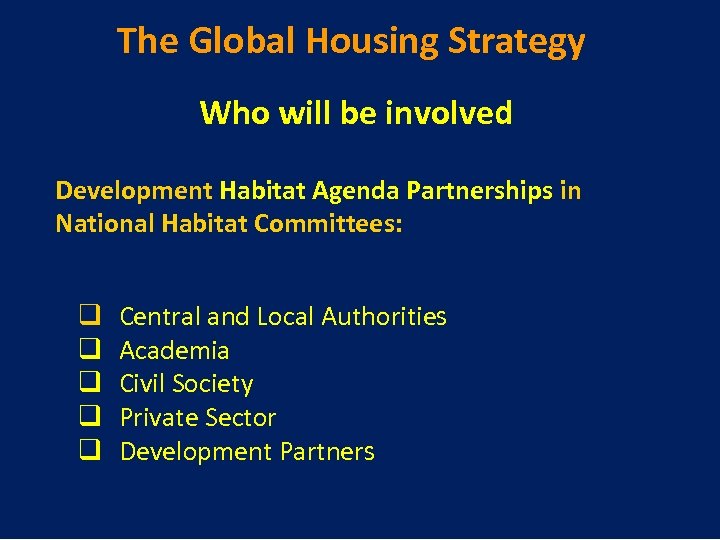
The Global Housing Strategy Who will be involved Development Habitat Agenda Partnerships in National Habitat Committees: q q q Central and Local Authorities Academia Civil Society Private Sector Development Partners
The Global Housing Strategy q. Aims to develop National and City Housing Strategies. q. A National Housing Strategy is a participatory process to guide polices, planning, and programming of housing, and slum upgrading and prevention interventions. q. National and city Housing Strategies are inseparable from inclusive urban planning and management process
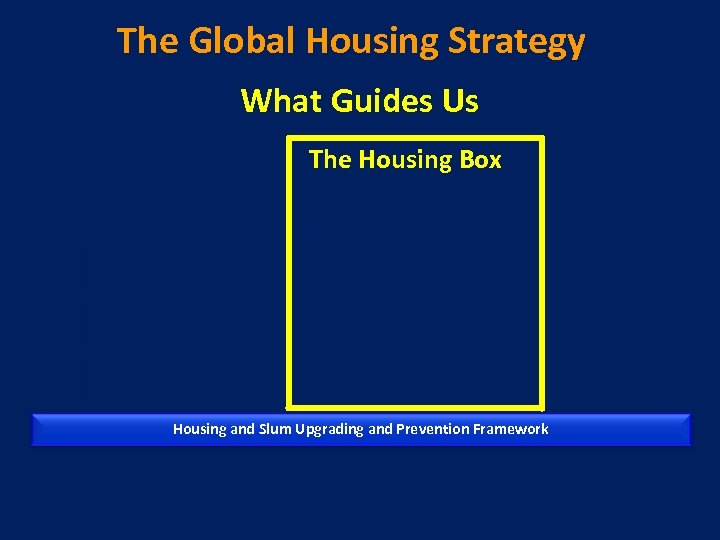
The Global Housing Strategy What Guides Us The Housing Box Sustainable Housing Components Housing Governance, Management National Urban Policy Urban Planning Land Design Tenure Types Urban Economy Local Economic Development Finance Building Technologies Governance National Legislation Local Legislation Basic Urban Services Materials & Components Management & Maintenance Housing and Slum Upgrading and Prevention Framework Lessons Learned Housing Demand National and Local Urbanisation Prerequisites
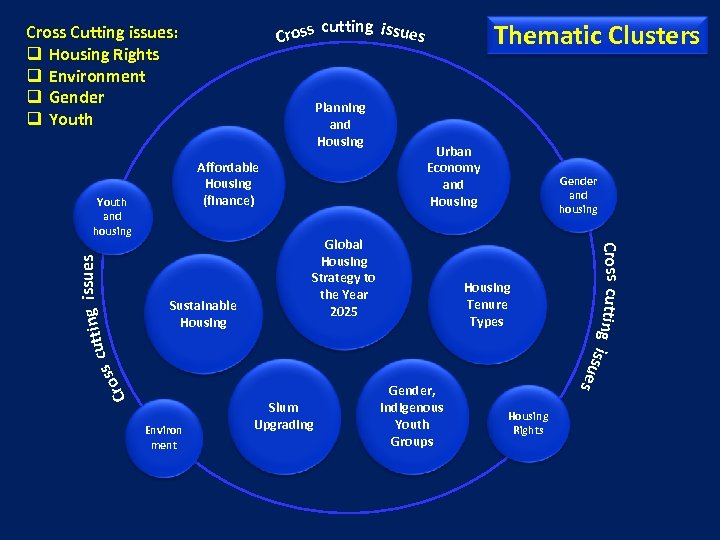
Cross Cutting issues: q Housing Rights q Environment q Gender q Youth Cro Sustainable Housing Environ ment Thematic Clusters Urban Economy and Housing Global Housing Strategy to the Year 2025 Slum Upgrading Gender and housing Housing Tenure Types Gender, Indigenous Youth Groups Housing Rights Cross cutting i ssue s g issues Planning and Housing Affordable Housing (finance) Youth and housing ttin s cutting issues
The Global Housing Strategy The approach to the GHS will include: q Exchange of experiences q Applied evidence-based research q Effectiveness at scale q Efficiency through partnerships q National and local capacity development
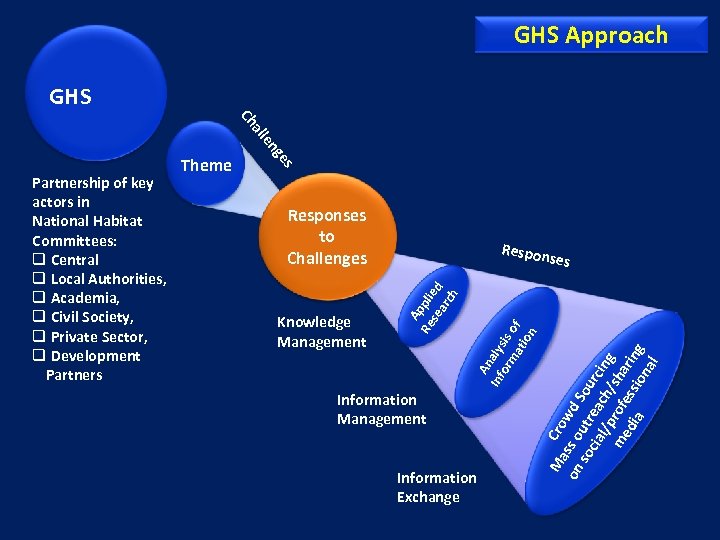
GHS Approach GHS s ge en all Ch Responses to Challenges Information Management Information Exchange M Cro a on ss o wd S so utr ou cia ea rc l/p ch/ ing me rofe sha dia ssi ring on al A Inf naly or sis ma of tio n Knowledge Management Respon ses A Re ppli se ed ar ch Partnership of key actors in National Habitat Committees: q Central q Local Authorities, q Academia, q Civil Society, q Private Sector, q Development Partners Theme
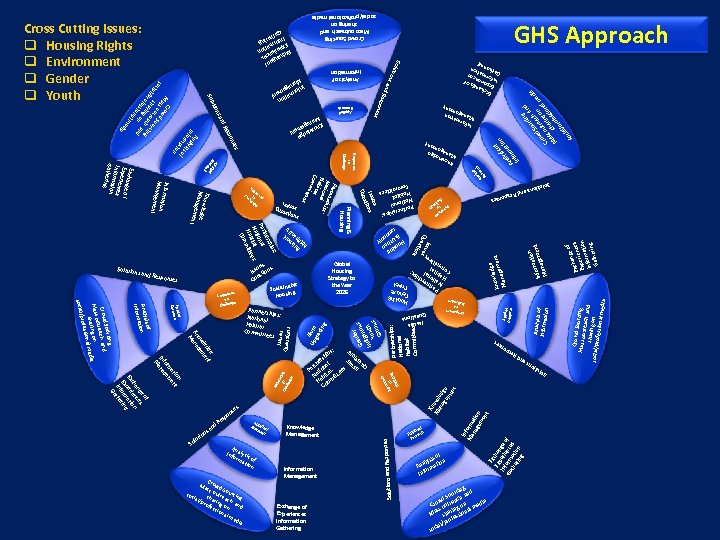
Crowd Sourcing Mass outreach and sharing on social/professional media es ns of sis aly ion An rmat o Inf g rcin d Sou h an wd treac n a edi Cro ou g o ss al m rin Ma sha ssion fe pro al/ oci s of ange Exch iences xper ation E m Infor ring e Gath tion t rma Info gemen a Man Ex Ex chan Inf peri ge o Ga orm ence f th at s er ion ing Qu Issu es es tio ns ponses Solutions and Res Re Inf Ma orm na atio ge me n nt Kn M owl an ed ag ge em en t ses pon Res to ge llen Cha So l d plie Ap search Crowd So Mass ou urcing treach an d sharing on social/p rofessio nal med ia Issues ns Questio Partnerships: National Habitat Committees Applied Research Respon ses to der Gen nous ige h Ind out Y pus Gro ledge Know gement a Man challeng Housin es g Tenure P a Types Na rtne Ha tion rship s: Co bita al mm t itt ee s S Up lum gra din g Analysis o Informat f ion ing us an Ho Urb my & ono cx Issues Questions s se on sp o ge t n e all Re n sa uti on s: ership Partn al n Natio t a Habit ittees Comm Ch Re spo n to ses alle nge ses Ch spon d Re Exchange of Experiences Information Gathering ied pl ch Ap sear Re Kno M w ana ledge gem ent C Ma rowd ss o So ut urc al/ shar reach ing pro ing fes on and sio nal me dia Knowledge Management Information Management sp o dge nt e wle Kno nagem Ma An Inf alysis orm of ati on d. R e Applied Research Ap of is n lys tio na rma A o f In Info Ma rmatio nag n eme nt s Res plied ear ch an ions on ati nt orm me Inf nage Ma d an I Qu ssues est ion s ge t led en ow gem Kn ana M n io t at en rm m fo ge In ana M of ge s an ce ch ien on Ex per ati Ex form ring In the Ga s ion lut s: ip sh er l rtn na Pa atio at ees N abit itt H mm Co e ns po s Re es Issu ons sti Que d Applie rch Resea sis of Analy tion a Inform ing Sourc nd Crowd ach a outre Mass ring on ia sha l med ssiona profe social/ Partners h Nationa ips: l Habitat Commit tees Solut Analysis of Information Responses to Challenge Planning & Housing Par t Nat nershi ps: i Hab onal Com itat mit tee s : ips rsh tne Par ional t Na itat es e Hab mitt Com Global Housing Strategy to the Year 2025 ng d rci an a ou h di d S reac on me l ow t g Cr s ou rin iona as sha ess f M ro /p ial oc s E xch Exp ange o Info erienc f e Gat rmatio s her ing n of ge han ences Exc eri ion Exp rmat g o Inf herin t Ga ses Af f Ho orda us bl in e g s ue s Iss tion es Qu able Sustain g Housin ses Respon to nge Challe soc i tio pon Res A Re ppli se ed ar ch Issu Que es stion s ses So Solu and Re sp o Ch to nse all en ge Kno wle Mana dge geme nt Respon es ons A In na f or lysis m at of ion In formati Manag on ement ns and ons esp uti Sol M Crow as so so d. S cia u o l/p sha tre urc a in ro r fe ing o ch a g ss ion n nd al m ed ia Excha ng Experi e of e Inform nces a Gathe tion ring Solutio GHS Approach ns a nd R Cross Cutting issues: q Housing Rights q Environment q Gender q Youth
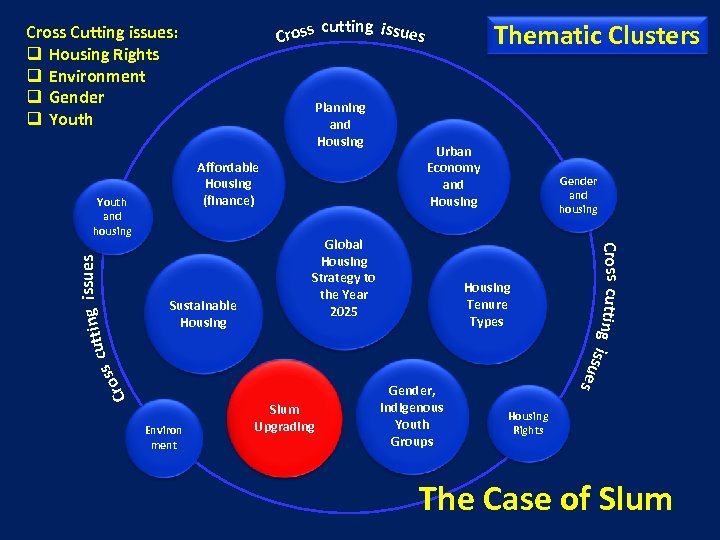
Cross Cutting issues: q Housing Rights q Environment q Gender q Youth Cro Sustainable Housing Environ ment Thematic Clusters Urban Economy and Housing Global Housing Strategy to the Year 2025 Slum Upgrading Gender and housing Housing Tenure Types Gender, Indigenous Youth Groups Cross cutting i ssue s g issues Planning and Housing Affordable Housing (finance) Youth and housing ttin s cutting issues Housing Rights The Case of Slum
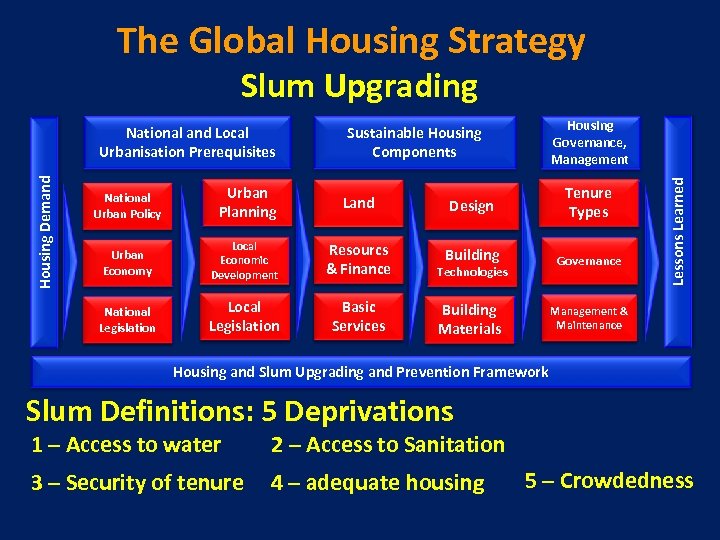
The Global Housing Strategy Slum Upgrading Housing Governance, Management Sustainable Housing Components Tenure Types National Urban Policy Urban Planning Land Design Tenure Types Urban Economy Local Economic Development Resourcs Finance & Finance Building Technologies Governance National Legislation Local Legislation Basic Urban Services Building Materials & Components Materials Lessons Learned Housing Demand National and Local Urbanisation Prerequisites Management & Maintenance Housing and Slum Upgrading and Prevention Framework Slum Definitions: 5 Deprivations 1 – Access to water 2 – Access to Sanitation 3 – Security of tenure 4 – adequate housing 5 – Crowdedness
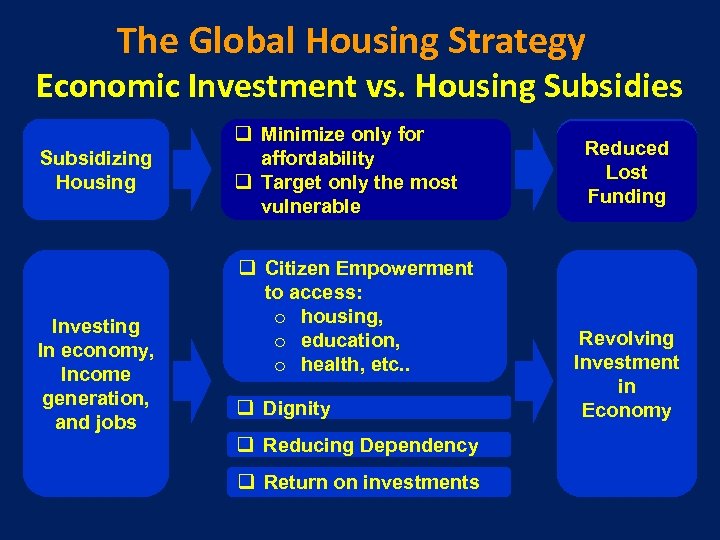
The Global Housing Strategy Economic Investment vs. Housing Subsidies Subsidizing Housing Investing In economy, Income generation, and jobs q Dependency on Minimize only for affordability subsidies q Lack ofonly the most Target dignity q No return on subsidies vulnerable q Citizen Empowerment to access: o housing, o education, o health, etc. . q Dignity q Reducing Dependency q Return on investments Reduced Lost Funding Revolving Investment in Economy
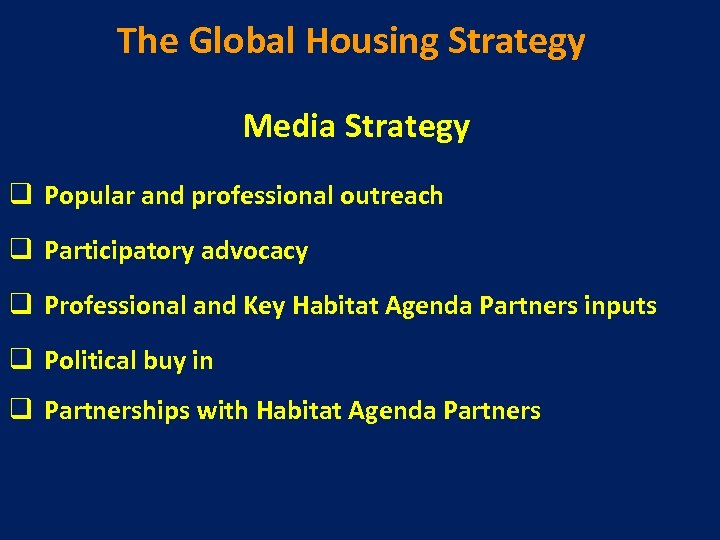
The Global Housing Strategy Media Strategy q Popular and professional outreach q Participatory advocacy q Professional and Key Habitat Agenda Partners inputs q Political buy in q Partnerships with Habitat Agenda Partners
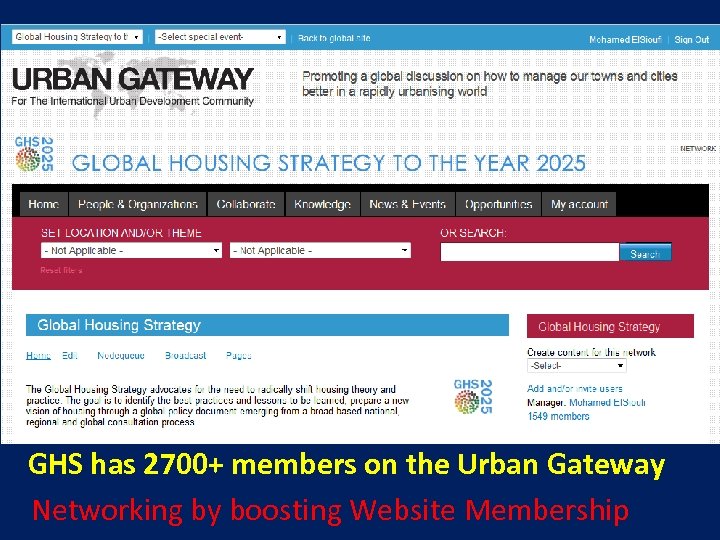
GHS has 2700+ members on the Urban Gateway Networking by boosting Website Membership
ro l. G na sio fes ro P so up Li n ro 0 P , 00 00 IN ed nk als on si fes 0 ach 6 tre r 9 er v l ou ve O oo ona ssi gt in ofe pr ch nd ea tr ar a u pul O Po

GHS Linked. In Group 1000+ members Professional and Key partners inputs
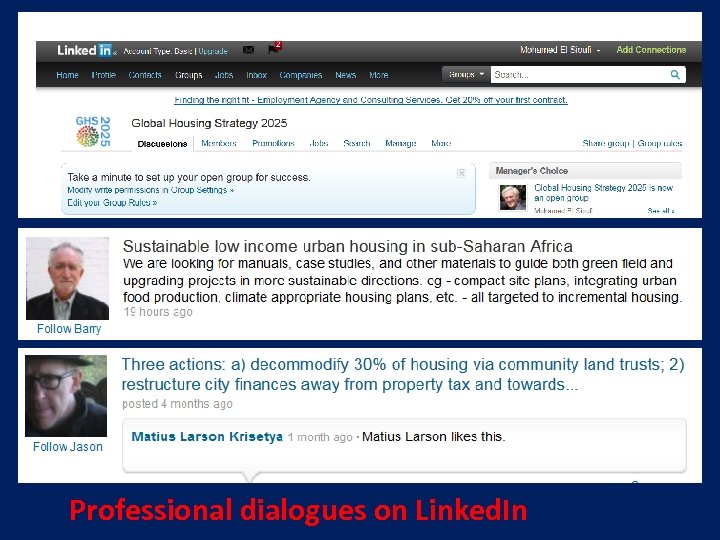
Professional dialogues on Linked. In

HOUSING CRITERIA
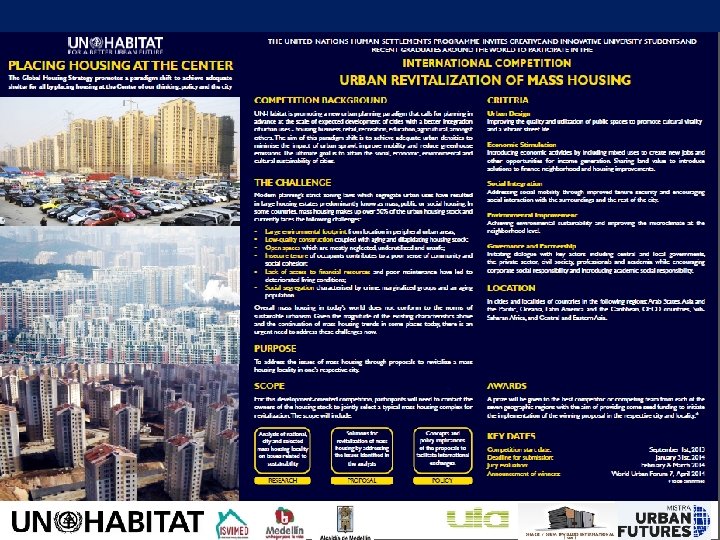
CRITERIA Urban Planning and Design q Locate housing within urban areas not isolated in remote “dormitory cities” q Include housing in mixed urban use areas, q Improve mobility by introducing a rich variety of urban uses, q Promote cultural viability and street life.
CRITERIA Economic opportunities q Housing development creates jobs and stimulates the economy (production of building materials, construction industry) q Include housing with mixed uses to generate new jobs & income generating opportunities, q Encourage the private sector to invest in housing in mixed use area,
CRITERIA Economic opportunities q Introduce urban agriculture for job creation, food production and security, improved environmental qualities q Share land value to introduce solutions to finance and cross subsidize housing
CRITERIA Social integration q Address social mobility through improved tenure security of housing units q Encouraging social interaction of different income groups – not ghettos and gated communities, q Ensure that housing proposals are gender responsive.
CRITERIA Environmental improvement q Achieve neighborhood environmental sustainability, q Improve microclimate through green architecture and planning approaches q Improve microclimate through vegetation preferably productive urban agriculture as well as urban elements/furniture.
CRITERIA Governance and partnership q Produce housing through partnerships will all key actors including central and local government, private sector, civil society, professionals and academia. q Encourage corporate social responsibility to subsidize housing for vulnerable groups
CRITERIA Governance and partnership q Introduce academic social responsibility whereby students, recent graduates and academia provide policy advice and technical assistance to local and central authorities and those involved in housing for low income groups.
International Competition Urban Revitalization of Mass Housing
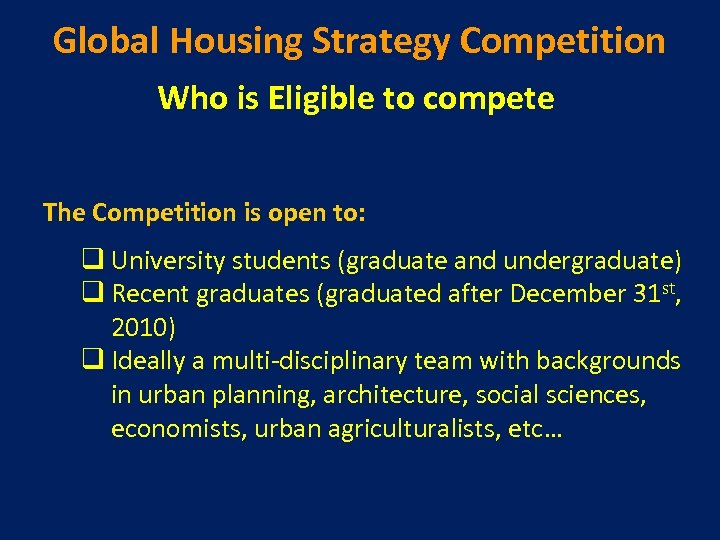
Global Housing Strategy Competition Who is Eligible to compete The Competition is open to: q University students (graduate and undergraduate) q Recent graduates (graduated after December 31 st, 2010) q Ideally a multi-disciplinary team with backgrounds in urban planning, architecture, social sciences, economists, urban agriculturalists, etc…
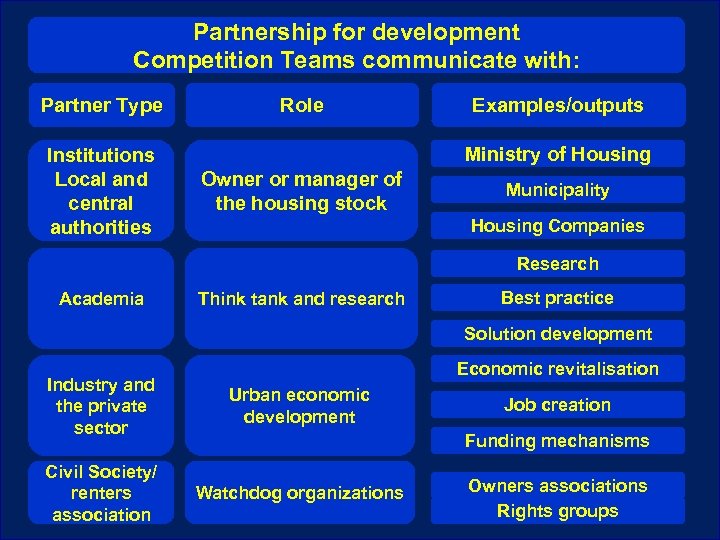
Partnership for development Competition Teams communicate with: Partner Type Institutions Local and central authorities Role Examples/outputs Ministry of Housing Owner or manager of the housing stock Municipality Housing Companies Research Academia Think tank and research Best practice Solution development Economic revitalisation Industry and the private sector Urban economic development Civil Society/ renters association Watchdog organizations Job creation Funding mechanisms Owners associations Rights groups
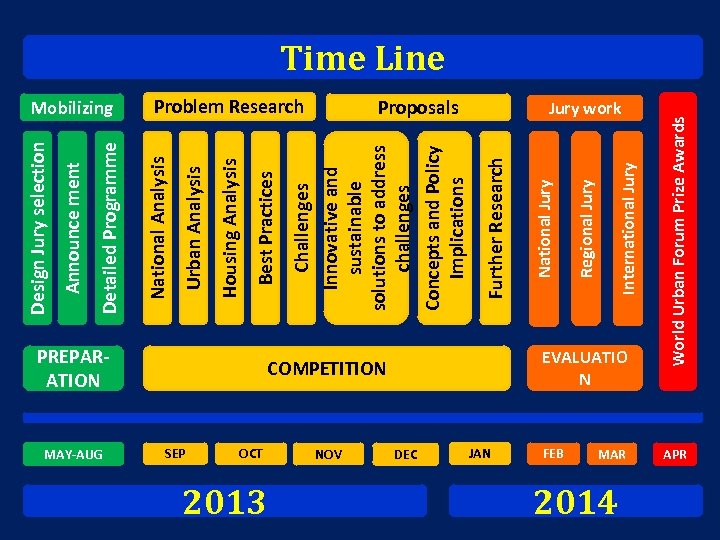
MAY-AUG SEP PREPARATION OCT 2013 NOV DEC COMPETITION JAN FEB Jury work EVALUATIO N MAR 2014 World Urban Forum Prize Awards International Jury Regional Jury Proposals National Jury Further Research Problem Research Concepts and Policy Implications Challenges Innovative and sustainable solutions to address challenges Best Practices Housing Analysis Urban Analysis Mobilizing National Analysis Detailed Programme Announce ment Design Jury selection Time Line APR
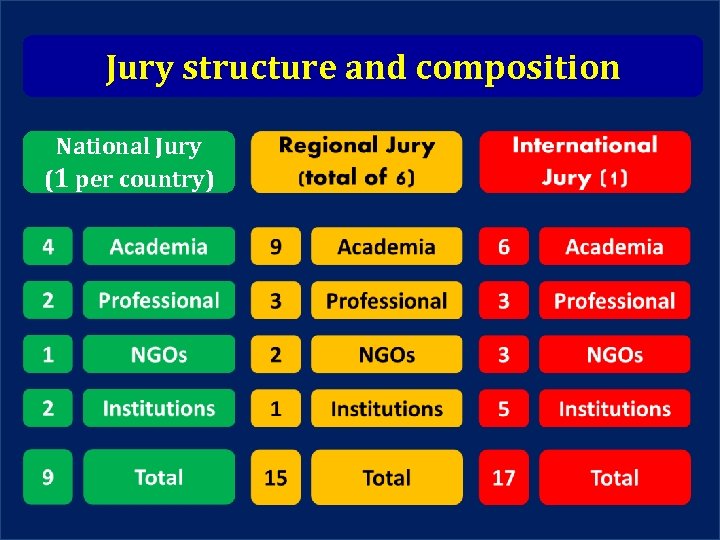
Jury structure and composition National Jury (1 per country)
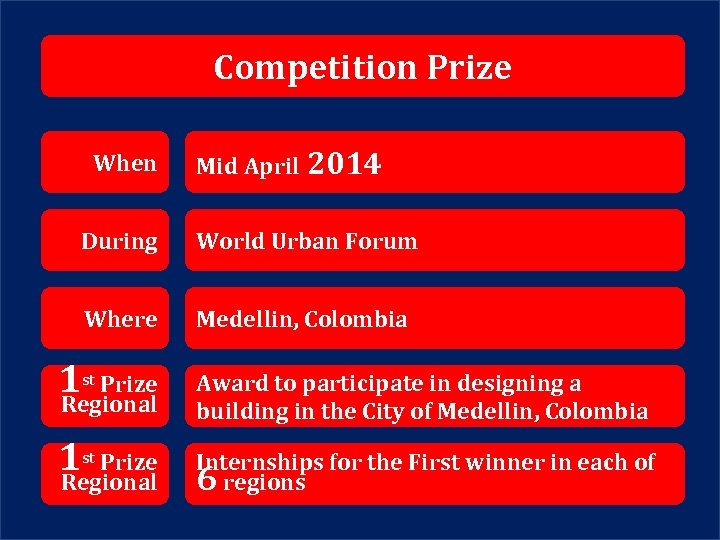
Competition Prize When Mid April 2014 During World Urban Forum Where Medellin, Colombia 1 Prize Regional Award to participate in designing a building in the City of Medellin, Colombia 1 Prize Regional Internships for the First winner in each of 6 regions st st
International Competition Urban Revitalization of Mass Housing
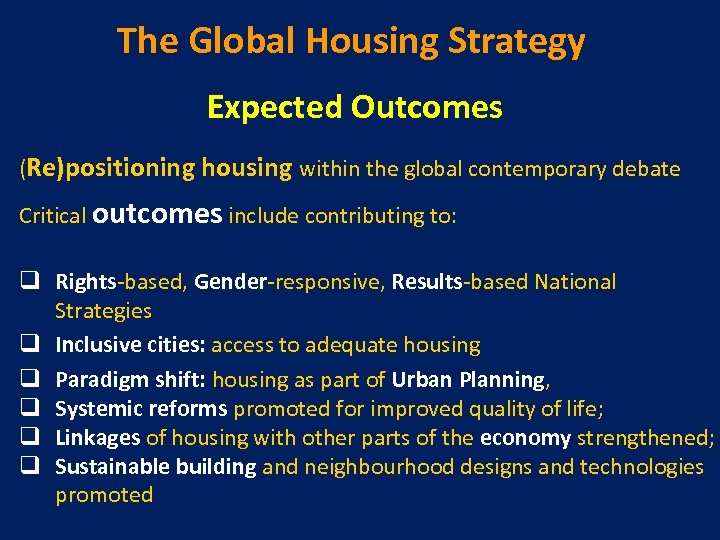
The Global Housing Strategy Expected Outcomes (Re)positioning housing within the global contemporary debate Critical outcomes include contributing to: q Rights-based, Gender-responsive, Results-based National Strategies q Inclusive cities: access to adequate housing q Paradigm shift: housing as part of Urban Planning, q Systemic reforms promoted for improved quality of life; q Linkages of housing with other parts of the economy strengthened; q Sustainable building and neighbourhood designs and technologies promoted
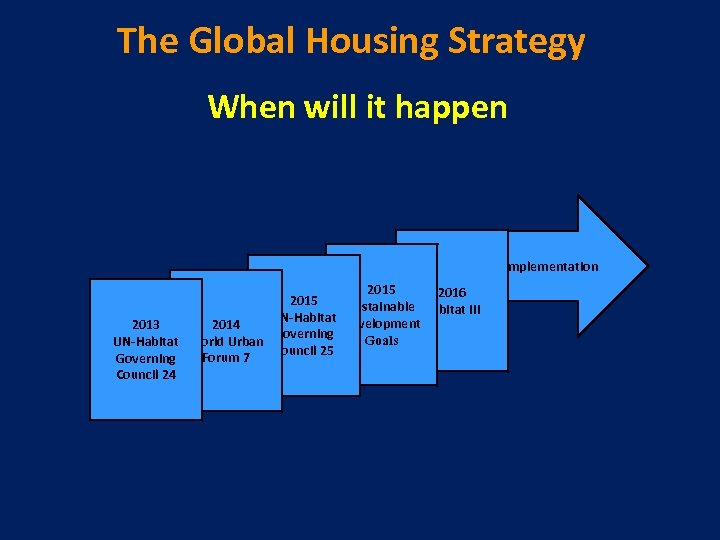
The Global Housing Strategy When will it happen GHS Implementation 2015 2016 2015 Sustainable Habitat III UN-Habitat Development 2014 2013 Governing Goals UN-Habitat World Urban Council 25 Forum 7 Governing Council 24
Tack så mycket Thank you Global H ou s in g St r a t eg y PLACING HOUSING AT THE CENTER The GLOBAL HOUSING STRATEGY” promotes a paradigm shift to achieve adequate shelter for all by placing housing at the center of our thinking, policy and the city http: //www. urbangateway. org/
Скачать презентацию Urban Lunch-Time A call for a Paradigm Shift
ff106040ecfcf4ab3a360c572e17c321.ppt