 Скачать презентацию URBAN DEVELOPMENTS OF HEAVY SNOW AND COLD AREA
3c576fffe70b8356ab0975492861865c.ppt
- Количество слайдов: 23



URBAN DEVELOPMENTS OF HEAVY SNOW AND COLD AREA IN SAPPORO CITY, NORTHAN PART OF JAPAN: 1970 -2008 Daisuke SHIOZAKI (Graduate Student, Hokkaido University, Japan) Tadashi KAWAMURA (Graduate Student, Hokkaido University, Japan) Yuichi HASHIMOTO (Hokkaido University, Japan) IGU /UGI Regional Conference 2010 in Tel Aviv, Israel
URBAN DEVELOPMENTS OF HEAVY SNOW AND COLD AREA IN SAPPORO CITY, NORTHAN PART OF JAPAN: 1970 -2008 • This study aims to clarify the trend of urban development in the heavy snow and cold area by using the urban development database between 1970 and 2005 in Sapporo City.
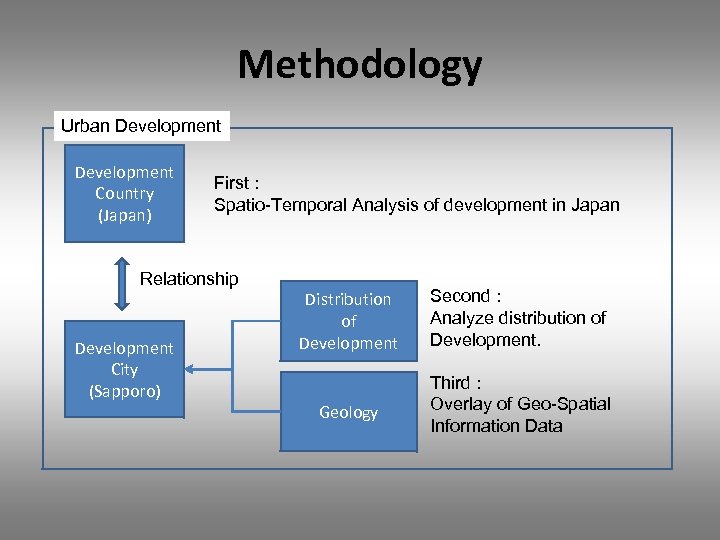
Methodology Urban Development Country (Japan) First : Spatio-Temporal Analysis of development in Japan Relationship Development City (Sapporo) Distribution of Development Second : Analyze distribution of Development. Geology Third : Overlay of Geo-Spatial Information Data
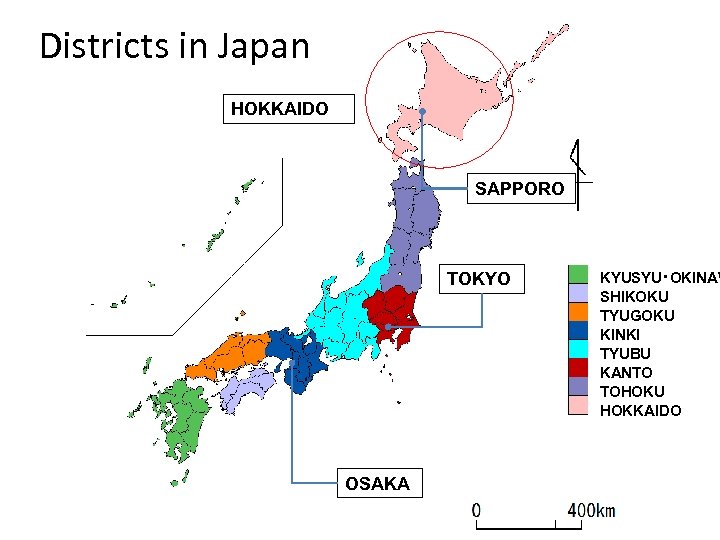
Districts in Japan HOKKAIDO SAPPORO TOKYO OSAKA KYUSYU・OKINAW SHIKOKU TYUGOKU KINKI TYUBU KANTO TOHOKU HOKKAIDO
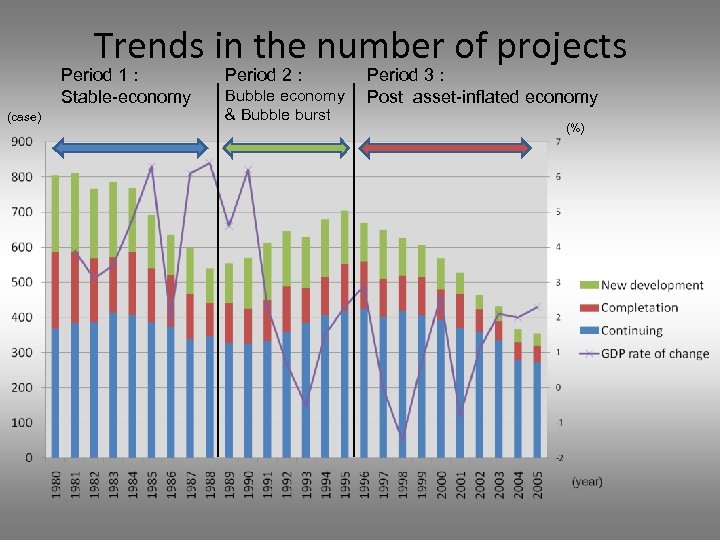
Trends in the number of projects Period 1 : Stable-economy (case) Period 2 : Bubble economy & Bubble burst Period 3 : Post asset-inflated economy (%)
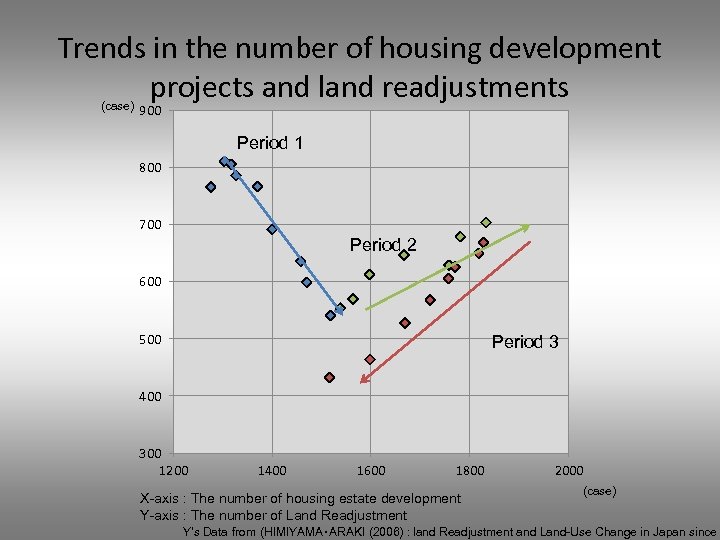
Trends in the number of housing development projects and land readjustments (case) 900 Period 1 800 700 Period 2 600 500 Period 3 400 300 1200 1400 1600 1800 X-axis : The number of housing estate development Y-axis : The number of Land Readjustment 2000 (case) Y's Data from (HIMIYAMA・ARAKI (2006) : land Readjustment and Land-Use Change in Japan since
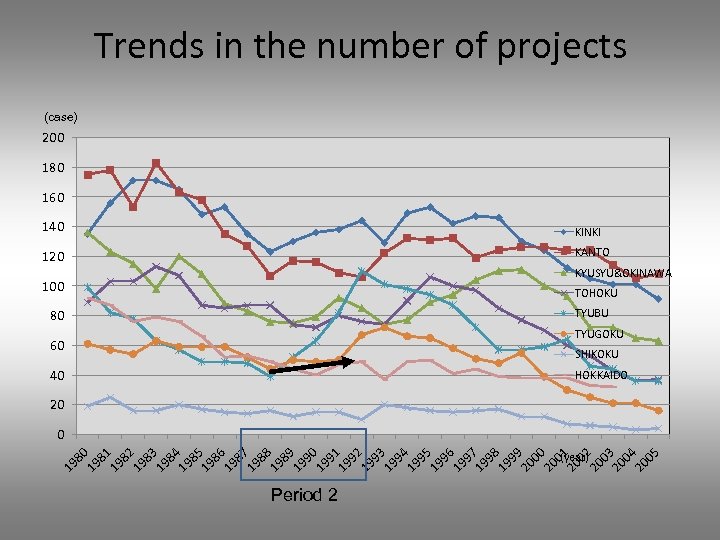
Trends in the number of projects (case) 200 180 160 140 KINKI 120 KANTO KYUSYU&OKINAWA 100 TOHOKU TYUBU 80 TYUGOKU 60 SHIKOKU 40 HOKKAIDO 20 81 19 82 19 83 19 84 19 85 19 86 19 87 19 88 19 89 19 90 19 91 19 92 19 93 19 94 19 95 19 96 19 97 19 98 19 99 20 00 20 01 20 02 20 03 20 04 20 05 (year) 19 19 80 0 Period 2
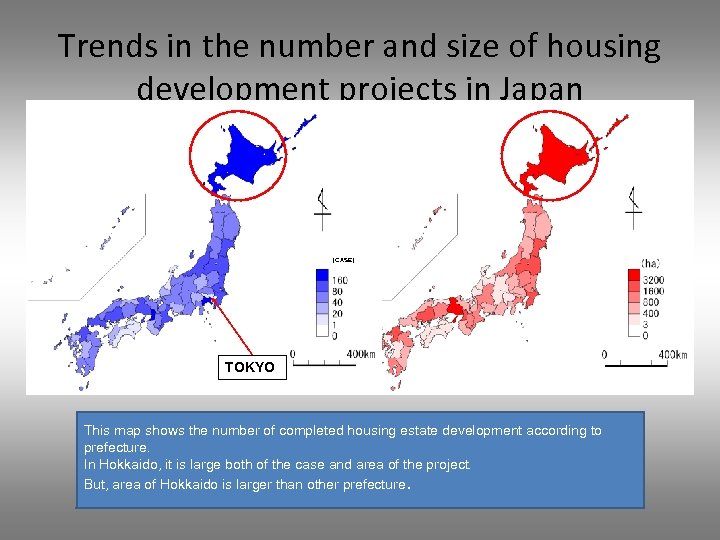
Trends in the number and size of housing development projects in Japan (CASE) TOKYO This map shows the number of completed housing estate development according to prefecture. In Hokkaido, it is large both of the case and area of the project. But, area of Hokkaido is larger than other prefecture.
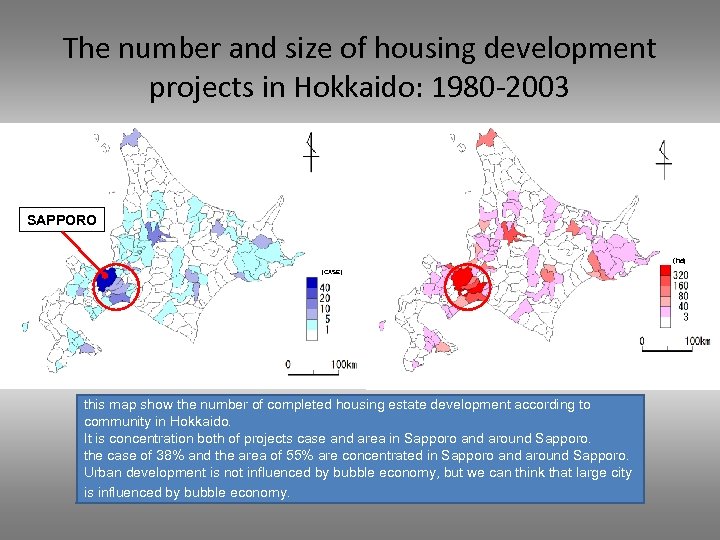
The number and size of housing development projects in Hokkaido: 1980 -2003 SAPPORO (ha) (CASE) this map show the number of completed housing estate development according to community in Hokkaido. It is concentration both of projects case and area in Sapporo and around Sapporo. the case of 38% and the area of 55% are concentrated in Sapporo and around Sapporo. Urban development is not influenced by bubble economy, but we can think that large city is influenced by bubble economy.
Urban Development in Sapporo City • Analyzing the time series variation of urban development by using 2500 data points which represent urban development projects • Analyzing the geo-spatial data to understand the relation between urban development and geological situation
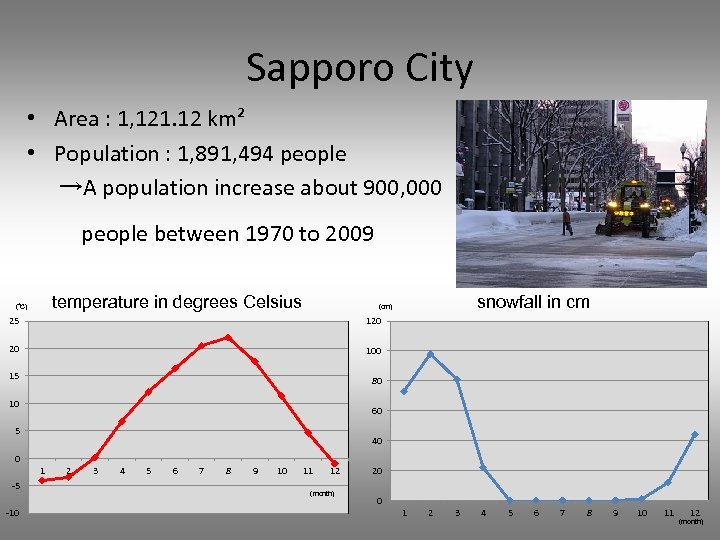
Sapporo City • Area : 1, 121. 12 km² • Population : 1, 891, 494 people →A population increase about 900, 000 people between 1970 to 2009 temperature in degrees Celsius (℃) snowfall in cm (cm) 25 120 20 100 15 80 10 60 5 40 0 1 -5 -10 2 3 4 5 6 7 8 9 10 11 12 (month) 20 0 1 2 3 4 5 6 7 8 9 10 11 12 (month)
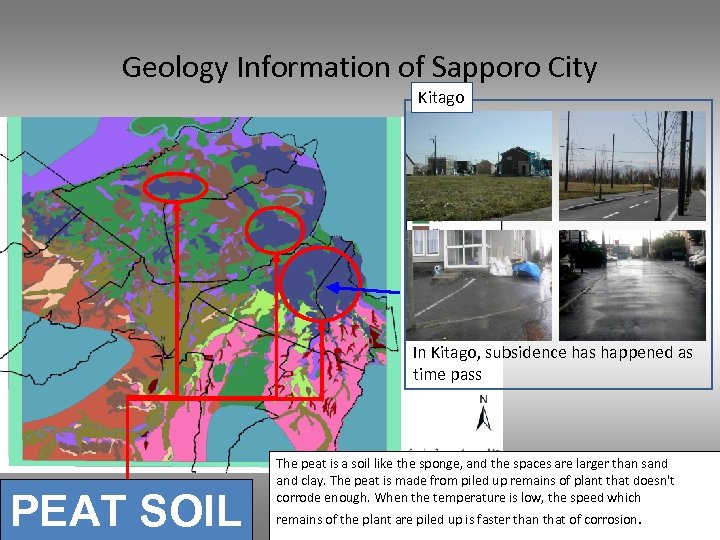
Geology Information of Sapporo City Kitago Atsubetu kita In Kitago, subsidence has happened as time pass PEAT SOIL The peat is a soil like the sponge, and the spaces are larger than sand clay. The peat is made from piled up remains of plant that doesn't corrode enough. When the temperature is low, the speed which remains of the plant are piled up is faster than that of corrosion.
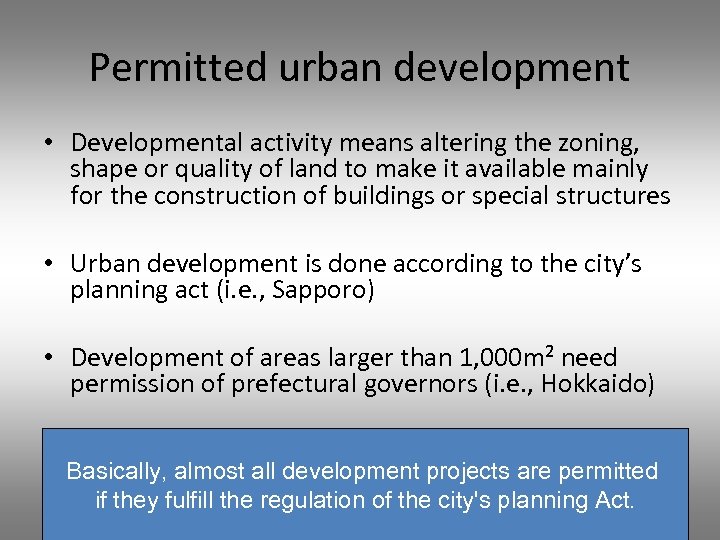
Permitted urban development • Developmental activity means altering the zoning, shape or quality of land to make it available mainly for the construction of buildings or special structures • Urban development is done according to the city’s planning act (i. e. , Sapporo) • Development of areas larger than 1, 000 m² need permission of prefectural governors (i. e. , Hokkaido) Basically, almost all development projects are permitted if they fulfill the regulation of the city's planning Act.
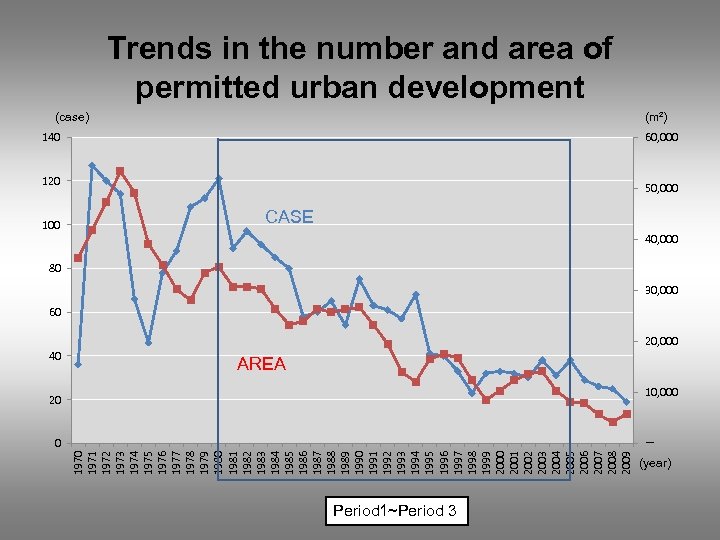
100 40 1971 1972 1973 1974 1975 1976 1977 1978 1979 1980 1981 1982 1983 1984 1985 1986 1987 1988 1989 1990 1991 1992 1993 1994 1995 1996 1997 1998 1999 2000 2001 2002 2003 2004 2005 2006 2007 2008 2009 Trends in the number and area of permitted urban development (case) (m²) 140 60, 000 120 50, 000 CASE 40, 000 80 30, 000 60 20, 000 AREA 20 10, 000 0 - Period 1~Period 3 (year)
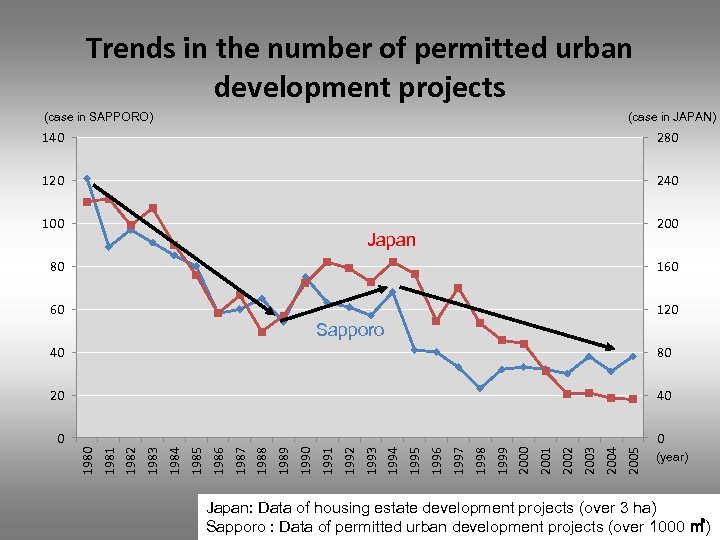
Trends in the number of permitted urban development projects (case in SAPPORO) (case in JAPAN) 140 280 120 240 100 200 Japan 80 160 60 120 Sapporo 2005 2004 2003 2002 2001 2000 1999 1998 1997 1996 1995 1994 1993 1992 1991 1990 1989 1988 1987 1986 1985 0 1984 0 1983 40 1982 20 1981 80 1980 40 (year) Japan: Data of housing estate development projects (over 3 ha) Sapporo : Data of permitted urban development projects (over 1000 ㎡)
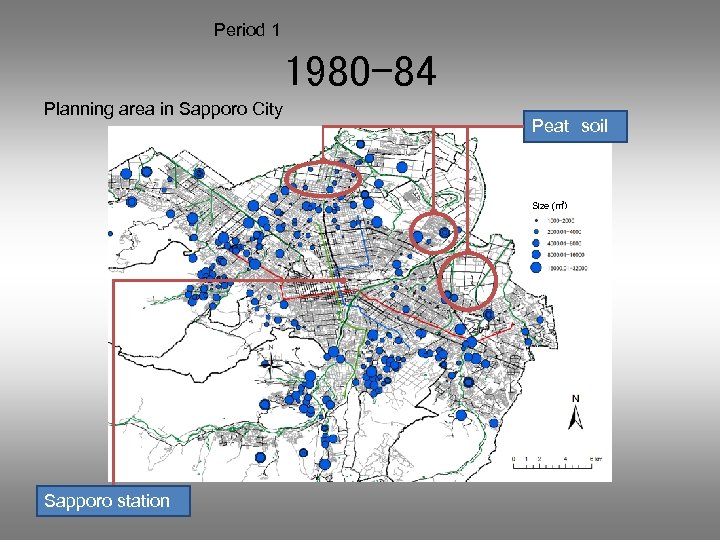
Period 1 1980 -84 Planning area in Sapporo City Peat soil Size (㎡) Sapporo station
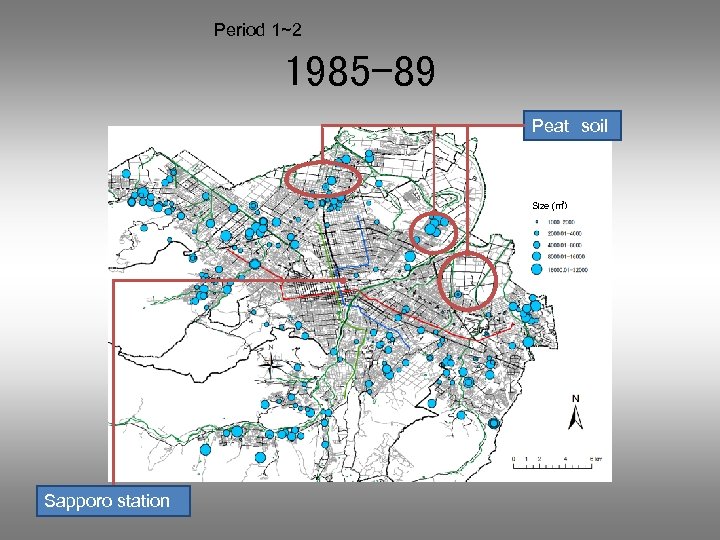
Period 1~2 1985 -89 Peat soil Size (㎡) Sapporo station
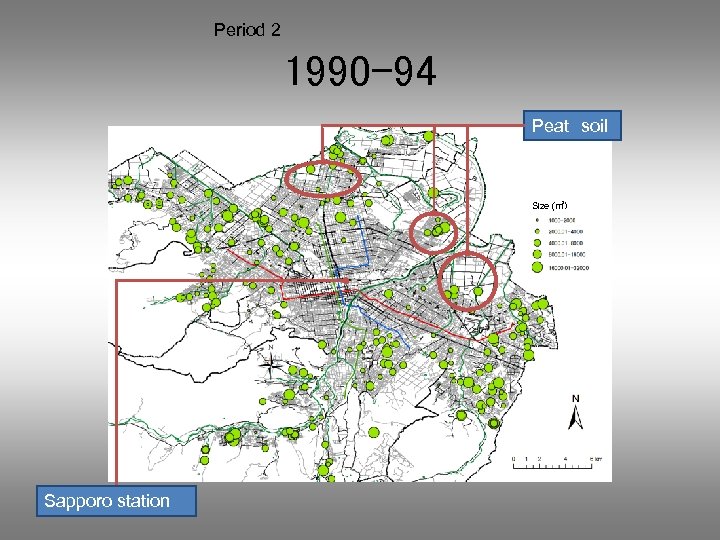
Period 2 1990 -94 Peat soil Size (㎡) Sapporo station
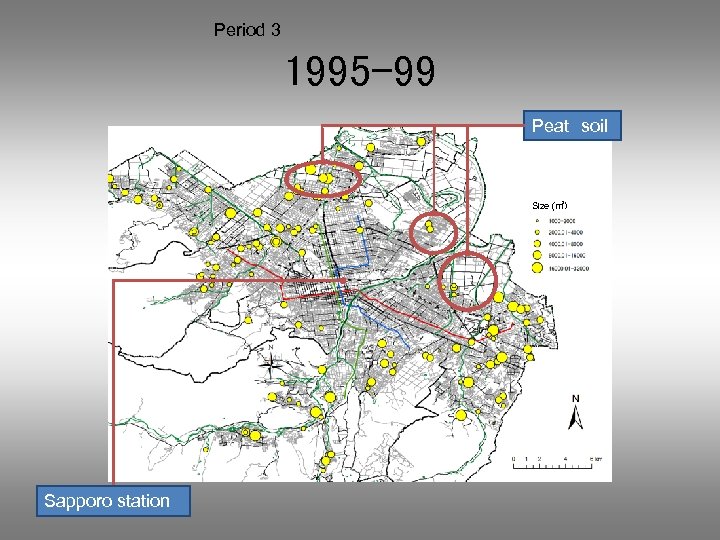
Period 3 1995 -99 Peat soil Size (㎡) Sapporo station
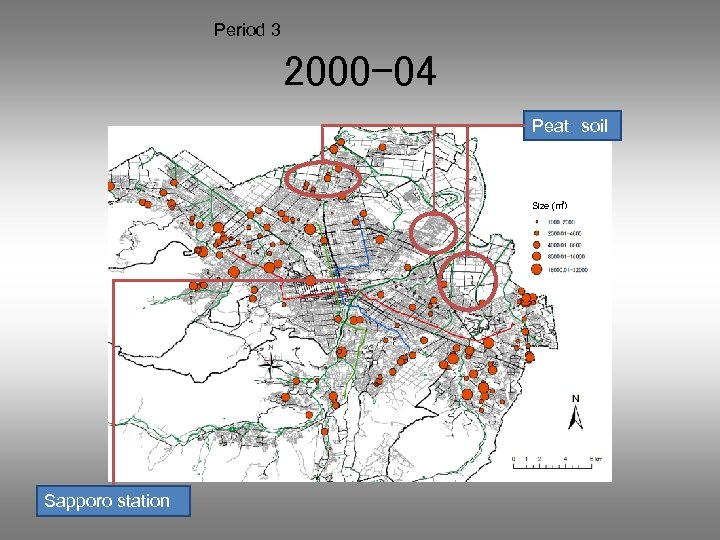
Period 3 2000 -04 Peat soil Size (㎡) Sapporo station
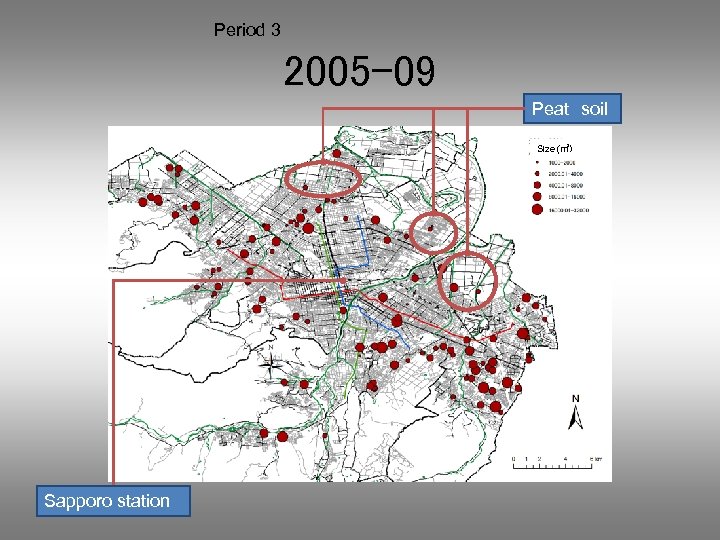
Period 3 2005 -09 Peat soil Size (㎡) Sapporo station
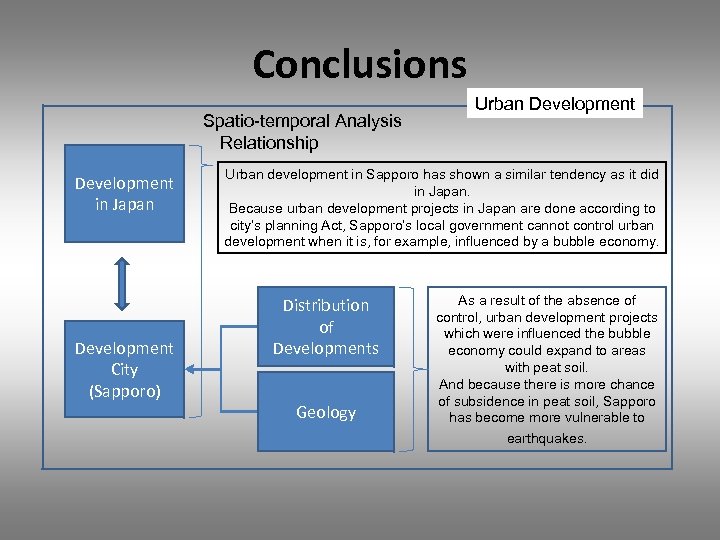
Conclusions Spatio-temporal Analysis Relationship Development in Japan Development City (Sapporo) Urban Development Urban development in Sapporo has shown a similar tendency as it did in Japan. Because urban development projects in Japan are done according to city’s planning Act, Sapporo’s local government cannot control urban development when it is, for example, influenced by a bubble economy. Distribution of Developments Geology As a result of the absence of control, urban development projects which were influenced the bubble economy could expand to areas with peat soil. And because there is more chance of subsidence in peat soil, Sapporo has become more vulnerable to earthquakes.
URBAN DEVELOPMENTS OF HEAVY SNOW AND COLD AREA IN SAPPORO CITY, NORTHAN PART OF JAPAN: 1970 -2008 Thank you for your attention Daisuke SHIOZAKI (Graduate Student, Hokkaido University, Japan) Tadashi KAWAMURA (Graduate Student, Hokkaido University, Japan) Yuichi HASHIMOTO (Hokkaido University, Japan)
Скачать презентацию URBAN DEVELOPMENTS OF HEAVY SNOW AND COLD AREA
3c576fffe70b8356ab0975492861865c.ppt