


 Скачать презентацию Upselling a Promotional Product Using Customer Purchase Information
24186e1f14b62570f76400926644d785.ppt
- Количество слайдов: 33
 Upselling a Promotional Product Using Customer Purchase Information Serhan Ziya Department of Statistics and Operations Research University of North Carolina at Chapel Hill (joint work with) Göker Aydın Department of Industrial and Operations Engineering University of Michigan – Ann Arbor
 Outline ¡ ¡ What is upselling? Who is doing it? Problem description l l l ¡ ¡ Dynamic prices and discounts Static prices and dynamic discounts Static prices and static discounts Results Conclusion
 Upselling “Do you want fries with that? ” “Any chips and drinks? ” “Would you like a tie that goes with your new shirt? ”
 Upselling - Definition “Soliciting the purchase of goods or services following an initial transaction during a single telephone call” Federal Trade Commission “Soliciting the purchase of goods or services immediately after an initial transaction. ”
 Upselling – Who is doing it? ¡ Catalog Retailers: Lillian Vernon, DM Management, Oriental Trading Co. , Corona Cigars, Ross-Simons, etc. ¡ Online retailers: Amazon. com, Bn. com, Walmart. com, Buy. com, etc. ¡ Traditional retailers: Ann Taylor, Banana Republic, Gap, Old Navy, etc.
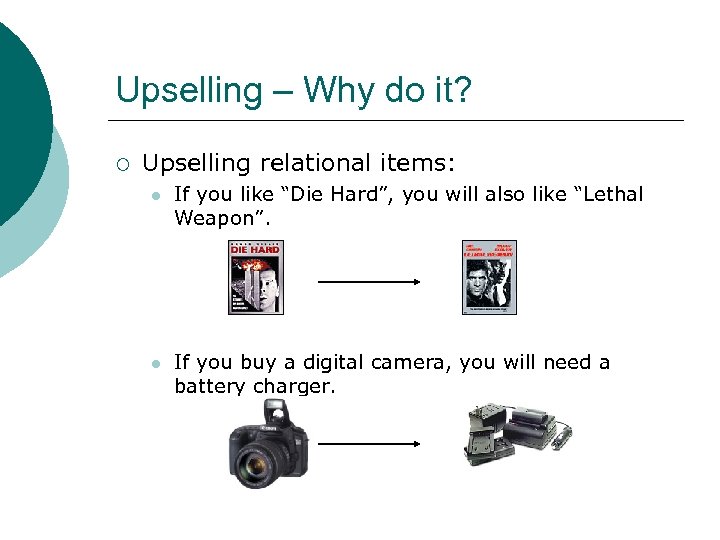 Upselling – Why do it? ¡ Upselling relational items: l If you like “Die Hard”, you will also like “Lethal Weapon”. l If you buy a digital camera, you will need a battery charger.
 Upselling – Why do it? ¡ Upselling to liquidate excess inventory: l Overstock items ¡ Slow moving items ¡ Seasonal products “ 42% of catalogers (63% of apparel catalogers) use upselling to reduce excess merchandise”, Operations BENCHMARK’ 99, Catalog Age. Lillian Vernon, DM Management, Chinaberry, etc.
 Key questions ¡ ¡ ¡ Which product to upsell? How to price the product? What discount to offer, if any? l may depend on ¡ ¡ ¡ customer purchase history customer demographics inventory levels
 Research questions ¡ Pricing and discounts l l ¡ ¡ ¡ How should prices be set? When to offer a discount to whom? Benefits of upselling Benefits of using customer purchase information Interaction with dynamic pricing
 Literature review ¡ Dynamic pricing of inventories l l ¡ Bundling l l ¡ Gallego and van Ryzin(1994), Bitran and Mondschein (1997), Elmaghraby, Gulcu, and Keskinocak (2003), Aviv and Pazgal (2005 a, 2005 b), Zhang and Cooper (2005), Maglaras and Meissner (2005)… Elmaghraby and Keskinocak(2003), Bitran and Caldentey(2003) Hanson and Martin (1990), Ernst and Kouvelis (1999) Gurler, Bulut, and Sen (2005) Cross-selling/upselling l l Armony and Gurvich (2005) Netessine, Savin, and Xiao (2004)
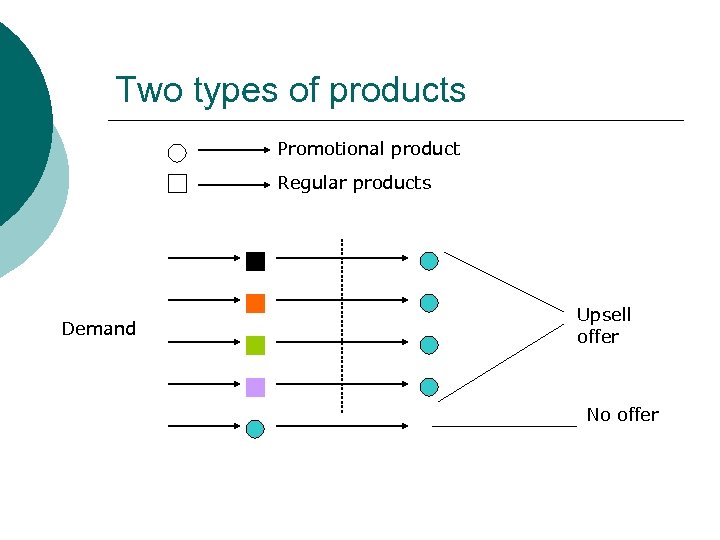 Two types of products Promotional product Regular products Demand Upsell offer No offer
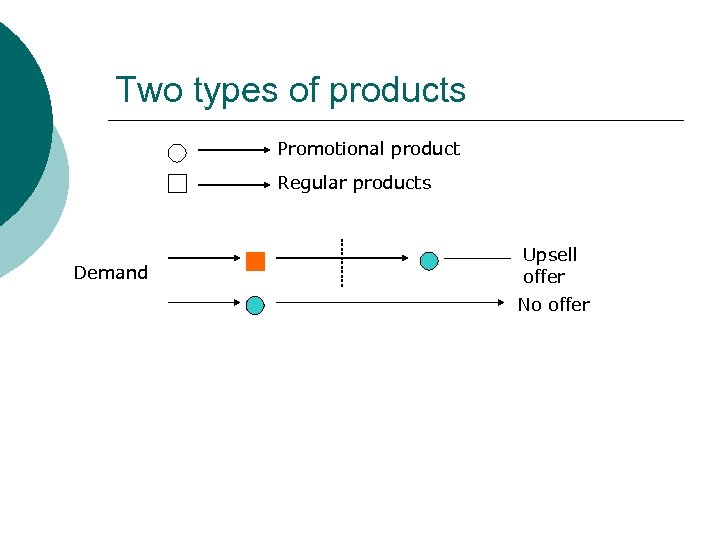 Two types of products Promotional product Regular products Demand Upsell offer No offer
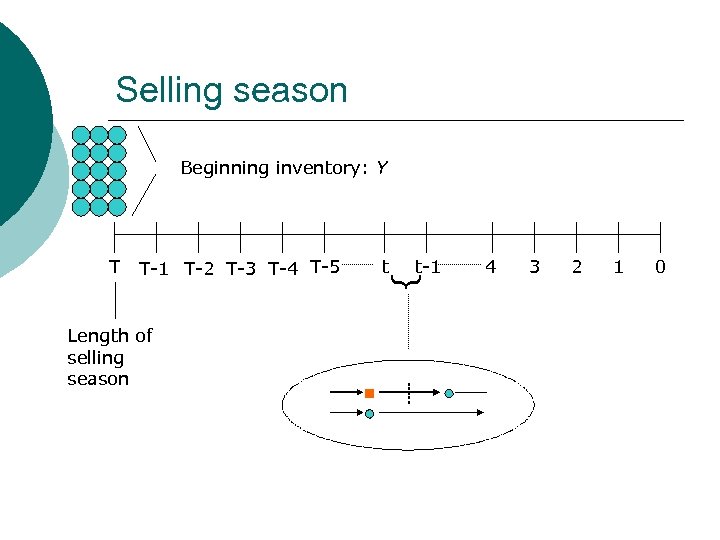 Selling season Beginning inventory: Y T-1 T-2 T-3 T-4 T-5 Length of selling season t t-1 } T 4 3 2 1 0
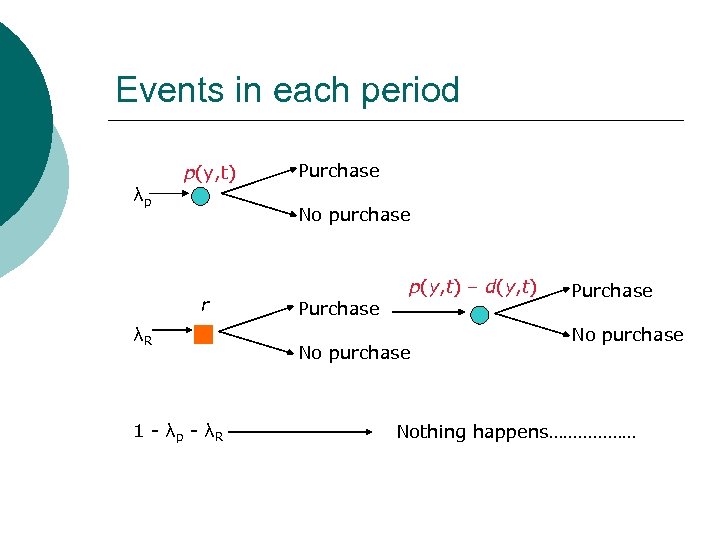 Events in each period p(y, t) λp Purchase No purchase r λR 1 - λp - λR p(y, t) – d(y, t) Purchase No purchase Nothing happens………………
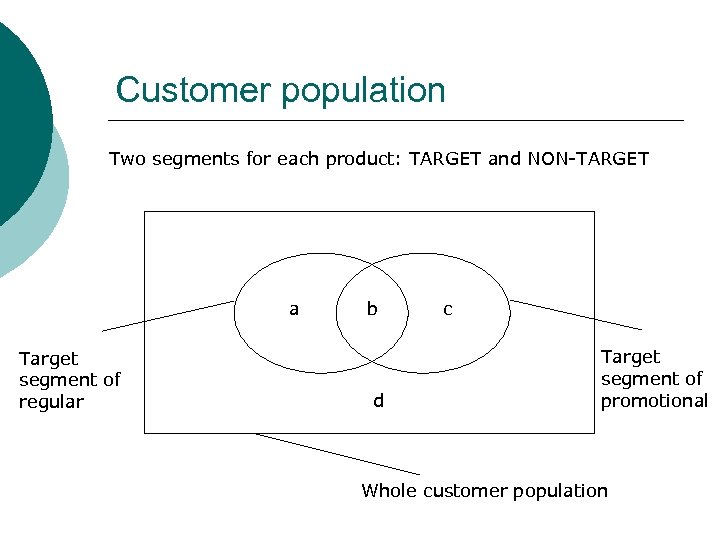 Customer population Two segments for each product: TARGET and NON-TARGET a Target segment of regular b d c Target segment of promotional Whole customer population
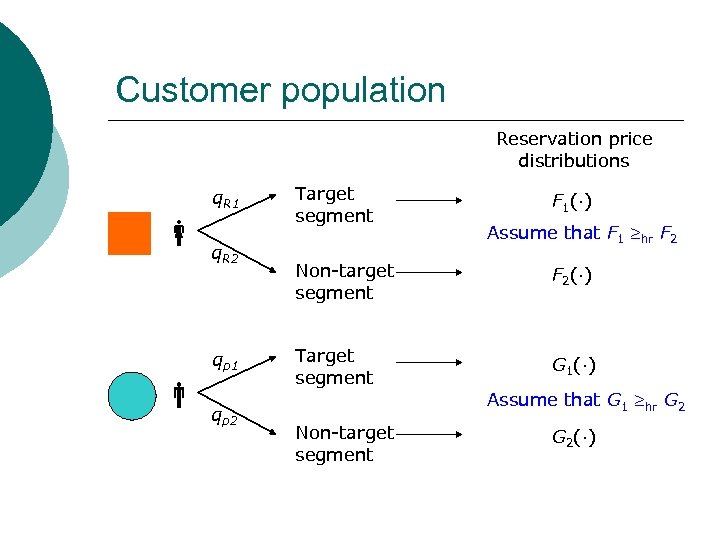 Customer population Reservation price distributions q. R 1 q. R 2 qp 1 qp 2 Target segment F 1(·) Assume that F 1 hr F 2 Non-target segment F 2(·) Target segment G 1(·) Assume that G 1 hr G 2 Non-target segment G 2(·)
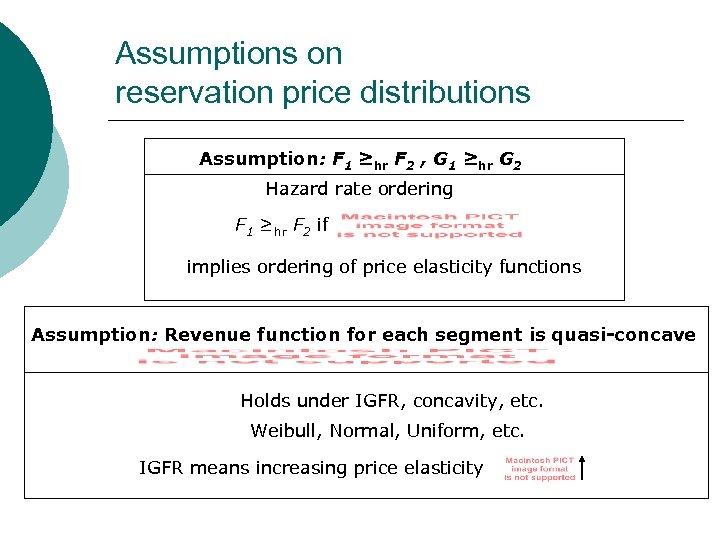 Assumptions on reservation price distributions Assumption: F 1 ≥hr F 2 , G 1 ≥hr G 2 Hazard rate ordering F 1 ≥hr F 2 if implies ordering of price elasticity functions Assumption: Revenue function for each segment is quasi-concave Holds under IGFR, concavity, etc. Weibull, Normal, Uniform, etc. IGFR means increasing price elasticity
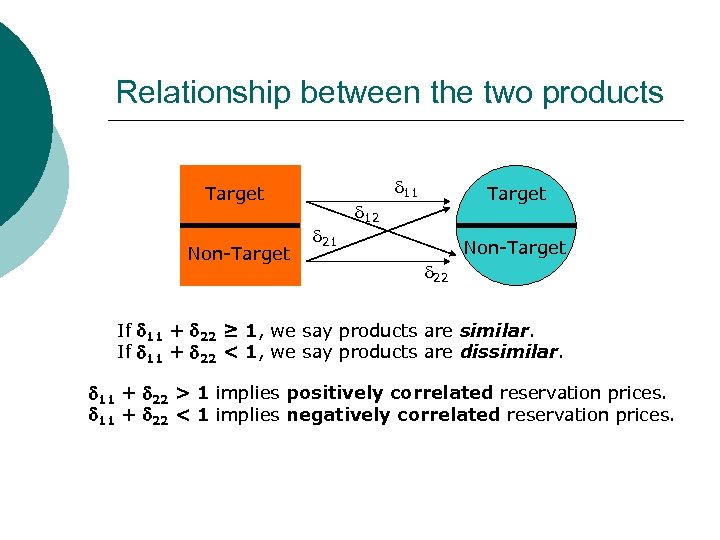 Relationship between the two products 11 Target Non-Target 21 Target 12 Non-Target 22 If 11 + 22 ≥ 1, we say products are similar. If 11 + 22 < 1, we say products are dissimilar. 11 + 22 > 1 implies positively correlated reservation prices. 11 + 22 < 1 implies negatively correlated reservation prices.
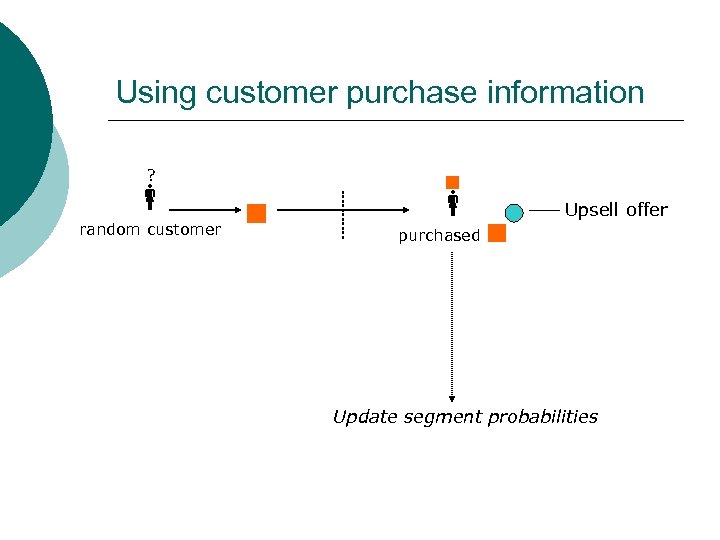 Using customer purchase information ? random customer Upsell offer purchased Update segment probabilities
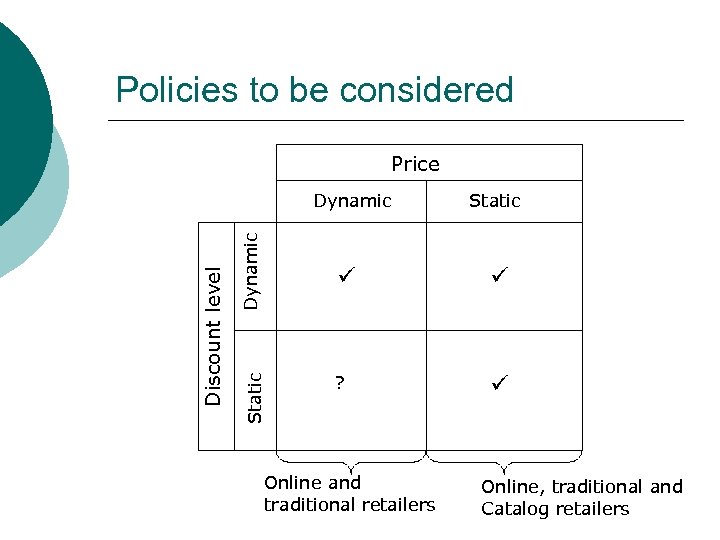 Policies to be considered Price Dynamic Static Discount level Dynamic ? Online and traditional retailers Online, traditional and Catalog retailers
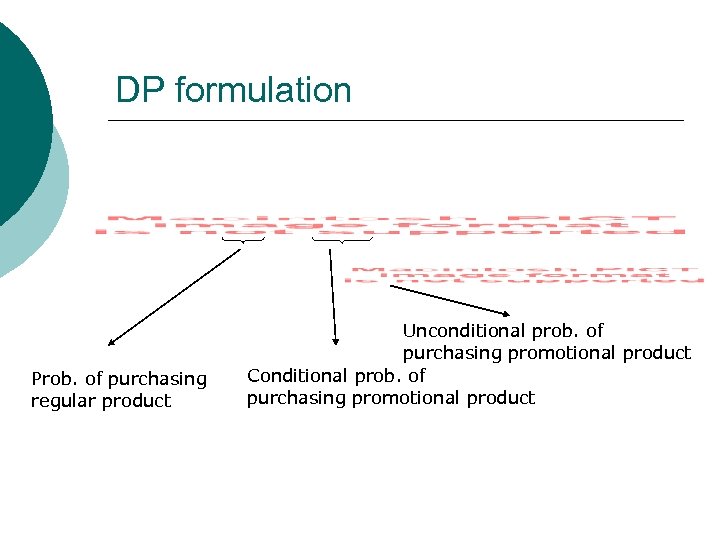 DP formulation Prob. of purchasing regular product Unconditional prob. of purchasing promotional product Conditional prob. of purchasing promotional product
 Structure of optimal discount policy When should an upsell offer include a discount? Products are dissimilar ( 11 + 22 < 1) Products are similar ( 11 + 22 ≥ 1) OFFER DISCOUNT DO NOT OFFER DISCOUNT regardless of inventory level and time
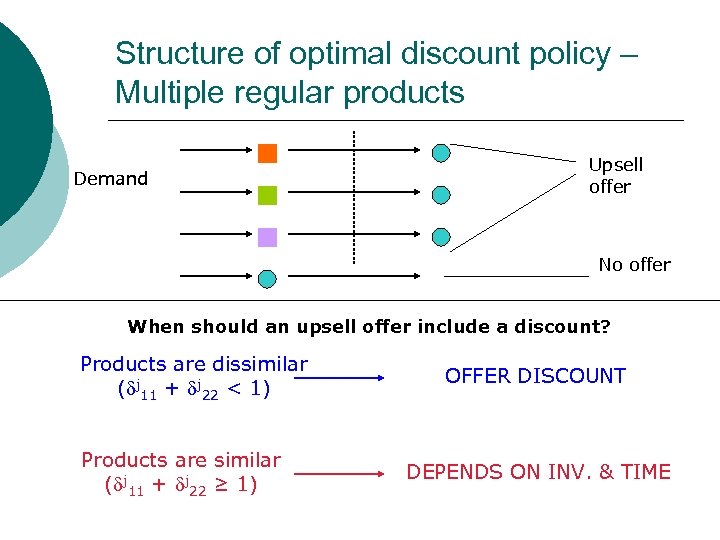 Structure of optimal discount policy – Multiple regular products Demand Upsell offer No offer When should an upsell offer include a discount? Products are dissimilar ( j 11 + j 22 < 1) Products are similar ( j 11 + j 22 ≥ 1) OFFER DISCOUNT DEPENDS ON INV. & TIME
 Prices, inventory level, and time-to-go ¡ Optimal advertised prices and optimal discounted upsell prices are decreasing in the inventory level and increasing in time-to-go
 Prices, inventory level, and time-to-go ¡ Given the inventory level, the size of the optimal discount is non-monotonic in time-to-go.
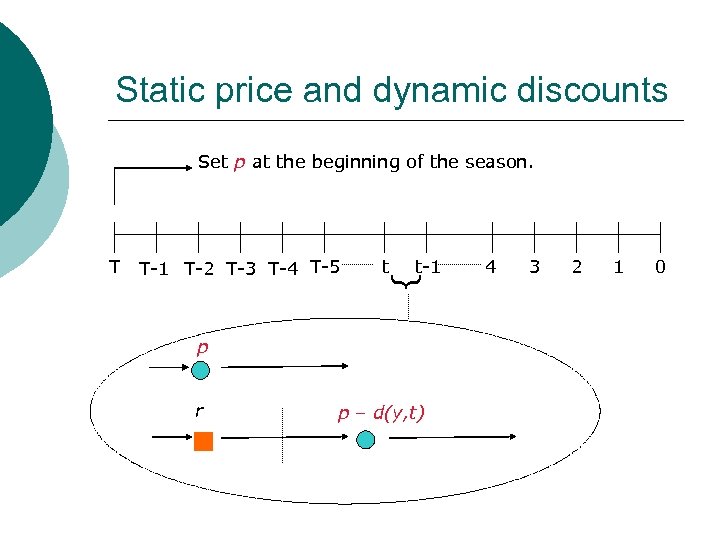 Static price and dynamic discounts Set p at the beginning of the season. T-1 T-2 T-3 T-4 T-5 t t-1 } T p r p – d(y, t) 4 3 2 1 0
 Static price and dynamic discounts Optimal discount policy For any given price p, the optimal discount policy is of switching-curve type in the inventory level and time. Similarly for static price and discount.
 Numerical study ¡ Reservation price distributions: Four different combinations of Weibull distributions T = 20 q. R 1 {0. 7, 0. 5, 0. 3} 11 {0, 0. 3, 0. 5, 0. 7, 1. 0} 22 {0, 0. 3, 0. 5, 0. 7, 1. 0} λR+ λP {0. 7, 0. 5, 0. 3} λR / (λR+ λP) {0. 7, 0. 5, 0. 3} y {high, medium, low} r {high, medium, low} l ¡ ¡ ¡ ¡ Overall 24300 runs with different parameter values…
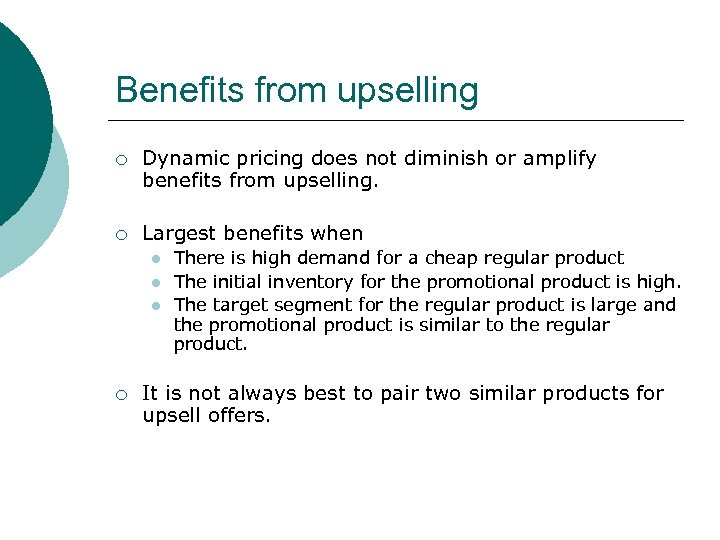 Benefits from upselling ¡ Dynamic pricing does not diminish or amplify benefits from upselling. ¡ Largest benefits when l l l ¡ There is high demand for a cheap regular product The initial inventory for the promotional product is high. The target segment for the regular product is large and the promotional product is similar to the regular product. It is not always best to pair two similar products for upsell offers.
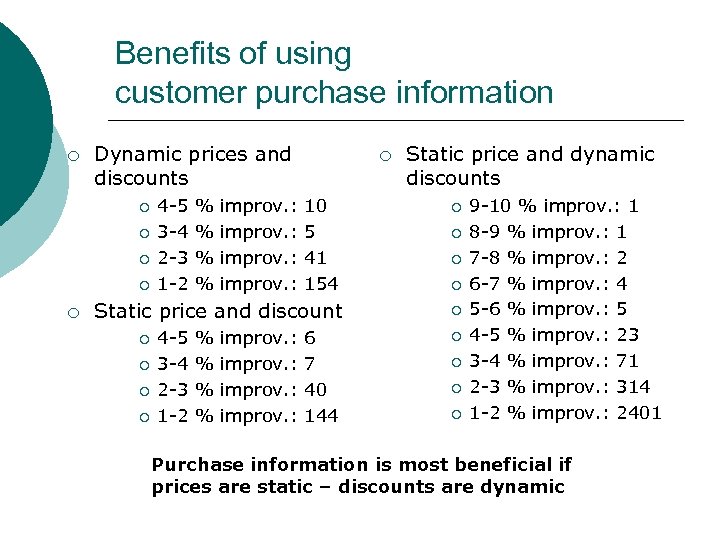 Benefits of using customer purchase information ¡ Dynamic prices and discounts ¡ ¡ ¡ 4 -5 3 -4 2 -3 1 -2 % % improv. : ¡ 10 5 41 154 Static price and discount ¡ ¡ 4 -5 3 -4 2 -3 1 -2 % % improv. : 6 7 40 144 Static price and dynamic discounts ¡ ¡ ¡ ¡ ¡ 9 -10 % improv. : 1 8 -9 % improv. : 1 7 -8 % improv. : 2 6 -7 % improv. : 4 5 -6 % improv. : 5 4 -5 % improv. : 23 3 -4 % improv. : 71 2 -3 % improv. : 314 1 -2 % improv. : 2401 Purchase information is most beneficial if prices are static – discounts are dynamic
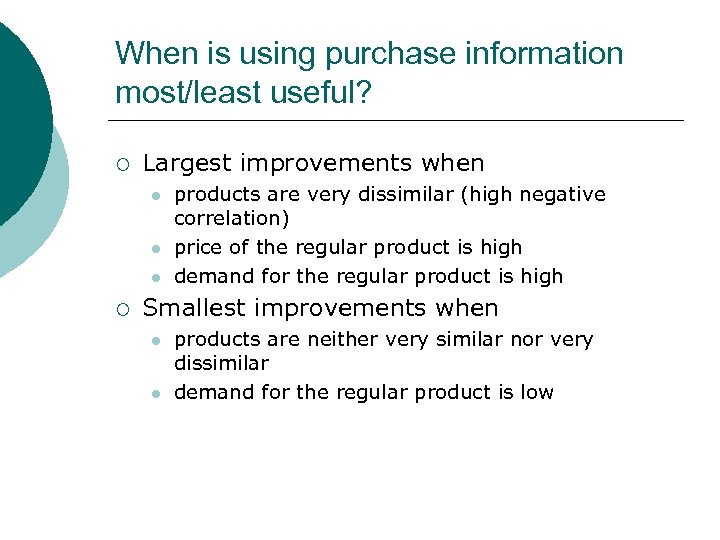 When is using purchase information most/least useful? ¡ Largest improvements when l l l ¡ products are very dissimilar (high negative correlation) price of the regular product is high demand for the regular product is high Smallest improvements when l l products are neither very similar nor very dissimilar demand for the regular product is low
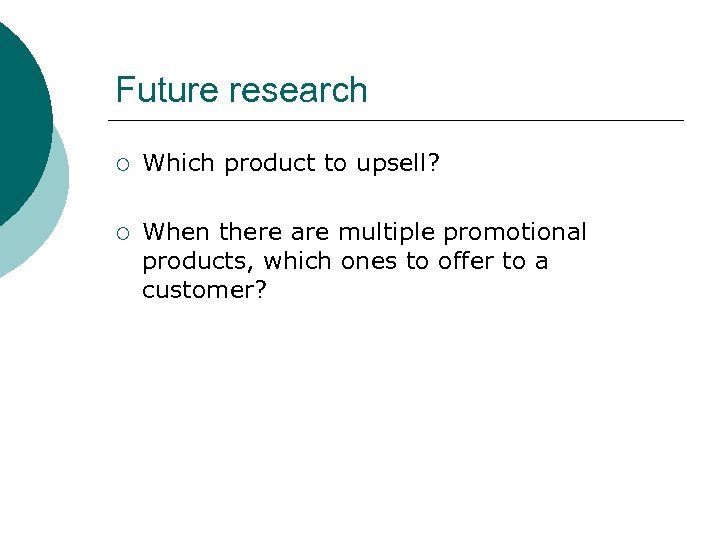 Future research ¡ Which product to upsell? ¡ When there are multiple promotional products, which ones to offer to a customer?
 Paper information “Upselling a promotional product using customer purchase information” available at www. unc. edu/~ziya email: ziya@unc. edu