


 Скачать презентацию Upper Paleolithic Art Upper Paleolithic Art
09186863874f4e5a2d64388124a5eaa3.ppt
- Количество слайдов: 47
 Upper Paleolithic Art
 Upper Paleolithic Art • Mobile – Small, can be moved from place to place or traded • Parietal – Paintings on cave walls – Large carvings
 Mobile Art • The European bison is one of the animals most commonly depicted in paleolithic art. • These treatments in several media (sandstone, reindeer horn, clay, and limestone) illustrate the sophistication of paleolithic art. • Note the similar stylistic treatment of the mane and beard of the bull, which show that artististic conventions were passed from generation to generation.
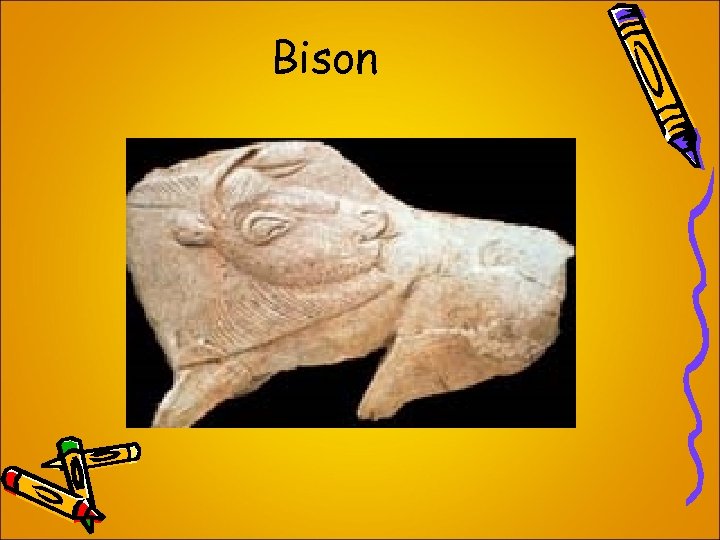 Bison
Bison
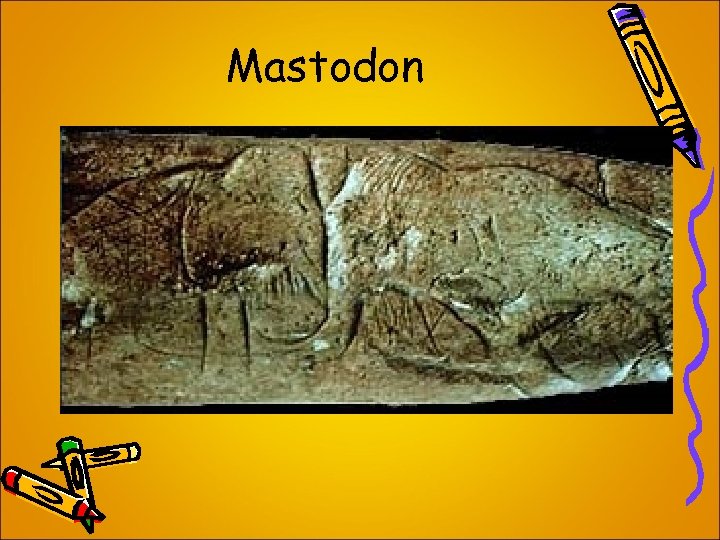 Mastodon
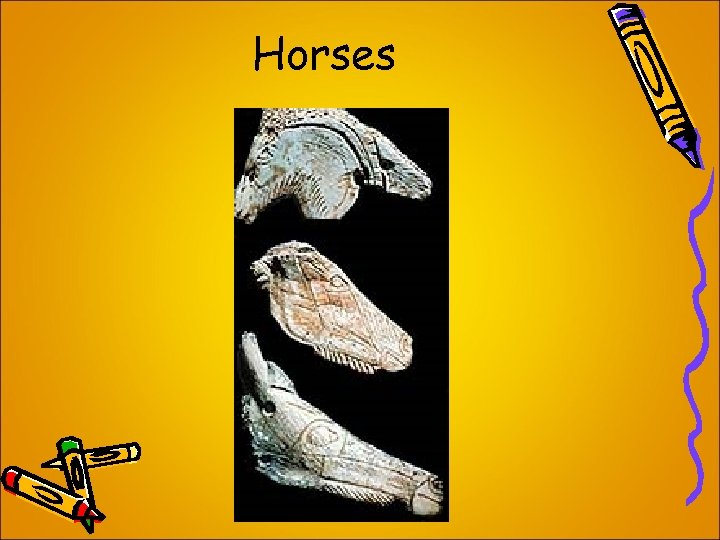 Horses
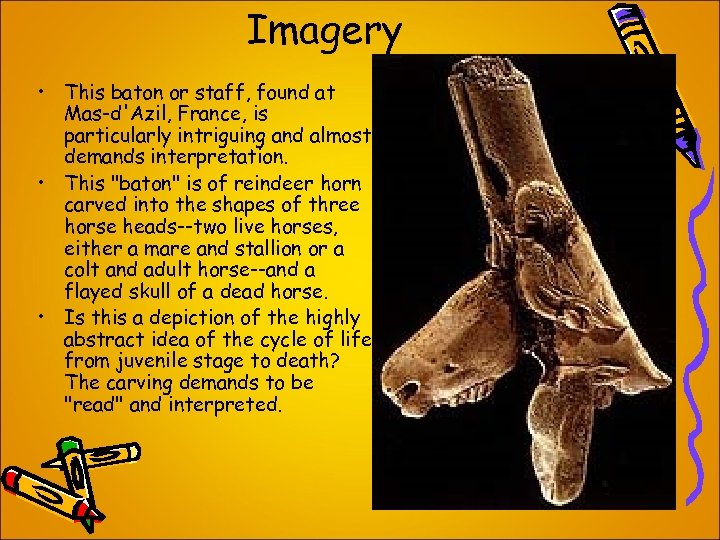 Imagery • This baton or staff, found at Mas-d'Azil, France, is particularly intriguing and almost demands interpretation. • This "baton" is of reindeer horn carved into the shapes of three horse heads--two live horses, either a mare and stallion or a colt and adult horse--and a flayed skull of a dead horse. • Is this a depiction of the highly abstract idea of the cycle of life from juvenile stage to death? The carving demands to be "read" and interpreted.
 Venus Figurines • Female statuettes, sometimes called "Venus" figurines, have been found at a number of European sites. • The female head at is rendered in a highly abstract style compared to animals • The plumpness and exaggerated sexual features of many of these figures, along with their faceless anonymity, suggest that they symbolize fertility.
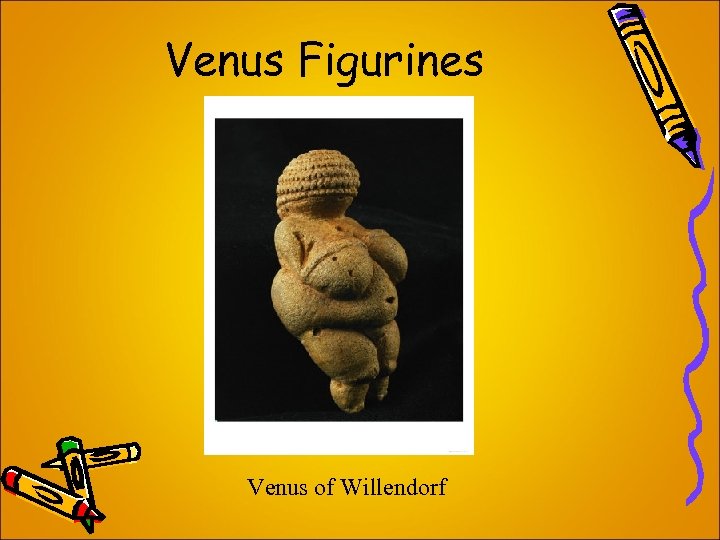 Venus Figurines Venus of Willendorf
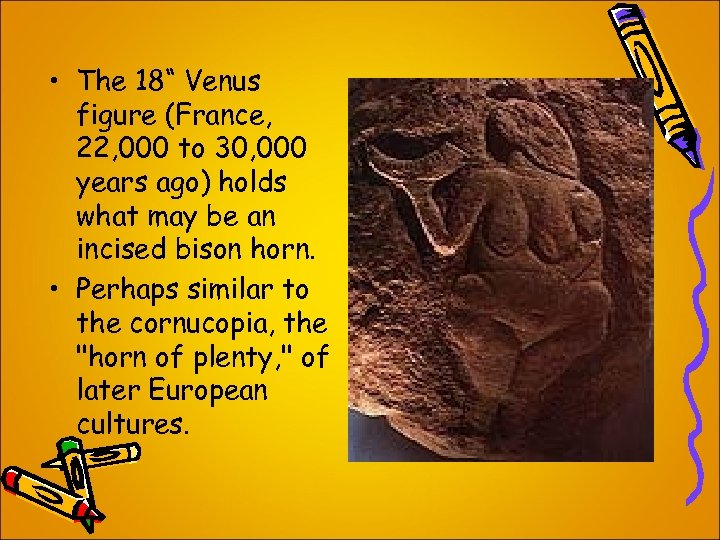 • The 18“ Venus figure (France, 22, 000 to 30, 000 years ago) holds what may be an incised bison horn. • Perhaps similar to the cornucopia, the "horn of plenty, " of later European cultures.
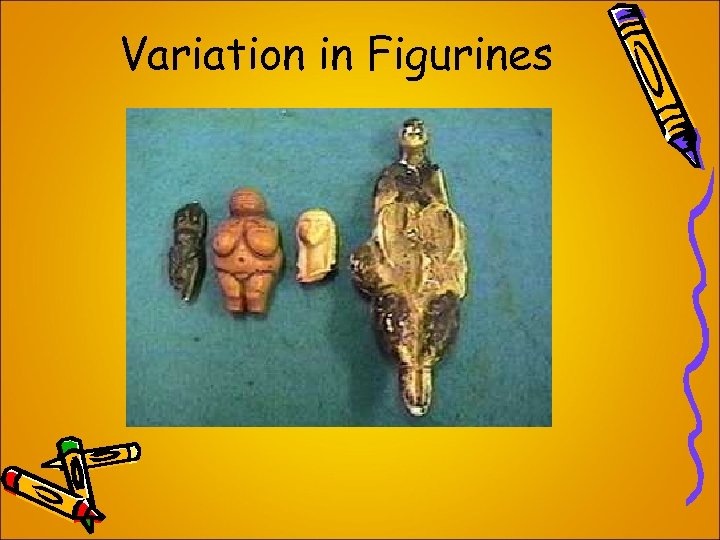 Variation in Figurines
 Upper Paleolithic Parietal Art • Lascaux, France • Chauvet Cave, France • Altamira, Spain – All have elaborate paintings and engravings – Usually done along certain “themes” • ie. Altamira mostly bison – Not used for habitation-strictly ceremonial
 Methods • Pigments such as charcoal, red ochre, yellow ochre commonly used. • Applied with animal hair brushes, fingers and/or blown through tube.
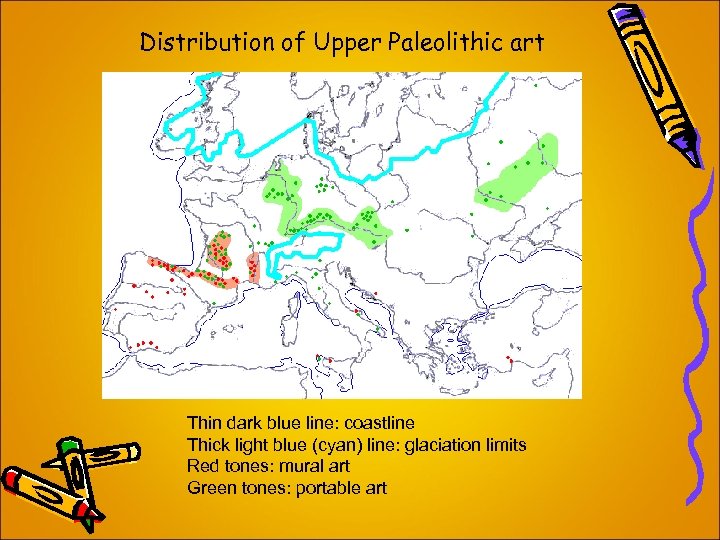 Distribution of Upper Paleolithic art Thin dark blue line: coastline Thick light blue (cyan) line: glaciation limits Red tones: mural art Green tones: portable art
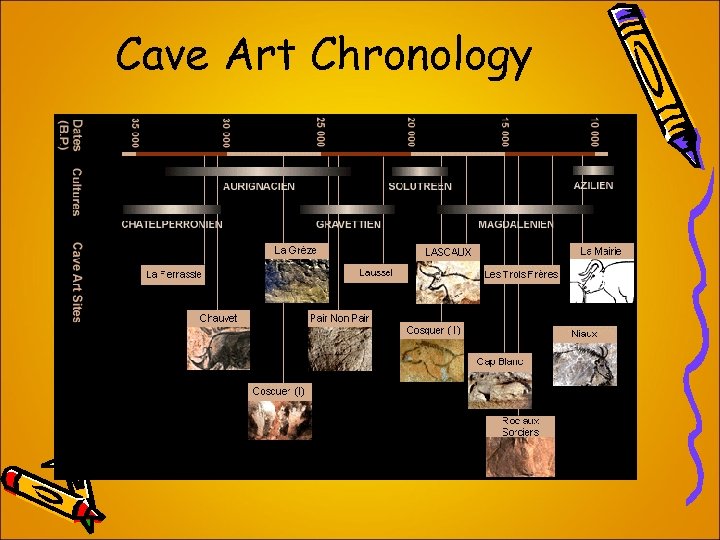 Cave Art Chronology
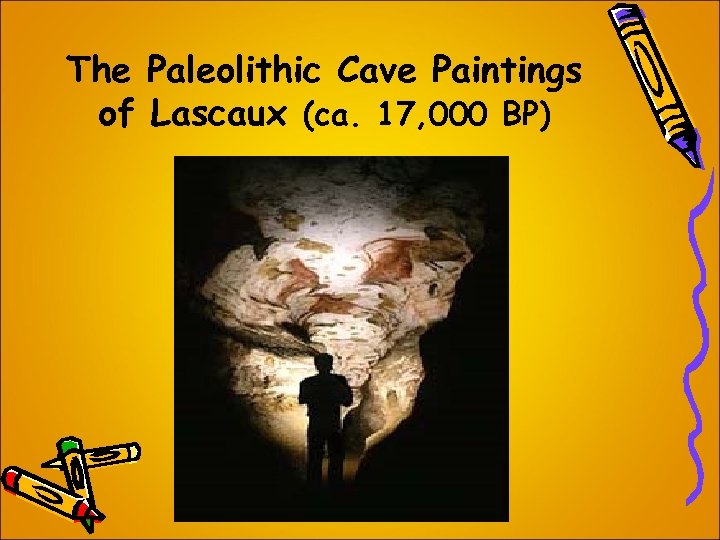 The Paleolithic Cave Paintings of Lascaux (ca. 17, 000 BP)
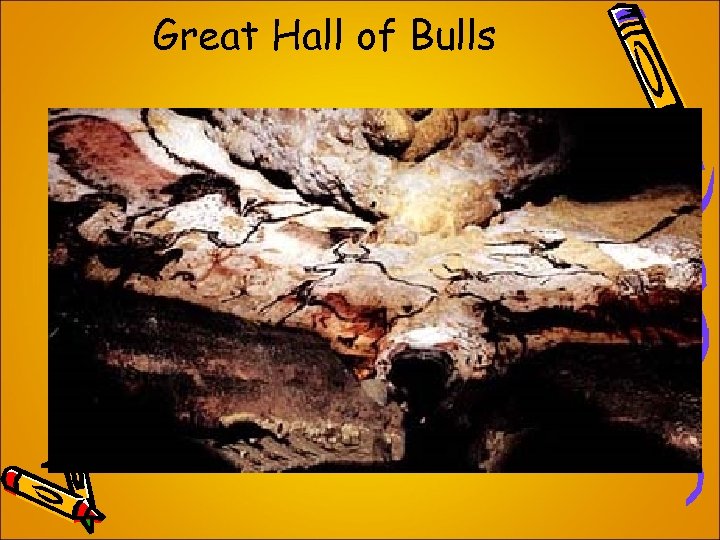 Great Hall of Bulls
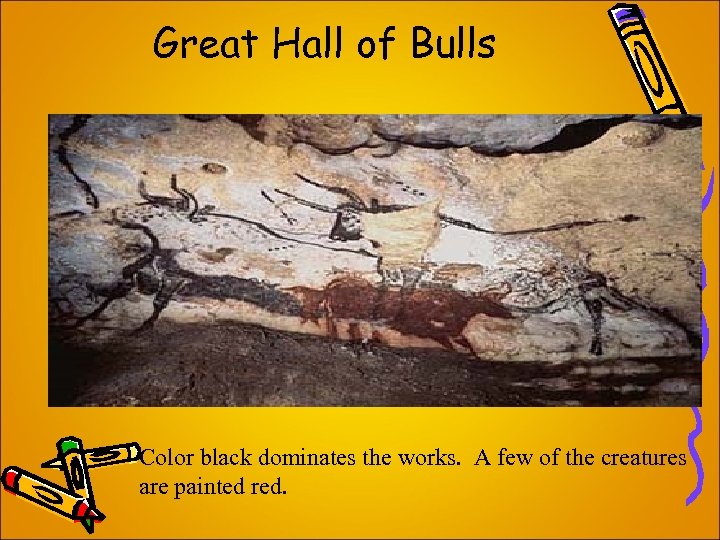 Great Hall of Bulls Color black dominates the works. A few of the creatures are painted red.
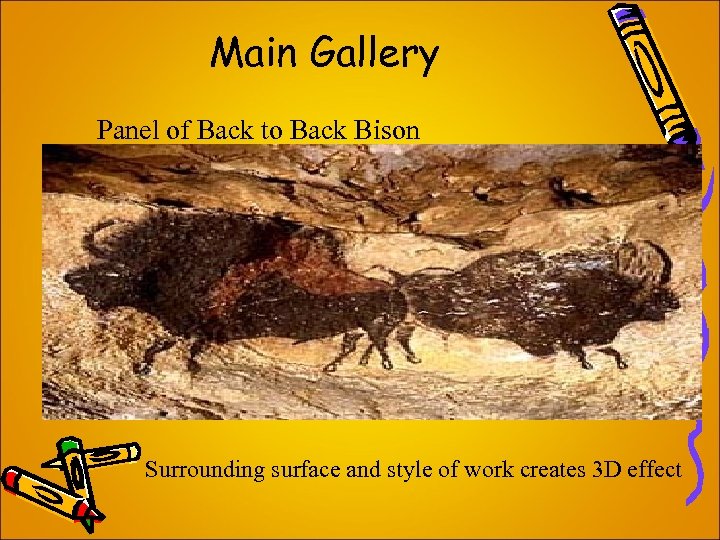 Main Gallery Panel of Back to Back Bison Surrounding surface and style of work creates 3 D effect
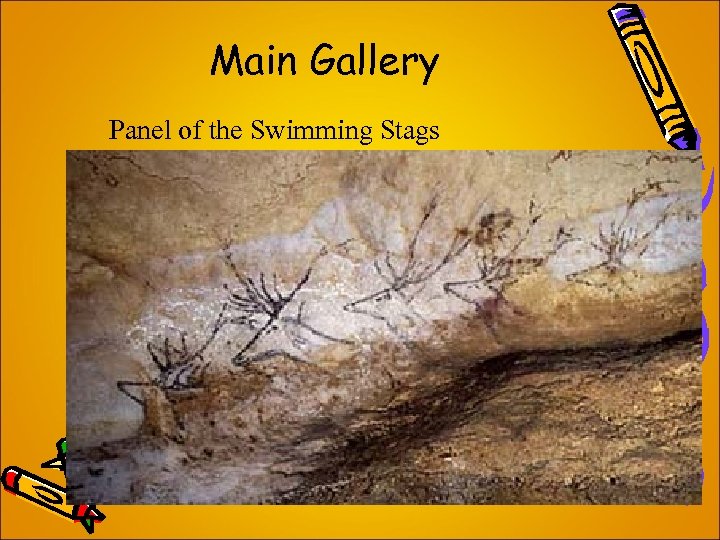 Main Gallery Panel of the Swimming Stags
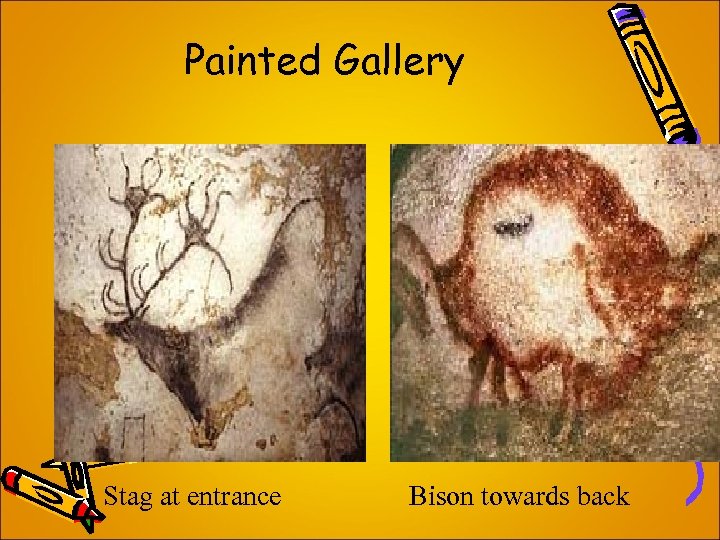 Painted Gallery Stag at entrance Bison towards back
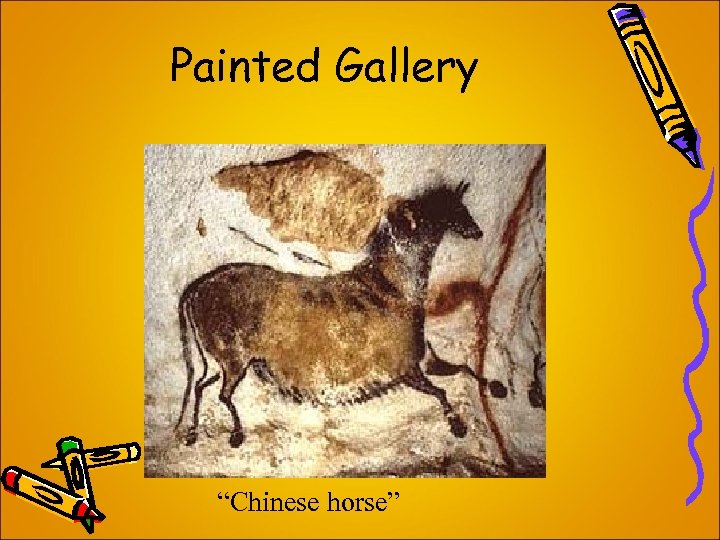 Painted Gallery “Chinese horse”
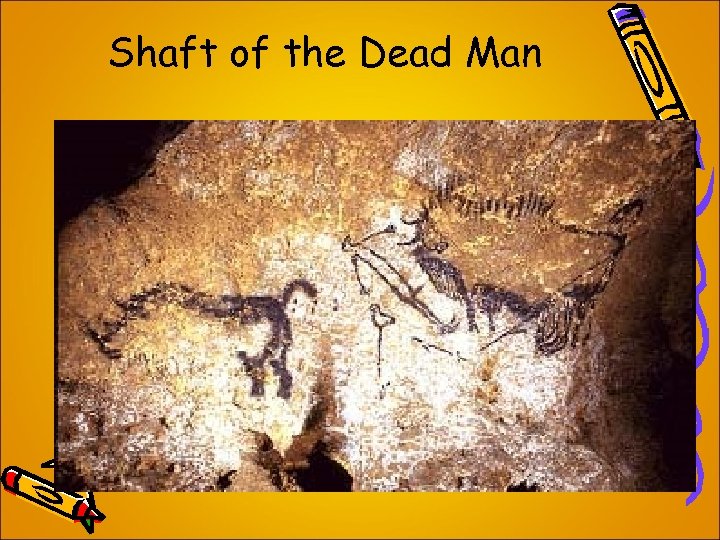 Shaft of the Dead Man
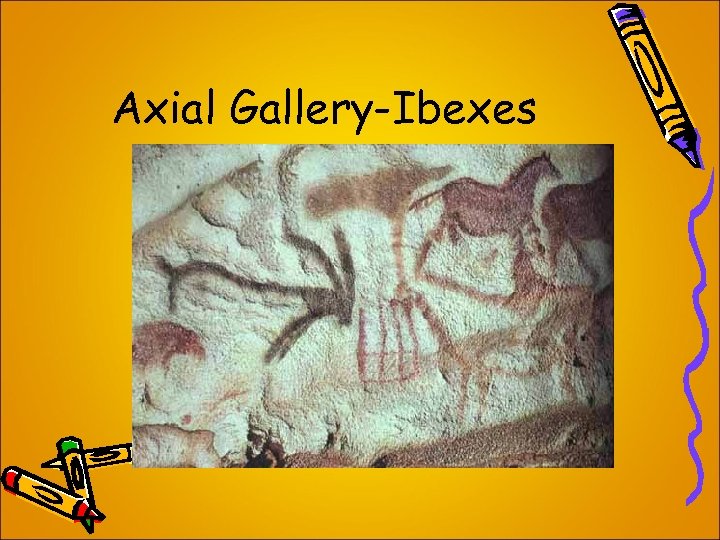 Axial Gallery-Ibexes
 Short Clip of Lascaux http: //dordogne-dordogne. com/cave-oflascaux/
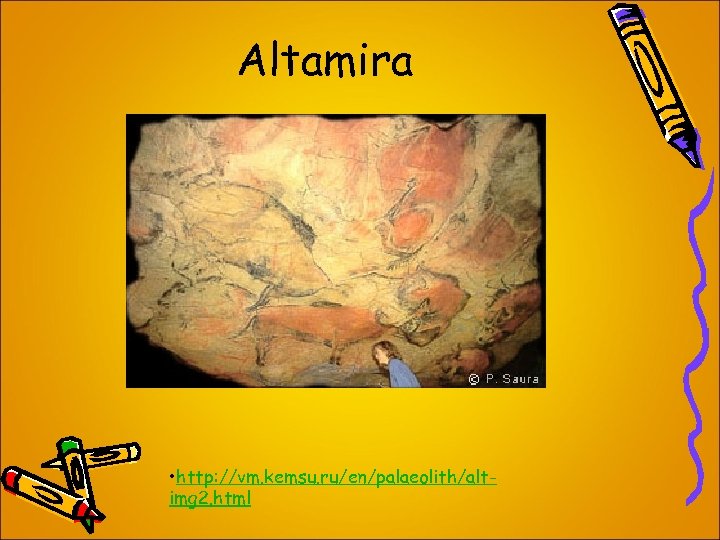
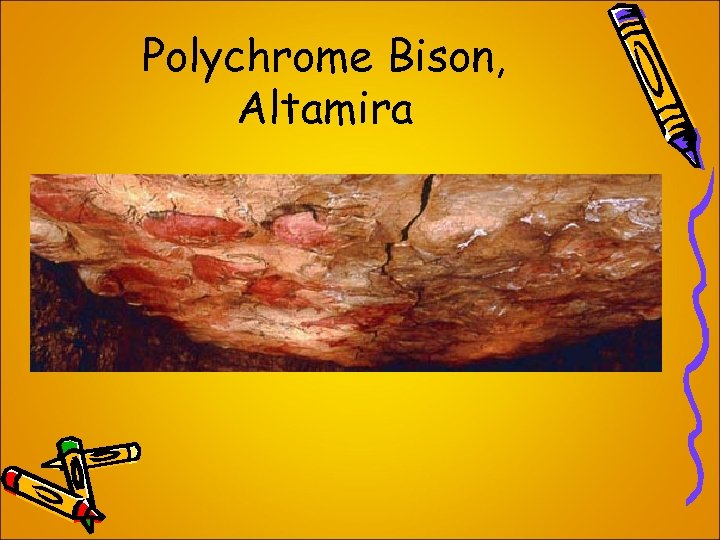
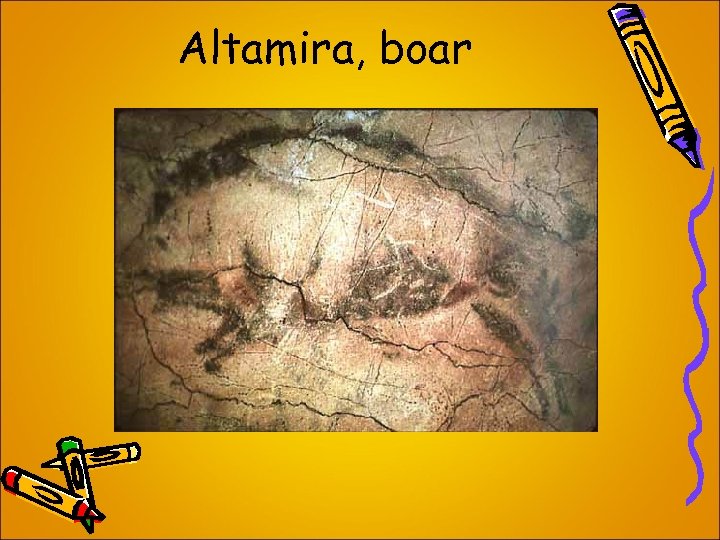
 Altamira, Spain (ca. 14 -18, 000 B. P. ) • It is situated in Cantabria province not far from Santander city, on the edge of Santiliana del Mar village. • The cave was found by a local hunter, Modesto Peres in 1868. • Mostly bison
 Altamira, Spain
 Altamira • http: //vm. kemsu. ru/en/palaeolith/altimg 2. html
 Polychrome Bison, Altamira
 Altamira, boar
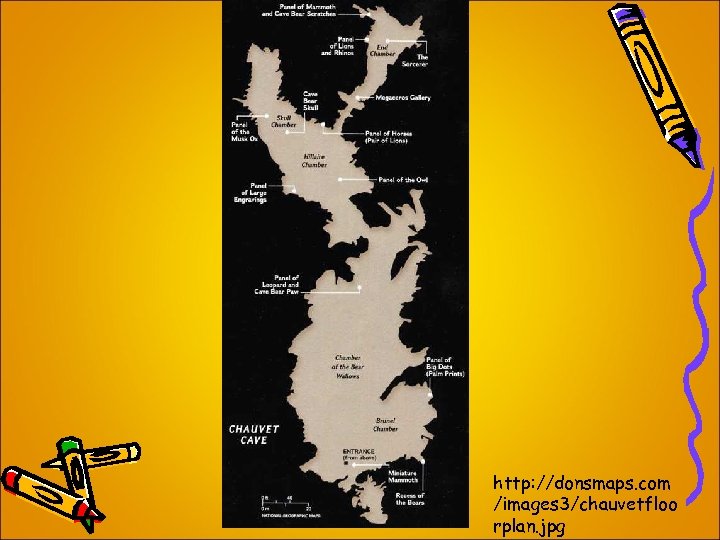
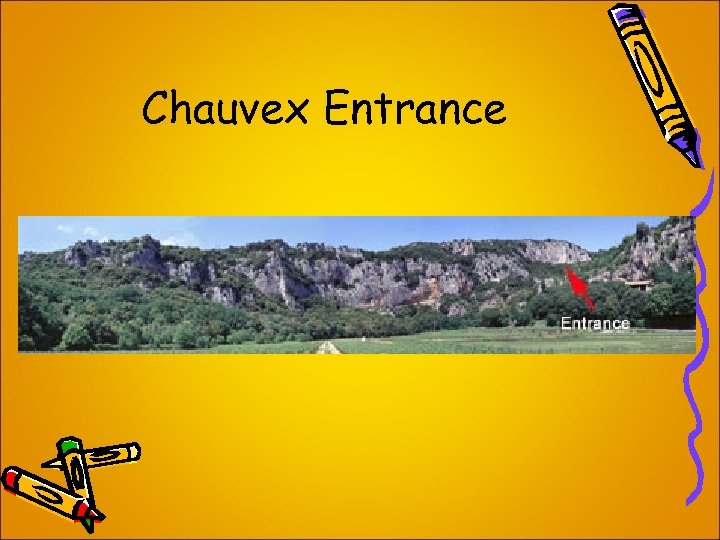
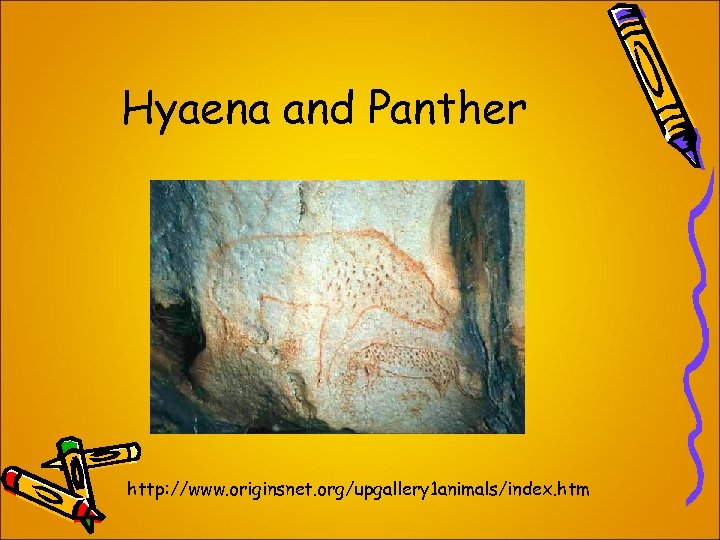
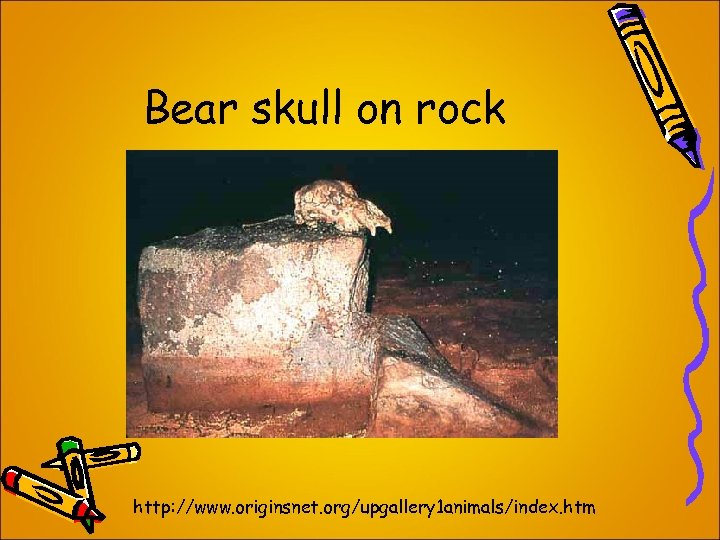
 Chauvet Cave, France (ca. 32, 000 B. P. ) • It is located in the steep side of a cliff in the gorges of the Ardeche, a tributary of the Rhone river. • The cave was discovered on the 18 th of December 1994 by three speleologists - Jean-Marie Chauvet, Eliette Brunel Deschamps and Christian Hillaire. • There is a succession of four big "vestibules" with about or more than 300 paintings. They are in a remarkable state of preservation. At present the paintings are the oldest known. http: //vm. kemsu. ru/en/palaeolith/shove. html
 http: //donsmaps. com /images 3/chauvetfloo rplan. jpg
 Chauvex Entrance
 Hyaena and Panther http: //www. originsnet. org/upgallery 1 animals/index. htm
 Bear skull on rock http: //www. originsnet. org/upgallery 1 animals/index. htm
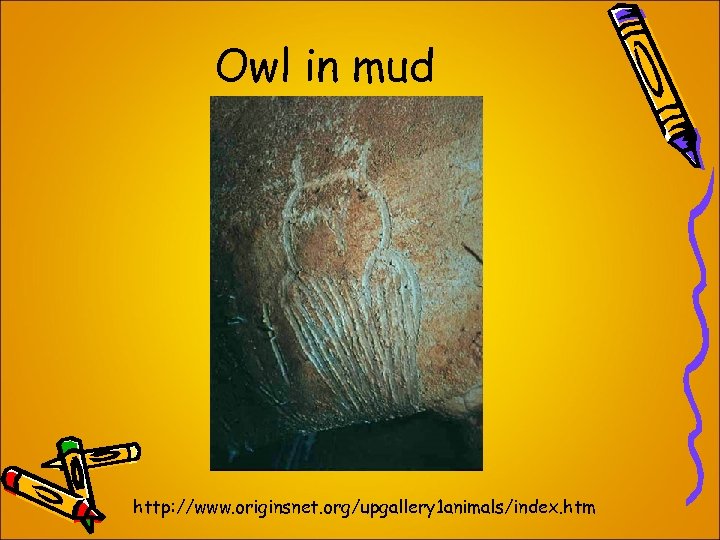 Owl in mud http: //www. originsnet. org/upgallery 1 animals/index. htm
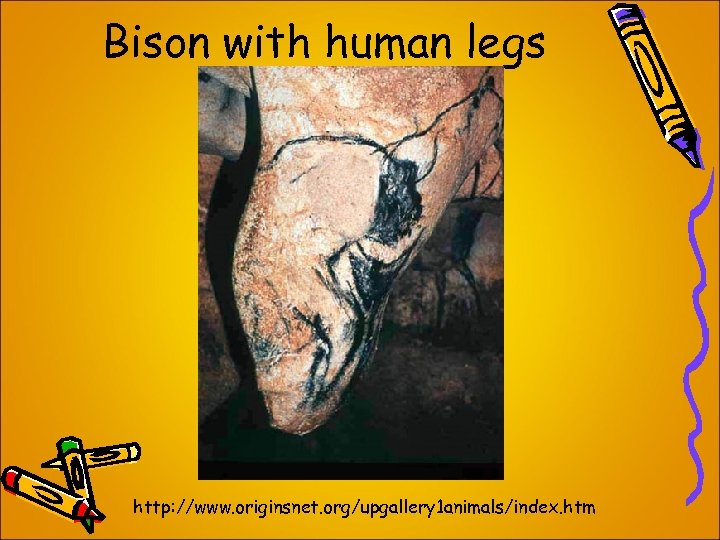 Bison with human legs http: //www. originsnet. org/upgallery 1 animals/index. htm
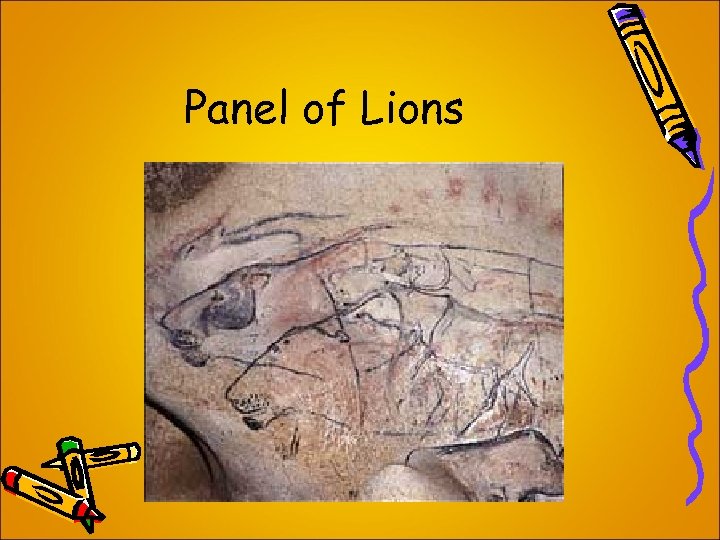 Panel of Lions
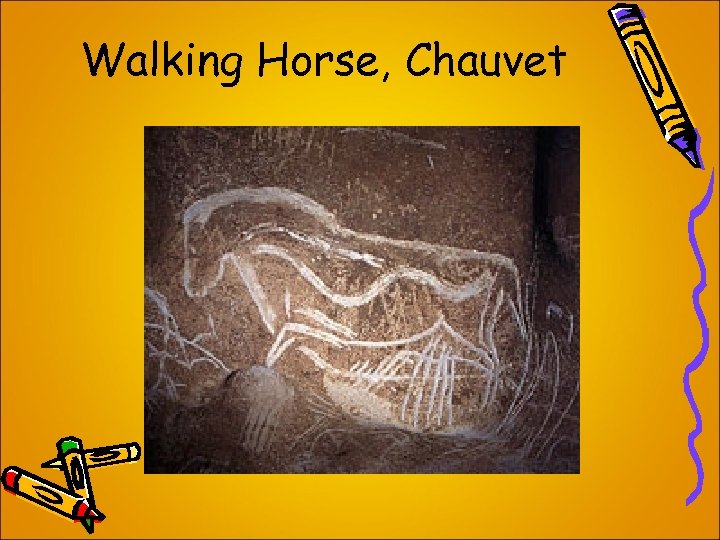 Walking Horse, Chauvet
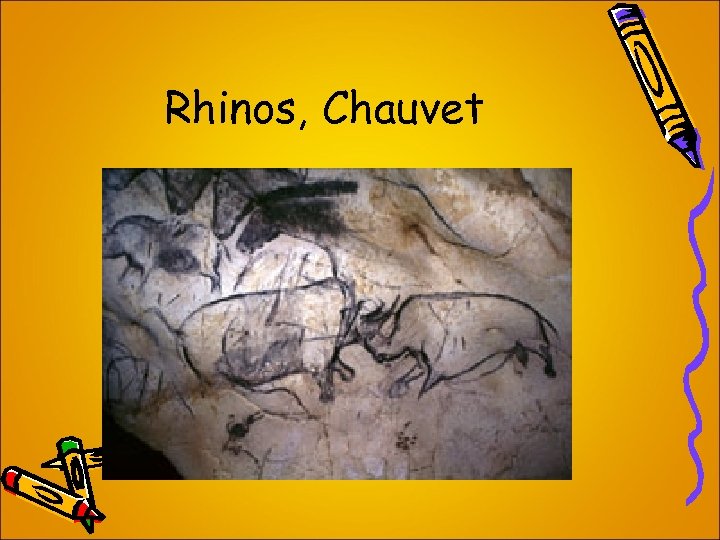 Rhinos, Chauvet
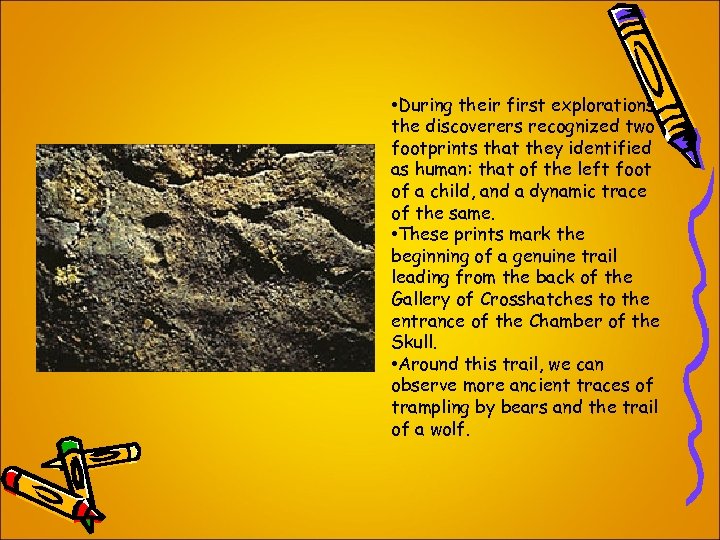 • During their first explorations, the discoverers recognized two footprints that they identified as human: that of the left foot of a child, and a dynamic trace of the same. • These prints mark the beginning of a genuine trail leading from the back of the Gallery of Crosshatches to the entrance of the Chamber of the Skull. • Around this trail, we can observe more ancient traces of trampling by bears and the trail of a wolf.
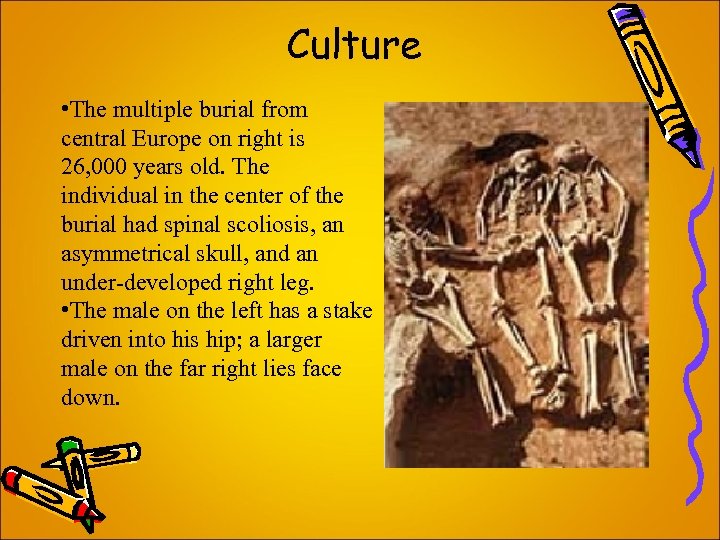 Culture • The multiple burial from central Europe on right is 26, 000 years old. The individual in the center of the burial had spinal scoliosis, an asymmetrical skull, and an under-developed right leg. • The male on the left has a stake driven into his hip; a larger male on the far right lies face down.
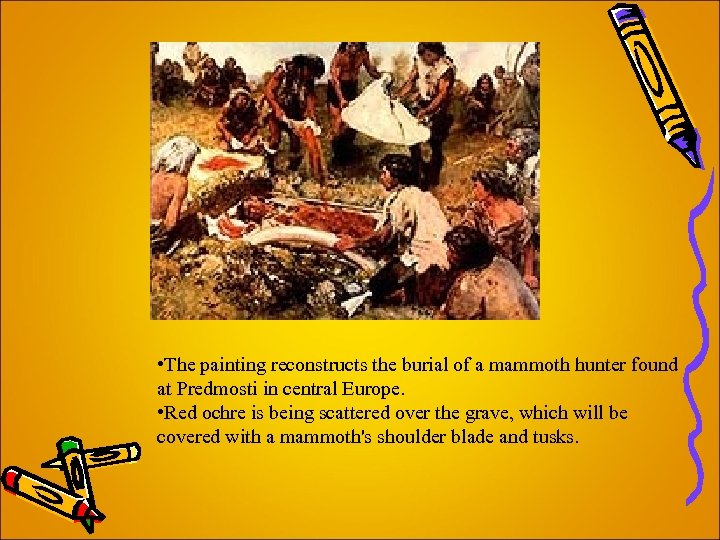 • The painting reconstructs the burial of a mammoth hunter found at Predmosti in central Europe. • Red ochre is being scattered over the grave, which will be covered with a mammoth's shoulder blade and tusks.
 Dolni Vistonice • Gravettian site dated to about 25, 000 years ago • The site is located on a ridge overlooking the Dyej River, Czech Republic – 200 by 500 feet – bones of over 100 mammoths were found in an area that measured 40 by 140 feet – rows of mammoth tusks formed a fence around the site • several houses • common central fire • material culture – 2, 300 fired clay figurines – Gravettian tool assemblage – exotic artifacts • shell from Mediterranean http: //www. unc. edu/courses/pre 2000 fall/anth 100/uppaleo. htm
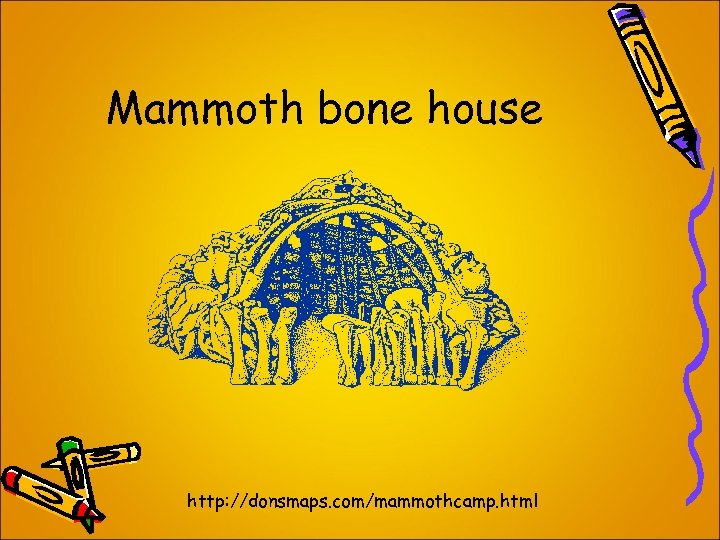 Mammoth bone house http: //donsmaps. com/mammothcamp. html
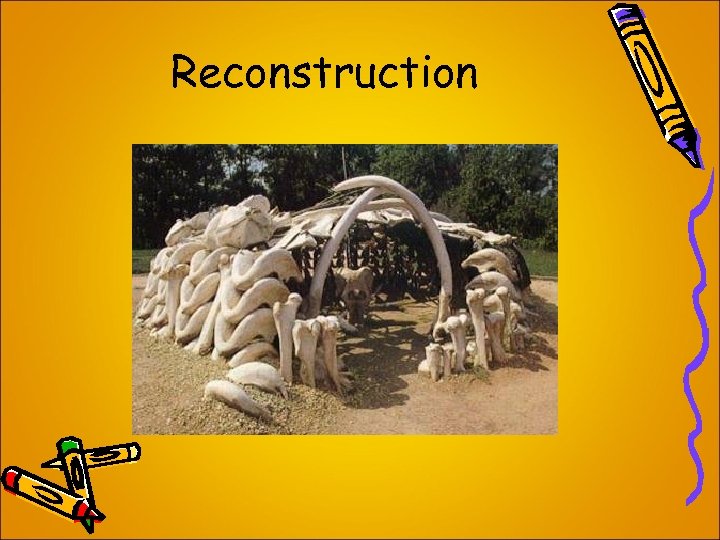 Reconstruction
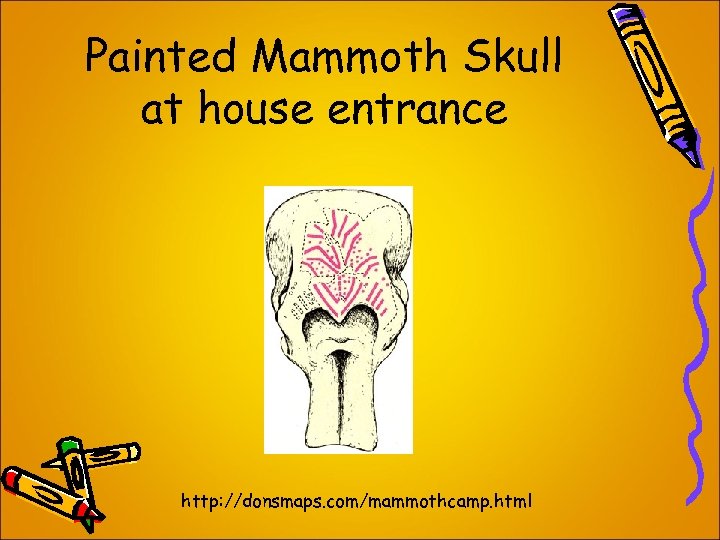 Painted Mammoth Skull at house entrance http: //donsmaps. com/mammothcamp. html