 Скачать презентацию УПОТРЕБЛЕНИЕ ВИДО-ВРЕМЕННЫХ ФОРМ АНГЛИЙСКИХ ГЛАГОЛОВ В ДЕЙСТВИТЕЛЬНОМ ЗАЛОГЕ
УПОТРЕБЛЕНИЕ ВРЕМЁН.pptx
- Количество слайдов: 92




УПОТРЕБЛЕНИЕ ВИДО-ВРЕМЕННЫХ ФОРМ АНГЛИЙСКИХ ГЛАГОЛОВ В ДЕЙСТВИТЕЛЬНОМ ЗАЛОГЕ
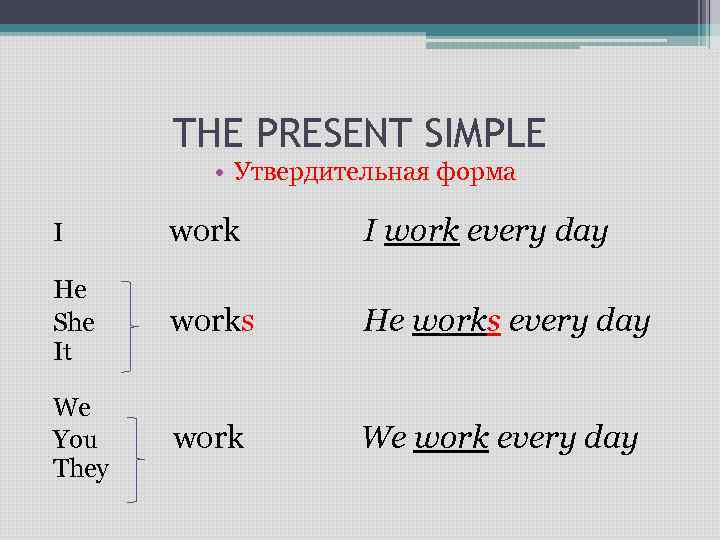
THE PRESENT SIMPLE • Утвердительная форма I work every day He She It works He works every day We You They work We work every day
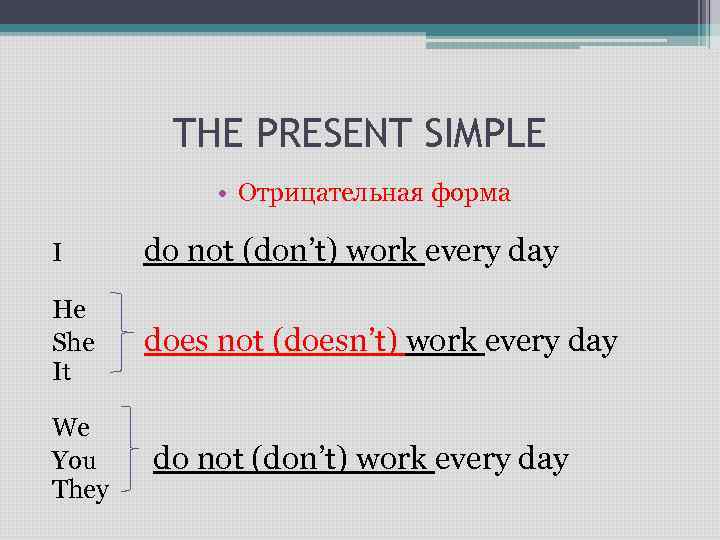
THE PRESENT SIMPLE • Отрицательная форма I do not (don’t) work every day He She It does not (doesn’t) work every day We You They do not (don’t) work every day
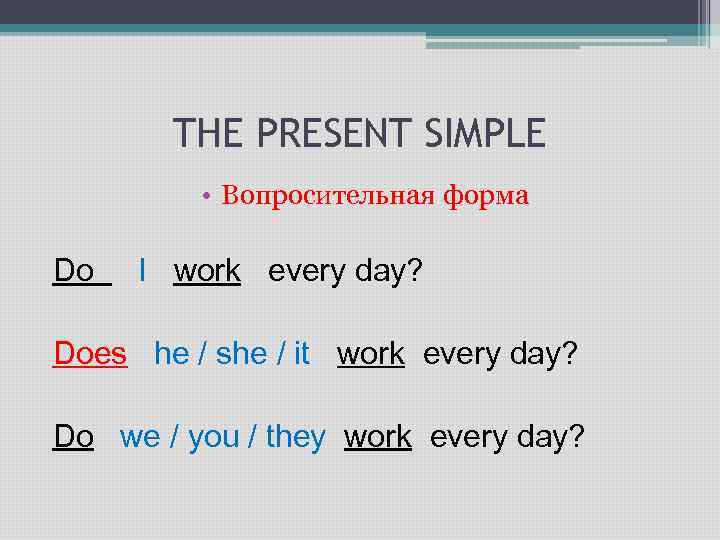
THE PRESENT SIMPLE • Вопросительная форма Do I work every day? Does he / she / it work every day? Do we / you / they work every day?
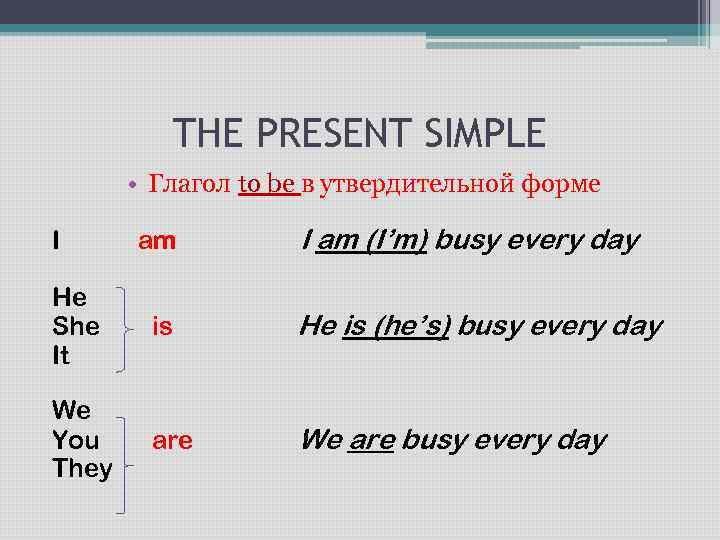
THE PRESENT SIMPLE • Глагол to be в утвердительной форме I am (I’m) busy every day He She It is He is (he’s) busy every day We You They are We are busy every day

THE PRESENT SIMPLE • Глагол to be в отрицательной форме I am not (I’m not) busy every day He She is not He is not(isn’t) busy every day are not We are not (aren’t) busy every day It We You They

THE PRESENT SIMPLE • Глагол to be в вопросительной форме Am I busy today? Is he / she / it busy today? Are we / you / they busy today?

THE PRESENT SIMPLE Случаи употребления • Для регулярно повторяющихся действий (сопровождаются обстоятельствами времени often, always, usually, sometimes, never, every day, as a rule): She often plays the piano. She goes to the cinema once a month. I never watch TV.
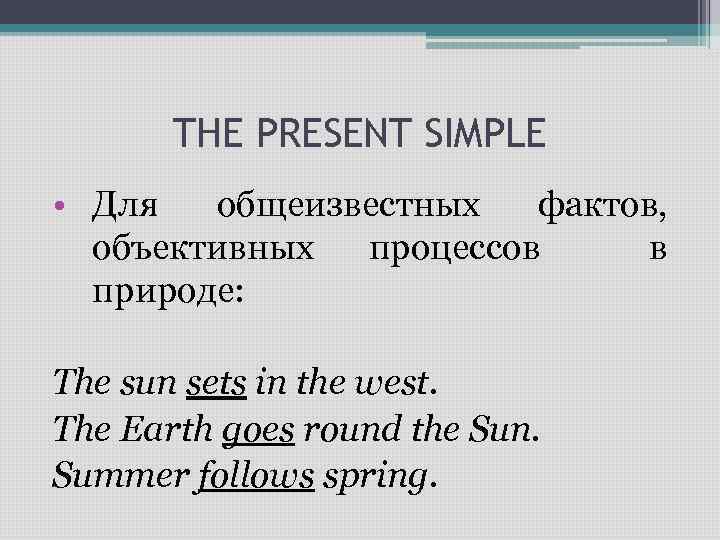
THE PRESENT SIMPLE • Для общеизвестных фактов, объективных процессов в природе: The sun sets in the west. The Earth goes round the Sun. Summer follows spring.

THE PRESENT SIMPLE • Для действий, протекающих в течение длительного периода времени (постоянные действия, привычки): She works as a teacher. She lives in Minsk. She goes in for sport. She sleeps a lot.
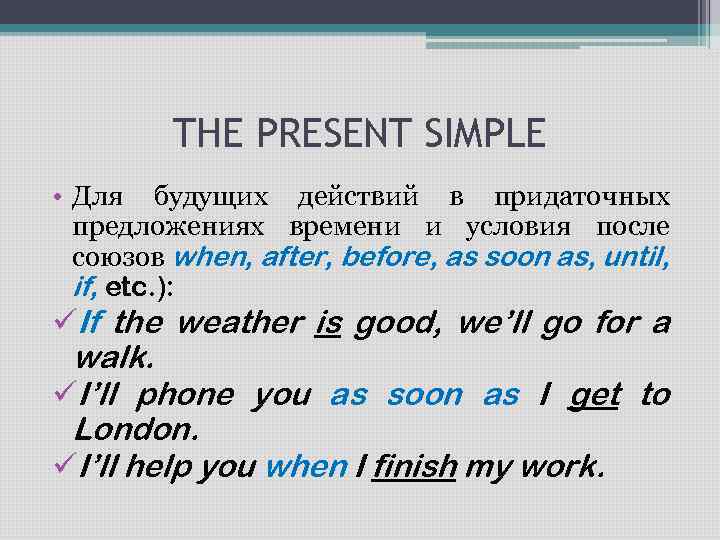
THE PRESENT SIMPLE • Для будущих действий в придаточных предложениях времени и условия после союзов when, after, before, as soon as, until, if, etc. ): üIf the weather is good, we’ll go for a walk. üI’ll phone you as soon as I get to London. üI’ll help you when I finish my work.

THE PRESENT SIMPLE • Для запланированных событий согласно расписанию, графику: üThe flight leaves at 2 p. m. (according to the timetable) üThe film starts at 8 p. m. (according to the programme) üMy lessons are over at 12 p. m. (according to the timetable)

THE PRESENT SIMPLE • Для действий, выраженных глаголами состояния: Do you recognize me? I prefer dogs to cats. Do you know this man? This car belongs to me. I want something to drink. They have a big house.

THE PRESENT SIMPLE • Для спортивных инструкций: комментариев, üMalkin serves to Crosby. üNow I peel the apples, slice them and put into the bowl.

THE PRESENT SIMPLE • NOTA BENE The Present Simple употребляется в выражениях Here comes …, There goes … : üLook – here comes your mum. üThere goes our bus. We’ll have to wait for the next.

THE PRESENT SIMPLE • NOTA BENE The Present Simple часто употребляется вместо the Past Simple и the Present Perfect в выражениях I hear … , I see … : I hear Sue is getting married. I see there’s been unrest in Belfast again.
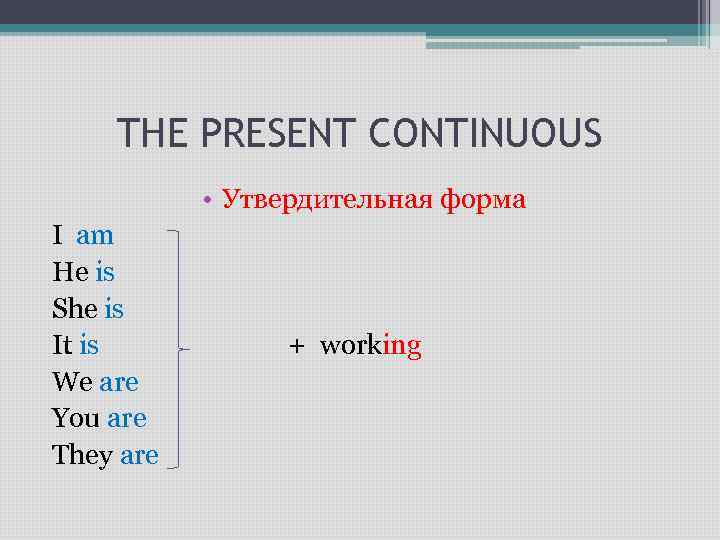
THE PRESENT CONTINUOUS • Утвердительная форма I am He is She is It is We are You are They are + working

THE PRESENT CONTINUOUS I am working in the garden He / She is working in the garden We are working in the garden You are working in the garden They are working in the garden

THE PRESENT CONTINUOUS • Отрицательная форма I am not She is not He is not It is not We are not You are not They are not + working

THE PRESENT CONTINUOUS • Вопросительная форма Am I Is he Is she Is it Are we Are you Are they + working ?
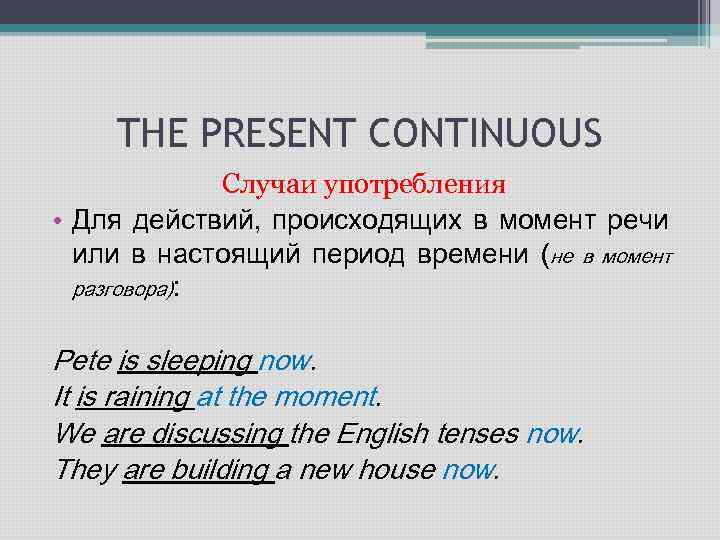
THE PRESENT CONTINUOUS Cлучаи употребления • Для действий, происходящих в момент речи или в настоящий период времени (не в момент разговора): Pete is sleeping now. It is raining at the moment. We are discussing the English tenses now. They are building a new house now.

THE PRESENT CONTINUOUS • Для выражения изменяющегося либо развивающегося действия или ситуации: üThe population is rising very fast. üMy English is getting better. üIt is becoming cold.

THE PRESENT CONTINUOUS • Для обозначения временного действия: üNow she is living in Minsk. üI am walking to work this week, because my car is out of order.
THE PRESENT CONTINUOUS • Для обозначения часто повторяющегося действия, которое вызывает раздражение, недовольство (с наречиями always, constantly, forever): üYou are always losing your things! üShe is constantly complaining!
THE PRESENT CONTINUOUS • Для выражения будущее: планов на ближайшее üI am meeting my aunt at the station tomorrow. üShe is leaving for Moscow next week.

THE PRESENT CONTINUOUS • Для настоящих действий, которые протекают параллельно другу. Два параллельных действия связываются при помощи союзов while и as: üJane is cooking while I am laying the table. üI am reading a book while my sister is doing her homework.

NOTA BENE • • • State The flowers smell nice. The parcel weighs 10 kg. She has a dog. I think you are right. The soup tastes good. I see you’ve made a mistake. • • • Event She is smelling the flowers. We are weighing the parcel. She is having dinner. I am thinking about your words. She is tasting the soup to see if it has enough salt. I am seeing the doctor tomorrow.

THE PRESENT PERFECT Утвердительная форма I We You They Утвердительная форма He have worked have known She has worked It has known

THE PRESENT PERFECT Отрицательная форма I He We have not worked You have not known They She has not worked has not known It

THE PRESENT PERFECT • Вопросительная форма Have Has Has Have I he she it we you they + worked
THE PRESENT PERFECT Случаи употребления • Для действий, завершившихся до какого-то момента в настоящем. Виден результат действия. Обстоятельства времени, являющиеся индикаторами the Present Perfect: ever, never, already, just, lately, before, so far, up to now, this week, yet; How many / much …?

THE PRESENT PERFECT üThey have just come back. üHas your brother left school yet? üI have not done my homework yet. üI have already done my homework. üI have never been to London. üHave you ever been to London? üHow many English books have you read? I have read few English so far / up to now.
THE PRESENT PERFECT • Для действий, начавшихся в прошлом и продолжающихся до сих пор. Обстоятельства времени, являющиеся индикаторами the Present Perfect: since, for; Since when …? How long …? How long have you known him? Since when have you known him? I have known him since childhood. I have known him for 20 years.

THE PRESENT PERFECT В конструкциях • It is the first (second / last) time + the Present perfect: It is the second time I have seen this film. It is the best + noun + the Present perfect: It is the best film I have ever seen.
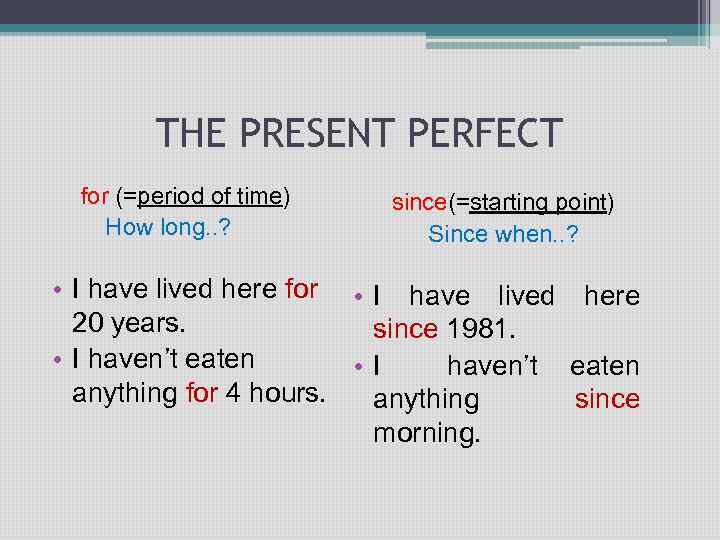
THE PRESENT PERFECT for (=period of time) How long. . ? since(=starting point) Since when. . ? • I have lived here for • I have lived here 20 years. since 1981. • I haven’t eaten anything for 4 hours. anything since morning.
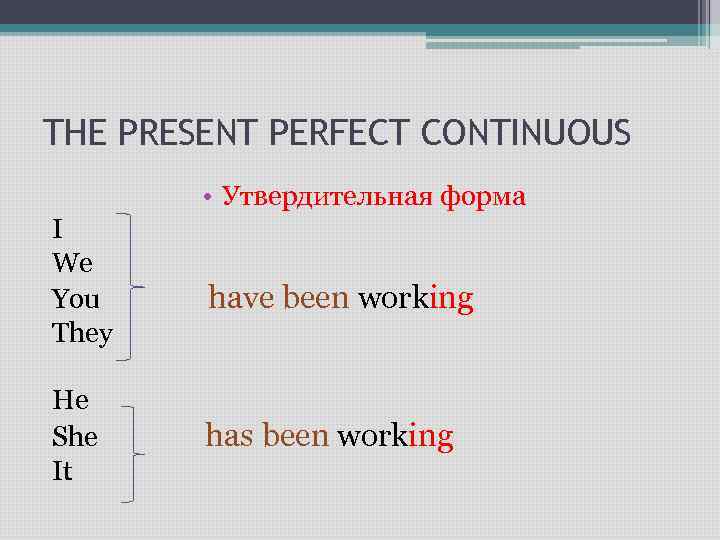
THE PRESENT PERFECT CONTINUOUS • Утвердительная форма I We You They He She It have been working has been working
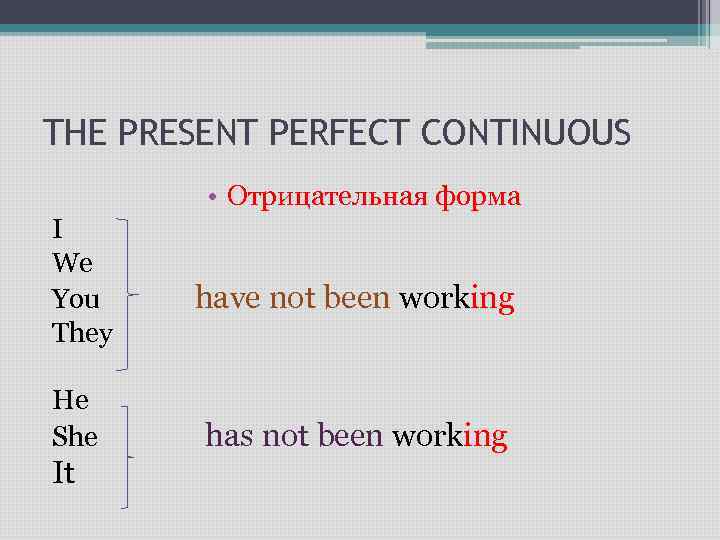
THE PRESENT PERFECT CONTINUOUS • Отрицательная форма I We You They He She It have not been working has not been working

THE PRESENT PERFECT CONTINUOUS • Вопросительная форма Have Has Has Have I he she it we you they + been working ?
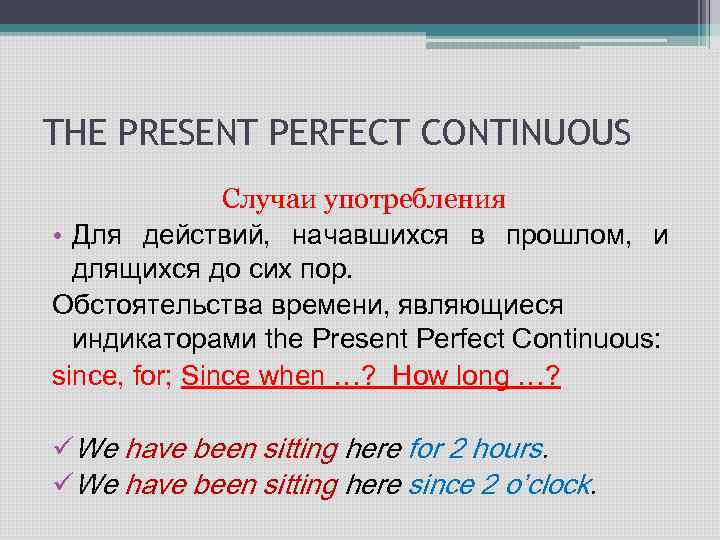
THE PRESENT PERFECT CONTINUOUS Случаи употребления • Для действий, начавшихся в прошлом, и длящихся до сих пор. Обстоятельства времени, являющиеся индикаторами the Present Perfect Continuous: since, for; Since when …? How long …? üWe have been sitting here for 2 hours. üWe have been sitting here since 2 o’clock.

THE PRESENT PERFECT CONTINUOUS • Для действий, которые длились до настоящего момента, закончились, но имеется видимый результат данных действий: My eyes are red. I have been crying. She is out of breath. She has been running. His jacket is torn. He has been fighting.
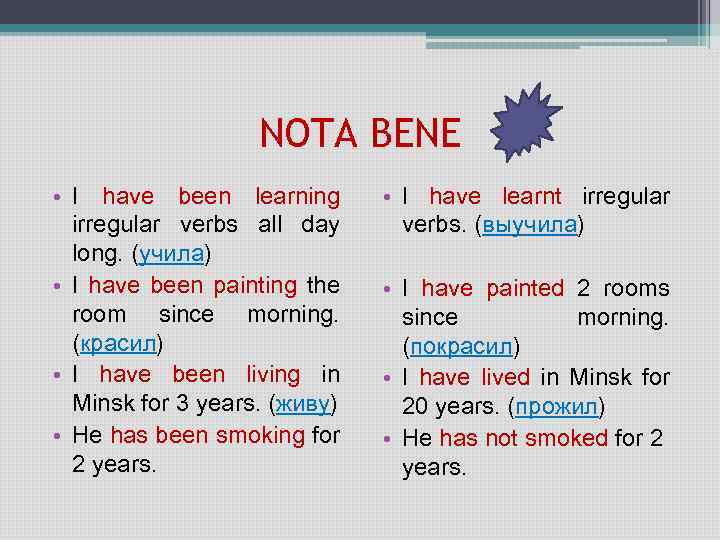
NOTA BENE • I have been learning irregular verbs all day long. (учила) • I have been painting the room since morning. (красил) • I have been living in Minsk for 3 years. (живу) • He has been smoking for 2 years. • I have learnt irregular verbs. (выучила) • I have painted 2 rooms since morning. (покрасил) • I have lived in Minsk for 20 years. (прожил) • He has not smoked for 2 years.

THE PAST SIMPLE • Утвердительная форма I He She It We You They + worked / knew
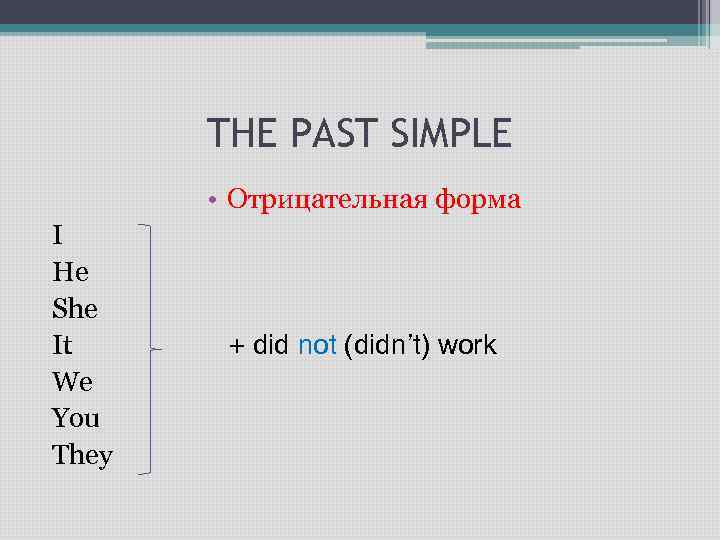
THE PAST SIMPLE • Отрицательная форма I He She It We You They + did not (didn’t) work

THE PAST SIMPLE Did • Вопросительная форма I he she it + work? we you they

THE PAST SIMPLE Случаи употребления • Для действий, которые произошли в некоторый момент времени в прошлом (время указывается или подразумевается): Обстоятельства времени: yesterday, last week, long ago, the other day, once, then, in May, in 1978, in childhood, etc. üYesterday I got up at 7 o’clock. üI went to Poland in May.

THE PAST SIMPLE • Для обозначения последовательных действий в прошлом: I got up at 7 o’clock, washed myself and had breakfast. • Для регулярно повторяющихся действий в прошлом: I often played football in my childhood. I read a lot of books at school.

THE PAST SIMPLE • Для действий, которые регулярно совершались в прошлом, но больше не совершаются в настоящем, используется оборот used to: I used to read a lot in my childhood. I didn’t use to read much in my childhood. Did you use to read a lot in your childhood?

1 I used to live alone Я раньше жил один 2 She used to play tennis professionally Она раньше играла в теннис профессионально 3 4 5 We used to go to them every Мы раньше ходили к ним day каждый день He used to play cards when Он играл в карты, когда был he was a teenager подростком Our boss used to work till midnight Наш босс раньше работал до полуночи

THE PAST CONTINUOUS • Утвердительная форма I was He was She was It was We were You were They were + working

THE PAST CONTINUOUS I was working in the garden He / She was working in the garden We were working in the garden You were working in the garden They were working in the garden
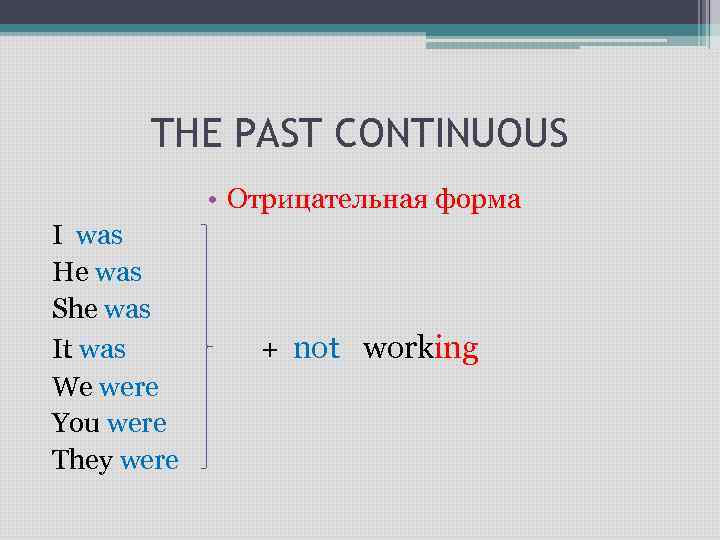
THE PAST CONTINUOUS • Отрицательная форма I was He was She was It was We were You were They were + not working
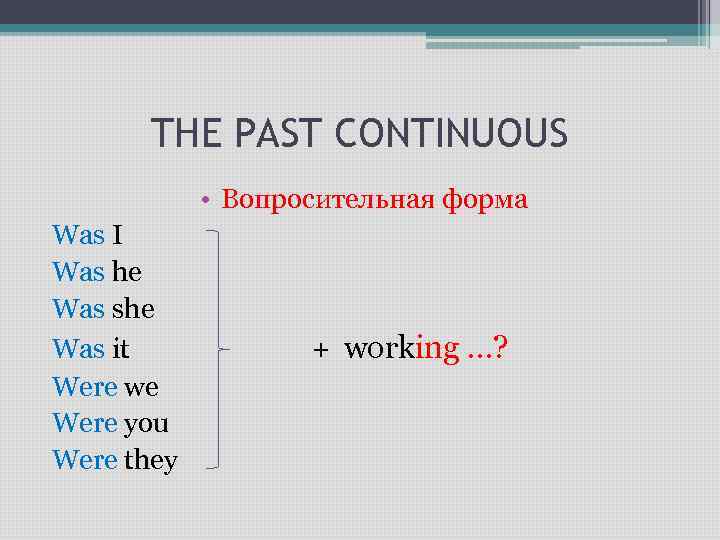
THE PAST CONTINUOUS • Вопросительная форма Was I Was he Was she Was it Were we Were you Were they + working …?
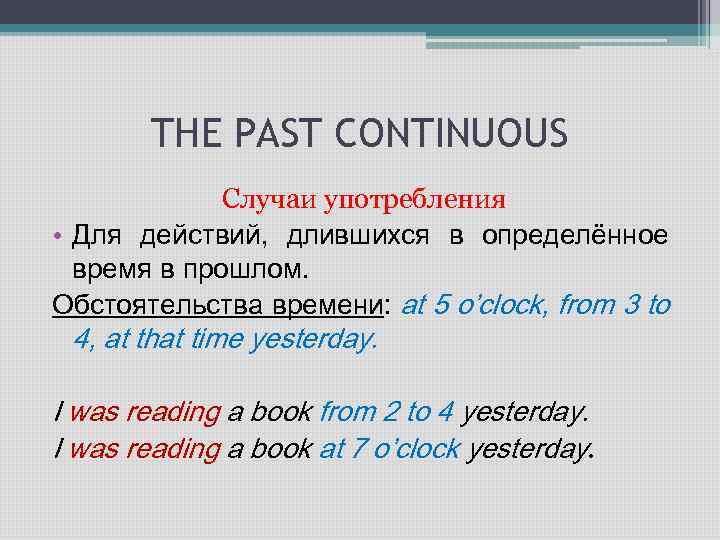
THE PAST CONTINUOUS Случаи употребления • Для действий, длившихся в определённое время в прошлом. Обстоятельства времени: at 5 o’clock, from 3 to 4, at that time yesterday. I was reading a book from 2 to 4 yesterday. I was reading a book at 7 o’clock yesterday.
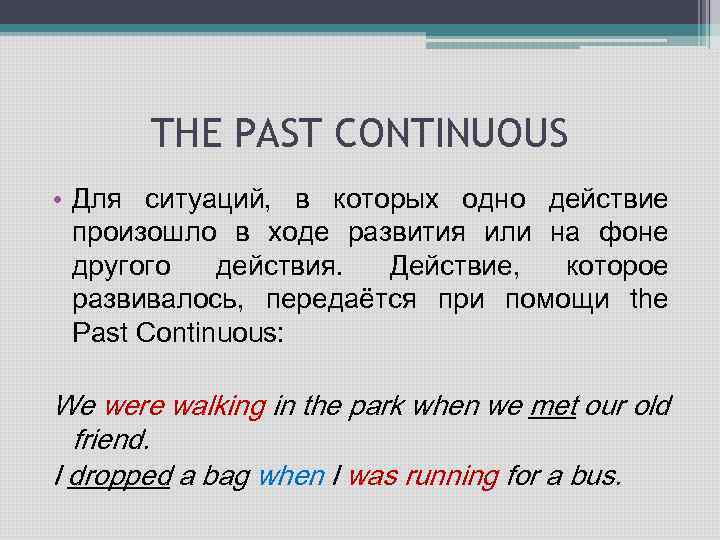
THE PAST CONTINUOUS • Для ситуаций, в которых одно действие произошло в ходе развития или на фоне другого действия. Действие, которое развивалось, передаётся при помощи the Past Continuous: We were walking in the park when we met our old friend. I dropped a bag when I was running for a bus.
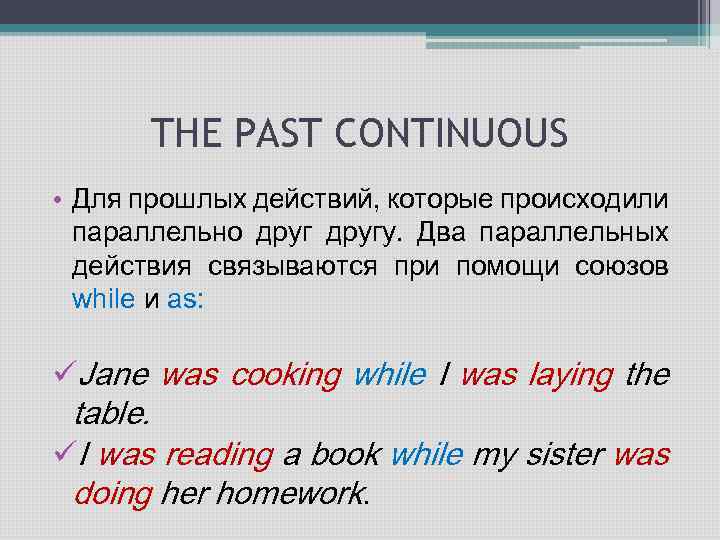
THE PAST CONTINUOUS • Для прошлых действий, которые происходили параллельно другу. Два параллельных действия связываются при помощи союзов while и as: üJane was cooking while I was laying the table. üI was reading a book while my sister was doing her homework.
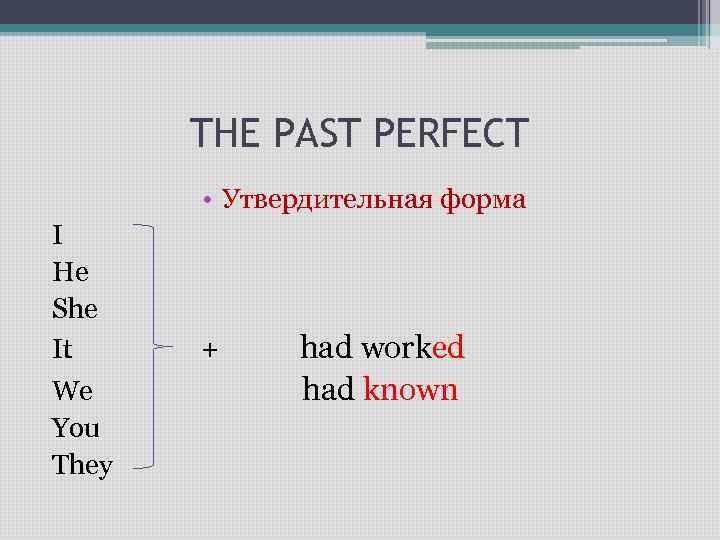
THE PAST PERFECT • Утвердительная форма I He She It We You They + had worked had known
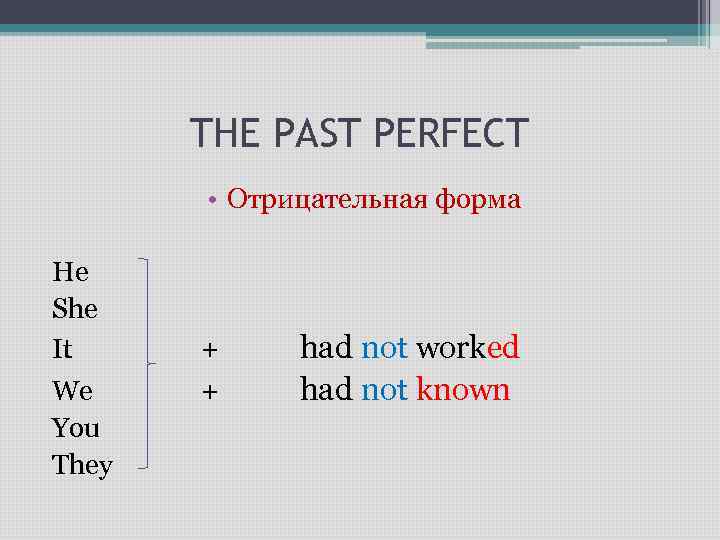
THE PAST PERFECT • Отрицательная форма He She It We You They + + had not worked had not known
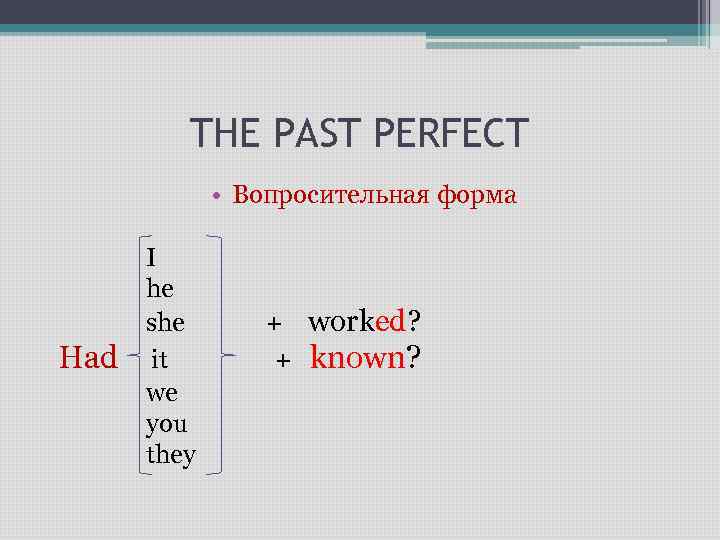
THE PAST PERFECT • Вопросительная форма Had I he she it we you they + worked? + known?

THE PAST PERFECT Случаи употребления • Для действий, завершившихся до определённого момента в прошлом. Обстоятельства времени: by (5 o’clock), before, after. üThey had finished the work by 3 o’clock. üI came to the station after the train had left. üHad they left before the trouble started?
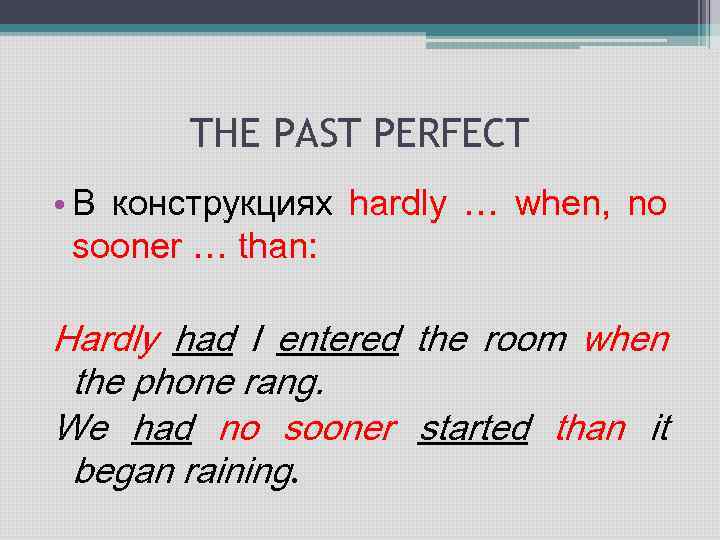
THE PAST PERFECT • В конструкциях hardly … when, no sooner … than: Hardly had I entered the room when the phone rang. We had no sooner started than it began raining.

THE PAST PERFECT CONTINUOUS • Утвердительная форма I He She It We You They + had been working
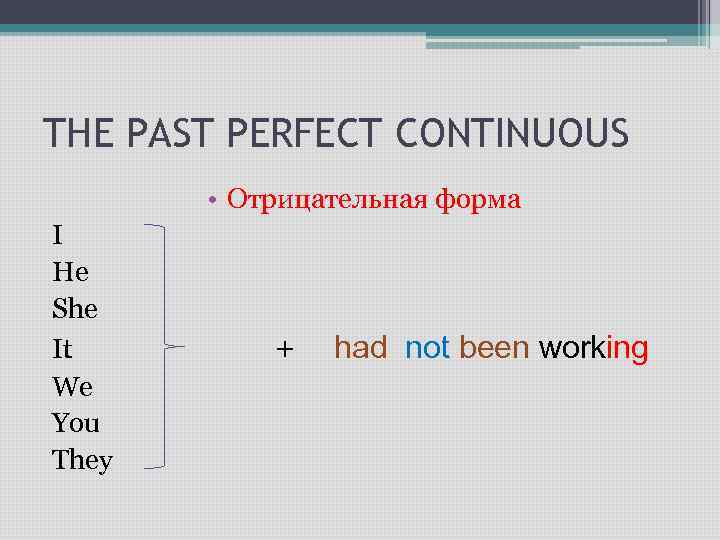
THE PAST PERFECT CONTINUOUS • Отрицательная форма I He She It We You They + had not been working
THE PAST PERFECT CONTINUOUS • Вопросительная форма Had I he she it we you they + been working …?
THE PAST PERFECT CONTINUOUS Случаи употребления Для действий, начавшихся до определённого момента в прошлом и длящихся некоторое время. Обстоятельства времени, являющиеся индикаторами the Past Perfect Continuous: since, for; How long …? üHow long had you been living here before you bought a house? üI had been living here for a year before I bought the house.

THE FUTURE SIMPLE • Утвердительная форма I he she it we you they + will work

THE FUTURE SIMPLE • Отрицательная форма I he she it we you they + will not (won’t) work

THE FUTURE SIMPLE Will • Вопросительная форма I he she it + work …? we you they

THE FUTURE SIMPLE Случаи употребления • Для действий, которые произойдут в какой-то момент времени в будущем. Обстоятельства времени: tomorrow, tonight, the day after tomorrow, next week, soon, in a year, in summer, in 2016. üI will arrive at my hotel at 6 o’clock tomorrow.
THE FUTURE SIMPLE • Для обозначения неизбежного действия в будущем, на которое нельзя повлиять: üI will be 18 next year. üThe temperature will fall to -10 C tomorrow.
THE FUTURE SIMPLE • Для действий, решение о выполнении которых принято в момент речи: üThis bag is heavy. I will help you with it. üIt looks like rain. I will take my umbrella. üThere is no bread at home. I will buy some bread.
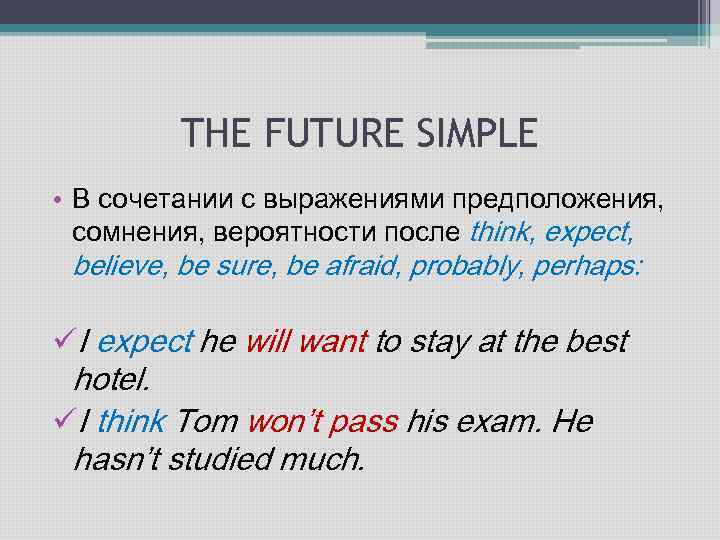
THE FUTURE SIMPLE • В сочетании с выражениями предположения, сомнения, вероятности после think, expect, believe, be sure, be afraid, probably, perhaps: üI expect he will want to stay at the best hotel. üI think Tom won’t pass his exam. He hasn’t studied much.

THE FUTURE CONTINUOUS • Утвердительная форма I he she it we you they + will be working

THE FUTURE CONTINUOUS • Отрицательная форма I he she it we you they + will not be working
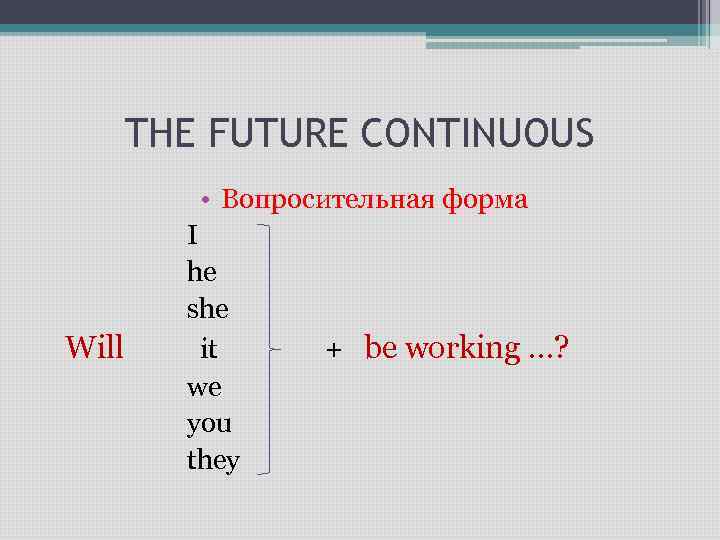
THE FUTURE CONTINUOUS • Вопросительная форма Will I he she it we you they + be working …?

THE FUTURE CONTINUOUS Случаи употребления • Для действий, которые будут происходить в точное время в будущем. Обстоятельства времени: at 5 o’clock, from 5 to 6 o’clock: üShe will be doing her homework from 5 to 7 o’clock.

THE FUTURE CONTINUOUS • В вопросах о планах собеседника, если спрашивающий хочет, чтобы отвечающий что -то для него сделал: üWill you be passing the post office on the way home? üWill you be using your computer tonight?

THE FUTURE CONTINUOUS • Для предполагаемых действий в будущем (которые запланированы): üThis time next week I will be going to Paris. üThis time tomorrow I will be taking my exam.

THE FUTURE PERFECT • Утвердительная форма I he she it we you they + will have worked

THE FUTURE PERFECT • Отрицательная форма I he she it we you they + will not have worked

THE FUTURE PERFECT • Вопросительная форма Will I he she it we you they + have worked …?
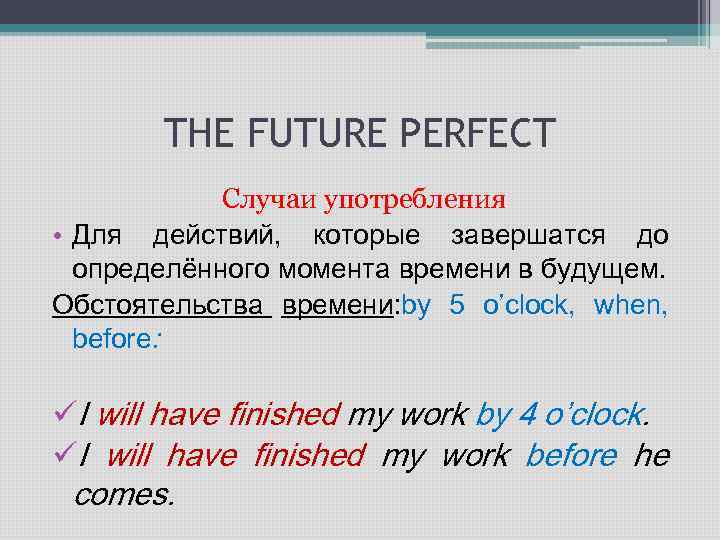
THE FUTURE PERFECT Случаи употребления • Для действий, которые завершатся до определённого момента времени в будущем. Обстоятельства времени: by 5 o’clock, when, before: üI will have finished my work by 4 o’clock. üI will have finished my work before he comes.

THE FUTURE PERFECT CONTINUOUS • Утвердительная форма I he she it we you they + will have been working

THE FUTURE PERFECT CONTINUOUS • Отрицательная форма I he she it we you they + will not have been working

THE FUTURE PERFECT CONTINUOUS • Вопросительная форма Will I he she it we you they + have been working …?
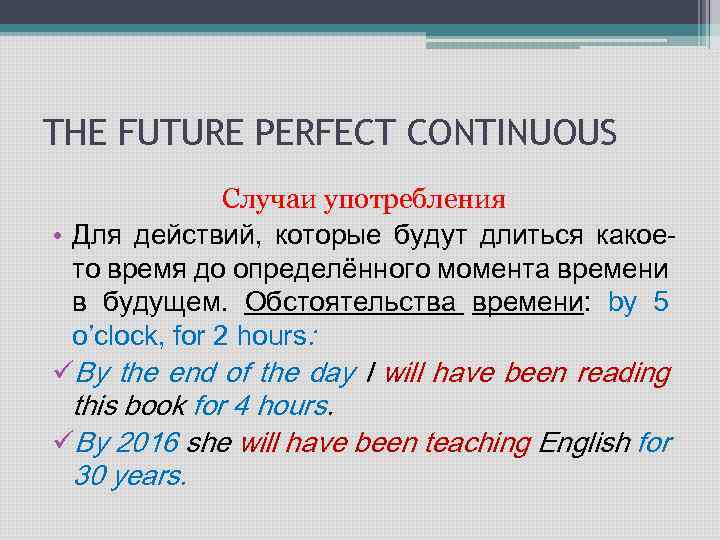
THE FUTURE PERFECT CONTINUOUS Случаи употребления • Для действий, которые будут длиться какоето время до определённого момента времени в будущем. Обстоятельства времени: by 5 o’clock, for 2 hours: üBy the end of the day I will have been reading this book for 4 hours. üBy 2016 she will have been teaching English for 30 years.
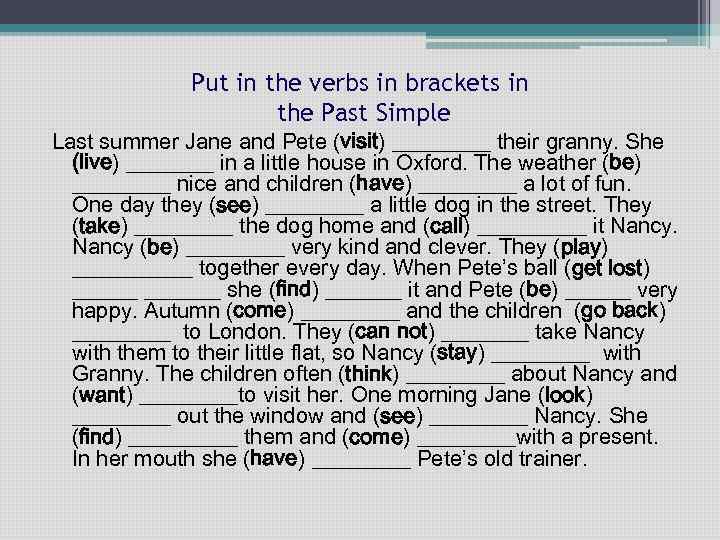
Put in the verbs in brackets in the Past Simple Last summer Jane and Pete (visit) _____ their granny. She (live) ____ in a little house in Oxford. The weather (be) _____ nice and children (have) _____ a lot of fun. One day they (see) _____ a little dog in the street. They (take) _____ the dog home and (call) _____ it Nancy (be) _____ very kind and clever. They (play) ______ together every day. When Pete’s ball (get lost) _______ she (find) _______ it and Pete (be) ______ very happy. Autumn (come) _____ and the children (go back) _____ to London. They (can not) ____ take Nancy with them to their little flat, so Nancy (stay) _____ with Granny. The children often (think) _____ about Nancy and (want) _____to visit her. One morning Jane (look) _____ out the window and (see) _____ Nancy. She (find) _____ them and (come) _____with a present. In her mouth she (have) _____ Pete’s old trainer.

Put in the verbs in brackets in the Past Simple Last summer Jane and Pete visited their granny. She lived in a little house in Oxford. The weather was nice and children had a lot of fun. One day they saw a little dog in the street. They took the dog home and called it Nancy was very kind and clever. They played together every day. When Pete’s ball got lost she found it and Pete was very happy. Autumn came and the children went back to London. They couldn’t take Nancy with them to their little flat, so Nancy stayed with Granny. The children often thought about Nancy and wanted to visit her. One morning Jane looked out the window and saw Nancy. She found them and came with a present. In her mouth she had Pete’s old trainer.

Раскройте скобки, употребив правильную форму глагола. • Julia ______ (be) my best friend, but we are not friends any more. • I gave up smoking one year ago. I _______ (smoke) two packets of cigarettes a day. • Chris ______ (live) in a small flat, but now he lives in a big house. • Andrew _______ (drink) milk every day when he was a child.

• Ann _______ (eat) at home, but now she eats out. • I _______ (not/like) meat, but now I am not a vegetarian. • She _______ (cry) a lot when she was younger. • _______ (you/go) to work on foot? • He _______ (not/watch) news, but now he watches it every day. • Peter _______ (earn) a lot, but now he is unemployed.
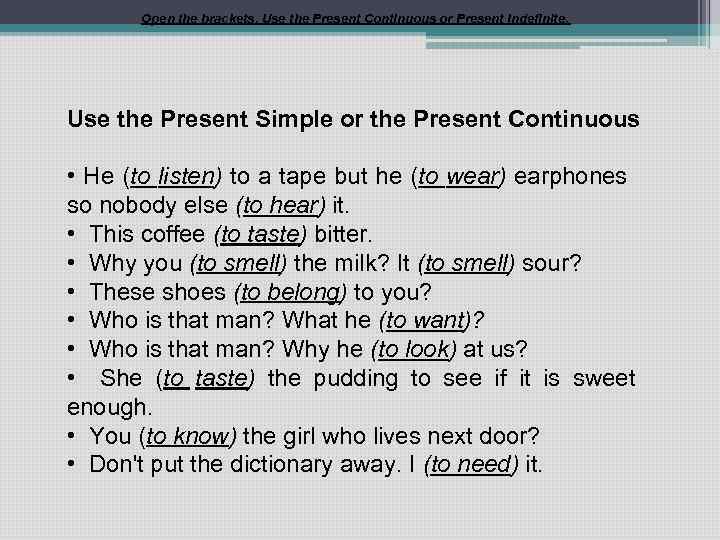
Open the brackets. Use the Present Continuous or Present Indefinite. Use the Present Simple or the Present Continuous • He (to listen) to a tape but he (to wear) earphones so nobody else (to hear) it. • This coffee (to taste) bitter. • Why you (to smell) the milk? It (to smell) sour? • These shoes (to belong) to you? • Who is that man? What he (to want)? • Who is that man? Why he (to look) at us? • She (to taste) the pudding to see if it is sweet enough. • You (to know) the girl who lives next door? • Don't put the dictionary away. I (to need) it.

Open the brackets. Use either the Past Continuous or Past Indefinite. • Sally (to burn) her wrist when she (to cook) the dinner. • Last night I (to read) in bed when suddenly I (to hear) a cry. • We (not to go) out because it (to rain). • One day I (to play) by the big window in our front room where I used to sit on wet days looking at the rain. • When Sid (to be) young, he (to work) from morning till night. • While he (to read) aloud, I (to write) a letter to my friend. • Last night my neighbours (to shout) for hours and I couldn't get to sleep. • The whole day yesterday Nick (to get) ready for his report. • What you (to do) at this time yesterday? • The phone still (to ring) when I (to rush) into the room.

Open the brackets. Use either the Past Indefinite or Present Perfect. • Lately I (not to see) much of her. But a week ago I (to come) across her in a shop. • We (not to meet) since we (to leave) school • Do you know this man? – Yes, I (to know) him since childhood. • Is it raining? – No, the rain (to stop) an hour ago. – It (to rain) since yesterday evening. • I wonder what (to happen) to him. Why is he late? • When you (to see) Ann last time? –We (not to meet) lately. • She (to be) to London twice. • You (to find) your key? – Unfortunately, no. But I remember I (to put) it on my desk yesterday evening. • When they (to buy) their new house? – Last autumn. But they (not to repair) it yet. • She (to learn) to play the guitar at school.
Скачать презентацию УПОТРЕБЛЕНИЕ ВИДО-ВРЕМЕННЫХ ФОРМ АНГЛИЙСКИХ ГЛАГОЛОВ В ДЕЙСТВИТЕЛЬНОМ ЗАЛОГЕ
УПОТРЕБЛЕНИЕ ВРЕМЁН.pptx