


 Скачать презентацию Update on Standards and Guidance OSHA s Regulatory Agenda
9afc6ba8f400fb8b0dfb700cf44cfb0c.ppt
- Количество слайдов: 28
 Update on Standards and Guidance OSHA’s Regulatory Agenda and Guidance Projects Dorothy Dougherty, Acting Directorate of Standards and Guidance
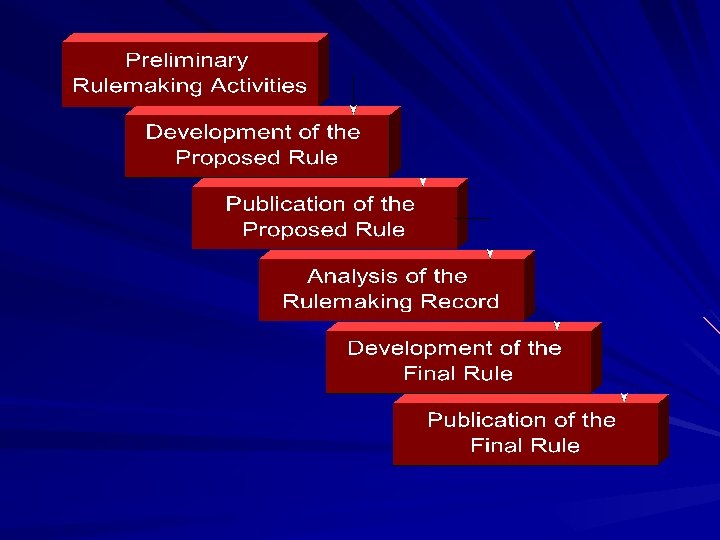
 THE REGULATORY PROCESS
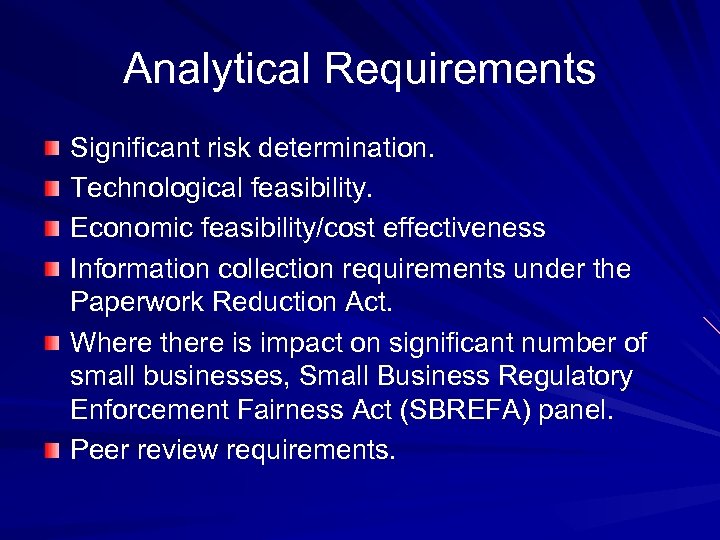 Analytical Requirements Significant risk determination. Technological feasibility. Economic feasibility/cost effectiveness Information collection requirements under the Paperwork Reduction Act. Where there is impact on significant number of small businesses, Small Business Regulatory Enforcement Fairness Act (SBREFA) panel. Peer review requirements.
 Regulatory Agenda DSG has about 20 regulatory projects. Current regulatory agenda was published on 4/24/2006. Can be accessed through OSHA’s web page under the “unified agenda”.
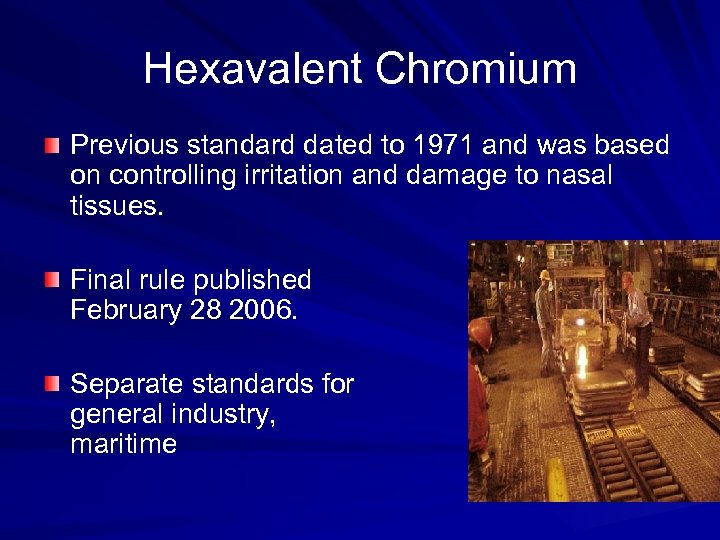 Hexavalent Chromium Previous standard dated to 1971 and was based on controlling irritation and damage to nasal tissues. Final rule published February 28 2006. Separate standards for general industry, maritime construction,
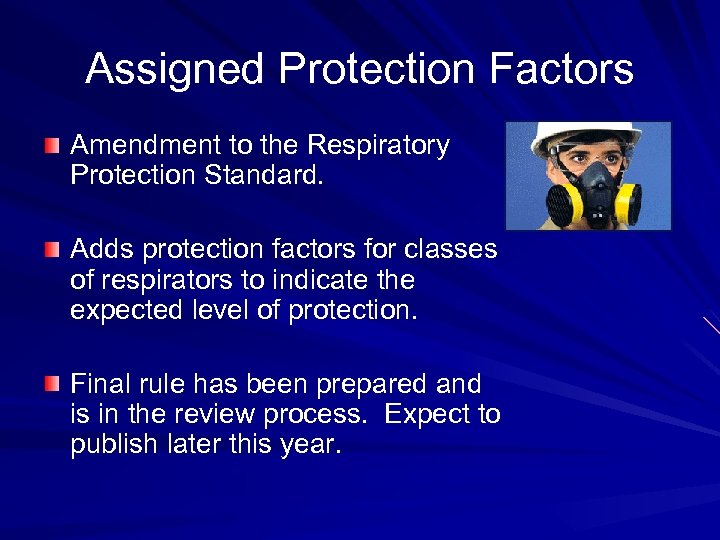 Assigned Protection Factors Amendment to the Respiratory Protection Standard. Adds protection factors for classes of respirators to indicate the expected level of protection. Final rule has been prepared and is in the review process. Expect to publish later this year.
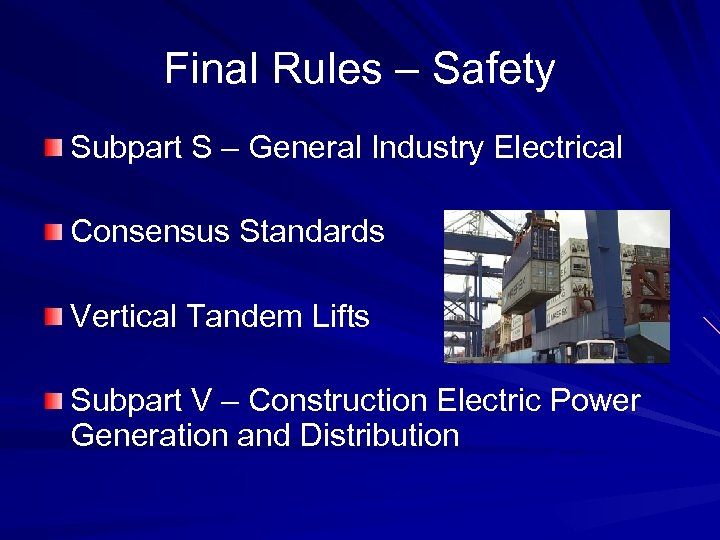 Final Rules – Safety Subpart S – General Industry Electrical Consensus Standards Vertical Tandem Lifts Subpart V – Construction Electric Power Generation and Distribution
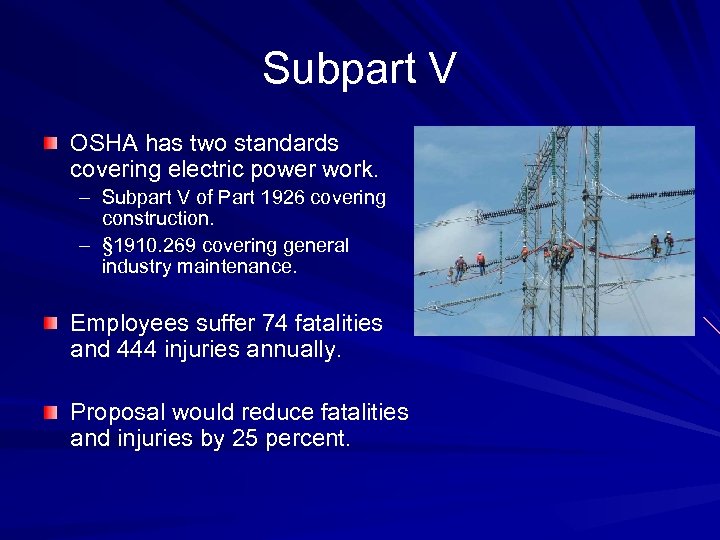 Subpart V OSHA has two standards covering electric power work. – Subpart V of Part 1926 covering construction. – § 1910. 269 covering general industry maintenance. Employees suffer 74 fatalities and 444 injuries annually. Proposal would reduce fatalities and injuries by 25 percent.
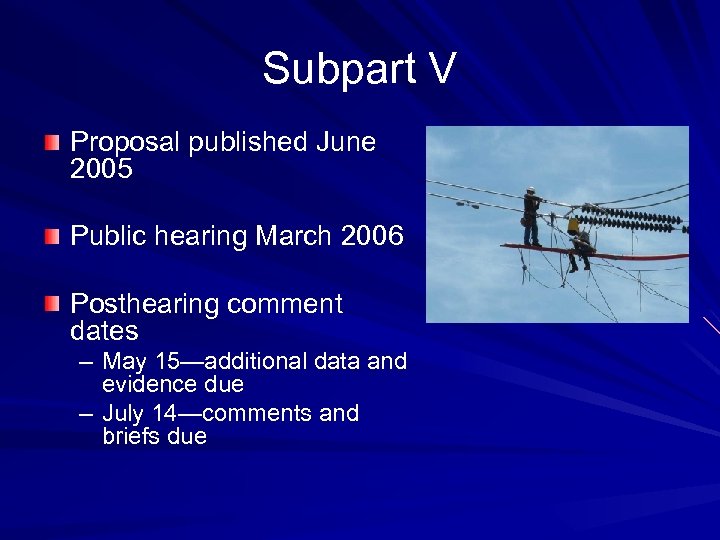 Subpart V Proposal published June 2005 Public hearing March 2006 Posthearing comment dates – May 15—additional data and evidence due – July 14—comments and briefs due
 Consensus Standards More than 200 consensus standards are used in about 500 OSHA provisions Nearly all 200 are out of date OSHA Rulemaking cannot keep pace with updates
 How OSHA Uses Consensus Standards Basis - of an OSHA standard – extracting wording Citing - as a reference - to indicate an acceptable means to meet a performance-language requirement Incorporating by reference - citing the name, year, and part/section of the consensus standard Notes or Appendices - for additional information or compliance assistance
 Proposed Rules Crystalline Silica Beryllium Explosives General Working Conditions in Shipyards
 RFIs and ANPRs Hazard Communication/Globally Harmonized System SIPS III Emergency Response and Preparedness Ionizing Radiation
 Emergency Response/Preparedness OSHA’s jurisdiction is limited, but its standards are used by state and local authorities. Experience in preparing guidance. Publishing request for information to solicit input on whether rulemaking should be done, and what form it should take. Issues related to PPE, training, medical surveillance.
 Hazard Communication Considering adoption of the Globally Harmonized System of Classification and Labeling of Chemicals (GHS). Added to the new regulatory agenda, with the next step being an advance notice of proposed rulemaking (ANPR). ANPR is currently being reviewed by OMB.
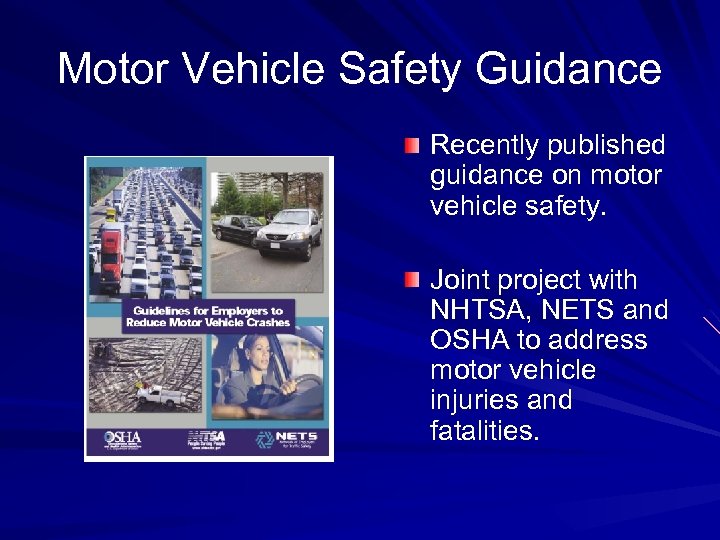 Motor Vehicle Safety Guidance Recently published guidance on motor vehicle safety. Joint project with NHTSA, NETS and OSHA to address motor vehicle injuries and fatalities.
 Current Guidance Projects Chrome VI outreach Hazards of Scrap Metal Recycling Hazard Communication/GHS PPE for Emergency Response Silica Exposure in Construction
 Current Guidance Projects Ergonomics in Shipyards Slings Electrical Safety Motor Vehicle Safety in Marine Terminals Fire Service Manual
 Emerging Issues Control Banding – Co-sponsor international workshop – Participated in national workshop Nanotechnology – National Nanotechnology Initiative – Best practices Methamphetamine Laboratories – Researching potential hazards to first responders and privatesector clean-up workers
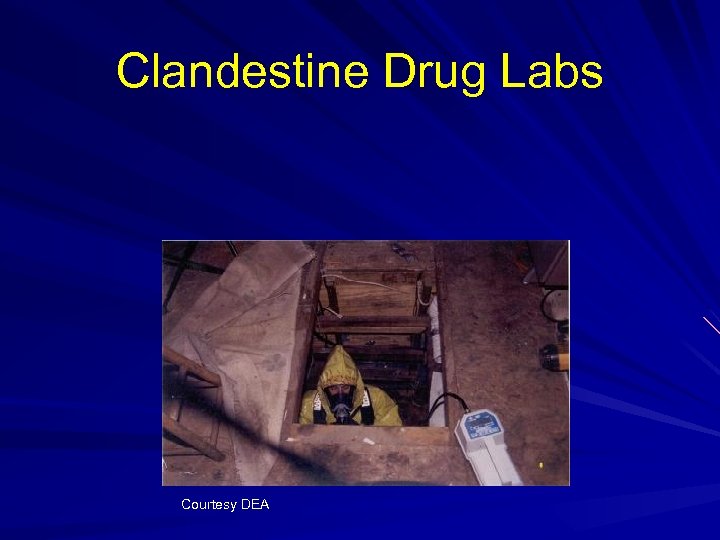 Clandestine Drug Labs Courtesy DEA
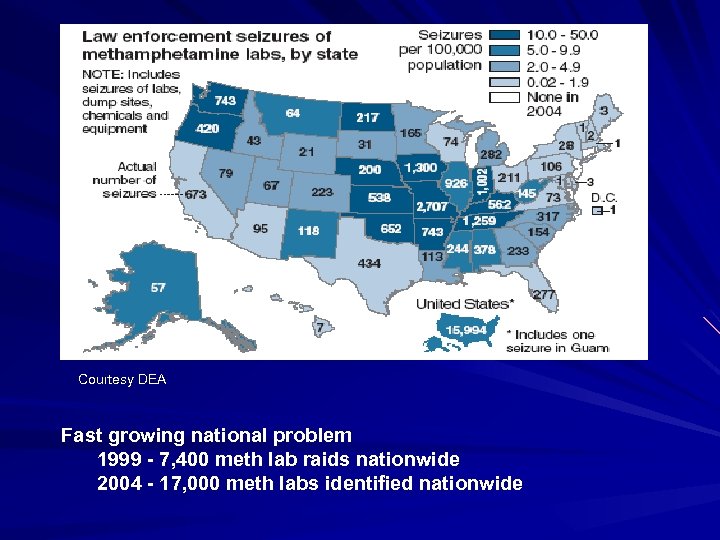 Courtesy DEA Fast growing national problem 1999 - 7, 400 meth lab raids nationwide 2004 - 17, 000 meth labs identified nationwide
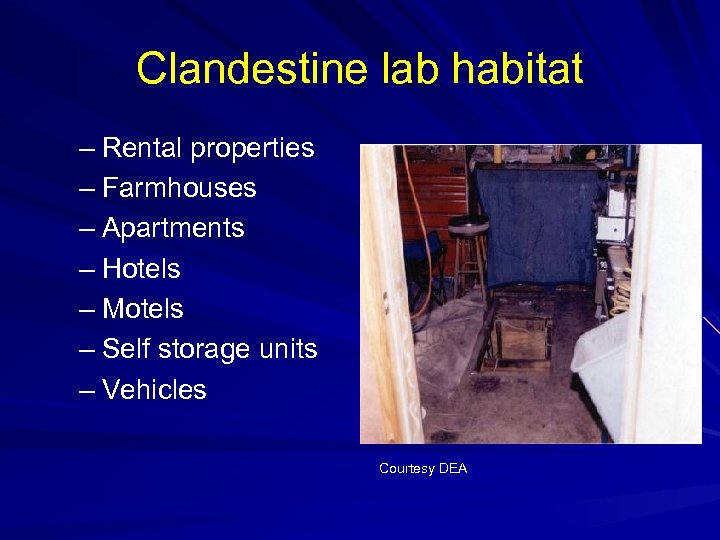 Clandestine lab habitat – Rental properties – Farmhouses – Apartments – Hotels – Motels – Self storage units – Vehicles Courtesy DEA
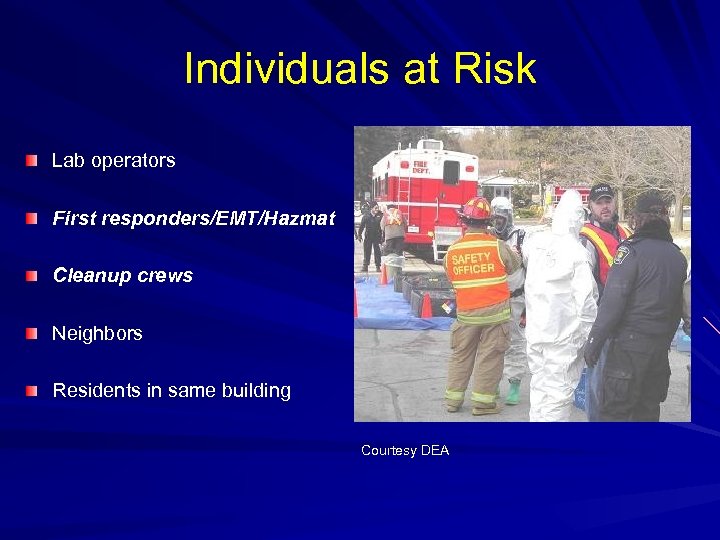 Individuals at Risk Lab operators First responders/EMT/Hazmat Cleanup crews Neighbors Residents in same building Courtesy DEA
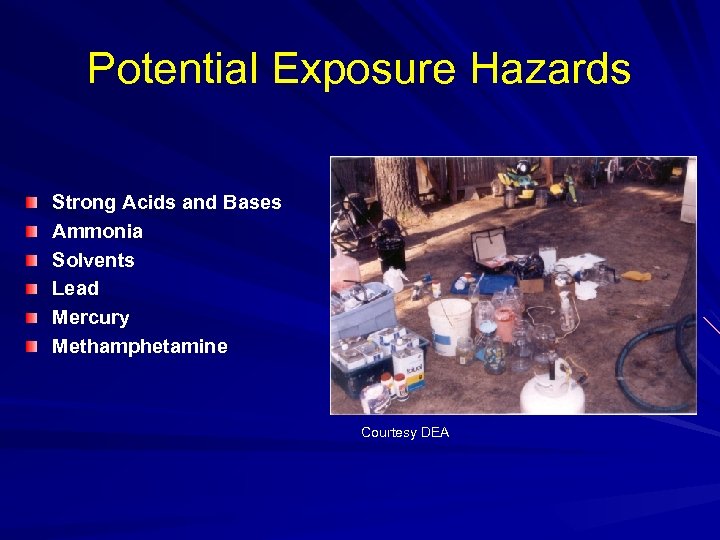 Potential Exposure Hazards Strong Acids and Bases Ammonia Solvents Lead Mercury Methamphetamine Courtesy DEA
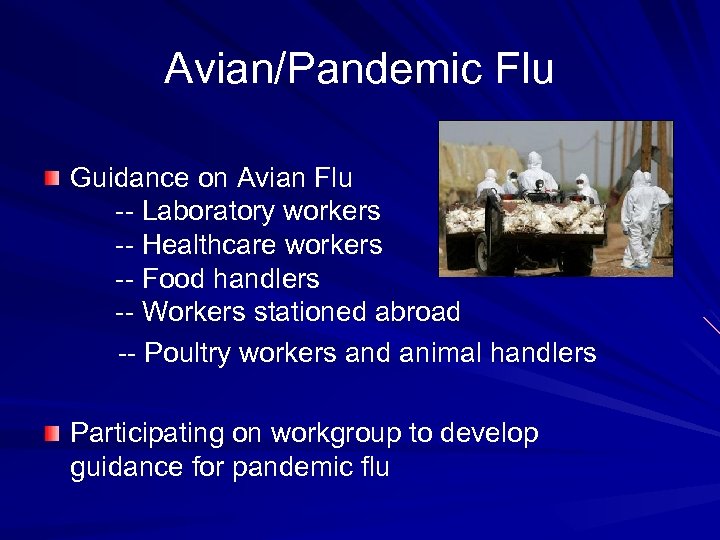 Avian/Pandemic Flu Guidance on Avian Flu -- Laboratory workers -- Healthcare workers -- Food handlers -- Workers stationed abroad -- Poultry workers and animal handlers Participating on workgroup to develop guidance for pandemic flu
 Conclusion A new regulatory agenda was published on 4/24/2006. It provides the goals for completing the various steps of each project. Rulemaking is an iterative and deliberative process. It includes many checks and balances to ensure the Agency is basing its decisions on the best available evidence. Guidance is an additional tool to provide information to help address safety and health issues.