 Скачать презентацию Update on HBD R D at the WIS Boris
5623a6e6cf428ee0b74cf2d20d199850.ppt
- Количество слайдов: 6



Update on HBD R&D at the WIS Boris Khachaturov, Alexander Kozlov, Alexander Milov, Ilia Ravinovich and Itzhak Tserruya Weizmann Institute, Israel Feb. 12, 2002 http: //www. phenix. bnl. gov/WWW/p/draft/tserruya/HBD/1 -12 -R&D-update. ppt
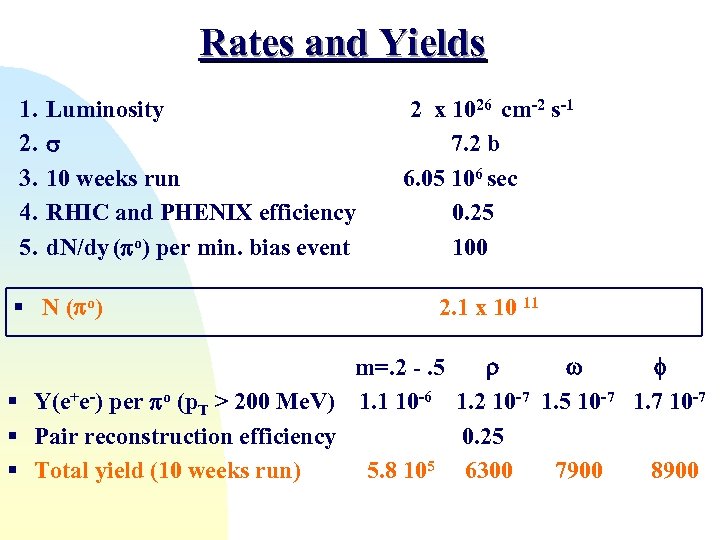
Rates and Yields 1. 2. 3. 4. 5. Luminosity 10 weeks run RHIC and PHENIX efficiency d. N/dy ( o) per min. bias event § N ( o) 2 x 1026 cm-2 s-1 7. 2 b 6. 05 106 sec 0. 25 100 2. 1 x 10 11 m=. 2 -. 5 § Y(e+e-) per o (p. T > 200 Me. V) 1. 1 10 -6 1. 2 10 -7 1. 5 10 -7 1. 7 10 -7 § Pair reconstruction efficiency 0. 25 § Total yield (10 weeks run) 5. 8 105 6300 7900 8900
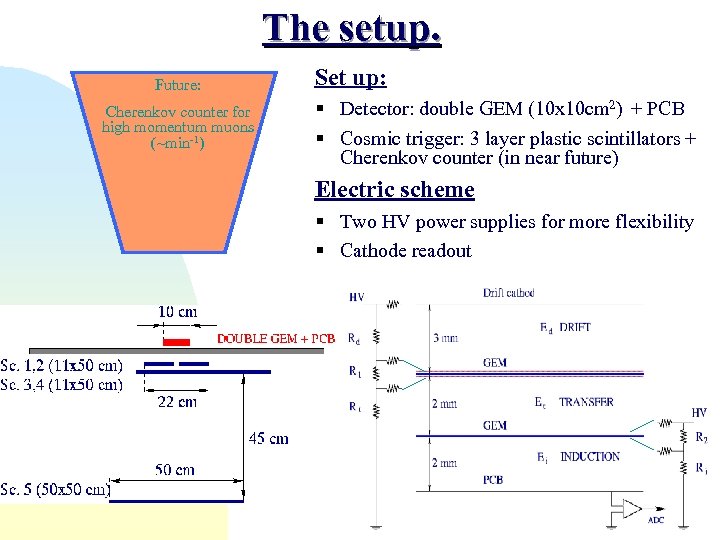
The setup. Future: Cherenkov counter for high momentum muons (~min-1) Set up: § Detector: double GEM (10 x 10 cm 2) + PCB § Cosmic trigger: 3 layer plastic scintillators + Cherenkov counter (in near future) Electric scheme § Two HV power supplies for more flexibility § Cathode readout
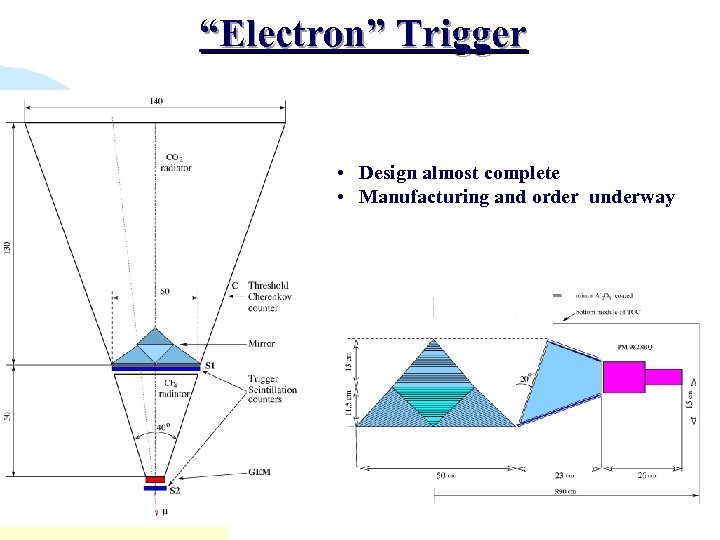
“Electron” Trigger • Design almost complete • Manufacturing and order underway
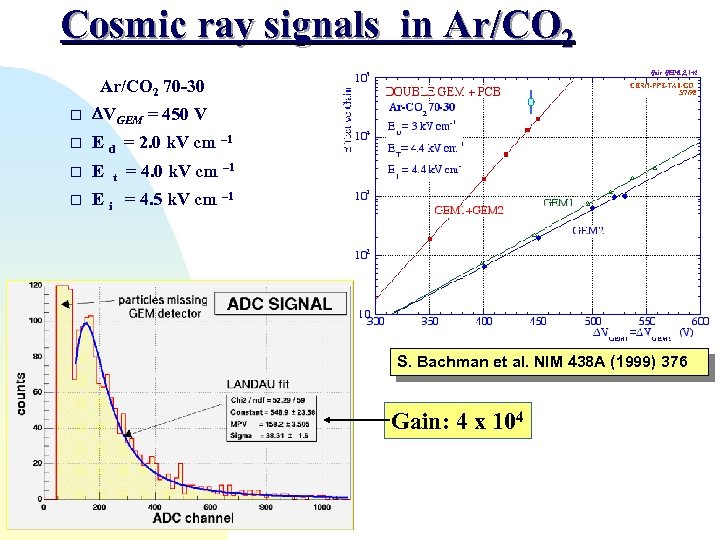
Cosmic ray signals in Ar/CO 2 70 -30 VGEM = 450 V E d = 2. 0 k. V cm – 1 E E i = 4. 5 k. V cm – 1 t = 4. 0 k. V cm – 1 S. Bachman et al. NIM 438 A (1999) 376 Gain: 4 x 10⁴
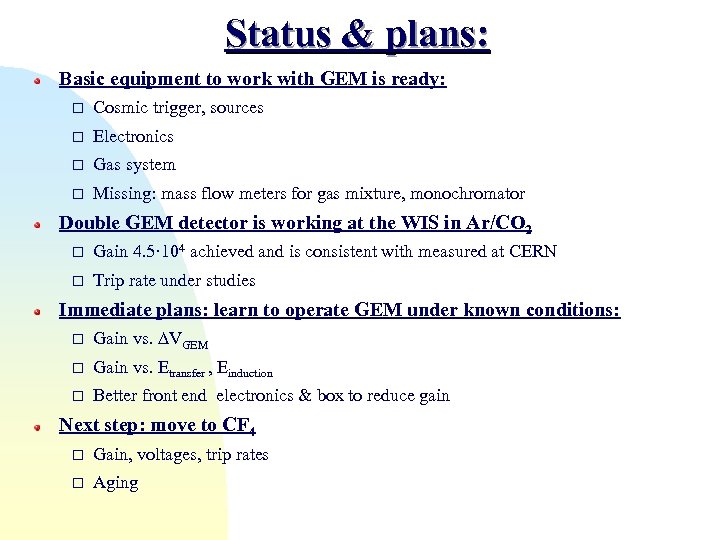
Status & plans: Basic equipment to work with GEM is ready: Cosmic trigger, sources Electronics Gas system Missing: mass flow meters for gas mixture, monochromator Double GEM detector is working at the WIS in Ar/CO 2 Gain 4. 5· 104 achieved and is consistent with measured at CERN Trip rate under studies Immediate plans: learn to operate GEM under known conditions: Gain vs. VGEM Gain vs. Etransfer , Einduction Better front end electronics & box to reduce gain Next step: move to CF 4 Gain, voltages, trip rates Aging
Скачать презентацию Update on HBD R D at the WIS Boris
5623a6e6cf428ee0b74cf2d20d199850.ppt