


 Скачать презентацию University of Wollongong Development of Silicon Detector Instrumentation
246a4aecabf7d2ada8914ae305974622.ppt
- Количество слайдов: 66
 University of Wollongong Development of Silicon Detector Instrumentation for Medical Physics A. B. Rosenfeld Centre for Medical Radiation Physics, University of Wollongong, Australia New Zealand-Australian Semiconductor Instrumentation Workshop. Wellington , 21 -23 June, 2004
 Overview Positron Emission Tomography Microdosimetry Hadron Therapy Space Dosimetry Intensity Modulated Radiotherapy (IMRT) Synchrotron Microbeam X-Ray Radiation Therapy (MRT) High and Low Dose Rate Brachytherapy Neutron Dosimetry Radiation Damage Monitoring
 University of Wollongong Development of Silicon Detector Instrumentation for Medical Physics Positron Emission Tomography
 Introduction Huntington’s disease studies http: //neurosurgery. mgh. harvard. edu/pet-hp. htm
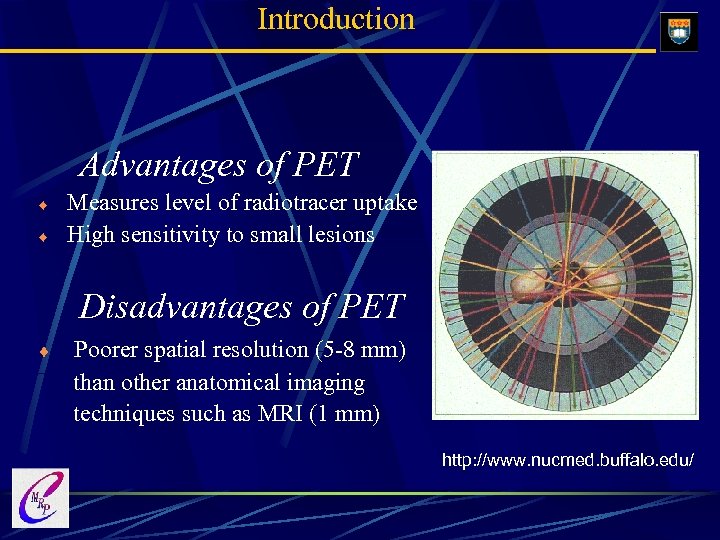 Introduction Advantages of PET ¨ ¨ Measures level of radiotracer uptake High sensitivity to small lesions Disadvantages of PET ¨ Poorer spatial resolution (5 -8 mm) than other anatomical imaging techniques such as MRI (1 mm) http: //www. nucmed. buffalo. edu/
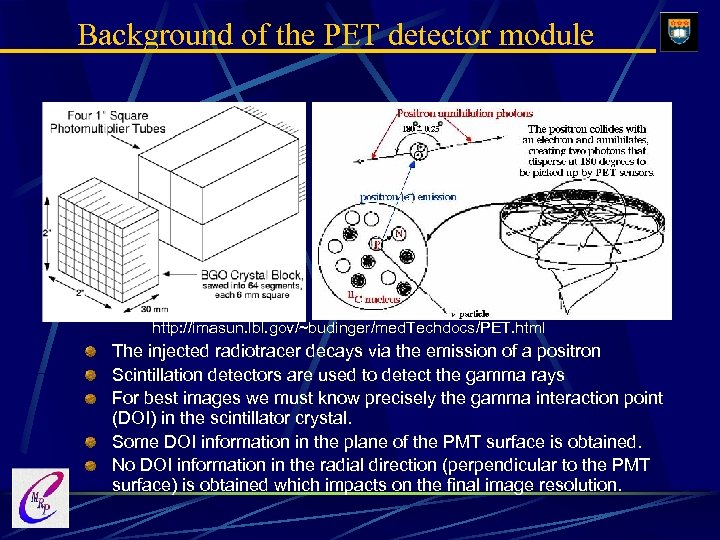 Background of the PET detector module http: //imasun. lbl. gov/~budinger/med. Techdocs/PET. html The injected radiotracer decays via the emission of a positron Scintillation detectors are used to detect the gamma rays For best images we must know precisely the gamma interaction point (DOI) in the scintillator crystal. Some DOI information in the plane of the PMT surface is obtained. No DOI information in the radial direction (perpendicular to the PMT surface) is obtained which impacts on the final image resolution.
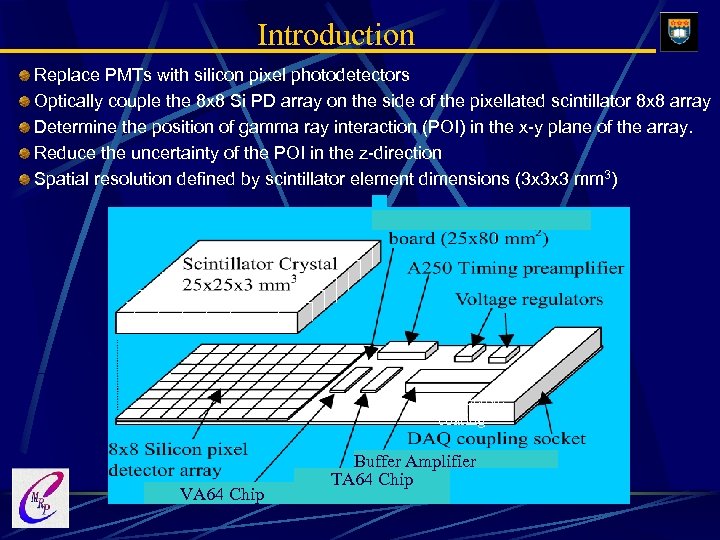 Introduction Replace PMTs with silicon pixel photodetectors Optically couple the 8 x 8 Si PD array on the side of the pixellated scintillator 8 x 8 array Determine the position of gamma ray interaction (POI) in the x-y plane of the array. Reduce the uncertainty of the POI in the z-direction Spatial resolution defined by scintillator element dimensions (3 x 3 x 3 mm 3) Reflective coating VA 64 Chip Buffer Amplifier TA 64 Chip
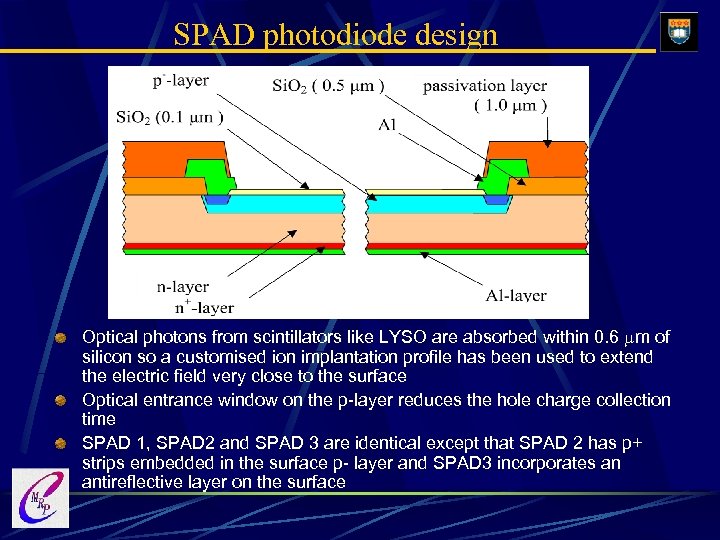 SPAD photodiode design Optical photons from scintillators like LYSO are absorbed within 0. 6 mm of silicon so a customised ion implantation profile has been used to extend the electric field very close to the surface Optical entrance window on the p-layer reduces the hole charge collection time SPAD 1, SPAD 2 and SPAD 3 are identical except that SPAD 2 has p+ strips embedded in the surface p- layer and SPAD 3 incorporates an antireflective layer on the surface
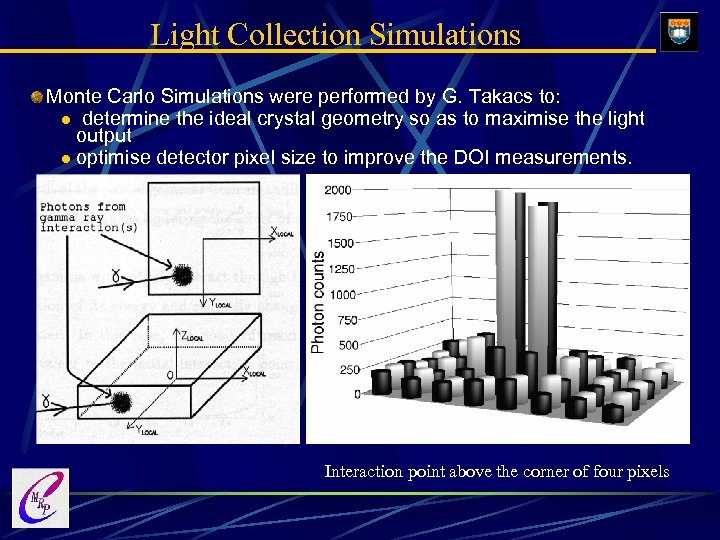 Light Collection Simulations Monte Carlo Simulations were performed by G. Takacs to: l determine the ideal crystal geometry so as to maximise the light output l optimise detector pixel size to improve the DOI measurements. Interaction point above the corner of four pixels
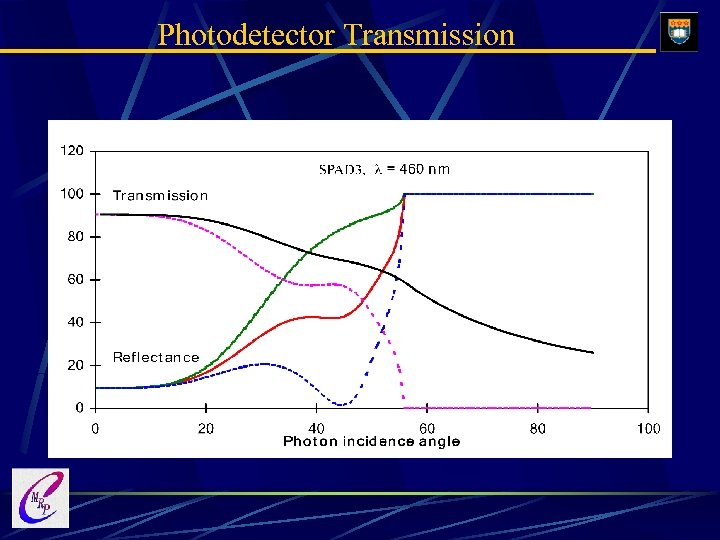 Photodetector Transmission
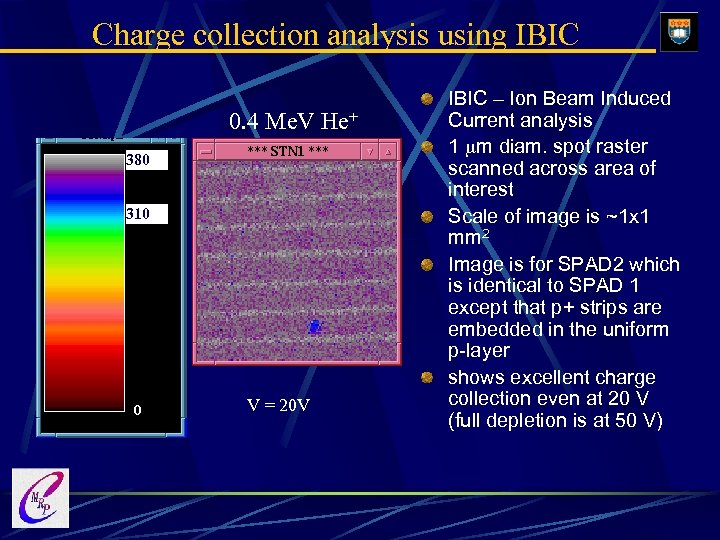 Charge collection analysis using IBIC 0. 4 Me. V He+ 380 310 V = 20 V IBIC – Ion Beam Induced Current analysis 1 mm diam. spot raster scanned across area of interest Scale of image is ~1 x 1 mm 2 Image is for SPAD 2 which is identical to SPAD 1 except that p+ strips are embedded in the uniform p-layer shows excellent charge collection even at 20 V (full depletion is at 50 V)
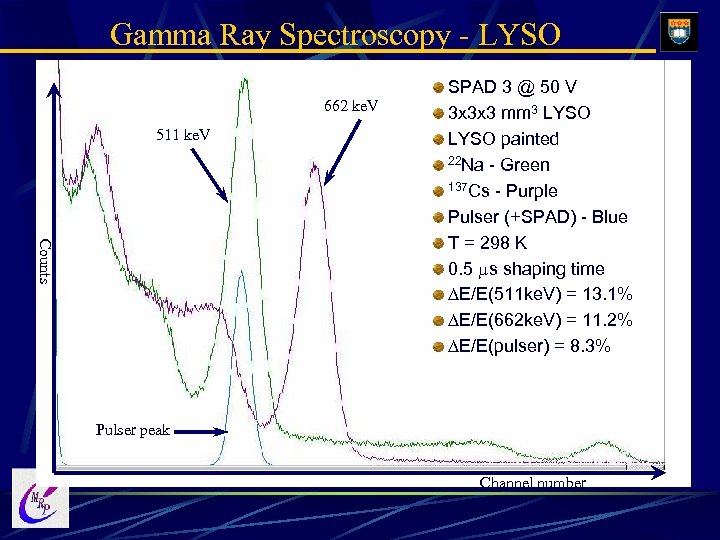 Gamma Ray Spectroscopy - LYSO 662 ke. V 511 ke. V Counts SPAD 3 @ 50 V 3 x 3 x 3 mm 3 LYSO painted 22 Na - Green 137 Cs - Purple Pulser (+SPAD) - Blue T = 298 K 0. 5 ms shaping time DE/E(511 ke. V) = 13. 1% DE/E(662 ke. V) = 11. 2% DE/E(pulser) = 8. 3% Pulser peak Channel number
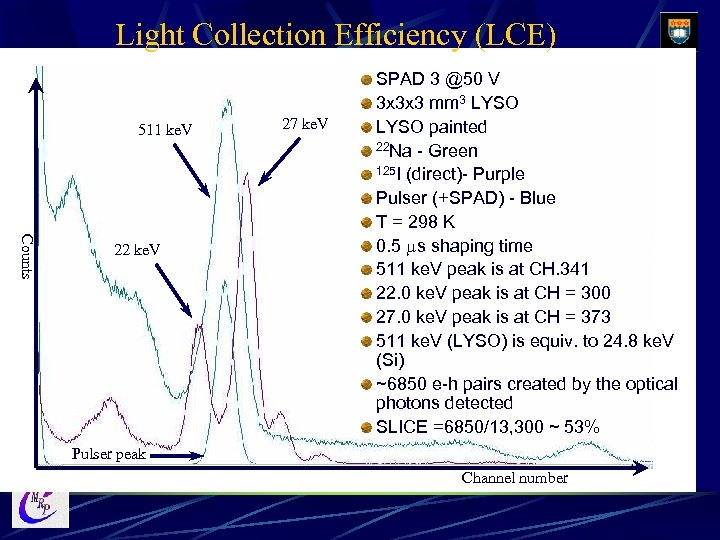 Light Collection Efficiency (LCE) 511 ke. V Counts 22 ke. V 27 ke. V SPAD 3 @50 V 3 x 3 x 3 mm 3 LYSO painted 22 Na - Green 125 I (direct)- Purple Pulser (+SPAD) - Blue T = 298 K 0. 5 ms shaping time 511 ke. V peak is at CH. 341 22. 0 ke. V peak is at CH = 300 27. 0 ke. V peak is at CH = 373 511 ke. V (LYSO) is equiv. to 24. 8 ke. V (Si) ~6850 e-h pairs created by the optical photons detected SLICE =6850/13, 300 ~ 53% Pulser peak Channel number
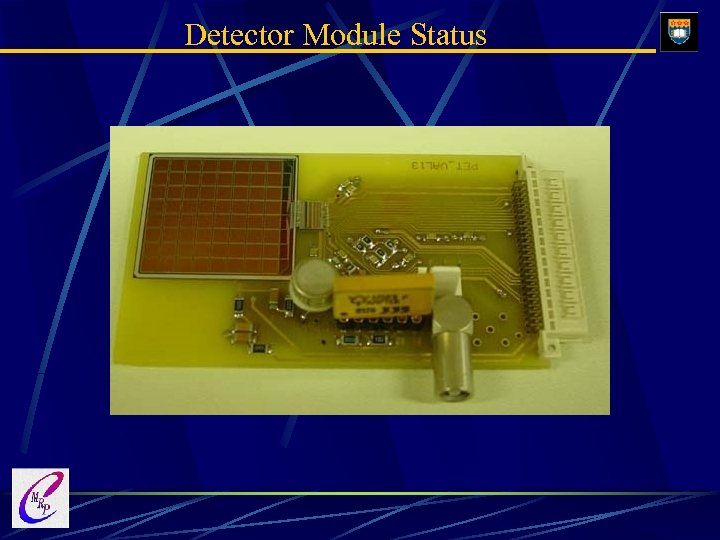 Detector Module Status
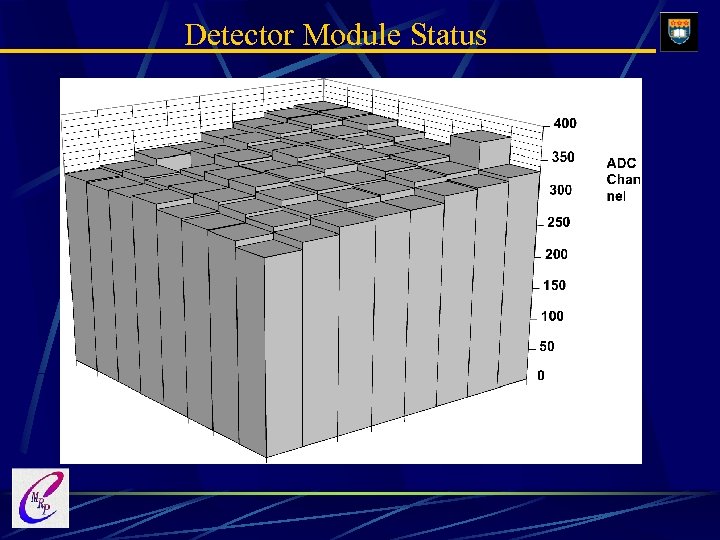 Detector Module Status
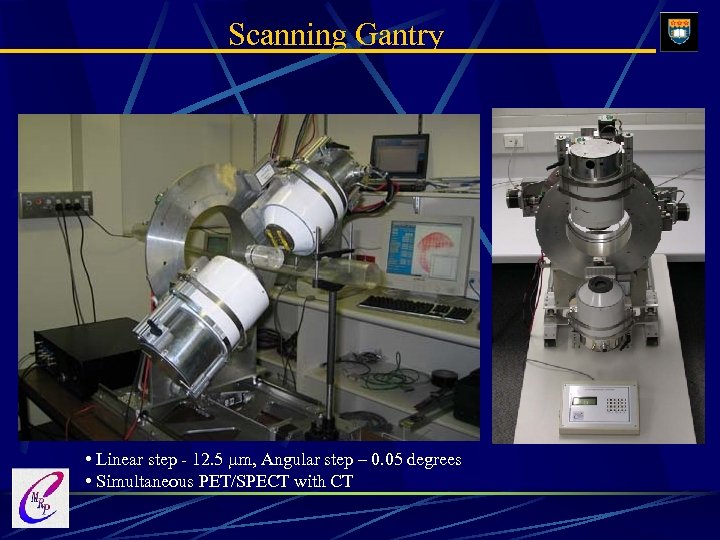 Scanning Gantry • Linear step - 12. 5 mm, Angular step – 0. 05 degrees • Simultaneous PET/SPECT with CT
 University of Wollongong Development of Silicon Detector Instrumentation for Medical Physics Microdosimeter applications in Hadron Therapy and Space
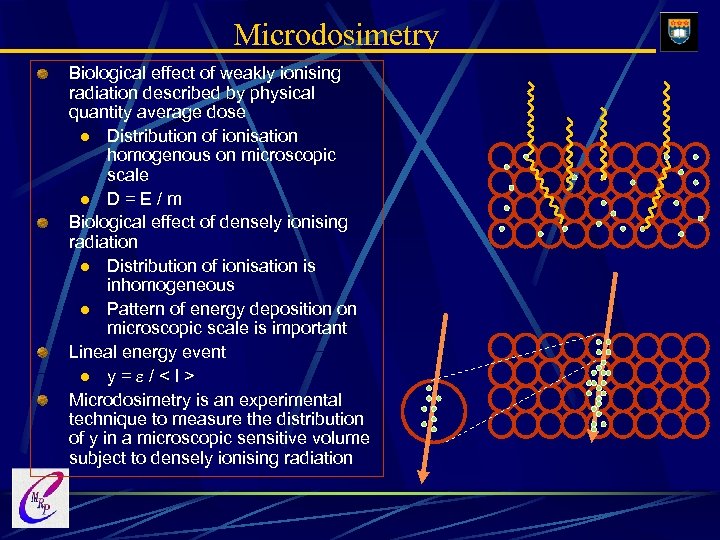 Microdosimetry Biological effect of weakly ionising radiation described by physical quantity average dose l Distribution of ionisation homogenous on microscopic scale l D=E/m Biological effect of densely ionising radiation l Distribution of ionisation is inhomogeneous l Pattern of energy deposition on microscopic scale is important Lineal energy event l y=e/
 Introduction Microdosimeter measures the energy deposition events in a small (cell-sized) volume due to radiation interactions. l Produces spectra of counts versus energy (E). l Divide energy by mean chord length (l) gives lineal energy spectra f(y) l Dose distribution d(y) yf(y) where y=lineal energy=E/l Motivation: l Radiobiological effectiveness depends upon LET or lineal energy l Distribution of dose (d(y)) with lineal energy gives dose equivalent (H) l=10 um Protons Alpha, Heavy ions
 Silicon Microdosimetry Tissue Equivalent Proportional Counter (TEPC) l Low density, tissue equivalent, gas filled proportional counter l Simulates microscopic volume TEPC Disadvantages l Measurement in gas phase l Poor spatial resolution Silicon Microdosimetry l Solid state, microscopic, silicon sensitive volumes l High spatial resolution Measure ionisation energy loss in depletion region of pn junctions Detector AMPTEK A 250 Pre-amplifier
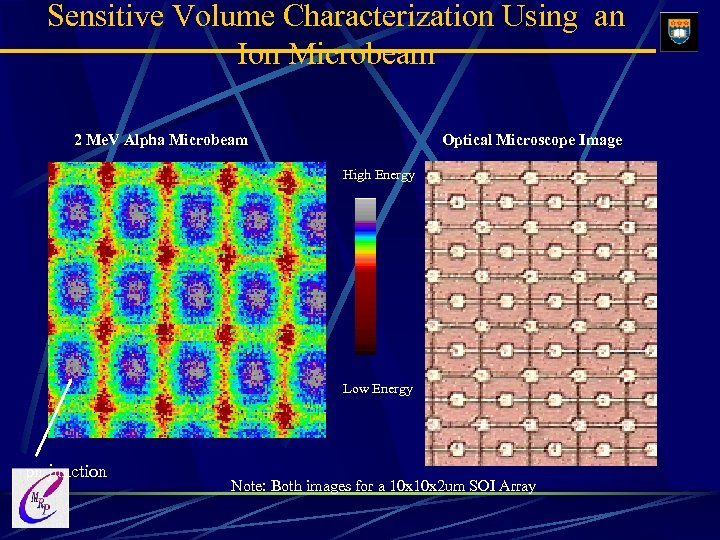 Sensitive Volume Characterization Using an Ion Microbeam 2 Me. V Alpha Microbeam Optical Microscope Image High Energy Low Energy pn junction Note: Both images for a 10 x 2 um SOI Array
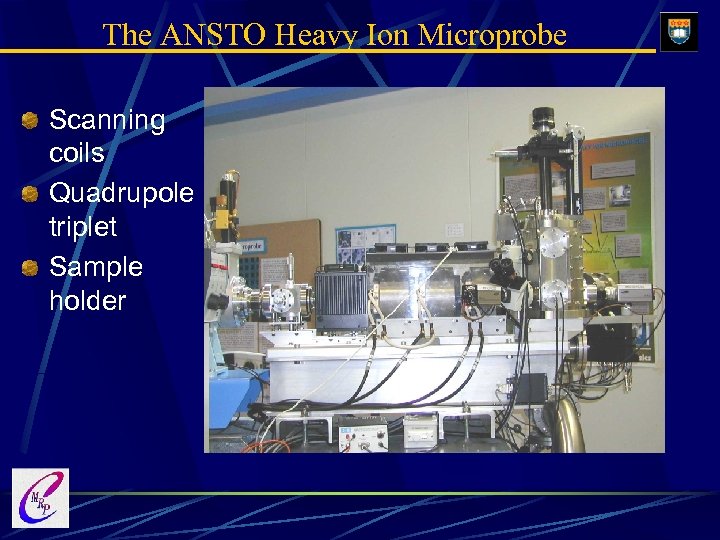 The ANSTO Heavy Ion Microprobe Scanning coils Quadrupole triplet Sample holder
 Applications Cancer treatment modalities which utilise high LET radiation (proton, boron neutron capture, fast neutron, heavy ion therapies) Characterise high LET radiation fields encountered in space (to fly on NASA research satellite)
 Mapping the Sensitive Volume with IBIC Need to study charge collection following ion strike l Investigate how charge collection varies with location of ion strike on the device l Investigate how charge collection varies with ion LET l Ditto for bias applied to microdosimeter IBIC using 3 Me. V H+, 9 Me. V He 2+, 25 Me. V C 4+
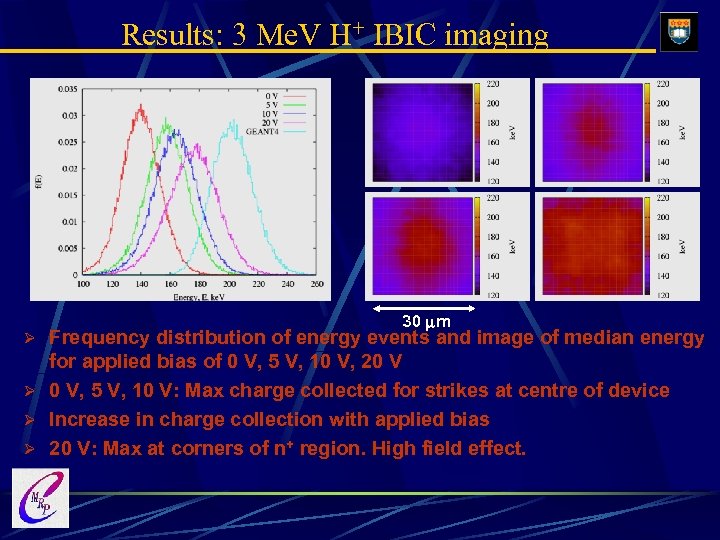 Results: 3 Me. V H+ IBIC imaging 30 m Frequency distribution of energy events and image of median energy for applied bias of 0 V, 5 V, 10 V, 20 V Ø 0 V, 5 V, 10 V: Max charge collected for strikes at centre of device Ø Increase in charge collection with applied bias Ø 20 V: Max at corners of n+ region. High field effect. Ø
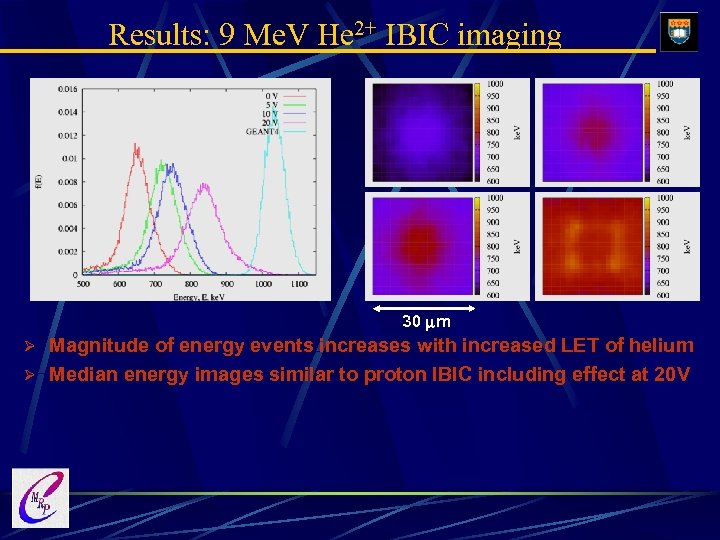 Results: 9 Me. V He 2+ IBIC imaging 30 m Magnitude of energy events increases with increased LET of helium Ø Median energy images similar to proton IBIC including effect at 20 V Ø
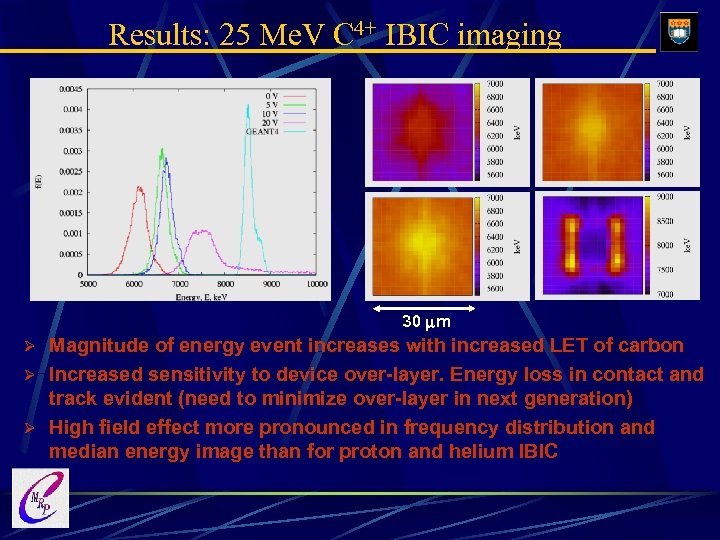 Results: 25 Me. V C 4+ IBIC imaging 30 m Magnitude of energy event increases with increased LET of carbon Ø Increased sensitivity to device over-layer. Energy loss in contact and track evident (need to minimize over-layer in next generation) Ø High field effect more pronounced in frequency distribution and median energy image than for proton and helium IBIC Ø
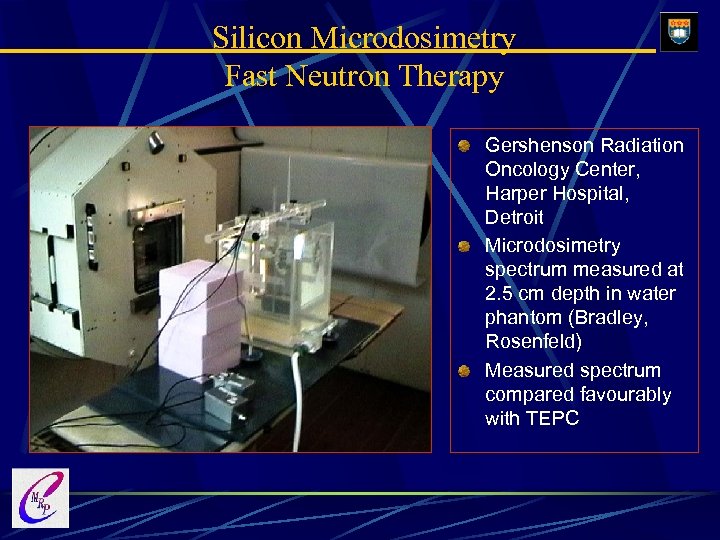 Silicon Microdosimetry Fast Neutron Therapy Gershenson Radiation Oncology Center, Harper Hospital, Detroit Microdosimetry spectrum measured at 2. 5 cm depth in water phantom (Bradley, Rosenfeld) Measured spectrum compared favourably with TEPC
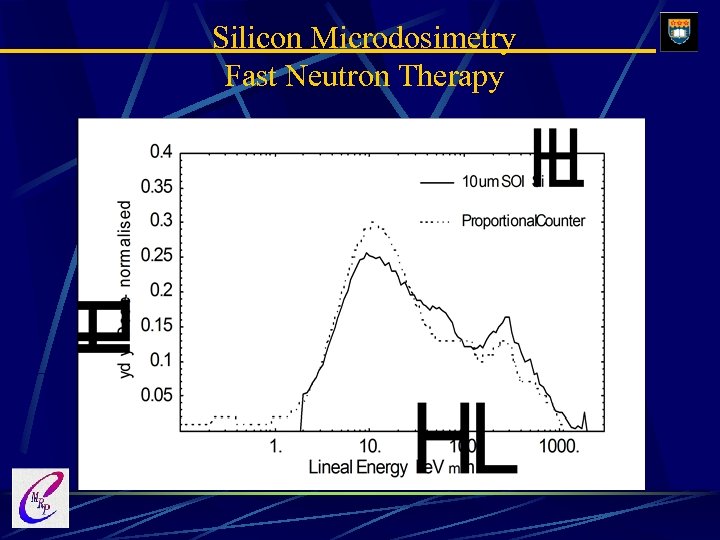 Silicon Microdosimetry Fast Neutron Therapy
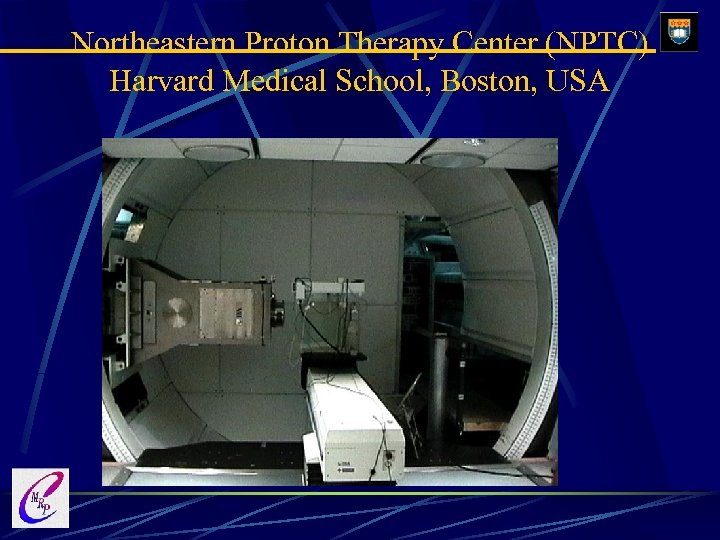 Northeastern Proton Therapy Center (NPTC) Harvard Medical School, Boston, USA
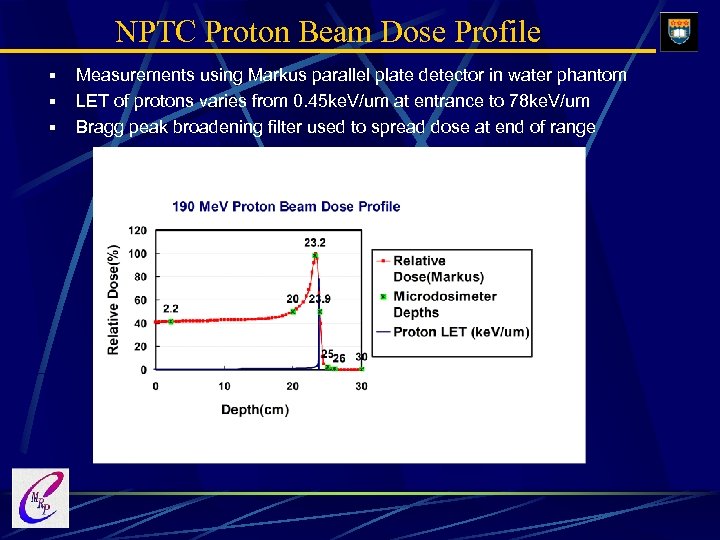 NPTC Proton Beam Dose Profile § § § Measurements using Markus parallel plate detector in water phantom LET of protons varies from 0. 45 ke. V/um at entrance to 78 ke. V/um Bragg peak broadening filter used to spread dose at end of range
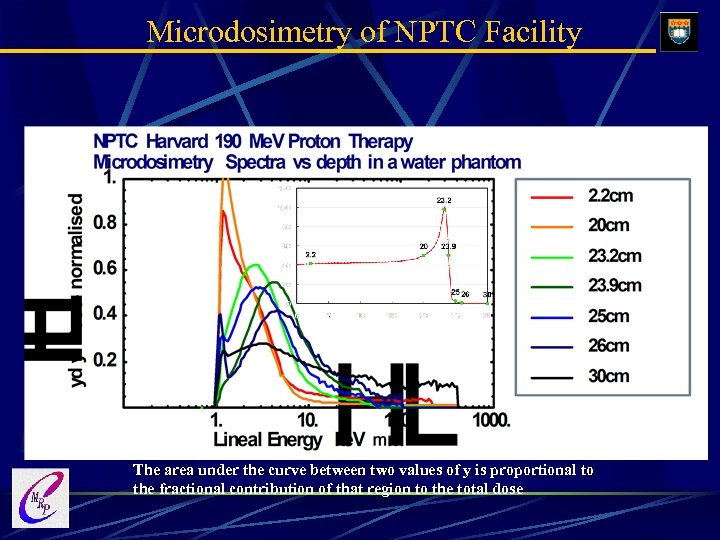 Microdosimetry of NPTC Facility The area under the curve between two values of y is proportional to the fractional contribution of that region to the total dose
 University of Wollongong Development of Silicon Detector Instrumentation for Medical Physics MOSFET Dosimetry in Radiotherapy
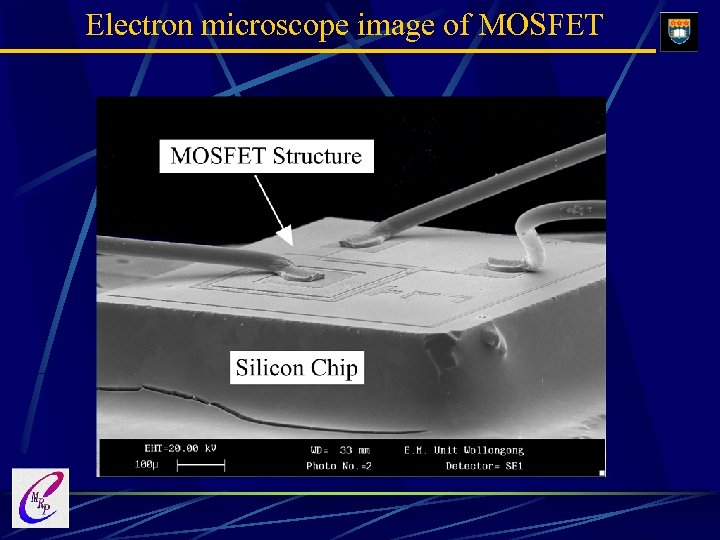
 MOSFET Structure
 Electron microscope image of MOSFET
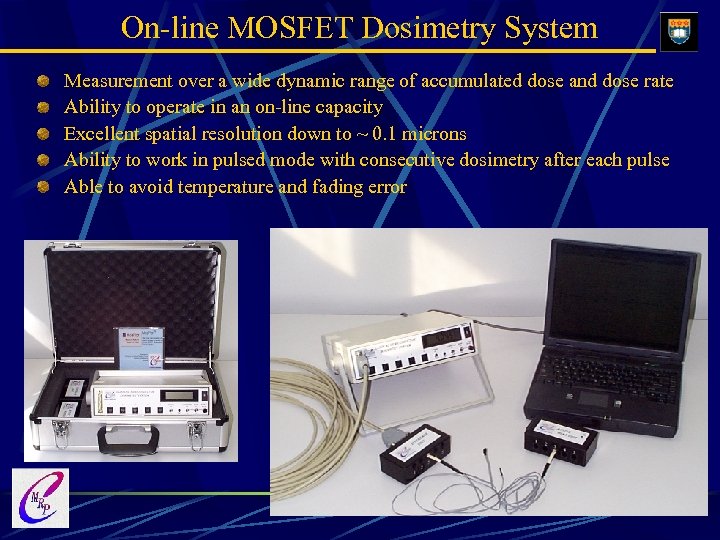 On-line MOSFET Dosimetry System Measurement over a wide dynamic range of accumulated dose and dose rate Ability to operate in an on-line capacity Excellent spatial resolution down to ~ 0. 1 microns Ability to work in pulsed mode with consecutive dosimetry after each pulse Able to avoid temperature and fading error
 MOSFET Response
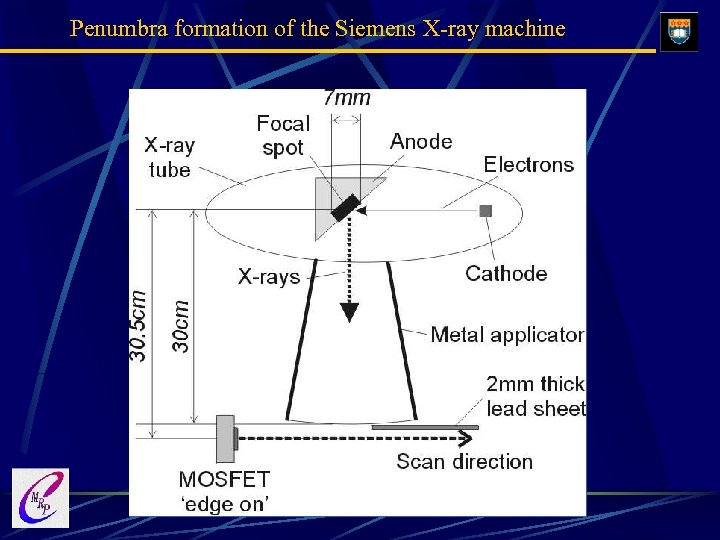 Penumbra formation of the Siemens X-ray machine
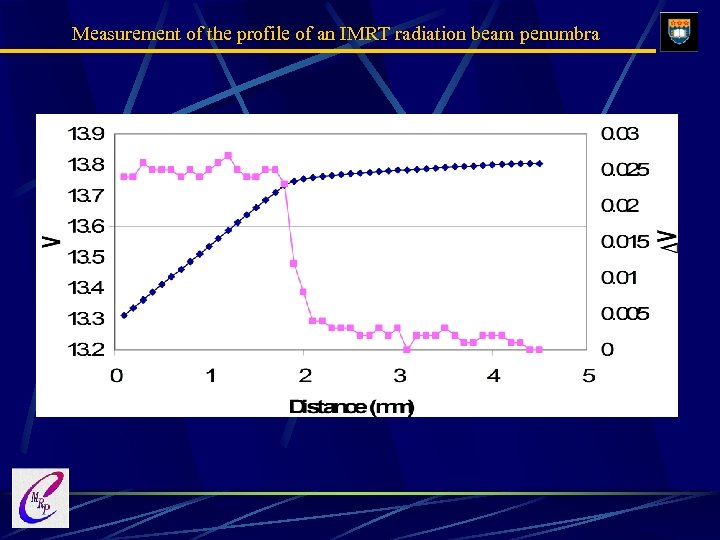 Measurement of the profile of an IMRT radiation beam penumbra
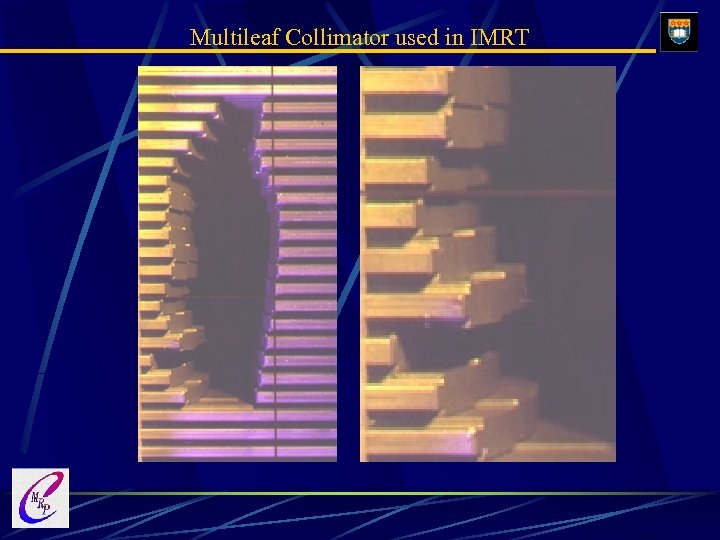 Multileaf Collimator used in IMRT
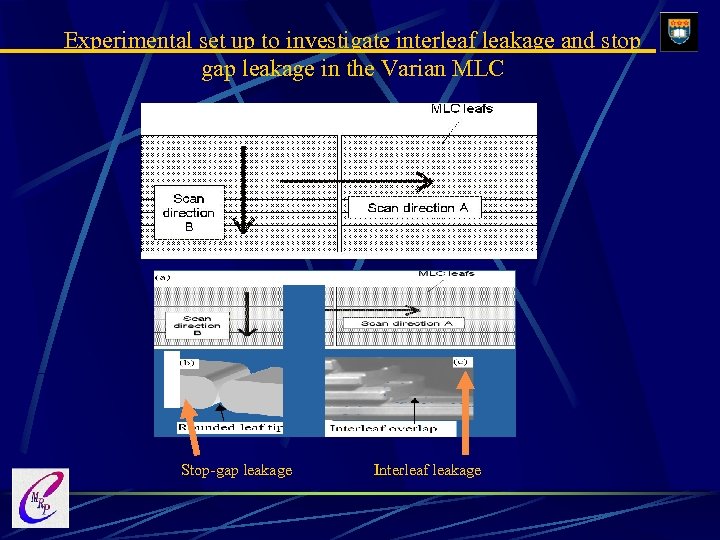 Experimental set up to investigate interleaf leakage and stop gap leakage in the Varian MLC Stop-gap leakage Interleaf leakage
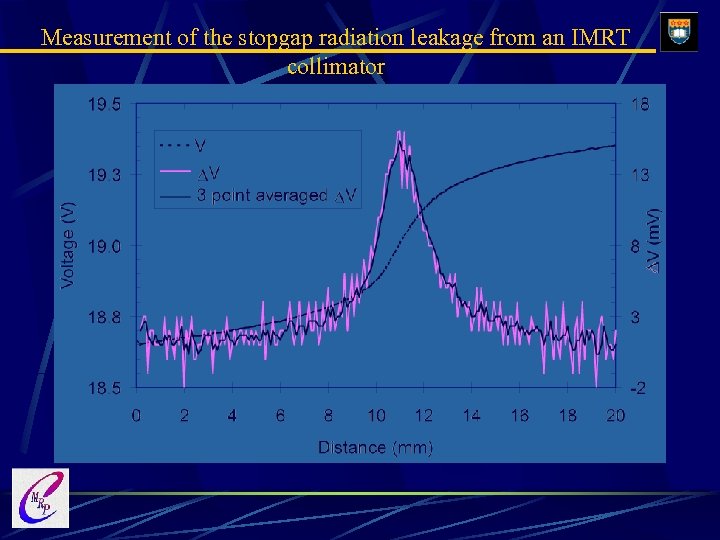 Measurement of the stopgap radiation leakage from an IMRT collimator
 University of Wollongong Development of Silicon Detector Instrumentation for Medical Physics Synchrotron Microbeam X-Ray Radiation Therapy (MRT)
 MRT
MRT
 Medical Beamline at the ESRF
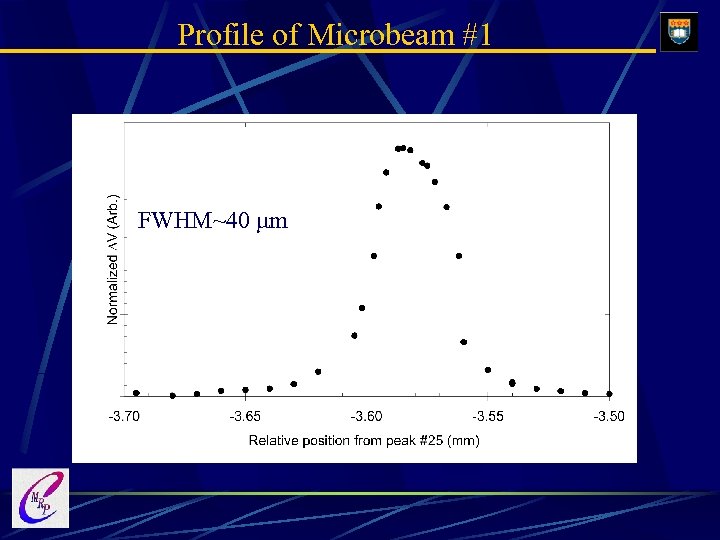
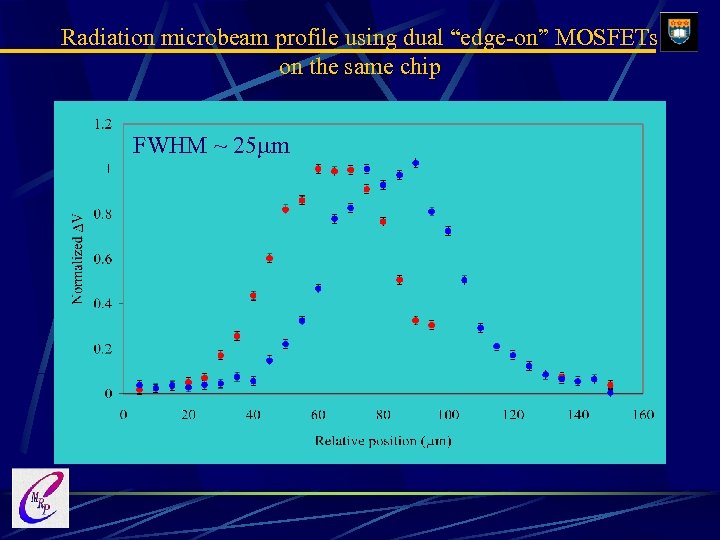
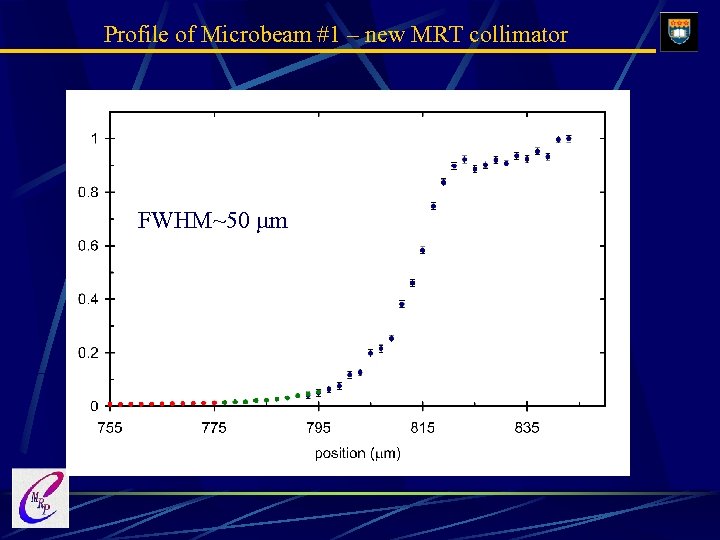
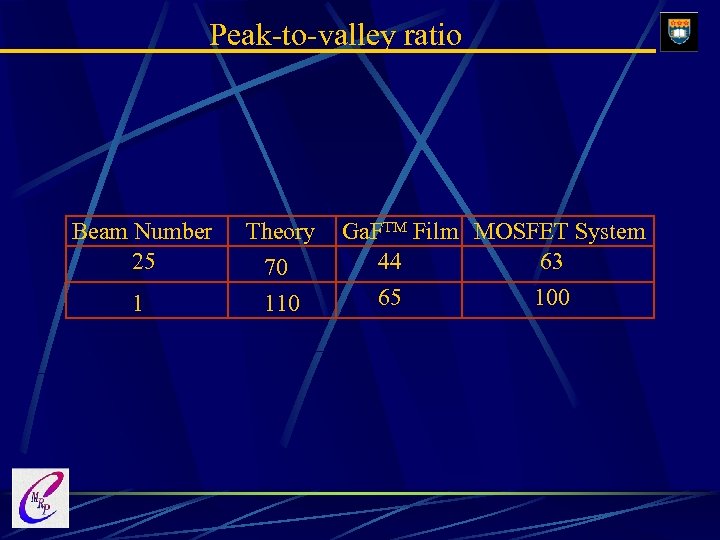
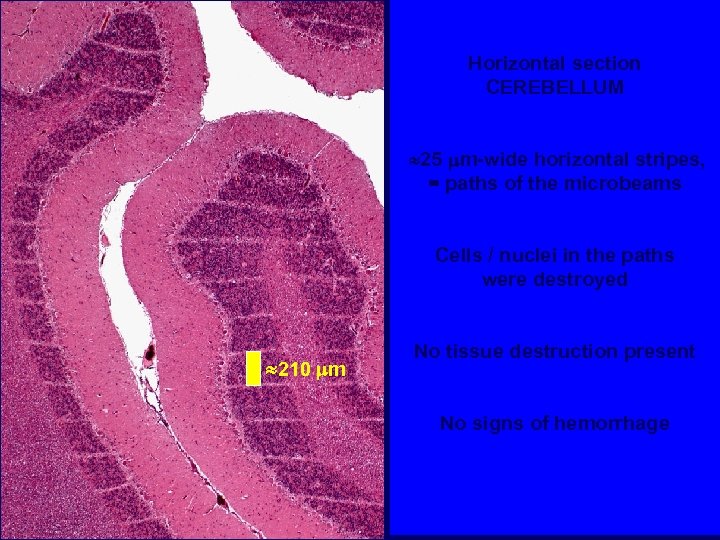 Horizontal section CEREBELLUM 25 m-wide horizontal stripes, = paths of the microbeams Cells / nuclei in the paths were destroyed 210 m No tissue destruction present No signs of hemorrhage
 Profile of Microbeam #1 FWHM~40 mm
 Radiation microbeam profile using dual “edge-on” MOSFETs on the same chip FWHM ~ 25 mm
 Profile of Microbeam #1 – new MRT collimator FWHM~50 mm
 Peak-to-valley ratio Beam Number 25 1 Theory 70 110 Ga. FTM Film MOSFET System 44 63 65 100
 University of Wollongong Development of Silicon Detector Instrumentation for Medical Physics Silicon Detectors for Low Dose Rate and High Dose Rate Brachytherapy Treatment Quality Assurance
 Implant schematic
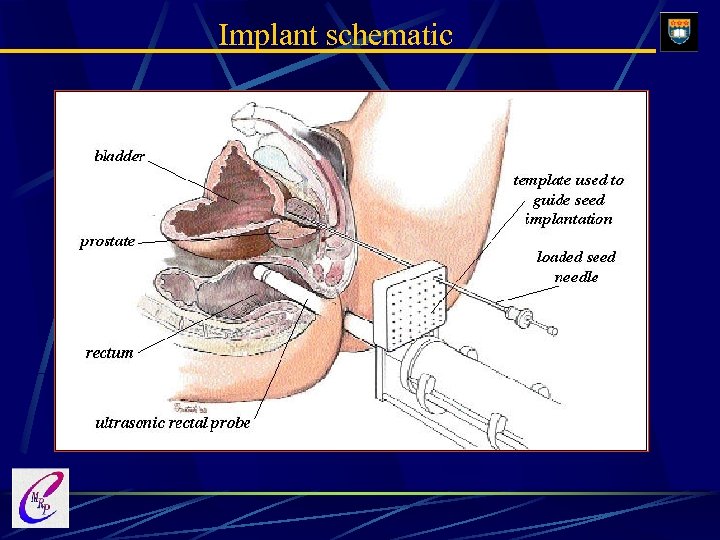
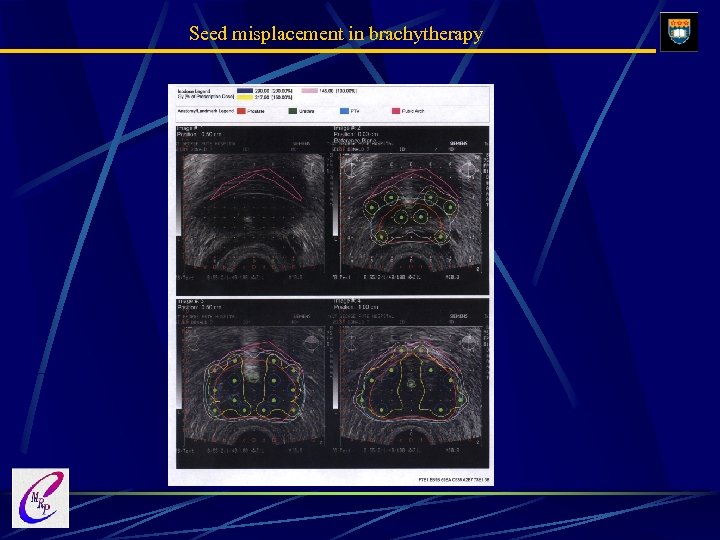
 Seed misplacement in brachytherapy There are several factors that lead to the misplacement of seeds The insertion of the guiding needles through different layers of tissue may lead to the needles not being inserted in parallel There may be swelling during treatment The seeds may drift along the path of the needles Blood flow may alter the position of the seeds Gland motion may occur There is a need for the seed locations to be monitored in real time during insertion. If a seed is misplaced, the required locations of other seeds may be recalculated in compensation
 Seed misplacement in brachytherapy
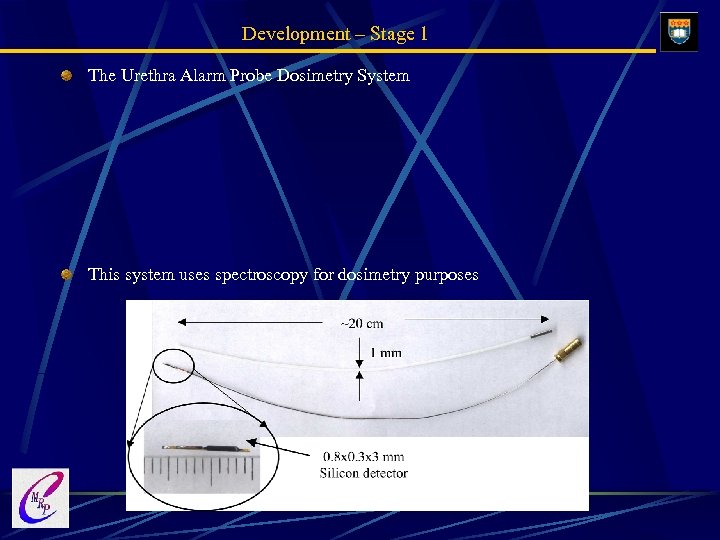 Development – Stage 1 The Urethra Alarm Probe Dosimetry System This system uses spectroscopy for dosimetry purposes
 Development – Stage 1
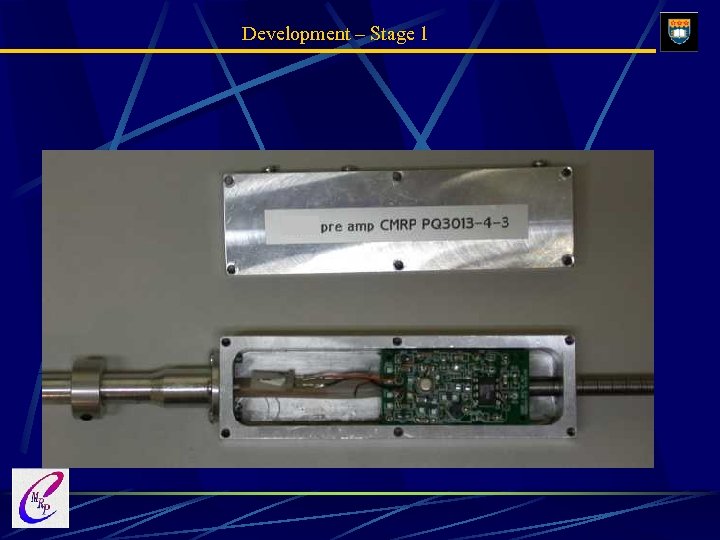
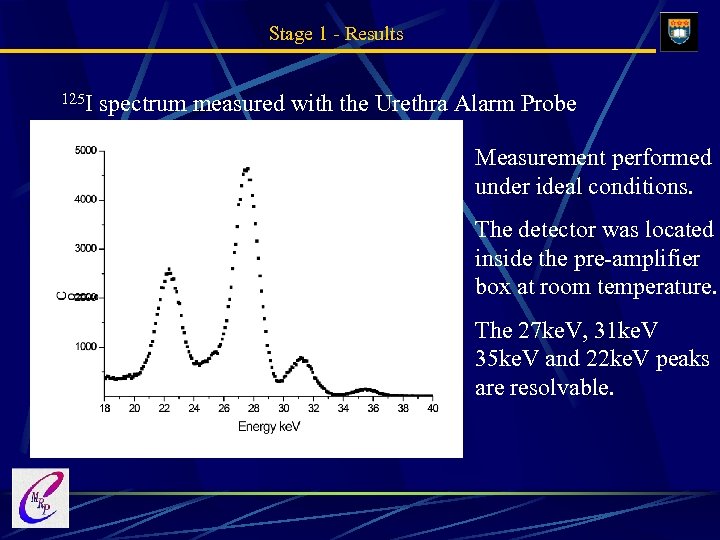 Stage 1 - Results 125 I spectrum measured with the Urethra Alarm Probe Measurement performed under ideal conditions. The detector was located inside the pre-amplifier box at room temperature. The 27 ke. V, 31 ke. V 35 ke. V and 22 ke. V peaks are resolvable.
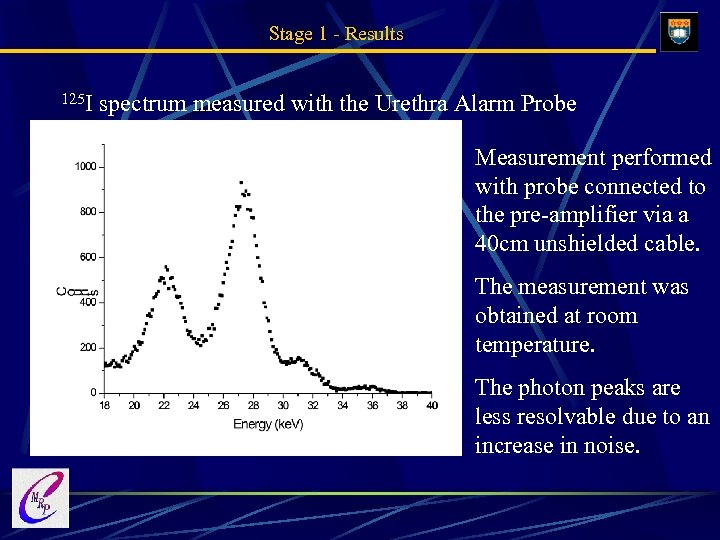 Stage 1 - Results 125 I spectrum measured with the Urethra Alarm Probe Measurement performed with probe connected to the pre-amplifier via a 40 cm unshielded cable. The measurement was obtained at room temperature. The photon peaks are less resolvable due to an increase in noise.
 University of Wollongong Development of Silicon Detector Instrumentation for Medical Physics Silicon Detectors for Neutron Dosimetry and Radiation Damage Monitoring
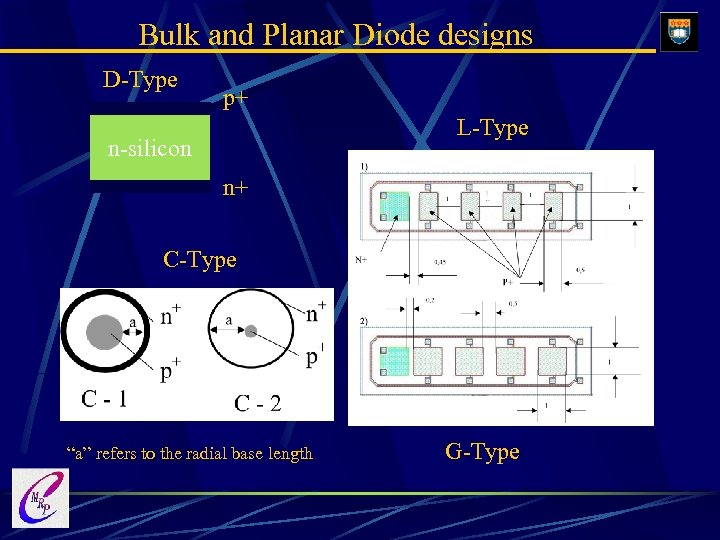 Bulk and Planar Diode designs D-Type p+ L-Type n-silicon n+ C-Type “a” refers to the radial base length G-Type
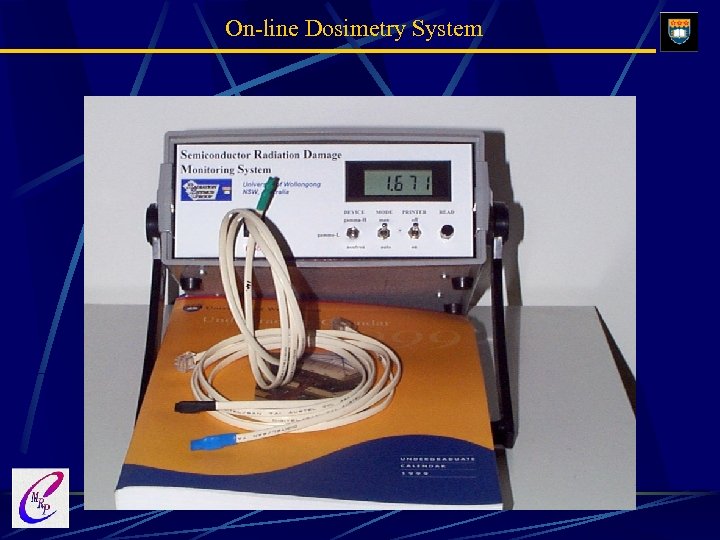 On-line Dosimetry System
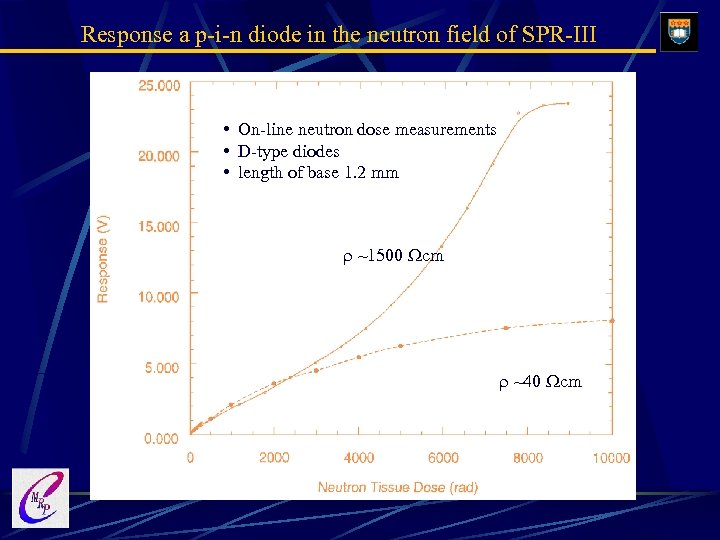 Response a p-i-n diode in the neutron field of SPR-III • On-line neutron dose measurements • D-type diodes • length of base 1. 2 mm r ~1500 Wcm r ~40 Wcm
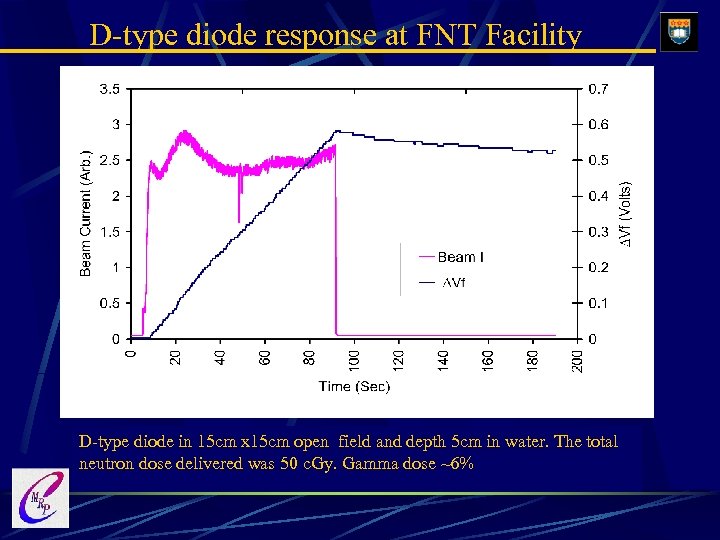 D-type diode response at FNT Facility D-type diode in 15 cm x 15 cm open field and depth 5 cm in water. The total neutron dose delivered was 50 c. Gy. Gamma dose ~6%
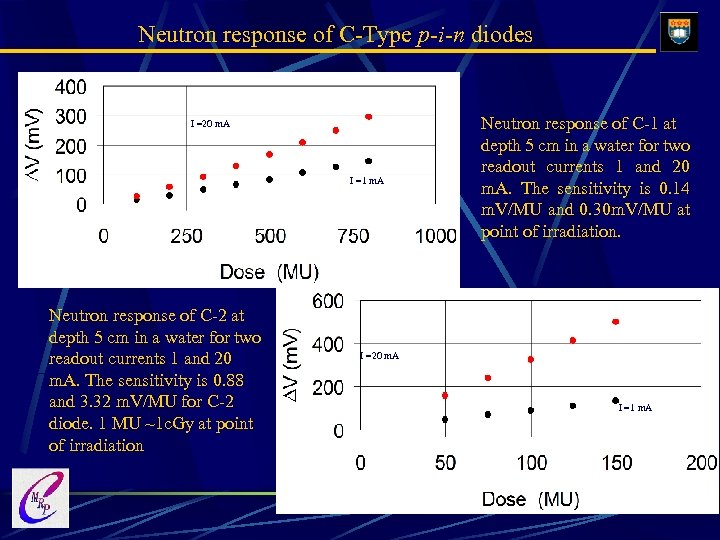 Neutron response of C-Type p-i-n diodes I =20 m. A I =1 m. A Neutron response of C-2 at depth 5 cm in a water for two readout currents 1 and 20 m. A. The sensitivity is 0. 88 and 3. 32 m. V/MU for C-2 diode. 1 MU ~1 c. Gy at point of irradiation Neutron response of C-1 at depth 5 cm in a water for two readout currents 1 and 20 m. A. The sensitivity is 0. 14 m. V/MU and 0. 30 m. V/MU at point of irradiation. I =20 m. A I =1 m. A
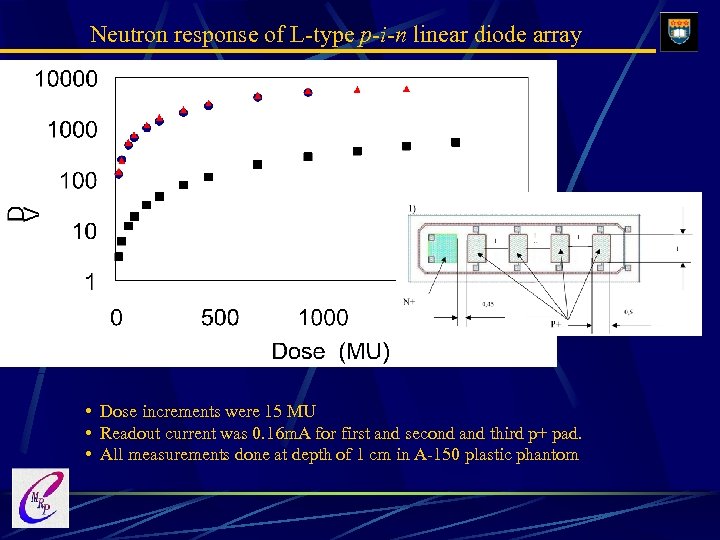 Neutron response of L-type p-i-n linear diode array • Dose increments were 15 MU • Readout current was 0. 16 m. A for first and second and third p+ pad. • All measurements done at depth of 1 cm in A-150 plastic phantom
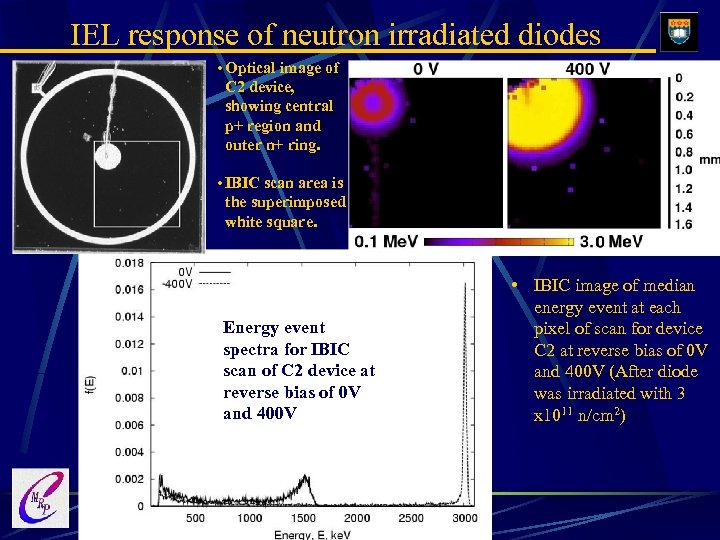 IEL response of neutron irradiated diodes • Optical image of C 2 device, showing central p+ region and outer n+ ring. • IBIC scan area is the superimposed white square. Energy event spectra for IBIC scan of C 2 device at reverse bias of 0 V and 400 V • IBIC image of median energy event at each pixel of scan for device C 2 at reverse bias of 0 V and 400 V (After diode was irradiated with 3 x 10¹¹ n/cm 2)