


 Скачать презентацию University of Tennessee Planetary Geosciences Institute Larry Taylor
16021bf1c154f3b2c8478a4a8747b75c.ppt
- Количество слайдов: 22
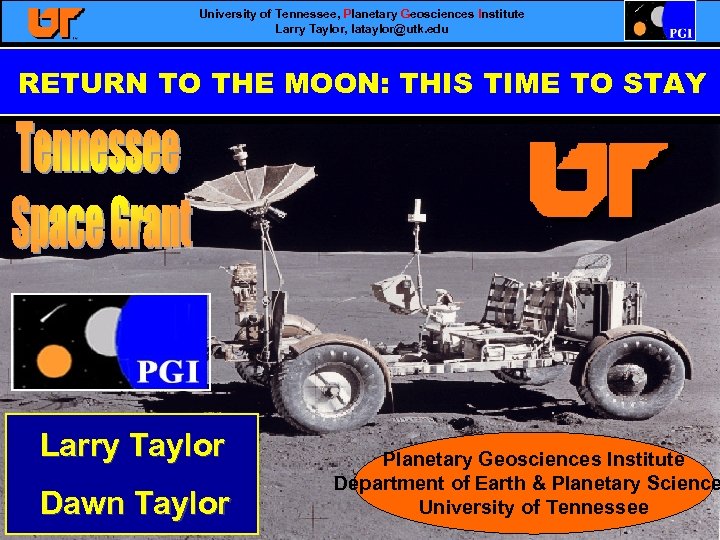 University of Tennessee, Planetary Geosciences Institute Larry Taylor, lataylor@utk. edu RETURN TO THE MOON: THIS TIME TO STAY Larry Taylor Dawn Taylor Planetary Geosciences Institute Department of Earth & Planetary Science University of Tennessee
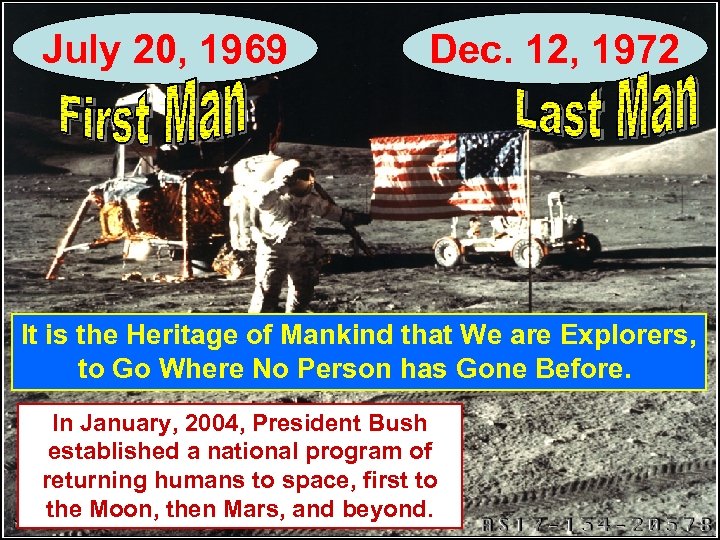 July 20, 1969 Dec. 12, 1972 It is the Heritage of Mankind that We are Explorers, to Go Where No Person has Gone Before. In January, 2004, President Bush established a national program of returning humans to space, first to the Moon, then Mars, and beyond.
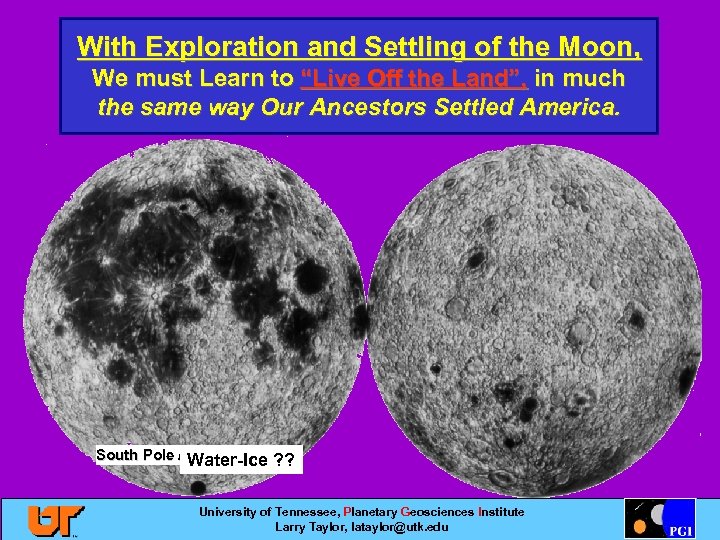 With Exploration and Settling of the Moon, We must Learn to “Live Off the Land”, in much the same way Our Ancestors Settled America. South Pole / Amundsen Site Water-Ice ? ? University of Tennessee, Planetary Geosciences Institute Larry Taylor, lataylor@utk. edu
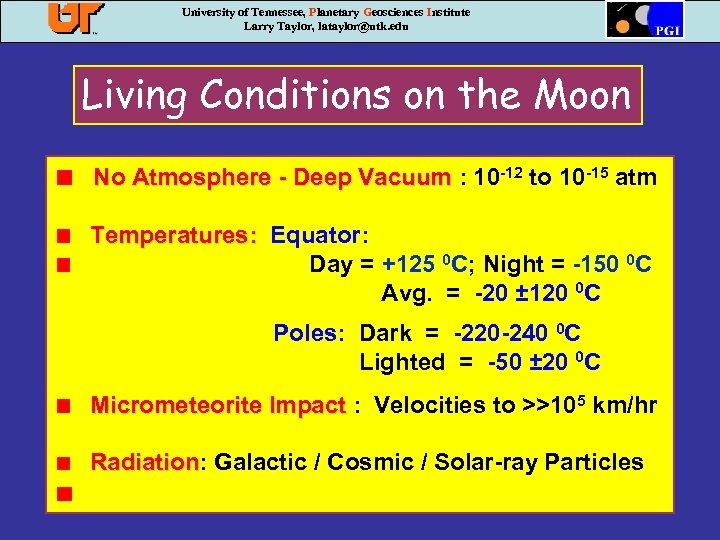 University of Tennessee, Planetary Geosciences Institute Larry Taylor, lataylor@utk. edu Living Conditions on the Moon No Atmosphere - Deep Vacuum : 10 -12 to 10 -15 atm Temperatures: Equator: Day = +125 0 C; Night = -150 0 C Avg. = -20 ± 120 0 C Poles: Dark = -220 -240 0 C Lighted = -50 ± 20 0 C Micrometeorite Impact : Velocities to >>105 km/hr Radiation: Galactic / Cosmic / Solar-ray Particles Radiation
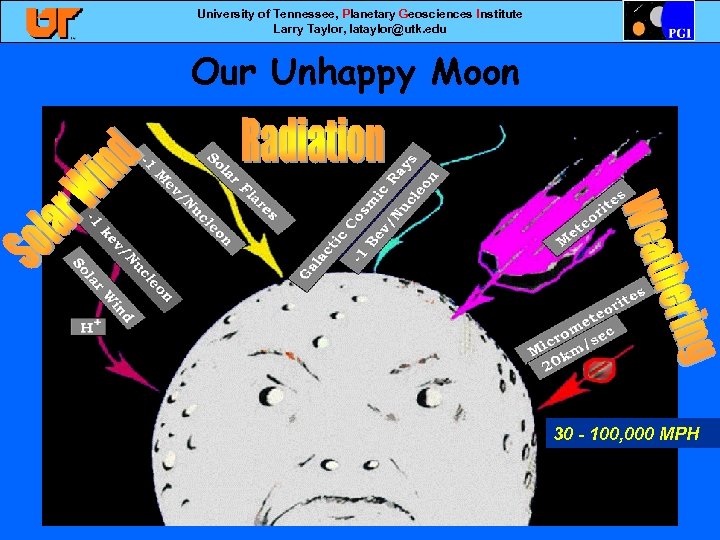 University of Tennessee, Planetary Geosciences Institute Larry Taylor, lataylor@utk. edu Our Unhappy Moon 30 - 100, 000 MPH
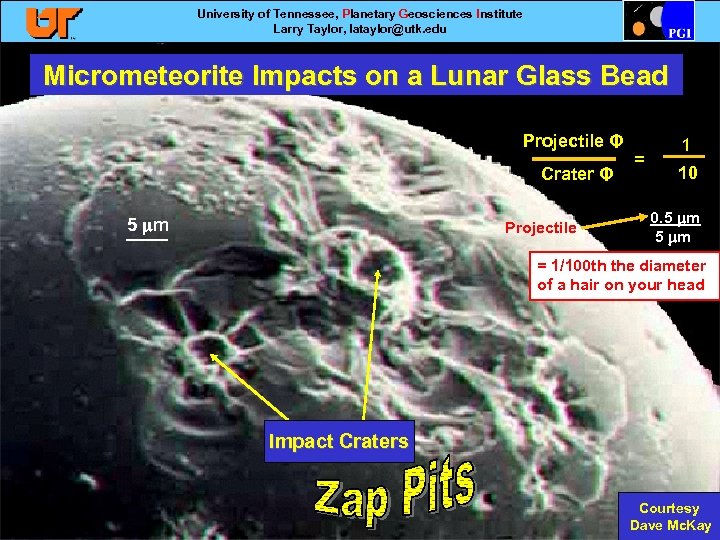 University of Tennessee, Planetary Geosciences Institute Larry Taylor, lataylor@utk. edu Micrometeorite Impacts on a Lunar Glass Bead Projectile Φ Crater Φ 5 m Projectile = 1 10 0. 5 m = 1/100 th the diameter of a hair on your head Impact Craters Courtesy Dave Mc. Kay
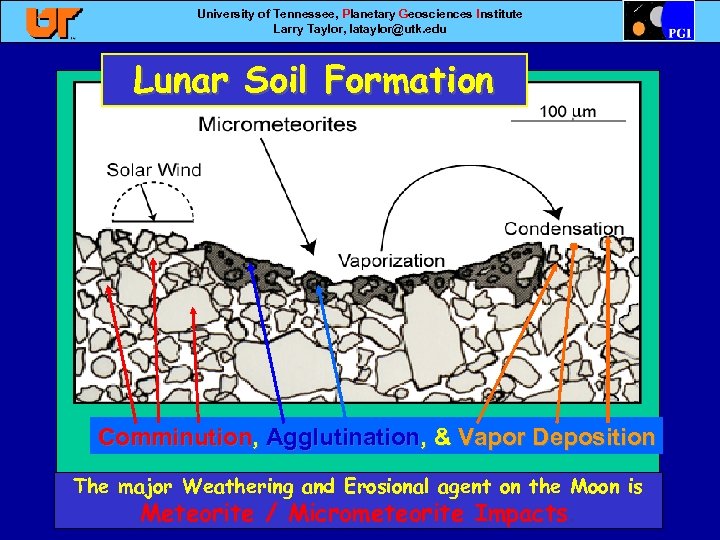 University of Tennessee, Planetary Geosciences Institute Larry Taylor, lataylor@utk. edu Lunar Soil Formation Comminution, Agglutination, & Vapor Deposition The major Weathering and Erosional agent on the Moon is Meteorite / Micrometeorite Impacts.
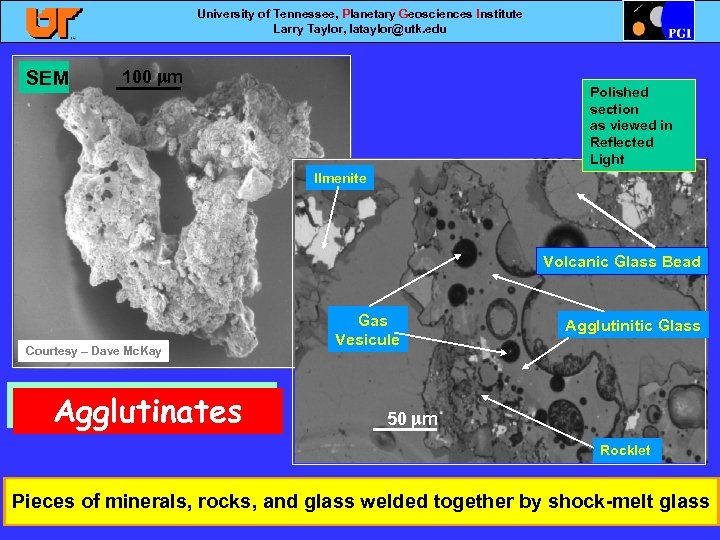 University of Tennessee, Planetary Geosciences Institute Larry Taylor, lataylor@utk. edu SEM 100 m Polished section as viewed in Reflected Light Ilmenite Volcanic Glass Bead Courtesy – Dave Mc. Kay Agglutinates Gas Vesicule Agglutinitic Glass 50 m Rocklet Pieces of minerals, rocks, and glass welded together by shock-melt glass
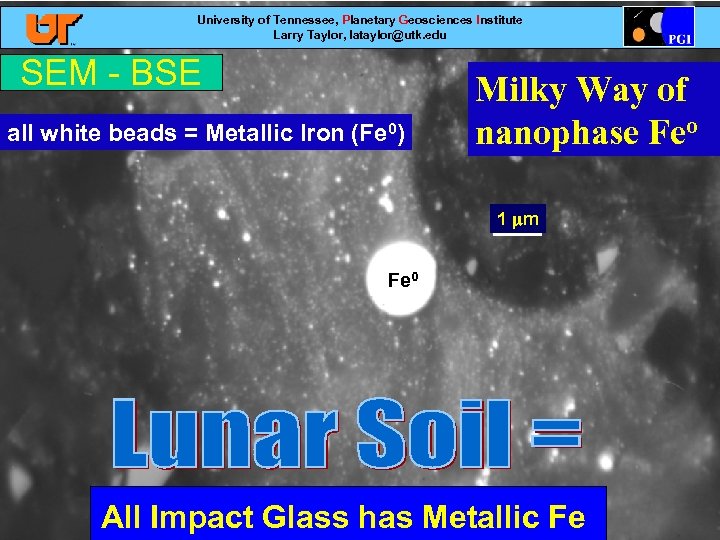 University of Tennessee, Planetary Geosciences Institute Larry Taylor, lataylor@utk. edu SEM - BSE all white beads = Metallic Iron (Fe 0) Milky Way of nanophase Feo 1 m Fe 0 All Impact Glass has Metallic Fe
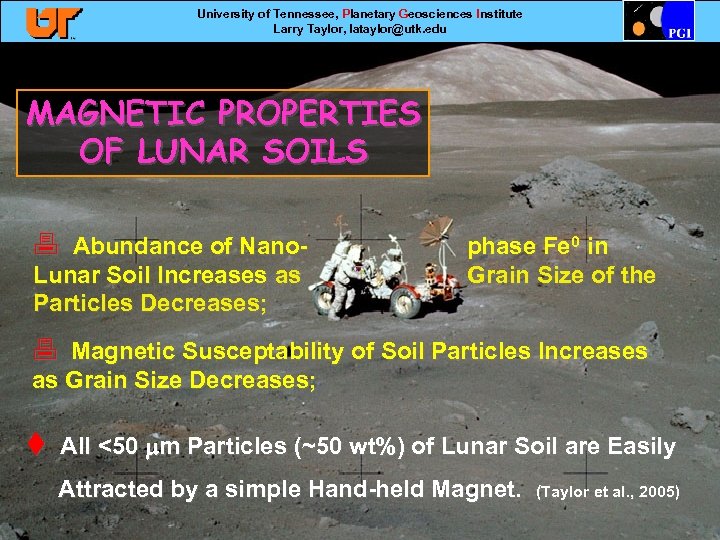 University of Tennessee, Planetary Geosciences Institute Larry Taylor, lataylor@utk. edu MAGNETIC PROPERTIES OF LUNAR SOILS 6 Abundance of Nano. Lunar Soil Increases as Particles Decreases; phase Fe 0 in Grain Size of the 6 Magnetic Susceptability of Soil Particles Increases as Grain Size Decreases; t All <50 m Particles (~50 wt%) of Lunar Soil are Easily Attracted by a simple Hand-held Magnet. (Taylor et al. , 2005)
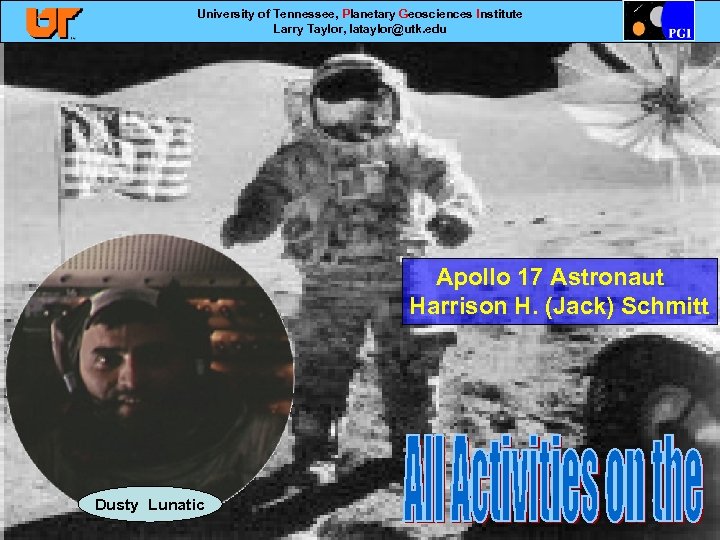 University of Tennessee, Planetary Geosciences Institute Larry Taylor, lataylor@utk. edu Apollo 17 Astronaut Harrison H. (Jack) Schmitt Dusty Lunatic
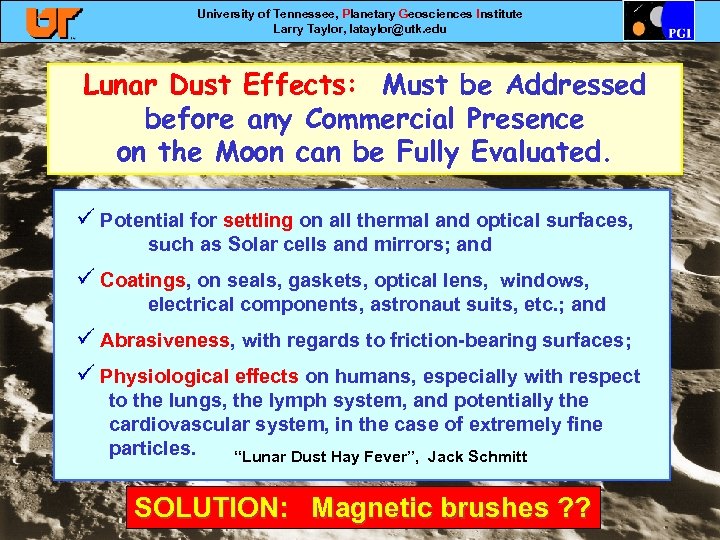 University of Tennessee, Planetary Geosciences Institute Larry Taylor, lataylor@utk. edu Lunar Dust Effects: Must be Addressed before any Commercial Presence on the Moon can be Fully Evaluated. ü Potential for settling on all thermal and optical surfaces, such as Solar cells and mirrors; and ü Coatings, on seals, gaskets, optical lens, windows, electrical components, astronaut suits, etc. ; and ü Abrasiveness, with regards to friction-bearing surfaces; ü Physiological effects on humans, especially with respect to the lungs, the lymph system, and potentially the cardiovascular system, in the case of extremely fine particles. “Lunar Dust Hay Fever”, Jack Schmitt SOLUTION: Magnetic brushes ? ?
 ANOTHER WHITE HOUSE LEAK!!
 University of Tennessee, Planetary Geosciences Institute Larry Taylor, lataylor@utk. edu MICROWAVE RADIATION for DUST MITIGATION v There is an entire subculture of people who derive pleasure from putting strange things in microwave ovens v Things that microwave oven manufacturers would strenuously suggest should not be put there. In the hands of these people : Ø Ø Table grapes produce glowing plasmas; Soap bars mutate into abominable soap monsters; Compact discs incandesce; Even ‘Wet Poodles’ have been known to “explode. ”
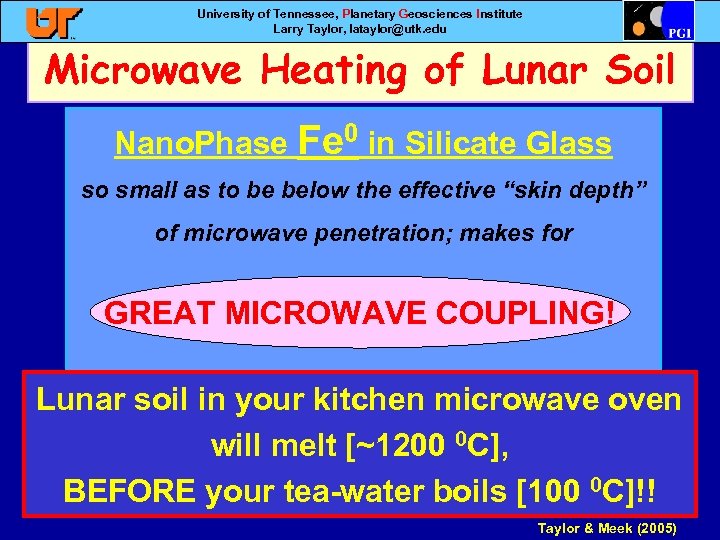 University of Tennessee, Planetary Geosciences Institute Larry Taylor, lataylor@utk. edu Microwave Heating of Lunar Soil Nano. Phase Fe 0 in Silicate Glass so small as to be below the effective “skin depth” of microwave penetration; makes for GREAT MICROWAVE COUPLING! Lunar soil in your kitchen microwave oven will melt [~1200 0 C], BEFORE your tea-water boils [100 0 C]!! Taylor & Meek (2005)
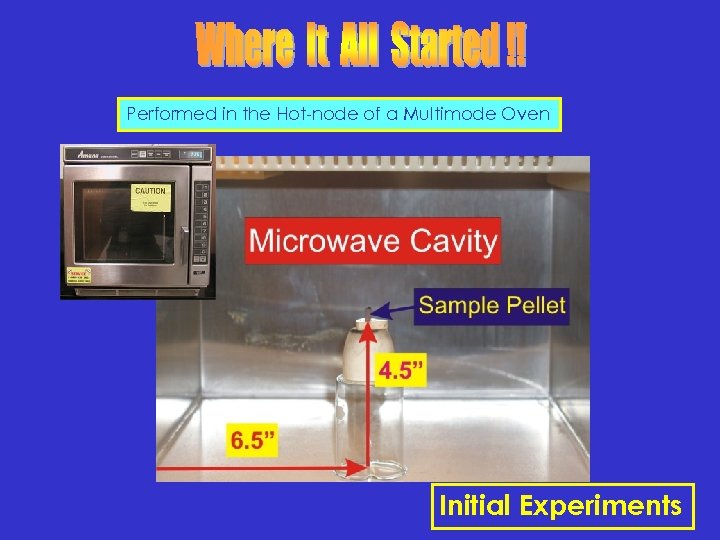 Performed in the Hot-node of a Multimode Oven Initial Experiments
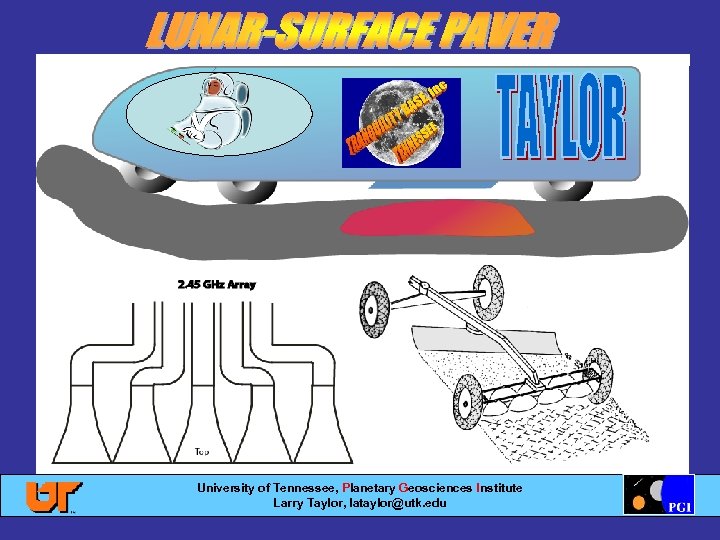
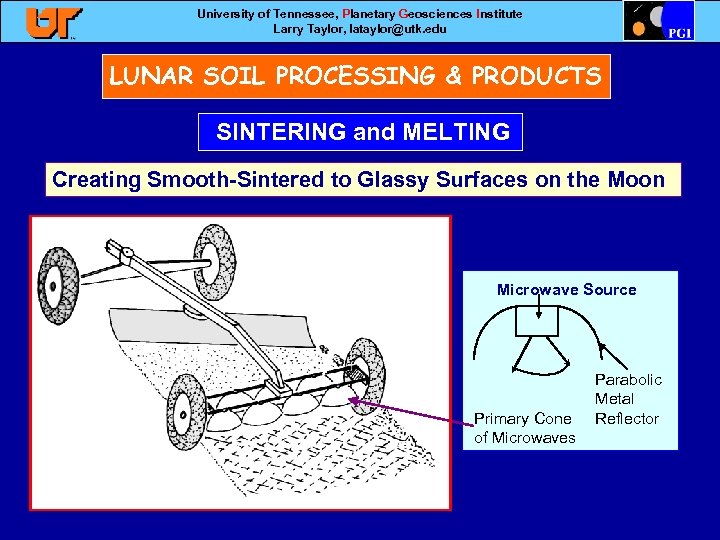 University of Tennessee, Planetary Geosciences Institute Larry Taylor, lataylor@utk. edu LUNAR SOIL PROCESSING & PRODUCTS SINTERING and MELTING Creating Smooth-Sintered to Glassy Surfaces on the Moon Microwave Source Primary Cone of Microwaves Parabolic Metal Reflector
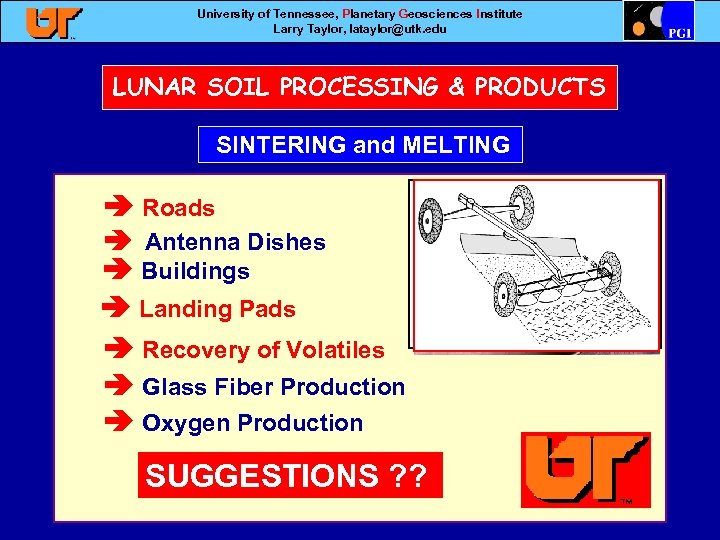 University of Tennessee, Planetary Geosciences Institute Larry Taylor, lataylor@utk. edu LUNAR SOIL PROCESSING & PRODUCTS SINTERING and MELTING â Roads â Antenna Dishes â Buildings â Landing Pads â Recovery of Volatiles â Glass Fiber Production â Oxygen Production SUGGESTIONS ? ?
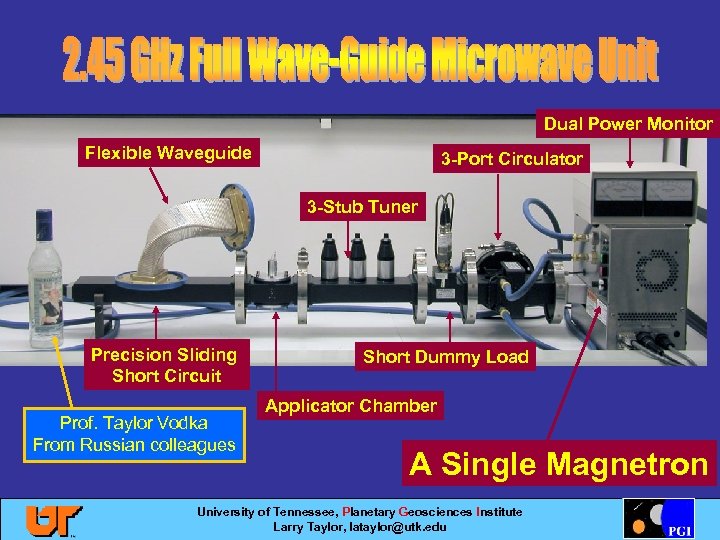 Dual Power Monitor Flexible Waveguide 3 -Port Circulator 3 -Stub Tuner Precision Sliding Short Circuit Prof. Taylor Vodka From Russian colleagues Short Dummy Load Applicator Chamber A Single Magnetron University of Tennessee, Planetary Geosciences Institute Larry Taylor, lataylor@utk. edu
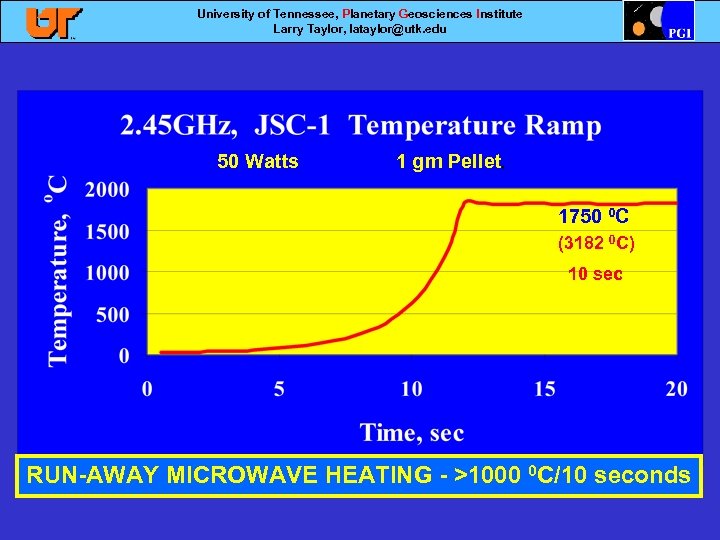 University of Tennessee, Planetary Geosciences Institute Larry Taylor, lataylor@utk. edu 50 Watts 1 gm Pellet, 1750 0 C (3182 0 C) 10 sec RUN-AWAY MICROWAVE HEATING - >1000 0 C/10 seconds
 University of Tennessee, Planetary Geosciences Institute Larry Taylor, lataylor@utk. edu
 TIME FOR ANOTHER WALK ON THE MOON Coming Along? Courtesy, Jack Schmitt