


 Скачать презентацию UNIVERSITY OF MONTENEGRO INSTITUTE OF FOREIGN LANGUAGES THE
1b5a028677be5b9ccb86cc35b12a14bf.ppt
- Количество слайдов: 48
 UNIVERSITY OF MONTENEGRO INSTITUTE OF FOREIGN LANGUAGES THE FACULTY OF POLITICAL SCIENCES ENGLISH COURSE – INTERMEDIATE Podgorica, 21. 11. 2016.
 MODAL VERBS NATIONALITY WORDS
 MODAL VERBS
 Modal verbs Modals (also called modal verbs, modal auxiliary verbs, modal auxiliaries) are special verbs which behave irregularly in English. They are different from normal verbs like "work, play, visit. . . " They are used to indicate modality.
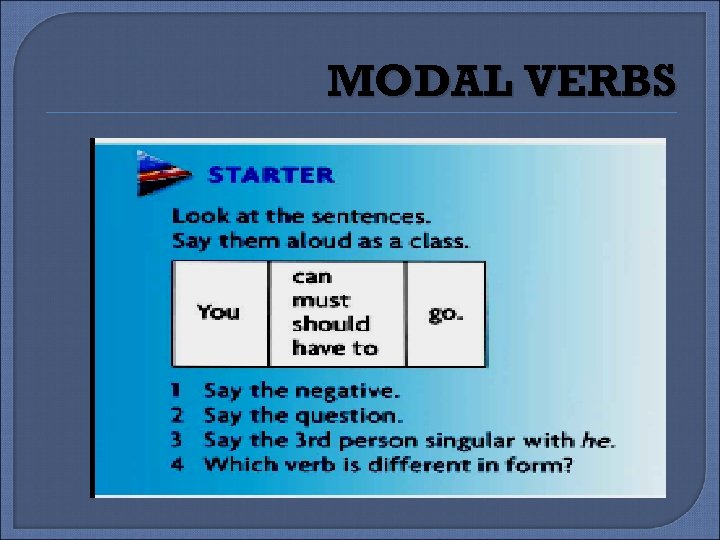
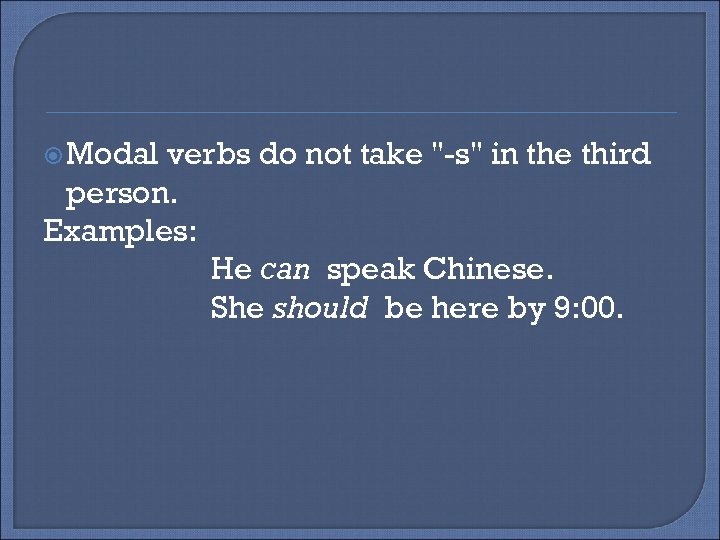 Modal verbs do not take "-s" in the third person. Examples: He can speak Chinese. She should be here by 9: 00.
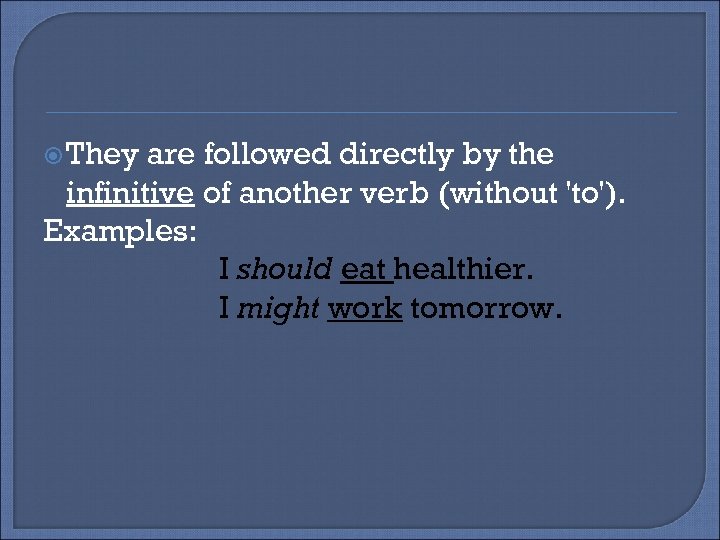 They are followed directly by the infinitive of another verb (without 'to'). Examples: I should eat healthier. I might work tomorrow.
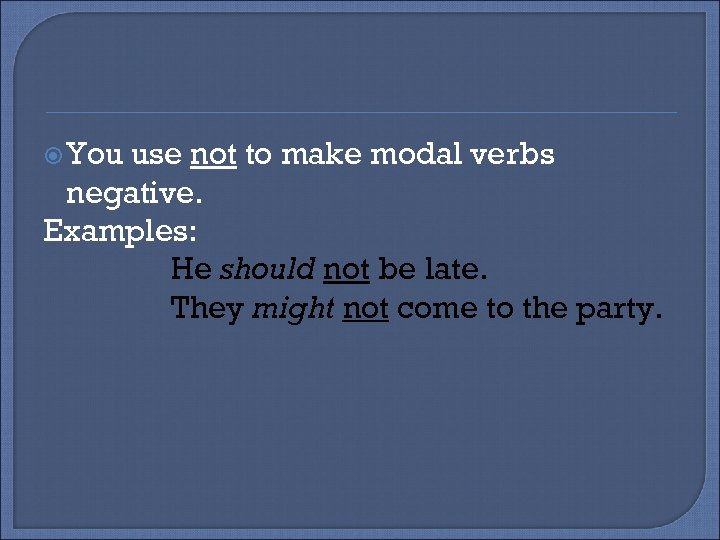 You use not to make modal verbs negative. Examples: He should not be late. They might not come to the party.
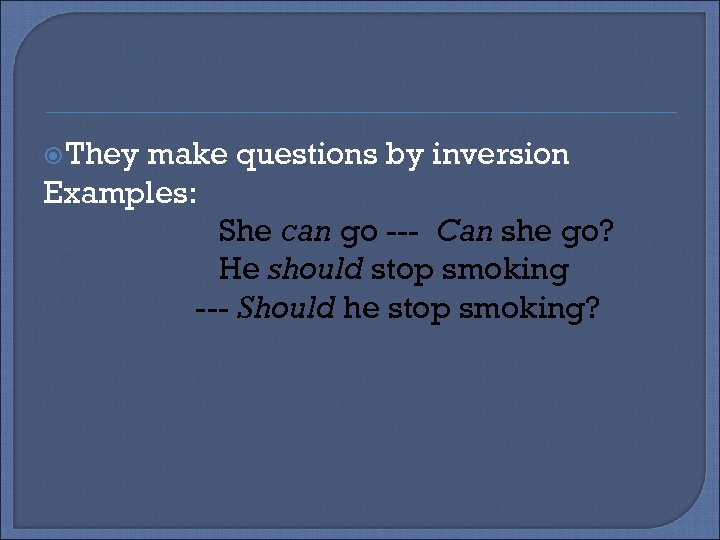 They make questions by inversion Examples: She can go --- Can she go? He should stop smoking --- Should he stop smoking?
 MODAL MUST- VERBS: HAVE TO/DON’T HAVE TO SHOULD CAN COULD MAY
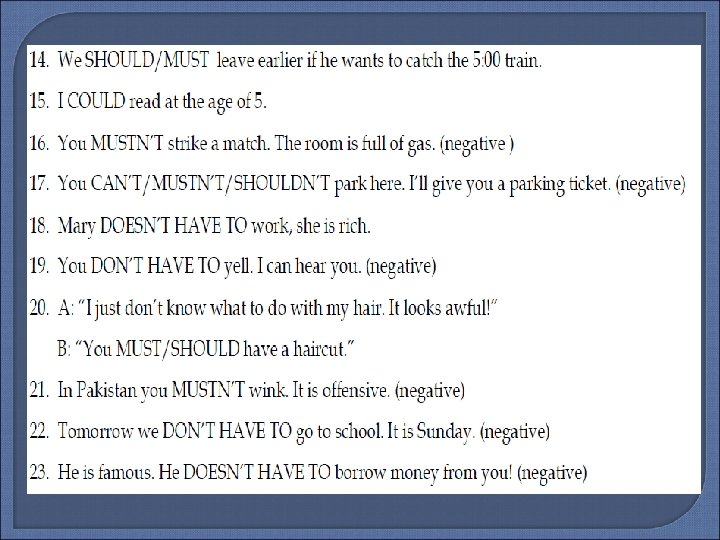
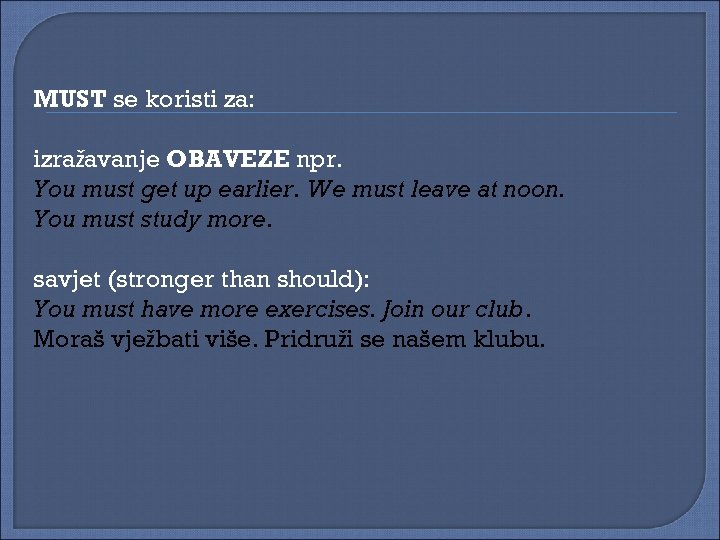 MUST se koristi za: izražavanje OBAVEZE npr. You must get up earlier. We must leave at noon. You must study more. savjet (stronger than should): You must have more exercises. Join our club. Moraš vježbati više. Pridruži se našem klubu.
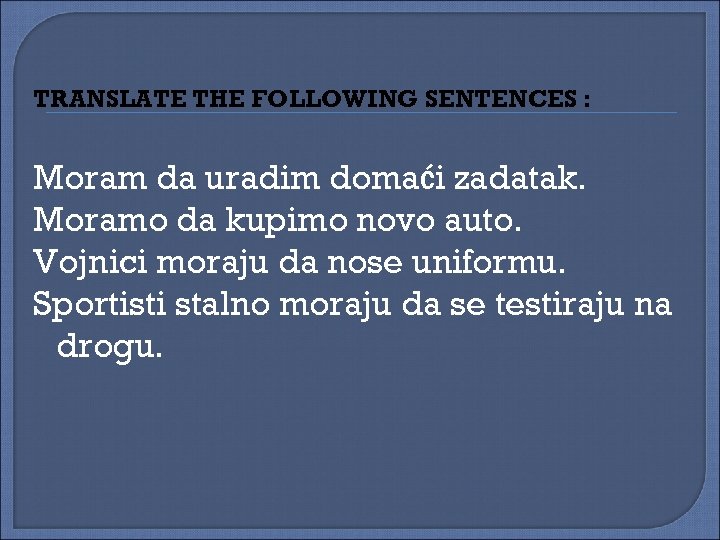 TRANSLATE THE FOLLOWING SENTENCES : Moram da uradim domaći zadatak. Moramo da kupimo novo auto. Vojnici moraju da nose uniformu. Sportisti stalno moraju da se testiraju na drogu.
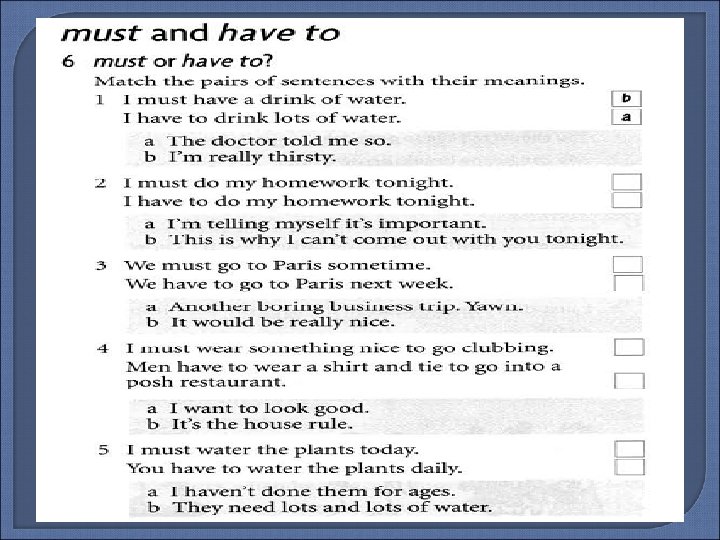
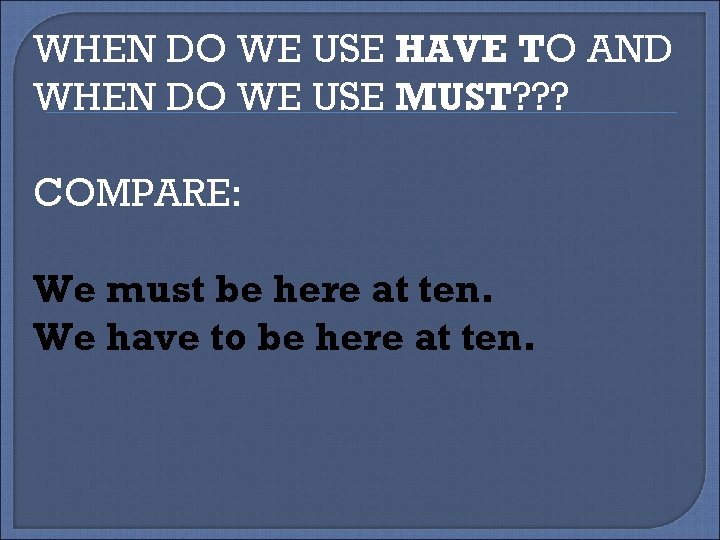 WHEN DO WE USE HAVE TO AND WHEN DO WE USE MUST? ? ? COMPARE: We must be here at ten. We have to be here at ten.
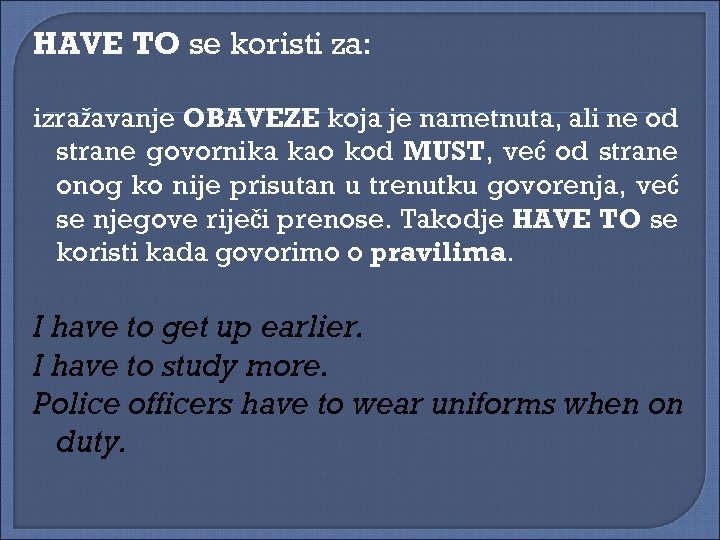 HAVE TO se koristi za: izražavanje OBAVEZE koja je nametnuta, ali ne od strane govornika kao kod MUST, već od strane onog ko nije prisutan u trenutku govorenja, već se njegove riječi prenose. Takodje HAVE TO se koristi kada govorimo o pravilima. I have to get up earlier. I have to study more. Police officers have to wear uniforms when on duty.
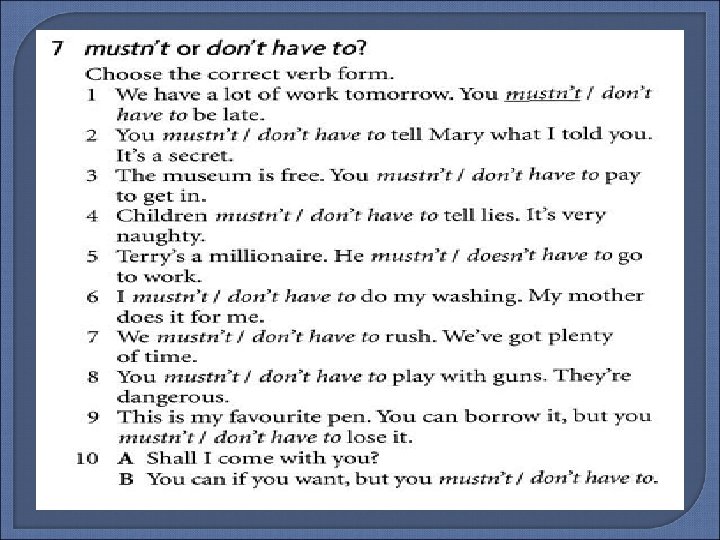
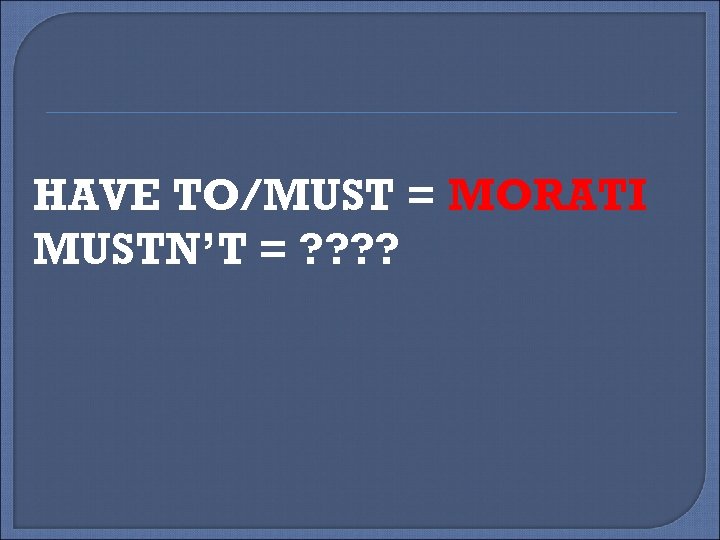 HAVE TO/MUST = MORATI MUSTN’T = ? ?
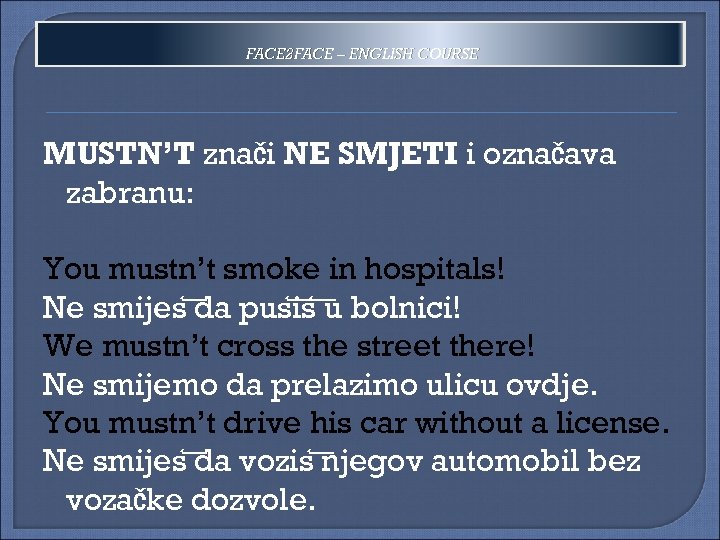 FACE 2 FACE – ENGLISH COURSE MUSTN’T znači NE SMJETI i označava zabranu: You mustn’t smoke in hospitals! Ne smiješ da pušiš u bolnici! We mustn’t cross the street there! Ne smijemo da prelazimo ulicu ovdje. You mustn’t drive his car without a license. Ne smiješ da voziš njegov automobil bez vozačke dozvole.
 AKO MUSTN’T ZNAČI NE SMJETI KAKO SE ONDA KAŽE NE MORATI? NE MORAM DA UČIM. NE MORA DA RADI JER IMA DOVOLJNO NOVCA.
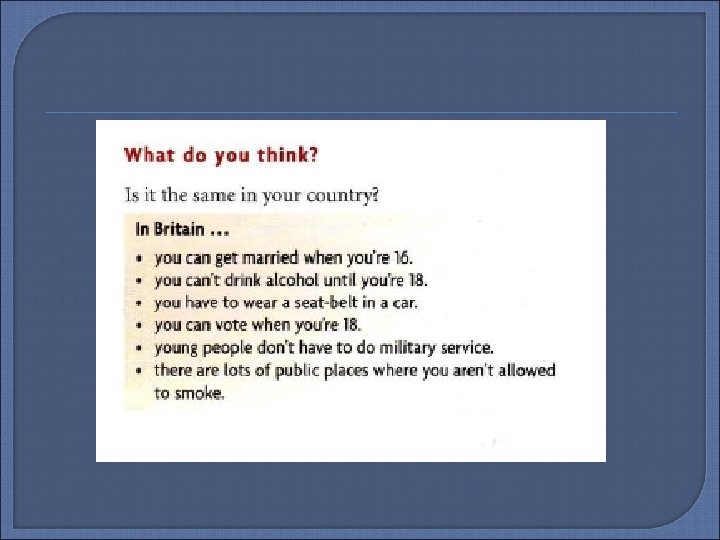
 DON’T HAVE TO, DOESN`T HAVE TO = NE MORATI Children don’t have to pay admission for a museum. Djeca ne moraju da plate ulaz u muzej. I don’t have to do the washing up. Ne moram da perem suđe. She does not have to work. Ona ne mora da radi.
 Unit 4: ‘Doing The Right Thing’ Being a teenager has both positive and negative sides. Name a few things that you HAVE TO DO and some things YOU DON’T HAVE TO DO
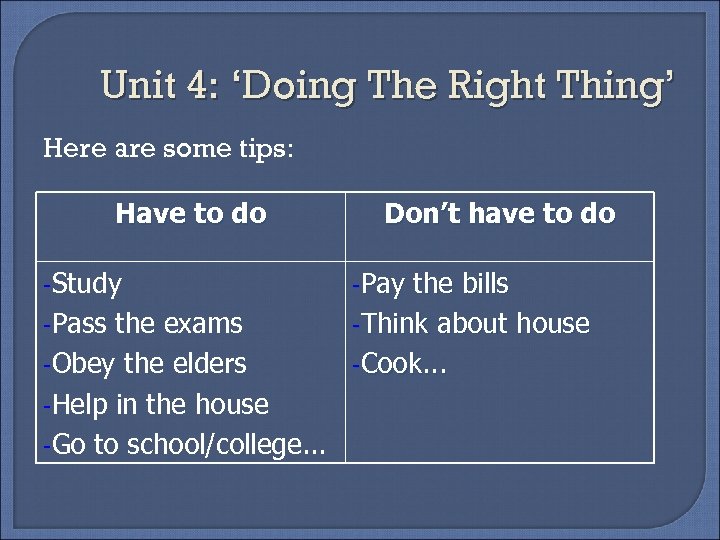 Unit 4: ‘Doing The Right Thing’ Here are some tips: Have to do -Study -Pass the exams -Obey the elders -Help in the house -Go to school/college. . . Don’t have to do -Pay the bills -Think about house -Cook. . .
 Unit 4: ‘Doing The Right Thing’ Now think about the grown-ups. What do they HAVE TO DO and what DON’T THEY HAVE TO DO?
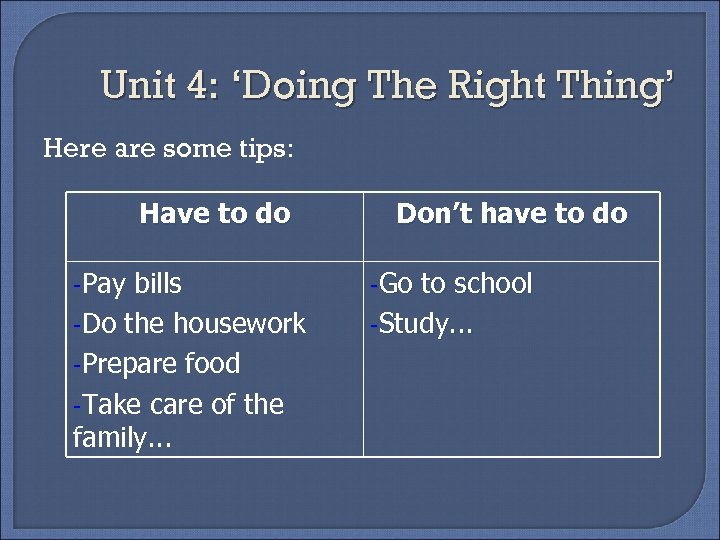 Unit 4: ‘Doing The Right Thing’ Here are some tips: Have to do -Pay bills -Do the housework -Prepare food -Take care of the family. . . Don’t have to do -Go to school -Study. . .
 Unit 4: ‘Doing The Right Thing’ Now think about the grown-ups. What do they HAVE TO DO and what DON’T THEY HAVE TO DO?
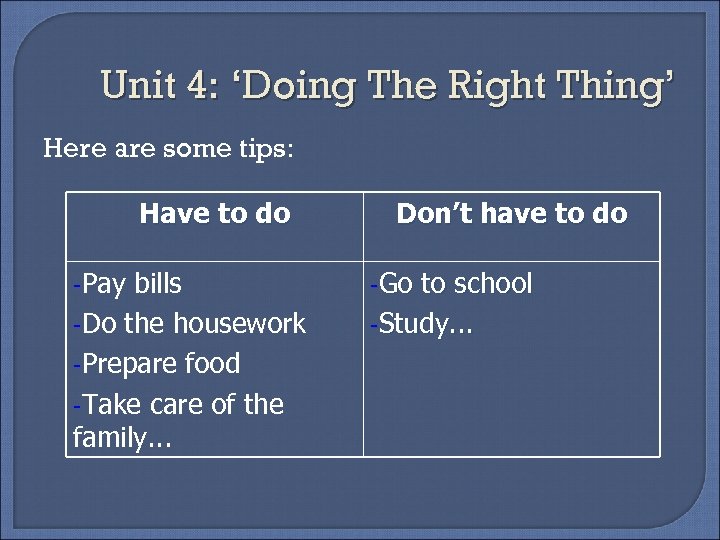 Unit 4: ‘Doing The Right Thing’ Here are some tips: Have to do -Pay bills -Do the housework -Prepare food -Take care of the family. . . Don’t have to do -Go to school -Study. . .
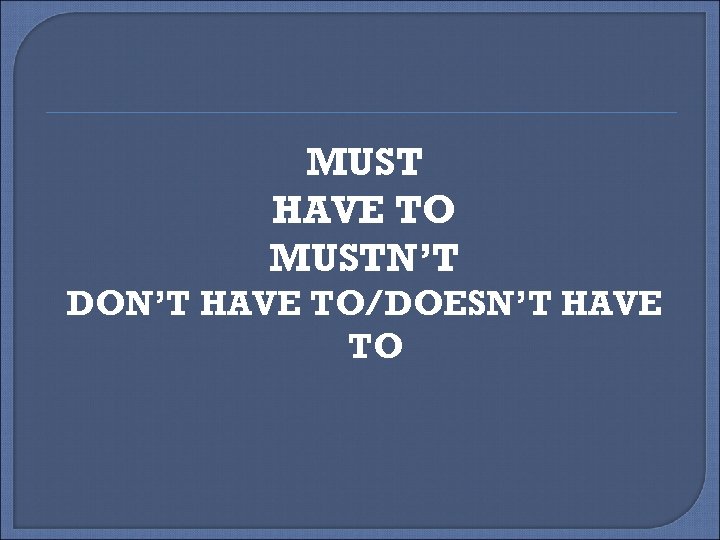 MUST HAVE TO MUSTN’T DON’T HAVE TO/DOESN’T HAVE TO
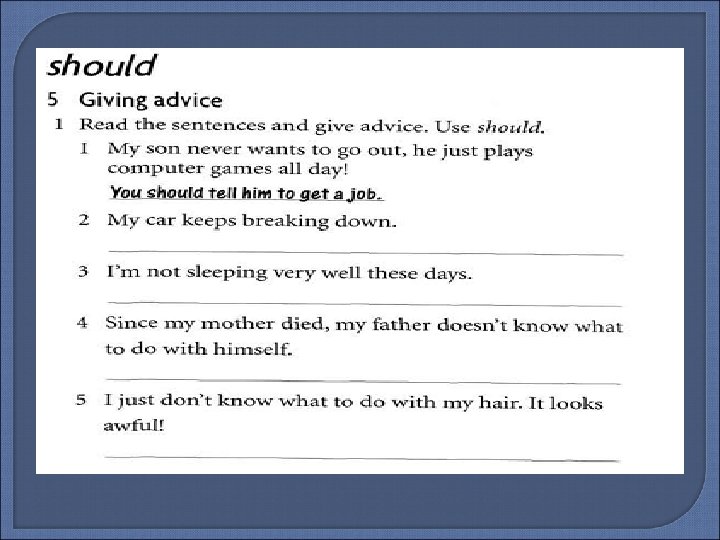
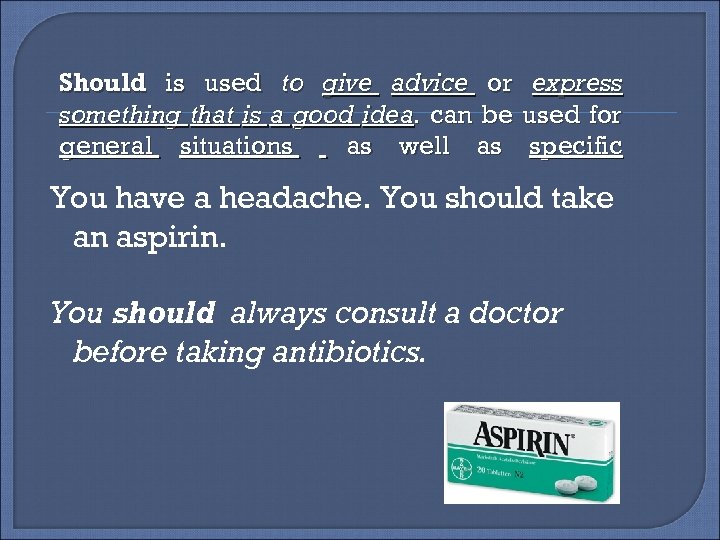 Should is used to give advice or something that is a good idea. can be general situations as well as express used for specific You have a headache. You should take an aspirin. You should always consult a doctor before taking antibiotics.
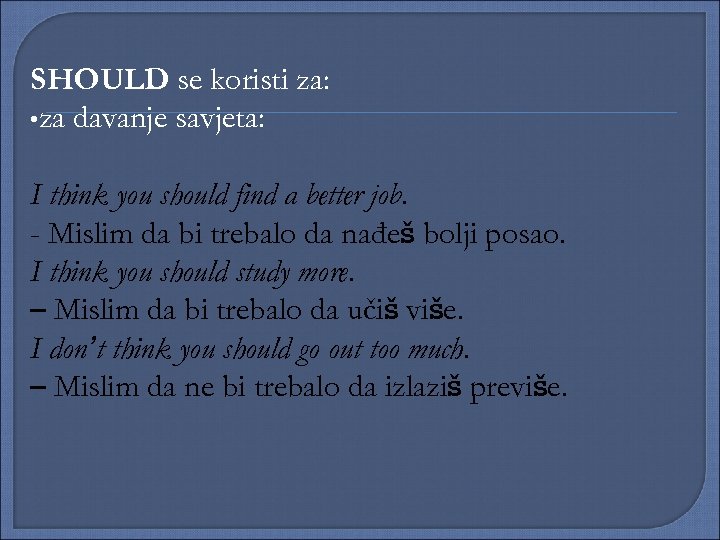 SHOULD se koristi za: • za davanje savjeta: I think you should find a better job. - Mislim da bi trebalo da nađeš bolji posao. I think you should study more. – Mislim da bi trebalo da učiš više. I don’t think you should go out too much. – Mislim da ne bi trebalo da izlaziš previše.
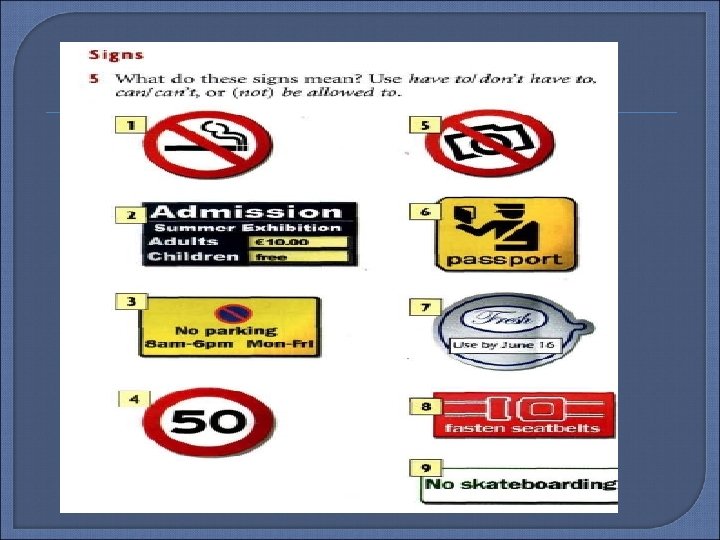
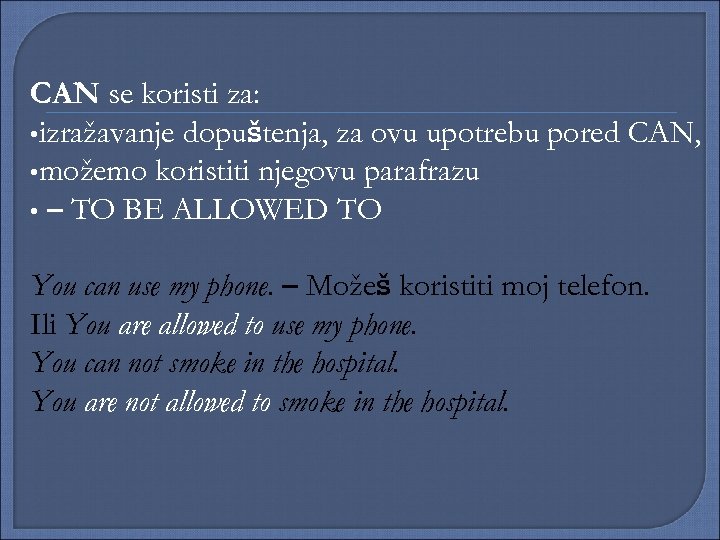 CAN se koristi za: • izražavanje dopuštenja, za ovu upotrebu pored CAN, • možemo koristiti njegovu parafrazu • – TO BE ALLOWED TO You can use my phone. – Možeš koristiti moj telefon. Ili You are allowed to use my phone. You can not smoke in the hospital. You are not allowed to smoke in the hospital.
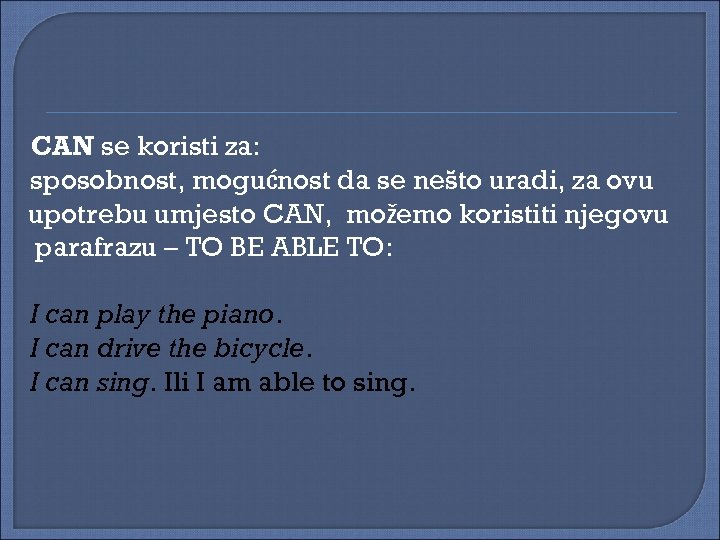 CAN se koristi za: sposobnost, mogućnost da se nešto uradi, za ovu upotrebu umjesto CAN, možemo koristiti njegovu parafrazu – TO BE ABLE TO: I can play the piano. I can drive the bicycle. I can sing. Ili I am able to sing.
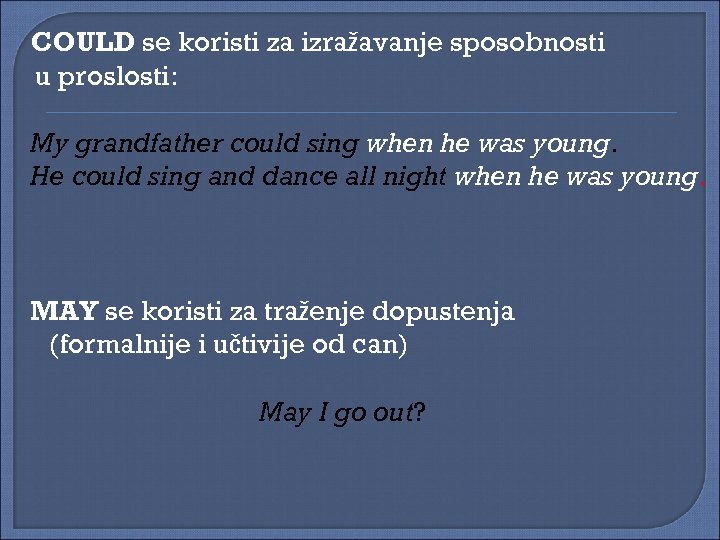 COULD se koristi za izražavanje sposobnosti u prošlosti: My grandfather could sing when he was young. He could sing and dance all night when he was young. MAY se koristi za traženje dopuštenja (formalnije i učtivije od can) May I go out?
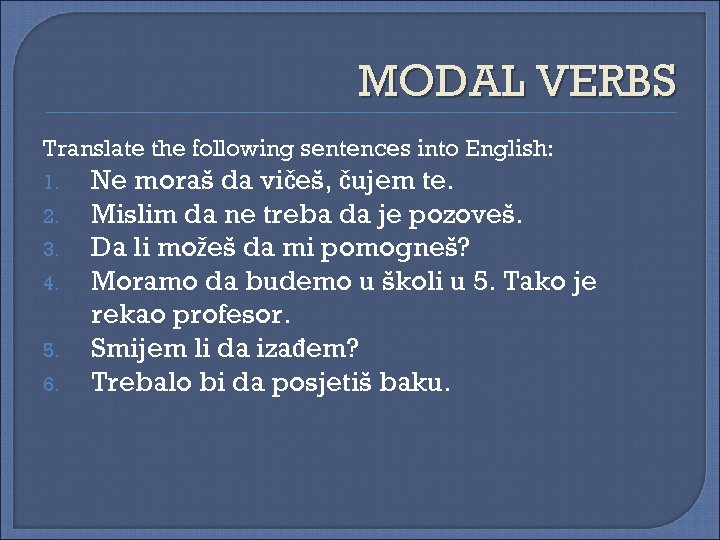 MODAL VERBS Translate the following sentences into English: 1. 2. 3. 4. 5. 6. Ne moraš da vičeš, čujem te. Mislim da ne treba da je pozoveš. Da li možeš da mi pomogneš? Moramo da budemo u školi u 5. Tako je rekao profesor. Smijem li da izađem? Trebalo bi da posjetiš baku.
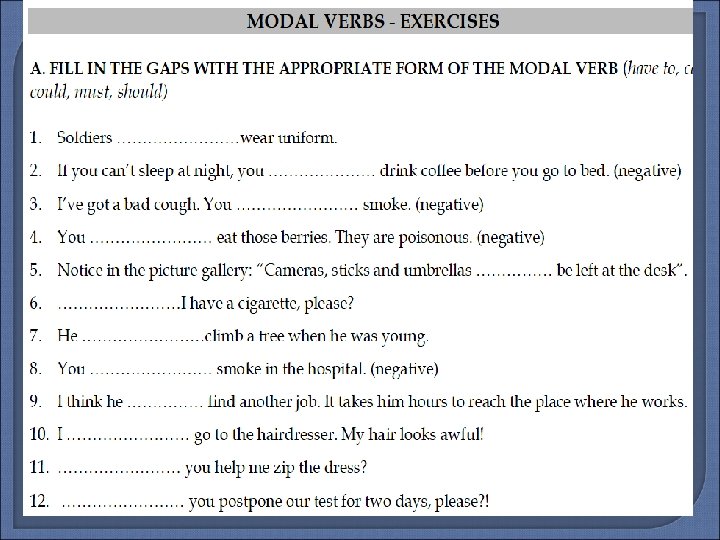
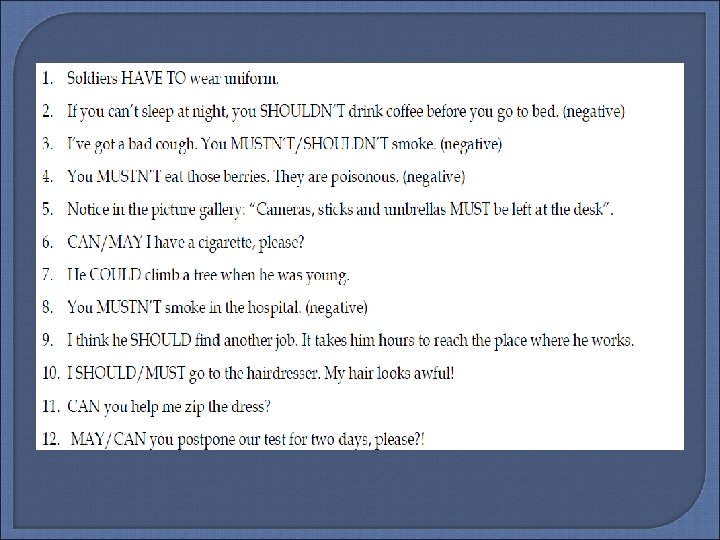
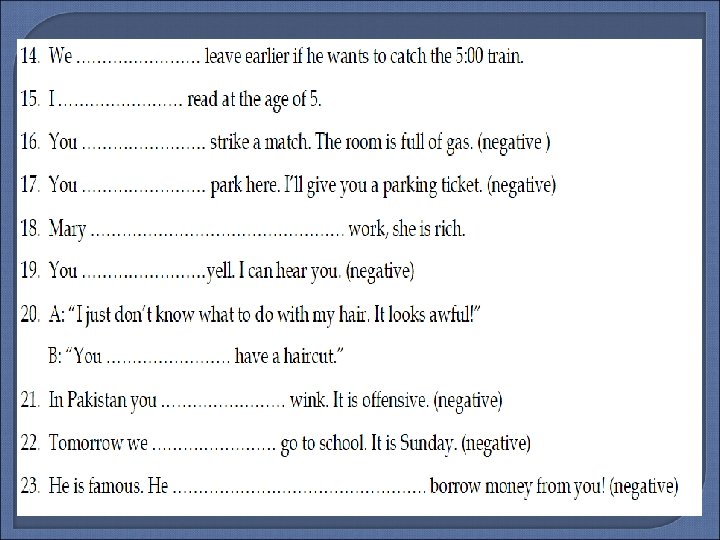
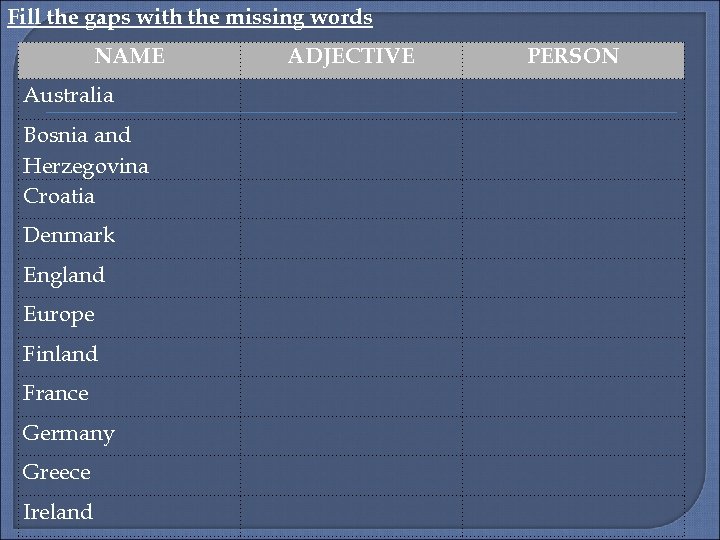 Fill the gaps with the missing words NAME Australia Bosnia and Herzegovina Croatia Denmark England Europe Finland France Germany Greece Ireland ADJECTIVE PERSON
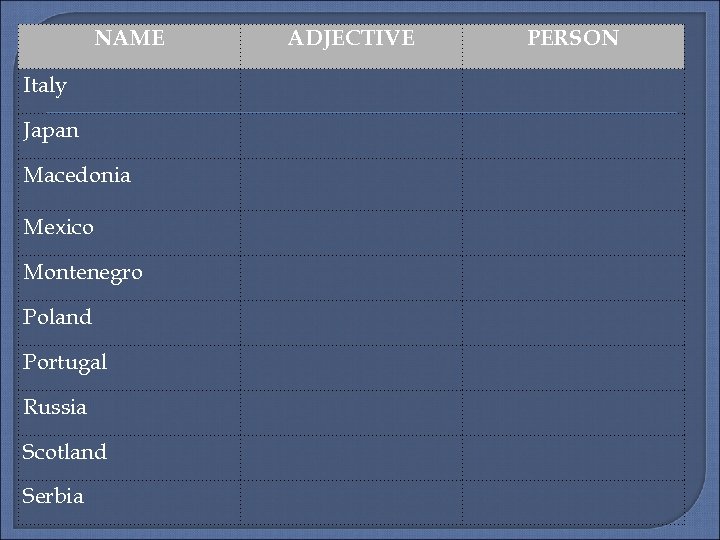 NAME Italy Japan Macedonia Mexico Montenegro Poland Portugal Russia Scotland Serbia ADJECTIVE PERSON
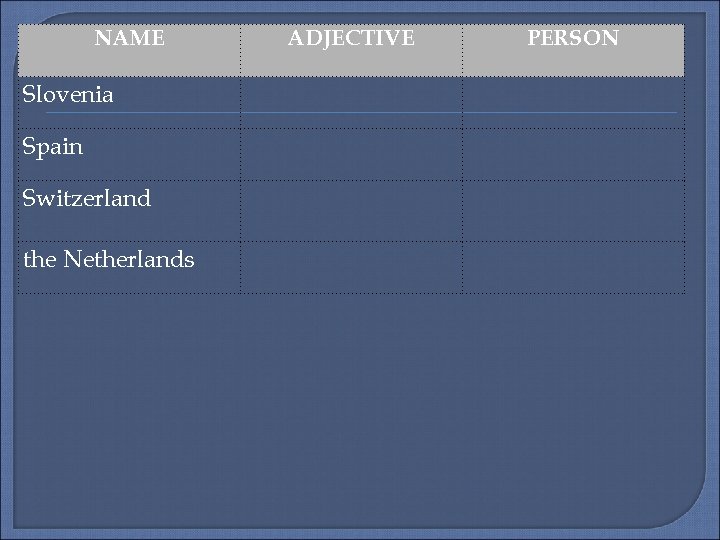 NAME Slovenia Spain Switzerland the Netherlands ADJECTIVE PERSON
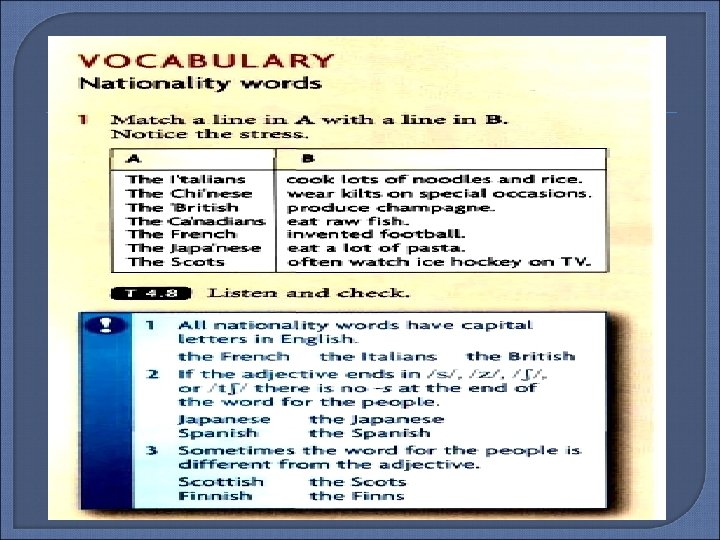
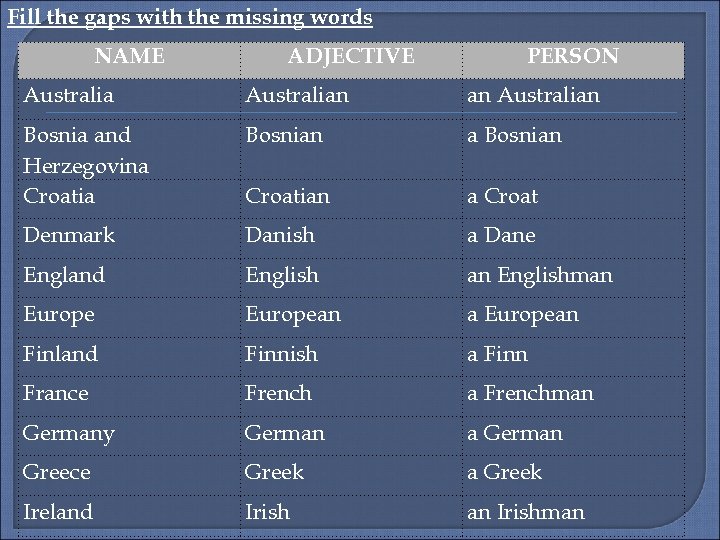 Fill the gaps with the missing words NAME ADJECTIVE PERSON Australian an Australian Bosnia and Herzegovina Croatia Bosnian Croatian a Croat Denmark Danish a Dane England English an Englishman European a European Finland Finnish a Finn France French a Frenchman Germany German a German Greece Greek a Greek Ireland Irish an Irishman
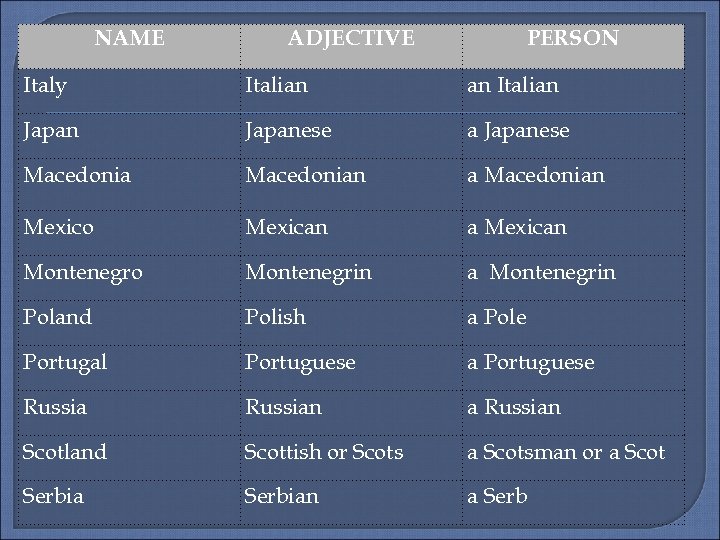 NAME ADJECTIVE PERSON Italy Italian an Italian Japanese a Japanese Macedonian a Macedonian Mexico Mexican a Mexican Montenegro Montenegrin a Montenegrin Poland Polish a Pole Portugal Portuguese a Portuguese Russian a Russian Scotland Scottish or Scots a Scotsman or a Scot Serbian a Serb
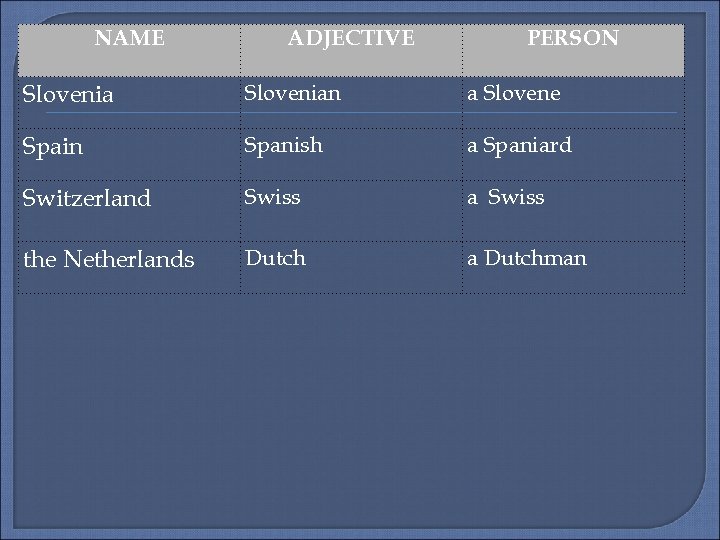 NAME ADJECTIVE PERSON Slovenian a Slovene Spain Spanish a Spaniard Switzerland Swiss a Swiss the Netherlands Dutch a Dutchman

 THANK YOU FOR COMING! SEE YOU NEXT WEEK.