

University of Cambridge Peterhouse Peterhouse is the oldest

University of Cambridge
Peterhouse
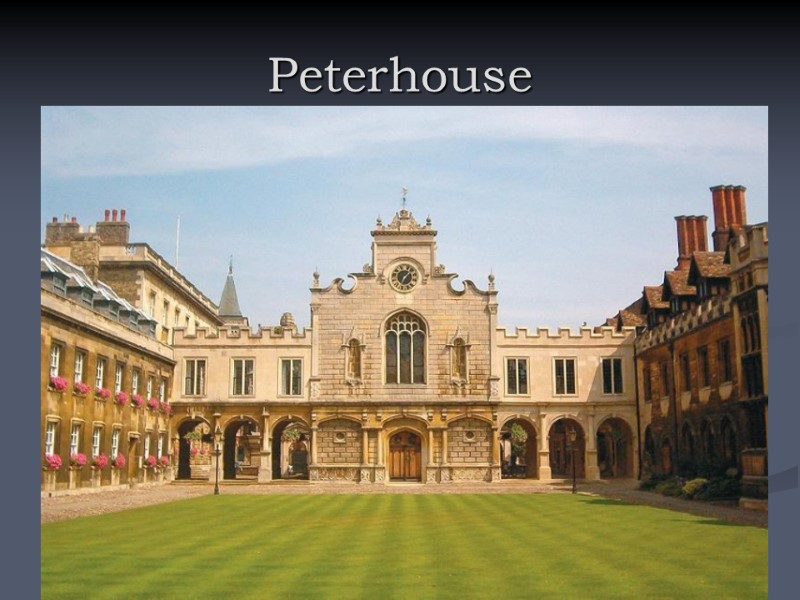
Peterhouse is the oldest of the constituent colleges in the University of Cambridge. It was founded in 1284 by Hugo de Balsham, Bishop of Ely, on its current site close to the centre of the City. It is also the smallest college, housing an intellectual community of some 45 Fellows, 260 undergraduates and 110 graduate students. Admitting students solely on the basis of academic achievement and potential, Peterhouse is committed to offering places to the most able, regardless of school or background.
King’s College
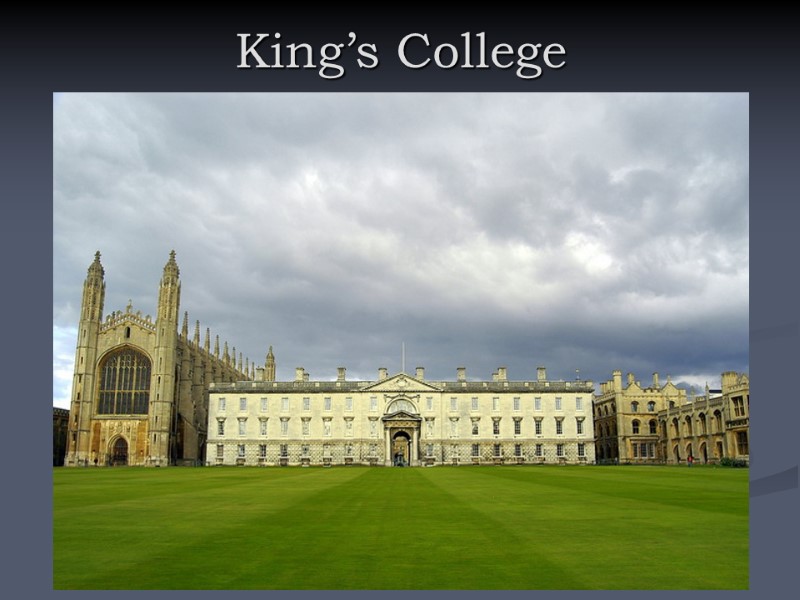
King's College was founded in 1441 by Henry VI (1421-71) and is one of the 31 colleges in the University of Cambridge. King's has an outstanding academic record and is also world-famous for its Chapel and choir. King’s is a vibrant, diverse and tolerant community. The College actively encourages applications from continental Europe and overseas. At King’s, students from any background can fulfil their personal and intellectual potential.
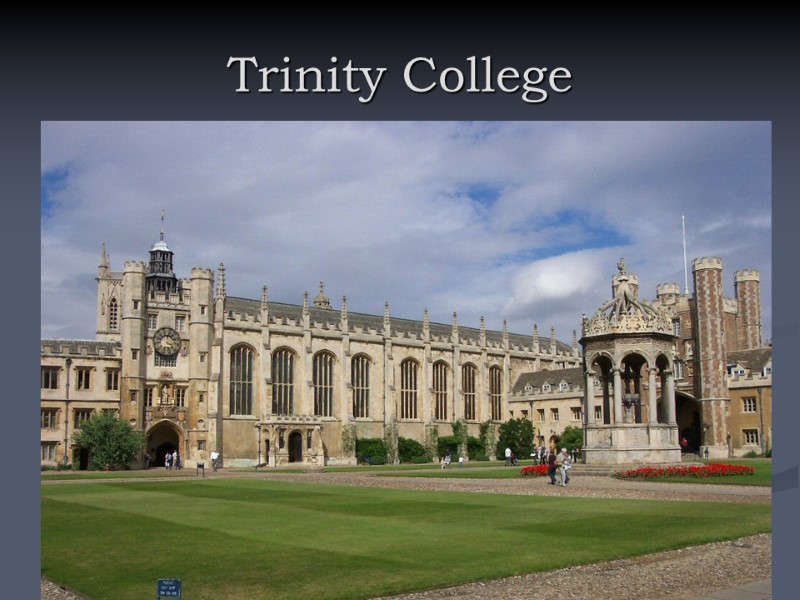
Trinity College
Trinity College was founded by Henry VIII in 1546 as part of the University of Cambridge. Since then Trinity has flourished and grown, and is now a home to around 600 undergraduates, 300 graduates, and over 160 Fellows. Trinity exists to give its members a rewarding, richly resourced, and intellectually inspiring place in which to pursue their education and research. Princes, spies, poets and prime-ministers have all been taught here, and members of the College go on to a very wide range of professions and careers after taking degrees in all the subjects the University offers. College life is lively and diverse, with students coming here from all over the world as well as from all kinds of different schools in the United Kingdom.
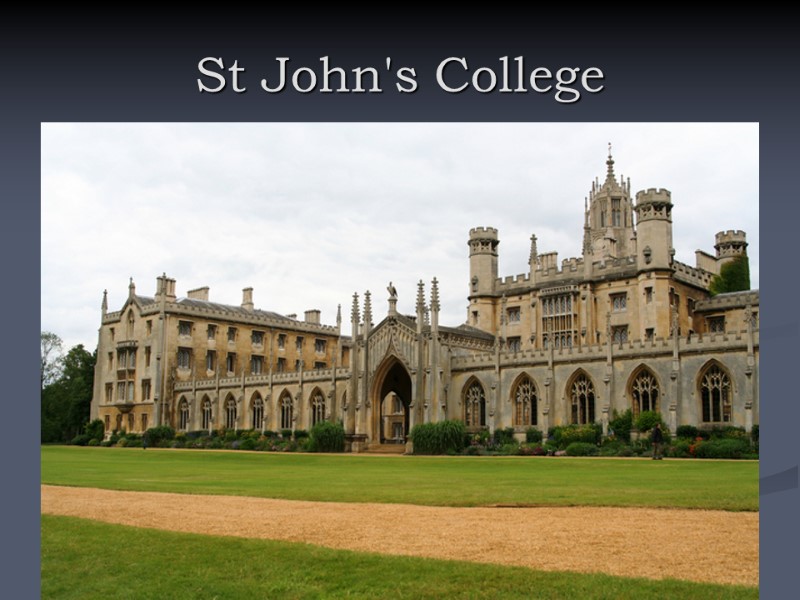
St John's College
St John's College was founded in 1511 by Lady Margaret Beaufort, mother of King Henry VII. While we look back with pride at the leaders, scientists and artists who have made their mark on the world following their education here, we're still looking to the next generation. These are the people who will find inspiration here, and shape the future. The atmosphere at St John’s is lively, challenging and inspiring. They’re committed to providing a world-class education in an exciting multicultural environment where you’ll thrive, realize your potential and even exceed your own expectations.
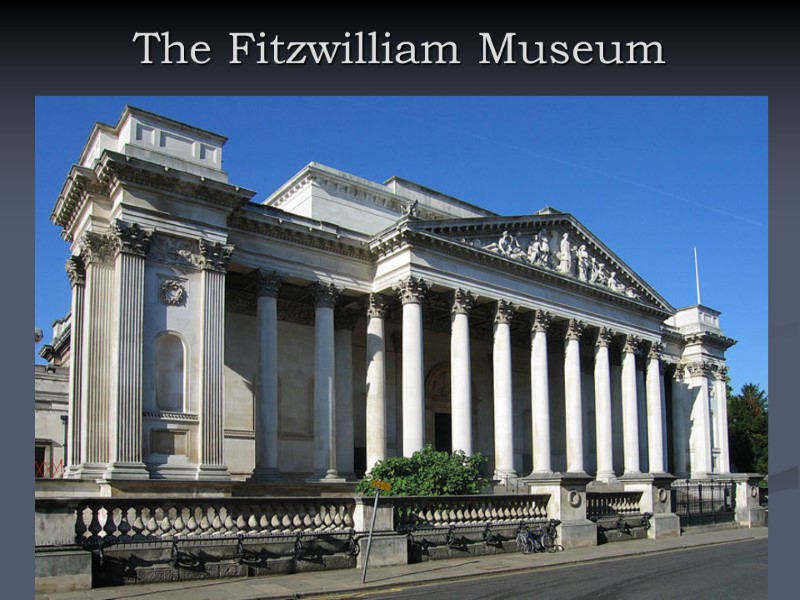
The Fitzwilliam Museum
The Fitzwilliam Museum was described by the Standing Commission on Museums & Galleries in 1968 as “one of the greatest art collections of the nation and a monument of the first importance”. It owes its foundation to Richard, VII Viscount Fitzwilliam of Merrion who, in 1816, bequeathed to the University of Cambridge his works of art and library, together with funds to house them, to further "the Increase of Learning and other great Objects of that Noble Foundation". "The Fitzwilliam Museum is one of the greatest glories of the University of Cambridge. It is a museum of international stature, with unique collections most splendidly housed... Like the University itself, the Fitzwilliam Museum is part of the national heritage, but, much more, it is part of a living and continuing culture which it is our statutory duty to transmit".
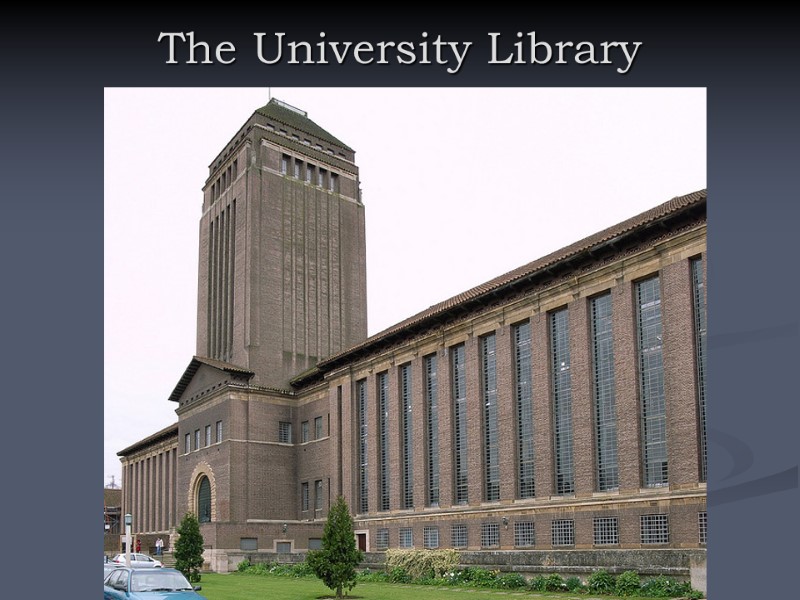
The University Library
Cambridge University Library is one of the world’s most important repositories of the recorded word – in media ranging from 3000-year-old bone to the latest electronic journal. Thanks to its open-stack system it offers unrivalled access to its vast collections. The most accessible collection of literary treasure on this side of the Atlantic.
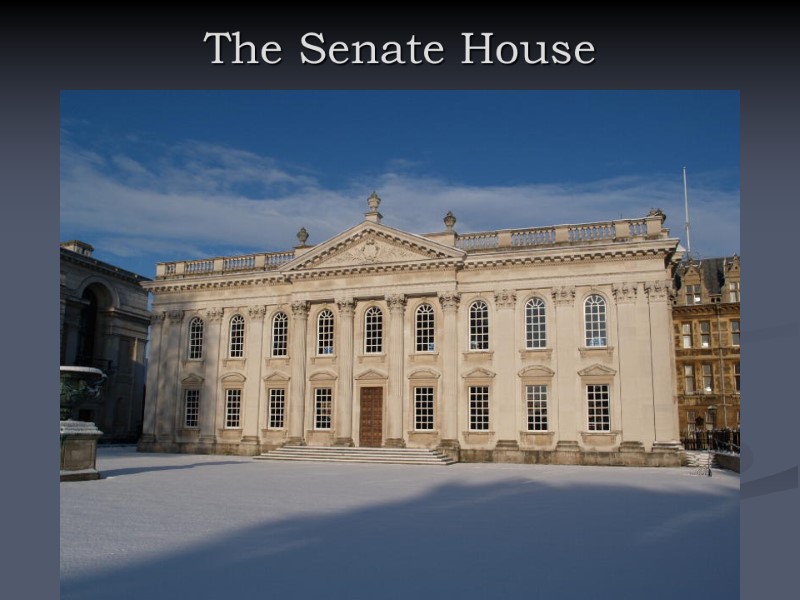
The Senate House
The Senate House of the University of Cambridge is now used mainly for degree ceremonies. It was formerly also used for meetings of the Council of the Senate. The building, which is situated in the centre of the city between King's and Gonville and Caius Colleges, was designed by Sir James Burrell and built in 1722–1730 by architect James Gibbs. As part of the University's 800th anniversary celebrations, the side of the Senate House was illuminated with a light show, illustrating aspects of the history of the university.
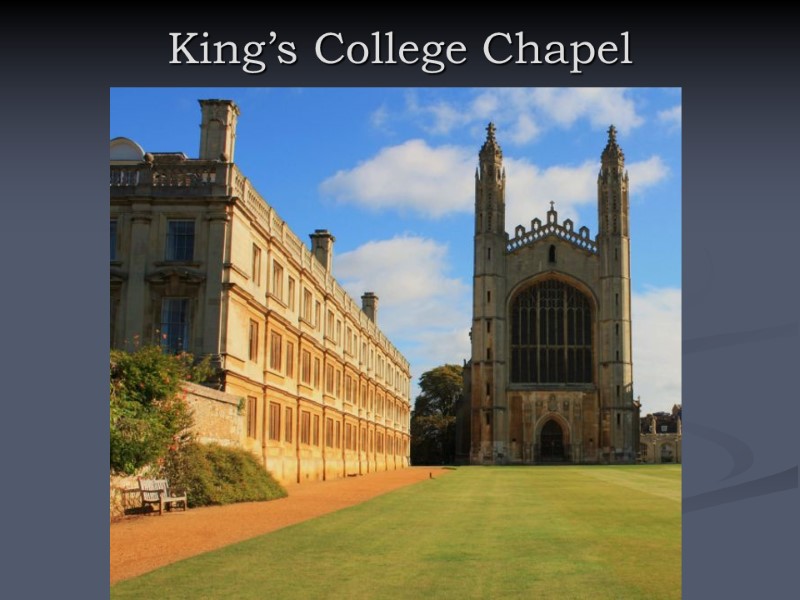
King’s College Chapel
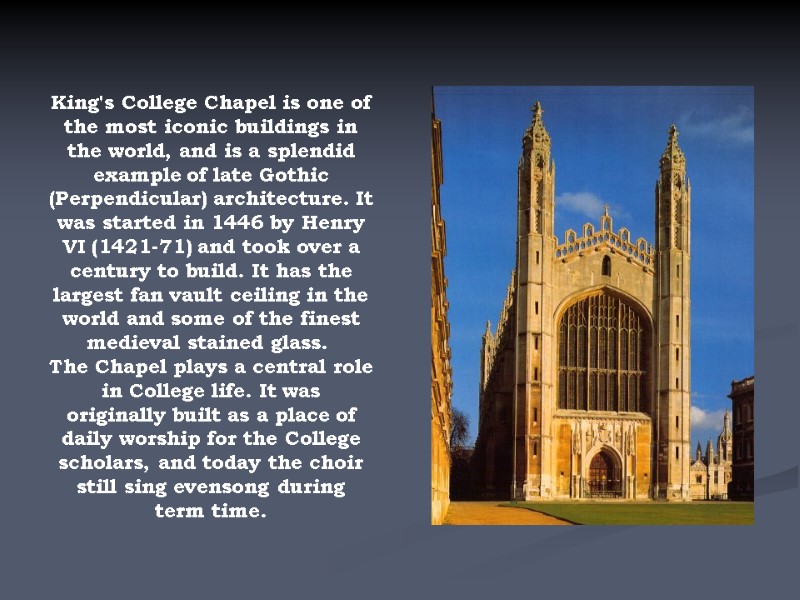
King's College Chapel is one of the most iconic buildings in the world, and is a splendid example of late Gothic (Perpendicular) architecture. It was started in 1446 by Henry VI (1421-71) and took over a century to build. It has the largest fan vault ceiling in the world and some of the finest medieval stained glass. The Chapel plays a central role in College life. It was originally built as a place of daily worship for the College scholars, and today the choir still sing evensong during term time.
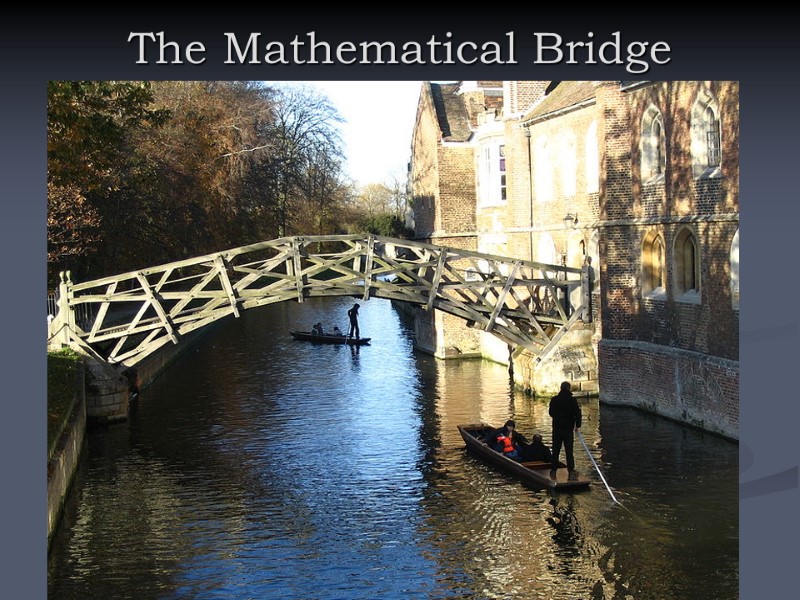
The Mathematical Bridge
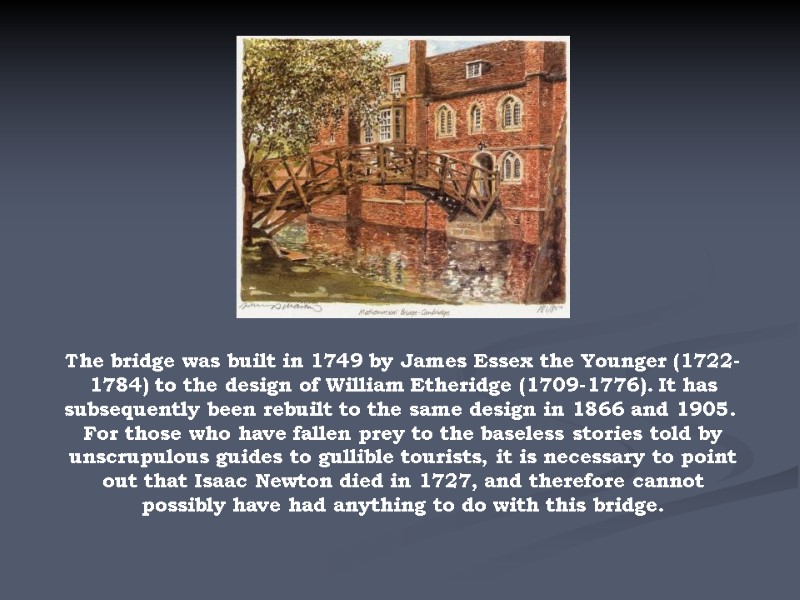
The bridge was built in 1749 by James Essex the Younger (1722-1784) to the design of William Etheridge (1709-1776). It has subsequently been rebuilt to the same design in 1866 and 1905. For those who have fallen prey to the baseless stories told by unscrupulous guides to gullible tourists, it is necessary to point out that Isaac Newton died in 1727, and therefore cannot possibly have had anything to do with this bridge.
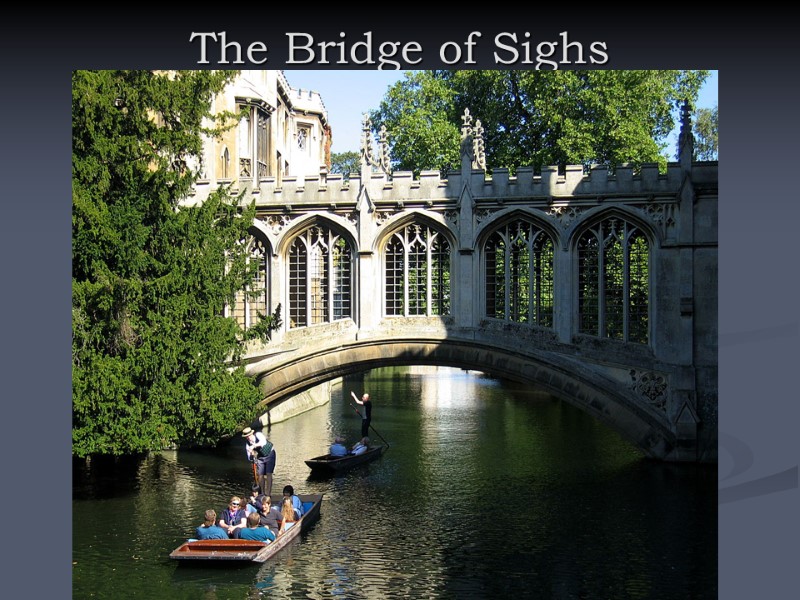
The Bridge of Sighs
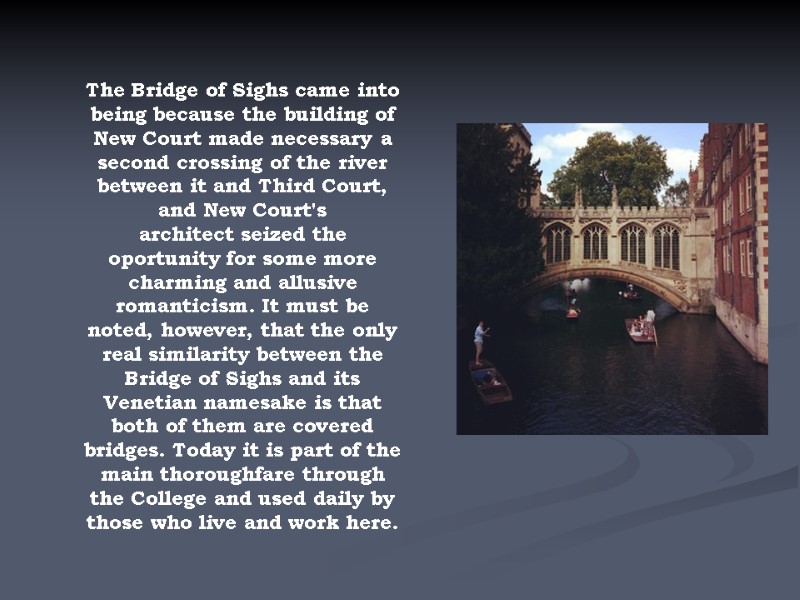
The Bridge of Sighs came into being because the building of New Court made necessary a second crossing of the river between it and Third Court, and New Court's architect seized the oportunity for some more charming and allusive romanticism. It must be noted, however, that the only real similarity between the Bridge of Sighs and its Venetian namesake is that both of them are covered bridges. Today it is part of the main thoroughfare through the College and used daily by those who live and work here.
 Скачать презентацию University of Cambridge Peterhouse Peterhouse is the oldest
16552-university_of_cambridge.ppt
- Количество слайдов: 21