 Скачать презентацию UNIVERSITY OF CALIFORNIA Wendell C Brase Chair University
3f55c28240434845489ea1d41c4f8239.ppt
- Количество слайдов: 21



UNIVERSITY OF CALIFORNIA Wendell C. Brase Chair, University of California Climate Solutions Steering Group Vice Chancellor, UC Irvine
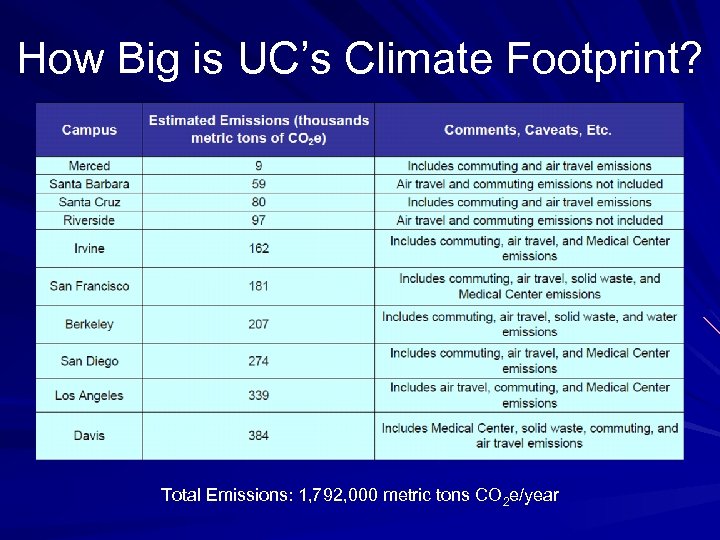
How Big is UC’s Climate Footprint? Total Emissions: 1, 792, 000 metric tons CO 2 e/year
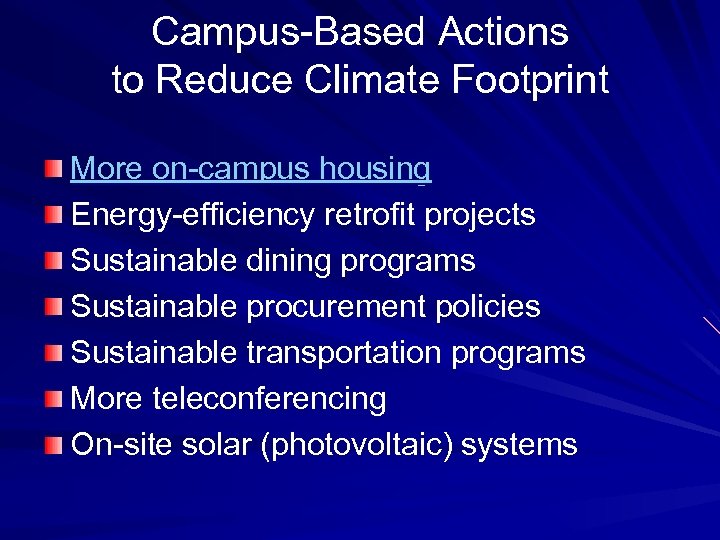
Campus-Based Actions to Reduce Climate Footprint More on-campus housing Energy-efficiency retrofit projects Sustainable dining programs Sustainable procurement policies Sustainable transportation programs More teleconferencing On-site solar (photovoltaic) systems
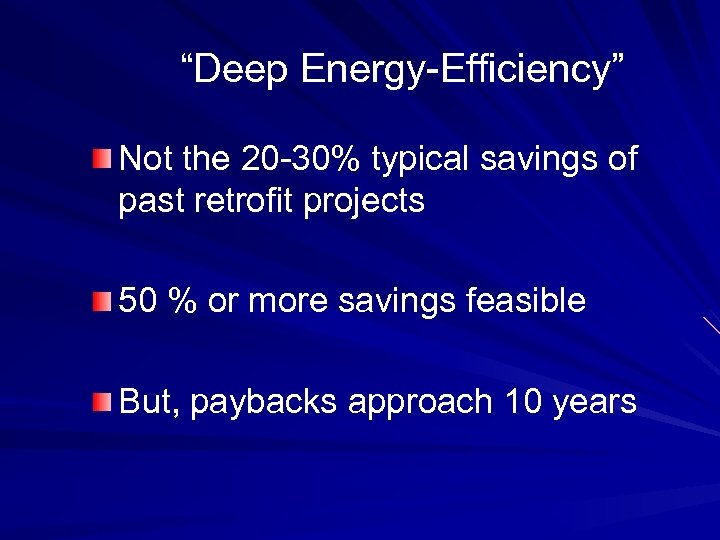
“Deep Energy-Efficiency” Not the 20 -30% typical savings of past retrofit projects 50 % or more savings feasible But, paybacks approach 10 years
Projects that Achieve >50% Emissions Reduction Lighting Redesign/retrofit office lighting using the CLTC office prototype Redesign/retrofit classroom lighting using the CLTC classroom prototype Redesign/retrofit laboratory lighting using UC Irvine prototype Daylight sensors for fixtures near windows (with sensors located exterior side of window coverings so that their function is not inadvertently defeated) Parking structure retrofit using bi-level (occupancy-sensing) induction or LED lamps + daylight sensors Parking lot and path lighting retrofit using bi-level induction or LED lamps Street lamp retrofit using induction or LED lamps Stairwell and exit way bi-level fluorescent and LED fixtures Occupancy-controlled corridor lighting
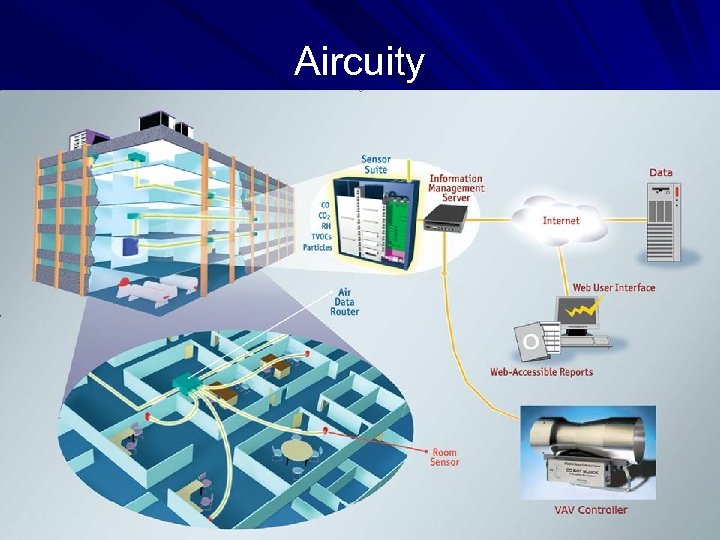
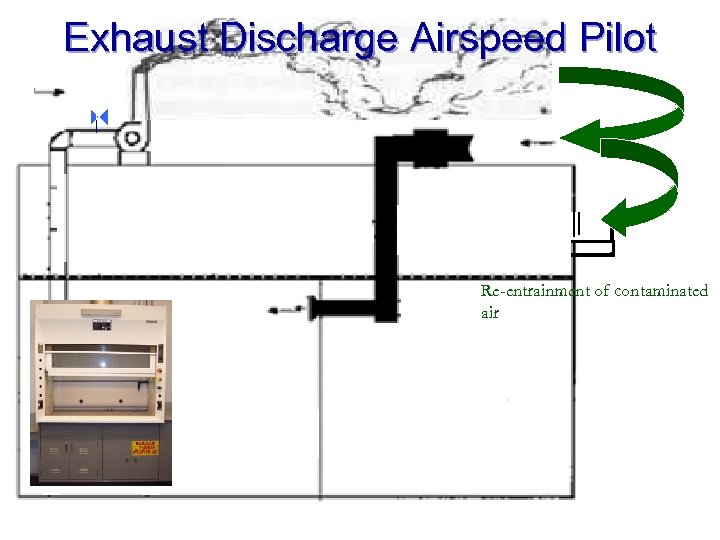
Projects that Achieve >50% Emissions Reduction, continued. . . Laboratories Reduce exhaust discharge airspeed through installation of variable-speed exhaust fans, wind-sensitive airspeed controls, and/or stack extensions. Retrofit UC Irvine “smart lab” features, including real-time air quality sensing, ventilation setback when no occupancy is sensed, and “smart exhaust” system features outlined above. Low flow/high-performance fume hoods (where hood density is high) CAV to VAV retrofit in laboratories CAV to VAV retrofit in vivaria Certain Energy Star refrigerator/freezer replacements Information Technology Power management software Server virtualization and server collocation Segregate data center hot/cold aisles and introduce “air-side economizer” for once-through ventilation CRT replacement
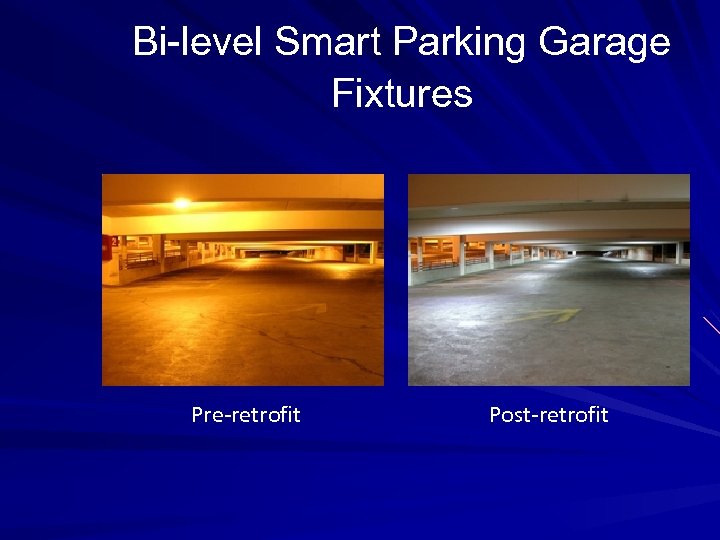
Bi-level Smart Parking Garage Fixtures Pre-retrofit Post-retrofit
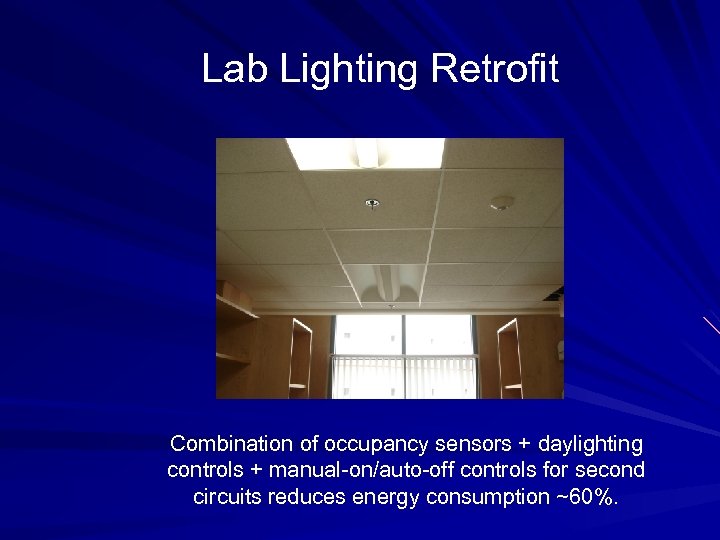
Lab Lighting Retrofit Combination of occupancy sensors + daylighting controls + manual-on/auto-off controls for second circuits reduces energy consumption ~60%.
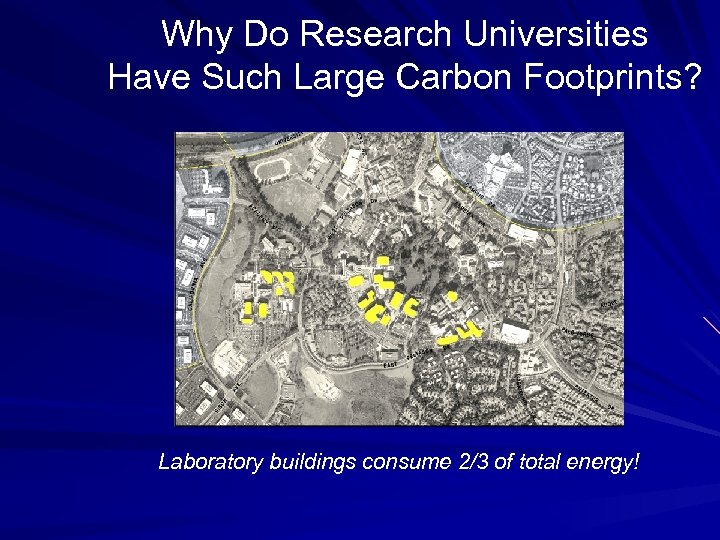
Why Do Research Universities Have Such Large Carbon Footprints? Laboratory buildings consume 2/3 of total energy!
Aircuity
Exhaust Discharge Airspeed Pilot Re-entrainment of contaminated air
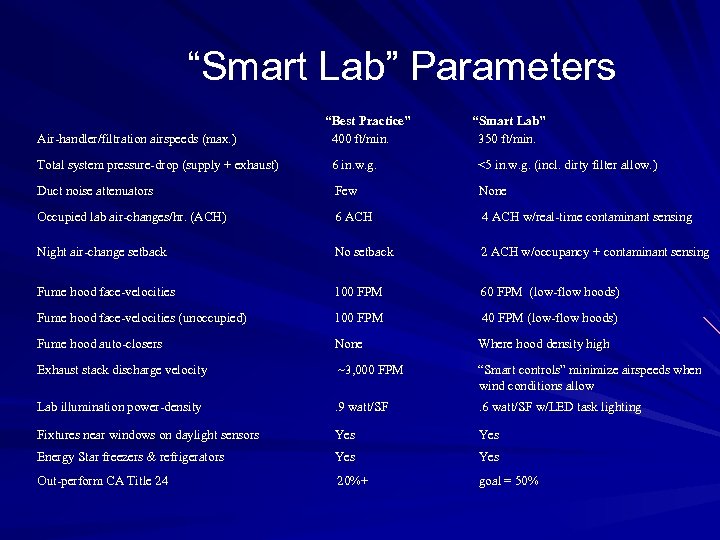
“Smart Lab” Parameters Air-handler/filtration airspeeds (max. ) “Best Practice” 400 ft/min. “Smart Lab” 350 ft/min. Total system pressure-drop (supply + exhaust) 6 in. w. g. <5 in. w. g. (incl. dirty filter allow. ) Duct noise attenuators Few None Occupied lab air-changes/hr. (ACH) 6 ACH 4 ACH w/real-time contaminant sensing Night air-change setback No setback 2 ACH w/occupancy + contaminant sensing Fume hood face-velocities 100 FPM 60 FPM (low-flow hoods) Fume hood face-velocities (unoccupied) 100 FPM 40 FPM (low-flow hoods) Fume hood auto-closers None Where hood density high Exhaust stack discharge velocity ~3, 000 FPM “Smart controls” minimize airspeeds when wind conditions allow Lab illumination power-density . 9 watt/SF . 6 watt/SF w/LED task lighting Fixtures near windows on daylight sensors Yes Energy Star freezers & refrigerators Yes Out-perform CA Title 24 20%+ goal = 50%
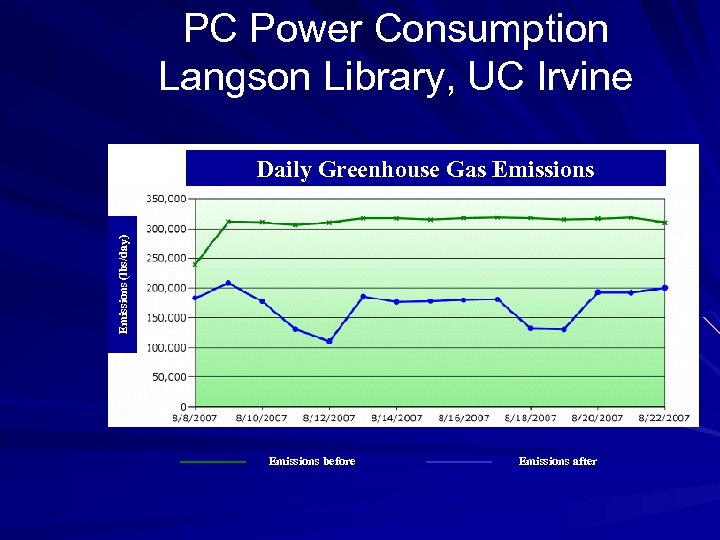
PC Power Consumption Langson Library, UC Irvine Emissions (lbs/day) Daily Greenhouse Gas Emissions before Emissions after
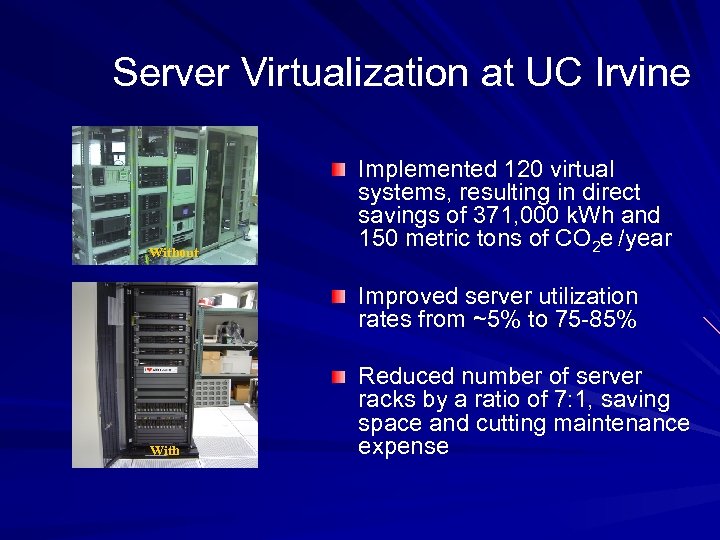
Server Virtualization at UC Irvine Without Implemented 120 virtual systems, resulting in direct savings of 371, 000 k. Wh and 150 metric tons of CO 2 e /year Improved server utilization rates from ~5% to 75 -85% With Reduced number of server racks by a ratio of 7: 1, saving space and cutting maintenance expense
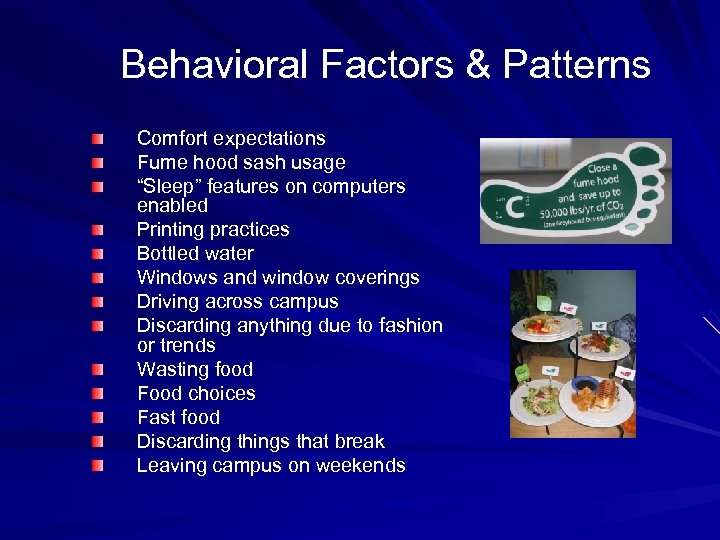
Behavioral Factors & Patterns Comfort expectations Fume hood sash usage “Sleep” features on computers enabled Printing practices Bottled water Windows and window coverings Driving across campus Discarding anything due to fashion or trends Wasting food Food choices Fast food Discarding things that break Leaving campus on weekends
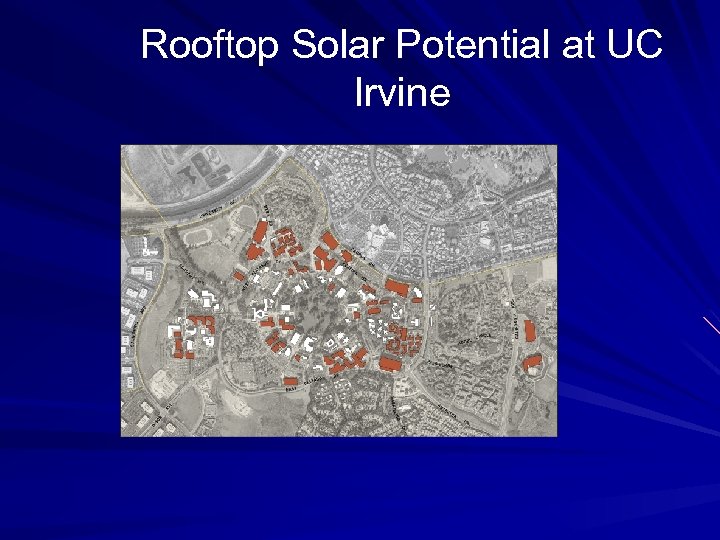
Rooftop Solar Potential at UC Irvine
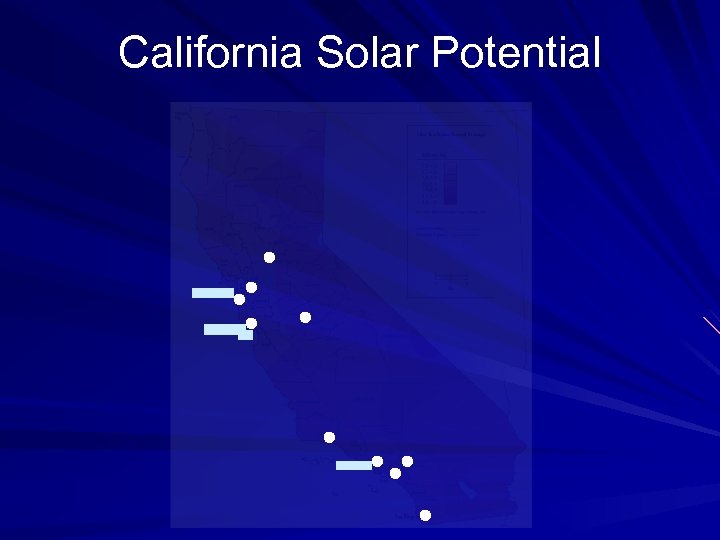
California Solar Potential
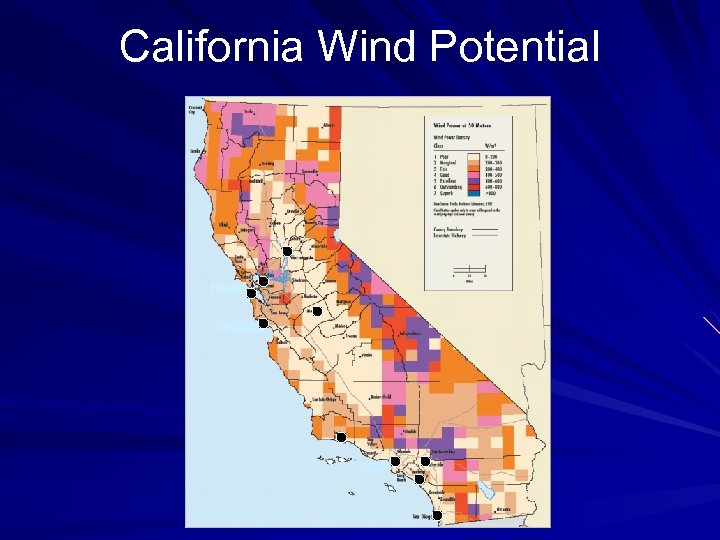
California Wind Potential 2
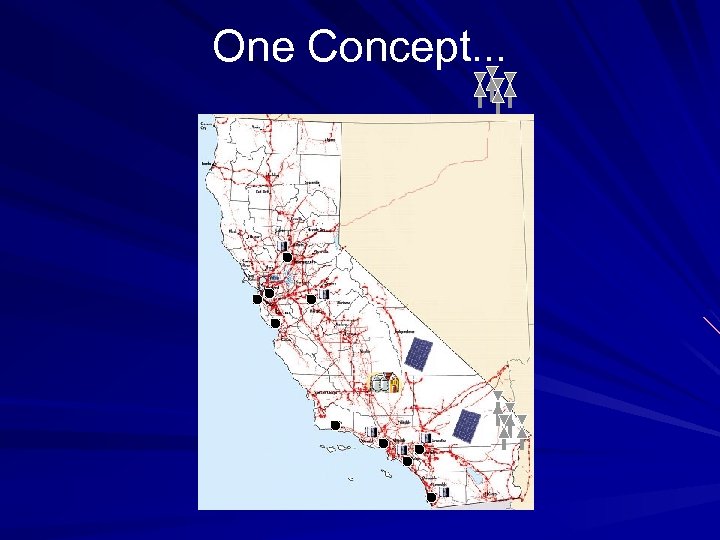
One Concept. . .
Possible Strategies to Reduce UC’s Climate Footprint Buy Renewable Energy Credits (RECs) Sell RECs to help “jump start” projects Long-term, off-site power purchase agreements Procure wind power at night Produce or procure bio-gas to mix with cogeneration fuel Partner with CSU and California General Services
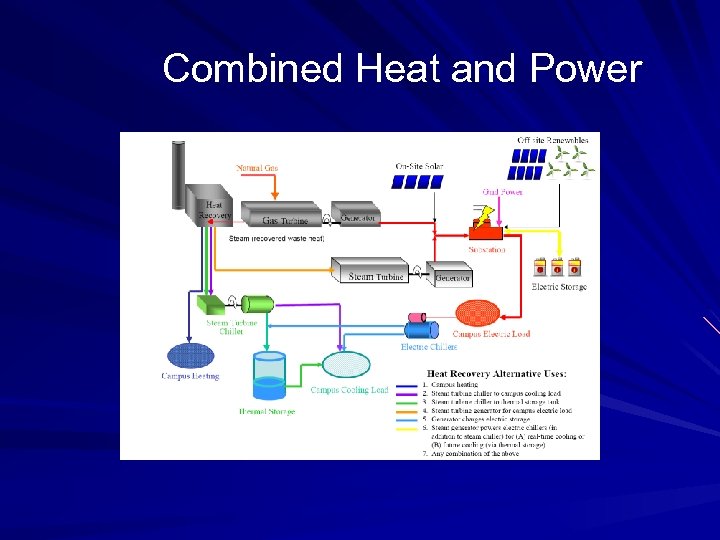
Combined Heat and Power
Скачать презентацию UNIVERSITY OF CALIFORNIA Wendell C Brase Chair University
3f55c28240434845489ea1d41c4f8239.ppt